

Free Western Macedonia Travel Guide & Mobile App
Explore Western Macedonia with free travel guides. Discover regional history, expert tips, proposed trips, and audio guides on web or mobile app.


Explore Western Macedonia in Greece for lakes, Byzantine heritage, mountain villages, vineyards, wildlife and highland food traditions.
When is the best time to visit Western Macedonia?
Best: May–June, September · 24–29°C| Month | High (°C) | Rainfall (mm) |
|---|---|---|
| January | 8 | 40 |
| February | 10 | 35 |
| March | 15 | 30 |
| April | 19 | 25 |
| May (best) | 24 | 20 |
| June (best) | 29 | 15 |
| July | 32 | 10 |
| August | 32 | 10 |
| September (best) | 28 | 20 |
| October | 21 | 25 |
| November | 14 | 30 |
| December | 9 | 35 |
Getting to and around Western Macedonia
How to get there
Transportation
Top city travel guides in Western Macedonia
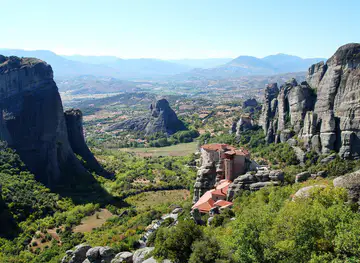
The cities of Western Macedonia, and the easiest places to base yourself.
-
-

-


Swipe for more cities
Destinations in Western Macedonia
Resorts, valleys and scenic spots worth a trip of their own.

Swipe for more destinations
Best attractions in Western Macedonia
Western Macedonia’s attractions are defined by the relationship between highland nature and long settlement history. Kastoria combines lakeside walks with the Byzantine Museum, the archaeological site of Dispilio and a remarkable concentration of historic churches and houses. The Prespa area offers birdwatching, traditional villages, boat excursions from Psarades and tranquil paths beside reedbeds and mountain slopes. Florina provides access to the Vigla-Pisoderi skiing area, Nymfaio and the wildlife work of ARCTUROS, while the nearby lakes Vegoritida and Petron create further opportunities for observation and walking. Kozani’s wider district includes the archaeological museum and site of Aiani, vineyards around Amyntaio and the distinctive landscapes shaped by lignite mining. Grevena leads towards the Pindus forests, Vasilitsa’s ski terrain and outdoor routes associated with the Valia Kalda area. Across the region, attractions range from archaeological and religious heritage to mushroom-rich woodlands, wineries, wildlife sanctuaries, mountain villages and changing industrial landscapes.
-
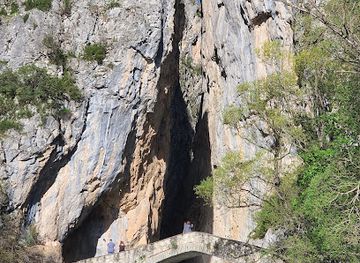
Bridge
Portitsa ancient stone bridge
Discover the historic Portitsa Bridge in Grevena, Greece: a stunning stone structure at the entrance to a dramatic gorge, blending history and nature.
-
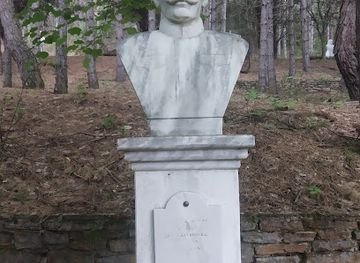
Museum
Museum of the Macedonian Struggle
Explore Macedonian history at this open-air museum near Chromio, Kozani, commemorating the struggles for Greek independence and unification.
-
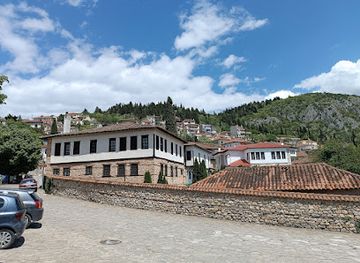
Βατόλακκος Γρεβενών,Ελλάδα
Discover the charm of Vatolakkos Grevenon, a serene Greek village rich in culture, nature, and warm hospitality, perfect for your next adventure.

Best landmarks in Western Macedonia
Lake Orestiada and the peninsula of Kastoria form Western Macedonia’s most recognisable urban landmark, with the water encircling a town of Byzantine churches, Ottoman houses and steep historic lanes. The Byzantine churches of Kastoria, including those in the old neighbourhoods of Doltso and Apozari, are significant for their medieval frescoes and architecture. In the north, the Prespa lakes create a borderland landscape of international importance, framed by Mount Varnountas and remembered through the stone villages of Psarades and Agios Germanos. The Neolithic lakeshore site at Dispilio provides a landmark of Greece’s prehistoric heritage, while the archaeological remains and museum at Aiani represent ancient Elimeia near Kozani. Nymfaio’s stone-built streets and mansions express a different mountain architectural tradition, and Siatista is notable for the substantial houses built by merchant families. The high ridges of Grammos, Vitsi and the Pindus are geographical landmarks as well as reminders of the region’s frontier and civil-war history; their significance is best understood through the landscape rather than through isolated monuments.
-
Museum
Museum of the Macedonian Struggle at Kastoria
Explore Kastoria's pivotal role in the Macedonian Struggle for independence at this historical museum in a traditional 18th-century mansion.
-
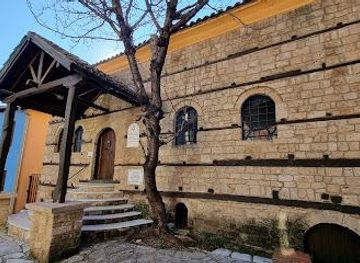
Synagogue
Jewish Synagogue of Veria
Explore the Jewish Synagogue of Veria, a historic landmark showcasing the rich cultural heritage of Northern Greece's Jewish community.
-
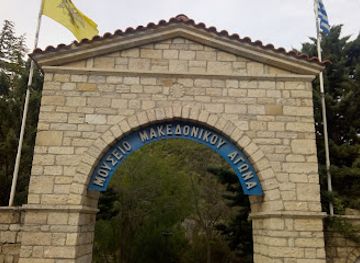
Museum
Museum of the Macedonian Struggle
Explore the heroic past of Macedonia at this open-air museum near Chromio, celebrating the fighters and their quest for freedom and unity.
-
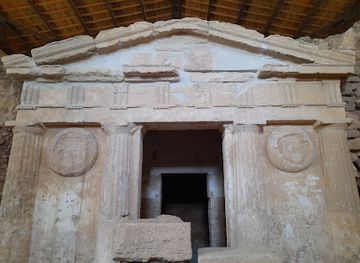
Historical landmark
Macedonian Tomb at Spilia of Eordaea
Explore the Macedonian Tomb at Spilia, an ancient landmark offering a fascinating glimpse into Macedonian history and funerary traditions dating back to the 2nd century BC.
Explore Western Macedonia on the map
Plan your trip on one map. See where the top cities, national parks and sights are, and book hotels and experiences in a few clicks.
Best hotels in Western Macedonia
Best restaurants in Western Macedonia
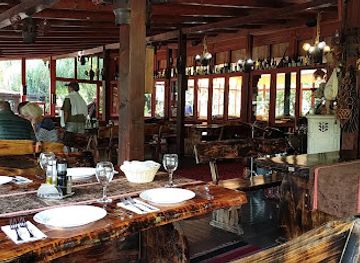
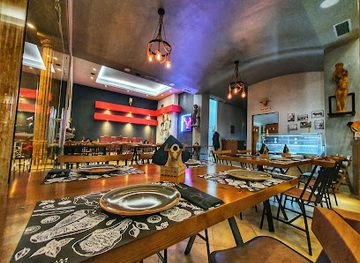
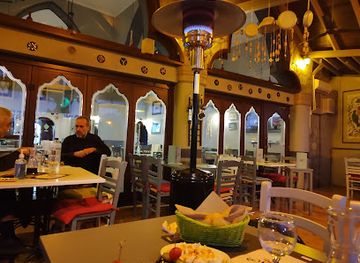
Dining in Western Macedonia reflects cold winters, upland farming and the produce of its lakes and forests. Prespa beans are among the region’s best-known foods, while Florina peppers appear roasted, stuffed or preserved and Kozani is associated with the cultivation and trade of saffron. Kastoria’s restaurants serve freshwater fish alongside northern Greek home cooking, and the Grevena area is noted for wild mushrooms, which feature seasonally in tavernas and specialist products. Mountain cheeses, beans, cured meats, pies and slow-cooked dishes are common across the region, with recipes varying between villages. Amyntaio’s vineyards support local wines, and cafés and traditional tavernas remain important in market towns such as Kozani, Florina, Kastoria and Grevena. Farmers’ markets are useful places to find beans, peppers, fruit, preserves, herbs and cheeses, while rural inns often base menus on locally available ingredients rather than a fixed regional template.
-
Restaurant
NAUTICAL HALL
Experience culinary delights at Nautical Hall in Kastoria – where every meal is complemented by breathtaking waterfront views.
-
Restaurant
Restaurant „Ostrovo“
Experience authentic Macedonian cuisine with stunning views at Restaurant 'Ostrovo', nestled by Lake Ohrid.
-
Restaurant
Abacos Taverna (SteakHouse)
Discover the taste of Greece at Abacos Taverna in Kozani – where every steak tells a story of flavor and tradition.
-
Restaurant
Boroinó
Experience the best of Greek cuisine at Boroinó in Kastoria - where tradition meets modern culinary creativity.
Best bars in Western Macedonia
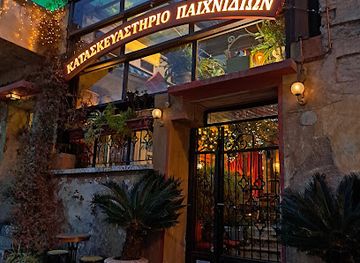
Evening life in Western Macedonia is concentrated in the larger towns rather than in a continuous nightlife circuit. Kozani, Florina and Kastoria have the broadest choice of cafés, bars and restaurants, with students and younger residents contributing to later evenings in central areas. Kastoria’s waterfront and town centre are suited to relaxed drinks, while Florina has a strong café culture connected with its artistic and university communities. Grevena and smaller towns generally rely on traditional cafés, tavernas, wine bars and pubs, with live music appearing at selected venues or during local celebrations. Mountain villages can become lively at weekends and during winter visits, but opening patterns are seasonal and changeable. The region is better known for conversation, food, local wine and social cafés than for large-scale clubbing, and visitors should not assume that rural areas offer late-night transport.
-
Cocktail bar
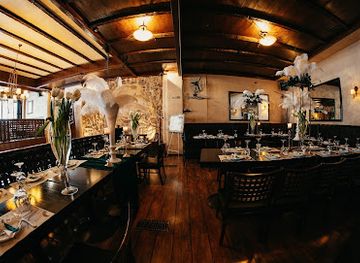
Upupa Epops
Discover unique cocktails and a vibrant atmosphere at Upupa Epops, a top cocktail bar in Athens that redefines nightlife.
-
Restaurant
Trupokaridos
Discover the flavors of Greece at Trupokaridos, a top-rated restaurant in the heart of Kozani, offering a delightful culinary experience.
-
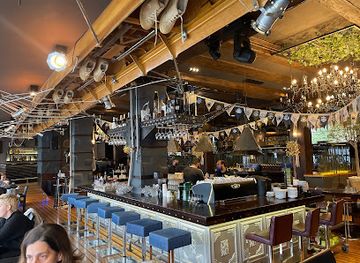
Bar
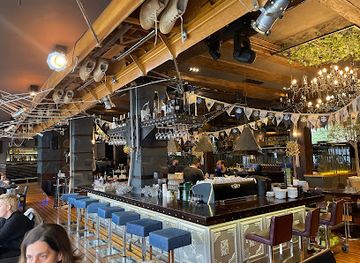
NAUTICAL HALL
Experience the vibrant Nautical Hall in Kastoria, where delicious cuisine meets a nostalgic 80s ambiance, perfect for any occasion.
-
Restaurant
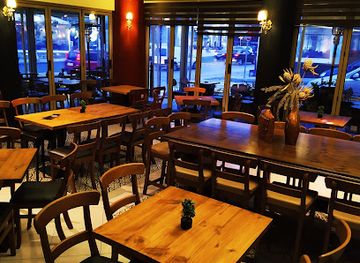
RESTO BAR
Discover RESTO BAR in Kozani: A traditional restaurant offering delectable grilled dishes and a cozy atmosphere for an unforgettable dining experience.
Best nightclubs in Western Macedonia
Evening life in Western Macedonia is concentrated in the larger towns rather than in a continuous nightlife circuit. Kozani, Florina and Kastoria have the broadest choice of cafés, bars and restaurants, with students and younger residents contributing to later evenings in central areas. Kastoria’s waterfront and town centre are suited to relaxed drinks, while Florina has a strong café culture connected with its artistic and university communities. Grevena and smaller towns generally rely on traditional cafés, tavernas, wine bars and pubs, with live music appearing at selected venues or during local celebrations. Mountain villages can become lively at weekends and during winter visits, but opening patterns are seasonal and changeable. The region is better known for conversation, food, local wine and social cafés than for large-scale clubbing, and visitors should not assume that rural areas offer late-night transport.
-
Night club
Summer Night Club Hush Летен Ноќен Клуб Хаш
Discover the electrifying nightlife of Bitola at Summer Night Club Hush, where music, dance, and fun come alive in a vibrant atmosphere.
-
Night club
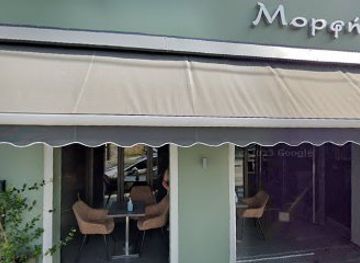
Μορφή καφέ μπαρ
Discover the energetic nightlife at Μορφή Καφέ Μπαρ in Velventos, where music, fun, and a friendly atmosphere await every visitor.

Best shops in Western Macedonia
Shopping in Western Macedonia is strongest in the market towns, where central streets combine everyday Greek retail with independent food shops, cafés and specialist producers. Kozani is the main commercial centre and a good place to look for saffron products, local preserves and regional foods, while Florina is associated with peppers, fruit, wines and traditional agricultural produce. Kastoria has a long-established fur-making history, although the sector has changed and visitors should assess products and businesses individually; the town also offers food shops, crafts and galleries. Grevena is a useful place to find dried and preserved mushrooms, herbs, honey and mountain produce. In Prespa and the surrounding uplands, small shops and farm outlets sell beans, cheeses, jams and spirits when available. Village festivals and seasonal markets may offer textiles, ceramics, woodwork and homemade foods, but their timing varies. For durable souvenirs, choose clearly labelled regional produce, wine from Amyntaio, saffron, beans, peppers or mushroom products rather than generic imports.
-
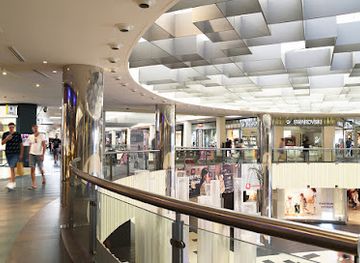
Shopping mall
Mediterranean Cosmos
Explore Mediterranean Cosmos in Thessaloniki, Greece: a vibrant shopping mall filled with unique shops, delicious dining, and family-friendly entertainment.
-
Outlet mall
Designer Outlet Athens
Discover unbeatable deals on top brands at Designer Outlet Athens, the ultimate shopping destination near Athens, Greece.
-
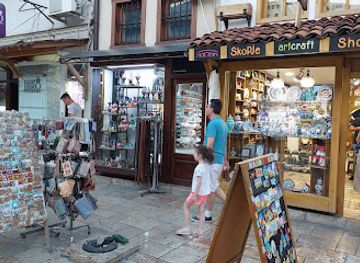
Market
Old Bazaar
Explore the Old Bazaar in Skopje, a historic market brimming with culture, unique shops, and delicious local cuisine.
-
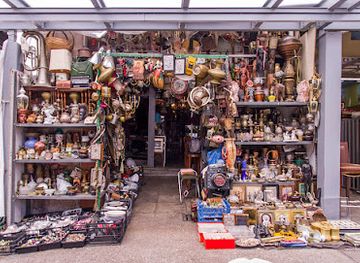
Flea market
Monastiraki Flea Market
Discover the unique treasures and vibrant culture of Monastiraki Flea Market in Athens, where history meets modern commerce.

Get your free copy of our complete guide to Western Macedonia, delivered straight to you.
Everything on this page, from attractions and restaurants to essentials and local phrases, in one PDF you can read offline, print or share.
Already have an account? Sign in
Your Western Macedonia guide is ready.
We'll send it to · Not you? Sign out

Getting your guide ready…
We are putting together a fresh copy of the Western Macedonia guide. This can take up to a minute.
This can take a few moments. If your browser asks, choose Allow so the download can start. You'll find the guide in your Downloads folder.
Nothing happened? Download it again
Sorry, the guide is taking longer than usual. Please try again in a minute, or get it by email instead.
Western Macedonia essentials
Currency and Payment
Safety
Emergency Situations
Do's and Don'ts
Local Tips
From Eve
Local phrases worth knowing
You don't need to get them perfect. A few words go a long way, and locals appreciate the effort.
Basics
| English | Local | Say it |
|---|---|---|
| Hello | Γειά σου | [Yia sou] |
| Goodbye | Αντίο | [Antio] |
| Yes | Ναι | [Ne] |
| No | Όχι | [Ochi] |
| Please/You're welcome | Παρακαλώ | [Parakalo] |
| Thank you | Ευχαριστώ | [Efharisto] |
| Excuse me/Sorry | Συγγνώμη | [Signomi] |
| How are you? | Πώς είσαι; | [Pos ise?] |
| Fine. And you? | Καλά. Εσύ; | [Kala. Esy?] |
| Do you speak English? | Μιλάς αγγλικά; | [Milas anglika?] |
| I don't understand | Δεν καταλαβαίνω | [Den katalavaino] |
Eating & Drinking
| English | Local | Say it |
|---|---|---|
| I'd like to see the menu, please | Θα ήθελα να δω το μενού, παρακαλώ | [Tha ithela na do to menu, parakalo] |
| I don't eat meat | Δεν τρώω κρέας | [Den troo kreas] |
| Cheers! | Στην υγειά μας! | [Stin ygeia mas!] |
| I would like to pay, please | Θα ήθελα να πληρώσω, παρακαλώ | [Tha ithela na pliroso, parakalo] |
Emergencies
| English | Local | Say it |
|---|---|---|
| Help! | Βοήθεια! | [Voitheia!] |
| Go away! | Φύγε! | [Fyge!] |
| Call the Police! | Καλέστε την αστυνομία! | [Kaleste tin astynomia!] |
| Call a doctor! | Καλέστε έναν γιατρό! | [Kaleste ena giatro!] |
| I'm lost | Είμαι χαμένος | [Ime chamenos] |
| I'm ill | Είμαι άρρωστος | [Ime arostos] |
Shopping
| English | Local | Say it |
|---|---|---|
| I'd like to buy... | Θα ήθελα να αγοράσω... | [Tha ithela na agoraso...] |
| I'm just looking | Απλά κοιτάω | [Ap'la kitao] |
| How much is it? | Πόσο κοστίζει; | [Poso kostizei?] |
| That's too expensive | Είναι πολύ ακριβό | [Ine poly akrivo] |
| Can you lower the price? | Μπορείς να ρίξεις την τιμή; | [Boreis na rixis tin timi?] |
Time & Numbers
| English | Local | Say it |
|---|---|---|
| What time is it? | Τι ώρα είναι; | [Ti ora ine?] |
| It's one o'clock | Είναι μία η ώρα | [Ine mia i ora] |
| Half past (10) | Δέκα και μισή | [Deka ke misi] |
| Morning | Πρωί | [Proi] |
| Afternoon | Απόγευμα | [Apogeuma] |
| Evening | Βράδυ | [Vrady] |
| Yesterday | Χθες | [Chthes] |
| Today | Σήμερα | [Simera] |
| Tomorrow | Αύριο | [Avrio] |
| 1 | 1 | [1] |
| 2 | 2 | [2] |
| 3 | 3 | [3] |
| 4 | 4 | [4] |
| 5 | 5 | [5] |
| 6 | 6 | [6] |
| 7 | 7 | [7] |
| 8 | 8 | [8] |
| 9 | 9 | [9] |
| 10 | 10 | [10] |
Transport & Directions
| English | Local | Say it |
|---|---|---|
| Where's a/the...? | Πού είναι το...; | [Pou ine to...?] |
| What's the address? | Ποια είναι η διεύθυνση; | [Poia ine i diefthinsi?] |
| Can you show me (on the map)? | Μπορείς να μου δείξεις (στο χάρτη); | [Boreis na mou deixis (sto charti)?] |
| When's the next (bus)? | Πότε είναι το επόμενο (λεωφορείο); | [Pote ine to epomeno (leoforeio)?] |
| A ticket (to ....) | Ένα εισιτήριο (για ....) | [Ena eisitirio (gia ....)] |
History of Western Macedonia
Neolithic Settlements and the Lakes
Western Macedonia contains important evidence of prehistoric life around its lakes and fertile upland basins. The lakeshore settlement at Dispilio, near Kastoria, dates principally to the Neolithic period and has produced remains of houses, tools and organic materials preserved in wet conditions. Its reconstruction and archaeological interpretation illustrate how early communities adapted to a watery environment through fishing, farming and woodworking. Other prehistoric remains across the region show that the basins of Kastoria, Florina and Kozani were long-established routes of settlement rather than remote mountain margins.
Ancient Kingdoms and Aiani
In antiquity, much of present-day Western Macedonia formed part of regional kingdoms and communities linked to Upper Macedonia. Aiani, near Kozani, was an important centre of ancient Elimeia, and its archaeological museum displays sculpture, inscriptions, pottery and jewellery from the settlement and its surrounding cemeteries. The area lay between the Macedonian heartland and the mountain routes towards Epirus, giving it strategic and commercial importance. Ancient roads, cemeteries and urban remains reveal a society connected to wider Greek cultural and political developments while retaining a distinctive highland identity.
Roman and Byzantine Frontiers
Roman rule brought Western Macedonia into a larger imperial system of roads, administration and trade, although the region’s mountainous geography continued to shape settlement. In the Byzantine period, Kastoria developed as a fortified and ecclesiastical centre on Lake Orestiada. Its churches, many built or decorated between the eleventh and fourteenth centuries, preserve sophisticated mosaics and frescoes associated with the religious and artistic life of the medieval Balkans. The region’s frontier position also exposed it to changing political powers, military pressures and movement along routes between Macedonia, Albania and Epirus.
Ottoman Rule and Mountain Commerce
Western Macedonia remained under Ottoman rule for several centuries, and its towns and villages became part of commercial networks linking the Balkans. Kastoria’s peninsula retains Ottoman houses with enclosed courtyards and timber-framed upper floors, while Siatista is known for substantial merchant mansions built by prosperous trading families. Religious communities, craft guilds and long-distance merchants shaped local economies, with wool, leather, livestock and agricultural products moving through mountain passes and market towns. The period also left mosques, baths, bridges and other architectural traces, although many landscapes remained predominantly rural.
The Balkan Wars and Integration with Greece
The Balkan Wars of 1912–13 brought major political change to the region, which was incorporated into the Greek state during the wider redrawing of borders in Macedonia. The transition altered administration, military geography and patterns of population movement. Western Macedonia’s position beside Albania and the newly formed Kingdom of Serbs, Croats and Slovenes made it strategically sensitive, while towns such as Florina, Kastoria and Kozani became important centres for the new northern frontier. Churches, cemeteries, monuments and local museums preserve memories of this turbulent period.
Population Exchange and Refugee Settlement
The compulsory population exchange between Greece and Turkey in the 1920s transformed many communities across Macedonia. Refugees from Asia Minor and eastern Thrace were settled in towns and villages, bringing new agricultural practices, foods, crafts and musical traditions. Western Macedonia also experienced the departure or movement of long-established Muslim and Slavic-speaking populations as borders and national identities hardened. The resulting social landscape was not uniform: each district developed its own mixture of older local traditions and refugee influences, visible in settlement names, church life, cuisine and agricultural production.
Civil War and the Mountain Borderlands
The Greek Civil War of 1946–49 affected Western Macedonia particularly severely because of its rugged terrain and proximity to international borders. The Grammos and Vitsi mountains became major theatres of fighting, and villages, families and agricultural life were disrupted. The conflict left lasting demographic and political consequences, including displacement and depopulation in some upland settlements. Visitors may encounter monuments, military traces and local memories connected with the period, but the subject remains complex and should be approached with sensitivity rather than reduced to battlefield tourism.
Lignite, Industry and Regional Change
From the twentieth century onwards, lignite extraction and electricity generation reshaped parts of the Kozani and Florina districts. Open-cast mines and power stations provided employment and supported Greece’s energy system, while also transforming farmland, settlements and the environment. The industrial landscape contrasts sharply with the vineyards, lakes and mountain villages elsewhere in the region. As Greece moves towards a lower-carbon energy system, Western Macedonia is undergoing another major transition, with questions of land restoration, employment and economic diversification becoming central to its contemporary identity.
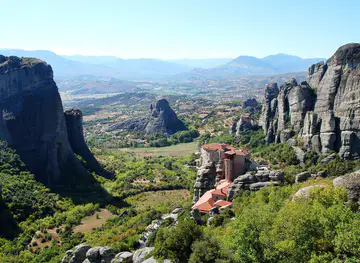
Western Macedonia in Photos
Browse through our photo collection highlighting the charm and character of the destination.
Neighbouring regions of Western Macedonia
The closest regions to Western Macedonia, if you have time for more than one.
-

-

-
-

-


Swipe for more regions
Explore more
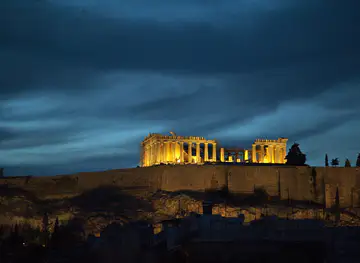
Explore more of Greece
Discover Greece: A land where ancient history meets modern vibrancy, offering stunning islands, crystal-clear seas, and unforgettable cultural experiences.
Explore Greece