

Free Macedonia Travel Guide & Mobile App
Explore Macedonia with free travel guides. Discover regional history, expert tips, proposed trips, and audio guides on web or mobile app.


Explore Macedonia in northern Greece through Thessaloniki, ancient kingdoms, mountain lakes, vineyards, beaches and layered Balkan history.
Read more about Macedonia
When is the best time to visit Macedonia?
Best: May–June, September · 24–27°C| Month | High (°C) | Rainfall (mm) |
|---|---|---|
| January | 9 | 30 |
| February | 11 | 30 |
| March | 15 | 40 |
| April | 19 | 40 |
| May (best) | 24 | 30 |
| June (best) | 27 | 20 |
| July | 30 | 20 |
| August | 30 | 20 |
| September (best) | 26 | 30 |
| October | 21 | 40 |
| November | 15 | 40 |
| December | 11 | 40 |
Getting to and around Macedonia
How to get there
Transportation
Top city travel guides in Macedonia
The cities of Macedonia, and the easiest places to base yourself.
-
-

-

-

-

-


Swipe for more cities
Destinations in Macedonia
Resorts, valleys and scenic spots worth a trip of their own.
-

-

-

-


Swipe for more destinations
Best attractions in Macedonia
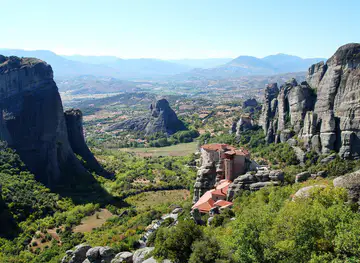
Macedonia offers a broad mixture of archaeology, urban culture, beaches and mountain landscapes. In Central Macedonia, Pella and Vergina explain the rise of the ancient Macedonian kingdom, while Dion combines sanctuaries, theatres and Roman remains at the foot of the Pieria mountains. Thessaloniki provides museums, Byzantine churches, Roman monuments and long stretches of waterfront, complemented by the monasteries and coves of Halkidiki. The eastern part of the region includes Philippi, an extensive archaeological site with a theatre, forum and early Christian basilicas, as well as the historic port city of Kavala. Western Macedonia is characterised by mountain lakes and traditional towns: Prespes is important for birdlife and wetland scenery, Kastoria is known for its lakeside setting and churches, and Florina provides access to highland landscapes and vineyards. Ski centres, walking routes, cycling roads, fishing areas and wildlife observation broaden the outdoor offering, although access and facilities vary considerably by season. Museums in Thessaloniki, Kozani and other regional towns add geological, archaeological, ecclesiastical and social perspectives rather than presenting Macedonia as a single, uniform destination.
-
Historical landmark
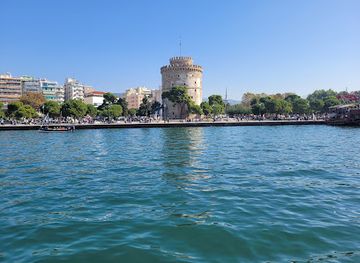
White Tower of Thessaloniki
Explore Thessaloniki's White Tower: A historical landmark offering stunning views and a rich tapestry of the city's fascinating past.
-
Nature preserve
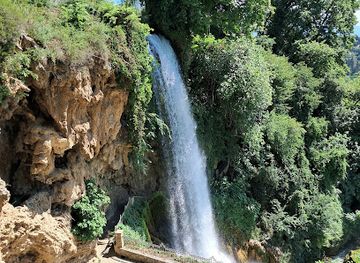
Edessa Waterfalls
Experience the breathtaking beauty of Edessa Waterfalls, Greece's largest waterfalls, set in a serene nature preserve surrounded by lush landscapes.
-
Garden
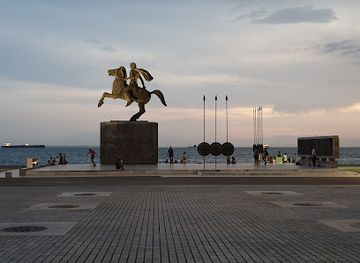
Alexander the Great Garden
Discover the tranquil beauty of Alexander the Great Garden in Thessaloniki, a perfect retreat for nature lovers and history enthusiasts alike.
-
Historical landmark
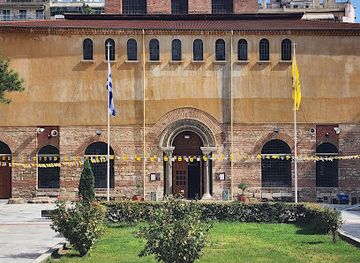
Agia Sofia Square
Discover the historical and cultural brilliance of Agia Sofia Square, a vibrant heart of Thessaloniki filled with charm and architectural wonders.
Best landmarks in Macedonia
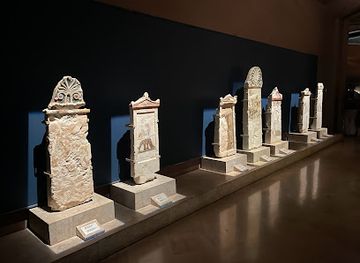
The White Tower on Thessaloniki’s waterfront is Macedonia’s most recognisable urban landmark, although its present form belongs to the Ottoman period and its history reflects the city’s role as a fortified port. Thessaloniki’s Roman Arch and Rotunda, along with its Byzantine churches, demonstrate the city’s importance across successive empires. At Vergina, the underground royal tombs and associated museum preserve the ceremonial world of ancient Aigai, the first capital of Macedon; their protected interiors make the site especially distinctive. Pella’s ancient urban plan and intricate pebble mosaics mark the later royal capital. In eastern Macedonia, the Lion of Amphipolis is a striking funerary monument beside the ancient city, while Philippi’s theatre and basilicas belong to one of the region’s major Roman and early Christian centres. Kavala’s aqueduct, known as the Kamares, crosses the historic city with a monumental line of Ottoman engineering. Western Macedonia has a different visual vocabulary: the lakefront town of Kastoria, Prespes lakes and the stone-built settlements around its mountain basins provide geographical landmarks rather than a single dominant monument.
-
Archaeological museum
Museum of the Royal Tombs at Aigai (Aegae)
Explore the opulent tombs of Macedonian royalty, including Philip II, at this UNESCO World Heritage Site in Vergina, Greece.
-
Historical landmark
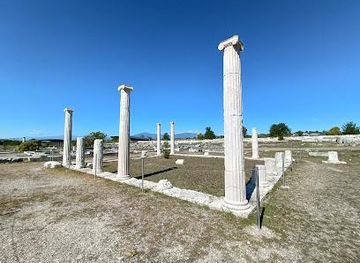
Archaelogical Site of Pella
Discover the birthplace of Alexander the Great and the capital of ancient Macedonia, where history comes alive through stunning mosaics and ruins.
-
Archaeological museum
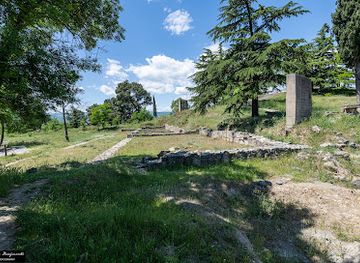
Archaeological Site Vardar Hill
Uncover ancient Macedonian history at Vardarski Rid, an archaeological site with Bronze Age roots and stunning Vardar River views.
-
Historical landmark
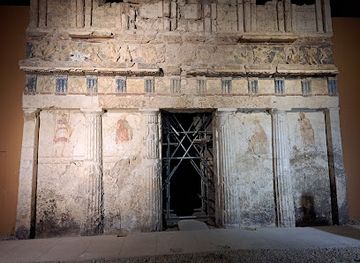
Macedonian Tomb of Judgment at Mieza
Explore the Macedonian Tomb of Judgement at Mieza, a unique Hellenistic tomb with rare depictions of the afterlife and stunning architectural details.
Explore Macedonia on the map
Plan your trip on one map. See where the top cities, national parks and sights are, and book hotels and experiences in a few clicks.
Best hotels in Macedonia
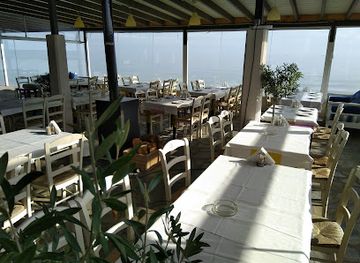
Best restaurants in Macedonia
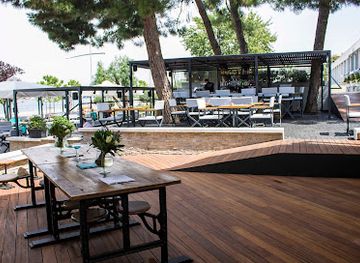
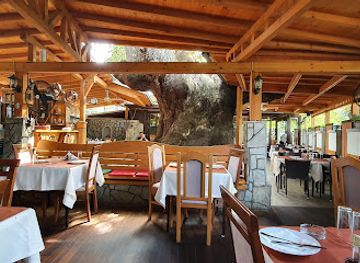
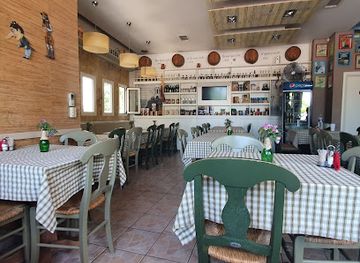
Macedonian cooking is shaped by fertile plains, mountain agriculture, coastal fisheries and the movement of communities through northern Greece. In Thessaloniki, bakeries and cafés are associated with bougatsa, a filled pastry usually served sweet or savoury, and koulouri, the sesame-coated bread ring sold across the city. Taverns throughout the region serve grilled meats, stews, beans, peppers, aubergines, local cheeses and seasonal greens, while lakeside areas may feature freshwater fish. Florina peppers, Prespes beans and saffron from the Kozani area are distinctive regional products, and cured meats are especially associated with the colder inland districts. Pontic and Anatolian influences appear in dumplings, pies, fermented flavours and spice combinations, while Thessaloniki’s historic Jewish and Balkan connections have also shaped its food culture. Vineyards around Naoussa, Amyndeon, Drama and Kavala produce wines suited to local tables; tsipouro and other regional spirits are commonly enjoyed with small savoury dishes. Farmers’ markets, bakeries and family-run tavernas often provide the clearest sense of local seasonality.
-
Italian
NAVONA Day & Night
Experience authentic Italian cuisine at NAVONA Day & Night in Thessaloniki - where every meal is a celebration of flavor.
-
Restaurant
Javor Džoko - Mrzenci
Discover authentic North Macedonian flavors at Javor Džoko - Mrzenci's charming restaurant offering delightful dishes in a serene setting.
-
Restaurant
Μεζέ Μεζέ
Discover authentic Greek cuisine at Μεζέ Μεζέ in Litochoro, where every dish tells a story of tradition and flavor.
-
Oyster Bar
Psarokokkalo
Discover fresh seafood delights at Psarokokkalo in Katerini - a premier oyster bar offering exquisite dishes and local flavors.
Best bars in Macedonia
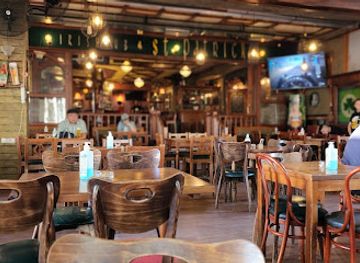
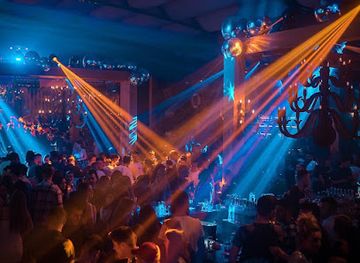
Thessaloniki has Macedonia’s most developed evening scene, ranging from cafés and modern cocktail bars around the centre and waterfront to music venues, late-opening restaurants and clubs whose programmes change over time. Ladadika is a well-established dining and entertainment quarter, while areas around the historic centre and university attract a younger, year-round crowd. Smaller cities such as Kavala, Serres, Veria, Kozani and Florina concentrate nightlife in central cafés, bars and tavernas rather than large club districts. Halkidiki’s resort towns become considerably busier in summer, with beach bars and late-night venues operating according to the tourist season. In mountain and lakeside communities, evenings more often centre on traditional cafés, village tavernas, local wine or tsipouro and occasional live music. Visitors should check current arrangements locally, as seasonal opening patterns are particularly pronounced outside Thessaloniki.
-
Cocktail bar
Upupa Epops
Experience the vibrant cocktail culture of Athens at Upupa Epops, where creativity meets craftsmanship in every unique drink.
-
Bar
The Clumsies
Discover The Clumsies, a vibrant cocktail bar in Athens, renowned for its innovative drinks and welcoming atmosphere, perfect for a memorable night out.
-
Cocktail bar
Baba au Rum
Experience innovative cocktails and a vibrant atmosphere at Baba au Rum, one of Athens' top cocktail bars.
-
Irish pub
Irish Pub Saint Patrick
Discover the vibrant Irish Pub Saint Patrick in Skopje, where local flavors meet authentic Irish hospitality for an unforgettable experience.


Best nightclubs in Macedonia
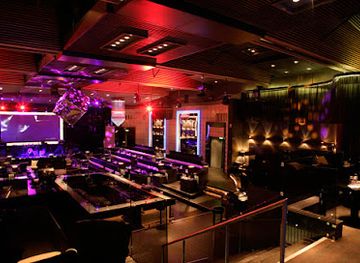
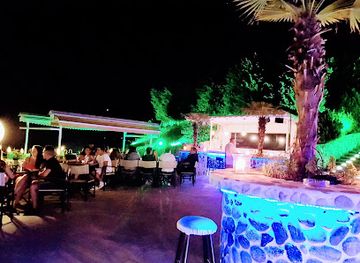
Thessaloniki has Macedonia’s most developed evening scene, ranging from cafés and modern cocktail bars around the centre and waterfront to music venues, late-opening restaurants and clubs whose programmes change over time. Ladadika is a well-established dining and entertainment quarter, while areas around the historic centre and university attract a younger, year-round crowd. Smaller cities such as Kavala, Serres, Veria, Kozani and Florina concentrate nightlife in central cafés, bars and tavernas rather than large club districts. Halkidiki’s resort towns become considerably busier in summer, with beach bars and late-night venues operating according to the tourist season. In mountain and lakeside communities, evenings more often centre on traditional cafés, village tavernas, local wine or tsipouro and occasional live music. Visitors should check current arrangements locally, as seasonal opening patterns are particularly pronounced outside Thessaloniki.
-
Night club
Vogue Club
Experience the vibrant nightlife of Thessaloniki at Vogue Club, where live music and lively atmosphere create unforgettable nights.
-
Bar
Akrotiri Beach Bar
Discover the charm of Akrotiri Beach Bar in Limenas Litochorou, where stunning views and vibrant nightlife meet!
-
Night club
Club Gold
Discover the electrifying atmosphere of Club Gold in Paralia, Greece, where unforgettable nights and vibrant crowds come alive!
-
Disco club
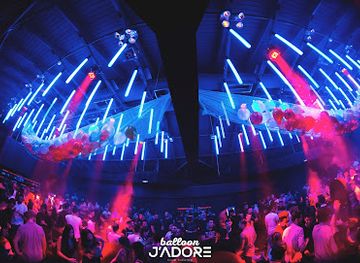
J'adore Supreme Club
Dance the night away at J'adore Supreme Club, Thessaloniki's top disco destination for an unforgettable nightlife experience.
Best shops in Macedonia
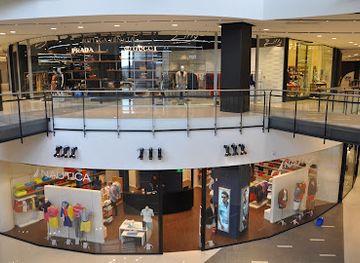
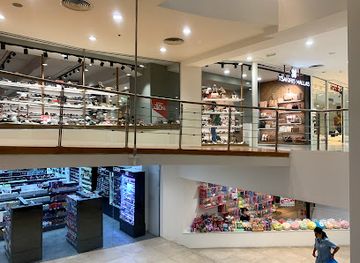
Thessaloniki is Macedonia’s main shopping centre, combining the large commercial streets around Tsimiski with independent boutiques, bookshops and the traditional food markets of Kapani and Modiano. These markets are useful for observing everyday trade and buying spices, olives, cheeses, cured foods and confectionery, although individual stalls and businesses can change. In smaller cities, shopping is centred on pedestrian high streets, weekly markets, bakeries and specialist food shops rather than large retail complexes. Regional products make the most meaningful souvenirs: wines from Naoussa, Amyndeon, Drama or Kavala, Florina peppers, Prespes beans, Kozani saffron, honey, herbs, preserves and local cheeses. Kastoria has a long association with fur manufacture, though visitors should distinguish established regional industry from ethical and personal purchasing preferences. Pottery, woven goods, woodwork and small-scale crafts may be found in mountain and lakeside towns, while galleries and designer shops are more concentrated in Thessaloniki. Carrying food products across borders may be subject to destination-country rules, so check them before buying substantial quantities.
-
Shopping mall
Mediterranean Cosmos
Explore Mediterranean Cosmos in Thessaloniki: A shopping, dining, and entertainment destination with something for everyone.
-
Outlet mall
One Salonica Outlet Mall
Experience the thrill of shopping at One Salonica Outlet Mall, Thessaloniki's premier destination for discounted brand-name fashion and delightful dining.
-
Outlet mall
MEGA Outlet
Explore MEGA Outlet in Pylaia-Chortiatis for an exciting shopping experience with unbeatable prices on top brands.
-
Shopping mall
Macedonia Shopping Mall
Discover endless shopping and dining options at Macedonia Shopping Mall, Thessaloniki's top retail destination with a vibrant atmosphere.

Get your free copy of our complete guide to Macedonia, delivered straight to you.
Everything on this page, from attractions and restaurants to essentials and local phrases, in one PDF you can read offline, print or share.
Already have an account? Sign in
Your Macedonia guide is ready.
We'll send it to · Not you? Sign out

Getting your guide ready…
We are putting together a fresh copy of the Macedonia guide. This can take up to a minute.
This can take a few moments. If your browser asks, choose Allow so the download can start. You'll find the guide in your Downloads folder.
Nothing happened? Download it again
Sorry, the guide is taking longer than usual. Please try again in a minute, or get it by email instead.
Macedonia essentials
Currency and Payment
Safety
Emergency Situations
Do's and Don'ts
Local Tips
From Eve
Local phrases worth knowing
You don't need to get them perfect. A few words go a long way, and locals appreciate the effort.
Basics
| English | Local | Say it |
|---|---|---|
| Hello | Γειά σου | [Yia sou] |
| Goodbye | Αντίο | [Adío] |
| Yes | Ναι | [Ne] |
| No | Όχι | [Óchi] |
| Please/You're welcome | Παρακαλώ | [Parakaló] |
| Thank you | Ευχαριστώ | [Efcharistó] |
| Excuse me/Sorry | Συγγνώμη | [Signómi] |
| How are you? | Πώς είσαι; | [Pós íse?] |
| Fine. And you? | Καλά. Εσύ; | [Kalá. Esý?] |
| Do you speak English? | Μιλάς Αγγλικά; | [Milás Angliká?] |
| I don't understand | Δεν καταλαβαίνω | [Den katalavaino] |
Eating & Drinking
| English | Local | Say it |
|---|---|---|
| I'd like to see the menu, please | Θα ήθελα να δω το μενού, παρακαλώ | [Tha íthela na do to menou, parakaló] |
| I don't eat meat | Δεν τρώω κρέας | [Den tróo kréas] |
| Cheers! | Στην υγειά μας! | [Stin ygeiá mas!] |
| I would like to pay, please | Θα ήθελα να πληρώσω, παρακαλώ | [Tha íthela na pliróso, parakaló] |
Emergencies
| English | Local | Say it |
|---|---|---|
| Help! | Βοήθεια! | [Voítheia!] |
| Go away! | Φύγε! | [Fýge!] |
| Call the Police! | Καλέστε την Αστυνομία! | [Kaléste tin Astynomía!] |
| Call a doctor! | Καλέστε έναν γιατρό! | [Kaléste énan giatró!] |
| I'm lost | Είμαι χαμένος | [Eímai chaménos] |
| I'm ill | Είμαι άρρωστος | [Eímai árrhostos] |
Shopping
| English | Local | Say it |
|---|---|---|
| I'd like to buy... | Θα ήθελα να αγοράσω... | [Tha íthela na agoráso...] |
| I'm just looking | Απλά κοιτάω | [Aplá kitáo] |
| How much is it? | Πόσο κοστίζει; | [Póso kostízei?] |
| That's too expensive | Αυτό είναι πολύ ακριβό | [Aftó eínai polý akrivó] |
| Can you lower the price? | Μπορείς να κατεβάσεις την τιμή; | [Borís na katevásis tin timí?] |
Time & Numbers
| English | Local | Say it |
|---|---|---|
| What time is it? | Τι ώρα είναι; | [Ti órá eínai?] |
| It's one o'clock | Είναι μία η ώρα | [Eínai mía i órá] |
| Half past (10) | Δέκα και μισή | [Déka kai misí] |
| Morning | Πρωί | [Proí] |
| Afternoon | Απόγευμα | [Apógevma] |
| Evening | Βράδυ | [Vrády] |
| Yesterday | Χθες | [Chthes] |
| Today | Σήμερα | [Símera] |
| Tomorrow | Αύριο | [Ávrio] |
| 1 | 1 | [1] |
| 2 | 2 | [2] |
| 3 | 3 | [3] |
| 4 | 4 | [4] |
| 5 | 5 | [5] |
| 6 | 6 | [6] |
| 7 | 7 | [7] |
| 8 | 8 | [8] |
| 9 | 9 | [9] |
| 10 | 10 | [10] |
Transport & Directions
| English | Local | Say it |
|---|---|---|
| Where's a/the...? | Πού είναι το...; | [Poú eínai to...?] |
| What's the address? | Ποια είναι η διεύθυνση; | [Poia eínai i diéfthynsi?] |
| Can you show me (on the map)? | Μπορείς να μου δείξεις (στο χάρτη); | [Borís na mou deíxeis (sto chárti)?] |
| When's the next (bus)? | Πότε είναι το επόμενο (λεωφορείο); | [Póte eínai to epómeno (leoforeío)?] |
| A ticket (to ....) | Ένα εισιτήριο (για ....) | [Éna eisitírio (gia ....)] |
History of Macedonia
Neolithic and Bronze Age Macedonia
Macedonia contains some of Greece’s important prehistoric settlements, including Neolithic sites in the fertile plains around Thessaloniki and the monumental Bronze Age cemetery at Aiani in Western Macedonia. Communities benefited from river valleys, arable land and routes linking the Aegean with the interior Balkans. Excavated houses, pottery, tools and burial goods show long-term settlement and changing systems of agriculture, craft production and social organisation. The tell settlements of Central Macedonia are especially important because their accumulated layers preserve evidence of life over several millennia, long before the emergence of the historical Macedonian kingdom.
The Kingdom of Macedon
From the fifth century BCE, the Argead dynasty consolidated a kingdom centred in the northern Greek plains. Aigai, identified with modern Vergina, was the early royal capital and contains monumental tombs and palace remains associated with the dynasty, including the burial complex traditionally linked to Philip II. Pella later became the administrative capital and developed into a planned city with impressive mosaics. Under Philip II and Alexander III, known as Alexander the Great, Macedon expanded across the Greek world and into Asia. Their political and cultural legacy remains central to the region’s historical identity.
Roman Macedonia and Via Egnatia
After the Roman conquest in the second century BCE, Macedonia became a Roman province and an important corridor between the Adriatic and the Aegean. The Via Egnatia connected settlements across the region, supporting military movement, administration and trade. Thessaloniki grew into a major port and political centre, while Philippi became prominent after the 42 BCE battle fought nearby between the forces of Octavian and Mark Antony and those of Brutus and Cassius. Roman forums, roads, theatres and Christian monuments at sites such as Philippi, Dion and Thessaloniki preserve the scale of this transformation.
Byzantine Macedonia
Under the Byzantine Empire, Macedonian towns and ports formed part of a Christian political and commercial world linking Constantinople with the Balkans. Thessaloniki was the region’s dominant city and an important centre of ecclesiastical and artistic life; its early Christian and Byzantine churches are among the most significant survivals in Greece. Veria also retains a notable group of Byzantine and post-Byzantine churches. The region experienced raids, frontier conflict and changing imperial control, but urban worship, trade and monastic networks ensured the continuation of distinctive architectural and artistic traditions.
Ottoman Rule and Multi-Community Cities
Most of Macedonia came under Ottoman rule between the late fourteenth and fifteenth centuries, beginning a period that lasted, with changing local circumstances, until the Balkan Wars. Thessaloniki became a major Ottoman port and a city of Muslims, Jews and Orthodox Christians, with baths, mosques, markets and houses alongside older churches. Jewish refugees from Iberia made Sephardic Thessaloniki one of Europe’s most important Jewish centres. Ottoman agricultural, commercial and administrative structures also shaped smaller towns and rural districts, leaving visible monuments and an enduring multicultural imprint.
The Balkan Wars and Greek Macedonia
The Balkan Wars of 1912–13 transformed the political map of Macedonia. Greece took control of Thessaloniki and much of the southern part of the wider geographical region, while borders dividing Macedonian communities were subsequently established among Greece, Serbia and Bulgaria. The Treaty of Bucharest in 1913 helped formalise the settlement. The incorporation of Greek Macedonia into the Greek state brought new administrative arrangements and population movements, while the region’s strategic position continued to give it major military and economic importance.
Refugee Settlement and Urban Change
The population exchange between Greece and Turkey in the 1920s brought large numbers of Orthodox Christian refugees from Asia Minor, Pontus and eastern Thrace to Macedonia. Many were settled in new villages and urban neighbourhoods, profoundly changing agriculture, commerce, music and cuisine. Thessaloniki expanded rapidly, while refugee communities contributed dishes, religious traditions and craft skills that remain part of northern Greek culture. The arrival of refugees also altered the balance of communities in a region already marked by Ottoman-era diversity and by the departure or displacement of many Muslim and Jewish residents.
War, Occupation and Post-war Transformation
Macedonia experienced occupation during the Second World War, severe hardship and the destruction of much of Thessaloniki’s Jewish community. The Greek Civil War that followed also affected mountain districts and villages, particularly in the north and west. In the later twentieth century, industrialisation, improved roads, tourism and migration reshaped the region. Thessaloniki developed as a national economic and cultural centre, while rural Macedonia diversified through agriculture, food processing, vineyards and coastal tourism. Contemporary landscapes therefore combine ancient sites and traditional settlements with modern transport corridors and expanding cities.
Macedonia in Photos
Browse through our photo collection highlighting the charm and character of the destination.
Neighbouring regions of Macedonia
The closest regions to Macedonia, if you have time for more than one.
-

-

-

-
-


Swipe for more regions
Explore more
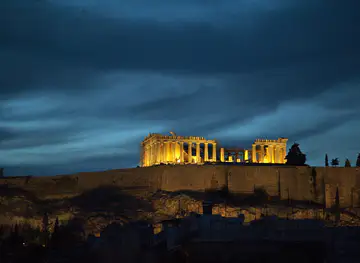
Explore more of Greece
Discover Greece: A land where ancient history meets modern vibrancy, offering stunning islands, crystal-clear seas, and unforgettable cultural experiences.
Explore Greece