

Labadee Travel Guide - Free Web & App
Your ultimate guide to Labadee. Discover top landmarks, proposed trips, and local tips. Free on the web or via the Evendo companion app.


Labadee, Haiti pairs Caribbean beaches, mountain scenery and sea adventures with cruise-port access on the country’s northern coast near Cap-Haïtien.
A Coastal Peninsula in Northern Haiti
Labadee occupies a hilly peninsula on Haiti’s northern coast, near the port city of Cap-Haïtien. The name is most familiar to cruise travellers because the area operates primarily as a private resort destination used by Royal Caribbean Group ships, rather than as an independently developed beach town. Visitors arrive during scheduled cruise calls and spend the day within a managed coastal enclave of beaches, coves, footpaths and activity areas, with access arrangements determined by the cruise operator and prevailing conditions in Haiti.Read more about Labadee
Beaches, Hills and Sea Adventures
A Carefully Managed Visitor Experience
When is the best time to visit Labadee?
Best: January, March–April · 28–29°C| Month | High (°C) | Rainfall (mm) |
|---|---|---|
| January (best) | 28 | 40 |
| February | 28 | 40 |
| March (best) | 28 | 30 |
| April (best) | 29 | 30 |
| May | 29 | 25 |
| June | 30 | 25 |
| July | 30 | 25 |
| August | 30 | 25 |
| September | 30 | 25 |
| October | 29 | 30 |
| November | 29 | 35 |
| December | 28 | 40 |
Getting to and around Labadee
How to get there
Transportation
Best attractions in Labadee
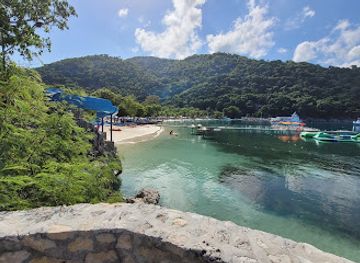
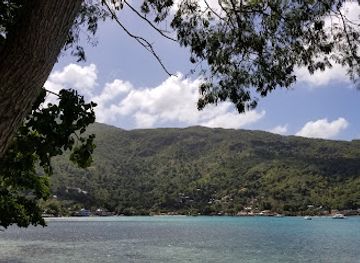
Labadee’s principal attractions are its managed Caribbean beaches and small coves, where cruise passengers can swim or relax when conditions and operating arrangements permit. The peninsula’s wooded hills provide views over the bay and the northern Haitian coast, while organised activities have included the Dragon’s Breath Zip Line, a mountain coaster, floating-water attractions and boat excursions. Availability, age limits and operating conditions can change, so these should be checked on the day. The resort’s craft market and performances introduce visitors to Haitian artistic traditions, although they form part of a commercial shore experience rather than an independent town. Labadee itself has limited conventional sightseeing infrastructure: there is no broad historic centre, museum quarter or public beach-town promenade. Cap-Haïtien and the inland monuments around Milot offer more substantial cultural attractions, but they lie outside Labadee and require separately arranged transport, permissions and current security assessment.
-
Tourist attraction
Labadee Haïti
Experience the beauty of Labadee, Haiti - a tropical paradise offering pristine beaches, thrilling activities, and vibrant local culture.
-
Beach
Cadras Beach
Experience the serene shores of Cadras Beach in Labadie, Haiti, where stunning vistas and tranquil waters await every traveler.
-
Park
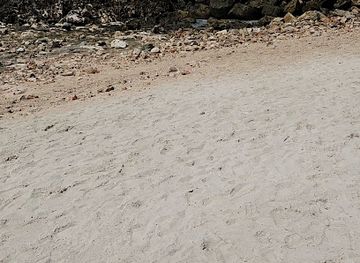
Dragon's Breath
Explore the natural beauty of Dragon's Breath, a serene park in Labadie offering breathtaking views and a peaceful escape into nature.
-
 Tourist attraction
Labadee VIP Cabanas
Discover the ultimate tropical escape at Labadee VIP Cabanas, where relaxation meets adventure in the heart of Haiti's stunning coastline.
Explore Labadee on the map
Plan your trip on one map. See where the top attractions, landmarks, restaurants and hotels are, and book hotels and experiences in a few clicks.
Best hotels in Labadee
Best restaurants in Labadee
Dining in Labadee is concentrated within the cruise-resort operation rather than in an independent local restaurant scene. Visiting passengers are generally directed towards meals and refreshments arranged through their ship or the destination’s facilities, with menus shaped by cruise catering and beach-day service rather than by a network of village eateries. Local produce and Haitian culinary influences may appear in selected offerings, but availability varies by operator, ship and date. Travellers seeking a broader understanding of northern Haitian food culture should look to Cap-Haïtien and other established settlements, where Haitian cooking may include rice and beans, plantains, poultry, meat, seafood and pikliz, the spicy pickled accompaniment. Independent eating outside the managed enclave should be planned cautiously and only through trusted, current arrangements.
-
Restaurant
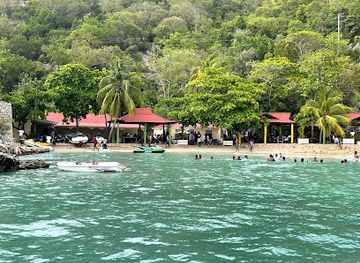
Belly Beach, Labadee haiti
Experience paradise at Belly Beach in Labadee, Haiti - where crystal-clear waters meet vibrant local culture.
Best bars in Labadee
Labadee is a daytime cruise-port destination, so it does not have an independent nightlife district, nightclub scene or established evening bar circuit. Drinks and informal socialising are generally provided through the ship and resort facilities during the ship’s call, with the atmosphere shaped by beach activities, music and scheduled entertainment rather than by local late-night venues. Once the ship departs, the peninsula is not normally a place where cruise passengers remain for an independent evening out. Cap-Haïtien has a more developed urban hospitality scene, but it lies outside Labadee and current security conditions, transport arrangements and operating hours must be checked carefully before considering a visit. Seasonal events and cultural performances should never be assumed to be taking place on a particular call.
-
Restaurant
Belly Beach, Labadee haiti
Experience the beauty and vibrancy of Belly Beach in Labadee, Haiti – a perfect destination for relaxation and cultural exploration.
Get your free copy of our complete guide to Labadee, delivered straight to you.
Everything on this page, from attractions and restaurants to essentials and local phrases, in one PDF you can read offline, print or share.
Already have an account? Sign in
Your Labadee guide is ready.
We'll send it to · Not you? Sign out

Getting your guide ready…
We are putting together a fresh copy of the Labadee guide. This can take up to a minute.
This can take a few moments. If your browser asks, choose Allow so the download can start. You'll find the guide in your Downloads folder.
Nothing happened? Download it again
Sorry, the guide is taking longer than usual. Please try again in a minute, or get it by email instead.
Labadee essentials
Currency and Payment
Safety
Emergency Situations
Do's and Don'ts
Local Tips
From Eve
Local phrases worth knowing
You don't need to get them perfect. A few words go a long way, and locals appreciate the effort.
Basics
| English | Local | Say it |
|---|---|---|
| Hello | Bonjou | [bon-zho] |
| Goodbye | Orevwa | [oh-rev-wah] |
| Yes | Wi | [wee] |
| No | Non | [nohn] |
| Please/You're welcome | Tanpri | [tahn-pree] |
| Thank you | Mèsi | [meh-see] |
| Excuse me/Sorry | Eskize mwen | [es-kee-zay mwenn] |
| How are you? | Kijan ou ye? | [key-zhan oo yay] |
| Fine. And you? | Byen. E ou? | [byen. ay oo] |
| Do you speak English? | Èske ou pale angle? | [es-kay oo pah-lay an-glay] |
| I don't understand | Mwen pa konprann | [mwenn pah kohn-prahn] |
Eating & Drinking
| English | Local | Say it |
|---|---|---|
| I'd like to see the menu, please | Mwen ta renmen we meni an, tanpri | [mwenn tah rahn-men weh meh-nee ahn, tahn-pree] |
| I don't eat meat | Mwen pa manje vyann | [mwenn pah mahn-jay vee-yahn] |
| Cheers! | Sante! | [sahn-tay] |
| I would like to pay, please | Mwen ta renmen peye, tanpri | [mwenn tah rahn-men pay-yay, tahn-pree] |
Emergencies
| English | Local | Say it |
|---|---|---|
| Help! | Ed! | [ed] |
| Go away! | Ale! | [ah-lay] |
| Call the Police! | Rele Polis! | [reh-lay poh-leece] |
| Call a doctor! | Rele yon doktè! | [reh-lay yohn dohk-tay] |
| I'm lost | Mwen pedi | [mwenn peh-dee] |
| I'm ill | Mwen malad | [mwenn ma-lahd] |
Shopping
| English | Local | Say it |
|---|---|---|
| I'd like to buy... | Mwen ta renmen achte... | [mwenn tah rahn-men ahsh-tay...] |
| I'm just looking | Mwen jis ap gade | [mwenn zjeez ahp gah-day] |
| How much is it? | Konbyen li ye? | [kohn-byen lee yay] |
| That's too expensive | Sa twò chè | [sah twah sheh] |
| Can you lower the price? | Eske ou ka ba pri la? | [es-kay oo kah bah pree lah] |
Time & Numbers
| English | Local | Say it |
|---|---|---|
| What time is it? | Ki lè li ye? | [kee lay lee yay] |
| It's one o'clock | Li senk | [lee sahnk] |
| Half past (10) | Mitàn (10) | [mee-tahn (dix)] |
| Morning | Maten | [mah-tayn] |
| Afternoon | Apremidi | [ah-pray-mee-dee] |
| Evening | Aswè | [ah-sway] |
| Yesterday | Yè | [yay] |
| Today | Jodia | [zho-dee-ah] |
| Tomorrow | Demen | [deh-menn] |
| 1 | 1 | [un] |
| 2 | 2 | [de] |
| 3 | 3 | [twah] |
| 4 | 4 | [kat] |
| 5 | 5 | [senk] |
| 6 | 6 | [sis] |
| 7 | 7 | [sèt] |
| 8 | 8 | [wit] |
| 9 | 9 | [nèf] |
| 10 | 10 | [dis] |
Transport & Directions
| English | Local | Say it |
|---|---|---|
| Where's a/the...? | Kote yon/la...? | [koh-tay yohn/lah] |
| What's the address? | Ki adrès la ye? | [kee ad-res lah yay] |
| Can you show me (on the map)? | Eske ou kapab montre mwen (sou kat la)? | [es-kay oo ka-pahb mohn-tray mwenn (soh ka lah)] |
| When's the next (bus)? | Pilwen pwochen (bis)? | [peel-wehn pwosh-enn (bees)] |
| A ticket (to ....) | Yon tikè (pou ....) | [yohn tee-keh (poo)] |
History of Labadee
Northern Haiti Before European Colonisation
The northern coast of present-day Haiti was inhabited by Taíno communities before European colonisation, although surviving evidence does not make Labadee itself a clearly documented archaeological centre. The coast’s sheltered bays, fertile hinterland and maritime position formed part of a broader Caribbean environment shaped by fishing, farming, canoe travel and regional exchange. European arrival brought profound disruption through disease, conquest, enslavement and the transformation of Hispaniola into a colonial possession.
Saint-Domingue and the Colonial Coast
During the French colonial period, western Hispaniola became Saint-Domingue, a plantation society whose wealth rested heavily on enslaved African labour. Northern ports and coastal settlements were linked to agricultural estates, maritime trade and the commercial importance of Cap-Français, the colonial predecessor of Cap-Haïtien. Labadee lies within this wider northern historical landscape, but it is not itself known primarily for a surviving colonial townscape or a major documented monument.
The Haitian Revolution and Independence
The Haitian Revolution transformed the northern region between 1791 and independence in 1804. Cap-Haïtien and the surrounding mountains were closely associated with the struggle that overturned French colonial rule and created Haiti, the first independent Black republic. The most visible surviving monuments of the post-revolutionary north, including Citadelle Laferrière and Sans-Souci Palace, are inland near Milot rather than within Labadee. Their presence helps explain the historical importance of the wider region visited by travellers arriving through the northern coast.
From Coastal Settlement to Cruise Destination
In the late twentieth century, Labadee was developed as a private cruise destination under a long-term arrangement involving Royal Caribbean, with operations beginning in the 1980s. Beaches, activity areas, dining facilities and retail spaces were created for scheduled ship visits, giving the peninsula a tourism economy distinct from the surrounding communities and from Cap-Haïtien’s urban life. The model has also attracted debate about local economic benefit, employment, access and the relationship between a managed resort enclave and Haiti’s wider social and political conditions.
Contemporary Operations and Conservation Questions
Labadee’s modern history continues to be shaped by cruise tourism, coastal management and Haiti’s changing security environment. The resort’s operation depends on maritime access and decisions made by cruise companies in response to local conditions, so calls and shore activities are not permanent guarantees. Visitors encounter a carefully managed landscape rather than an open public resort town, while questions about environmental pressure, waste, water use, local participation and the distribution of tourism revenue remain relevant to understanding the destination.
Labadee in Photos
Browse through our photo collection highlighting the charm and character of the destination.
Neighbouring destination travel guides
The closest destinations to Labadee, if you have time for more than one.
-
-

-

-

-


Swipe for more destinations
Explore more

Explore more of Nord
Explore Nord Haiti for Cap-Haïtien’s Creole heritage, the Citadelle and Sans-Souci, mountain landscapes, beaches and revolutionary history.
Explore Nord
Explore more of Haiti
Discover Haiti: A Caribbean gem with vibrant culture, rich history, stunning landscapes, and a unique culinary scene.
Explore Haiti