

Giant City State Park Travel Guide - Free Web & App
Your ultimate guide to Giant City State Park. Discover top landmarks, proposed trips, and local tips. Free on the web or via the Evendo companion app.


Giant City State Park in Illinois offers sandstone formations, forest trails, climbing, historic cabins and scenic outdoor escapes near Carbondale.
Landscape and Natural Character
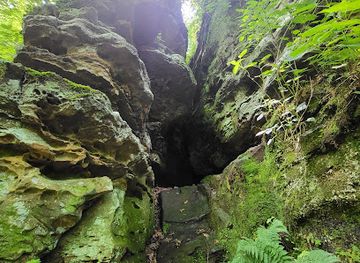
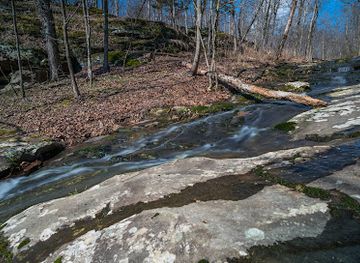
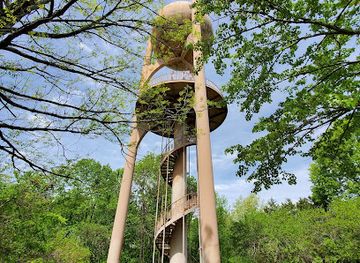
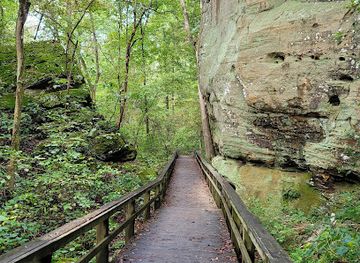
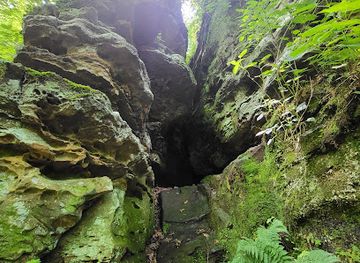
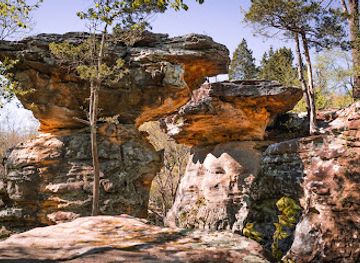
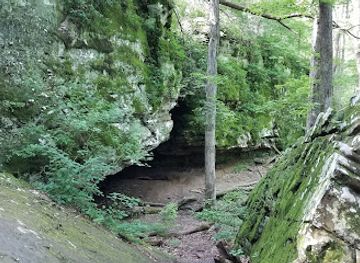
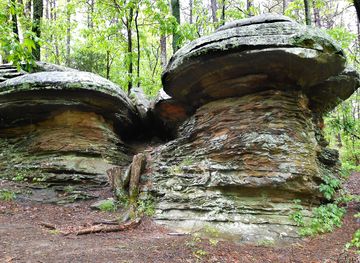
Giant City State Park occupies approximately 4,000 acres in the wooded hills of southern Illinois, close to Makanda and within the wider landscape of the Shawnee Hills. Its defining scenery is formed from towering blocks, narrow passages and overhanging shelves of sandstone, shaped by erosion into a maze-like landscape that gives the park its name. Oak-hickory forest covers the ridges and valleys, with spring wildflowers, ferns and changing autumn colour adding seasonal variety. The terrain is more rugged than the surrounding lowlands, although trails range from short, accessible walks to routes involving uneven ground, steps and rocky surfaces.Read more about Giant City State Park
Trails, Climbing and Outdoor Discovery
Park Heritage and Visitor Bases
When is the best time to visit Giant City State Park?
Best: May, August–September · 25–30°C| Month | High (°C) | Rainfall (mm) |
|---|---|---|
| January | 5 | 70 |
| February | 7 | 60 |
| March | 14 | 90 |
| April | 19 | 100 |
| May (best) | 25 | 110 |
| June | 29 | 100 |
| July | 32 | 90 |
| August (best) | 30 | 80 |
| September (best) | 26 | 80 |
| October | 19 | 90 |
| November | 13 | 80 |
| December | 7 | 80 |
Getting to and around Giant City State Park
How to get there
Transportation
Best attractions in Giant City State Park
Giant City State Park’s principal attraction is its sandstone landscape, best encountered on the Giant City Nature Trail, where enormous blocks and narrow corridors create the park’s characteristic maze-like scenery. Other established routes, including the Post Oak Nature Trail, Trillium Trail, Red Cedar Trail and Arrow Wood Trail, provide different perspectives on the oak-hickory woodland, seasonal wildflowers and rolling Shawnee Hills terrain. The Giant City Lodge and its surrounding historic buildings add a Civilian Conservation Corps dimension to the visit, while picnic areas and camping facilities support longer stays. Rock climbing and rappelling are significant specialist activities on suitable sandstone bluffs, subject to current regulations and conditions. The park’s forests also offer opportunities for birdwatching and quiet wildlife observation, although sightings vary. Nearby Makanda and Carbondale serve as useful complements rather than attractions within the park itself, providing food, supplies and cultural or university-town services after time spent on the trails.
-
American
Giant City State Park Lodge & Restaurant
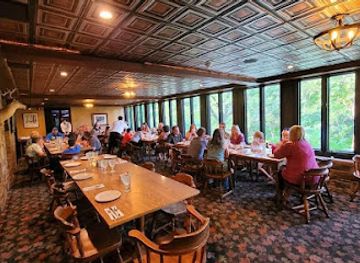
Experience the unique charm of Giant City State Park Lodge & Restaurant, where rustic hospitality meets the beauty of the great outdoors in Southern Illinois.
-
Visitor center
Giant City Visitor Center
Explore the stunning landscapes and rich history at the Giant City Visitor Center in Makanda, Illinois, your gateway to Giant City State Park.
-
Tourist attraction
Stonefort Nature Trail
Explore the breathtaking Stonefort Nature Trail, a scenic hiking haven in Makanda, Illinois, perfect for nature lovers and outdoor enthusiasts.
-
Campground
Giant City Class A Campground
Discover the stunning landscapes and tranquil atmosphere of Giant City Class A Campground in Makanda, Illinois, perfect for outdoor adventures and relaxation.
Best landmarks in Giant City State Park
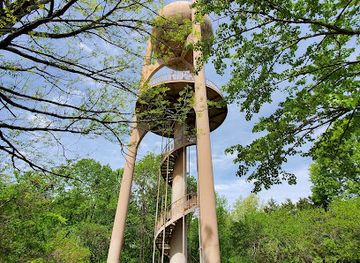
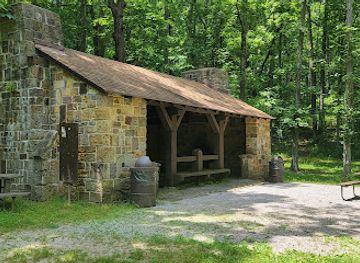
The landmark that gives Giant City State Park its identity is its exposed sandstone architecture: massive blocks, overhangs, crevices and passageways shaped by natural weathering in the Shawnee Hills. The Giant City Nature Trail brings these formations into close view, while the wider network of wooded ridges and valleys provides the ecological setting in which they are found. The Giant City Lodge is the park’s most important built landmark, representing the Civilian Conservation Corps period of American park development through its rustic construction and enduring recreational role. The park’s named trail areas, forested slopes and climbing bluffs are landscape landmarks rather than isolated monuments, and their significance lies in the relationship between geology, woodland habitat and public conservation. The setting near Makanda also places the park within southern Illinois’s broader cultural landscape of rural communities and protected forest.
-
American
Giant City State Park Lodge & Restaurant
Experience Southern Illinois charm at Giant City Lodge: historic lodging, family-style dining, and breathtaking natural beauty in Giant City State Park.
-
Hiking area
Giant City Nature Trail
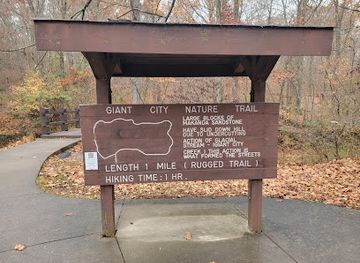
Explore the ancient 'Streets of Giant City,' a natural maze of towering bluffs in Illinois' Giant City State Park. A unique hiking adventure!
-
Shopping mall
Makanda Boardwalk
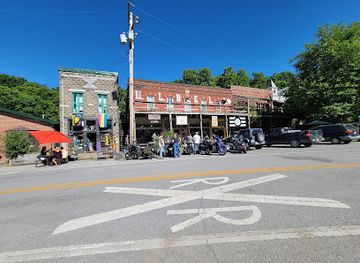
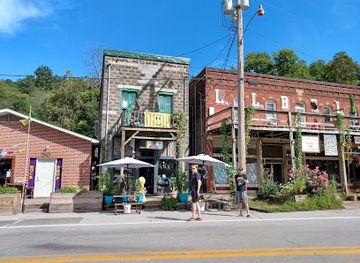
Explore unique art, handcrafted goods, and local charm at the historic Makanda Boardwalk, the gateway to Giant City State Park in Southern Illinois.
-
Visitor center
Giant City Visitor Center
Explore the heart of Giant City State Park: Discover history, geology, and outdoor adventures at the Visitor Center in Makanda, Illinois.
Explore Giant City State Park on the map
Plan your trip on one map. See where the top attractions, landmarks, restaurants and hotels are, and book hotels and experiences in a few clicks.
Best hotels in Giant City State Park
Best restaurants in Giant City State Park
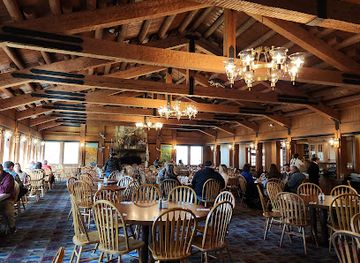
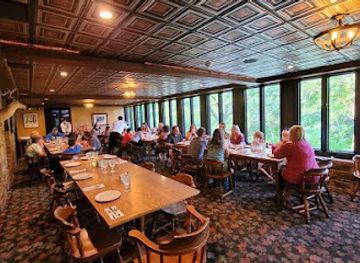
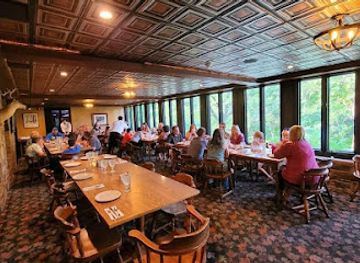
Dining within Giant City State Park is centred on the historic Giant City Lodge, whose restaurant provides a convenient meal option in a rustic park setting when operating. Visitors staying elsewhere should expect a rural dining pattern rather than a concentrated restaurant district. Makanda has a small selection of local food businesses, while Carbondale offers the broadest choice nearby, ranging from casual restaurants and cafés to international and contemporary American cooking associated with its university population. Murphysboro, a regional town west of the park, is another useful stop for food and supplies. Southern Illinois food culture reflects farming country, woodland landscapes and river-region traditions, with seasonal produce and hearty American dishes commonly encountered, though menus vary by establishment. Bringing provisions is sensible for a full day on the trails, since dining facilities are not distributed among every trailhead or scenic area.
-
American
Giant City State Park Lodge & Restaurant
Discover Giant City State Park Lodge & Restaurant – where exquisite American dining meets breathtaking natural landscapes.
Best bars in Giant City State Park
Giant City State Park itself has no developed nightlife district, and evenings are generally quiet, shaped by the lodge, campsites, woodland darkness and the sounds of the surrounding countryside. The lodge may provide a sociable setting for diners and overnight guests when its facilities are operating, but visitors should not assume late-night entertainment. Makanda offers a small-town atmosphere rather than a broad bar scene. Carbondale is the nearest place with a more developed choice of pubs, bars, live music and student-oriented evening venues, although these are outside the park and require a drive. A relaxed evening meal, conversation at an accommodation base or stargazing away from town lights is more characteristic of an overnight stay near Giant City than clubbing or organised entertainment.
-
American
Giant City State Park Lodge & Restaurant
Experience the charm of Giant City State Park Lodge & Restaurant, where nature meets comfort and delicious American cuisine.
-
Hotel
Makanda Inn
Experience the serene charm of Makanda Inn, where cozy accommodations meet the beauty of southern Illinois in a tranquil setting.
-
Shopping mall
Makanda Boardwalk
Experience the unique charm of Makanda Boardwalk with its artisan shops and delightful treats in Southern Illinois.
-
Hiking area
Devil’s Standtable Nature Trail
Discover the breathtaking beauty of the Devil’s Standtable Nature Trail, a premier hiking destination in Makanda, Illinois, perfect for all nature lovers.
Best nightclubs in Giant City State Park
Giant City State Park itself has no developed nightlife district, and evenings are generally quiet, shaped by the lodge, campsites, woodland darkness and the sounds of the surrounding countryside. The lodge may provide a sociable setting for diners and overnight guests when its facilities are operating, but visitors should not assume late-night entertainment. Makanda offers a small-town atmosphere rather than a broad bar scene. Carbondale is the nearest place with a more developed choice of pubs, bars, live music and student-oriented evening venues, although these are outside the park and require a drive. A relaxed evening meal, conversation at an accommodation base or stargazing away from town lights is more characteristic of an overnight stay near Giant City than clubbing or organised entertainment.
-
State park
Giant City State Park
Discover the breathtaking landscapes and outdoor adventures at Giant City State Park in Illinois, a paradise for nature lovers and outdoor enthusiasts.
-
American
Giant City State Park Lodge & Restaurant
Discover the perfect blend of outdoor adventure and comfort at Giant City State Park Lodge & Restaurant, your gateway to Illinois' natural beauty.
-
Campground
Giant City Class A Campground
Explore the serene beauty of Giant City Class A Campground in Southern Illinois, where nature meets comfort in perfect harmony.
Best shops in Giant City State Park
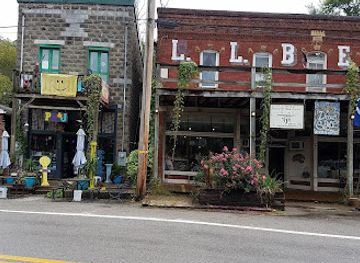
Shopping at Giant City State Park is limited and primarily practical, with any purchases likely to be associated with park facilities, accommodation or visitor needs rather than a substantial retail scene. Makanda provides the nearest small-community services and is known more for local character and individual businesses than for a large commercial centre. Carbondale is the most useful nearby base for supermarkets, outdoor supplies, independent shops, galleries and a wider selection of everyday goods. Regional food products, locally made art and craft items may be found through individual businesses and seasonal outlets in southern Illinois, but availability changes and should not be assumed. Visitors exploring the park should obtain specialist equipment, provisions and medication before leaving the larger towns, as trailheads and picnic areas are not shopping locations.
-
State park
Giant City State Park
Discover the breathtaking landscapes and outdoor adventures at Giant City State Park, the ultimate nature retreat in Illinois.
-
American
Giant City State Park Lodge & Restaurant
Discover the beauty of Giant City State Park Lodge & Restaurant, where outdoor adventure meets delicious American dining in a family-friendly atmosphere.
-
Hiking area
Giant City Nature Trail
Explore the breathtaking Giant City Nature Trail in Cobden, Illinois, where stunning views and diverse wildlife await outdoor enthusiasts.
-
Gift shop
Makanda Trading Company
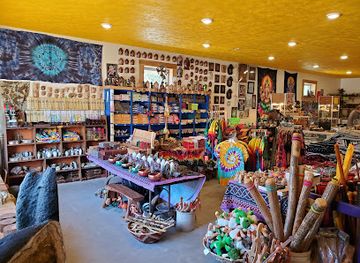
Discover the eclectic charm of Makanda Trading Company, a haven for unique gifts, jewelry, and metaphysical treasures in the heart of Illinois.
Get your free copy of our complete guide to Giant City State Park, delivered straight to you.
Everything on this page, from attractions and restaurants to essentials and local phrases, in one PDF you can read offline, print or share.
Already have an account? Sign in
Your Giant City State Park guide is ready.
We'll send it to · Not you? Sign out

Getting your guide ready…
We are putting together a fresh copy of the Giant City State Park guide. This can take up to a minute.
This can take a few moments. If your browser asks, choose Allow so the download can start. You'll find the guide in your Downloads folder.
Nothing happened? Download it again
Sorry, the guide is taking longer than usual. Please try again in a minute, or get it by email instead.
Giant City State Park essentials
Currency and Payment
Safety
Emergency Situations
Do's and Don'ts
Local Tips
From Eve
Local phrases worth knowing
You don't need to get them perfect. A few words go a long way, and locals appreciate the effort.
Basics
| English | Local | Say it |
|---|---|---|
| Hello | Howdy | [HOU-dee] |
| Goodbye | See ya | [SEE yah] |
| Yes | Yep | [YEP] |
| No | Nah | [NAH] |
| Please/You're welcome | Please/No problem | [PLEEZ / NOH PROB-lem] |
| Thank you | Thanks | [THANKS] |
| Excuse me/Sorry | Pardon me/My bad | [PAR-d'n me / MY bad] |
| How are you? | Howdy | [HOU-dee] |
| Fine. And you? | Good. How 'bout you? | [GOOD. HOW 'bout yah] |
| Do you speak English? | Ya speak English? | [Yah speak ING-lish?] |
| I don't understand | I don't get it | [eye DON'T get it] |
Eating & Drinking
| English | Local | Say it |
|---|---|---|
| I'd like to see the menu, please | Can I see the grub list? | [kan eye SEE the GRUB list?] |
| I don't eat meat | I don't do meat | [eye DON'T do meat] |
| Cheers! | Bottoms up! | [BOTTOMS up!] |
| I would like to pay, please | Time to settle up, please | [TIME to SET-tul up, please] |
Emergencies
| English | Local | Say it |
|---|---|---|
| Help! | SOS! | [ESS OH ESS!] |
| Go away! | Beat it! | [BEET it!] |
| Call the Police! | Get the cops! | [GET the KOPS!] |
| Call a doctor! | Summon a doc! | [SUM-mun uh DOK!] |
| I'm lost | I'm turned around | [eye'm TURNED a-ROUND] |
| I'm ill | I'm under the weather | [eye'm UN-der the WEH-thur] |
Shopping
| English | Local | Say it |
|---|---|---|
| I'd like to buy... | I'm lookin' to snag... | [eye'm LOOK-in to SNAG...] |
| I'm just looking | Just browsin' | [JUST BROW-zin'] |
| How much is it? | What's the damage? | [WHAT'S the DAM-ij] |
| That's too expensive | That's a bit steep | [THAT'S uh BIT steep] |
| Can you lower the price? | Can ya cut me a deal? | [can yah CUT me uh DEAL?] |
Time & Numbers
| English | Local | Say it |
|---|---|---|
| What time is it? | What's the time? | [WHAT'S the TIME?] |
| It's one o'clock | It's one | [it's ONE] |
| Half past (10) | Ten-thirty | [TEN-thur-tee] |
| Morning | Mornin' | [MORN-in'] |
| Afternoon | Afternoon | [af-ter-NOON] |
| Evening | Evenin' | [E-ven-in'] |
| Yesterday | Yest'day | [YES-t'day] |
| Today | Today | [to-DAY] |
| Tomorrow | Tomorrah | [tom-OR-uh] |
| 1 | One | [wun] |
| 2 | Two | [TOO] |
| 3 | Three | [three] |
| 4 | Four | [fawr] |
| 5 | Five | [fahv] |
| 6 | Six | [siks] |
| 7 | Seven | [SEV-en] |
| 8 | Eight | [ayt] |
| 9 | Nine | [nahn] |
| 10 | Ten | [ten] |
Transport & Directions
| English | Local | Say it |
|---|---|---|
| Where's a/the...? | Where's the...? | [WHERE'S the...?] |
| What's the address? | Where's it at? | [WHERE'S it at?] |
| Can you show me (on the map)? | Can ya point it out (on the map)? | [can yah POINT it out (on the map)?] |
| When's the next (bus)? | When's the next (bus)? | [WHEN'S the NEXT (bus)?] |
| A ticket (to ....) | A pass (to ....) | [uh PASS (to ....)] |
History of Giant City State Park
Sandstone Hills and Ancient Landscapes
The rock landscape of Giant City State Park belongs to the sandstone country of southern Illinois, where resistant layers have weathered into cliffs, ledges, crevices and isolated blocks. These formations are natural products of long-term geological erosion rather than constructed walls or fortifications. The park’s wooded hills form part of the broader Shawnee Hills, a distinctive upland landscape rising above the flatter country of the Mississippi and Ohio river regions. This geological character shaped the area’s later identity, influencing settlement patterns, recreation and the eventual preservation of the sandstone features that define Giant City today.
Indigenous and Early Settlement
The wider southern Illinois region has a long history of Indigenous occupation, with Native peoples using the forests, streams and uplands for travel, hunting and seasonal resources. European-American settlement later brought farms, woodland industries and new transport links to the Shawnee Hills. The name Giant City reflects the visual impression made by the park’s immense sandstone blocks and narrow corridors; it does not describe a documented ancient urban settlement. As surrounding land was cleared or used for agriculture and timber, the remaining rocky woodland became increasingly recognised for its scenic and recreational value.
A State Park Takes Shape
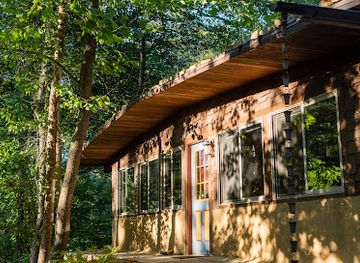
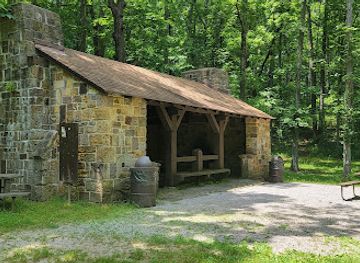
Illinois began developing Giant City as a public park in the early twentieth century, protecting a substantial area of sandstone formations and forest near Makanda. The Civilian Conservation Corps played a particularly important role during the 1930s, constructing the Giant City Lodge, cabins, roads, trails and other park improvements. Their work forms part of the wider New Deal conservation legacy visible in many American parks. The lodge’s rustic stone-and-timber character remains one of the clearest historical expressions of the park’s development as a place for public recreation.
Conservation and Recreation
Giant City State Park is now managed by the Illinois Department of Natural Resources as a protected outdoor recreation landscape. Its history is expressed through the combination of sandstone formations, mature woodland, trails and surviving Civilian Conservation Corps structures. Hiking, camping, picnicking, climbing and nature observation have become central uses, while management must balance public access with erosion control, habitat protection and the preservation of historic features. The park also functions as part of the wider recreational network of southern Illinois, alongside the Shawnee National Forest and nearby communities such as Carbondale, Makanda and Murphysboro.
Giant City State Park in Photos
Browse through our photo collection highlighting the charm and character of the destination.
Neighbouring destination travel guides
The closest destinations to Giant City State Park, if you have time for more than one.
-

-

-

-

-


Swipe for more destinations
Explore more
Explore more of Illinois Ozarks
Explore the Illinois Ozarks for sandstone bluffs, forest trails, caves, river valleys, small towns and southern Illinois food traditions.
Explore Illinois Ozarks
Explore more of Illinois
Discover Illinois: From Chicago's iconic skyline to the tranquil beauty of its countryside, experience the diverse allure of the Prairie State.
Explore Illinois