

Free Madhya Pradesh Travel Guide & Mobile App
Explore Madhya Pradesh with free travel guides. Discover regional history, expert tips, proposed trips, and audio guides on web or mobile app.


Explore Madhya Pradesh for UNESCO heritage, tiger reserves, historic cities, tribal arts, river landscapes and distinctive Central Indian cuisine.
Read more about Madhya Pradesh
When is the best time to visit Madhya Pradesh?
Best: December–February · 23–28°C| Month | High (°C) | Rainfall (mm) |
|---|---|---|
| January (best) | 23 | 10 |
| February (best) | 28 | 10 |
| March | 33 | 15 |
| April | 37 | 15 |
| May | 40 | 20 |
| June | 38 | 100 |
| July | 32 | 200 |
| August | 32 | 200 |
| September | 32 | 150 |
| October | 32 | 50 |
| November | 28 | 15 |
| December (best) | 24 | 10 |
Getting to and around Madhya Pradesh
How to get there
Transportation
Top city travel guides in Madhya Pradesh
The cities of Madhya Pradesh, and the easiest places to base yourself.
-

-

-

-

-

-


Swipe for more cities
Best attractions in Madhya Pradesh
Madhya Pradesh offers an unusually broad mixture of archaeology, architecture, wildlife and landscape. Sanchi and Bhimbetka provide two very different encounters with the past: one centred on Buddhist monuments and the other on prehistoric rock shelters. Khajuraho’s temple groups reward close attention to sculpture and architectural detail, while Gwalior Fort and Mandu present fortifications, palaces, mosques, tombs and reservoirs in commanding settings. Bhopal combines museums, lakes and access to nearby heritage sites, and Indore provides a more urban experience shaped by commerce, food and Holkar history. The state’s national parks form another major attraction, with Kanha, Bandhavgarh, Pench, Panna and Satpura offering guided safaris through contrasting forests, grasslands and ravines. Birdwatching, nature walks where permitted, boating in selected areas and rural landscape tours broaden the experience beyond tiger viewing. The Narmada valley, marble formations near Jabalpur and the plateau landscapes of Malwa add geological and scenic variety, while craft traditions and cultural institutions provide reasons to spend time in towns rather than passing directly between headline sites.
-
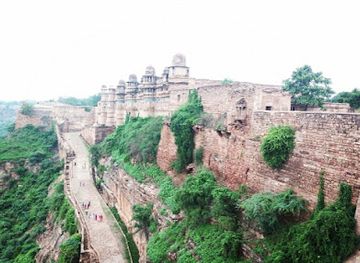
Fortress
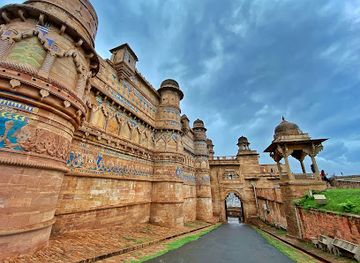
Gwalior Fort
Discover the architectural splendor and historical grandeur of Gwalior Fort, a must-visit destination in Madhya Pradesh, India.
-
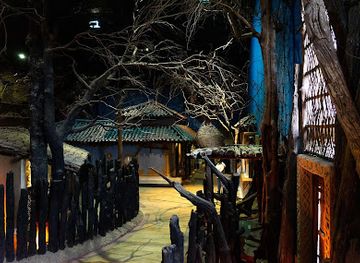
Madhya Pradesh Tribal Museum
Explore the vibrant tribal heritage of Madhya Pradesh at the Tribal Museum, a cultural gem in Bhopal showcasing art, traditions, and history.
-
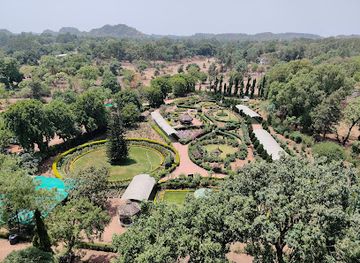
National park
Satpura National Park
Explore the natural wonders of Satpura National Park, where breathtaking landscapes and diverse wildlife await every adventure seeker.
-
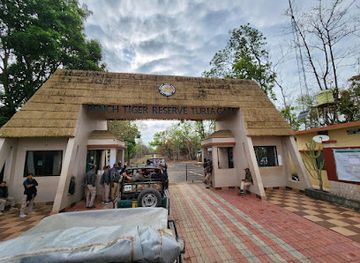
National park
Pench National Park
Immerse yourself in the untamed beauty of Pench National Park, a wildlife haven offering thrilling safaris and breathtaking landscapes in Madhya Pradesh.
Best landmarks in Madhya Pradesh
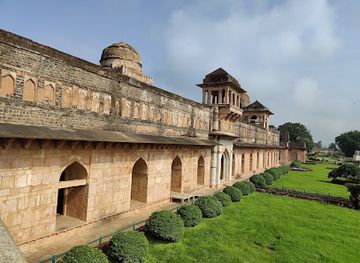
The Great Stupa at Sanchi is Madhya Pradesh’s most recognisable Buddhist landmark, defined by its hemispherical mound, carved gateways and elevated position above the surrounding countryside. The temples of Khajuraho form another internationally recognised group, their sandstone façades combining precise architectural planning with dense religious and figurative sculpture. Gwalior Fort dominates its hilltop with defensive walls, palaces and temples, and its long political history is reflected in the different architectural layers within the complex. Mandu’s plateau contains a striking concentration of Afghan-influenced buildings, including the Jahaz Mahal and the great enclosure of Hoshang Shah’s Tomb. In Bhopal, the Upper and Lower Lakes are defining civic and geographical features, while the Taj-ul-Masajid is one of the city’s most prominent religious buildings. Maheshwar’s fort and riverside ghats overlook the Narmada and connect the town’s political history with its continuing textile tradition. Near Jabalpur, the marble rocks and gorge along the Narmada create a natural landmark shaped by river erosion rather than human construction.
-
Fortress
Gwalior Fort
Discover the grandeur and rich history of Gwalior Fort, an architectural marvel and a must-visit destination in Madhya Pradesh, India.
-
National park
Kanha Tiger Reserve
Explore the stunning Kanha Tiger Reserve in Madhya Pradesh, where majestic tigers roam and nature's beauty captivates every traveler.
-
Castle
Jahaz Mahal
Experience the grandeur of Jahaz Mahal, a stunning castle in Madhya Pradesh, showcasing exquisite architecture and rich historical significance.
-
Tourist attraction
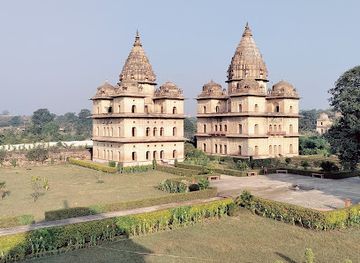
Orchha Fort
Explore Orchha Fort: A Historical Gem in Madhya Pradesh with Stunning Architecture and Scenic Views.
Explore Madhya Pradesh on the map
Plan your trip on one map. See where the top cities, national parks and sights are, and book hotels and experiences in a few clicks.
Best hotels in Madhya Pradesh
Best restaurants in Madhya Pradesh
Madhya Pradesh’s food culture varies between urban kitchens, roadside eateries, historic Muslim communities and regional vegetarian traditions. Indore is particularly associated with lively street-food culture, including poha, savoury snacks, sweets and the late-evening food stalls of Sarafa Bazaar, while Bhopal is known for Mughlai-influenced cooking, kebabs, slow-cooked meat dishes and breads alongside substantial vegetarian fare. Across the state, wheat, lentils, maize, seasonal vegetables and dairy are important ingredients, with dishes such as dal bafla representing the wider Malwa culinary tradition. Rural inns and family-run restaurants may offer thalis and simple regional meals rather than extensive menus. Markets are useful places to sample sweets, namkeen and local produce, but visitors should favour busy establishments with good turnover and clean preparation areas. Chai, lassi and regional sweets are widely available, while contemporary restaurants in Bhopal and Indore increasingly interpret Central Indian ingredients in more modern formats.
-
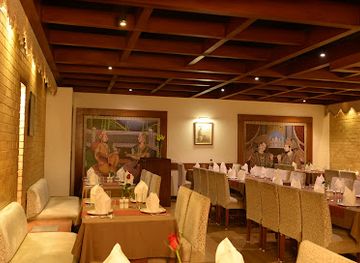
Awadhi Restaurant
Sanchi - Dum Pukht, Awadhi Cuisine Restaurant
Experience the essence of Awadhi cuisine at Sanchi - where tradition meets elegance in every dish.
-
Awadhi Restaurant
Sanchi Dum Pukht Awadhi Cuisine Restaurant
Experience authentic Awadhi cuisine at Sanchi Dum Pukht in Bhopal's Sayaji Hotel – where tradition meets luxury.
-
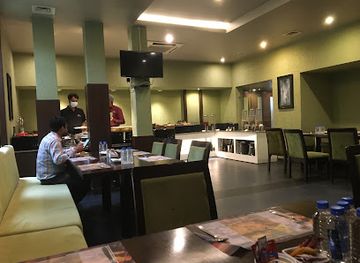
Restaurant
Modi Restaurant
Experience authentic breakfast flavors at Modi Restaurant in Madhya Pradesh - where every dish tells a story.
-
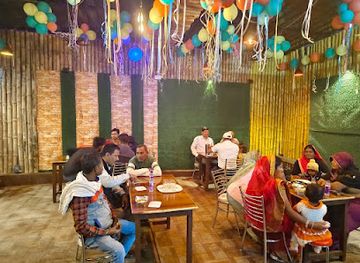
Restaurant
The Restaurant
Experience authentic Madhya Pradesh cuisine at The Restaurant in Deotalab – where tradition meets taste in a cozy setting.
Best bars in Madhya Pradesh
Evening life in Madhya Pradesh is concentrated in Bhopal, Indore, Gwalior and larger commercial centres rather than spread evenly across the state. Indore has the broadest urban choice, including restaurants, hotel bars, cafés and a younger late-evening food culture, while Bhopal offers hotel lounges, contemporary restaurants and cultural events around its central districts. Gwalior’s evenings are generally quieter, with dining and hotel venues more prominent than a large club scene. In smaller historic towns and near wildlife reserves, traditional restaurants, hotel dining rooms and early-closing local establishments are more typical than nightlife districts. Alcohol availability is governed by state regulations and may be restricted around religious sites or on particular dates, so visitors should check locally rather than assume that national chains or late-night venues are present. Live performances, festivals and cultural programmes can provide alternatives to bar-based entertainment.
-
Grill
Wind And Waves Restaurant
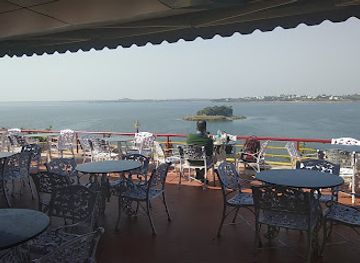
Experience delightful grilled dishes and cozy café vibes at Wind And Waves Restaurant in Bhopal, where flavor meets relaxation.
-
Bar
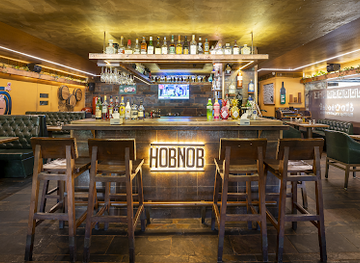
Hobnob Gourmet Cafébar
Experience the vibrant atmosphere and exquisite cuisine at Hobnob Gourmet Cafébar, where local flavors meet global inspirations in Indore.
-
Pub
Trance the Pub
Discover Indore's nightlife at Trance the Pub, where great drinks meet a vibrant atmosphere in the heart of the city.
-
Pub
KYRO Cafe & Club
Discover the electrifying nightlife of Indore at KYRO Cafe & Club - a rooftop venue blending dining, drinking, and dancing.
Best nightclubs in Madhya Pradesh
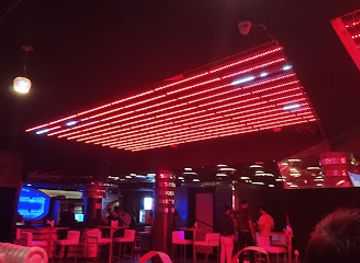
Evening life in Madhya Pradesh is concentrated in Bhopal, Indore, Gwalior and larger commercial centres rather than spread evenly across the state. Indore has the broadest urban choice, including restaurants, hotel bars, cafés and a younger late-evening food culture, while Bhopal offers hotel lounges, contemporary restaurants and cultural events around its central districts. Gwalior’s evenings are generally quieter, with dining and hotel venues more prominent than a large club scene. In smaller historic towns and near wildlife reserves, traditional restaurants, hotel dining rooms and early-closing local establishments are more typical than nightlife districts. Alcohol availability is governed by state regulations and may be restricted around religious sites or on particular dates, so visitors should check locally rather than assume that national chains or late-night venues are present. Live performances, festivals and cultural programmes can provide alternatives to bar-based entertainment.
-
Disco club
V Club & Lounge
Discover the vibrant nightlife of Bhopal at V Club & Lounge, a premier disco club and bar offering unforgettable experiences.
-
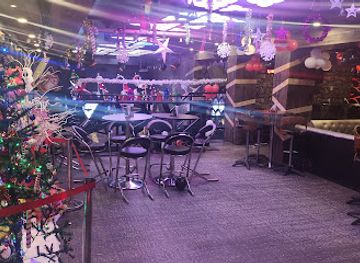
Night club
The Pitchers Club(Run By - Bhavishya Group & Shivhare Group)
Discover Bhopal's nightlife at The Pitchers Club, a lively venue combining dining, dancing, and socializing for an unforgettable experience.
-
Night club
Playboy Club Indore
Discover the vibrant nightlife of Indore at Playboy Club, a top destination for music, dance, and celebration.
-
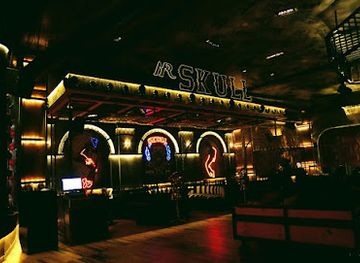
Night club
MR SKULL
Discover the vibrant nightlife of Indore at MR SKULL, where great food meets electrifying entertainment in a unique atmosphere.

Best shops in Madhya Pradesh
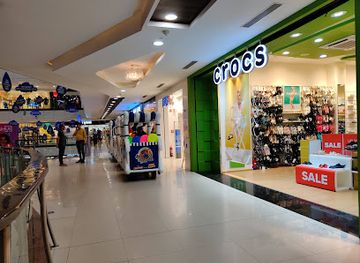
Shopping in Madhya Pradesh is strongest in market districts, historic city centres and craft-producing towns rather than in a single statewide retail corridor. Indore is known for food markets, textiles, jewellery and busy commercial streets, while Bhopal combines modern retail with emporia and shops selling regional handicrafts. Chanderi, in the northern part of the state, is associated with fine handloom textiles, especially its distinctive sarees and fabrics; Maheshwar is also known for handwoven cloth linked to the town’s long weaving tradition. Tribal art, metalwork, terracotta, carved objects and painted forms can be found through reputable craft outlets and state-supported emporia, though provenance and quality vary. Khajuraho and other heritage centres offer books, textile products and souvenirs, but visitors should distinguish artisan-made goods from mass-produced replicas. Local sweets, namkeen, spices and packaged food products make practical gifts, while bargaining is common in informal markets but less appropriate in fixed-price shops and organised craft stores.
-
Shopping mall
Treasure Island Mall (TI Mall)
Experience the best of shopping, dining, and entertainment at Treasure Island Mall, Indore's premier shopping destination.
-
Shopping mall
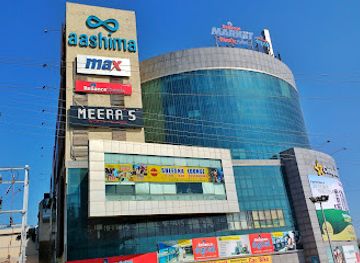
Aashima Mall
Discover a shopping haven at Aashima Mall in Bhopal, where retail therapy meets delightful dining and exciting entertainment options.
-
Clothing store
Pakiza Retail Pvt Ltd.
Explore the vibrant shopping experience at Pakiza Retail Pvt Ltd. in Indore, where fashion meets local culture in a hypermarket setting.
-
Shopping mall
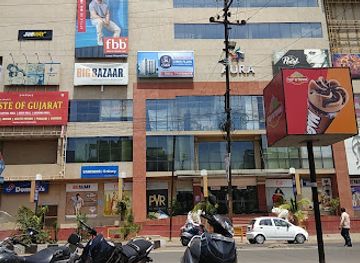
Aura Mall
Discover a blend of shopping, dining, and entertainment at Aura Mall, Bhopal's premier shopping destination.
Get your free copy of our complete guide to Madhya Pradesh, delivered straight to you.
Everything on this page, from attractions and restaurants to essentials and local phrases, in one PDF you can read offline, print or share.
Already have an account? Sign in
Your Madhya Pradesh guide is ready.
We'll send it to · Not you? Sign out

Getting your guide ready…
We are putting together a fresh copy of the Madhya Pradesh guide. This can take up to a minute.
This can take a few moments. If your browser asks, choose Allow so the download can start. You'll find the guide in your Downloads folder.
Nothing happened? Download it again
Sorry, the guide is taking longer than usual. Please try again in a minute, or get it by email instead.
Madhya Pradesh essentials
Currency and Payment
Safety
Emergency Situations
Do's and Don'ts
Local Tips
From Eve
Local phrases worth knowing
You don't need to get them perfect. A few words go a long way, and locals appreciate the effort.
Basics
| English | Local | Say it |
|---|---|---|
| Hello | नमस्ते | [Namaste] |
| Goodbye | अलविदा | [Alvida] |
| Yes | हाँ | [Haan] |
| No | नहीं | [Nahin] |
| Please/You're welcome | कृपया/स्वागत है | [Kripya/Swagat hai] |
| Thank you | धन्यवाद | [Dhanyavaad] |
| Excuse me/Sorry | माफ़ कीजिए/सॉरी | [Maaf kijiye/Sorry] |
| How are you? | आप कैसे हैं? | [Aap kaise hain?] |
| Fine. And you? | ठीक है। और आप? | [Theek hai. Aur aap?] |
| Do you speak English? | क्या आप अंग्रेज़ी बोलते हैं? | [Kya aap Angrezi bolte hain?] |
| I don't understand | मुझे समझ नहीं आता | [Mujhe samajh nahin aata] |
Eating & Drinking
| English | Local | Say it |
|---|---|---|
| I'd like to see the menu, please | कृपया मेनू दिखाइए | [Kripya menu dikhaiye] |
| I don't eat meat | मैं मांस नहीं खाता/खाती | [Main maans nahin khata/khati] |
| Cheers! | सुभकामनाएँ! | [Subhkaamnaayein] |
| I would like to pay, please | कृपया, मैं बिल चुकाना चाहता/चाहती हूँ | [Kripya, main bil chukana chahta/chahti hoon] |
Emergencies
| English | Local | Say it |
|---|---|---|
| Help! | मदद करें! | [Madad karen!] |
| Go away! | चले जाओ! | [Chale jao!] |
| Call the Police! | पुलिस को बुलाओ! | [Police ko bulao!] |
| Call a doctor! | डॉक्टर को बुलाओ! | [Doctor ko bulao!] |
| I'm lost | मैं खो गया/गई हूँ | [Main kho gaya/gai hoon] |
| I'm ill | मैं बीमार हूँ | [Main bimaar hoon] |
Shopping
| English | Local | Say it |
|---|---|---|
| I'd like to buy... | मैं ये खरीदना चाहता/चाहती हूँ... | [Main ye kharidna chahta/chahti hoon...] |
| I'm just looking | मैं बस देख रहा/रही हूँ | [Main bas dekh raha/rahi hoon] |
| How much is it? | यह कितने का है? | [Yah kitne ka hai?] |
| That's too expensive | यह बहुत महंगा है | [Yah bahut mehnga hai] |
| Can you lower the price? | क्या आप कीमत कम कर सकते हैं? | [Kya aap keemat kam kar sakte hain?] |
Time & Numbers
| English | Local | Say it |
|---|---|---|
| What time is it? | क्या समय हुआ है? | [Kya samay hua hai?] |
| It's one o'clock | यह एक बजे है | [Yah ek baje hai] |
| Half past (10) | साढ़े (10) | [Saade (10)] |
| Morning | सुबह | [Subah] |
| Afternoon | दोपहर | [Dopahar] |
| Evening | शाम | [Shaam] |
| Yesterday | कल | [Kal] |
| Today | आज | [Aaj] |
| Tomorrow | कल | [Kal] |
| 1 | 1 | [1] |
| 2 | 2 | [2] |
| 3 | 3 | [3] |
| 4 | 4 | [4] |
| 5 | 5 | [5] |
| 6 | 6 | [6] |
| 7 | 7 | [7] |
| 8 | 8 | [8] |
| 9 | 9 | [9] |
| 10 | 10 | [10] |
Transport & Directions
| English | Local | Say it |
|---|---|---|
| Where's a/the...? | एक ... कहाँ है? | [Ek ... kahan hai?] |
| What's the address? | पता क्या है? | [Pata kya hai?] |
| Can you show me (on the map)? | क्या आप मुझे (नक्शे पर) दिखा सकते हैं? | [Kya aap mujhe (nakshae par) dikha sakte hain?] |
| When's the next (bus)? | अगली (बस) कब है? | [Agli (bus) kab hai?] |
| A ticket (to ....) | एक टिकट (.... के लिए) | [Ek ticket (.... ke liye)] |
History of Madhya Pradesh
Prehistoric Art at Bhimbetka
The rock shelters of Bhimbetka, south of Bhopal, preserve paintings and occupation evidence spanning prehistoric periods. Scenes of animals, hunting, dancing and communal activity provide a rare visual record of early human life in the Indian subcontinent. The shelters were used and revisited over long periods, and their position among sandstone outcrops and woodland helps explain why they offered both protection and a suitable setting for habitation. Bhimbetka’s archaeological importance extends beyond the paintings themselves: it demonstrates the depth of human settlement in central India and remains one of Madhya Pradesh’s most significant prehistoric landscapes.
Ashoka and the Buddhist Centre at Sanchi
Sanchi became a major Buddhist centre after the Mauryan emperor Ashoka established a stupa there in the third century BCE. Successive rulers and Buddhist communities enlarged and embellished the complex, adding gateways, monasteries and sculptural decoration. The famous gateways depict episodes from the Buddha’s life and Buddhist symbolism, while the surviving monuments reveal changing architectural and artistic traditions over many centuries. Sanchi’s position near ancient routes helped sustain its importance. Although the site later declined as a religious centre, its monuments survived and became a crucial record of early Buddhist architecture in India.
Early and Medieval Kingdoms
Central India was governed by a succession of dynasties, including the Guptas, Pratiharas, Kalachuris, Paramaras and Chandels. Their political centres and religious foundations left enduring traces in temples, sculptures, inscriptions and fortified settlements. The Paramara capital at Dhar and the Chandela stronghold at Khajuraho illustrate the region’s role in medieval statecraft and temple patronage. Control of the Narmada valley, trade routes and agricultural areas gave these kingdoms strategic importance. Their legacies are visible not only in grand monuments but also in the distribution of older towns and sacred sites across the state.
The Chandela Temples of Khajuraho
Between roughly the tenth and twelfth centuries, the Chandela rulers developed Khajuraho as a centre of temple construction. The surviving Hindu and Jain temples are celebrated for their carefully proportioned architecture and extensive sandstone sculpture, which covers religious imagery, divine figures, musicians, courtly life and human relationships. The complex once formed part of a larger settlement and temple group than visitors see today. Its artistic programme reflects the religious and social world of medieval north India rather than a single subject. Khajuraho is now one of Madhya Pradesh’s defining cultural landmarks and a UNESCO World Heritage Site.
Fortresses, Sultanates and the Mughal Period
From the late medieval period, fortified cities such as Gwalior, Mandu and Burhanpur became important centres of power, diplomacy and trade. Gwalior Fort changed hands among Rajput, Sultanate, Mughal and later Maratha powers, while Mandu developed a remarkable landscape of palaces, mosques, tombs and reservoirs on a plateau above the Narmada valley. Burhanpur, farther south, was a major Mughal-era town and military centre. These places show how Central India connected northern imperial politics with routes leading towards the Deccan, while also preserving distinctive regional architecture.
Maratha and Holkar Influence
Maratha power expanded across central India during the eighteenth century, with the Scindias centred at Gwalior and the Holkars based at Indore and Maheshwar. The Holkar ruler Ahilyabai Holkar is particularly remembered for administration, patronage and the restoration of temples and pilgrimage infrastructure in several parts of India. Maheshwar developed as a riverside capital on the Narmada, with ghats, a fort and a long weaving tradition. The Scindias shaped Gwalior’s political and architectural history. Their period remains visible in palaces, temples, urban institutions and the cultural traditions of the region.
Princely States and British Central India
During British rule, much of present-day Madhya Pradesh was divided among princely states and directly administered territories. Bhopal was a prominent princely state governed for long periods by a succession of Muslim women rulers, whose public works included roads, water infrastructure, educational institutions and civic buildings. Gwalior, Indore, Rewa and other princely territories retained their own courts and administrations under British paramountcy. This political arrangement produced a varied architectural and institutional inheritance, while railways and new administrative boundaries altered established patterns of movement and trade.
Formation of the Modern State
The contemporary state of Madhya Pradesh took shape through post-independence reorganisation, including the merger and adjustment of former princely territories and Central Indian administrative units. In 2000, the southeastern region was separated to form Chhattisgarh, leaving the present state boundaries. Since then, Madhya Pradesh has developed a mixed economy based on agriculture, manufacturing, services, mining and tourism. Conservation has also become a significant part of its public identity through national parks and tiger reserves, although balancing wildlife protection, local livelihoods and infrastructure remains an ongoing challenge.
Madhya Pradesh in Photos
Browse through our photo collection highlighting the charm and character of the destination.
Neighbouring regions of Madhya Pradesh
The closest regions to Madhya Pradesh, if you have time for more than one.
-

-

-

-

-


Swipe for more regions
Explore more

Explore more of India
Discover the magic of India, where diverse landscapes, rich heritage, and vibrant culture come together to create an unforgettable travel experience.
Explore India