

Lake Toba Travel Guide - Free Web & App
Your ultimate guide to Lake Toba. Discover top landmarks, proposed trips, and local tips. Free on the web or via the Evendo companion app.


Lake Toba, Indonesia, combines volcanic landscapes with Samosir Island, Batak heritage, lakeside villages, waterfalls and peaceful highland adventures.
A Highland Lake in a Vast Caldera
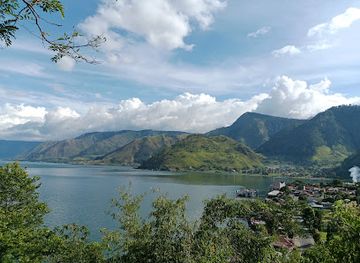
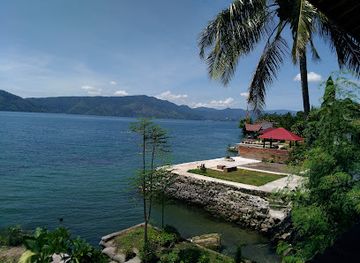
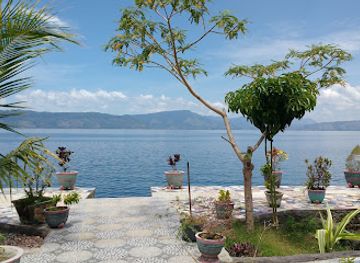
Lake Toba occupies the immense caldera of the Toba supervolcano in North Sumatra, Indonesia. At its centre lies Samosir Island, itself a substantial upland island connected to the mainland by a narrow isthmus near Pangururan. Dark volcanic slopes, cultivated hillsides and broad blue water give the region a spacious, often tranquil character, while the surrounding highlands bring cooler temperatures than the lowlands around Medan. The lake is one of Indonesia's defining natural landscapes, but its significance extends beyond scenery: it is also the historical heartland of the Batak peoples.Read more about Lake Toba
Batak Culture and Lakeside Life
Exploring the Lake Region
When is the best time to visit Lake Toba?
Best: June–August · 29°C| Month | High (°C) | Rainfall (mm) |
|---|---|---|
| January | 28 | 250 |
| February | 28 | 230 |
| March | 29 | 210 |
| April | 29 | 190 |
| May | 29 | 170 |
| June (best) | 29 | 150 |
| July (best) | 29 | 150 |
| August (best) | 29 | 150 |
| September | 29 | 150 |
| October | 29 | 170 |
| November | 29 | 190 |
| December | 29 | 210 |
Getting to and around Lake Toba
How to get there
Transportation
Best attractions in Lake Toba
Lake Toba's principal attraction is the caldera lake itself, viewed from winding roads, shore settlements and ferry decks, with Samosir Island providing the region's most concentrated mix of scenery and Batak heritage. Around Tomok, visitors can see traditional houses and the stone burial complex associated with King Sidabutar, while Ambarita is known for its historic stone meeting place and execution chairs linked to local customary tradition. Simanindo has cultural displays and performances, although schedules vary, and Pangururan offers access to the island's administrative centre and inland landscapes. On the mainland, Parapat is the established resort and ferry gateway, while Balige and the southern shore combine lake views with markets, villages and cultural attractions. Waterfalls, coffee-growing hills and viewpoints lie beyond the immediate shoreline, but road conditions and distances make them better suited to planned excursions than spontaneous walks.
-
Tourist attraction
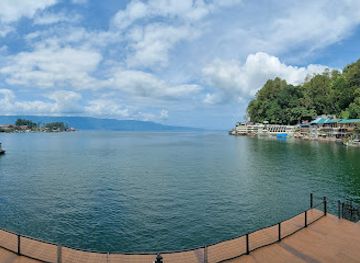
Pantai Bebas Parapat Danau Toba
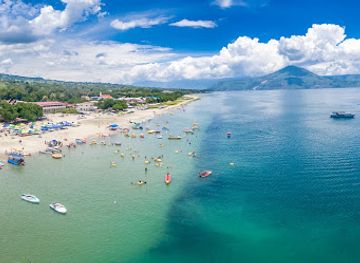
Experience the breathtaking beauty of Pantai Bebas Parapat on the serene shores of Danau Toba, a perfect retreat for relaxation and adventure.
-
Tourist attraction
Bukit Indah Simarjarunjung
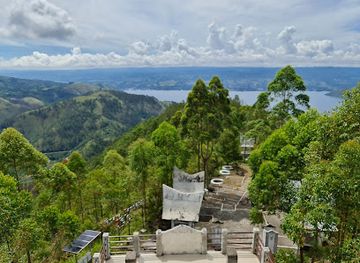
Explore the stunning beauty of Bukit Indah Simarjarunjung, where mesmerizing views of Lake Toba await every visitor in North Sumatra.
-
Tourist attraction
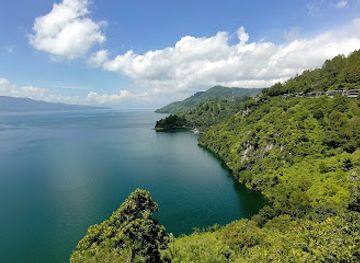
Danau Toba Parapat
Experience the breathtaking beauty and rich culture of Danau Toba, the world's largest volcanic lake, in the heart of North Sumatra.
-
Tourist attraction
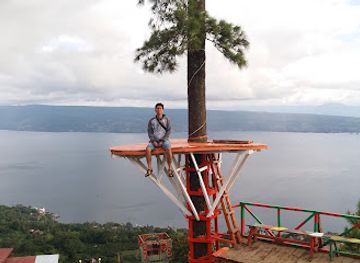
Menara Pandang Tele
Discover the stunning views of Menara Pandang Tele, a scenic spot overlooking Lake Toba, where nature meets breathtaking vistas in North Sumatra.

Best landmarks in Lake Toba
The lake's defining landmark is the Toba caldera, an immense volcanic depression filled by Lake Toba and surrounded by uplands shaped by the region's geological history. Samosir Island is the most prominent geographical feature within the water, with its narrow connection to the mainland near Pangururan forming a particularly recognisable part of the landscape. Cultural landmarks include the traditional Batak houses and communal buildings of Samosir, the stone tomb associated with King Sidabutar at Tomok, and Ambarita's stone chairs and meeting place. Churches are also important features of the Batak highlands, reflecting the region's Christian history alongside older customary traditions. The lake shore, ferry routes, volcanic hills and village compounds together form a cultural landscape rather than a collection of isolated monuments.
-
Tourist attraction
Danau Toba Parapat
Discover the breathtaking beauty of Danau Toba Parapat, a serene volcanic lake in North Sumatra, Indonesia, rich in culture and natural charm.
-
Scenic spot
Menara Pandang Tele
Discover the stunning vistas at Menara Pandang Tele, a scenic gem in North Sumatra overlooking the majestic Lake Toba, perfect for nature lovers and photographers.
-
Beach
Pasir putih Parbaba
Discover the beauty of Pasir Putih Parbaba, a breathtaking beach in North Sumatra that offers relaxation, adventure, and stunning views of Lake Toba.
-
Scenic spot
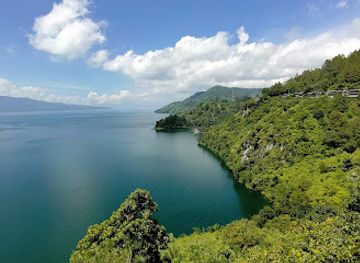
Lake Toba Viewpoint
Experience the unparalleled beauty of Lake Toba Viewpoint, where stunning landscapes and rich culture meet in North Sumatra, Indonesia.
Explore Lake Toba on the map
Plan your trip on one map. See where the top attractions, landmarks, restaurants and hotels are, and book hotels and experiences in a few clicks.
Best hotels in Lake Toba
Best restaurants in Lake Toba
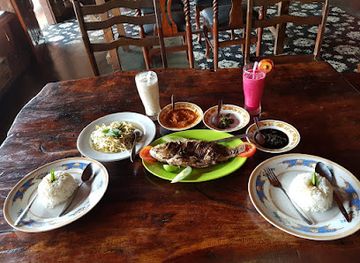
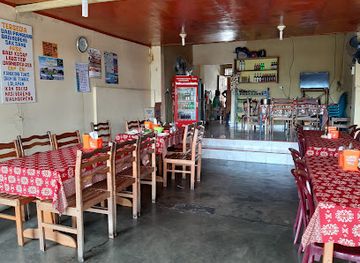
Dining around Lake Toba is concentrated in Parapat, Tuk Tuk, Pangururan, Balige and other larger settlements rather than in the more remote landscape. Batak cooking commonly features freshwater fish, chicken, pork and vegetables, with bold seasoning and dishes such as arsik, a spiced fish preparation, and naniura, a traditional cured fish dish; visitors should ask about ingredients where dietary or religious considerations matter. Local restaurants and warungs also serve Indonesian staples including nasi goreng, noodles, soups and grilled foods, while lakeside accommodation often provides simple meals for guests. Coffee from North Sumatra's highlands is widely available, and markets offer fruit and regional produce. In smaller villages, choice may be limited and meal times less predictable, so carrying water and a small supply of snacks is sensible during longer road or boat excursions.
-
Asian
LEO'S Restaurant
Discover the vibrant taste of authentic Asian cuisine at LEO'S Restaurant in Tuktuk Siadong—where tradition meets flavor.
-
Indonesian
Jenny's Restaurant
Discover traditional Indonesian cuisine with stunning views at Jenny's Restaurant in Tuktuk Siadong.
-
Indonesian
Rumah Makan Lomak
Discover the heart of Indonesian cuisine at Rumah Makan Lomak in Samosir Regency—where every meal is a celebration of flavor.
-
Cafe
Buddhas Cafe- Vegan (புத்தர் கஃபே/बुद्ध कैफे)
Discover Buddhas Cafe in Samosir - A vegan oasis offering delicious plant-based meals amidst stunning natural beauty.
Best bars in Lake Toba
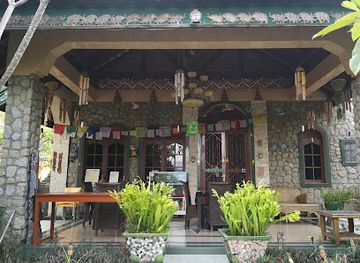
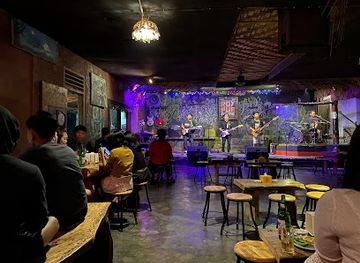
Lake Toba is not a major nightlife destination, and evening entertainment is generally low-key. Tuk Tuk on Samosir has the region's most established concentration of visitor-oriented cafés, guesthouse restaurants and relaxed evening venues, while Parapat and Balige offer local restaurants and hotel-based social spaces rather than a club scene. In villages around the lake, evenings are shaped more by family life, church activity and community gatherings than by commercial entertainment. Occasional Batak music, dance or cultural performances may be available through accommodation providers or local organisers, but schedules are not constant. Visitors should expect early-closing, informal settings and limited transport after dark, particularly outside the main resort areas, and should confirm arrangements locally rather than assuming that a venue or performance will be operating.
-
Restaurant
Buddhas Cafe- Vegan (புத்தர் கஃபே/बुद्ध कैफे)
Discover the flavors of plant-based dining at Buddhas Cafe, a unique vegan restaurant in Simanindo, North Sumatra, where sustainability meets deliciousness.
-
Live music bar
Roy's Pub Live Music
Experience the vibrant rhythms and flavors at Roy's Pub Live Music in Samosir Regency, where every night is a celebration of local culture and entertainment.
-
Vegetarian
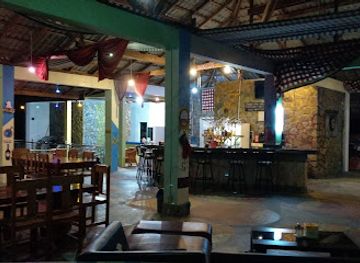
Horas restaurant-Mario’s apartments
Enjoy a serene dining experience at Horas Restaurant in Tuktuk Siadong, featuring exquisite vegetarian cuisine and breathtaking views of Lake Toba.
-
Bar
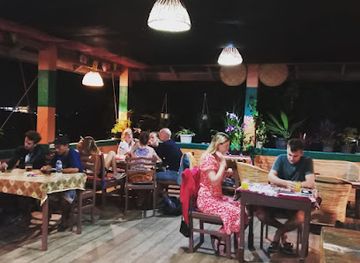
Casa Di Manurung Bar & Restaurant
Discover the flavors of Samosir at Casa Di Manurung Bar & Restaurant, offering delightful cuisine and stunning views of Lake Toba.
Best nightclubs in Lake Toba
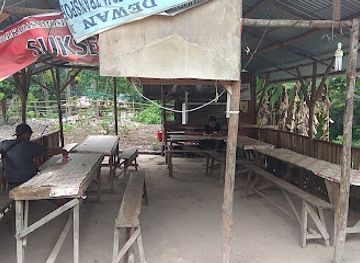
Lake Toba is not a major nightlife destination, and evening entertainment is generally low-key. Tuk Tuk on Samosir has the region's most established concentration of visitor-oriented cafés, guesthouse restaurants and relaxed evening venues, while Parapat and Balige offer local restaurants and hotel-based social spaces rather than a club scene. In villages around the lake, evenings are shaped more by family life, church activity and community gatherings than by commercial entertainment. Occasional Batak music, dance or cultural performances may be available through accommodation providers or local organisers, but schedules are not constant. Visitors should expect early-closing, informal settings and limited transport after dark, particularly outside the main resort areas, and should confirm arrangements locally rather than assuming that a venue or performance will be operating.
-
Night club
LAPO TUAK JEFRY
Discover vibrant nightlife at Lapo Tuak Jeffry in Samosir Regency, where music, culture, and cuisine come together for an unforgettable experience.
-
Night club
Berburu Tikus-tikus Lokal
Discover the nightlife of Simalungun at Berburu Tikus-tikus Lokal, a vibrant club blending local culture with modern entertainment.
-
Night club
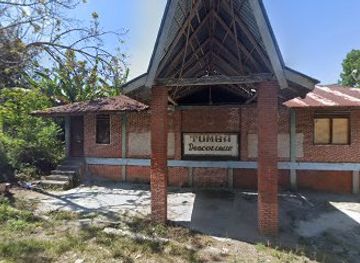
Tumba Discotheque
Experience the vibrant nightlife at Tumba Discotheque in Samosir, where music, dance, and a lively atmosphere await.
-
Night club
M Sitanggang
Experience the vibrant nightlife at M Sitanggang, Samosir's premier night club, where music, dance, and local culture come alive.
Best shops in Lake Toba
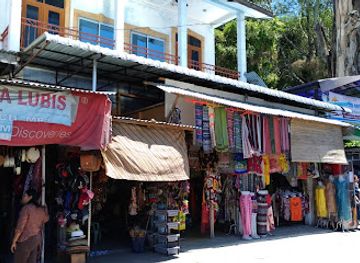
Shopping at Lake Toba is modest and centred on local settlements rather than dedicated retail districts. Tuk Tuk, Tomok, Parapat, Pangururan and Balige provide the widest choice of small shops, market stalls and visitor-oriented outlets, while village markets are useful for fruit, snacks and everyday goods. Batak-influenced products may include ulos textiles, woven goods, carved items, musical instruments and souvenirs featuring traditional motifs, although quality, provenance and availability vary. Coffee from North Sumatra is a practical regional purchase, and local food products can often be found in markets or town shops. Ask permission before treating ceremonial or antique-looking objects as merchandise, and buy textiles or crafts from sellers who can explain how and where they were made rather than assuming every item is locally produced.
-
Shopping mall
Pasar Tomok
Explore Pasar Tomok, a vibrant traditional market on Samosir Island showcasing local crafts, delicious food, and rich Batak culture.
-
Convenience store
INDOMARET RAYA SIMANINDO SAMOSIR
Discover convenience at Indomaret Raya Simanindo, your essential stop for snacks, souvenirs, and local products in Samosir, North Sumatra.
-
Coffee shop
COFFEE TOBA
Experience the best of local coffee culture in a serene lakeside setting at Coffee Toba, North Sumatra's hidden gem.
-
Internet shop
Silalahi Project
Experience the perfect blend of connectivity and learning at Silalahi Project in North Sumatra, where modern services meet a welcoming atmosphere.
Get your free copy of our complete guide to Lake Toba, delivered straight to you.
Everything on this page, from attractions and restaurants to essentials and local phrases, in one PDF you can read offline, print or share.
Already have an account? Sign in
Your Lake Toba guide is ready.
We'll send it to · Not you? Sign out

Getting your guide ready…
We are putting together a fresh copy of the Lake Toba guide. This can take up to a minute.
This can take a few moments. If your browser asks, choose Allow so the download can start. You'll find the guide in your Downloads folder.
Nothing happened? Download it again
Sorry, the guide is taking longer than usual. Please try again in a minute, or get it by email instead.
Lake Toba essentials
Currency and Payment
Safety
Emergency Situations
Do's and Don'ts
Local Tips
From Eve
Local phrases worth knowing
You don't need to get them perfect. A few words go a long way, and locals appreciate the effort.
Basics
| English | Local | Say it |
|---|---|---|
| Hello | Horas | [Horas] |
| Goodbye | Mariam | [Mar-ee-am] |
| Yes | Iya | [Ee-ya] |
| No | Ndak | [N-dak] |
| Please/You're welcome | Mauliate | [Mau-lee-a-teh] |
| Thank you | Hatur Nuhun | [Ha-tur Noo-hoon] |
| Excuse me/Sorry | Pardoan | [Par-do-an] |
| How are you? | Holong ma? | [Ho-long ma] |
| Fine. And you? | Holong ma sai | [Ho-long ma sigh] |
| Do you speak English? | Boasa ma i do hot | [Bo-a-sa ma ee do hot] |
| I don't understand | Ndang jumpa | [N-dang jum-pa] |
Eating & Drinking
| English | Local | Say it |
|---|---|---|
| I'd like to see the menu, please | Asa mangulos menu, tolong | [A-sa man-goo-los me-nu, to-long] |
| I don't eat meat | Sai dohot nari | [Sigh do-hot na-ree] |
| Cheers! | Horas | [Horas] |
| I would like to pay, please | Asa tung tangan, tolong | [A-sa tung tang-an, to-long] |
Emergencies
| English | Local | Say it |
|---|---|---|
| Help! | Tolong! | [To-long] |
| Go away! | Mangalului! | [Mang-a-loo-ee] |
| Call the Police! | Telepon polisi! | [Te-le-pon po-lee-see] |
| Call a doctor! | Telepon dokter! | [Te-le-pon dok-ter] |
| I'm lost | Sai nangkok | [Sigh nang-kok] |
| I'm ill | Sai maruah | [Sigh mah-roo-ah] |
Shopping
| English | Local | Say it |
|---|---|---|
| I'd like to buy... | Asa mambeli... | [A-sa mam-bel-ee] |
| I'm just looking | Sai mardalan | [Sigh mar-da-lan] |
| How much is it? | Unang hule? | [Oo-nang hoo-leh] |
| That's too expensive | Hule dohot nauli | [Hoo-le do-hot now-lee] |
| Can you lower the price? | Mangalului hule? | [Mang-a-loo-ee hoo-leh] |
Time & Numbers
| English | Local | Say it |
|---|---|---|
| What time is it? | Tung so naeng? | [Toong so nang] |
| It's one o'clock | Naeng sahat tung | [Nang sa-hat toong] |
| Half past (10) | Naeng gabe (10) | [Nang gah-beh (10)] |
| Morning | Tangiang | [Tan-gee-ang] |
| Afternoon | Sianipar | [See-an-ee-par] |
| Evening | Tungkup | [Toong-koop] |
| Yesterday | Marsirang | [Mar-see-rang] |
| Today | Naeng | [Nang] |
| Tomorrow | Na uda | [Nah oo-dah] |
| 1 | Sada | [Sah-dah] |
| 2 | Dua | [Doo-ah] |
| 3 | Tolu | [Toh-loo] |
| 4 | Opat | [Oh-paht] |
| 5 | Lima | [Lee-ma] |
| 6 | Onom | [Oh-nom] |
| 7 | Pitu | [Pee-too] |
| 8 | Walung | [Wah-loong] |
| 9 | Sia | [See-ah] |
| 10 | Sapuluh | [Sah-poo-loo] |
Transport & Directions
| English | Local | Say it |
|---|---|---|
| Where's a/the...? | Mandok a/na...? | [Man-dok ah/nah] |
| What's the address? | Anjaha alamatna? | [An-jah-ha ala-mat-nah] |
| Can you show me (on the map)? | Mangalului sai (pada peta)? | [Mang-a-loo-ee sigh (pa-da pe-ta)] |
| When's the next (bus)? | Tung naeng bus ari sabulan? | [Toong nang boos ah-ree sa-boo-lan] |
| A ticket (to ....) | Tiket (tu ....) | [Tee-ket (too ....)] |
History of Lake Toba
The Toba Supereruption
Lake Toba occupies the caldera created by the enormous Toba eruption approximately 74,000 years ago, one of the largest known explosive eruptions in Earth's recent geological history. The collapse of the volcanic system formed the broad basin now filled by the lake, while later volcanic activity helped shape Samosir Island and the surrounding uplands. This geological history explains the region's dramatic scale, fertile volcanic soils and elevated terrain. It belongs to a timescale far older than human settlement, although the resulting landscape has strongly influenced where communities farm, travel and establish villages.
Early Batak Settlement
The lands around Lake Toba became the homeland of several Batak peoples, whose related but distinct communities developed their own languages, customs and political traditions. Samosir is particularly important in Batak origin traditions, while settlements around the lake were organised through kinship, customary law and village institutions. Traditional houses, meeting buildings, burial places and ritual sites reflect a society in which ancestry and community relationships remained central. Agriculture, livestock keeping and fishing connected people closely with the lake and its volcanic highlands long before the region became an international tourism destination.
Kingdoms, Clans and Local Authority
Before colonial rule, authority around Lake Toba was exercised through local kingship, clan leadership and networks of customary allegiance rather than a single centralised state covering the whole lake. The figure of Sisingamangaraja, remembered in Batak history and tradition as a spiritual and political leader, became especially associated with resistance and regional identity. The precise nature of authority varied between communities, but ceremonies, genealogies and customary law continued to shape village life. These traditions remain visible in Batak architecture, memorials, music and the importance attached to ancestral places.
Christianity and Colonial Transformation
Christian missionary work expanded among Batak communities during the nineteenth century, particularly through the work of the German Rhenish Mission and later the Huria Kristen Batak Protestant church. Conversion brought new schools, churches and forms of literacy, while older customs were reinterpreted and sometimes challenged. Dutch colonial administration also extended its influence into the highlands, altering systems of authority, taxation, transport and trade. The resulting landscape contains both Christian institutions and enduring Batak cultural forms, a combination that is especially evident in the villages and towns of the Samosir and Toba regions.
Tourism and Cultural Preservation
Road improvements and the development of Parapat helped establish Lake Toba as a major North Sumatran tourism destination during the twentieth century. Samosir's scenery, cooler climate and Batak heritage then drew domestic and international visitors, with accommodation and ferry links concentrating around places such as Tuk Tuk and Tomok. Tourism has created income and encouraged the preservation and presentation of traditional architecture, music and dance, but it has also brought pressure on shorelines, waste management and water quality. Contemporary conservation and regional planning therefore form part of the lake's continuing history.
Lake Toba in Photos
Browse through our photo collection highlighting the charm and character of the destination.
Neighbouring destination travel guides
The closest destinations to Lake Toba, if you have time for more than one.
-

-

-

-

-


Swipe for more destinations
Explore more

Explore more of North Sumatra
North Sumatra combines Medan’s heritage, Lake Toba’s volcanic scenery, Batak culture, highland farms and rainforest wildlife.
Explore North Sumatra
Explore more of Indonesia
Explore Indonesia: An archipelago of diverse cultures, stunning landscapes, and endless adventures from bustling cities to serene beaches.
Explore Indonesia