

Free Southeast Sulawesi Travel Guide & Mobile App
Explore Southeast Sulawesi with free travel guides. Discover regional history, expert tips, proposed trips, and audio guides on web or mobile app.


Southeast Sulawesi combines Wakatobi’s coral reefs, Buton’s sultanate heritage, tropical waterfalls and remote island landscapes in eastern Indonesia.
Read more about Southeast Sulawesi
When is the best time to visit Southeast Sulawesi?
Best: July–September · 30°C| Month | High (°C) | Rainfall (mm) |
|---|---|---|
| January | 30 | 300 |
| February | 30 | 250 |
| March | 30 | 200 |
| April | 30 | 150 |
| May | 31 | 100 |
| June | 30 | 100 |
| July (best) | 30 | 100 |
| August (best) | 30 | 100 |
| September (best) | 30 | 100 |
| October | 30 | 150 |
| November | 30 | 200 |
| December | 30 | 250 |
Getting to and around Southeast Sulawesi
How to get there
Transportation
Destinations in Southeast Sulawesi
Resorts, valleys and scenic spots worth a trip of their own.

Swipe for more destinations
Best attractions in Southeast Sulawesi
Southeast Sulawesi's attractions range from internationally recognised marine environments to historic settlements and forested mainland landscapes. Wakatobi National Park is the province's leading draw, offering diving and snorkelling among coral reefs, drop-offs, seagrass areas and island communities spread across Wangi-Wangi, Kaledupa, Tomia and Binongko. Conditions differ between sites, and responsible operators are essential in a protected ecosystem. Near Kendari, Moramo Waterfall provides an inland contrast, with water flowing over limestone shelves in a wooded setting. North Konawe's Labengki area is known for karst islets, lagoons and sheltered coastal scenery, usually reached by boat. Baubau offers access to Buton's history, while wider Buton and Muna provide rural landscapes, beaches and cultural encounters. The province also suits kayaking, reef exploration, village walks, birdwatching and scenic road journeys, although many places have limited facilities and require local arrangements. Attractions here are dispersed rather than concentrated in a single tourism corridor, making travel planning, weather awareness and realistic journey times particularly important.
-
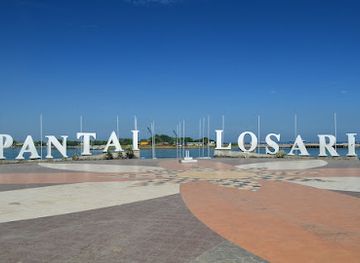
Beach
Losari Beach
Experience the stunning sunsets and vibrant local culture at Losari Beach, a serene coastal gem in South Sulawesi, Indonesia.
-
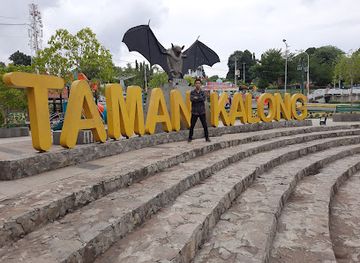
City park
Kalong Park Soppeng
Experience the natural beauty and cultural charm of Kalong Park Soppeng, a serene city park perfect for relaxation and exploration in South Sulawesi.
-
Tourist attraction
Lolai Tongkonan Lempe
Discover the rich culture and stunning architecture at Lolai Tongkonan Lempe, a captivating tourist attraction in the heart of North Toraja, Indonesia.
-
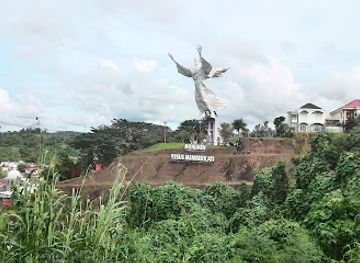
Monument
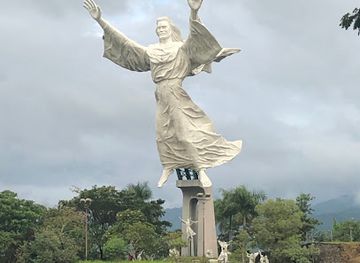
Yesus Memberkati Statue
Discover the breathtaking Yesus Memberkati Statue in Manado, a symbol of hope and faith with stunning vistas of North Sulawesi's beauty.
Best landmarks in Southeast Sulawesi
Benteng Keraton Buton in Baubau is Southeast Sulawesi's most prominent historic landmark. Built around the former centre of the Buton Sultanate, its extensive stone walls and hilltop position express the political and defensive importance of the maritime kingdom that governed parts of the region. Within the old royal area, traditional houses, mosques and administrative remnants help explain Baubau's historical character. Kendari Bay is a major contemporary geographical landmark, forming the coastal setting around which the provincial capital developed and providing views across a busy urban and maritime landscape. Moramo Waterfall is a notable natural landmark south of Kendari, where water crosses layered limestone terraces in a forest environment. Farther north, the karst islands and lagoons of Labengki create a distinctive seascape, while Wakatobi's reefs are a living geographical landmark rather than a single monument. These places represent the province's central themes: sultanate history, limestone terrain, urban bays and an island world shaped by coral seas.
-
Historical landmark
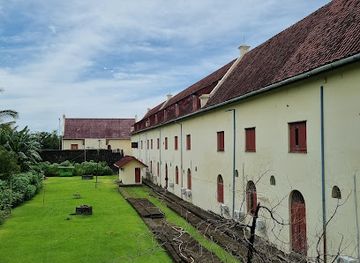
Fort Rotterdam
Discover the historical treasures of Fort Rotterdam, a captivating fortress museum in Makassar that narrates Indonesia's vibrant colonial past.
-
Island
Sulawesi
Explore the stunning landscapes, vibrant cultures, and rich marine life of Sulawesi, Indonesia's enchanting island paradise.
-
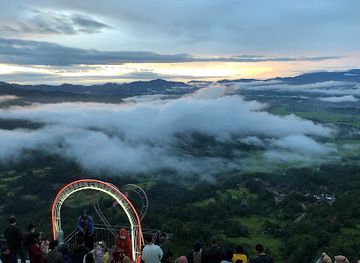
Tourist attraction
Lolai - To' Tombi, Negeri di atas awan
Discover the enchanting beauty of Lolai - To' Tombi, a serene escape in North Toraja, South Sulawesi, where nature meets rich cultural heritage.
-
Monument
Yesus Memberkati Statue
Discover the breathtaking Yesus Memberkati Statue in Manado City, a monumental symbol of faith offering stunning views and rich cultural experiences in North Sulawesi.

Explore Southeast Sulawesi on the map
Plan your trip on one map. See where the top cities, national parks and sights are, and book hotels and experiences in a few clicks.
Best hotels in Southeast Sulawesi
Best restaurants in Southeast Sulawesi
Dining in Southeast Sulawesi reflects the meeting of mainland farming, island seafaring and Indonesian trade routes. Kendari and Baubau have the broadest choice of Indonesian restaurants, seafood kitchens, casual eateries and cafés, while smaller islands rely more heavily on family-run warungs and simple meals prepared around local availability. Fish, prawns, squid and shellfish are common along the coast, often served with rice, chilli sambal, lime and vegetables. Cassava, sago, banana, coconut and other tropical staples are important in many communities, while grilled or fried fish is especially practical in island areas. Wakatobi's diving centres and guesthouses usually offer straightforward Indonesian meals, sometimes with fresh catch arranged locally. Markets are useful for fruit, snacks and regional ingredients, but opening patterns vary. Visitors should distinguish between locally distinctive dishes and the wider Indonesian repertoire, as recipes and names can change from one island or ethnic community to another.
-
Seafood
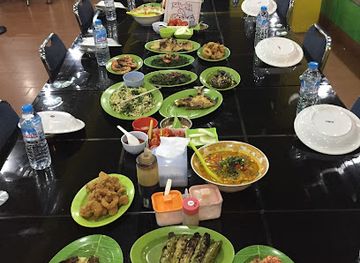
RM. Kampung Bakau
Experience authentic Southeast Sulawesi flavors at RM. Kampung Bakau, where fresh seafood meets local culinary traditions.
-
Buffet
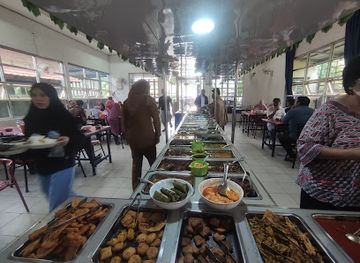
Rumah Makan Ibu Dina
Experience an authentic buffet of traditional Indonesian dishes at Rumah Makan Ibu Dina in Kendari - a culinary delight not to be missed!
-
Ikan bakar restaurant
RM. Teluk Kendari
Discover RM. Teluk Kendari - An Authentic Seafood Dining Experience in Kendari City Offering Grilled Fish and Traditional Indonesian Cuisine.
-
Resort hotel
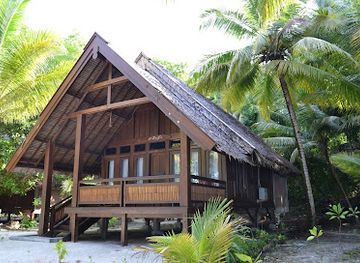
Wakatobi Patuno Resort
Experience unparalleled luxury at Wakatobi Patuno Resort - your gateway to Southeast Sulawesi's stunning beaches and vibrant marine life.
Best bars in Southeast Sulawesi
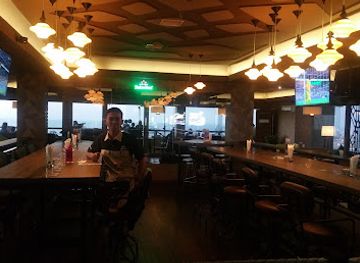
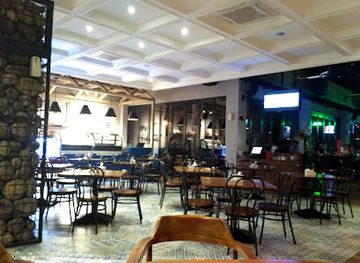
Nightlife in Southeast Sulawesi is generally modest and concentrated in Kendari and Baubau rather than organised around large club districts. In the cities, evening life centres on coffee shops, casual restaurants, karaoke venues, hotel lounges and small bars, with live music appearing at some establishments. Kendari has the province's widest urban choice, while Baubau combines cafés and restaurants with a slower evening atmosphere near its historic and commercial areas. On Wakatobi and smaller islands, nights are usually shaped by guesthouse dining, conversations after diving, village food stalls and quiet waterfront settings rather than late-night entertainment. Alcohol may be limited or absent in some communities, and visitors should follow local sensitivities around dress, behaviour and public drinking. Entertainment, transport and service hours can be seasonal, so confirm arrangements locally instead of expecting a nightlife scene comparable with Bali or Jakarta.
-
Bar
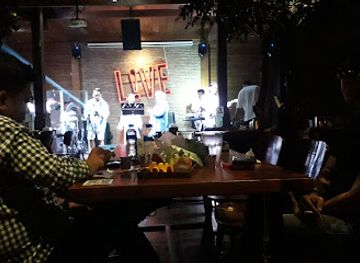
HW Helen's Live Bar Makassar
Discover the energetic essence of Makassar's nightlife at HW Helen's Live Bar, where great music and drinks create unforgettable memories.
-
Lounge
Gravity Sky Lounge
Experience the breathtaking views and vibrant nightlife at Gravity Sky Lounge in Makassar, where exquisite drinks and delightful cuisine await.
-
Bar
Publiq Dine & Wine
Discover the vibrant dining experience at Publiq Dine & Wine in Makassar, where delicious food and lively atmosphere await.
-
 Resort hotel
Wakatobi Patuno Resort
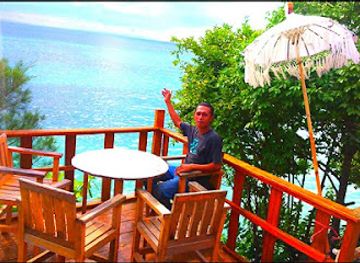
Experience the beauty and tranquility of Wakatobi Patuno Resort, a luxurious retreat on Wangi-Wangi Island, Indonesia, perfect for relaxation and adventure.
Best nightclubs in Southeast Sulawesi
Nightlife in Southeast Sulawesi is generally modest and concentrated in Kendari and Baubau rather than organised around large club districts. In the cities, evening life centres on coffee shops, casual restaurants, karaoke venues, hotel lounges and small bars, with live music appearing at some establishments. Kendari has the province's widest urban choice, while Baubau combines cafés and restaurants with a slower evening atmosphere near its historic and commercial areas. On Wakatobi and smaller islands, nights are usually shaped by guesthouse dining, conversations after diving, village food stalls and quiet waterfront settings rather than late-night entertainment. Alcohol may be limited or absent in some communities, and visitors should follow local sensitivities around dress, behaviour and public drinking. Entertainment, transport and service hours can be seasonal, so confirm arrangements locally instead of expecting a nightlife scene comparable with Bali or Jakarta.
-
Movie theater
Cinemaxx Lippo Plaza Buton
Experience the magic of cinema at Cinemaxx Lippo Plaza Buton, where the latest movies meet luxurious comfort in Bau-Bau.
-
Resort hotel
Wakatobi Patuno Resort
Discover paradise at Wakatobi Patuno Resort, where stunning beaches meet luxurious accommodation in the heart of Indonesia's Wakatobi Islands.
-
Seafood
Wasabinua Hotel & Dive Resort
Experience the perfect blend of relaxation, adventure, and exquisite seafood dining at Wasabinua Hotel & Dive Resort in Wakatobi.
-
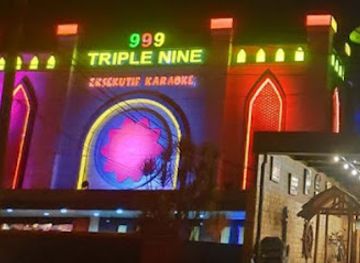
Karaoke bar
999 Music
Experience the vibrant atmosphere of 999 Music, a premier karaoke bar in Kendari, where every night is filled with unforgettable musical moments.
Best shops in Southeast Sulawesi
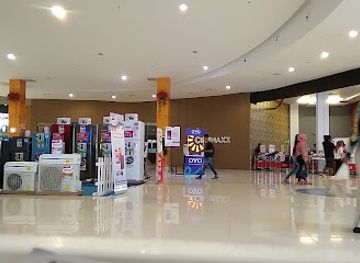
Shopping in Southeast Sulawesi is primarily local and practical, with the greatest choice in Kendari and Baubau. Urban markets and small shops sell fruit, spices, dried seafood, snacks, clothing and household goods, while supermarkets are useful for supplies before travelling to more remote islands. Wakatobi's villages may offer woven items, shell-free marine-themed crafts, local food products and small souvenirs, although selection and availability vary between islands. Butonese and other regional textiles, woven goods and handicrafts can be found through local cultural centres, markets or community producers, but buyers should ask about provenance and avoid products made from protected wildlife or coral. Packaged coffee, spices, sweets and dried foods are practical gifts when purchased hygienically and within Indonesian customs allowances. Shopping is less about large commercial centres than about meeting makers, visiting markets and finding goods connected with island livelihoods and regional food traditions.
-
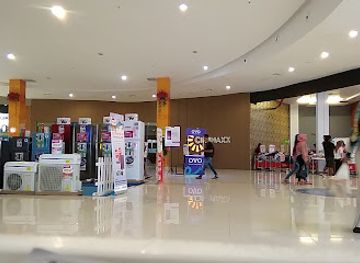
Movie theater
Cinemaxx Lippo Plaza Buton
Experience the latest films in comfort at Cinemaxx Lippo Plaza Buton, the top movie theater in Bau-Bau City, Southeast Sulawesi.
-
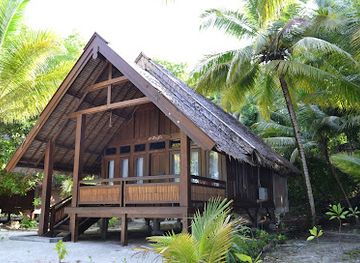
Resort hotel
Wakatobi Patuno Resort
Experience the tranquility of Wakatobi Patuno Resort, a tropical paradise in Wangi-Wangi Island, perfect for relaxation and adventure.
-
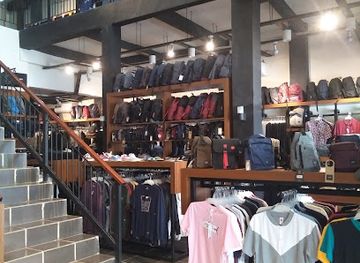
Clothing store
Issue Shop
Discover stylish and unique clothing at Issue Shop in Makassar, blending local craftsmanship with contemporary fashion.
-
Souvenir store
Miens Souvenir
Explore Miens Souvenir, a vibrant store in North Sulawesi for unique crafts, clothing, and novelties that capture the essence of your travels.
Get your free copy of our complete guide to Southeast Sulawesi, delivered straight to you.
Everything on this page, from attractions and restaurants to essentials and local phrases, in one PDF you can read offline, print or share.
Already have an account? Sign in
Your Southeast Sulawesi guide is ready.
We'll send it to · Not you? Sign out

Getting your guide ready…
We are putting together a fresh copy of the Southeast Sulawesi guide. This can take up to a minute.
This can take a few moments. If your browser asks, choose Allow so the download can start. You'll find the guide in your Downloads folder.
Nothing happened? Download it again
Sorry, the guide is taking longer than usual. Please try again in a minute, or get it by email instead.
Southeast Sulawesi essentials
Currency and Payment
Safety
Emergency Situations
Do's and Don'ts
Local Tips
From Eve
Local phrases worth knowing
You don't need to get them perfect. A few words go a long way, and locals appreciate the effort.
Basics
| English | Local | Say it |
|---|---|---|
| Hello | Halo | [ha-lo] |
| Goodbye | Selamat tinggal | [se-la-mat ting-gal] |
| Yes | Ya | [ya] |
| No | Tidak | [ti-dak] |
| Please/You're welcome | Silakan/ Sama-sama | [si-la-kan/ sa-ma sa-ma] |
| Thank you | Terima kasih | [te-ri-ma ka-sih] |
| Excuse me/Sorry | Permisi/ Maaf | [per-mi-si/ ma-af] |
| How are you? | Apa kabar? | [a-pa ka-bar] |
| Fine. And you? | Baik. Dan kamu? | [ba-ik. dan ka-mu] |
| Do you speak English? | Apakah kamu bisa berbahasa Inggris? | [a-pa-kah ka-mu bi-sa ber-ba-ha-sa ing-gris] |
| I don't understand | Saya tidak mengerti | [sa-ya ti-dak meng-er-ti] |
Eating & Drinking
| English | Local | Say it |
|---|---|---|
| I'd like to see the menu, please | Saya ingin melihat menu, silakan | [sa-ya in-gin me-li-hat me-nu, si-la-kan] |
| I don't eat meat | Saya tidak makan daging | [sa-ya ti-dak ma-kan da-ging] |
| Cheers! | Selamat minum! | [se-la-mat mi-num] |
| I would like to pay, please | Saya ingin membayar, silakan | [sa-ya in-gin mem-ba-yar, si-la-kan] |
Emergencies
| English | Local | Say it |
|---|---|---|
| Help! | Tolong! | [to-long] |
| Go away! | Pergi jauh! | [per-gi ja-u] |
| Call the Police! | Panggil polisi! | [pan-gil po-li-si] |
| Call a doctor! | Panggil dokter! | [pan-gil dok-ter] |
| I'm lost | Saya tersesat | [sa-ya ter-se-sat] |
| I'm ill | Saya sakit | [sa-ya sa-kit] |
Shopping
| English | Local | Say it |
|---|---|---|
| I'd like to buy... | Saya ingin membeli... | [sa-ya in-gin mem-be-li] |
| I'm just looking | Saya hanya melihat | [sa-ya han-ya me-li-hat] |
| How much is it? | Berapa harganya? | [be-ra-pa har-ga-nya] |
| That's too expensive | Itu terlalu mahal | [i-tu ter-la-lu ma-hal] |
| Can you lower the price? | Bisakah kamu menurunkan harga? | [bi-sa-kah ka-mu me-nu-run-kan har-ga] |
Time & Numbers
| English | Local | Say it |
|---|---|---|
| What time is it? | Jam berapa? | [jam be-ra-pa] |
| It's one o'clock | Jam satu | [jam sa-tu] |
| Half past (10) | Setengah (10) | [se-ten-gah] |
| Morning | Pagi | [pa-gi] |
| Afternoon | Siang | [si-ang] |
| Evening | Sore | [so-re] |
| Yesterday | Kemarin | [ke-ma-rin] |
| Today | Hari ini | [ha-ri i-ni] |
| Tomorrow | Besok | [be-sok] |
| 1 | Satu | [sa-tu] |
| 2 | Dua | [du-a] |
| 3 | Tiga | [ti-ga] |
| 4 | Empat | [em-pat] |
| 5 | Lima | [li-ma] |
| 6 | Enam | [e-nam] |
| 7 | Tujuh | [tu-juh] |
| 8 | Delapan | [de-la-pan] |
| 9 | Sembilan | [sem-bi-lan] |
| 10 | Sepuluh | [se-pu-luh] |
Transport & Directions
| English | Local | Say it |
|---|---|---|
| Where's a/the...? | Di mana ...? | [di ma-na] |
| What's the address? | Apa alamatnya? | [a-pa a-la-mat-nya] |
| Can you show me (on the map)? | Bisakah kamu menunjukkan (di peta)? | [bi-sa-kah ka-mu me-nun-juk-an di pe-ta] |
| When's the next (bus)? | Kapan bus berikutnya? | [ka-pan bus be-ri-kut-nya] |
| A ticket (to ....) | Sebuah tiket (ke ....) | [se-buah ti-ket ke] |
History of Southeast Sulawesi
Early Austronesian and Maritime Settlement
The islands and mainland shores of Southeast Sulawesi have been inhabited for many centuries by communities whose lives developed around farming, fishing, forest resources and seafaring. Archaeological evidence across Sulawesi points to long human occupation, while the province's island societies preserve traditions shaped by movement between reefs, straits and trading settlements. The Bajo, Butonese, Muna, Tolaki and other communities developed distinct languages and customs, although commerce and intermarriage connected them across the seas. The region's geography encouraged outward-looking maritime networks rather than isolated island economies.
The Tolaki Kingdoms and Mainland Society
On the southeastern mainland, Tolaki societies formed political communities and agricultural settlements in areas that now include Konawe and surrounding districts. Local authority was organised through customary institutions and relationships between rulers, nobles and village communities. Rice cultivation, forest products and exchange with coastal settlements supported these societies, while rivers and bays provided routes towards the sea. Although the political structures changed under later colonial administration and the Indonesian state, Tolaki customary values, ceremonies and language remain important expressions of mainland Southeast Sulawesi's cultural identity.
The Rise of the Buton Sultanate
Buton emerged as a significant maritime polity, with its centre at Baubau, from the late medieval period into the early modern era. It adopted Islam in the sixteenth century and became a sultanate whose influence extended across parts of the surrounding islands and seas. The fortified complex at Baubau, usually known as Benteng Keraton Buton, reflects the importance of defence, administration and royal authority. Buton's position between major sea routes allowed it to participate in commerce involving eastern Indonesia, while its rulers negotiated relationships with neighbouring powers and later European interests.
Islam, Trade and Inter-Island Connections
From the early modern period onward, Islam, trade and seafaring linked Southeast Sulawesi to a wider eastern Indonesian world. Butonese and other island navigators moved between Sulawesi, the Moluccas, Java and the Lesser Sunda Islands, carrying forest products, foodstuffs, textiles and news. Religious teachers, merchants and local rulers helped establish Islamic institutions, particularly in coastal communities. The legacy can be seen in mosques, old settlements, oral histories and the continued importance of maritime exchange, even though modern transport and administrative borders have altered older routes.
Colonial Administration and Economic Change
Dutch colonial influence gradually reshaped the region's political geography, especially during the nineteenth and early twentieth centuries. Existing sultanates and local rulers were drawn into treaties and administrative systems that favoured colonial control of trade and territory. Roads, ports and extractive activity developed unevenly, while the authority of traditional political institutions was reduced. The period also intensified connections with wider Indonesian markets. In Southeast Sulawesi, the colonial legacy is less concentrated in monumental urban architecture than in altered administrative boundaries, commercial networks and the gradual reorganisation of land and coastal resources.
War, Independence and Provincial Formation
The Japanese occupation during the Second World War disrupted colonial administration and brought shortages, coercion and military upheaval to the region. Indonesian independence was followed by a gradual reorganisation of authority across southeastern Sulawesi. Southeast Sulawesi became a province in 1964, with Kendari as its capital, giving the region a distinct administrative framework within Indonesia. Subsequent decades saw expanded roads, schools, ports and public services, although the province's scattered islands continued to face different logistical challenges from the mainland.
Conservation, Nickel and the Contemporary Economy
Modern Southeast Sulawesi combines older maritime livelihoods with tourism, public-sector employment, agriculture, fisheries and mineral extraction. Nickel mining and processing have become increasingly important in parts of the province, bringing investment and employment while also raising questions about forests, watersheds, coastal pollution and community rights. The creation and promotion of protected marine areas, notably Wakatobi National Park, placed coral reefs and island ecosystems at the centre of conservation and tourism policy. The province's contemporary identity is therefore shaped by both environmental stewardship and rapid economic development.
Southeast Sulawesi in Photos
Browse through our photo collection highlighting the charm and character of the destination.
Neighbouring regions of Southeast Sulawesi
The closest regions to Southeast Sulawesi, if you have time for more than one.
-

-

-

-

-


Swipe for more regions
Explore more

Explore more of Indonesia
Explore Indonesia: An archipelago of diverse cultures, stunning landscapes, and endless adventures from bustling cities to serene beaches.
Explore Indonesia