

Achill Island Travel Guide - Free Web & App
Your ultimate guide to Achill Island. Discover top landmarks, proposed trips, and local tips. Free on the web or via the Evendo companion app.


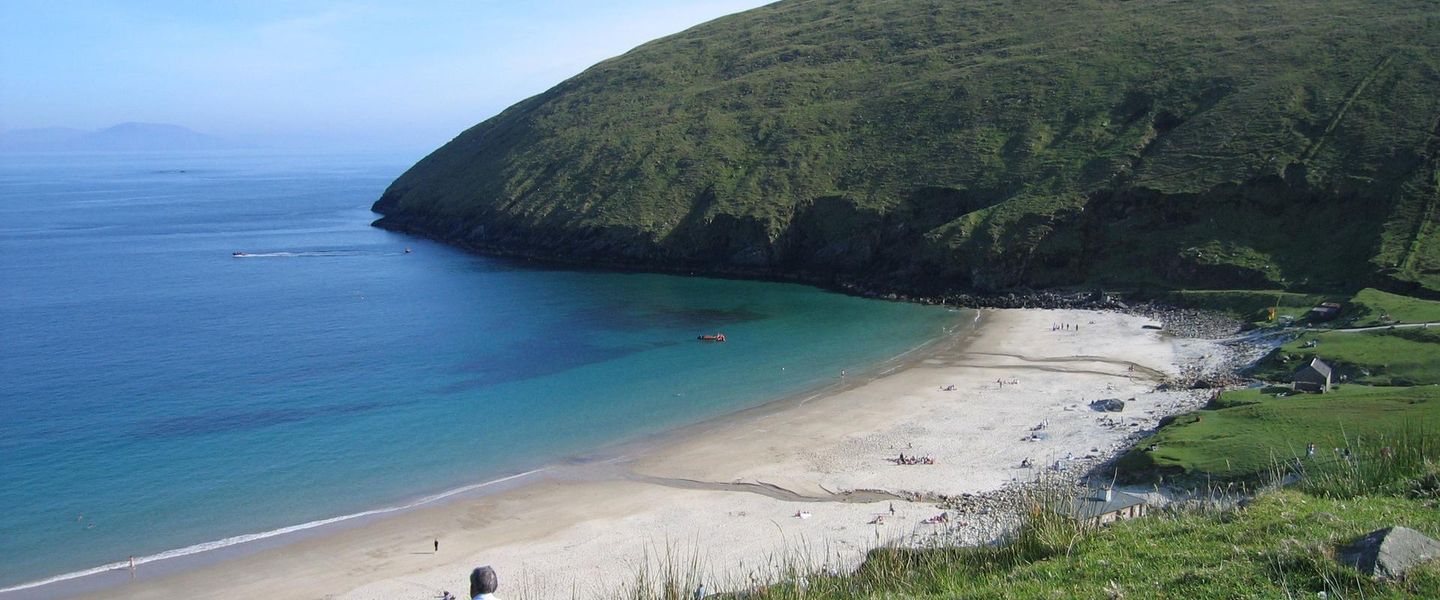


Achill Island, Ireland combines Atlantic cliffs, sandy beaches, stone villages, heritage sites, walking routes and wild coastal scenery in County Mayo.
Atlantic Landscapes
Achill Island lies off the coast of County Mayo in Ireland's west, connected to the mainland by a bridge across Achill Sound. Ireland's largest island combines a rugged Atlantic coastline with broad beaches, peatlands, mountain slopes and scattered rural settlements. The island's western and northern edges face the open ocean, producing a landscape shaped by wind, rain, surf and long views across the sea. Mountains rise dramatically above the coast, including Slievemore and Minaun, while Croaghaun is associated with some of Europe's highest sea cliffs.Read more about Achill Island
Villages and Heritage
Exploring the Island
When is the best time to visit Achill Island?
Best: June–August · 16–17°C| Month | High (°C) | Rainfall (mm) |
|---|---|---|
| January | 8 | 118 |
| February | 9 | 99 |
| March | 9 | 100 |
| April | 10 | 82 |
| May | 13 | 84 |
| June (best) | 16 | 80 |
| July (best) | 17 | 82 |
| August (best) | 17 | 86 |
| September | 15 | 99 |
| October | 13 | 115 |
| November | 11 | 118 |
| December | 9 | 120 |
Getting to and around Achill Island
How to get there
Transportation
Best attractions in Achill Island
Achill's attractions are primarily landscapes and cultural sites distributed around the island. Keem Bay occupies a sheltered western valley framed by steep hills, while Keel Beach provides a broad sweep of Atlantic sand and an open setting for walking or, when conditions and local guidance allow, water-based recreation. The Deserted Village on Slievemore offers one of the island's most evocative encounters with rural history, its stone cottages standing among fields and mountain slopes. Minaun Heights gives extensive views over the island, Achill Sound and the surrounding Atlantic coast, while the higher country around Slievemore and Croaghaun rewards prepared walkers with remote scenery. Dooagh and the western coastline reveal the island's exposed character through cliffs, rocky shorelines and changing sea conditions. Kildamhnait Castle provides a tangible historic focus in the south-east, and smaller villages, beaches, churches and local cultural venues add context to an island where settlement and landscape remain closely connected.
-
Slievemore Deserted Village
Explore the haunting ruins of a bygone era at Slievemore Deserted Village on Achill Island, where history and stunning landscapes converge.
-
Tourist attraction
Minaun Heights
Experience breathtaking 360° panoramic views from Minaun Heights, a must-see destination along Achill Island's Wild Atlantic Way.
-
Tourist attraction
Wild Atlantic Way Signature Discovery Point @Keem Bay
Discover Keem Bay: Achill Island's breathtaking beach, framed by dramatic cliffs and steeped in history, along Ireland's Wild Atlantic Way.
-
Tourist attraction
Achill-henge
Discover Achill-henge: A modern-day enigma on Achill Island offering stunning views and a unique photo opportunity amidst Ireland's rugged landscape.


Best landmarks in Achill Island
Achill's defining landmarks are largely natural. Croaghaun rises above the north-west coast and is associated with exceptionally high sea cliffs, although the terrain is exposed and should be approached only with suitable preparation. Minaun Heights forms a prominent central viewpoint above the island, while Slievemore dominates the landscape around the Deserted Village. Keem Bay and Keel Beach are recognisable coastal features whose character changes with weather, tide and light. Among the historic landmarks, Kildamhnait Castle is a surviving tower-house associated with the O'Malley family and the island's Gaelic past, while the Deserted Village preserves a concentration of traditional stone-house ruins. Achill Sound, the narrow waterway separating the island from the mainland, is both a geographical threshold and an important part of the island's modern identity. Together these places express the relationship between Atlantic geography, settlement, work and endurance.
-
Aquarium
The Achill Experience Aquarium & Visitor Centre
Explore Achill Island's marine life and heritage at this engaging aquarium and visitor center, a perfect all-weather attraction.
-
Historical landmark
Slievemore Deserted Village
Explore the haunting ruins of a once-thriving village nestled on Achill Island's Slievemore Mountain, offering a glimpse into Ireland's rural past.
-
Tourist attraction
Keel Beach
Experience the thrill of watersports and breathtaking scenery at Keel Beach, Achill Island – a Blue Flag paradise on the Wild Atlantic Way.
-
 Hotel
Achill Island Hotel
Experience Achill Island's rugged beauty and warm hospitality at this family-run hotel on the Wild Atlantic Way.


Explore Achill Island on the map
Plan your trip on one map. See where the top attractions, landmarks, restaurants and hotels are, and book hotels and experiences in a few clicks.
Best hotels in Achill Island
Best restaurants in Achill Island
Dining on Achill Island is shaped by its small settlements, rural economy and Atlantic location rather than by a concentrated restaurant district. Cafés, pubs, guesthouse dining rooms and independent eateries are found mainly around Achill Sound, Keel and other populated villages, with availability varying by season and individual business. Menus may draw on Irish home cooking, seafood where available, locally produced meat, baking and other west-of-Ireland ingredients, while cafés are useful for provisions before longer drives or walks. Visitors staying in self-catering accommodation can supplement shopping with supplies from village shops and mainland supermarkets before crossing to the island. Because distances between communities are substantial and evening choices can be limited, reservations and advance checks are sensible, particularly outside larger visitor periods. The emphasis is generally on informal hospitality and regional produce rather than a large fine-dining scene.
-
Grill
The Amethyst Bar
Experience the best of Irish cuisine at The Amethyst Bar - where delicious grill dishes meet stunning scenery in Keel.
-
Pub
Gielty's Bar and Restaurant
Experience authentic Irish cuisine and vibrant local culture at Gielty's Bar and Restaurant on Achill Island.
-
Restaurant
Ted's Bar, Restaurant and Venue
Experience delightful dining at Ted's Bar & Restaurant on Achill Island - where great food meets live music in a stunning Irish setting.
-
Restaurant
Beehive Crafts and Gifts
Experience local craftsmanship and delicious cuisine at Beehive Crafts and Gifts on Achill Island – where every meal tells a story.


Best bars in Achill Island
Achill Island does not have a major nightclub district or a dense late-night entertainment scene. Evening life centres on traditional pubs and hotel or guesthouse bars in villages such as Keel, Dooagh and Achill Sound, where conversation, local hospitality and occasional traditional music may form the focus, subject to the programme and season. Some venues also provide straightforward food and a place to meet residents and other visitors, but opening arrangements and performances can change. The island's dispersed settlement pattern means that a car journey may be necessary between accommodation and an evening venue, so drinking and driving should be avoided. Visitors seeking a broader choice of bars, cinemas or organised entertainment will generally need to look to mainland towns such as Westport or Castlebar rather than expecting a resort-style nightlife offer on Achill.
-
Grill
The Amethyst Bar
Discover the culinary charm of The Amethyst Bar in Keel, where fresh ingredients meet stunning views of Achill Island.
-
Pub
Gielty's Bar and Restaurant
Discover the charm of Achill Island at Gielty's Bar and Restaurant, where traditional Irish hospitality meets stunning coastal views.
-
Pub
Ted's Bar, Restaurant and Venue
Discover the heart of Achill at Ted's – a lively pub and restaurant offering local cuisine and live music in a warm, welcoming atmosphere.
-
Restaurant
Pure Magic Achill Lodge
Discover the beauty of Achill Island while enjoying a unique blend of comfort and charm at Pure Magic Achill Lodge, your perfect getaway.


Best nightclubs in Achill Island
Achill Island does not have a major nightclub district or a dense late-night entertainment scene. Evening life centres on traditional pubs and hotel or guesthouse bars in villages such as Keel, Dooagh and Achill Sound, where conversation, local hospitality and occasional traditional music may form the focus, subject to the programme and season. Some venues also provide straightforward food and a place to meet residents and other visitors, but opening arrangements and performances can change. The island's dispersed settlement pattern means that a car journey may be necessary between accommodation and an evening venue, so drinking and driving should be avoided. Visitors seeking a broader choice of bars, cinemas or organised entertainment will generally need to look to mainland towns such as Westport or Castlebar rather than expecting a resort-style nightlife offer on Achill.
-
Pub
Gielty's Bar and Restaurant
Discover the charm of Achill Island at Gielty's Bar and Restaurant, where authentic Irish cuisine meets breathtaking coastal views.
-
Pub
Ted's Bar, Restaurant and Venue
Discover Ted's Bar, Restaurant and Venue - a vibrant gastropub on Achill Island, offering delicious food, live music, and a taste of Irish hospitality.
-
Bar
Lynott's Pub
Experience the heart of Irish hospitality at Lynott's Pub in Bunacurry, where great music meets stunning views in County Mayo.
-
Bar
McLoughlins Bar
Discover the warmth of Irish hospitality at McLoughlins Bar in Achill, where great drinks and local music await.


Best shops in Achill Island
Shopping on Achill is modest and locally focused, with village shops, small food retailers, craft outlets and seasonal businesses concentrated around settlements such as Achill Sound and Keel rather than along a large commercial high street. Visitors may find locally made art, photography, textiles, ceramics, books, gifts and food products reflecting the island's landscape and cultural traditions, although stock and opening arrangements vary. Small shops are useful for everyday provisions, but a substantial grocery shop is often easier on the mainland before crossing to the island. Farm-related products, handmade goods and Irish-language or west-of-Ireland cultural items can provide more meaningful souvenirs than generic tourist merchandise. Dedicated outdoor equipment and broader retail choice are more likely in mainland towns, while Achill's own shopping experience is tied to independent businesses and the dispersed nature of island life.
-
Aquarium
The Achill Experience Aquarium & Visitor Centre
Explore the vibrant marine life and rich history at The Achill Experience Aquarium & Visitor Centre on Achill Island, County Mayo.
-
Restaurant
Beehive Crafts and Gifts
Explore Beehive Crafts and Gifts on Achill Island for unique handmade treasures and a cozy café experience amidst stunning Irish landscapes.
-
Beach
Keel Beach
Discover the breathtaking beauty of Keel Beach on Achill Island, a serene escape with golden sands and stunning coastal views.
-
Supermarket
Sweeney's SuperValu
Experience the heart of Achill Sound at Sweeney's SuperValu, where local flavors meet warm Irish hospitality.


Get your free copy of our complete guide to Achill Island, delivered straight to you.
Everything on this page, from attractions and restaurants to essentials and local phrases, in one PDF you can read offline, print or share.
Already have an account? Sign in
Your Achill Island guide is ready.
We'll send it to · Not you? Sign out

Getting your guide ready…
We are putting together a fresh copy of the Achill Island guide. This can take up to a minute.
This can take a few moments. If your browser asks, choose Allow so the download can start. You'll find the guide in your Downloads folder.
Nothing happened? Download it again
Sorry, the guide is taking longer than usual. Please try again in a minute, or get it by email instead.
Achill Island essentials
Currency and Payment
Safety
Emergency Situations
Do's and Don'ts
Local Tips
From Eve
Local phrases worth knowing
You don't need to get them perfect. A few words go a long way, and locals appreciate the effort.
Basics
| English | Local | Say it |
|---|---|---|
| Hello | Dia dhuit | [dee-uh gwitch] |
| Goodbye | Slán | [slawn] |
| Yes | Tá | [taw] |
| No | Níl | [neel] |
| Please/You're welcome | Le do thoil | [leh duh hull] |
| Thank you | Go raibh maith agat | [guh rev mah agut] |
| Excuse me/Sorry | Tá brón orm | [taw brohn orum] |
| How are you? | Conas atá tú? | [kun-us ah-taw too] |
| Fine. And you? | Tá mé go maith. Agus tú? | [taw may guh mah. ah-gus too] |
| Do you speak English? | An labhraíonn tú Béarla? | [ahn law-vree-un too bayr-lah] |
| I don't understand | Ní thuigim | [nee hug-im] |
Eating & Drinking
| English | Local | Say it |
|---|---|---|
| I'd like to see the menu, please | Ba mhaith liom an bhialann a fheiceáil, le do thoil | [bah wyh lum un vee-lawn ah eck-ah-leh, leh duh hull] |
| I don't eat meat | Ní itheann mé feoil | [nee ih-han may foh-il] |
| Cheers! | Sláinte! | [slawn-cheh] |
| I would like to pay, please | Ba mhaith liom íoc, le do thoil | [bah wyh lum ee-uck, leh duh hull] |
Emergencies
| English | Local | Say it |
|---|---|---|
| Help! | Cabhair! | [cah-wir] |
| Go away! | Imigh uaim! | [ih-mee iv-im] |
| Call the Police! | Glan an Gharda Síochána! | [glan ahn gard-ah shee-uh-khawn-ah] |
| Call a doctor! | Glan dochtúir! | [glan duck-too-ir] |
| I'm lost | Tá mé caillte | [taw may kahl-cheh] |
| I'm ill | Tá mé tinn | [taw may chin] |
Shopping
| English | Local | Say it |
|---|---|---|
| I'd like to buy... | Ba mhaith liom ceannach... | [bah wyh lum kyah-nukh] |
| I'm just looking | Níl mé ach ag féachaint | [neel may ahk egg fay-khent] |
| How much is it? | Cé mhéad atá air? | [kay vayd ah-taw er] |
| That's too expensive | Tá sé sin ró-dháiríre | [taw shay shin roh-gaw-reh] |
| Can you lower the price? | An féidir leat an praghas a ísliú? | [ahn fay-dur lat ahn prah-gus ah eesh-loo] |
Time & Numbers
| English | Local | Say it |
|---|---|---|
| What time is it? | Cén t-am é? | [kayn t-ahm ay] |
| It's one o'clock | Tá sé a haon a chlog | [taw shay ah hayn ah khlog] |
| Half past (10) | Leathuair tar éis a deich | [lah-hwer tah-ir aysh ah deh] |
| Morning | Maidin | [mah-din] |
| Afternoon | Tráthnóna | [traw-noh-nah] |
| Evening | Tráthnóna | [traw-noh-nah] |
| Yesterday | Inné | [in-ay] |
| Today | Inniu | [in-yoo] |
| Tomorrow | Amárach | [ah-maw-rahk] |
| 1 | A haon | [ah hayn] |
| 2 | A dó | [ah doh] |
| 3 | A trí | [ah tree] |
| 4 | A ceathair | [ah kyah-hir] |
| 5 | A cúig | [ah koo-ig] |
| 6 | A sé | [ah shay] |
| 7 | A seacht | [ah shakht] |
| 8 | A hocht | [ah hukht] |
| 9 | A naoi | [ah knee] |
| 10 | A deich | [ah deh] |
Transport & Directions
| English | Local | Say it |
|---|---|---|
| Where's a/the...? | Cá bhfuil a... | [kaw wil ah] |
| What's the address? | Cén seoladh atá ann? | [kayn shawl-ah ah-taw on] |
| Can you show me (on the map)? | An féidir leat é a thaispeáint (ar an léarscáil)? | [ahn fay-dur lat ay ah hish-paynt (air on layr-skawl)] |
| When's the next (bus)? | Cén uair an bhus seo? | [kayn oo-ir on vus shuh] |
| A ticket (to ....) | Ticead (go dtí ....) | [tick-ad (guh dee)] |
History of Achill Island
Island Landscapes and Early Settlement
Achill's mountains, valleys, beaches and cliffs are the result of long geological processes, later reshaped by glaciation, Atlantic weather and ongoing coastal erosion. Human settlement developed within this demanding environment, with communities making use of small fields, grazing land, shore resources and sheltered valleys. Archaeological remains and traditional field patterns indicate that the island's history reaches well beyond the documented medieval period, although the surviving landscape often reveals more about long-term land use than about individual early settlements.
Gaelic Communities and Kildamhnait
For centuries Achill formed part of a Gaelic-speaking cultural landscape on the western edge of County Mayo. Kildamhnait, on the island's south-eastern side, is associated with Saint Kildamhnait and later with Kildamhnait Castle, a fortified tower house traditionally linked with the O'Malley family. The island's communities were organised around farming, fishing, seasonal work and extended family networks, while Irish remained an important language of local identity. The surviving castle and ecclesiastical associations provide tangible links with Achill's medieval and early modern past.
Farming, Fishing and Seasonal Migration
Achill's economy historically depended on small-scale agriculture, livestock, fishing and the use of common or mountain grazing. The island's climate and limited arable land made life precarious, and many families combined local work with seasonal migration to find employment elsewhere. Shore-based activity, seaweed gathering and fishing formed part of the coastal economy, while peat cutting shaped the upland landscape. These patterns of work influenced the scattered settlement structure still visible in villages and townlands across the island.
The Deserted Village at Slievemore
The Deserted Village on the southern slopes of Slievemore consists of the remains of stone cottages arranged along a narrow settlement zone. Its abandonment is generally connected with the profound social and economic pressures experienced in nineteenth-century Ireland, including the effects of the Great Famine and subsequent emigration, although the site's history reflects a longer pattern of changing occupation and seasonal use. The ruins are not simply a preserved village frozen in one moment: they form part of a wider cultural landscape of fields, trackways and mountain grazing.
Tourism, Art and Conservation
Achill became increasingly known to visitors through the growth of coastal travel, walking, painting and literary interest in the west of Ireland. The island's scenery and rural communities attracted artists and writers, including the German painter Paul Henry, whose work helped establish a widely recognised image of western landscapes. In the modern era, tourism has become an important part of the local economy alongside farming and other work. Conservation concerns now influence the management of beaches, cliffs, uplands, habitats and archaeological remains, while local cultural initiatives continue to maintain music, language and community traditions.
Achill Island in Photos
Browse through our photo collection highlighting the charm and character of the destination.
Neighbouring destination travel guides
The closest destinations to Achill Island, if you have time for more than one.
-

-

-

-

-


Swipe for more destinations
Explore more

Explore more of County Mayo
Discover County Mayo, where rugged landscapes meet rich heritage, offering a perfect blend of adventure and relaxation in the heart of Ireland's Wild Atlantic Way.
Explore County Mayo
Explore more of Ireland
Discover Ireland: A land of enchanting landscapes, rich history, and vibrant culture, where every corner tells a story and every visit feels like coming home.
Explore Ireland