Free County Donegal Travel Guide & Mobile App
Explore County Donegal with free travel guides. Discover regional history, expert tips, proposed trips, and audio guides on web or mobile app.


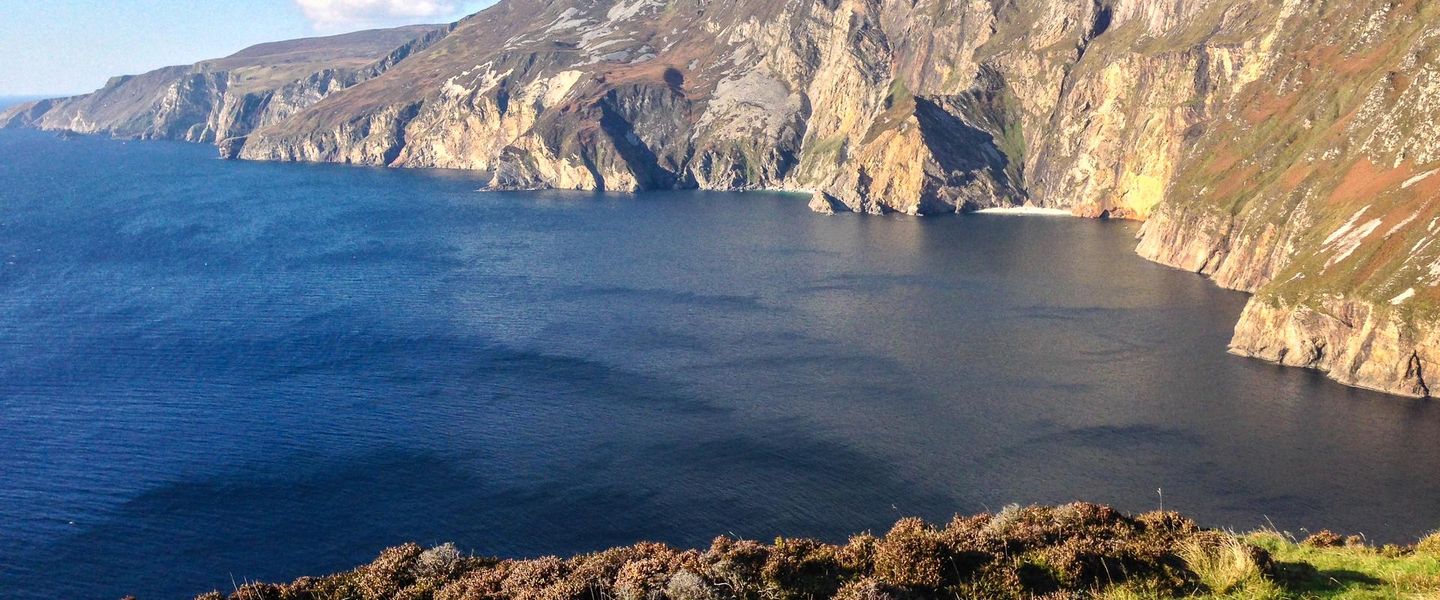


County Donegal combines Atlantic cliffs, mountain landscapes, Gaeltacht culture, historic towns, seafood and celebrated Donegal tweed.
Read more about County Donegal
When is the best time to visit County Donegal?
Best: June–August · 17–19°C| Month | High (°C) | Rainfall (mm) |
|---|---|---|
| January | 8 | 100 |
| February | 8 | 90 |
| March | 10 | 90 |
| April | 12 | 70 |
| May | 15 | 70 |
| June (best) | 17 | 70 |
| July (best) | 19 | 80 |
| August (best) | 18 | 90 |
| September | 16 | 90 |
| October | 13 | 110 |
| November | 10 | 110 |
| December | 8 | 110 |
Getting to and around County Donegal
How to get there
Transportation
Top city travel guides in County Donegal
The cities of County Donegal, and the easiest places to base yourself.

Swipe for more cities
Destinations in County Donegal
Resorts, valleys and scenic spots worth a trip of their own.
-

-

-


Swipe for more destinations
Best attractions in County Donegal
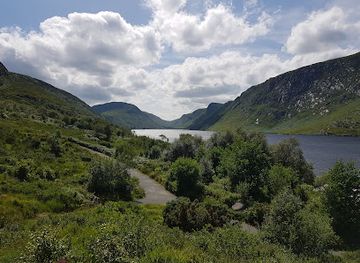
County Donegal’s attractions are shaped by the meeting of Atlantic coast, upland terrain and a strong cultural inheritance. Glenveagh National Park offers mountain scenery, Lough Veagh, woodland walks and Glenveagh Castle, while Sliabh Liag provides high sea cliffs and expansive views across Donegal Bay. Malin Head and Fanad Head are prominent coastal destinations, each combining exposed headlands with maritime history and wildlife possibilities. The county’s beaches, from broad strands to smaller coves, support walking, surfing and quiet shore excursions, although conditions vary considerably with tide and weather. Historic sites include Donegal Castle, the early Christian remains associated with Glencolmcille, Grianan of Aileach on Inishowen and the Franciscan friary at Donegal Town. Museums, galleries, craft studios, traditional music venues and cultural centres add depth in Letterkenny, Donegal Town and smaller communities. Outdoor visitors can choose from marked hill walks, cycling routes, kayaking, angling and guided coastal activities, while families may prefer castle grounds, accessible beaches and wildlife-focused outings. The attraction landscape is less about a dense chain of ticketed sights than about combining a few major heritage places with long stretches of open scenery and living communities.
-
National park
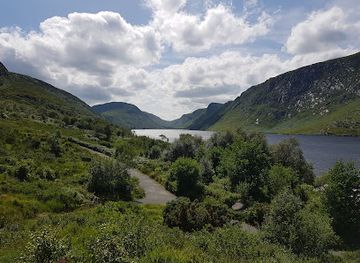
Glenveagh National Park
Discover rugged beauty, historic gardens, and a majestic castle in the heart of Donegal's Glenveagh National Park.
-
Castle
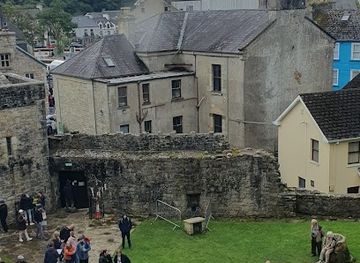
Donegal Castle
Explore centuries of Irish history at Donegal Castle, from Gaelic stronghold to Jacobean manor, in the heart of Donegal Town.
-
Wildlife park
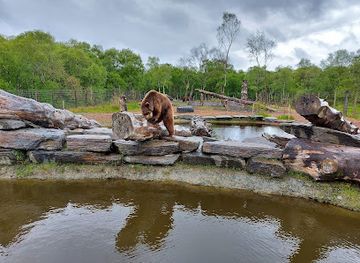
Wild Ireland
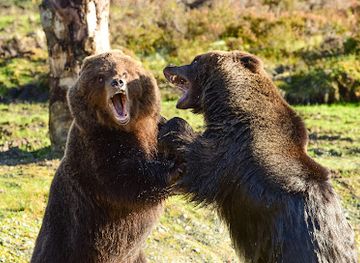
Discover Ireland's lost wildlife in a Celtic rainforest sanctuary, supporting animal rescue and conservation on the Wild Atlantic Way.
-
Hotel
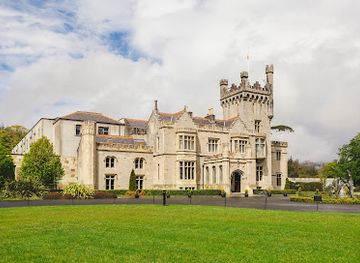
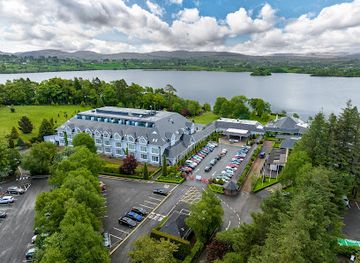
Lough Eske Castle
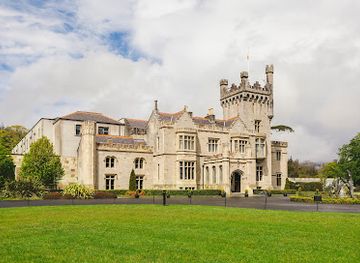
Experience Irish history and luxury at Lough Eske Castle, a stunningly restored 5-star hotel on the shores of Lough Eske in County Donegal.
Best landmarks in County Donegal
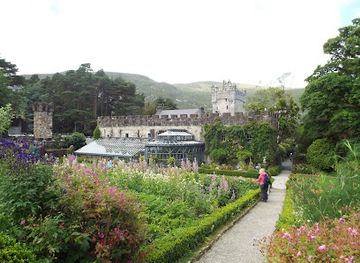
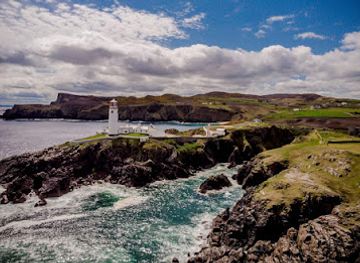
Sliabh Liag’s Atlantic cliffs are among Donegal’s most recognisable natural landmarks, rising dramatically above the sea and expressing the scale of the county’s south-western coast. In the north, Malin Head marks the northernmost point of mainland Ireland and is associated with rugged headlands, sea routes and wide ocean views, while Fanad Head lighthouse stands at the entrance to Lough Swilly as a prominent maritime marker. Glenveagh Castle, built in the nineteenth century beside Lough Veagh, provides an architectural contrast to the surrounding Derryveagh Mountains. Donegal Castle, overlooking the River Eske, is an important surviving reminder of the O'Donnell lordship and Gaelic Donegal. On Inishowen, the stone fort of Grianan of Aileach occupies a hilltop site of earlier importance and commands views across the surrounding loughs and lowlands. The Franciscan friary at Donegal Town, with its ruined church and cloister remains, adds a medieval ecclesiastical landmark to the county’s southern heritage. Together these places show how Donegal’s identity has been shaped by defensive positions, religious foundations, maritime navigation, aristocratic estates and a coast that remains its most powerful visual symbol.
-
National park
Glenveagh National Park
Explore Glenveagh National Park, a breathtaking natural wonder in Donegal, featuring stunning landscapes, diverse wildlife, and rich cultural heritage.
-
Castle
Donegal Castle
Explore centuries of Irish history at Donegal Castle, from Gaelic stronghold to Jacobean manor, in the heart of Donegal Town.
-
Wildlife park
Wild Ireland
Explore Wild Ireland, where you can encounter native wildlife in stunning natural surroundings, perfect for families and nature lovers alike.
-
Tourist attraction
Fanad Head Lighthouse
Explore the breathtaking Fanad Head Lighthouse, a historic beacon on the stunning Donegal coastline, offering panoramic views and rich maritime history.
Explore County Donegal on the map
Plan your trip on one map. See where the top cities, national parks and sights are, and book hotels and experiences in a few clicks.
Best hotels in County Donegal
Best restaurants in County Donegal
Donegal dining draws heavily on the Atlantic and the county’s farming hinterland. Fish and shellfish feature prominently in coastal towns such as Killybegs, Donegal Town and communities along the western seaboard, while lamb, beef, farmhouse cheeses, breads and seasonal vegetables appear across the wider county. Pubs and cafés provide practical places to try soups, seafood dishes, baked goods and contemporary interpretations of familiar Irish cooking; rural inns often emphasise locally sourced produce without presenting a separate, rigid Donegal cuisine. Farmers’ markets and food shops are useful for regional cheeses, smoked products, preserves and baking, while craft producers and cafés in the Gaeltacht areas reflect the county’s community-based culture. Donegal’s food traditions also sit within the broader culinary life of Ireland, so dishes such as boxty should be understood as national or regional Irish fare rather than claimed exclusively for the county. In Killybegs and other fishing communities, ask about the day’s catch, and in remote areas check dining arrangements in advance because restaurant choice can be limited outside the main towns.
-
Hotel
Harvey's Point
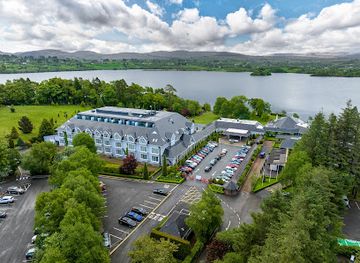
Discover luxury at Harvey's Point Hotel by Lough Eske: An idyllic retreat offering top-notch dining and breathtaking views in Donegal.
-
Hotel
Lough Eske Castle
Discover the enchanting beauty and luxurious comfort of Lough Eske Castle in County Donegal - a perfect retreat for relaxation and exploration.
-
Seafood
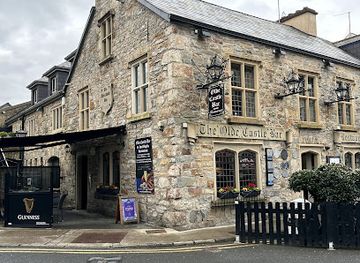
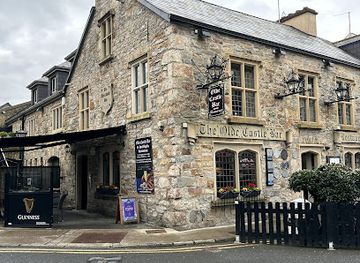
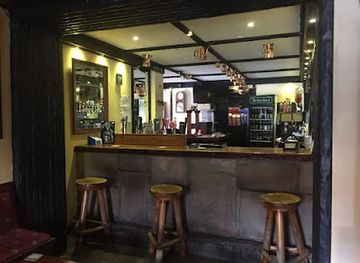
Olde Castle Seafood Bar
Experience authentic Irish seafood dining at Olde Castle Seafood Bar in Donegal Town – where every bite tells a story of the sea.
-
Gastropub
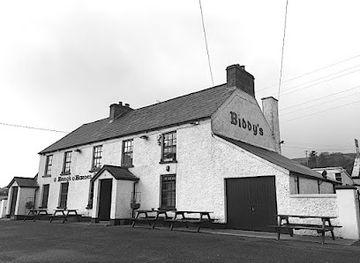
Biddy's O'Barnes
Discover Biddy's O'Barnes: A top gastropub in County Donegal serving delicious Irish cuisine and famous Guinness amidst stunning landscapes.
Best bars in County Donegal
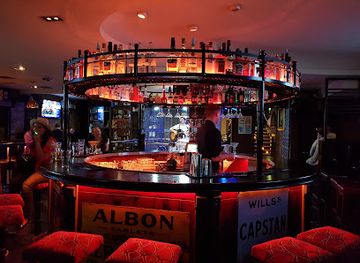
Evening life in County Donegal is centred more on traditional pubs, restaurants, music and conversation than on a large nightclub circuit. Letterkenny has the broadest choice of late-opening bars, live music and younger nightlife, while Donegal Town, Buncrana, Ballyshannon and other larger settlements offer pubs, occasional live performances and social venues. In smaller coastal and rural communities, historic-style pubs and hotel bars are often the main evening options, with traditional sessions or local performances varying by season and day of the week. Craft breweries and drinks producers contribute to the county’s contemporary food-and-drink scene, but availability and opening arrangements change, so current local information is useful. Visitors should not assume that a quiet village has late-night transport; arrange a taxi or accommodation-based return where necessary, and remember that enjoying Donegal’s evening culture does not depend on drinking.
-
Bar
Harvey's Point
Discover the charm of Harvey's Point, a serene hotel and restaurant on Lough Eske offering exquisite dining and breathtaking views in Donegal.
-
Bar
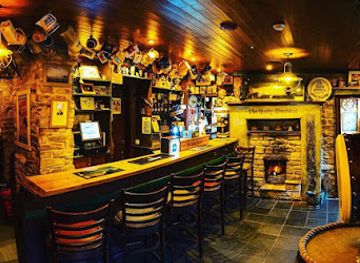
The Rusty Mackerel
Discover the heart of Irish hospitality at The Rusty Mackerel, a cozy bar and pub in Donegal serving delicious food and local brews.
-
Seafood
Olde Castle Seafood Bar
Discover the best seafood in Donegal Town at Olde Castle Seafood Bar, where fresh flavors and local charm come together for an unforgettable dining experience.
-
Gastropub
Biddy's O'Barnes
Discover the authentic taste of Ireland at Biddy's O'Barnes, a charming gastropub nestled in the stunning Barnesmore Gap of Co. Donegal.
Best nightclubs in County Donegal
Evening life in County Donegal is centred more on traditional pubs, restaurants, music and conversation than on a large nightclub circuit. Letterkenny has the broadest choice of late-opening bars, live music and younger nightlife, while Donegal Town, Buncrana, Ballyshannon and other larger settlements offer pubs, occasional live performances and social venues. In smaller coastal and rural communities, historic-style pubs and hotel bars are often the main evening options, with traditional sessions or local performances varying by season and day of the week. Craft breweries and drinks producers contribute to the county’s contemporary food-and-drink scene, but availability and opening arrangements change, so current local information is useful. Visitors should not assume that a quiet village has late-night transport; arrange a taxi or accommodation-based return where necessary, and remember that enjoying Donegal’s evening culture does not depend on drinking.
-
Bar
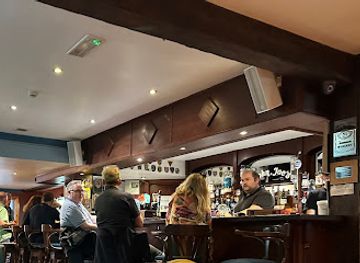
John Joe's Bar
Discover the lively atmosphere and rich musical heritage at John Joe's Bar, a must-visit pub in Kilcar, Co. Donegal.
-
Bar
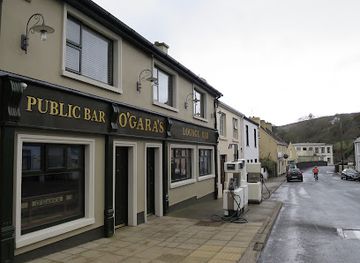
O'Garas Bar&Lounge Kilcar
Experience the heart of Irish culture at O'Garas Bar & Lounge, a cozy spot in Kilcar offering delicious local cuisine and a vibrant atmosphere.
-
Night club
Voodoo Venue
Discover the energy of Letterkenny's nightlife at Voodoo Venue, where cocktails, live music, and unforgettable experiences await.
-
Bar
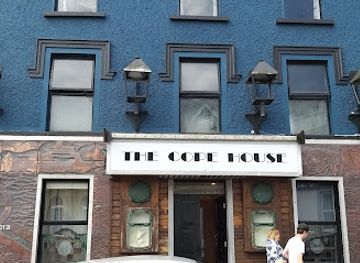
The Galleon Bar @ The Cope House
Experience the charm of The Galleon Bar @ The Cope House in Killybegs, where friendly service meets stunning coastal views.
Best shops in County Donegal
Shopping in County Donegal is strongest in market towns, independent high streets, craft studios and food shops rather than large luxury centres. Letterkenny provides the county’s broadest retail choice, with national chains, department-style shopping and independent businesses, while Donegal Town, Buncrana, Ballyshannon, Ardara and other towns are useful for local crafts, books, clothing and practical supplies. Donegal tweed is the signature purchase, available in garments, caps, scarves, blankets and lengths of cloth; look for reputable makers and ask about how and where an item was produced. Galleries and studio shops sell knitwear, pottery, jewellery, woodwork, leather goods and paintings inspired by the coast and mountains. Farm shops and markets offer cheeses, preserves, smoked foods, breads and other edible gifts, although market days vary by town and season. In remote areas, opening arrangements can be limited, so do not leave all shopping until the end of a long coastal journey. A well-made tweed item or locally produced food is generally a more meaningful souvenir than a generic Celtic-themed product.
-
Hotel
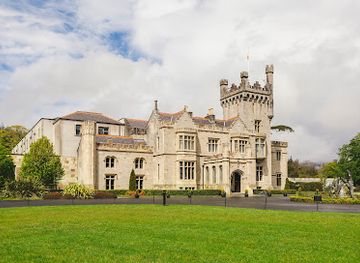
Lough Eske Castle
Discover the enchanting Lough Eske Castle, a five-star hotel blending history, luxury, and breathtaking landscapes in County Donegal, Ireland.
-
Tourist attraction
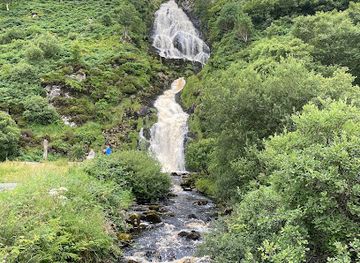
Assaranca Waterfall (Eas a' Ranca)
Experience the breathtaking beauty of Assaranca Waterfall, a stunning natural attraction nestled in the heart of Co. Donegal, Ireland.
-
Tourist attraction
Fairy Bridges
Discover the breathtaking Fairy Bridges in County Donegal, a must-see tourist attraction blending natural beauty and local folklore.
-
Tourist attraction
Caves of Maghera
Discover the breathtaking beauty and intriguing legends of the Caves of Maghera, a must-see natural wonder on Ireland's stunning coast.
Get your free copy of our complete guide to County Donegal, delivered straight to you.
Everything on this page, from attractions and restaurants to essentials and local phrases, in one PDF you can read offline, print or share.
Already have an account? Sign in
Your County Donegal guide is ready.
We'll send it to · Not you? Sign out

Getting your guide ready…
We are putting together a fresh copy of the County Donegal guide. This can take up to a minute.
This can take a few moments. If your browser asks, choose Allow so the download can start. You'll find the guide in your Downloads folder.
Nothing happened? Download it again
Sorry, the guide is taking longer than usual. Please try again in a minute, or get it by email instead.
County Donegal essentials
Currency and Payment
Safety
Emergency Situations
Do's and Don'ts
Local Tips
From Eve
Local phrases worth knowing
You don't need to get them perfect. A few words go a long way, and locals appreciate the effort.
Basics
| English | Local | Say it |
|---|---|---|
| Hello | Dia dhuit | [Dee-ah gwitch] |
| Goodbye | Slán | [Slawn] |
| Yes | Tá | [Taw] |
| No | Níl | [Neel] |
| Please/You're welcome | Le do thoil | [Leh duh hull] |
| Thank you | Go raibh maith agat | [Guh rev mah ah-gut] |
| Excuse me/Sorry | Gabh mo leithscéal | [Gow mo lehs-kayl] |
| How are you? | Conas atá tú? | [Cun-us ah-taw too] |
| Fine. And you? | Maith go leor. Agus tú? | [Mah go lore. Agus too?] |
| Do you speak English? | An labhraíonn tú Béarla? | [An law-ree-un too Bayr-lah?] |
| I don't understand | Ní thuigim | [Nee hwig-im] |
Eating & Drinking
| English | Local | Say it |
|---|---|---|
| I'd like to see the menu, please | Ba bhreá liom an mias a fheiceáil, le do thoil | [Ba vraw lum an me-us a yeh-kill, leh duh hull] |
| I don't eat meat | Ní ithim feoil | [Nee ih-im fail] |
| Cheers! | Sláinte! | [Slawn-teh!] |
| I would like to pay, please | Ba mhaith liom íoc, le do thoil | [Ba wah lum eek, leh duh hull] |
Emergencies
| English | Local | Say it |
|---|---|---|
| Help! | Cabhair! | [Caw-ir!] |
| Go away! | Imigh uait! | [Ih-mee oo-it!] |
| Call the Police! | Glaoigh ar na Póilíní! | [Glee-oh ar nah Paw-leen-ee!] |
| Call a doctor! | Glaoigh ar dhochtúir! | [Glee-oh ar hock-tur!] |
| I'm lost | Táim caillte | [Taw-im kylt-eh] |
| I'm ill | Táim tinn | [Taw-im tin] |
Shopping
| English | Local | Say it |
|---|---|---|
| I'd like to buy... | Ba bhreá liom a cheannach... | [Ba vraw lum a khan-ukh...] |
| I'm just looking | Táim ag féachaint | [Taw-im egg fay-khant] |
| How much is it? | Cé mhéad atá sé? | [Kay vay-d ah-taw shay?] |
| That's too expensive | Tá sé ró-chostasach | [Taw shay roh-kos-tahkh] |
| Can you lower the price? | An féidir leat an praghas a laghdú? | [An fay-dur lat an prah-gas a lah-oo?] |
Time & Numbers
| English | Local | Say it |
|---|---|---|
| What time is it? | Cén t-am é? | [Kayn tawm eh?] |
| It's one o'clock | Is a haon a chlog | [Is a hain a khlog] |
| Half past (10) | Leath tar éis (10) | [Lah tar ays (10)] |
| Morning | Maidin | [Mah-din] |
| Afternoon | Tráthnóna | [Trah-noh-na] |
| Evening | Tráthnóna | [Trah-noh-na] |
| Yesterday | Inné | [In-yay] |
| Today | Inniu | [In-yu] |
| Tomorrow | Amárach | [Ah-mah-rah] |
| 1 | A haon | [A hain] |
| 2 | A dó | [A doe] |
| 3 | A trí | [A tree] |
| 4 | A ceathair | [A keh-her] |
| 5 | A cúig | [A coo-ig] |
| 6 | A sé | [A shay] |
| 7 | A seacht | [A shokht] |
| 8 | A hocht | [A hockt] |
| 9 | A naoi | [A nee] |
| 10 | A deich | [A deh] |
Transport & Directions
| English | Local | Say it |
|---|---|---|
| Where's a/the...? | Cá bhfuil an...? | [Caw will an...?] |
| What's the address? | Cad é an seoladh? | [Cad eh an shol-adh?] |
| Can you show me (on the map)? | An féidir leat a thaispeáint dom (ar an mapa)? | [An fay-dur lat a hash-paynt dum (ar an mah-pah)?] |
| When's the next (bus)? | Cathain a bheidh an (bus) eile? | [Cah-in a vay an (bus) eh-le?] |
| A ticket (to ....) | Ticéad (go ....) | [Tick-aid (go ....)] |
History of County Donegal
Prehistoric Monuments and Early Settlement
Donegal’s landscape preserves evidence of settlement from prehistoric periods, including megalithic tombs, stone circles, standing stones and ancient field systems. The concentration of monuments around parts of west Donegal and the wider uplands shows how communities farmed, buried their dead and marked territory long before written records. These remains are closely tied to the county’s terrain: exposed coastal ground, fertile river valleys and mountain passes all shaped where people lived. The monuments are not isolated curiosities but part of a long archaeological record that gives Donegal’s apparently wild landscapes a deep human history.
Early Medieval Kingdoms and Monastic Culture
In the early medieval period, Donegal formed part of the territory associated with the powerful northern Uí Néill dynasty, while local ruling families controlled particular districts. Monastic foundations and early Christian sites developed across the county, including the important ecclesiastical centre at Glencolmcille, traditionally associated with Saint Colm Cille. Small churches, carved stones, holy wells and burial grounds remain visible reminders of this period. Religious communities also connected the region to wider intellectual and devotional networks, despite its distance from Ireland’s principal eastern centres.
The O'Donnell Lords of Tyrconnell
Much of present-day Donegal was historically known as Tyrconnell and was ruled for centuries by the O'Donnell dynasty. Donegal Castle, begun in the fifteenth century on the River Eske, reflects the family’s authority and its engagement with Gaelic political and cultural life. The O'Donnells maintained alliances and rivalries with other Irish dynasties, especially the O'Neills of neighbouring Ulster. Their power declined during the Tudor conquest of Ireland, and the Flight of the Earls in 1607, involving Hugh O'Donnell and Hugh O'Neill, marked a decisive turning point in the history of Gaelic Ulster.
Plantation, Conflict and Changing Landholding
The seventeenth century brought major political and demographic change as English and Scottish settlement expanded in parts of Ulster after the Flight of the Earls. Donegal did not experience plantation uniformly, but landholding, administration and settlement patterns were altered, particularly in the north and east. Fortifications, estates and planned towns formed part of a new political order, while Gaelic communities continued to live across much of the county. Religious divisions and disputes over land remained important influences on Donegal society for generations.
Farming, Fishing and Emigration
For much of the eighteenth and nineteenth centuries, Donegal’s economy depended on small-scale farming, livestock, fishing, textile production and seasonal work. The county’s rugged geography limited industrial development but supported distinctive local economies, including fishing around Killybegs and weaving and craft traditions in rural communities. The Great Famine brought severe hardship, although its effects varied across the county. Poverty, limited employment and insecure landholding contributed to substantial emigration, shaping families and communities in Donegal, Britain, North America and beyond.
The Irish Language and Cultural Revival
Irish remained particularly strong in west Donegal and other Gaeltacht districts, where it continued as a community language despite the pressures of schooling, emigration and economic change. During the nineteenth-century cultural revival, interest in Irish literature, folklore, music and local history encouraged renewed attention to Donegal’s Gaelic heritage. Writers and collectors helped bring regional traditions to wider audiences, while communities continued to sustain them in everyday life. Today, Irish-language education, broadcasting, arts and community activity remain important parts of Donegal’s cultural identity.
Modern Donegal and the Border Landscape
The twentieth century brought roads, electrification, new public services and changing patterns of work, while agriculture, fishing and textiles remained significant. County Donegal’s position beside Northern Ireland has also shaped daily movement, trade and family connections, especially around Inishowen and the east of the county. The border became an international frontier after partition and later acquired new significance during the Troubles, before becoming more open through the peace process and European integration. Contemporary Donegal balances local community life and traditional industries with tourism, education, creative work and a growing interest in its natural environment.
County Donegal in Photos
Browse through our photo collection highlighting the charm and character of the destination.
Neighbouring regions of County Donegal
The closest regions to County Donegal, if you have time for more than one.
-
-

-

-
-


Swipe for more regions