

Free County Kerry Travel Guide & Mobile App
Explore County Kerry with free travel guides. Discover regional history, expert tips, proposed trips, and audio guides on web or mobile app.


Explore County Kerry for Atlantic peninsulas, Killarney lakes, mountain walks, Irish-language culture, historic sites and memorable coastal journeys.
Read more about County Kerry
When is the best time to visit County Kerry?
Best: June–August · 18–20°C| Month | High (°C) | Rainfall (mm) |
|---|---|---|
| January | 10 | 105 |
| February | 9 | 85 |
| March | 11 | 90 |
| April | 12 | 75 |
| May | 15 | 70 |
| June (best) | 18 | 65 |
| July (best) | 20 | 65 |
| August (best) | 19 | 75 |
| September | 17 | 80 |
| October | 15 | 95 |
| November | 11 | 100 |
| December | 9 | 105 |
Getting to and around County Kerry
How to get there
Transportation
Top city travel guides in County Kerry
The cities of County Kerry, and the easiest places to base yourself.
-

-

-


Swipe for more cities
Destinations in County Kerry
Resorts, valleys and scenic spots worth a trip of their own.
-

-

-

-

-

-


Swipe for more destinations
Best attractions in County Kerry
County Kerry’s attractions range from major natural landscapes to small archaeological sites encountered along rural roads. Killarney National Park is the county’s best-known visitor area, combining Lough Leane, Muckross Lake, woodland, mountain views, Muckross House and gardens, Torc Waterfall and routes suitable for walking or cycling. The Ring of Kerry crosses the Iveragh Peninsula through villages, beaches, upland scenery and viewpoints, while the Dingle Peninsula offers prehistoric remains, coastal walks, Irish-language communities and the harbour town of Dingle. Boat excursions may reach Valentia Island, the Blasket Islands or the Skellig Islands, subject to weather and operating arrangements. Experienced walkers have access to the MacGillycuddy’s Reeks, while gentler options include lakeside paths, estate grounds and selected coastal sections. Kerry also has museums, galleries, traditional music venues, working harbours and family-oriented attractions, but its strongest appeal is the way outdoor scenery, historic settlement and everyday rural life remain closely connected.
-
National park
Killarney National Park
Discover Ireland's first national park: a stunning landscape of lakes, mountains, and ancient woodlands, rich in history and natural beauty.
-
Museum
Muckross House
Discover Victorian elegance, stunning gardens, and traditional farm life in the heart of Killarney National Park at Muckross House.
-
Castle
Ross Castle
Explore a 15th-century Irish chieftain's stronghold on Lough Leane, with guided tours and scenic trails in Killarney National Park.
-
Tourist attraction
Torc Waterfall
Experience the magic of Torc Waterfall in Killarney National Park: cascading waters, ancient legends, and stunning Irish scenery.



Best landmarks in County Kerry
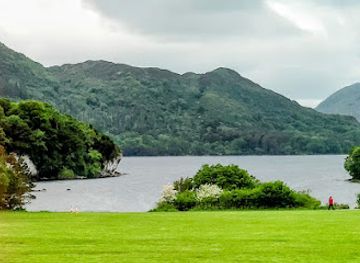
Kerry’s most recognisable landmarks are closely tied to its coast, mountains and early history. Skellig Michael, rising from the Atlantic west of the Iveragh Peninsula, is internationally significant for its early medieval monastic settlement and UNESCO World Heritage status; access is controlled and weather-dependent. In Killarney National Park, Ross Castle stands on the shore of Lough Leane as a substantial reminder of the county’s medieval lordships, while Muckross House represents the later estate landscape that shaped the area. The stone beehive huts and Gallarus Oratory on the Dingle Peninsula are distinctive examples of early Christian architecture, although individual sites have different conservation arrangements. Carrauntoohil, Ireland’s highest mountain, is a major natural landmark in the MacGillycuddy’s Reeks, and the mountain passes, bays and headlands of the Ring of Kerry give the county much of its visual identity. Valentia Island’s maritime setting, the Blasket Islands and the cliffs and sea stacks of the western coast reinforce Kerry’s long relationship with the Atlantic.
-
National park
Killarney National Park
Experience the natural wonders of Killarney National Park, where scenic beauty meets rich history and diverse wildlife in the heart of County Kerry.
-
Museum
Muckross House
Discover the beauty and history of Muckross House in Killarney, where Victorian elegance meets stunning natural landscapes.
-
Castle
Ross Castle
Explore Ross Castle in Killarney National Park, a historical treasure surrounded by stunning landscapes and rich Irish heritage.
-
Tourist attraction
Torc Waterfall
Explore the enchanting Torc Waterfall in Killarney National Park, a breathtaking natural wonder that showcases Ireland's scenic beauty and rich wildlife.


Explore County Kerry on the map
Plan your trip on one map. See where the top cities, national parks and sights are, and book hotels and experiences in a few clicks.
Best hotels in County Kerry
Best restaurants in County Kerry
Kerry’s food culture reflects both Atlantic geography and farming country. Seafood features strongly in coastal towns such as Dingle and Kenmare, with menus commonly drawing on locally landed fish, shellfish and smoked products when available. Inland dining makes use of Irish beef and lamb, dairy produce, vegetables and farmhouse ingredients, while bakeries, cafés and pubs provide practical choices for walkers and road-trippers. Dingle, Killarney, Tralee and Kenmare have the widest range of restaurants, from contemporary kitchens to traditional hotel dining and informal cafés; smaller villages tend to centre on pubs, delis and family-run food businesses. Look for Kerry-produced cheeses, butter, preserves, breads and seasonal goods in food shops and markets, and remember that individual menus and opening arrangements change. The county’s craft drinks scene sits alongside established Irish beer, cider and whiskey traditions, but local produce is best understood as part of a broader south-west Irish food culture rather than a single fixed cuisine.
-
Restaurant
Porterhouse Restaurant
Discover exquisite Irish cuisine at Porterhouse Restaurant in Killarney—where every meal is a celebration of local flavors.
-
Restaurant
Kate Browne's Restaurant & Bar
Experience the heart of Irish cuisine at Kate Browne's Restaurant & Bar in Ardfert, Co. Kerry - where tradition meets taste.
-
Seafood
Fisherman's Bar & Skellig Restaurant Portmagee
Experience authentic Irish seafood with stunning harbor views at Fisherman's Bar & Skellig Restaurant in Portmagee.
-
Seafood
The Moorings Guesthouse & Seafood Restaurant @ The Bridge Bar
Discover fresh seafood and cozy accommodations at The Moorings Guesthouse & Seafood Restaurant in Portmagee, County Kerry.


Best bars in County Kerry
Evening life in County Kerry is concentrated in Killarney, Tralee, Dingle and Kenmare, with smaller towns and villages relying more heavily on pubs, restaurants and occasional live music. Traditional pubs remain important social spaces, particularly for conversation and music, while larger towns also offer contemporary bars, hotel lounges and venues hosting performances. Dingle is especially associated with a strong music culture, although schedules vary and should be checked locally. Killarney has the county’s broadest visitor-oriented evening choice, including late bars and seasonal entertainment, while rural evenings are generally quieter and depend on local businesses rather than a formal nightlife district. Nightclubs exist mainly in the larger centres and are not the defining feature of a Kerry visit. In all areas, drinking is only one part of evening culture: theatre, concerts, food, storytelling and walks through historic town streets provide alternatives.
-
Irish pub
J.M. Reidy's
Discover the charm of Killarney at J.M. Reidy's, a beloved Irish pub offering delicious cuisine and a warm, inviting atmosphere.
-
Pub
Kirbys Brogue Inn
Kirbys Brogue Inn in Tralee: A cozy pub and restaurant offering authentic Irish cuisine and a welcoming atmosphere for every traveler.
-
Bar
Murphys Bar, Restaurant & Townhouse Killarney
Discover the charm of Killarney at Murphys Bar, Restaurant & Townhouse, where authentic Irish cuisine meets warm hospitality.
-
Pub
Dick Mack's Pub
Experience the charm of Dingle at Dick Mack's Pub, where great brews and warm Irish hospitality blend seamlessly in a historic setting.


Best nightclubs in County Kerry
Evening life in County Kerry is concentrated in Killarney, Tralee, Dingle and Kenmare, with smaller towns and villages relying more heavily on pubs, restaurants and occasional live music. Traditional pubs remain important social spaces, particularly for conversation and music, while larger towns also offer contemporary bars, hotel lounges and venues hosting performances. Dingle is especially associated with a strong music culture, although schedules vary and should be checked locally. Killarney has the county’s broadest visitor-oriented evening choice, including late bars and seasonal entertainment, while rural evenings are generally quieter and depend on local businesses rather than a formal nightlife district. Nightclubs exist mainly in the larger centres and are not the defining feature of a Kerry visit. In all areas, drinking is only one part of evening culture: theatre, concerts, food, storytelling and walks through historic town streets provide alternatives.
-
Irish pub
The Dingle Pub
Discover the vibrant culture and traditional flavors of Dingle at The Dingle Pub, a lively Irish pub with live music and a warm atmosphere.
-
Boat tour agency
Skellig Michael Tours - Skellig Michael Landing Tours and Boat Tours - Casey's Skellig Island Tours
Discover the awe-inspiring Skellig Michael, a UNESCO World Heritage site offering breathtaking views, rich biodiversity, and a glimpse into ancient history.
-
Irish pub
MacCarthy's Bar
Discover the heart of Irish culture at MacCarthy's Bar, a lively pub in Castletown-Bearhaven, offering traditional food, drinks, and live music.
-
Boat tour agency
Skellig Michael tours- Skellig Michael landing tours - Skellig Island Eco tours - Skellig Boats - Skellig Michael Cruises
Discover Skellig Michael, a UNESCO World Heritage Site, where ancient history meets stunning coastal beauty.


Best shops in County Kerry
Shopping in County Kerry is centred on the high streets and independent businesses of Killarney, Tralee, Dingle, Kenmare and the smaller market towns. Visitors will find outdoor clothing, books, art, jewellery, knitwear, pottery, prints and locally made gifts, alongside ordinary Irish retail rather than a single specialist shopping quarter. Dingle and Kenmare have particularly strong concentrations of craft, gallery and design-led shops, while Killarney offers the broadest selection for visitors and Tralee serves as a larger county retail centre. Food shops and farmers’ markets are useful for Kerry cheeses, breads, preserves, smoked seafood and other regional produce, though market days vary. Look for work by local makers, but check labels carefully when seeking genuinely Irish-made goods, as souvenir ranges can also be imported. Antiques, contemporary art and traditional music products are available in selected independent shops, and smaller villages are better suited to incidental finds than planned shopping trips.
-
Gift shop
Ladies' View Gift Store Cafe Bar & Roof Terrace
Discover the captivating Ladies' View Gift Store Cafe Bar & Roof Terrace in Killarney — where shopping, dining, and breathtaking views come together.
-
Tourist attraction
Kerry Cliffs (Aillte Chiarraí)
Experience the breathtaking beauty of Kerry Cliffs, where dramatic coastal views and rich wildlife await every visitor on the Skellig Ring.
-
Shopping mall
Killarney Outlet Centre
Explore the Killarney Outlet Centre: Your ultimate shopping destination for fashion bargains and cozy coffee breaks in Killarney.
-
Supermarket
Daly's SuperValu Killarney
Explore Daly's SuperValu Killarney for a delightful selection of fresh groceries, local produce, and baked goods in the heart of Ireland's scenic town.


Get your free copy of our complete guide to County Kerry, delivered straight to you.
Everything on this page, from attractions and restaurants to essentials and local phrases, in one PDF you can read offline, print or share.
Already have an account? Sign in
Your County Kerry guide is ready.
We'll send it to · Not you? Sign out

Getting your guide ready…
We are putting together a fresh copy of the County Kerry guide. This can take up to a minute.
This can take a few moments. If your browser asks, choose Allow so the download can start. You'll find the guide in your Downloads folder.
Nothing happened? Download it again
Sorry, the guide is taking longer than usual. Please try again in a minute, or get it by email instead.
County Kerry essentials
Currency and Payment
Safety
Emergency Situations
Do's and Don'ts
Local Tips
From Eve
Local phrases worth knowing
You don't need to get them perfect. A few words go a long way, and locals appreciate the effort.
Basics
| English | Local | Say it |
|---|---|---|
| Hello | Dia dhuit | [Dee-ah gwit] |
| Goodbye | Slán | [Slawn] |
| Yes | Tá | [Taw] |
| No | Níl | [Neel] |
| Please/You're welcome | Le do thoil | [Leh duh hull] |
| Thank you | Go raibh maith agat | [Guh rev mah agat] |
| Excuse me/Sorry | Gabh mo leithscéal | [Gow mo leh-skayl] |
| How are you? | Conas atá tú? | [Kuh-nas ah-taw too?] |
| Fine. And you? | Go breá. Agus tú? | [Guh brah. Agus too?] |
| Do you speak English? | An labhraíonn tú Béarla? | [On lau-ree-in too Bay-ar-la?] |
| I don't understand | Ní thuigim | [Nee hig-im] |
Eating & Drinking
| English | Local | Say it |
|---|---|---|
| I'd like to see the menu, please | Ba mhaith liom an t-ordlann a fheiceáil, le do thoil | [Bah wah lum on t-or-lawn a fey-kil, leh duh hull] |
| I don't eat meat | Ní ithim feoil | [Nee ee-him fey-il] |
| Cheers! | Sláinte! | [Slawn-che] |
| I would like to pay, please | Ba mhaith liom íoc, le do thoil | [Bah wah lum eek, leh duh hull] |
Emergencies
| English | Local | Say it |
|---|---|---|
| Help! | Cabhraigh! | [Caw-ree] |
| Go away! | Imigh uaim! | [Ih-mee oo-im] |
| Call the Police! | Glaoigh ar na póilíní! | [Glee-ar on na poh-leen-ee] |
| Call a doctor! | Glaoigh ar dhoctúir! | [Glee-ar or hok-toor] |
| I'm lost | Táim caillte | [Taw-im kylt-eh] |
| I'm ill | Táim tinn | [Taw-im tin] |
Shopping
| English | Local | Say it |
|---|---|---|
| I'd like to buy... | Ba mhaith liom a cheannach... | [Bah wah lum a khan-ukh...] |
| I'm just looking | Táim ag breathnú | [Taw-im ag brat-noo] |
| How much is it? | Cé mhéad atá sé? | [Kay vayd ah-taw shay?] |
| That's too expensive | Tá sé róchostasach | [Taw shay roh-kos-tah-k] |
| Can you lower the price? | An féidir leat an praghas a laghdú? | [On fay-dur lat on prah-as a lag-doo?] |
Time & Numbers
| English | Local | Say it |
|---|---|---|
| What time is it? | Cén t-am é? | [Kayn tam ay?] |
| It's one o'clock | Is a haon a chlog | [Is a hayn a khlog] |
| Half past (10) | Leath uair tar éis (10) | [Leh uir tar ash (10)] |
| Morning | Maidin | [Maw-din] |
| Afternoon | Tráthnóna | [Trah-no-na] |
| Evening | Tráthnóna | [Trah-no-na] |
| Yesterday | Inné | [In-yay] |
| Today | Inniu | [In-yu] |
| Tomorrow | Amárach | [Ah-mah-rah] |
| 1 | 1 | [1] |
| 2 | 2 | [2] |
| 3 | 3 | [3] |
| 4 | 4 | [4] |
| 5 | 5 | [5] |
| 6 | 6 | [6] |
| 7 | 7 | [7] |
| 8 | 8 | [8] |
| 9 | 9 | [9] |
| 10 | 10 | [10] |
Transport & Directions
| English | Local | Say it |
|---|---|---|
| Where's a/the...? | Cá bhfuil...? | [Kaw wil...?] |
| What's the address? | Cad é an seoladh? | [Kad ay on shol-adh?] |
| Can you show me (on the map)? | An féidir leat a thaispeáint dom (ar an mapa)? | [On fay-dur lat a hash-paynt dum (ar on maw-pa)?] |
| When's the next (bus)? | Cathain a thiocfaidh an (bus) eile? | [Kah-hin a hee-kh-wid on (bus) ill-eh?] |
| A ticket (to ....) | Ticéad (go ....) | [Tee-kayd (guh ....)] |
History of County Kerry
Prehistoric Kerry and Atlantic Settlements
Kerry contains a substantial prehistoric legacy, especially on the Dingle and Iveragh peninsulas. Bronze Age stone circles, standing stones, wedge tombs and field systems show that communities farmed, marked territory and conducted ritual activity across the western landscape thousands of years ago. The most visible remains often stand in open farmland or on upland edges, where their relationship with sea and mountain is part of their significance. These monuments are not isolated curiosities: together they reveal long-term settlement in a county whose rugged terrain is often mistaken for wilderness.
Early Christian Monasticism
From the early medieval period, Kerry became an important setting for Christian communities linked to Ireland’s Atlantic religious culture. The monastery on Skellig Michael, founded on an isolated rock far offshore, is the county’s most famous example, with stone beehive cells and steep stairways surviving above the sea. Sites such as Gallarus Oratory and churches, graveyards and cross-inscribed stones on the Dingle Peninsula reflect a wider network of worship and learning. Their remote locations express both practical settlement patterns and the spiritual value early communities placed on solitude.
Medieval Lords, Castles and Gaelic Society
Medieval Kerry was shaped by Gaelic lordships, ecclesiastical foundations and the expansion of Anglo-Norman power. The Fitzgeralds, particularly the Earls of Desmond, held major influence in the south-west, while castles and fortified houses controlled routes, river crossings and productive land. Ross Castle beside Lough Leane is a prominent surviving reminder of this period. Towns such as Tralee and Listowel developed as centres of administration and trade, while Gaelic language and customary society remained powerful across much of the county.
The Desmond Wars and Plantation Change
The late sixteenth century brought severe upheaval during the Desmond Rebellions, when the Earl of Desmond and his allies resisted English Crown authority in Munster. Warfare, confiscation and famine damaged communities across the south-west. After the rebellion, land was redistributed to undertakers and settlers, although the results in Kerry were uneven and Gaelic landholding continued in many districts. The period marked a decisive shift in political control and helped establish patterns of land ownership, fortified settlement and cultural tension that influenced the county for centuries.
Estate Landscapes and the Nineteenth Century
In the eighteenth and nineteenth centuries, large estates altered parts of Kerry through demesnes, planned gardens, roads and improved farms. Muckross House, completed in the nineteenth century for the Herbert family, represents this estate culture within today’s Killarney National Park. At the same time, most rural people lived through small-scale agriculture and precarious tenancy. The Great Famine of the 1840s caused hunger, disease, eviction and population loss, leaving a deep mark on communities throughout the county and transforming the social landscape through emigration.
Railways, Tourism and the Killarney Landscape
Railways reached Kerry in the nineteenth century, connecting towns such as Killarney and Tralee more closely with the rest of Ireland and helping create a modern tourism economy. Visitors were drawn to the lakes, mountains and celebrated scenic routes, while hotels, jaunting-car services and excursion infrastructure expanded around Killarney. The county’s scenery was increasingly presented as a national asset, but tourism developed alongside farming, fishing and ordinary town life rather than replacing them. This period established many of the travel patterns that still shape visits today.
Gaelic Revival and Modern Cultural Identity
Kerry contributed to the wider Irish cultural revival through its Irish-language communities, folklore, music and sporting traditions. The western peninsulas became important places for recording oral history, traditional customs and local speech, while writers and artists drew on the county’s landscapes and communities. After Irish independence, Gaeltacht areas remained central to the language’s living use, even as migration and economic change altered rural society. Contemporary Kerry combines this cultural inheritance with conservation, outdoor recreation, food production and a substantial international tourism industry.
County Kerry in Photos
Browse through our photo collection highlighting the charm and character of the destination.
Neighbouring regions of County Kerry
The closest regions to County Kerry, if you have time for more than one.
-

-

-

-
-


Swipe for more regions
Explore more
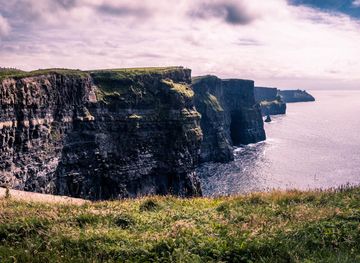
Explore more of Ireland
Discover Ireland: A land of enchanting landscapes, rich history, and vibrant culture, where every corner tells a story and every visit feels like coming home.
Explore Ireland