

Free County Galway Travel Guide & Mobile App
Explore County Galway with free travel guides. Discover regional history, expert tips, proposed trips, and audio guides on web or mobile app.


Explore County Galway for Connemara mountains, Atlantic islands, ancient ruins, Irish-language culture and distinctive food along the western coast.
Read more about County Galway
When is the best time to visit County Galway?
Best: June–August · 17–19°C| Month | High (°C) | Rainfall (mm) |
|---|---|---|
| January | 8 | 90 |
| February | 9 | 70 |
| March | 10 | 70 |
| April | 12 | 60 |
| May | 14 | 60 |
| June (best) | 17 | 60 |
| July (best) | 19 | 70 |
| August (best) | 18 | 80 |
| September | 17 | 80 |
| October | 13 | 100 |
| November | 10 | 100 |
| December | 7 | 90 |
Getting to and around County Galway
How to get there
Transportation
Top city travel guides in County Galway
The cities of County Galway, and the easiest places to base yourself.
-

-

-

-


Swipe for more cities
Destinations in County Galway
Resorts, valleys and scenic spots worth a trip of their own.
-

-

-
-

-

-


Swipe for more destinations
Best attractions in County Galway
County Galway's attractions range from prehistoric forts and monastic ruins to mountain walks, island landscapes and working coastal communities. Connemara National Park near Letterfrack is the county's principal protected landscape, with marked trails, bogland, woodland and views towards the Twelve Bens; nearby Kylemore Abbey combines a nineteenth-century estate history with gardens and a dramatic lakeside setting. The Aran Islands offer a concentrated encounter with stone walls, traditional settlements and major archaeological sites, especially Dún Aonghasa on Inis Mór. Inland, Aughnanure Castle, Athenry Castle, Portumna Castle and Kilmacduagh reveal different periods of medieval and early modern history. Lough Corrib and Lough Derg support boating, fishing and lakeside recreation, while the Atlantic coast provides beaches, harbours, sea angling and walking routes around Connemara and Galway Bay. Coole Park adds literary and woodland associations, and towns such as Clifden, Cong, Gort and Ballinasloe provide museums, galleries, heritage centres and local events. The appeal lies in the contrast between wild open ground, cultivated limestone country, island culture and historic settlements rather than in a single concentrated attraction zone.
-
Abbey
Kylemore Abbey & Victorian Walled Garden
Discover history, beauty, and tranquility at Kylemore Abbey, a stunning lakeside destination in the heart of Connemara, County Galway.
-
National park
Connemara National Park
Explore the wild beauty of Connemara National Park: hiking trails, stunning views, and diverse wildlife in County Galway, Ireland.
-
Cathedral
Galway Cathedral
Explore Galway Cathedral: A stunning fusion of Romanesque and Gothic architecture, rich in history and spiritual significance along the River Corrib.
-
Spanish Arch
Discover the enchanting Spanish Arch, a historic landmark in Galway that beautifully tells the story of the city's rich maritime heritage.


Best landmarks in County Galway
The most recognisable landmarks of County Galway are closely tied to its geology and long history. Dún Aonghasa on Inis Mór is a massive prehistoric stone fort perched above Atlantic cliffs, while the Aran Islands' extensive dry-stone walls form a cultural landscape as distinctive as the monument itself. In Connemara, the Twelve Bens and the Maumturks provide the county's defining mountain silhouettes, and the Kylemore valley is marked by Kylemore Abbey beside Pollacapall Lough. Aughnanure Castle, a fortified O'Flaherty residence near Oughterard, preserves towers, walls and riverside defences associated with Gaelic lordship. Kilmacduagh's round tower and ecclesiastical ruins stand in open south Galway countryside, and Portumna Castle represents the scale of early modern aristocratic building beside Lough Derg. The stone walls and limestone pavements of south Galway, particularly around the edge of Galway Bay, are natural and cultural landmarks in their own right, revealing how farming adapted to thin, stony ground.
-
Abbey
Kylemore Abbey & Victorian Walled Garden
Discover the enchanting Kylemore Abbey, a stunning Victorian castle set amidst breathtaking landscapes, rich history, and beautiful gardens in Ireland.
-
Park
Eyre Square
Explore Eyre Square, the vibrant heart of Galway, where lush landscapes meet rich cultural heritage in a lively urban setting.
-
Island
Ireland
Discover the breathtaking landscapes, rich heritage, and vibrant culture of Ireland, the Emerald Isle, where every corner tells a story.
-
National park
Connemara National Park
Explore Connemara National Park, a breathtaking haven of natural beauty in Ireland, perfect for hiking, wildlife spotting, and experiencing Ireland's stunning landscapes.


Explore County Galway on the map
Plan your trip on one map. See where the top cities, national parks and sights are, and book hotels and experiences in a few clicks.
Best hotels in County Galway
Best restaurants in County Galway
Dining in County Galway is shaped by Atlantic waters, pasture and small-scale food production. Galway Bay oysters are among the county's best-known local specialities, while smoked fish, mussels and other shellfish appear seasonally in coastal restaurants and village cafés. Connemara lamb, farmhouse cheeses, handmade breads and locally grown vegetables are common features of menus that combine Irish traditions with contemporary cooking. Pubs and rural inns often provide substantial, informal meals, while Clifden, other larger towns and the Galway city area offer a broader range of restaurants, cafés and international cuisines; Galway city is outside the county's local-government boundary but is the region's principal dining centre. Farmers' markets and food shops are good places to look for cheeses, preserves, baked goods and seafood, though opening days vary. On the Aran Islands, choices are more limited and seasonal, so visitors should plan meals around ferry timings and local availability rather than expect a late-night restaurant scene.
-
Pizza
The Dough Bros
Experience gourmet pizza like never before at The Dough Bros in Galway - where tradition meets innovation in every delicious slice.
-
Irish pub
The Kings Head
800 years of history, fresh local seafood, live music nightly—authentic Irish gastropub in Galway's heart.
-
Irish
McSwiggans Steak + Seafood Restaurant
Discover the best of Irish cuisine at McSwiggans Steak + Seafood Restaurant in Galway - a culinary haven for steak and seafood lovers.
-
Seafood
Hooked
Discover Hooked in Galway - where fresh seafood meets local flavors in a cozy atmosphere.


Best bars in County Galway
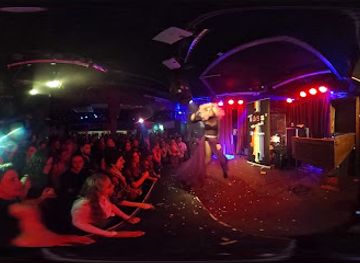
Evening life in County Galway is centred more on traditional pubs, restaurants, hotel bars and live music than on a large nightclub scene. Clifden, Tuam, Ballinasloe, Athenry and other larger settlements provide local gathering places, while smaller villages in Connemara and along the coast tend to have a modest selection of pubs where music may be part of the atmosphere without following a fixed schedule. Gaeltacht communities add an important Irish-language dimension to local cultural life, although visitors should avoid treating traditional music as a performance guaranteed on demand. Galway city, immediately adjoining the county but separately administered, has the region's broadest choice of late bars, theatres and music venues. In rural areas, distances, limited transport and closing times make it sensible to arrange a taxi or accommodation within walking distance rather than rely on late public transport.
-
Gastropub
An Púcán
Experience the vibrant atmosphere and authentic Irish flavors at An Púcán, a top gastropub in Galway’s lively nightlife scene.
-
Grill
The Skeff Bar
Experience the vibrant atmosphere and exquisite flavors of The Skeff Bar, Galway's premier grill and pub destination for food and fun.
-
Bar
The Quays Bar and Restaurant
Experience the essence of Galway at The Quays Bar and Restaurant, where delicious food, local music, and vibrant culture come together.
-
Pub
The Front Door Pub
Experience the heart of Galway at The Front Door Pub, a vibrant spot for drinks, food, and live music in a welcoming atmosphere.


Best nightclubs in County Galway
Evening life in County Galway is centred more on traditional pubs, restaurants, hotel bars and live music than on a large nightclub scene. Clifden, Tuam, Ballinasloe, Athenry and other larger settlements provide local gathering places, while smaller villages in Connemara and along the coast tend to have a modest selection of pubs where music may be part of the atmosphere without following a fixed schedule. Gaeltacht communities add an important Irish-language dimension to local cultural life, although visitors should avoid treating traditional music as a performance guaranteed on demand. Galway city, immediately adjoining the county but separately administered, has the region's broadest choice of late bars, theatres and music venues. In rural areas, distances, limited transport and closing times make it sensible to arrange a taxi or accommodation within walking distance rather than rely on late public transport.
-
Pub
Tig Cóilí
Discover the heart of Galway at Tig Cóilí, where traditional Irish cuisine meets lively live music in a welcoming pub atmosphere.
-
Live Music
Róisín Dubh
Discover the heart of Galway's nightlife at Róisín Dubh, a premier live music venue and pub offering unforgettable performances and local brews.
-
Bar
Seven Bridgestreet
Discover the lively atmosphere of Seven Bridgestreet - Galway's premier bar and live music venue, where cocktails and entertainment come together.
-
Irish pub
Lowry's Bar
Discover the vibrant atmosphere at Lowry's Bar, Clifden's premier Irish pub, featuring live music and delicious traditional dishes.



Best shops in County Galway
Shopping in County Galway is strongest in its market towns and larger coastal settlements rather than in large retail districts. Clifden has independent shops, galleries, outdoor retailers and places selling crafts and food associated with Connemara, while towns such as Tuam, Athenry, Gort, Ballinasloe and Portumna serve local communities with everyday stores, cafés and occasional markets. Visitors can look for Aran knitwear, Irish-made textiles, pottery, jewellery, artwork, books, preserves, farmhouse cheese and smoked fish, checking labels carefully where regional provenance matters. The Aran Islands have small craft and food outlets, but choice is limited and opening arrangements can be seasonal. Farmers' markets and country shops provide opportunities to buy local produce, while Galway city, outside County Galway's local-government area, offers the county's nearest broad urban retail selection. In rural districts, independent businesses may close earlier than visitors expect, so plan food and practical purchases before heading into remote areas.
-
 Shopping mall
Eyre Square Centre
Discover a vibrant shopping experience at Eyre Square Centre, featuring a wide range of stores, eateries, and local charm in the heart of Galway.
-
Shopping mall
Galway Shopping Centre
Explore the Galway Shopping Centre for a unique blend of local and international shopping experiences, dining options, and vibrant atmosphere.
-
Clothing Shop
Penneys
Discover fashion at unbeatable prices at Penneys in Galway's Eyre Square Centre, a must-visit for all shopping enthusiasts.
-
Department store
Dunnes Stores
Explore Dunnes Stores in Galway for a delightful shopping experience featuring local products, quality goods, and a taste of Irish culture.


Get your free copy of our complete guide to County Galway, delivered straight to you.
Everything on this page, from attractions and restaurants to essentials and local phrases, in one PDF you can read offline, print or share.
Already have an account? Sign in
Your County Galway guide is ready.
We'll send it to · Not you? Sign out

Getting your guide ready…
We are putting together a fresh copy of the County Galway guide. This can take up to a minute.
This can take a few moments. If your browser asks, choose Allow so the download can start. You'll find the guide in your Downloads folder.
Nothing happened? Download it again
Sorry, the guide is taking longer than usual. Please try again in a minute, or get it by email instead.
County Galway essentials
Currency and Payment
Safety
Emergency Situations
Do's and Don'ts
Local Tips
From Eve
Local phrases worth knowing
You don't need to get them perfect. A few words go a long way, and locals appreciate the effort.
Basics
| English | Local | Say it |
|---|---|---|
| Hello | Dia dhuit | [DEE-uh gwit] |
| Goodbye | Slán | [SLAWN] |
| Yes | Tá | [TAW] |
| No | Níl | [NEEL] |
| Please/You're welcome | Le do thoil | [LEH duh HUL] |
| Thank you | Go raibh maith agat | [Guh rev MAH agat] |
| Excuse me/Sorry | Gabh mo leithsceal | [GOW mo LETH-skal] |
| How are you? | Conas atá tú? | [KUN-us uh-TAW too] |
| Fine. And you? | Tá go maith. Conas atá tú? | [TAW guh MAH. KUN-us uh-TAW too] |
| Do you speak English? | An labhraíonn tú Béarla? | [An LAV-ree-in too BAYR-la?] |
| I don't understand | Ní thuigim | [NEE HIG-im] |
Eating & Drinking
| English | Local | Say it |
|---|---|---|
| I'd like to see the menu, please | Ba mhaith liom an gclár, le do thoil | [Bah WAH lum an GLAR, leh duh HUL] |
| I don't eat meat | Ní ithim feoil | [NEE IH-im FAYL] |
| Cheers! | Sláinte! | [SLAWN-tcha!] |
| I would like to pay, please | Ba mhaith liom íoc, le do thoil | [Bah WAH lum EEK, leh duh HUL] |
Emergencies
| English | Local | Say it |
|---|---|---|
| Help! | Cabhair! | [KOW-er!] |
| Go away! | Imigh uait! | [IM-ee u-it!] |
| Call the Police! | Glaoigh ar na gardaí! | [GLA-hee air na GAR-dee!] |
| Call a doctor! | Glaoigh ar dochtúir! | [GLA-hee air DOH-khtoor!] |
| I'm lost | Táim caillte | [TAWM KAL-ta] |
| I'm ill | Táim tinn | [TAWM TIN] |
Shopping
| English | Local | Say it |
|---|---|---|
| I'd like to buy... | Ba mhaith liom a cheannach... | [Bah WAH lum a KHYAN-ukh...] |
| I'm just looking | Táim ag breathnú | [TAWM egg BRATH-noo] |
| How much is it? | Conas atá sé a chostas? | [KUN-us uh-TAW shay uh KHOS-tas?] |
| That's too expensive | Tá sé ró-chostasach | [TAW shay ROH-KHOS-ta-hukh] |
| Can you lower the price? | An féidir leat an praghas a laghdú? | [An PAYD-er LAT an PRAH-gas a LAG-doo?] |
Time & Numbers
| English | Local | Say it |
|---|---|---|
| What time is it? | Cén t-am é? | [KAYN T-OM ay?] |
| It's one o'clock | Tá sé a haon a chlog | [TAW shay a HAYN a KLOG] |
| Half past (10) | Leath trasna (10) | [LAH tras-na (10)] |
| Morning | Maidin | [MAJ-in] |
| Afternoon | Dé hAoine | [DAY HEEN-ya] |
| Evening | Tráthnóna | [TRAW-no-na] |
| Yesterday | Inné | [IN-ye] |
| Today | Inniu | [IN-nyu] |
| Tomorrow | Amárach | [A-MAW-rah] |
| 1 | A haon | [A HAYN] |
| 2 | A dó | [A DOH] |
| 3 | A trí | [A TREE] |
| 4 | A ceathair | [A KYA-hir] |
| 5 | A cúig | [A KOO-ig] |
| 6 | A sé | [A SHAY] |
| 7 | A seacht | [A SHOCKT] |
| 8 | A hocht | [A HOCHT] |
| 9 | A naoi | [A NEE] |
| 10 | A deich | [A DEH] |
Transport & Directions
| English | Local | Say it |
|---|---|---|
| Where's a/the...? | Cá bhfuil an ...? | [KAW WIL an ...?] |
| What's the address? | Cad é an seoladh? | [KAD ay an SHOL-adh?] |
| Can you show me (on the map)? | An féidir leat dom a thaispeáint (ar an mapa)? | [An PAYD-er LAT dum a HAW-sht-paint (air an MAP-ah)?] |
| When's the next (bus)? | Cathain atá an bus eile? | [KAH-hin uh-TAW an bus EL-eh?] |
| A ticket (to ....) | Ticéad (go ...) | [TIK-id (guh ...)] |
History of County Galway
Prehistoric Settlements and Megalithic Landscapes
County Galway contains evidence of settlement stretching back thousands of years, including megalithic tombs, prehistoric enclosures and the imposing hilltop fort of Dún Aonghasa on Inis Mór. In Connemara and the Aran Islands, field systems, stone walls and monuments reveal how communities adapted to thin soils, exposed weather and limited farmland. The limestone landscapes of south and east Galway preserve additional traces of early agriculture and ritual activity. These remains are important not only as individual monuments but also because they show how closely prehistoric life was connected to geology, water and seasonal resources.
Early Christian Foundations and Monastic Galway
From the early medieval period, religious communities shaped many parts of the county. Kilmacduagh, near Gort, became an important monastic centre and retains churches, high crosses and a distinctive leaning round tower. Other ecclesiastical sites, including those associated with the Aran Islands and Cong, reflect the spread of Christian learning and pilgrimage across western Ireland. Monastic foundations often attracted settlement and landholding, while their surviving ruins provide some of the clearest evidence of the county's religious and artistic life before the Norman period.
Norman Lordships and Medieval Castles
Anglo-Norman expansion from the late twelfth century transformed political control and introduced new forms of castle building, lordship and town development. The de Burg family became especially powerful in Connacht, although Gaelic dynasties remained influential across the west. Medieval strongholds such as Athenry Castle and the later O'Flaherty castle at Aughnanure reflect the contested relationship between Norman and Gaelic powers. Towns, churches and fortified residences developed along strategic routes, leaving a built legacy that remains central to the county's historic character.
The O'Flahertys, the Claddagh and Atlantic Trade
In western Galway, the O'Flahertys were a prominent Gaelic lordly family whose influence extended across parts of Connemara and the shores of Galway Bay. At the bay's eastern end, Galway town grew as a port and commercial centre, even though the modern city is administratively separate from County Galway. Fishing, shipping and trade connected the coast with Britain, continental Europe and the offshore islands. The Claddagh fishing community, historically located beside Galway town, became a lasting symbol of the region's maritime culture, though its original settlement was later demolished in the twentieth century.
Plantations, Estates and the Changing Countryside
From the seventeenth century onwards, land ownership in Galway was reshaped by confiscation, colonisation and the growth of large estates. Country houses, demesnes and planned landscapes appeared alongside older villages and tenant farms. Portumna Castle, Coole Park and the grounds associated with Kylemore illustrate different phases of estate development, while the surrounding countryside records the social inequalities of the landlord system. The Great Famine of the 1840s caused severe suffering, population loss and emigration across the county, with enduring effects on rural communities and landholding.
Irish Language, Cultural Revival and the West
The west of County Galway became an important focus of nineteenth- and twentieth-century efforts to preserve and renew Irish-language culture. Connemara and the Aran Islands remained among the strongest areas of everyday Irish use, while writers, folklorists and artists drew inspiration from their landscapes and communities. The cultural revival also encouraged renewed interest in traditional music, storytelling, crafts and Gaelic identity. These traditions continue in the county's Gaeltacht districts, though contemporary life combines Irish with English and reflects modern education, tourism and migration.
Modern Galway and Regional Transformation
During the twentieth and early twenty-first centuries, County Galway changed from a predominantly rural and fishing-based economy into a region with substantial tourism, services, education, technology, manufacturing and creative industries. Galway city became a major economic and cultural centre outside the county's administrative boundary, while towns such as Clifden, Ballinasloe and Tuam developed distinct regional roles. Improved roads and visitor infrastructure made Connemara, the Aran Islands and the county's heritage sites more accessible, although remoteness, housing pressure and the protection of fragile landscapes remain important contemporary concerns.
County Galway in Photos
Browse through our photo collection highlighting the charm and character of the destination.
Neighbouring regions of County Galway
The closest regions to County Galway, if you have time for more than one.
-

-

-

-

-


Swipe for more regions
Explore more
Explore more of Ireland
Discover Ireland: A land of enchanting landscapes, rich history, and vibrant culture, where every corner tells a story and every visit feels like coming home.
Explore Ireland