

Mizen Head Travel Guide - Free Web & App
Your ultimate guide to Mizen Head. Discover top landmarks, proposed trips, and local tips. Free on the web or via the Evendo companion app.


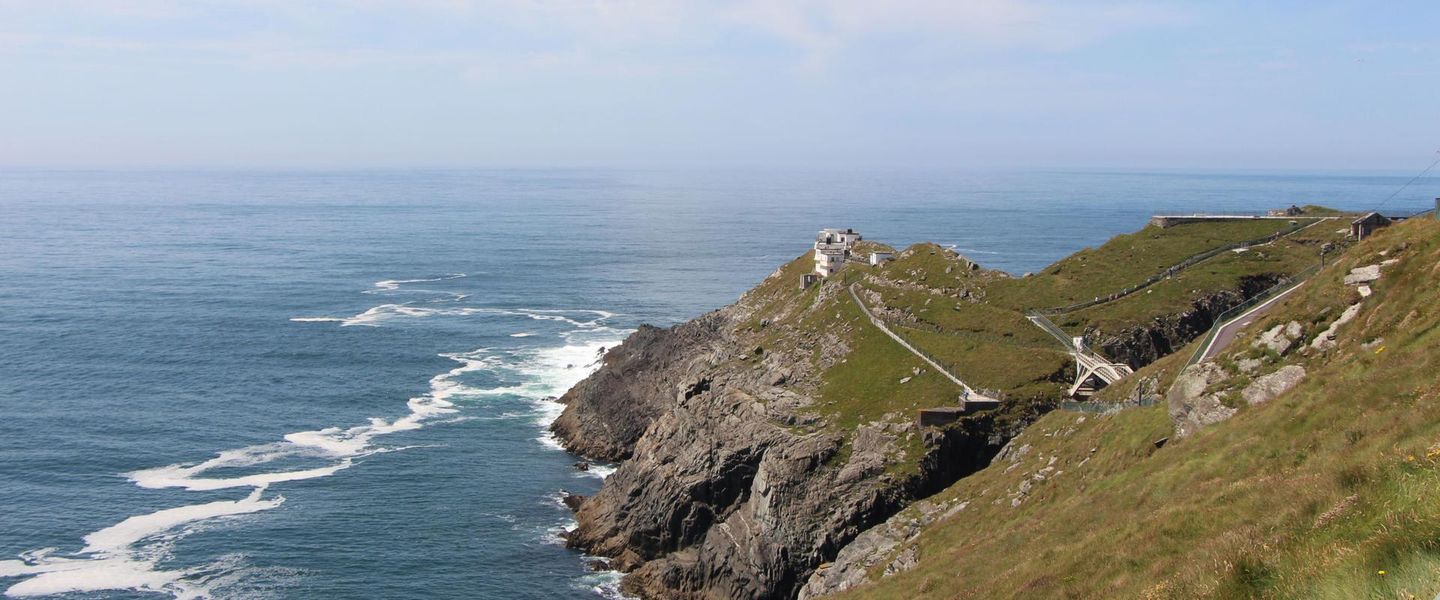


Mizen Head, Ireland’s southwestern outpost, pairs Atlantic cliffs and sea views with a historic signal station, coastal walks and West Cork heritage.
Cliffs, Ocean and Open Horizons
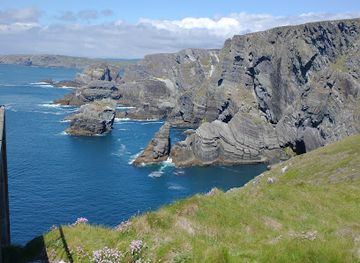
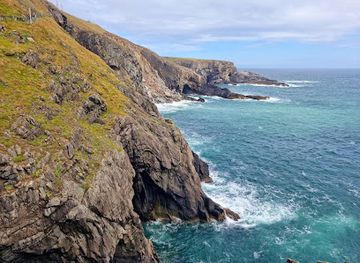
Mizen Head occupies the dramatic southwestern tip of County Cork, where Ireland’s mainland narrows into a rugged Atlantic headland above the meeting of land and sea. Its landscape is defined by dark cliffs, exposed rock, sea stacks, narrow inlets and broad views across the open ocean. On clear days, Fastnet Rock can be seen offshore, while the surrounding coastline reveals the force of Atlantic weather in its wave-cut terraces and wind-shaped vegetation.Read more about Mizen Head
The Signal Station
Exploring West Cork’s Far Southwest
When is the best time to visit Mizen Head?
Best: July–September · 16–19°C| Month | High (°C) | Rainfall (mm) |
|---|---|---|
| January | 9 | 110 |
| February | 9 | 101 |
| March | 10 | 91 |
| April | 11 | 80 |
| May | 14 | 70 |
| June | 16 | 61 |
| July (best) | 19 | 51 |
| August (best) | 19 | 40 |
| September (best) | 16 | 50 |
| October | 14 | 60 |
| November | 12 | 70 |
| December | 10 | 81 |
Getting to and around Mizen Head
How to get there
Transportation
Best attractions in Mizen Head
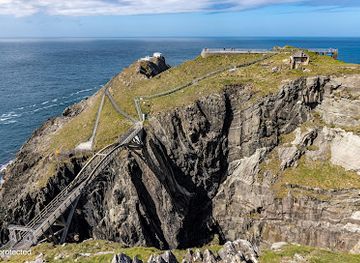
Mizen Head Signal Station is the central attraction, reached across a bridge spanning a dramatic coastal cleft and accompanied by views over the Atlantic and towards Fastnet Rock. The surrounding headland provides short walks and viewpoints where cliffs, sea stacks and wave-cut inlets illustrate the exposed character of Ireland’s southwestern coast. Nearby Barley Cove, on the Mizen Peninsula, is known for its broad sandy beach and dune-backed coastal setting, while Three Castle Head offers a rugged landscape with the remains of a historic promontory castle approached on foot. Goleen, Schull and Crookhaven add harbours, village streets and maritime context, although they are gateways to the wider peninsula rather than parts of the signal-station complex. The area is best appreciated through a combination of coastal scenery, maritime heritage and carefully paced driving between dispersed viewpoints, beaches and settlements.
-
 Tourist attraction
Bantry House
Experience the elegance and history of Bantry House, a stunning landmark in Co. Cork, surrounded by breathtaking views of Bantry Bay.
-
Public beach
Barley Cove Beach
Experience the breathtaking beauty and tranquility of Barley Cove Beach in Cork, a perfect escape for relaxation and adventure by the sea.
-
Tourist attraction
Sheep's Head Walk - Tooreen Turning Point
Explore the breathtaking Sheep's Head Walk - Tooreen Turning Point, a scenic coastal trail in County Cork, Ireland, perfect for nature lovers and hiking enthusiasts.
-
Tourist attraction
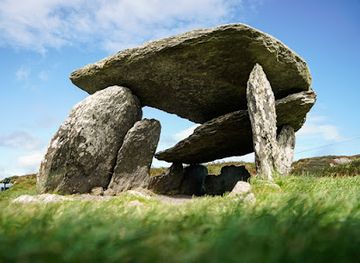
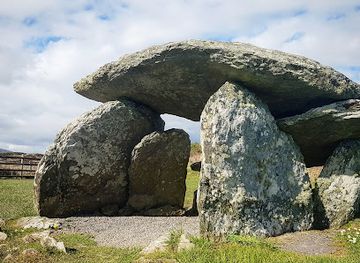
Altar Wedge Tomb
Discover the ancient mysteries of the Altar Wedge Tomb in County Cork, a stunning monument steeped in history and surrounded by breathtaking landscapes.
Best landmarks in Mizen Head
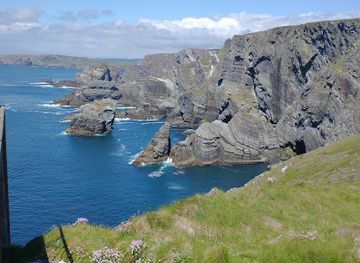
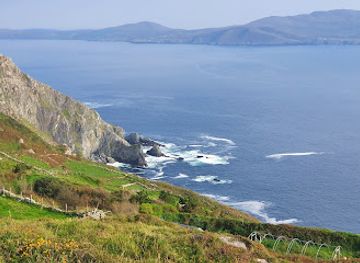
Mizen Head Signal Station is the defining human landmark, its isolated buildings recalling the period when maritime signalling and communications supported ships navigating the Atlantic approaches. The bridge leading across the deep chasm is an integral part of the site’s character and gives access to viewpoints above the water. Fastnet Rock, visible offshore in suitable conditions, is a prominent maritime landmark associated with the approaches to southwest Ireland, although it lies beyond Mizen Head itself. The headland’s cliffs, fissured rocks and sea stacks are its principal natural landmarks, formed and continually modified by Atlantic erosion. Nearby Three Castle Head combines rugged coastal geology with the remains of a historic castle, while Barley Cove represents a contrasting landscape of sand, beach and coastal dunes on the wider Mizen Peninsula.
-
Tourist attraction
Mizen Head Signal Station
Experience the breathtaking views and rich maritime history at Mizen Head Signal Station, a must-visit coastal gem in County Cork, Ireland.
-
Visitor center
Mizen Head Visitor Centre
Experience the breathtaking views and rich maritime history at Mizen Head Visitor Centre in County Cork, Ireland - a true gem along the Atlantic coastline.
-
Public beach
Barley Cove Beach
Experience the serene beauty of Barley Cove Beach, a stunning public beach in Cannawee, Cork, perfect for relaxation and family fun.
-
Tourist attraction
Altar Wedge Tomb
Discover the ancient wonders of the Altar Wedge Tomb in Co. Cork, a significant megalithic monument steeped in history and surrounded by stunning landscapes.

Explore Mizen Head on the map
Plan your trip on one map. See where the top attractions, landmarks, restaurants and hotels are, and book hotels and experiences in a few clicks.
Best hotels in Mizen Head
Best restaurants in Mizen Head
Dining around Mizen Head is rural and limited, with the main choice of cafés, pubs and restaurants found in Goleen, Schull, Crookhaven and other villages across the peninsula rather than at the headland itself. Menus in West Cork often draw on Irish staples, locally sourced seafood where available, dairy produce, seasonal vegetables and breads, while pubs may provide informal meals in a community setting. Schull has the broadest concentration of visitor services among the nearby settlements, while Goleen is particularly practical for a stop before or after visiting the headland. Supplies for picnics are worth arranging in advance, especially when exploring remote roads and beaches, and visitors should check current opening arrangements because rural dining businesses can operate seasonally or on changing schedules.
-
Irish pub
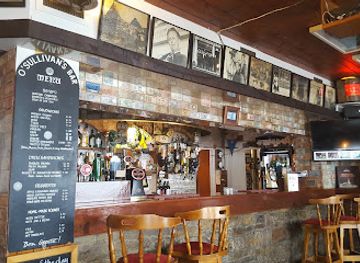
O'Sullivans Bar, Crookhaven
Experience authentic Irish hospitality at O'Sullivans Bar in Crookhaven—where local charm meets breathtaking coastal views.
-
Restaurant
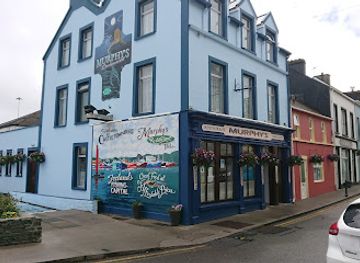
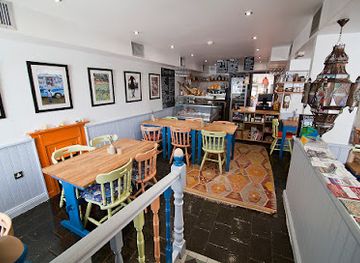
Murphy's Restaurant
Experience authentic Irish cuisine at Murphy's Restaurant in Castletown-Bearhaven – where tradition meets taste in Co. Cork.
-
Restaurant
Budds Restaurant
Experience authentic Irish cuisine at Budds Restaurant in Ballydehob - where fresh local ingredients meet warm hospitality.
-
Irish pub
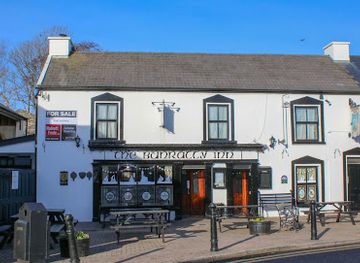
The Bunratty Inn
Discover authentic Irish cuisine and warm hospitality at The Bunratty Inn in scenic Schull.
Best bars in Mizen Head
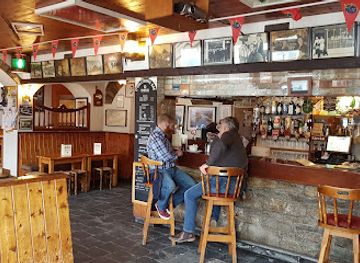
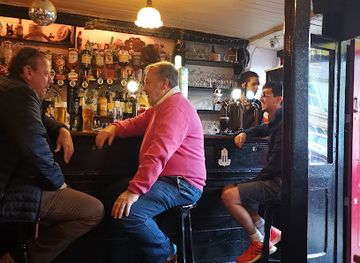
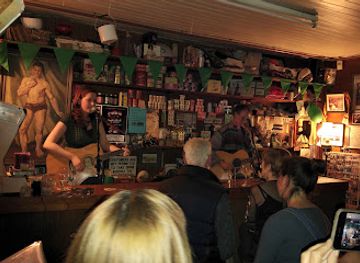
Mizen Head has no nightlife district, and evenings on the headland itself are quiet once the visitor facilities close. The authentic evening experience is found in the traditional pubs and hospitality venues of Goleen, Schull and Crookhaven, where conversation, local community life and occasional music may be more characteristic than late-night entertainment. Schull generally offers the widest choice of places to spend an evening, while smaller villages have a more limited and seasonal atmosphere. There are no grounds for assuming that performances or live music take place on a particular night, so current local information is important. Visitors staying in rural accommodation may instead spend the evening enjoying dark skies, coastal weather and the tranquillity of the peninsula.
-
Irish pub
O'Sullivans Bar, Crookhaven
Experience authentic Irish hospitality at O'Sullivans Bar in scenic Crookhaven, Co. Cork. Enjoy traditional dishes and local brews in a cozy atmosphere.
-
Irish pub
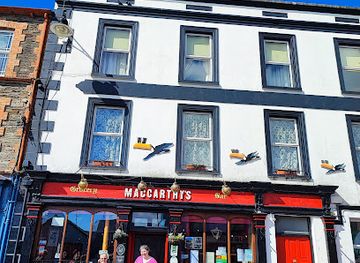
MacCarthy's Bar
Discover the heart of Irish hospitality at MacCarthy's Bar, a cozy spot in Castletown-Bearhaven offering local brews and traditional dishes.
-
Pub
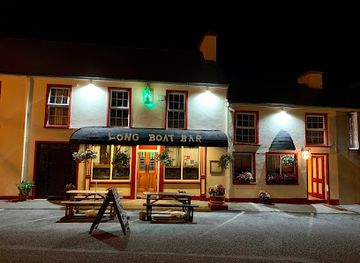
The Longboat Bar
Discover the charm of The Longboat Bar in Durrus, Co. Cork, where local flavors and warm hospitality await every visitor.
-
Bar
Crookhaven Inn
Discover the warmth of Irish hospitality at Crookhaven Inn, a charming bar with coastal views in the heart of Co. Cork.
Best nightclubs in Mizen Head
Mizen Head has no nightlife district, and evenings on the headland itself are quiet once the visitor facilities close. The authentic evening experience is found in the traditional pubs and hospitality venues of Goleen, Schull and Crookhaven, where conversation, local community life and occasional music may be more characteristic than late-night entertainment. Schull generally offers the widest choice of places to spend an evening, while smaller villages have a more limited and seasonal atmosphere. There are no grounds for assuming that performances or live music take place on a particular night, so current local information is important. Visitors staying in rural accommodation may instead spend the evening enjoying dark skies, coastal weather and the tranquillity of the peninsula.
-
Irish pub
O'Sullivans Bar, Crookhaven
Experience authentic Irish culture at O'Sullivans Bar in Crookhaven, where great food, drinks, and music meet stunning coastal views.
-
Bar
Hackett's Bar
Experience the warmth of Irish hospitality at Hackett's Bar in Schull, where delicious drinks and live music create unforgettable memories.
-
Tourist attraction
Mizen Head Bridge(Droichead Cheann Mizen)
Experience the breathtaking views and rich maritime history at Mizen Head Bridge, an iconic tourist attraction in County Cork, Ireland.
-
Bar
Levis Corner House
Experience the heart of Ballydehob at Levis Corner House, where local culture meets charming hospitality in a vibrant bar setting.
Best shops in Mizen Head
Shopping at Mizen Head is modest and practical rather than extensive. The visitor attraction may provide destination-related material, but most provisions and locally made goods are found in nearby settlements such as Goleen and Schull. Independent shops, cafés, galleries, craft outlets and food producers across West Cork may offer regional cheeses, preserves, baked goods, seafood products, pottery, artwork and other small-scale gifts, though individual availability changes. Schull is the most useful nearby centre for combining everyday supplies with browsing, while village shops and farm-related businesses reflect the dispersed nature of the peninsula. Visitors should purchase essentials before driving to remote coastal sites and should not expect a continuous shopping street, permanent craft market or large commercial centre around the headland.
-
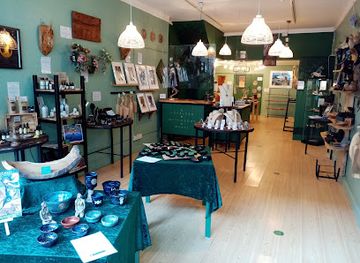
Gift shop
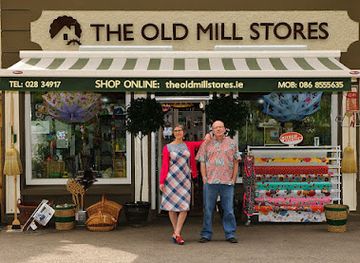
The Old Mill Stores
Explore The Old Mill Stores in Connonagh Village, a treasure trove of handcrafted gifts and home goods that celebrate Irish culture.
-
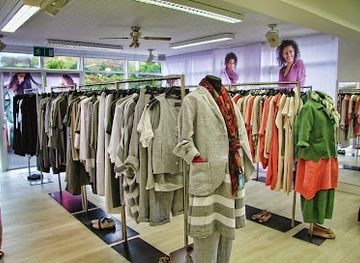
Clothing store
OSKA
Discover unique clothing and accessories at OSKA, the charming boutique in Goleen, Co. Cork, perfect for fashion enthusiasts and tourists alike.
-
Gift shop
The Woodsman's Realm
Explore unique gifts and handcrafted treasures at The Woodsman's Realm in Skibbereen, a charming shop celebrating local artistry and nature.
-
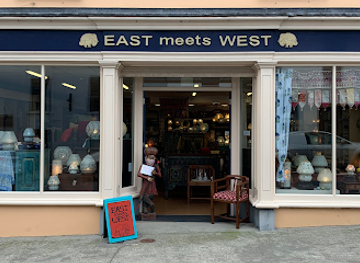
Home goods store
East Meets West Schull West Cork Ireland
Experience the unique blend of Eastern and Western home goods at East Meets West, a charming store in the heart of Schull, West Cork.
Get your free copy of our complete guide to Mizen Head, delivered straight to you.
Everything on this page, from attractions and restaurants to essentials and local phrases, in one PDF you can read offline, print or share.
Already have an account? Sign in
Your Mizen Head guide is ready.
We'll send it to · Not you? Sign out

Getting your guide ready…
We are putting together a fresh copy of the Mizen Head guide. This can take up to a minute.
This can take a few moments. If your browser asks, choose Allow so the download can start. You'll find the guide in your Downloads folder.
Nothing happened? Download it again
Sorry, the guide is taking longer than usual. Please try again in a minute, or get it by email instead.
Mizen Head essentials
Currency and Payment
Safety
Emergency Situations
Do's and Don'ts
Local Tips
From Eve
Local phrases worth knowing
You don't need to get them perfect. A few words go a long way, and locals appreciate the effort.
Basics
| English | Local | Say it |
|---|---|---|
| Hello | Dia dhuit | [dee-uh gwitch] |
| Goodbye | Slán | [slawn] |
| Yes | Tá | [taw] |
| No | Níl | [neel] |
| Please/You're welcome | Le do thoil | [leh duh hull] |
| Thank you | Go raibh maith agat | [guh rev mah agut] |
| Excuse me/Sorry | Tá brón orm | [taw brohn urm] |
| How are you? | Conas atá tú? | [kun-us ah-taw too] |
| Fine. And you? | Tá mé go maith. Agus tú? | [taw may guh mah. ah-gus too] |
| Do you speak English? | An labhraíonn tú Béarla? | [ahn low-reen too bayr-lah] |
| I don't understand | Ní thuigim | [nee hug-im] |
Eating & Drinking
| English | Local | Say it |
|---|---|---|
| I'd like to see the menu, please | Ba mhaith liom an mhenu a fháil, le do thoil | [bah why lum on menuh uh a-wahl, leh duh hull] |
| I don't eat meat | Ní ithim feoil | [nee ih-him foh-il] |
| Cheers! | Sláinte! | [slawn-chuh] |
| I would like to pay, please | Ba mhaith liom íoc, le do thoil | [bah why lum eek, leh duh hull] |
Emergencies
| English | Local | Say it |
|---|---|---|
| Help! | Cabhair! | [kuh-vir] |
| Go away! | Imigh uaim! | [ih-mee oom] |
| Call the Police! | Glaoigh ar na Gardaí! | [gwee ar nah gar-dee] |
| Call a doctor! | Glaoigh ar dochtúir! | [gwee ar dohk-thoor] |
| I'm lost | Tá mé caillte | [taw may kahl-cheh] |
| I'm ill | Tá mé tinn | [taw may chin] |
Shopping
| English | Local | Say it |
|---|---|---|
| I'd like to buy... | Ba mhaith liom ceannach... | [bah why lum kyunn-ukh] |
| I'm just looking | Níl ach ag faire | [neel okh egg fahr-uh] |
| How much is it? | Cé mhéad atá air? | [kay vayd ah-taw air] |
| That's too expensive | Tá sé ró-dháiríre | [taw shay roh-ghaw-reer-uh] |
| Can you lower the price? | An féidir leat an praghas a laghdú? | [ahn fay-dur lat on praw-gus ah lay-goo] |
Time & Numbers
| English | Local | Say it |
|---|---|---|
| What time is it? | Cén t-am é? | [kayn tahm ay] |
| It's one o'clock | Is a haon a chlog | [iss ah hayn ah khlog] |
| Half past (10) | Leathuair tar éis a deich | [lah-hoo-ir tar aysh ah deh] |
| Morning | Maidin | [mah-jin] |
| Afternoon | Tráthnóna | [traw-noh-nuh] |
| Evening | Tráthnóna | [traw-noh-nuh] |
| Yesterday | Inné | [in-ay] |
| Today | Inniu | [in-yoo] |
| Tomorrow | Amárach | [ah-maw-rockh] |
| 1 | Aon | [ayn] |
| 2 | Dó | [doh] |
| 3 | Trí | [tree] |
| 4 | Ceathair | [cah-her] |
| 5 | Cúig | [coo-ig] |
| 6 | Sé | [shay] |
| 7 | Seacht | [shawkht] |
| 8 | Ocht | [ukht] |
| 9 | Naoi | [nee] |
| 10 | Deich | [deh] |
Transport & Directions
| English | Local | Say it |
|---|---|---|
| Where's a/the...? | Cá bhfuil...? | [kaw will] |
| What's the address? | Céard atá an seoladh? | [kayrd ah-taw on sho-lah] |
| Can you show me (on the map)? | An féidir leat mé a thaispeáint (ar an léarscáil)? | [ahn fay-dur lat may uh hash-pawn-t (ar on layr-skawl)] |
| When's the next (bus)? | Cathain an chéad (bus) eile? | [kah-hin on khayd (bus) el-eh] |
| A ticket (to ....) | Ticéad (go dtí ....) | [tik-ayd (guh dee)] |
History of Mizen Head
An Atlantic-Worked Headland
Mizen Head’s physical setting was shaped over immense geological timescales by the formation and erosion of the rocks of southwest Cork, followed by the persistent action of Atlantic waves, wind and weather. The resulting headland is marked by cliffs, fissures, offshore rocks and narrow sea channels rather than a sheltered, gently sloping shoreline. These geological and coastal processes explain both the area’s visual character and its historical importance as a difficult but recognisable landfall for vessels approaching Ireland from the Atlantic.
Maritime Communities of West Cork
For centuries, the wider Mizen Peninsula was connected to the sea through fishing, small-scale farming, coastal trade and movements between its harbours and offshore islands. Settlements such as Crookhaven, Schull and Baltimore developed in relation to sheltered waters, while the exposed headland itself remained sparsely settled. Local life was shaped by the practical demands of weather, tides and distance, with boats and coastal routes linking communities that could be difficult to reach overland.
The Signal Station Era
The isolated position of Mizen Head made it an important site for maritime signalling during the era of expanding ocean shipping. A signal station was developed there in the early twentieth century to assist vessels navigating the approaches to Ireland and to support communication and warning services in challenging Atlantic conditions. The station’s buildings, access route and bridge reflect the engineering effort required to establish a working installation above the cliffs, far from the settled parts of the peninsula.
A Working Coast Transformed
Improvements in navigation, communications and shipping technology gradually reduced the original operational role of the Mizen Head station. As maritime systems changed during the twentieth century, the site ceased to function as it had in its earlier working period, but its structures retained their historical value. The preserved station now helps visitors understand the people and technology associated with maritime safety, while the surrounding coast continues to show the environmental conditions that made the site both valuable and demanding.
Heritage and Coastal Tourism
Mizen Head’s modern visitor identity grew from the preservation of its signal station and the increasing interest in West Cork’s Atlantic scenery and maritime heritage. Tourism remains closely tied to the peninsula’s natural character rather than to large-scale development. Visitor management, maintenance of paths and respect for the exposed coastal environment are essential to keeping access compatible with the cliffs, seabirds and other habitats of the headland.
Mizen Head in Photos
Browse through our photo collection highlighting the charm and character of the destination.
Cities in Mizen Head
The towns and cities of Mizen Head, and the easiest places to base yourself.

Swipe for more cities
Neighbouring destination travel guides
The closest destinations to Mizen Head, if you have time for more than one.
-

-

-

-

-


Swipe for more destinations
Explore more

Explore more of County Cork
Discover County Cork: Ireland's Southern Gem with stunning landscapes, rich history, and vibrant culture. Explore city wonders and coastal beauty in the heart of the Emerald Isle.
Explore County Cork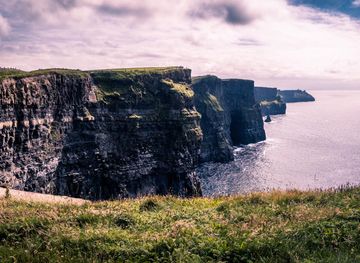
Explore more of Ireland
Discover Ireland: A land of enchanting landscapes, rich history, and vibrant culture, where every corner tells a story and every visit feels like coming home.
Explore Ireland