

Free Trieste Travel Guide & Mobile App
Plan your Trieste trip with Evendo. Get free guides to top attractions, restaurants, hotels, and bars. Web access or download the mobile app.


Trieste, Italy, blends Habsburg architecture, Adriatic views, coffeehouse culture and Friulian, Istrian and Central European flavours for rich city breaks.
A Port Shaped by Empires
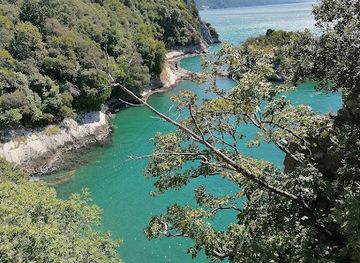
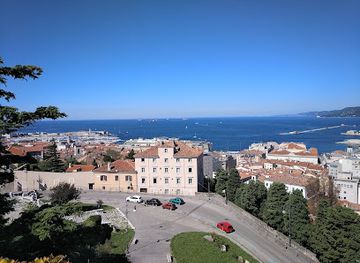
Trieste occupies a narrow strip of Italy between the Adriatic Sea and the Karst plateau, close to the Slovenian border. Its setting explains much of its character: the city opens towards the water, while limestone hills rise abruptly behind it. Once the principal maritime outlet of the Habsburg Empire, Trieste developed a cosmopolitan identity that remains visible in its grand squares, multilingual history and Central European café culture. The waterfront and the broad Piazza Unità d’Italia form the city’s most recognisable spaces, but its personality is equally apparent in quieter streets climbing towards the Karst.Read more about Trieste
Cafés, Literature and the Waterfront
The Karst and the Wider Borderland
When is the best time to visit Trieste?
Best: May–June, August · 26–31°C| Month | High (°C) | Rainfall (mm) |
|---|---|---|
| January | 11 | 80 |
| February | 14 | 80 |
| March | 17 | 80 |
| April | 21 | 80 |
| May (best) | 26 | 80 |
| June (best) | 29 | 40 |
| July | 32 | 40 |
| August (best) | 31 | 40 |
| September | 28 | 80 |
| October | 22 | 100 |
| November | 16 | 120 |
| December | 12 | 100 |
Getting to and around Trieste
How to get there
Transportation
Best attractions in Trieste
Trieste’s sightseeing begins in Piazza Unità d’Italia, the vast waterfront square framed by nineteenth-century palaces and open to the Gulf. From there, the Molo Audace offers a clear view back towards the city, while the Canal Grande leads into Borgo Teresiano, a planned district of waterways and mercantile buildings. Climb San Giusto hill to find the cathedral, castle and Roman Theatre, which together reveal several layers of the city’s past. The Museo Revoltella introduces Trieste’s modern art and civic culture, while the Joyce and Svevo literary trail explores the writers associated with its cafés and streets. North-west along the coast, Miramare Castle combines Habsburg interiors, parkland and sea views, although it lies outside the historic centre. The Risiera di San Sabba provides a sobering encounter with the city’s wartime history, and the Karst plateau adds limestone landscapes, villages and walking routes to the urban experience.
-
Historical landmark
Unity of Italy Square
Explore Unity of Italy Square in Trieste, a grand historical landmark with stunning architecture and vibrant local culture by the Adriatic Sea.
9 min walk · 0.7 km from city centre
-
Castle
Miramare Castle
Discover the enchanting Miramare Castle, a historical gem in Trieste surrounded by stunning gardens and breathtaking Adriatic views, perfect for all travelers.
23 min drive · 7.7 km from city centre
-
Tourist attraction
Grotta Gigante
Discover Grotta Gigante, one of the world's largest caves, featuring stunning rock formations and a fascinating underground world in the heart of Trieste.
20 min drive · 6.7 km from city centre
-
Park
Pinewood of Barcola
Explore Pinewood of Barcola, a serene park in Trieste, where nature meets adventure along the stunning Adriatic coastline.
13 min drive · 4.4 km from city centre


Best landmarks in Trieste
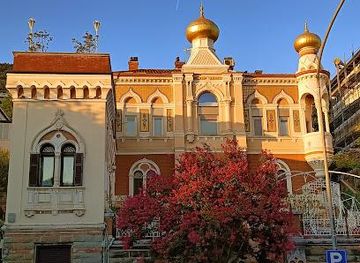
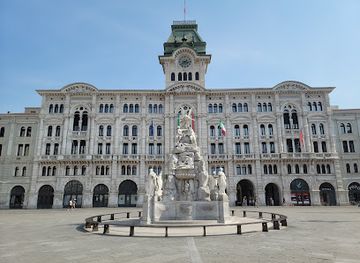
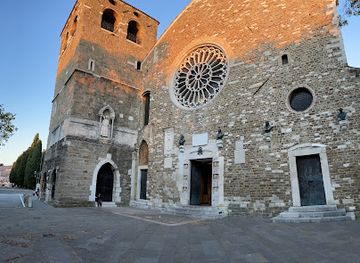
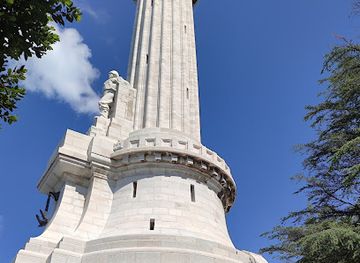
Piazza Unità d’Italia is Trieste’s defining civic landmark, an open-sided monumental square whose nineteenth-century palaces express the city’s importance within the Habsburg maritime world. On San Giusto hill, the Cathedral of San Giusto incorporates earlier religious structures and preserves a distinctive medieval complex beside the castle; the Roman Theatre below demonstrates the antiquity of the settlement. The Canal Grande, crossed by the Ponte Rosso, belongs to the planned eighteenth-century Borgo Teresiano and reflects the commercial expansion that followed the free-port era. The Serbian Orthodox Church of Saint Spyridon adds an important religious and architectural presence near the centre, while the Faro della Vittoria commemorates sailors and marks the coast from its hilltop position. Miramare Castle, built for Archduke Ferdinand Maximilian, represents the nineteenth-century Habsburg relationship with the Adriatic, and the Risiera di San Sabba stands as a place of remembrance for wartime persecution.
-
Historical landmark
Unity of Italy Square
Discover the grandeur of Unity of Italy Square, a historical landmark in Trieste where stunning architecture meets vibrant local culture.
9 min walk · 0.7 km from city centre
-
Castle
Castello di San Giusto
Explore the enchanting Castello di San Giusto, a historic fortress offering stunning views, rich cultural exhibits, and a glimpse into Trieste's majestic past.
5 min walk · 0.4 km from city centre
-
Cathedral
Cattedrale di San Giusto Martire
Discover the architectural beauty and historical significance of Cattedrale di San Giusto Martire, a cultural gem in the heart of Trieste.
6 min walk · 0.5 km from city centre
-
Historical place
Victory Lighthouse
Explore the historic Victory Lighthouse in Trieste, a symbol of maritime heritage with breathtaking views of the Adriatic Sea.
10 min drive · 3.3 km from city centre
Explore Trieste on the map
Plan your Trieste trip on one map. See where the top attractions, landmarks, restaurants, bars and hotels are, find what's near where you're staying, and book hotels and experiences in a few clicks.
Best hotels in Trieste
Best restaurants in Trieste
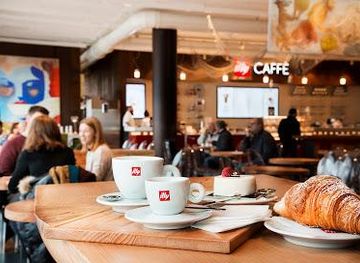
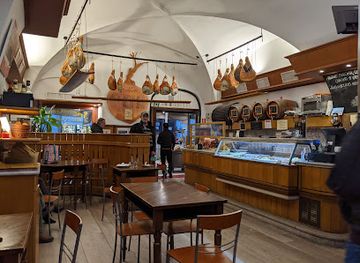
Trieste’s food culture reflects its position between the Italian Adriatic, the Habsburg world and the Istrian and Slovenian hinterlands. Traditional buffet restaurants serve hearty plates such as jota, a soup of beans, sauerkraut and potatoes, together with pork, sausages and boiled meats, while seafood appears in trattorie close to the waterfront and old port. Gnocchi, strucolo and other Central European-influenced dishes sit alongside Italian pasta and risotto. Local cafés are important social spaces, offering pastries such as presnitz and putizza with Trieste’s distinctive coffee tradition. The old town, Cavana, the Canal Grande area and the streets around Piazza della Borsa provide a concentration of restaurants, wine bars and informal eateries. On the Karst, osmize—seasonal farm-based establishments selling local wine and simple food—offer a regional experience when open, while the surrounding plateau contributes wines, cheeses and cured meats to the city’s tables.
-
Italian
Eataly Trieste
Savor Italy's finest at Eataly Trieste: waterfront market, pizza, pasta, and marina views in a lively hub of authentic Friuli flavors and gourmet delights.
16 min walk · 1.2 km from city centre
-
Neapolitan restaurant
Trattoria Caprese Trieste
Authentic Neapolitan pizza and fresh pasta in the heart of Trieste's historic center.
7 min walk · 0.6 km from city centre
-
Restaurant
Trattoria Da Giovanni
Experience authentic Italian flavors at Trattoria Da Giovanni in Trieste—where every meal is a celebration of tradition and taste.
3 min walk · 0.2 km from city centre
-
Restaurant
Caffè Tommaseo
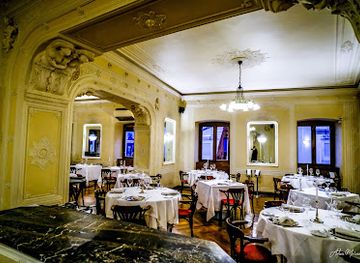
Discover Caffè Tommaseo: An iconic restaurant in Trieste offering exquisite Italian cuisine amidst rich history and vibrant culture.
8 min walk · 0.6 km from city centre
Best bars in Trieste
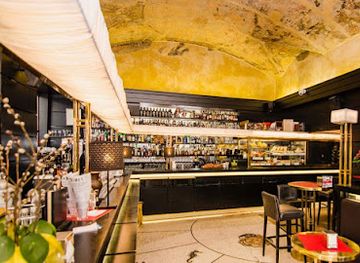
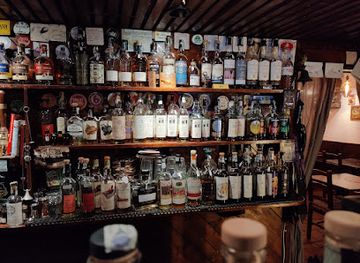
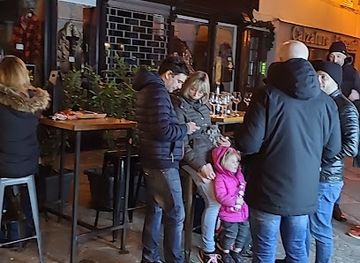
Trieste’s evenings are generally sociable rather than dominated by large clubs. The streets around Cavana, Via Torino and the old town fill with aperitivo bars, small wine venues and relaxed places to meet, while the Canal Grande and Piazza della Borsa provide more formal urban settings. Traditional cafés remain part of the night-time culture, particularly for conversation, pastries and coffee after dinner. The city’s theatres and concert institutions, including Teatro Verdi and Teatro Miela, add opera, classical music, film and contemporary performance to the evening calendar. Live music and seasonal events appear in smaller venues and along the waterfront, though programmes vary. In summer, residents also gather around Barcola and the seafront. Trieste has nightlife, but visitors should expect an intimate bar and cultural scene rather than a continuous club district or a major all-night party circuit.
-
Bar
Urbanis
Discover Urbanis in Trieste: A vibrant bar and café offering local delicacies and crafted drinks in a historic setting.
7 min walk · 0.6 km from city centre
-
Pub
Mastro Birraio
Discover Mastro Birraio, Trieste's premier pub for unique beers and gourmet burgers, perfect for an unforgettable dining experience.
9 min walk · 0.7 km from city centre
-
Bar
Al Ciketo
Discover Al Ciketo, a charming bar in Trieste known for its extensive drink menu and welcoming atmosphere, perfect for unwinding after a day of exploration.
9 min walk · 0.7 km from city centre
-
Cocktail bar
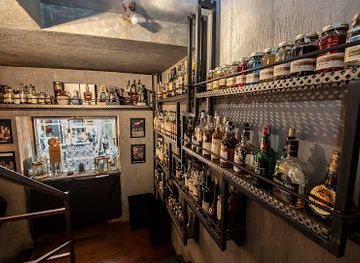
coktail bar Trieste | La Preferita
Unwind at La Preferita, Trieste's premier cocktail bar, where expert mixology meets a vibrant atmosphere for an unforgettable night out.
5 min walk · 0.4 km from city centre
Best nightclubs in Trieste
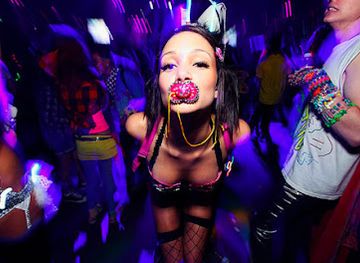
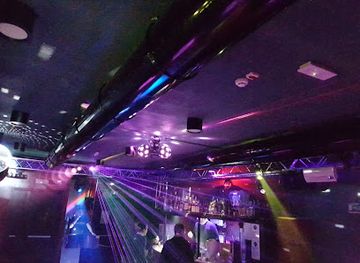
Trieste’s evenings are generally sociable rather than dominated by large clubs. The streets around Cavana, Via Torino and the old town fill with aperitivo bars, small wine venues and relaxed places to meet, while the Canal Grande and Piazza della Borsa provide more formal urban settings. Traditional cafés remain part of the night-time culture, particularly for conversation, pastries and coffee after dinner. The city’s theatres and concert institutions, including Teatro Verdi and Teatro Miela, add opera, classical music, film and contemporary performance to the evening calendar. Live music and seasonal events appear in smaller venues and along the waterfront, though programmes vary. In summer, residents also gather around Barcola and the seafront. Trieste has nightlife, but visitors should expect an intimate bar and cultural scene rather than a continuous club district or a major all-night party circuit.
-
Disco club
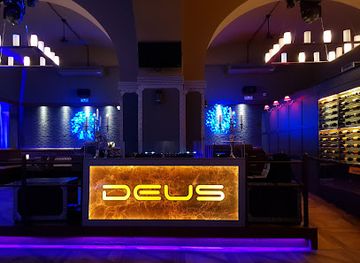
DEUS The Club Trieste
Discover Trieste's vibrant nightlife at DEUS The Club, a premier disco hub for music, dancing, and signature cocktails.
15 min walk · 1.2 km from city centre
-
Night club
Night Club Mexico
Discover the electrifying nightlife at Night Club Mexico in Trieste, where every night is a celebration of music, dance, and unforgettable moments.
4 min walk · 0.4 km from city centre
-
Night club
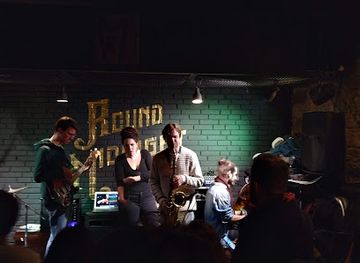
Round Midnight
Experience the vibrant nightlife at Round Midnight, Trieste's premier nightclub, where music and fun collide for an unforgettable evening.
6 min walk · 0.5 km from city centre
-
Night club
Streaming Discoteca
Experience the vibrant nightlife at Streaming Discoteca, Trieste's premier night club, where music, dancing, and unforgettable memories await.
7 min drive · 2.3 km from city centre
Best shops in Trieste
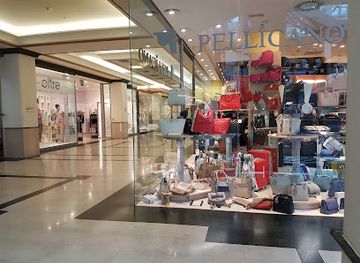
Shopping in Trieste combines practical Italian retail with the borderland’s long taste for coffee, wine, food and specialist goods. Corso Italia, Via San Nicolò and the streets around Piazza della Borsa contain mainstream shops, bookshops and independent businesses, while Cavana has smaller boutiques and design-oriented retailers among its older lanes. The covered Mercato Coperto offers a more everyday glimpse of local food shopping, with produce and prepared ingredients reflecting both the Adriatic and the Karst. Visitors often look for locally roasted coffee, regional wines, olive oil, honey, cheeses and cured meats, as well as literary books connected with Joyce, Svevo and Saba. The surrounding plateau is associated with stone, wine and traditional farm products rather than mass-produced souvenirs. Shopping across the border is possible in the wider region, but products from Slovenia or Croatia should be understood as neighbouring traditions, not automatically as Triestine goods.
-
Shopping mall
Torri D'Europa
Discover the vibrant Torri D'Europa shopping mall in Trieste, where fashion meets fun for the whole family.
5 min drive · 1.8 km from city centre
-
Shopping mall
Il Giulia
Explore the vibrant Il Giulia shopping mall in Trieste, featuring diverse shops, delightful dining, and a unique shopping experience.
19 min walk · 1.5 km from city centre
-
Gift shop
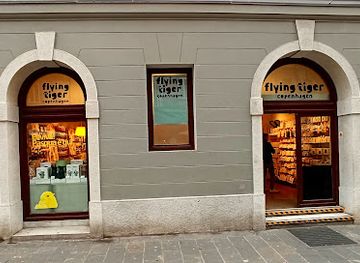
Flying Tiger Copenhagen
Explore the whimsical world of Flying Tiger Copenhagen in Trieste, a vibrant gift shop filled with unique home goods, stationery, and toys for all ages.
3 min walk · 0.2 km from city centre
-
Dress store
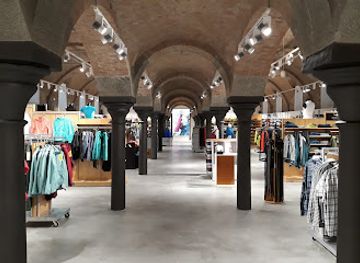
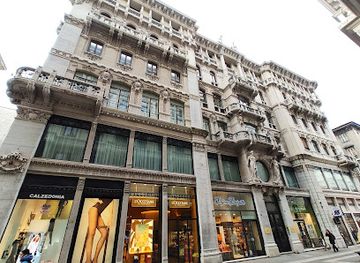
COIN EXCELSIOR
Explore Trieste's top fashion destination at COIN EXCELSIOR, featuring clothing, cosmetics, and accessories for every style and occasion.
3 min walk · 0.2 km from city centre
Get your free copy of our complete guide to Trieste, delivered straight to you.
Everything on this page, from attractions and restaurants to essentials and local phrases, in one PDF you can read offline, print or share.
Already have an account? Sign in
Your Trieste guide is ready.
We'll send it to · Not you? Sign out

Getting your guide ready…
We are putting together a fresh copy of the Trieste guide. This can take up to a minute.
This can take a few moments. If your browser asks, choose Allow so the download can start. You'll find the guide in your Downloads folder.
Nothing happened? Download it again
Sorry, the guide is taking longer than usual. Please try again in a minute, or get it by email instead.
Trieste essentials
Currency and Payment
Safety
Emergency Situations
Do's and Don'ts
Local Tips
From Eve
Local phrases worth knowing
You don't need to get them perfect. A few words go a long way, and locals appreciate the effort.
Basics
| English | Local | Say it |
|---|---|---|
| Hello | Ciao | [chow] |
| Goodbye | Arrivederci | [ah-ree-veh-dehr-chee] |
| Yes | Sì | [see] |
| No | No | [noh] |
| Please/You're welcome | Per favore/Prego | [pehr fa-voh-reh/preh-goh] |
| Thank you | Grazie | [gra-tsyeh] |
| Excuse me/Sorry | Mi scusi/Scusa | [mee skoo-zee/skoo-zah] |
| How are you? | Come stai? | [koh-meh stai] |
| Fine. And you? | Bene. E tu? | [beh-neh. eh too] |
| Do you speak English? | Parli inglese? | [par-lee een-gleh-zeh] |
| I don't understand | Non capisco | [non kah-pee-skoh] |
Eating & Drinking
| English | Local | Say it |
|---|---|---|
| I'd like to see the menu, please | Vorrei vedere il menù, per favore | [voh-reh-ee veh-deh-reh eel meh-noo, pehr fa-voh-reh] |
| I don't eat meat | Non mangio carne | [non mah-njo kahr-neh] |
| Cheers! | Salute! | [sah-loo-teh] |
| I would like to pay, please | Vorrei pagare, per favore | [voh-reh-ee pah-gah-reh, pehr fa-voh-reh] |
Emergencies
| English | Local | Say it |
|---|---|---|
| Help! | Aiuto! | [ah-yoo-toh] |
| Go away! | Vai via! | [vah-ee vee-ah] |
| Call the Police! | Chiama la polizia! | [kyah-mah lah poh-lee-tsya] |
| Call a doctor! | Chiama un dottore! | [kyah-mah oon doh-toh-reh] |
| I'm lost | Mi sono perso | [mee soh-no pehr-soh] |
| I'm ill | Mi sento male | [mee sehn-toh mah-leh] |
Shopping
| English | Local | Say it |
|---|---|---|
| I'd like to buy... | Vorrei comprare... | [voh-reh-ee kohm-prah-reh] |
| I'm just looking | Sto solo guardando | [stoh soh-loh gwar-dahn-doh] |
| How much is it? | Quanto costa? | [kwan-toh koh-stah] |
| That's too expensive | È troppo caro | [eh troh-po kah-roh] |
| Can you lower the price? | Puoi abbassare il prezzo? | [pwah-ee ahb-bah-sah-reh eel preh-tsoh] |
Time & Numbers
| English | Local | Say it |
|---|---|---|
| What time is it? | Che ora è? | [keh oh-rah eh] |
| It's one o'clock | È l'una | [eh loo-nah] |
| Half past (10) | Mezzo (10) | [meh-tsoh (deh-ee-chee)] |
| Morning | Mattina | [maht-tee-nah] |
| Afternoon | Pomeriggio | [poh-meh-ree-joh] |
| Evening | Sera | [seh-rah] |
| Yesterday | Ieri | [yeh-ree] |
| Today | Oggi | [oh-jee] |
| Tomorrow | Domani | [doh-mah-nee] |
| 1 | Uno | [oo-noh] |
| 2 | Due | [doo-eh] |
| 3 | Tre | [treh] |
| 4 | Quattro | [kwah-troh] |
| 5 | Cinque | [cheen-kweh] |
| 6 | Sei | [seh-ee] |
| 7 | Sette | [seht-teh] |
| 8 | Otto | [oh-toh] |
| 9 | Nove | [noh-veh] |
| 10 | Dieci | [dee-eh-chee] |
Transport & Directions
| English | Local | Say it |
|---|---|---|
| Where's a/the...? | Dov'è un/il...? | [doh-veh oon/eel] |
| What's the address? | Qual è l'indirizzo? | [kwal eh leen-dee-ree-tsoh] |
| Can you show me (on the map)? | Puoi mostrarmi (sulla mappa)? | [pwah-ee moh-stahr-mee (sool-lah mahp-pah)] |
| When's the next (bus)? | Quando passa il prossimo (autobus)? | [kwan-doh pahs-sah eel prohs-see-moh (ow-toh-boos)] |
| A ticket (to ....) | Un biglietto (per ....) | [oon bee-lyet-toh (pehr)] |
History of Trieste
Roman Tergeste and the Ancient Port
Trieste developed from an earlier settlement into Roman Tergeste, a town connected to the wider road and trading networks of the north-eastern Adriatic. The Romans established infrastructure on the hill and around the harbour, linking the settlement with the hinterland of the Karst and the coastal routes towards Istria. The surviving Roman Theatre, built on the lower slopes of the hill, indicates the scale and civic ambition of the ancient town. After the decline of Roman authority, the settlement passed through the political world of the eastern Adriatic, but its position beside a sheltered gulf continued to give it strategic and commercial importance.
Medieval Communal Trieste
During the Middle Ages, Trieste was shaped by the rivalry of local powers in the Adriatic and by the authority of the Patriarchate of Aquileia. The town developed as a fortified commune whose economy depended on maritime trade, fishing and connections with the surrounding plateau. Competition with Venice was a persistent feature of its political life, while the hilltop church of San Giusto grew into the city’s principal religious centre. Medieval Trieste was smaller and more defensible than the later imperial port, with its urban life concentrated around the hill, the old harbour and fortified streets below.
Habsburg Rule and Imperial Protection
Trieste placed itself under the protection of the Habsburgs in 1382, a decision that connected the city to the emerging Austrian lands for centuries. Its fortunes changed decisively in 1719, when Emperor Charles VI declared it a free port, encouraging merchants, shipping and immigration. Maria Theresa and Joseph II later supported administrative and urban reforms, and the planned Borgo Teresiano introduced straight streets, canals and monumental buildings between the old town and the sea. The port attracted Italian, Slovenian, German, Greek, Serbian, Jewish and other communities, making Trieste one of the Habsburg Empire’s most outward-looking cities.
The Nineteenth-Century Maritime Metropolis
The nineteenth century brought rapid expansion as Trieste became the principal commercial port of the Austrian Empire and the home of the Österreichischer Lloyd shipping company. New quays, warehouses, rail connections and representative buildings transformed the waterfront and surrounding districts. The city’s wealth supported theatres, publishing, banking and an influential café culture, while industrial and maritime employment drew a diverse population. This prosperity also generated political tensions between Italian nationalists, Slovenian communities, socialists and imperial authorities. The architecture of Piazza Unità d’Italia, the canal district and the grand commercial streets preserves the confidence of this imperial port era.
War, Annexation and Border Change
After the First World War and the dissolution of Austria-Hungary, Trieste was incorporated into the Kingdom of Italy in 1920. Fascist rule brought the suppression of Slovenian cultural and political institutions and deepened existing national tensions. During the Second World War, the city experienced German occupation, resistance and persecution, including the use of the Risiera di San Sabba as a detention and extermination camp. After 1945, Trieste became the centre of the disputed Free Territory of Trieste, administered in separate zones by the Allies and Yugoslavia. The 1954 London Memorandum returned the city and Zone A to Italian administration, while the border question was formally settled by the 1975 Treaty of Osimo.
Trieste in Contemporary Italy
Post-war Trieste adapted to the changed political geography of the Adriatic while retaining its role as a port, research centre and cultural meeting point. The opening and later integration of the neighbouring borders made travel across the Karst easier and encouraged renewed connections with Slovenia and Croatia. The city’s identity is now expressed through Italian civic life alongside Slovenian, Germanic, Jewish and other historical influences. Museums, literary associations, restored waterfront areas and the preservation of sites such as Risiera di San Sabba keep the twentieth century visible, while the port and scientific institutions connect Trieste to contemporary international networks.
Travel experiences inspired by this city
-
 8 Day Trip
Friends, Karst, and Canyons: 8 Days at Slovenia’s Škocjan Caves
Eco-minded 8-day friends’ adventure to Slovenia’s UNESCO-listed Škocjan Caves, with karst hikes, river canyons, local cuisine, and a comfy base in Divača.
8 Day Trip
Friends, Karst, and Canyons: 8 Days at Slovenia’s Škocjan Caves
Eco-minded 8-day friends’ adventure to Slovenia’s UNESCO-listed Škocjan Caves, with karst hikes, river canyons, local cuisine, and a comfy base in Divača.
 20 Jul 2026
By Esther Mwangi -
 11 Day Trip
Trieste with the Family: Coffeehouses, Castles, and Adriatic Breezes
An 11-day family escape to Trieste, Italy, mixing Habsburg elegance, seaside strolls, Carso hikes, and vibrant coffeehouse culture with fresh Adriatic seafood.
11 Day Trip
Trieste with the Family: Coffeehouses, Castles, and Adriatic Breezes
An 11-day family escape to Trieste, Italy, mixing Habsburg elegance, seaside strolls, Carso hikes, and vibrant coffeehouse culture with fresh Adriatic seafood.
 18 Jul 2026
By Andrea Colombo -
 11 Day Trip
Sežana with Family: 11 Days between the Karst and the Coast
Family-friendly Sežana, Slovenia: discover the Karst, Škocjan Caves, Lipica horses, and easy Trieste day trips by train for a sustainable summer escape.
11 Day Trip
Sežana with Family: 11 Days between the Karst and the Coast
Family-friendly Sežana, Slovenia: discover the Karst, Škocjan Caves, Lipica horses, and easy Trieste day trips by train for a sustainable summer escape.
 15 Jul 2026
By Abena Mensah -
 11 Day Trip
Exploring the Majestic Škocjan Caves with Friends
Discover the awe-inspiring Škocjan Caves in Slovenia with friends, exploring breathtaking karst formations and the rich local culture.
11 Day Trip
Exploring the Majestic Škocjan Caves with Friends
Discover the awe-inspiring Škocjan Caves in Slovenia with friends, exploring breathtaking karst formations and the rich local culture.
 5 May 2026
By Jelena Popović -
 6 Day Trip
Solo Adventure to the Majestic Škocjan Caves
Discover the awe-inspiring Škocjan Caves on a solo journey, exploring Slovenia's natural wonders and capturing breathtaking memories.
6 Day Trip
Solo Adventure to the Majestic Škocjan Caves
Discover the awe-inspiring Škocjan Caves on a solo journey, exploring Slovenia's natural wonders and capturing breathtaking memories.
 15 Nov 2025
By Marko Novak -
 8 Day Trip
Family Adventure in Trieste: Exploring History and Culture
Discover Trieste's rich history and culture with your family, from scenic train rides to exploring architectural marvels and savoring local cuisine.
8 Day Trip
Family Adventure in Trieste: Exploring History and Culture
Discover Trieste's rich history and culture with your family, from scenic train rides to exploring architectural marvels and savoring local cuisine.
 5 Jun 2025
By Michael Garcia
Swipe for more travel diaries
Trieste in Photos
Browse through our photo collection highlighting the charm and character of the destination.
Cities near Trieste
The closest cities to Trieste, if you have time for more than one stop.
-

-

-

-

-


Swipe for more cities
Explore more

Explore more of Italy
Discover Italy: A land of ancient history, artistic marvels, and culinary delights; where every corner reveals a new story and every meal is a celebration.
Explore Italy