

Tsurugaoka Hachimangu Travel Guide
Free Guide: Discover Kamakura's spiritual heart at Tsurugaoka Hachimangu, a historic Shinto shrine dedicated to the samurai spirit and cultural heritage.


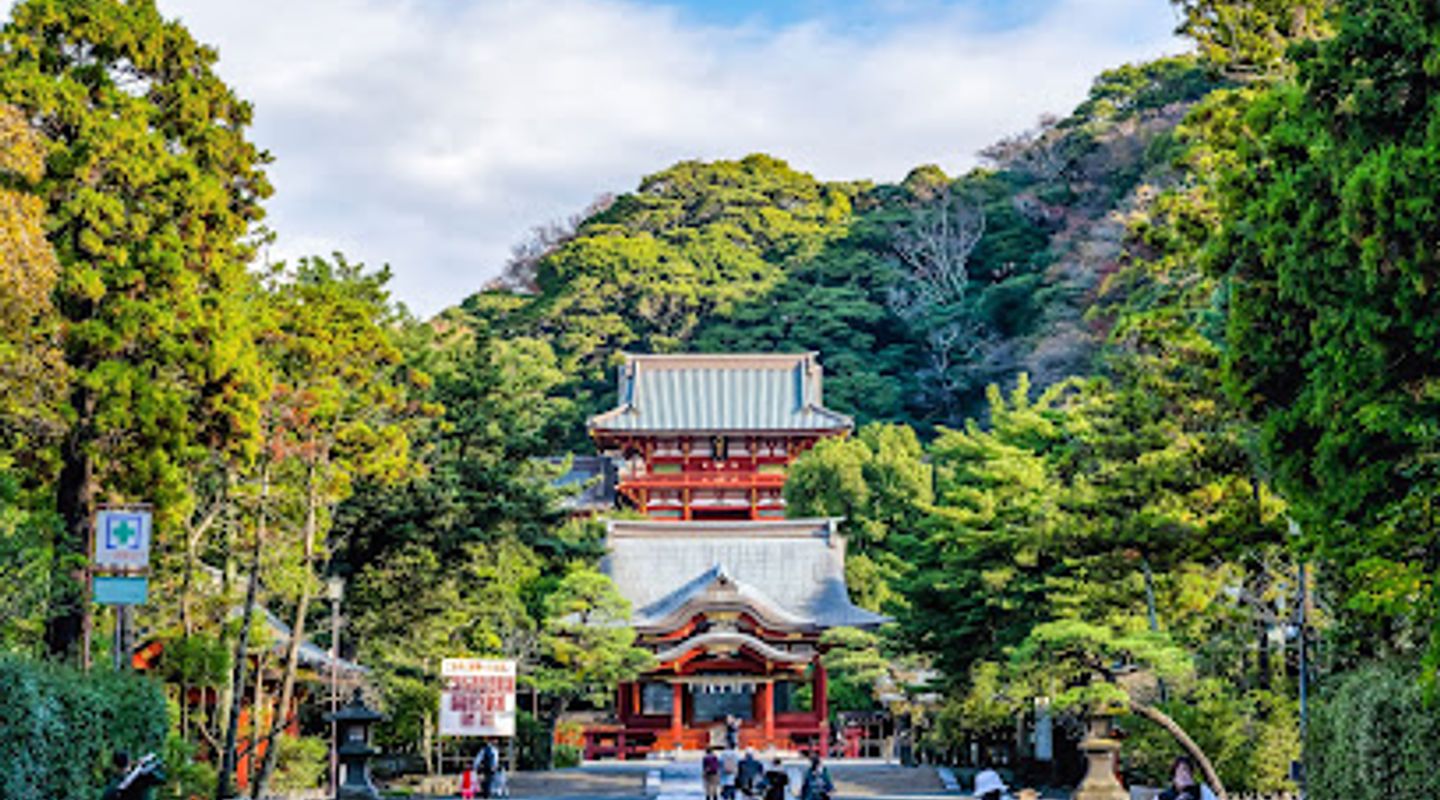
A brief summary of Tsurugaoka Hachimangu
Discover Kamakura's spiritual heart at Tsurugaoka Hachimangu, a historic Shinto shrine dedicated to the samurai spirit and cultural heritage.
Tsurugaoka Hachimangu is Kamakura's most significant Shinto shrine, founded in 1063 and expanded in 1180 by Minamoto Yoritomo. Dedicated to Hachiman, the patron god of samurai, it embodies Kamakura's cultural and spiritual heart. The expansive grounds feature iconic red torii gates, symbolic ponds, and the imposing main hall.
Opening hours
- Every day6 am–8 pm
Opening hours as listed on the venue’s Google Business Profile. Hours can change for services and special events, so check with the venue before you go.
- Address
- 2 Chome-1-31 Yukinoshita, Kamakura, Kanagawa 248-8588
- Phone
- Website
Getting there
Walking
Public Transport
Taxi
Discover more about Tsurugaoka Hachimangu
Overview
Tsurugaoka Hachimangu, Kamakura's most important Shinto shrine, has a history deeply intertwined with the rise of samurai power in Japan. Originally founded in 1063, it was moved to its current location and expanded in 1180 by Minamoto Yoritomo, founder of the Kamakura shogunate. The shrine is dedicated to Hachiman, the patron god of the Minamoto family and samurai in general.The shrine is approached via Wakamiya Oji, a 1.8 km long avenue lined with torii gates, leading from Kamakura's waterfront through the city center. Flanking the approach are two ponds: Genji pond representing the Minamoto clan with three islands, and Heike pond representing the Taira clan with four islands. The main hall (Hongu) sits atop a wide stairway, offering panoramic views. To the left of the stairway stood a large ginkgo tree until 2010, which was once used as a hideout in an ambush attack on a shogun.Key features include the Maiden, an open pavilion for dance and music, and sub-shrines like Wakamiya Shrine. The shrine hosts various events throughout the year, including the New Year holidays when it welcomes over two million visitors, and horseback archery (yabusame) in April and September. The main hall includes a museum displaying treasures like swords and documents. Though it served as both a Shinto shrine and a Tendai Buddhist temple for much of its history, today it stands as a symbol of Kamakura's historical significance and samurai legacy.
Evendo Review Centre
 Google
Guest reviews
Explore Tsurugaoka Hachimangu on the map
A handpicked selection of must-see spots near Tsurugaoka Hachimangu, mapped for you.
Get your free copy of our complete guide to Tsurugaoka Hachimangu, delivered straight to you.
Everything on this page, from opening hours and how to get there to Eve’s tips and the best time to go, in one PDF you can read offline, print or share.
Already have an account? Sign in
Your Tsurugaoka Hachimangu guide is ready.
We'll send it to · Not you? Sign out

Getting your guide ready…
We are putting together a fresh copy of the Tsurugaoka Hachimangu guide. This can take up to a minute.
This can take a few moments. If your browser asks, choose Allow so the download can start. You'll find the guide in your Downloads folder.
Nothing happened? Download it again
Sorry, the guide is taking longer than usual. Please try again in a minute, or get it by email instead.
Unlock the best of Tsurugaoka Hachimangu
Skip-the-line tickets, guided tours with entry, and walking tours of the area, booked in a few clicks.
 Tour with entry
Kamakura Walking Tour - The City of Shogun
from $33.25 Tour with entry
Tokyo: Imperial Palace and Shogun Storytelling Walk
from $36.04 Tour with entry
Ukiyo-e prints and Izakaya hopping in Shonan Tsujido
from $42.15 Tour with entry
Kamakura Nostalgic Photo Walk Capture Your Memories
from $52.25


Other nearby places you may find interesting
The closest places of the same kind, if this one is not quite what you had in mind.
-
-
-
-
-


Swipe for more places
More to explore near Tsurugaoka Hachimangu

 Best experiences near Tsurugaoka Hachimangu
 Best hotels near Tsurugaoka Hachimangu
 Best landmarks near Tsurugaoka Hachimangu
 Best attractions near Tsurugaoka Hachimangu
 Best shops near Tsurugaoka Hachimangu
 Best restaurants near Tsurugaoka Hachimangu
 Best bars near Tsurugaoka Hachimangu
Do you manage this location?
Take control to get all the benefits, like improved information, better appearance, and stronger visibility across AI-powered discovery.
Explore more

Explore more of Koshi
Discover Koshi: A serene blend of natural beauty, rich history, and vibrant culture in the heart of Kumamoto Prefecture, Japan.
Explore Koshi
Explore more of Japan
Discover the harmony of tradition and modernity in Japan, where ancient temples and cutting-edge technology coexist in perfect balance.
Explore Japan
