

Free Mangystau Peninsula Travel Guide & Mobile App
Explore Mangystau Peninsula with free travel guides. Discover regional history, expert tips, proposed trips, and audio guides on web or mobile app.


Explore Mangystau Peninsula for Caspian shores, sacred landscapes, chalk valleys, desert geology and expedition-style journeys from Aktau.
Read more about Mangystau Peninsula
When is the best time to visit Mangystau Peninsula?
Best: May–June, September · 22–28°C| Month | High (°C) | Rainfall (mm) |
|---|---|---|
| January | 2 | 11 |
| February | 4 | 9 |
| March | 10 | 10 |
| April | 16 | 9 |
| May (best) | 22 | 8 |
| June (best) | 28 | 7 |
| July | 31 | 6 |
| August | 30 | 6 |
| September (best) | 24 | 7 |
| October | 16 | 8 |
| November | 9 | 9 |
| December | 3 | 10 |
Getting to and around Mangystau Peninsula
How to get there
Transportation
Top city travel guides in Mangystau Peninsula
The cities of Mangystau Peninsula, and the easiest places to base yourself.
-

-


Swipe for more cities
Best attractions in Mangystau Peninsula
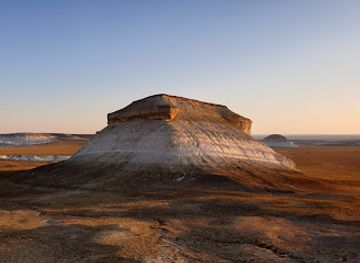
Mangystau’s attractions are primarily geological, spiritual and open-air rather than concentrated in conventional museums or resort facilities. The Bozzhira area on the Ustyurt Plateau presents pale escarpments, pinnacles and wide viewpoints reached by demanding tracks, while the Torysh Valley is known for its scattered spherical concretions. Sherkala is a distinctive isolated mountain whose changing forms are best appreciated from different approaches, and the Karagiye Depression offers a vast lowland landscape south of Aktau. The peninsula’s sacred heritage includes the Shakpak-Ata and Beket-Ata underground mosques, as well as cemeteries and mausoleums set in remote valleys. Around Aktau, visitors can combine the Caspian waterfront with regional museums and a more urban introduction to western Kazakhstan. The coast is better suited to expansive views, fishing and quiet observation than to a developed beach-holiday infrastructure. Birdlife and desert wildlife may be encountered, but sightings are unpredictable and should never be treated as guaranteed. The strongest itineraries balance carefully planned four-wheel-drive journeys with time in Aktau and respectful visits to religious sites.
-
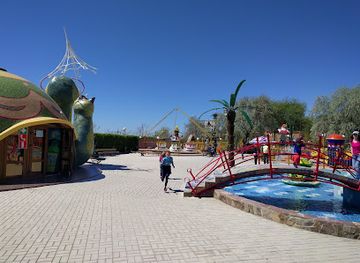
Amusement park
Park Atraktsionov
Experience exhilarating rides and enchanting attractions at Park Atraktsionov in Aktau, Kazakhstan's top amusement park for family fun.
-
Theme park
Tetysblu Тематический Парк
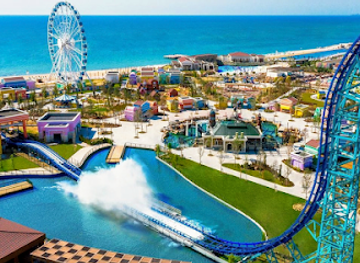
Experience the thrill of adventure and relaxation at Tetysblu, Aktau's premier theme park and water oasis, perfect for families and thrill-seekers alike.
-
Sculpture
Shevchenko Monument
Explore the Shevchenko Monument in Aktau, a stunning sculpture celebrating cultural heritage and artistic expression amidst beautiful surroundings.
-
Nature preserve
Ustyurtskiy Gosudarstvennyy Prirodnyy Zapovednik
Explore the stunning Ustyurtskiy State Nature Reserve in Kazakhstan, a paradise for nature lovers and adventure seekers, showcasing unique landscapes and diverse wildlife.

Best landmarks in Mangystau Peninsula
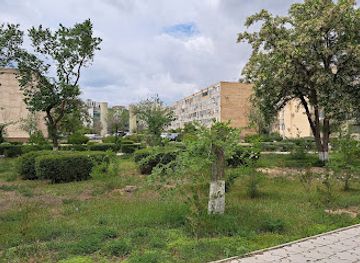
The most recognisable landmarks of Mangystau are usually natural formations or sacred structures rather than monumental city architecture. Bozzhira’s pale limestone ridges and isolated rock towers form the region’s signature visual landscape, while Sherkala rises as a solitary, weather-shaped mountain near the desert routes east of Aktau. The Karagiye Depression is a geographical landmark whose broad, austere basin demonstrates the scale of the peninsula’s dry interior. At Shakpak-Ata, a rock-cut mosque and surrounding necropolis unite architecture with the natural shelter of the plateau; Beket-Ata is both a cave sanctuary and an active pilgrimage destination. In Aktau, the Caspian shoreline, planned Soviet-era urban fabric and port infrastructure reflect the region’s modern industrial identity. Fort-Shevchenko, on the northern Caspian coast, preserves another layer of coastal and imperial history, although it lies away from the main Aktau excursion circuit. These landmarks are best understood through their setting: open distances, exposed geology and the relationship between water, stone, worship and movement.
-
Hotel
Rixos Water World Aktau
Experience the ultimate in luxury and leisure at Rixos Water World Aktau, where stunning beaches meet thrilling water adventures.
-
Hiking area
Skal'naya Tropa
Discover the breathtaking Skal'naya Tropa in Aktau, a scenic hiking area with stunning coastal views and peaceful resting spots for nature enthusiasts.
-
Theme park
Tetysblu Тематический Парк
Experience thrilling rides, water adventures, and endless fun at Tetysblu, Aktau's premier theme park for families and thrill-seekers alike.
-
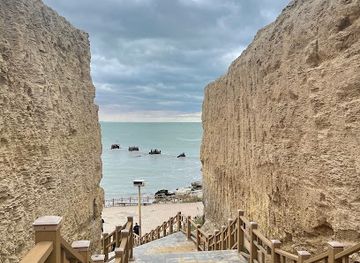
Beach
Stigl
Experience the serene beauty of Stigl, a picturesque beach in Kazakhstan, offering relaxation, adventure, and stunning views of the Caspian Sea.


Explore Mangystau Peninsula on the map
Plan your trip on one map. See where the top cities, national parks and sights are, and book hotels and experiences in a few clicks.
Best hotels in Mangystau Peninsula
Best restaurants in Mangystau Peninsula
Dining in Mangystau is centred on Aktau, where restaurants serve Kazakh, Central Asian, Russian, Caucasian and international food. Traditional meals commonly feature mutton, beef, horse meat, noodles, rice, bread and dairy products, with beshbarmak and baursak among the familiar Kazakh specialities. Tea is an important everyday drink, while camel and sheep’s milk products reflect the pastoral culture of western Kazakhstan, though availability varies by establishment. Markets and small food shops are useful for provisions before remote excursions, where there may be no reliable café or restaurant. In rural settings, meals arranged through guesthouses or tour operators may offer a more direct encounter with local cooking than formal dining rooms. Aktau’s Caspian setting also supports restaurants serving fish and broader seafood menus, but regional provenance should not be assumed for every dish. Visitors undertaking desert trips should carry durable snacks and water rather than depending on roadside services.
-
Hotel
Rixos Water World Aktau
Discover luxury and adventure at Rixos Water World Aktau, where stunning beaches meet world-class hospitality in Kazakhstan.
-
 Hotel
Caspian Riviera Grand Palace Hotel
Experience unmatched luxury at Caspian Riviera Grand Palace Hotel in Aktau - your perfect seaside escape awaits!
-
Hotel
Grand Hotel Victory
Discover unparalleled luxury and comfort at Grand Hotel Victory in Aktau, your perfect getaway destination.
-
Hiking area
Skal'naya Tropa
Explore Skal'naya Tropa: A breathtaking hiking destination in Aktau featuring diverse trails and stunning natural landscapes.


Best bars in Mangystau Peninsula
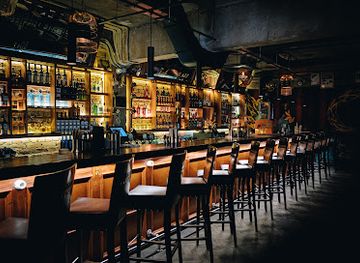
Aktau has the most varied evening scene on the Mangystau Peninsula, with hotel lounges, cafés, restaurants, pubs and bars concentrated around the urban centre and Caspian waterfront. The city’s nightlife is modest compared with Kazakhstan’s largest cities, but there are places for live conversation, music and late meals, alongside occasional contemporary clubs whose status and opening arrangements can change. Outside Aktau, evening life is mainly associated with family gatherings, guesthouses, roadside stops and traditional or modern cafés rather than a dedicated club circuit. Local breweries, tea houses and restaurants can provide a more useful introduction to the region’s social atmosphere than seeking large-scale nightlife. Alcohol is not central to visiting Mangystau, and travellers should respect differing personal and religious choices. Remote camps may offer clear desert skies and quiet conversation after dark, but visitors should follow fire, wildlife and waste precautions.
-
Hotel
Rixos Water World Aktau
Discover beachfront luxury at Rixos Water World Aktau, where relaxation meets adventure in the heart of Kazakhstan's coastal paradise.
-
Pub
Chechil Актау
Experience the vibrant atmosphere of Chechil Актау, a premier gastropub and live music venue, perfect for tourists seeking local flavor and entertainment.
-
Bar
Barmaglot Bar
Experience vibrant nightlife at Barmaglot Bar in Almaty, where exceptional drinks and electric ambiance come together for an unforgettable evening.
-
Theme park
Tetysblu Тематический Парк
Discover endless fun and excitement at Tetysblu Theme Park, where thrilling rides and water adventures await every visitor in Aktau, Kazakhstan.



Best nightclubs in Mangystau Peninsula
Aktau has the most varied evening scene on the Mangystau Peninsula, with hotel lounges, cafés, restaurants, pubs and bars concentrated around the urban centre and Caspian waterfront. The city’s nightlife is modest compared with Kazakhstan’s largest cities, but there are places for live conversation, music and late meals, alongside occasional contemporary clubs whose status and opening arrangements can change. Outside Aktau, evening life is mainly associated with family gatherings, guesthouses, roadside stops and traditional or modern cafés rather than a dedicated club circuit. Local breweries, tea houses and restaurants can provide a more useful introduction to the region’s social atmosphere than seeking large-scale nightlife. Alcohol is not central to visiting Mangystau, and travellers should respect differing personal and religious choices. Remote camps may offer clear desert skies and quiet conversation after dark, but visitors should follow fire, wildlife and waste precautions.
-
Hotel
Rixos Water World Aktau
Experience the ultimate luxury and adventure at Rixos Water World Aktau, where stunning beachfront views and exquisite amenities await you.
-
Hotel
Grand Hotel Victory
Discover unrivaled luxury and comfort at Grand Hotel Victory in Aktau, where modern elegance meets exceptional service.
-
Hotel
Renaissance Aktau Hotel
Discover unparalleled luxury and comfort at the Renaissance Aktau Hotel, your ideal retreat in Kazakhstan's coastal gem.
-
Hotel
Holiday Inn Aktau, an IHG Hotel
Experience the perfect blend of comfort and modern amenities at Holiday Inn Aktau, your gateway to the Caspian Sea.


Best shops in Mangystau Peninsula
Aktau is the principal shopping centre for the Mangystau Peninsula, offering supermarkets, modern retail, markets, pharmacies and small independent shops. Before travelling into the desert, visitors should buy water, food, sun protection and other practical supplies in the city. Souvenirs may include felt goods, embroidered textiles, leatherwork, jewellery, ceramics and small items referencing Kazakh nomadic culture, although quality and regional provenance vary. Food markets and specialist shops can provide baursak, dried dairy products, sweets, tea and other provisions, while local restaurants and guesthouses offer additional opportunities to sample regional products. Outside Aktau, shopping is limited to basic supplies in settlements rather than a developed craft or antiques scene. Visitors should not remove fossils, stones, archaeological objects or materials from sacred sites and protected landscapes. Bargaining may occur in informal markets, but it is wiser to ask the price clearly and pay respectfully than to treat every transaction as a negotiation.
-
Shopping mall
Mega Silk Way
Explore Mega Silk Way in Astana, Kazakhstan's largest shopping mall, featuring diverse shopping, dining, and entertainment experiences for visitors.
-
Shopping mall
Astana Mall
Discover a unique shopping experience at Astana Mall, featuring a variety of brands, delicious dining options, and entertainment for the whole family.
-
Hotel
Rixos Water World Aktau
Discover the perfect blend of luxury and adventure at Rixos Water World Aktau, a top-tier resort on the stunning Caspian Sea.
-
Hiking area
Skal'naya Tropa
Explore the captivating Skal'naya Tropa in Aktau, Kazakhstan, a breathtaking hiking area with stunning coastal views and serene nature experiences.


Get your free copy of our complete guide to Mangystau Peninsula, delivered straight to you.
Everything on this page, from attractions and restaurants to essentials and local phrases, in one PDF you can read offline, print or share.
Already have an account? Sign in
Your Mangystau Peninsula guide is ready.
We'll send it to · Not you? Sign out

Getting your guide ready…
We are putting together a fresh copy of the Mangystau Peninsula guide. This can take up to a minute.
This can take a few moments. If your browser asks, choose Allow so the download can start. You'll find the guide in your Downloads folder.
Nothing happened? Download it again
Sorry, the guide is taking longer than usual. Please try again in a minute, or get it by email instead.
Mangystau Peninsula essentials
Currency and Payment
Safety
Emergency Situations
Do's and Don'ts
Local Tips
From Eve
Local phrases worth knowing
You don't need to get them perfect. A few words go a long way, and locals appreciate the effort.
Basics
| English | Local | Say it |
|---|---|---|
| Hello | Сәлем | [Sälem] |
| Goodbye | Сау бол | [Sau bol] |
| Yes | Иә | [İä] |
| No | Жоқ | [Joq] |
| Please/You're welcome | Өтінемін/Рахмет | [Ötinemin/Rahmet] |
| Thank you | Рахмет | [Rahmet] |
| Excuse me/Sorry | Кешіріңіз | [Keshiriniz] |
| How are you? | Қалайсыз? | [Qalaysız?] |
| Fine. And you? | Жақсы. Ал сіз? | [Jaqsy. Al siz?] |
| Do you speak English? | Сіз ағылшынша сөйлейсіз бе? | [Siz ağılşınşa söyleysiz be?] |
| I don't understand | Мен түсінбеймін | [Men tüsinbeimin] |
Eating & Drinking
| English | Local | Say it |
|---|---|---|
| I'd like to see the menu, please | Мәзірді көргім келеді, өтінемін | [Mäzirdi körgim keledi, ötinemin] |
| I don't eat meat | Мен ет жемеймін | [Men et jemeimin] |
| Cheers! | Ас болсын! | [As bolsyn!] |
| I would like to pay, please | Мен төлегім келеді, өтінемін | [Men tölégim keledi, ötinemin] |
Emergencies
| English | Local | Say it |
|---|---|---|
| Help! | Көмектесіңіз! | [Kömektesiñiz!] |
| Go away! | Кетіңіз! | [Ketiñiz!] |
| Call the Police! | Полиция шақырыңыз! | [Politsiia şaqırıñız!] |
| Call a doctor! | Дәрігер шақырыңыз! | [Däriger şaqırıñız!] |
| I'm lost | Мен жоғалдым | [Men joğaldım] |
| I'm ill | Мен ауырып тұрмын | [Men awırıp turmın] |
Shopping
| English | Local | Say it |
|---|---|---|
| I'd like to buy... | Мен ... сатып алғым келеді | [Men ... satıp algım keledi] |
| I'm just looking | Мен тек қарап жүрмін | [Men tek qarap jürmin] |
| How much is it? | Бұл қанша тұрады? | [Bul qanşa turadı?] |
| That's too expensive | Бұл тым қымбат | [Bul tym qımbat] |
| Can you lower the price? | Бағаны төмендетесіз бе? | [Bağanı tömendetesiiz be?] |
Time & Numbers
| English | Local | Say it |
|---|---|---|
| What time is it? | Сағат қанша? | [Sağat qanşa?] |
| It's one o'clock | Бір сағат | [Bir sağat] |
| Half past (10) | Он бір жарым | [On bir jarım] |
| Morning | Таң | [Tań] |
| Afternoon | Түскі | [Tüskı] |
| Evening | Кеш | [Kesh] |
| Yesterday | Кеше | [Kese] |
| Today | Бүгін | [Bügin] |
| Tomorrow | Ертең | [Erteñ] |
| 1 | Бір | [Bir] |
| 2 | Екі | [Eki] |
| 3 | Үш | [Üş] |
| 4 | Төрт | [Tört] |
| 5 | Бес | [Bes] |
| 6 | Алты | [Alty] |
| 7 | Жеті | [Jeti] |
| 8 | Сегіз | [Segiz] |
| 9 | Тоғыз | [Toğız] |
| 10 | Он | [On] |
Transport & Directions
| English | Local | Say it |
|---|---|---|
| Where's a/the...? | Қайда ...? | [Qayda ...?] |
| What's the address? | Мекенжайы қандай? | [Mekenjayı qandayı?] |
| Can you show me (on the map)? | Маған (картадан) көрсете аласыз ба? | [Mağan (kartadan) körsete alasyz ba?] |
| When's the next (bus)? | Келесі (автобус) қашан? | [Kelesı (avtobus) qaşan?] |
| A ticket (to ....) | Билет (....) үшін | [Bilet (....) üşin] |
History of Mangystau Peninsula
Ancient Caspian and Tethys Landscapes
Mangystau’s most fundamental history is geological. The peninsula and adjoining plateaux were shaped by ancient seas, including the Tethys Ocean, whose sediments later became the pale limestone, marl and chalk formations visible across the region. Fossils, marine strata and eroded escarpments record dramatic changes in sea level and climate over immense periods. The modern desert is therefore a relatively recent surface over a much older maritime past, explaining the region’s striking stone formations and its importance to geological study.
Early Pastoral and Caravan Worlds
For centuries, Mangystau was traversed by mobile pastoral communities and routes linking the Caspian basin with Khorezm, the Ustyurt Plateau and wider Central Asia. Water sources and wintering grounds determined movement across an environment with few permanent settlements. Archaeological remains, burial places and traces of old routes reflect successive communities rather than a single continuous kingdom. The peninsula’s strategic value came from its position between desert interiors and the Caspian, even though its harsh terrain limited dense urban development.
Islamic Pilgrimage and Underground Mosques
From the medieval period onwards, Mangystau became associated with Islamic teachers, Sufi lineages and revered religious figures. Sacred sites such as Shakpak-Ata, Beket-Ata and other necropolises developed around caves, springs and isolated valleys. Shakpak-Ata is particularly notable for its rock-cut mosque and unusual interior plan, while Beket-Ata remains an important pilgrimage destination. These places demonstrate how religious practice adapted to the peninsula’s geology and continue to shape local cultural life.
Russian Imperial Expansion and Fort Mangyshlak
Russian imperial influence reached the Mangyshlak Peninsula in the nineteenth century, when military and administrative interests focused on the Caspian shore and the routes towards Central Asia. Fort Mangyshlak, established in the area of present-day Fort-Shevchenko, became a notable outpost. The period brought new political borders, military mapping and closer incorporation into imperial systems, while pastoral communities continued established patterns of movement. Coastal settlements gained importance as links between inland districts and the Caspian.
Ports, Oil and the Soviet Transformation
The twentieth century changed Mangystau through industrialisation, oil exploration and planned urban development. The city now known as Aktau was established during the Soviet period as a port and industrial centre, originally associated with the region’s mineral and petroleum economy. Roads, pipelines, desalination infrastructure and new settlements connected a previously remote landscape to national production networks. The contrast between Aktau’s planned modernism and the surrounding desert remains one of the region’s defining geographical and historical features.
Independent Kazakhstan and Geotourism
Since Kazakhstan’s independence, Mangystau has retained its role in energy, transport and Caspian commerce while gaining wider recognition for its geological and sacred heritage. Aktau has expanded as a regional centre, and domestic and international visitors increasingly travel to Bozzhira, Torysh, Sherkala and underground mosques. Tourism remains relatively expedition-oriented, with infrastructure uneven beyond the city. The region’s contemporary challenge is to improve access without damaging fragile desert landforms, archaeological sites or religious places.
Mangystau Peninsula in Photos
Browse through our photo collection highlighting the charm and character of the destination.
Neighbouring regions of Mangystau Peninsula
The closest regions to Mangystau Peninsula, if you have time for more than one.
-

-

-

-

-


Swipe for more regions
Explore more

Explore more of Kazakhstan
Explore Kazakhstan's rich culture, modern cities, and stunning natural landscapes. From the Caspian Sea to the Altai Mountains, find adventure and beauty in Central Asia.
Explore Kazakhstan