

Free Courland Travel Guide & Mobile App
Explore Courland with free travel guides. Discover regional history, expert tips, proposed trips, and audio guides on web or mobile app.


Explore Courland in western Latvia for Baltic beaches, Kuldīga’s heritage, maritime cities, forests, coastal villages and distinctive regional food.
Read more about Courland
When is the best time to visit Courland?
Best: June–August · 21–23°C| Month | High (°C) | Rainfall (mm) |
|---|---|---|
| January | 1 | 40 |
| February | 1 | 35 |
| March | 5 | 45 |
| April | 11 | 50 |
| May | 16 | 55 |
| June (best) | 21 | 60 |
| July (best) | 23 | 65 |
| August (best) | 22 | 65 |
| September | 18 | 60 |
| October | 13 | 55 |
| November | 6 | 50 |
| December | 2 | 45 |
Getting to and around Courland
How to get there
Transportation
Top city travel guides in Courland
The cities of Courland, and the easiest places to base yourself.
-

-

-

-

-

-


Swipe for more cities
Destinations in Courland
Resorts, valleys and scenic spots worth a trip of their own.
-

-

-
-

-


Swipe for more destinations
Best attractions in Courland
Courland’s attractions range from compact historic towns to long stretches of Baltic coastline and protected forest. Kuldīga offers a remarkably coherent old town, riverside walks and the Venta Rapid, while Liepāja combines a broad beach with music, wooden architecture, Art Nouveau buildings and the former military area of Karosta. Ventspils focuses on maritime history, public waterfront spaces and family-oriented museums. Along the coast, Cape Kolka, the beaches and fishing settlements of the northern shore, Jūrkalne’s bluff and the dune landscapes near Pape provide varied walking and photography. Slītere National Park protects old forests, wetlands and coastal habitats, and Pape Nature Park is important for migratory birds and other wildlife. Inland, Talsi’s lake district, the Abava valley and manor landscapes offer quieter excursions, while the Irbene radio astronomy complex provides a distinctive example of twentieth-century scientific and military heritage. Activities include birdwatching, canoeing, cycling, beachcombing and visits to museums, churches and restored town centres.
-
Nature preserve
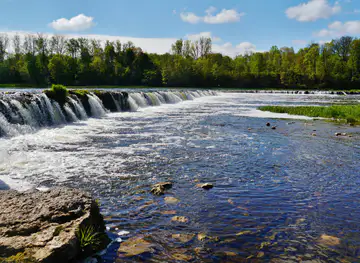
Venta waterfall
Explore the majestic Venta Waterfall in Kuldīga, Latvia, a stunning natural preserve perfect for nature lovers and photographers alike.
-
Tourist attraction
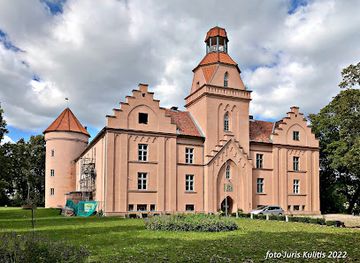
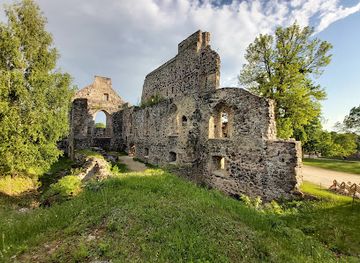
Ēdole castle
Experience the charm of Ēdole Castle, a stunning medieval fortress surrounded by lush landscapes and rich history in Latvia.
-
Tourist attraction
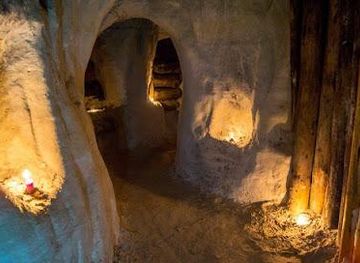
Riezupe Sand Caves
Explore the Riezupe Sand Caves, a captivating natural wonder in Latvia, revealing stunning formations and a serene underground adventure.
-
Museum
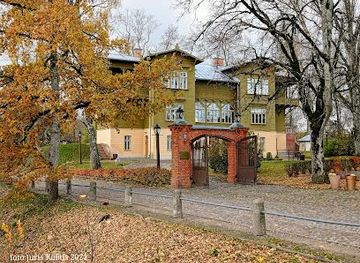
Kuldiga District Museum
Explore Kuldiga's rich cultural heritage at the Kuldiga District Museum, where history and art come together in a charming setting.

Best landmarks in Courland
Kuldīga’s historic centre is Courland’s most important architectural landmark, with timber houses, masonry buildings, small streets and the brick Venta Bridge forming a coherent townscape beside the river. The Venta Rapid, Latvia’s widest natural waterfall, is both a geographical feature and a symbol of the town. Liepāja is marked by its broad beach, grand churches, wooden residential quarters and the former naval district of Karosta, where the monumental Orthodox Naval Cathedral and remnants of military infrastructure express the city’s strategic past. Ventspils’ port and riverfront define its urban character, while the Livonian Order Castle provides a tangible link with medieval Courland. Cape Kolka is the region’s most recognisable coastal landmark, where the Baltic Sea and Gulf of Riga meet. Jūrkalne’s high shore, the wooded coast of Slītere and the lake-fringed hills of Talsi add natural landmarks to Courland’s architectural and maritime heritage.
-
Castle
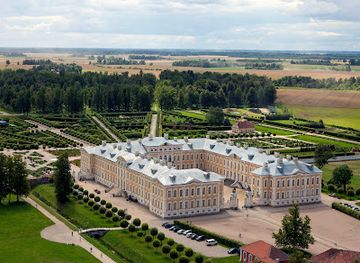
Rundāle Palace Museum
Experience the grandeur of Rundāle Palace Museum, Latvia's Baroque masterpiece, rich in history, art, and stunning gardens.
-
National park
Gauja National Park
Explore Latvia's Gauja National Park: Nature, history, and adventure await in this stunning protected landscape.
-
Museum
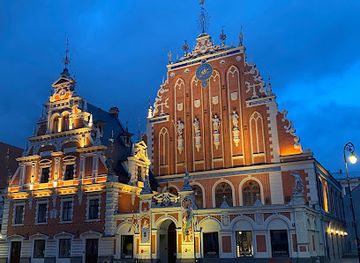
House of the Black Heads
Explore Riga's Hanseatic history at the House of the Black Heads, a stunningly reconstructed landmark in the heart of Old Town.
-
National park
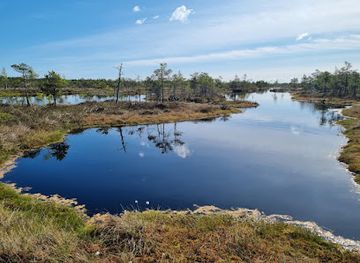
Ķemeri National Park
Discover Latvia's natural beauty at Ķemeri National Park: a haven of bogs, forests, mineral springs, and diverse wildlife, just a short trip from Riga.
Explore Courland on the map
Plan your trip on one map. See where the top cities, national parks and sights are, and book hotels and experiences in a few clicks.
Best hotels in Courland
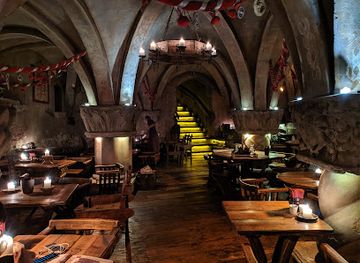
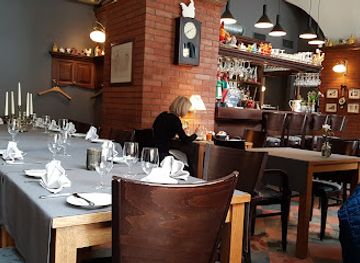
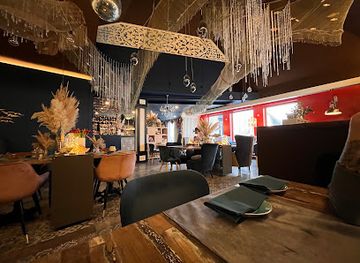
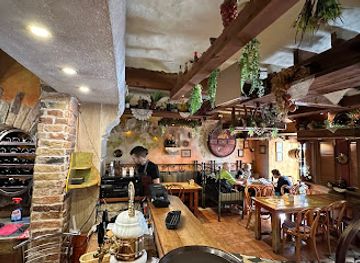
Best restaurants in Courland
Courland’s food reflects its coastline, forests and agricultural hinterland. Smoked and salted fish are especially associated with maritime communities, while local menus commonly draw on potatoes, rye bread, pork, dairy products, berries and mushrooms. In Liepāja and Ventspils, restaurants range from contemporary dining rooms and cafés to informal places serving fish and familiar Latvian dishes. Kuldīga and Talsi have a growing café culture set among historic buildings, while rural inns and farm producers offer a more seasonal experience. Look for regional breads, preserves, honey, cheese, smoked meats and berry-based desserts at markets or specialist shops. Latvian beer is widely available, and herbal drinks and birch sap products may appear seasonally. Menus and opening patterns can be limited in small villages, so carrying provisions is sensible when travelling to remote beaches, parks or nature reserves.
-
Restaurant
Rozengrāls (Vinarium civitatis rigensis)
Experience medieval charm and exquisite Latvian cuisine at Rozengrāls in the heart of Riga's Central District.
-
Restaurant
Pētergailis, restorāns
Discover the culinary delights at Pētergailis - where modern cuisine meets Latvian tradition in a vibrant setting.
-
Fish restaurant
Restaurant Bermudas
Discover Restaurant Bermudas: A top-rated seafood haven in Ragaciems offering fresh flavors and stunning coastal views.
-
Family-friendly
Province restaurant
Experience the essence of Latvian cuisine at Province Restaurant - where families gather to enjoy delicious meals in a welcoming atmosphere.
Best bars in Courland
Liepāja has Courland’s broadest evening scene, with bars, live music, cultural venues and restaurants concentrated around the central city and the city’s strong music tradition. Ventspils offers a quieter selection of pubs, cafés and restaurants, with summer activity increasing around the waterfront and cultural calendar. Kuldīga’s evening life is suited to relaxed dining, beer and wine in historic surroundings rather than late-night clubbing. Elsewhere, traditional pubs, hotel bars and rural restaurants are the main options, and smaller towns may become quiet relatively early. Seasonal concerts and performances can add energy during summer, but schedules change from year to year. In coastal villages and nature areas, plan for limited evening services and do not expect a substantial nightclub scene.
-
Restaurant
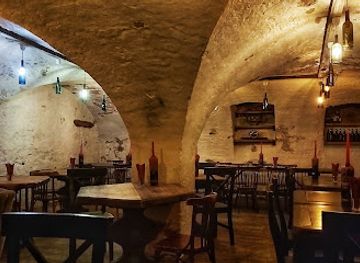
Ala Pagrabs
Experience the essence of Latvia at Ala Pagrabs, a restaurant and bar offering authentic cuisine and vibrant atmosphere in Rīga's Central District.
-
Bar
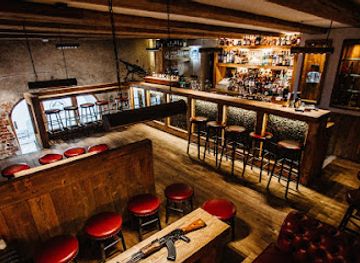
The Armoury Bar
Discover the enchanting Armoury Bar in Riga, where history and modern leisure intertwine, offering a unique drinking experience.
-
Bar
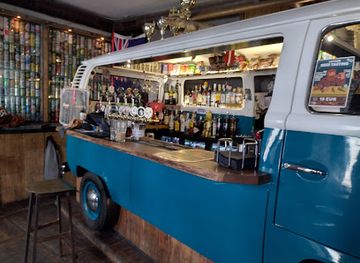
Aussie Backpackers Pub
Experience the vibrant nightlife of Riga at Aussie Backpackers Pub, where travelers meet, drinks flow, and unforgettable memories are made.
-
Sports bar
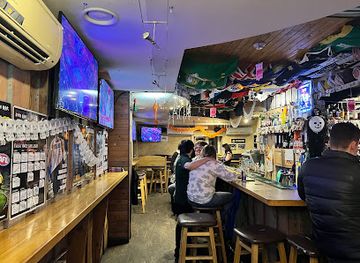
KIWI SPORTS PUB/BAR
Discover the ultimate sports bar experience in Rīga at KIWI Sports Pub/Bar, where great food, drinks, and live sports come together.
Best nightclubs in Courland
Liepāja has Courland’s broadest evening scene, with bars, live music, cultural venues and restaurants concentrated around the central city and the city’s strong music tradition. Ventspils offers a quieter selection of pubs, cafés and restaurants, with summer activity increasing around the waterfront and cultural calendar. Kuldīga’s evening life is suited to relaxed dining, beer and wine in historic surroundings rather than late-night clubbing. Elsewhere, traditional pubs, hotel bars and rural restaurants are the main options, and smaller towns may become quiet relatively early. Seasonal concerts and performances can add energy during summer, but schedules change from year to year. In coastal villages and nature areas, plan for limited evening services and do not expect a substantial nightclub scene.
-
Night club
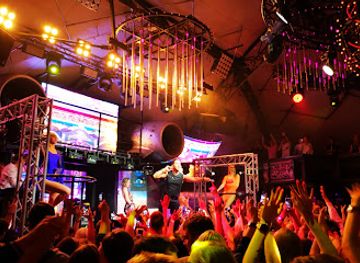
FIRST Club
Experience the electrifying nightlife of Riga at FIRST Club, where music, dancing, and unforgettable memories await every weekend.
-
Night club
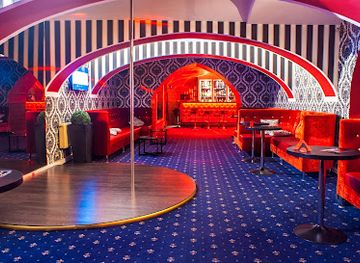
Royal Club
Immerse yourself in the electrifying nightlife at Royal Club, Riga's premier destination for unforgettable dancing and entertainment.
-
Night club
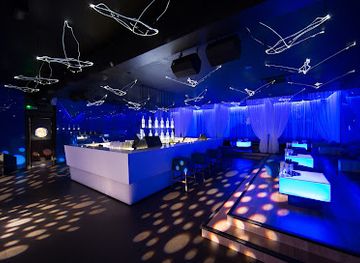
Coyote Fly
Discover Coyote Fly, a vibrant night club in Riga, where electrifying music meets stylish ambiance for an unforgettable nightlife experience.
-
Night club
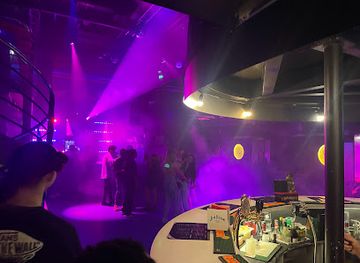
Valhalla
Discover the vibrant nightlife of Riga at Valhalla Night Club, where eclectic music and an energetic atmosphere await every night.
Best shops in Courland
Shopping in Courland is centred on market towns, independent high streets, food producers and practical local crafts rather than large luxury retail districts. Liepāja has the widest urban choice, including cafés with design goods, bookshops, galleries and ordinary high-street retailers, while Ventspils combines standard shopping with maritime-themed and locally made products. Kuldīga is well suited to browsing small galleries, craft shops, antiques and independent boutiques in historic streets. Regional markets and farm shops are the best places to seek rye bread, smoked fish, honey, preserves, berries, herbal products and dairy goods, subject to seasonal availability. Handcrafted ceramics, textiles, woodwork and amber jewellery make appropriate souvenirs, but compare quality and regional provenance before buying. In rural areas, opening days and hours can be limited, so purchase provisions in larger towns before travelling along the remote coast.
-
Market
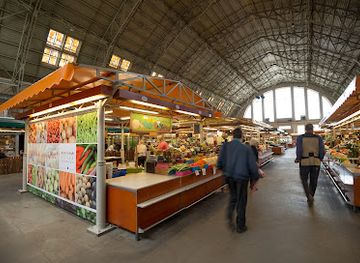
Riga Central Market
Discover the flavors and vibrancy of Latvia at Riga Central Market, a cultural gem in the heart of Riga offering local delicacies and unique crafts.
-
Shopping mall
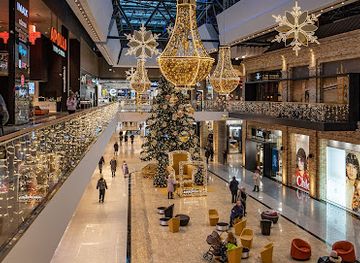
AKROPOLE Rīga
Experience the best of shopping, dining, and entertainment at AKROPOLE Rīga, the premier shopping destination in Latvia.
-
Shopping mall
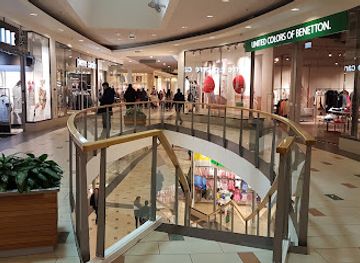
Akropole Alfa, iepirkšanās centrs
Discover the ultimate shopping destination in Riga at Akropole Alfa, where retail therapy meets entertainment in a vibrant atmosphere.
-
Shopping mall
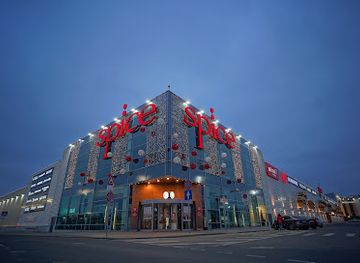
TC Spice
Experience shopping like never before at TC Spice, Riga's premier shopping destination offering a blend of luxury, dining, and entertainment.
Get your free copy of our complete guide to Courland, delivered straight to you.
Everything on this page, from attractions and restaurants to essentials and local phrases, in one PDF you can read offline, print or share.
Already have an account? Sign in
Your Courland guide is ready.
We'll send it to · Not you? Sign out

Getting your guide ready…
We are putting together a fresh copy of the Courland guide. This can take up to a minute.
This can take a few moments. If your browser asks, choose Allow so the download can start. You'll find the guide in your Downloads folder.
Nothing happened? Download it again
Sorry, the guide is taking longer than usual. Please try again in a minute, or get it by email instead.
Courland essentials
Currency and Payment
Safety
Emergency Situations
Do's and Don'ts
Local Tips
From Eve
Local phrases worth knowing
You don't need to get them perfect. A few words go a long way, and locals appreciate the effort.
Basics
| English | Local | Say it |
|---|---|---|
| Hello | Sveiki | [sveh-kee] |
| Goodbye | Uz redzēšanos | [ooz reh-deh-zha-nos] |
| Yes | Jā | [yah] |
| No | Nē | [neh] |
| Please/You're welcome | Lūdzu | [lood-zoo] |
| Thank you | Paldies | [pahl-dyehs] |
| Excuse me/Sorry | Atvainojiet | [aht-vai-noh-yeht] |
| How are you? | Kā tev klājas? | [kah tehv klah-yahs] |
| Fine. And you? | Labi. Un tu? | [lah-bee. oon too?] |
| Do you speak English? | Vai tu runā angliski? | [vai too roo-nah ahn-glees-kee] |
| I don't understand | Es nesaprotu | [es neh-sah-proh-too] |
Eating & Drinking
| English | Local | Say it |
|---|---|---|
| I'd like to see the menu, please | Es gribētu redzēt ēdienkarti, lūdzu | [es gree-bah-too reh-dzeht eh-dee-en-kahr-tee, lood-zoo] |
| I don't eat meat | Es neēdu gaļu | [es neh-eh-doo gah-loo] |
| Cheers! | Priekā! | [pre-kah] |
| I would like to pay, please | Es gribētu samaksāt, lūdzu | [es gree-bah-too sah-mahk-saht, lood-zoo] |
Emergencies
| English | Local | Say it |
|---|---|---|
| Help! | Palīdziet! | [pah-leed-zee-et] |
| Go away! | Ej prom! | [ay prohm] |
| Call the Police! | Zvaniet policijai! | [zvah-nee-et poh-lee-tsee-yai] |
| Call a doctor! | Zvaniet ārstam! | [zvah-nee-et ahr-stahm] |
| I'm lost | Es esmu apmaldījies | [es es-moo ahp-mahl-dee-yies] |
| I'm ill | Es esmu slims | [es es-moo sleems] |
Shopping
| English | Local | Say it |
|---|---|---|
| I'd like to buy... | Es gribētu nopirkt... | [es gree-bah-too noh-peer-kt] |
| I'm just looking | Es tikai skatījos | [es tee-kai skah-tee-yohs] |
| How much is it? | Cik tas maksā? | [tsik tahs mak-sah] |
| That's too expensive | Tas ir pārāk dārgi | [tahs eer pah-rahk dahr-gee] |
| Can you lower the price? | Vai tu vari samazināt cenu? | [vai too vah-ree sah-mah-zee-naht tseh-noo] |
Time & Numbers
| English | Local | Say it |
|---|---|---|
| What time is it? | Cik ir pulkstens? | [tsik eer poolk-stens] |
| It's one o'clock | Ir viens pulkstens | [eer vyens poolk-stens] |
| Half past (10) | Pusstundas (10) | [poos-stoon-dahs (10)] |
| Morning | Rīts | [reetz] |
| Afternoon | Pēcpusdiena | [pehp-poos-dee-eh-nah] |
| Evening | Vakars | [vah-kahrs] |
| Yesterday | Vakar | [vah-kahr] |
| Today | Šodien | [shoh-dyehn] |
| Tomorrow | Rīt | [reet] |
| 1 | 1 | [1] |
| 2 | 2 | [2] |
| 3 | 3 | [3] |
| 4 | 4 | [4] |
| 5 | 5 | [5] |
| 6 | 6 | [6] |
| 7 | 7 | [7] |
| 8 | 8 | [8] |
| 9 | 9 | [9] |
| 10 | 10 | [10] |
Transport & Directions
| English | Local | Say it |
|---|---|---|
| Where's a/the...? | Kur ir ...? | [koor eer ...?] |
| What's the address? | Kāda ir adrese? | [kah-dah eer ah-dre-seh] |
| Can you show me (on the map)? | Vai tu vari parādīt (uz kartes)? | [vai too vah-ree pah-rah-deet (ooz kahr-tes)?] |
| When's the next (bus)? | Kad ir nākamais (autobuss)? | [kadh eer nah-kah-myhs (ow-toh-boos)?] |
| A ticket (to ....) | Biļete (uz ....) | [bih-lyeh-teh (ooz ....)] |
History of Courland
The Curonians and Early Coastal Trade
Before the formation of Latvia, western Latvia was associated strongly with the Curonians, a Baltic people whose territories extended across much of Courland and whose settlements were connected to the Baltic Sea. Archaeological evidence from hillforts, burial sites and coastal areas records farming, craft production, warfare and long-distance exchange. The Curonians became known in medieval sources as capable seafarers, although later accounts often portrayed them through the perspective of their opponents. Their legacy remains important to regional identity, place names and historical interpretation, particularly in the coastal districts and around the Venta and Abava river systems.
German Rule and the Livonian Order
During the thirteenth century, German crusading movements and the Livonian Order incorporated Courland into the political and religious structures of medieval Livonia. Castles and fortified settlements supported administration, trade and Christianisation, while German-speaking elites gained influence over towns and estates. Kuldīga became an important centre of the Courland territory, and the region’s later urban architecture developed from this medieval framework. The order’s authority weakened during the Livonian War in the sixteenth century, when the political map of the eastern Baltic changed dramatically and Courland moved towards a distinct ducal state.
The Duchy of Courland and Semigallia, 1561–1795
After the collapse of Livonian power, Courland became the Duchy of Courland and Semigallia under the rule of the Dukes of Kettler and their successors. Based at Jelgava, outside present-day Courland, the duchy controlled much of western Latvia and developed ports including Ventspils and Liepāja. Under Duke Jacob Kettler in the seventeenth century, shipbuilding, manufacturing and overseas trade expanded, and Courland established short-lived colonies in Tobago and on the Gambia River. The duchy’s ambitions left a lasting maritime imprint, although its economy remained dependent on agriculture and the European balance of power.
Russian Imperial Administration and Rural Change
The duchy was absorbed into the Russian Empire in 1795, becoming the Governorate of Courland. Administrative and economic connections increasingly followed imperial routes, while estates, Lutheran and Orthodox institutions, and growing towns shaped the countryside. The nineteenth century brought gradual changes in agriculture, education, commerce and communications, though social inequality remained pronounced and German-speaking landowners retained substantial influence. Courland’s manor houses, churches, farmsteads and town plans preserve aspects of this period. The rise of Latvian national consciousness also encouraged greater interest in the Latvian language, folklore and cultural history of the region.
Ports, Railways and Industrialisation
From the late nineteenth century, railway construction and port investment connected Courland more closely with Riga, the Russian Empire and international markets. Liepāja developed into a major industrial and military port, with shipbuilding, metalworking and other industries supporting rapid urban growth. Ventspils also gained importance as a commercial harbour, while timber, agricultural goods and fishing sustained smaller coastal communities. These developments brought new neighbourhoods, warehouses, workers’ housing and civic buildings. They also established the urban and maritime foundations that continue to distinguish Liepāja and Ventspils from Courland’s inland market towns.
War, Occupation and Soviet Military Installations
The twentieth century brought severe disruption. Courland was affected by the First World War, the creation of independent Latvia in 1918, the Second World War and the occupations by the Soviet Union and Nazi Germany. The final German-held Courland Pocket lasted until the end of the war in Europe, leaving extensive physical and human destruction. During the Soviet period, Liepāja and Ventspils remained strategically important, while parts of the coast were restricted and used for military purposes. Radar stations, naval infrastructure and abandoned installations still form part of the region’s modern historical landscape.
Restored Towns and Contemporary Courland
After Latvia restored independence in 1991, Courland underwent economic and social change as ports were modernised, industries restructured and coastal areas became more accessible. Liepāja developed a strong cultural and creative profile, Ventspils invested heavily in public spaces and maritime interpretation, and Kuldīga became a major heritage destination. In 2023, Kuldīga’s historic centre was added to the UNESCO World Heritage List for its well-preserved urban fabric and historical development. Today, conservation, sustainable coastal tourism, nature protection and the renewal of smaller towns are central to Courland’s regional identity.
Courland in Photos
Browse through our photo collection highlighting the charm and character of the destination.
Neighbouring regions of Courland
The closest regions to Courland, if you have time for more than one.
-

-

-

-

-


Swipe for more regions
Explore more

Explore more of Latvia
Explore Latvia: A Baltic treasure with rich history, stunning landscapes, vibrant festivals, and warm hospitality. Discover Riga's charm and Latvia's natural beauty.
Explore Latvia