

Free Kurzeme Travel Guide & Mobile App
Explore Kurzeme with free travel guides. Discover regional history, expert tips, proposed trips, and audio guides on web or mobile app.


Explore Kurzeme’s Baltic beaches, Kuldīga’s historic streets, Liepāja’s music scene and the forests, villages and wildlife of western Latvia.
When is the best time to visit Kurzeme?
Best: June–August · 20–22°C| Month | High (°C) | Rainfall (mm) |
|---|---|---|
| January | 1 | 45 |
| February | 1 | 35 |
| March | 5 | 40 |
| April | 11 | 36 |
| May | 17 | 48 |
| June (best) | 20 | 57 |
| July (best) | 22 | 71 |
| August (best) | 21 | 74 |
| September | 17 | 65 |
| October | 12 | 66 |
| November | 6 | 61 |
| December | 3 | 55 |
Getting to and around Kurzeme
How to get there
Transportation
Top city travel guides in Kurzeme
The cities of Kurzeme, and the easiest places to base yourself.
-

-

-

-

-

-


Swipe for more cities
Destinations in Kurzeme
Resorts, valleys and scenic spots worth a trip of their own.
-

-

-
-

-


Swipe for more destinations
Best attractions in Kurzeme
Kurzeme’s attractions range from historic urban quarters to expansive coastal nature. Kuldīga is the region’s cultural highlight, combining a well-preserved historic centre with the Venta River and Ventas rumba, while Liepāja offers the beach, concert halls, architectural heritage and the former military landscape of Karosta. Ventspils adds maritime history, a port museum and family-oriented museums and parks. North of the main cities, Slītere National Park protects wooded dunes, wetlands and the distinctive Livonian Coast around Cape Kolka. Pape Nature Park in southern Kurzeme provides habitats for migratory birds, coastal wildlife and long walks beside lake, meadow and sea. Inland, the Abava Valley brings wooded slopes, river scenery and rural routes suited to walking and cycling. Smaller manor estates, churches, local museums and fishing settlements give road journeys between the principal towns their character. Conditions and access vary seasonally, so nature-focused visits benefit from checking local conservation guidance before departure.
-
Tourist attraction
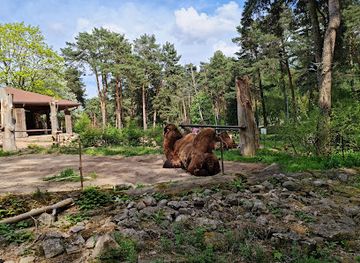
Riga National Zoological Garden
Discover diverse wildlife and conservation efforts at the Riga National Zoological Garden, a top tourist attraction in Latvia's capital city.
-
Tourist attraction
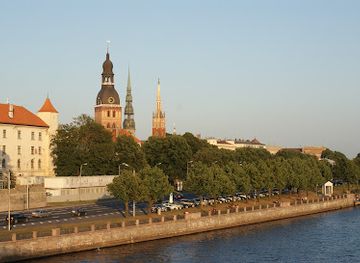
Riga Cathedral
Discover the architectural beauty and rich history of Riga Cathedral, a premier cultural landmark in the heart of Latvia's capital.
-
Tourist attraction
Kultūras pils "Ziemeļblāzma"
Discover the vibrant culture and artistic spirit of Riga at Kultūras pils Ziemeļblāzma, a must-visit cultural center in the heart of Latvia.
-
Tourist attraction
Dzegužkalns
Explore the tranquility of Dzeguļkalns Park in Rīga, a perfect blend of nature and scenic views for every traveler.
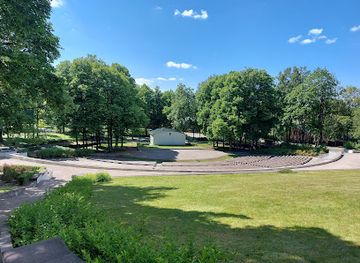
Best landmarks in Kurzeme
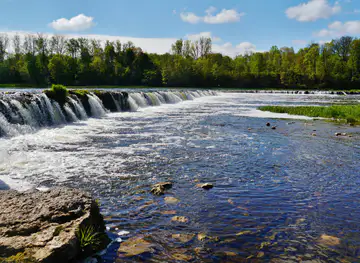
Kuldīga’s historic centre is Kurzeme’s most important architectural landmark, with timber and masonry buildings, traditional streets and bridges forming a coherent historic townscape recognised by UNESCO. Nearby, Ventas rumba is a defining natural landmark: a broad, low waterfall on the Venta River that is closely linked to the town’s identity. At Cape Kolka, the Baltic Sea and Gulf of Riga meet in a starkly open coastal setting marked by shifting sands, pine forest and maritime history. Liepāja’s Karosta is a remarkable military landscape of forts, port structures and monumental architecture, while the city’s Holy Trinity Cathedral and seaside promenade illustrate other periods of its development. Ventspils lighthouse and port surroundings express the continuing importance of navigation and maritime trade. In the countryside, the hills and water bodies around Talsi and the wooded Abava Valley provide geographical landmarks rather than monumental architecture, revealing Kurzeme’s varied inland character.
-
Castle
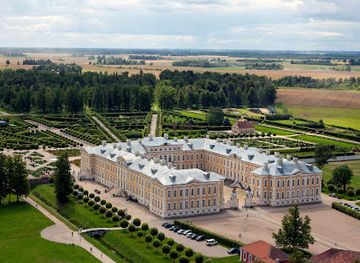
Rundāle Palace Museum
Discover Rundāle Palace: Latvia's Baroque gem, featuring opulent interiors, stunning gardens, and a glimpse into 18th-century aristocratic life.
-
Monument
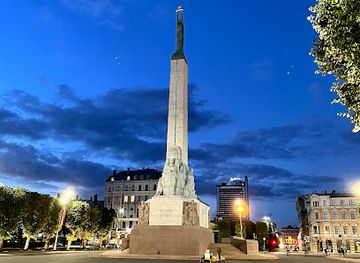
The Freedom Monument
Riga's iconic Freedom Monument: A symbol of Latvia's independence, commemorating the nation's fight for freedom and unity. A must-see landmark.
-
Museum
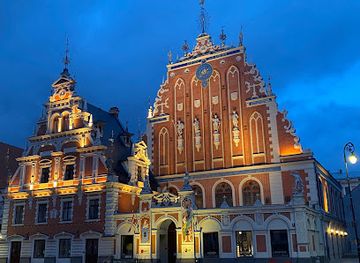
House of the Black Heads
Explore Riga's Hanseatic heritage at the House of the Black Heads, a stunningly reconstructed landmark in the heart of Old Town. A must-see!
-
National park
Ķemeri National Park
Explore Latvia's natural beauty: Bogs, forests, mineral springs, and diverse wildlife await in Ķemeri National Park near Jūrmala.
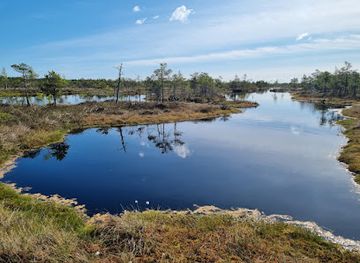
Explore Kurzeme on the map
Plan your trip on one map. See where the top cities, national parks and sights are, and book hotels and experiences in a few clicks.
Best hotels in Kurzeme
Best restaurants in Kurzeme
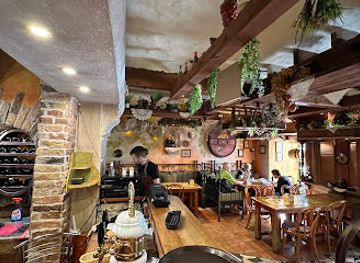
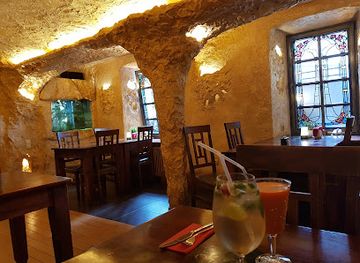
Kurzeme’s food reflects both its Baltic coastline and its agricultural interior. Smoked, salted and freshly prepared fish are especially associated with fishing communities and coastal markets, while rye bread, potatoes, dairy products, mushrooms and berries connect the regional table with Latvia’s wider food culture. Liepāja and Ventspils offer the broadest range of cafés, bakeries, modern restaurants and traditional Latvian cooking, with Kuldīga adding small restaurants and atmospheric cafés in historic buildings. Rural inns and farm-based producers may serve seasonal ingredients, but opening arrangements can be limited outside summer. Look for local cheeses, preserves, pastries and smoked products in markets and specialist shops, and expect menus to change with the catch and the harvest. Beer and non-alcoholic drinks made from local or Latvian ingredients are common accompaniments, while the best dining experiences often combine simple regional produce with contemporary presentation rather than elaborate culinary branding.
-
Restaurant
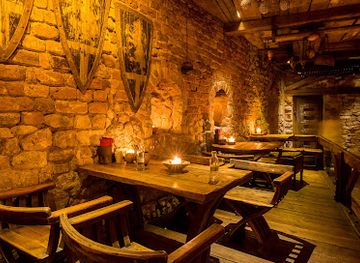
Rozengrāls (Vinarium civitatis rigensis)
Discover medieval charm and authentic Latvian cuisine at Rozengrāls – a culinary treasure in the heart of Riga.
-
Family-friendly
Province restaurant
Experience the taste of Latvia at Province Restaurant in Riga - a family-friendly destination for authentic local cuisine.
-
Restaurant
Lidojošā varde
Experience delightful dining at Lidojošā Varde in Riga—where local flavors meet whimsical decor in a unique restaurant setting.
-
Eastern European
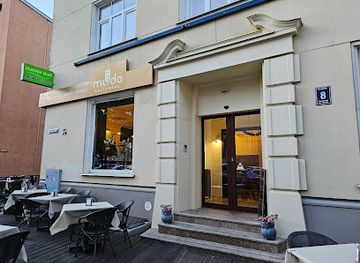
Milda
Experience authentic Latvian cuisine at Milda - where tradition meets modernity in the heart of Riga.
Best bars in Kurzeme
Evening life in Kurzeme is concentrated in Liepāja, Ventspils and Kuldīga, with smaller towns relying mainly on pubs, cafés and hotel restaurants. Liepāja has the region’s strongest music identity, supported by concert venues, live performances and bars serving audiences drawn to the city’s cultural scene. Ventspils offers a more restrained urban evening out, while Kuldīga’s historic centre suits relaxed drinks and dining rather than late-night clubbing. Along the coast, seasonal activity increases in summer, but many smaller settlements become quiet after dinner. Traditional pubs, craft-beer venues, wine bars and live-music events are more representative of the region than a large nightclub circuit. Check current arrangements locally, particularly outside the main cities and beyond the summer season.
-
Bar
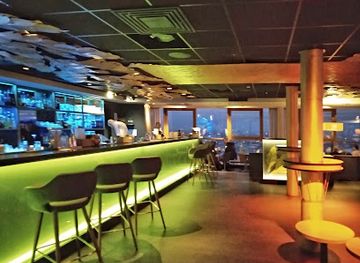
Skyline bar
Experience breathtaking views and exquisite cocktails at Skyline Bar, Riga's premier destination for a luxurious night out.
-
Brewpub
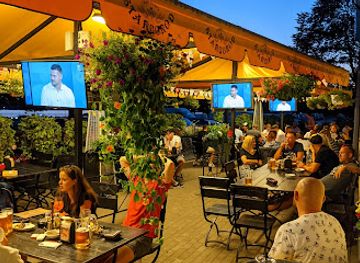
Stargorod Riga - Czech brewery
Experience the vibrant atmosphere and authentic flavors of Czech cuisine at Stargorod Riga - the premier brewpub in Latvia's capital.
-
Brewpub
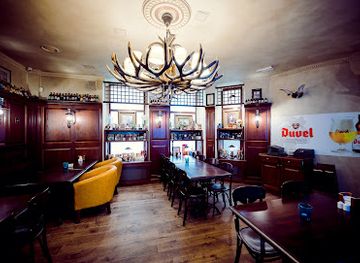
Gastro Pub Duvel's
Discover the heart of Riga's craft beer culture at Gastro Pub Duvel's, where gourmet pub fare meets a cozy brewpub atmosphere.
-
Bar
Black Magic
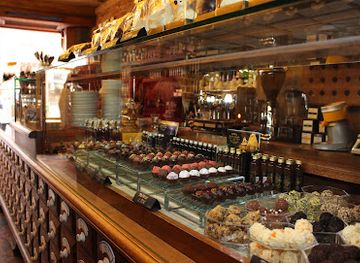
Experience the magical blend of handcrafted chocolates and innovative cocktails at Black Magic, a must-visit bar in Riga.
Best nightclubs in Kurzeme
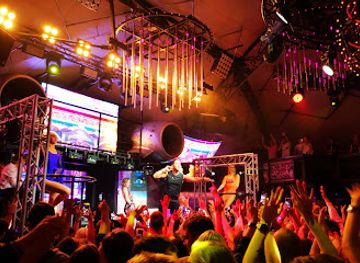
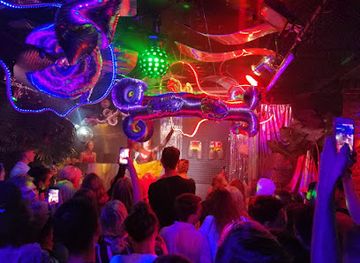
Evening life in Kurzeme is concentrated in Liepāja, Ventspils and Kuldīga, with smaller towns relying mainly on pubs, cafés and hotel restaurants. Liepāja has the region’s strongest music identity, supported by concert venues, live performances and bars serving audiences drawn to the city’s cultural scene. Ventspils offers a more restrained urban evening out, while Kuldīga’s historic centre suits relaxed drinks and dining rather than late-night clubbing. Along the coast, seasonal activity increases in summer, but many smaller settlements become quiet after dinner. Traditional pubs, craft-beer venues, wine bars and live-music events are more representative of the region than a large nightclub circuit. Check current arrangements locally, particularly outside the main cities and beyond the summer season.
-
Night club
FIRST Club
Unleash your night at FIRST Club in Riga, where vibrant music meets an electrifying atmosphere for an unforgettable nightlife experience.
-
Night club
Royal Club
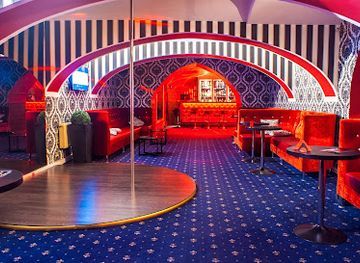
Discover the electrifying nightlife at Royal Club, Riga's premier destination for dancing and entertainment in a luxurious setting.
-
Night club
TOP Club Riga
Explore the heart of Riga's nightlife at TOP Club, where unforgettable music and vibrant atmosphere await you.
-
Night club
Valhalla
Discover the electrifying nightlife at Valhalla, Riga's premier night club, where unforgettable memories and vibrant energy await.
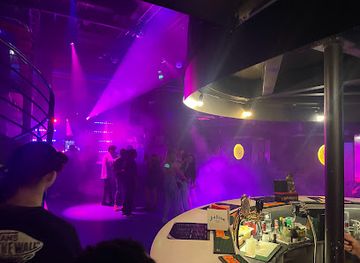
Best shops in Kurzeme
Shopping in Kurzeme is strongest in the market towns and larger coastal cities rather than in large luxury centres. Liepāja and Ventspils have the widest selection of high-street shops, supermarkets, independent boutiques, bookshops and galleries, while Kuldīga is well suited to browsing small craft, design and food shops within its historic centre. Local markets and seasonal stalls may offer smoked fish, rye bread, honey, preserves, berries and other Latvian produce, although availability depends on the time of year. Visitors interested in regional gifts can look for ceramics, textiles, woodwork, amber jewellery and contemporary work by Latvian makers, but should distinguish locally made goods from generic Baltic souvenirs. Talsi and other inland towns provide practical shopping and occasional market activity, while coastal villages are better for food products and maritime character than extensive retail choice.
-
Shopping mall
Gallery Centre, Shopping mall
Explore Riga's vibrant culture at Gallery Centre, a shopping paradise with diverse stores, delicious dining, and exciting events.
-
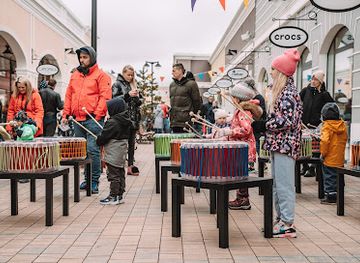
Outlet mall
Via Jurmala Outlet Village
Explore unbeatable deals and a delightful shopping atmosphere at Via Jurmala Outlet Village, Latvia's premier outlet mall.
-
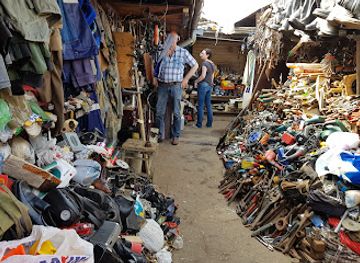
Flea market
Market Latgale
Explore Market Latgale: A Vibrant Flea Market in Riga, Showcasing Unique Souvenirs and Local Culture.
-
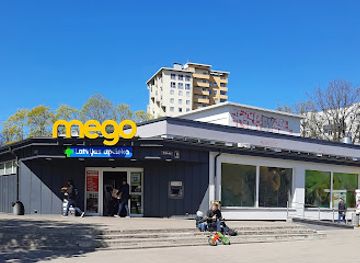
Grocery store
Mego Shop
Experience the local flavors and everyday life at Mego Shop, a premier grocery destination in Riga, Latvia.

Get your free copy of our complete guide to Kurzeme, delivered straight to you.
Everything on this page, from attractions and restaurants to essentials and local phrases, in one PDF you can read offline, print or share.
Already have an account? Sign in
Your Kurzeme guide is ready.
We'll send it to · Not you? Sign out

Getting your guide ready…
We are putting together a fresh copy of the Kurzeme guide. This can take up to a minute.
This can take a few moments. If your browser asks, choose Allow so the download can start. You'll find the guide in your Downloads folder.
Nothing happened? Download it again
Sorry, the guide is taking longer than usual. Please try again in a minute, or get it by email instead.
Kurzeme essentials
Currency and Payment
Safety
Emergency Situations
Do's and Don'ts
Local Tips
From Eve
Local phrases worth knowing
You don't need to get them perfect. A few words go a long way, and locals appreciate the effort.
Basics
| English | Local | Say it |
|---|---|---|
| Hello | Sveiki | [svei-kee] |
| Goodbye | Uz redzēšanos | [ooz rehd-zay-sha-nos] |
| Yes | Jā | [yah] |
| No | Nē | [neh] |
| Please/You're welcome | Lūdzu | [lood-zoo] |
| Thank you | Paldies | [pahl-dyehs] |
| Excuse me/Sorry | Atvainojiet | [aht-vai-noh-yeht] |
| How are you? | Kā tev klājas? | [kah tev klah-yas] |
| Fine. And you? | Labi. Un tu? | [lah-bee. oon too] |
| Do you speak English? | Vai tu runā angliski? | [vai too roo-nah ahn-glis-kee] |
| I don't understand | Es nesaprotu | [es neh-sah-proh-too] |
Eating & Drinking
| English | Local | Say it |
|---|---|---|
| I'd like to see the menu, please | Es gribētu redzēt ēdienkarti, lūdzu | [es gree-bah-too reh-dzayt eh-dee-en-kar-tee, lood-zoo] |
| I don't eat meat | Es neēdu gaļu | [es neh-eh-doo gah-lu] |
| Cheers! | Priekā! | [pree-kah] |
| I would like to pay, please | Es gribētu samaksāt, lūdzu | [es gree-bah-too sah-mahk-saht, lood-zoo] |
Emergencies
| English | Local | Say it |
|---|---|---|
| Help! | Palīdziet! | [pah-leed-zee-et] |
| Go away! | Aiziet! | [ai-zee-et] |
| Call the Police! | Zvaniet policiju! | [zvah-nee-et poh-lee-tsi-yoo] |
| Call a doctor! | Zvaniet ārstu! | [zvah-nee-et ahr-stoo] |
| I'm lost | Es esmu apmaldījies | [es es-moo ahp-mahl-dee-yes] |
| I'm ill | Es esmu slims | [es es-moo sleems] |
Shopping
| English | Local | Say it |
|---|---|---|
| I'd like to buy... | Es gribētu nopirkt... | [es gree-bah-too noh-peerkt] |
| I'm just looking | Es tikai skatos | [es tee-kai skah-tos] |
| How much is it? | Cik tas maksā? | [tsik tahs mak-sah] |
| That's too expensive | Tas ir pārāk dārgs | [tahs eer pah-rahk dahrgs] |
| Can you lower the price? | Vai tu vari pazemināt cenu? | [vai too vah-ree pah-zeh-mee-naht tsay-noo] |
Time & Numbers
| English | Local | Say it |
|---|---|---|
| What time is it? | Cik pulkstenis? | [tsik poolk-steh-nis] |
| It's one o'clock | Ir vienpadsmit | [eer vyen-pahds-mit] |
| Half past (10) | Pusē (10) | [poo-seh (deh-smit)] |
| Morning | Rīts | [reetz] |
| Afternoon | Pēcpusdiena | [pay-ts-poos-dye-na] |
| Evening | Vakars | [vah-kars] |
| Yesterday | Vakar | [vah-kar] |
| Today | Šodien | [sho-dee-en] |
| Tomorrow | Rīt | [reet] |
| 1 | 1 | [viens] |
| 2 | 2 | [divi] |
| 3 | 3 | [trīs] |
| 4 | 4 | [četri] |
| 5 | 5 | [pieci] |
| 6 | 6 | [seši] |
| 7 | 7 | [septi] |
| 8 | 8 | [astoņi] |
| 9 | 9 | [deviņi] |
| 10 | 10 | [desmit] |
Transport & Directions
| English | Local | Say it |
|---|---|---|
| Where's a/the...? | Kur ir...? | [koor eer] |
| What's the address? | Kāds ir adreses? | [kahds eer ah-dreh-ses] |
| Can you show me (on the map)? | Vai tu vari parādīt (uz kartes)? | [vai too vah-ree pah-rah-deet (ooz kar-tehs)] |
| When's the next (bus)? | Kad ir nākamais (autobuss)? | [kahd eer nah-kah-mice (ow-toh-boos)] |
| A ticket (to ....) | Biļete (uz....) | [bee-lyeh-teh (ooz....)] |
History of Kurzeme
Ancient Courland and Livonian Coastal Communities
Western Latvia has been inhabited since prehistoric times, and archaeological evidence records settlements, burial sites and trading activity around its rivers and coast. The northern shore was associated particularly with the Livonian people, whose language and cultural traditions survived in several fishing villages. Courland’s position between the Baltic Sea and the inland waterways made the area a meeting place for Baltic, Finnic, Germanic and Scandinavian influences. Archaeological sites and local museums provide the clearest ways to understand this early history, although much of the region’s oldest settlement pattern is now visible only through the landscape.
The Livonian Order and Medieval Towns
During the Middle Ages, western Latvia became part of the territories controlled by the Livonian Order and the bishoprics of Livonia. Castles, churches and trading settlements developed along routes linking the coast with inland markets. Kuldīga emerged as an important centre beside the Venta River, while coastal ports supported commerce and military movement across the Baltic. The medieval legacy was later altered by war and reconstruction, but the region’s historic churches, town plans and surviving masonry still reflect the political and economic importance of Courland within medieval Livonia.
The Duchy of Courland and Semigallia, 1561–1795
After the Livonian state broke apart in the sixteenth century, much of present-day Kurzeme formed the Duchy of Courland and Semigallia under the Kettler dynasty and its successors. Kuldīga served as an important ducal residence, and Jelgava became the principal political centre outside modern Kurzeme. Duke Jacob Kettler promoted manufacturing, shipbuilding and overseas trade, giving the small duchy connections that extended beyond the Baltic. The period left a durable regional identity centred on Courland, even after the duchy was incorporated into the Russian Empire in 1795.
Ports, Maritime Trade and Industrial Growth
From the eighteenth and nineteenth centuries onwards, ports such as Liepāja and Ventspils became increasingly important to the region’s economy. Grain, timber and other agricultural or forest products moved through the harbours, while rail connections strengthened links with inland Latvia and the wider Russian Empire. Liepāja developed into an industrial and commercial city with distinctive masonry and wooden architecture; Ventspils grew around its port and maritime functions. Fishing, shipbuilding, forestry and agriculture remained equally important across the smaller towns and rural districts.
War, Independence and the Interwar Republic
Kurzeme was heavily affected by the First World War, the Latvian War of Independence and the upheavals accompanying the collapse of the Russian Empire. Liepāja briefly served as a temporary centre of the Latvian government during the struggle for independence, and the western coast became strategically important because of its ports. During Latvia’s interwar independence, towns expanded civic institutions, schools and cultural life, while agriculture and maritime trade continued to shape the countryside. Several urban buildings and monuments date from this period of national statehood.
Occupation, Soviet Rule and the Contemporary Region
Latvia’s occupation during the Second World War and subsequent incorporation into the Soviet Union transformed Kurzeme. Military installations expanded, coastal access was restricted in many areas and industrial activity was reorganised under Soviet administration. Karosta in Liepāja preserves especially visible evidence of this military past, while rural communities experienced depopulation and economic change. Since the restoration of Latvian independence in 1991, ports, tourism, conservation and cultural heritage have become important parts of the regional economy. Historic centres such as Kuldīga now sit alongside modern coastal industries and protected natural areas.
Kurzeme in Photos
Browse through our photo collection highlighting the charm and character of the destination.
Neighbouring regions of Kurzeme
The closest regions to Kurzeme, if you have time for more than one.
-

-

-

-

-


Swipe for more regions
Explore more

Explore more of Latvia
Explore Latvia: A Baltic treasure with rich history, stunning landscapes, vibrant festivals, and warm hospitality. Discover Riga's charm and Latvia's natural beauty.
Explore Latvia