

Tioman Island Travel Guide - Free Web & App
Your ultimate guide to Tioman Island. Discover top landmarks, proposed trips, and local tips. Free on the web or via the Evendo companion app.


Tioman Island, Malaysia, pairs rainforest peaks and coral reefs with village beaches, diving, snorkelling, jungle trails and a relaxed South China Sea atmosphere.
Island Landscapes and Marine Life
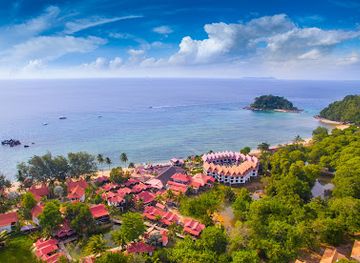
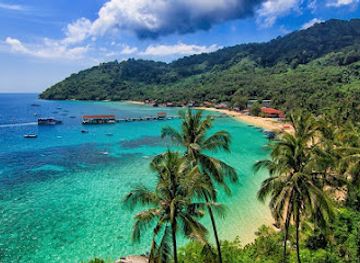
Tioman Island lies off Malaysia’s east coast in the South China Sea, within Pahang state and the wider Mersing archipelago. Its forested spine rises steeply from a deeply indented coast, with Mount Kajang reaching about 1,038 metres and granite slopes cloaked in tropical vegetation. Sandy coves, offshore islets and clear coastal waters give the island its strongest visual character, while coral reefs and rocky shallows support a popular diving and snorkelling scene. The island and its surrounding waters form part of the Mersing Marine Park, where responsible behaviour is important around reefs and marine habitats.Read more about Tioman Island
Villages and Ways to Explore
Island Culture and Atmosphere
When is the best time to visit Tioman Island?
Best: June–August · 30°C| Month | High (°C) | Rainfall (mm) |
|---|---|---|
| January | 31 | 265 |
| February | 30 | 236 |
| March | 30 | 221 |
| April | 30 | 180 |
| May | 30 | 155 |
| June (best) | 30 | 136 |
| July (best) | 30 | 141 |
| August (best) | 30 | 146 |
| September | 30 | 160 |
| October | 30 | 175 |
| November | 30 | 216 |
| December | 30 | 246 |
Getting to and around Tioman Island
How to get there
Transportation
Best attractions in Tioman Island
Tioman’s attractions are distributed between coastal villages, forest trails and the surrounding marine park. Tekek provides the principal arrival point and access to island services, while its beach and nearby coastal waters are used for swimming, snorkelling and diving. Air Batang, often called ABC, and Salang are established bases for reef excursions, with offshore sites offering opportunities to observe coral communities and tropical fish when sea and visibility conditions are suitable. Juara, on the eastern coast, has a more secluded character and is reached by crossing the island or travelling by boat. In the south, Mukut lies beneath Tioman’s higher forested slopes and is associated with views towards the twin granite formations known as the Dragon’s Horns. Jungle routes, streams and beaches reveal a different side of the island, while boat trips can reach nearby islets and less developed coastal areas without implying access to every shore.
-
Resort hotel
Paya Beach Spa & Dive Resort
Discover the serene beauty of Paya Beach Spa & Dive Resort, where relaxation meets adventure on the stunning Tioman Island.
-
 Resort hotel
Aman Tioman Beach Resort
Discover the serene beauty of Aman Tioman Beach Resort, where luxury meets nature on the breathtaking Tioman Island.
-
Tourist attraction
Pusat Taman Laut Tioman
Explore the ecological paradise of Pusat Taman Laut Tioman, where vibrant marine life meets breathtaking landscapes in Malaysia's tropical haven.
-
Tourist attraction
Sun Beach Resort
Discover the natural beauty and vibrant culture of Pulau Tioman at Sun Beach Resort, your tropical getaway for relaxation and adventure.


Best landmarks in Tioman Island
Tioman’s defining landmarks are primarily natural. Mount Kajang, rising to about 1,038 metres, forms the island’s highest interior summit and emphasises the steep, forested character visible from the coast. Near Mukut, the twin granite pinnacles known as the Dragon’s Horns create one of the island’s most recognisable silhouettes and are closely associated with local legend and Tioman’s visual identity. The island’s coves, rocky headlands and offshore islets mark the meeting point of granite terrain and the South China Sea, while neighbouring marine habitats are protected within the Mersing Marine Park framework. Tekek’s ferry landing, village mosques and scattered coastal settlements are modest human landmarks, reflecting the island’s maritime communities rather than monumental architecture. Tioman’s UNESCO biosphere-reserve designation also gives its linked forests, reefs and inhabited coastal landscapes wider environmental significance.
-
Resort hotel
Paya Beach Spa & Dive Resort
Discover the beauty of Paya Beach Spa & Dive Resort on Tioman Island, where relaxation meets adventure and nature thrives in harmony.
-
Resort hotel
Berjaya Tioman Resort - Malaysia
Experience the ultimate tropical getaway at Berjaya Tioman Resort, where luxury meets adventure amidst the stunning landscapes of Tioman Island.
-
Resort hotel
Aman Tioman Beach Resort
Experience luxury and tranquility at Aman Tioman Beach Resort, where stunning beaches meet lush tropical landscapes on Tioman Island.
-
Resort hotel
Japamala Resort
Experience the luxury and serenity of Japamala Resort on Tioman Island – where nature and elegance meet for an unforgettable getaway.
Explore Tioman Island on the map
Plan your trip on one map. See where the top attractions, landmarks, restaurants and hotels are, and book hotels and experiences in a few clicks.
Best hotels in Tioman Island
Best restaurants in Tioman Island
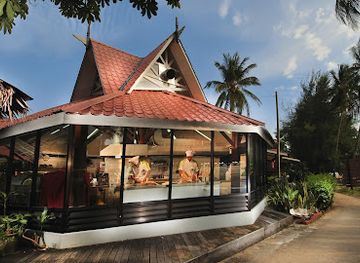
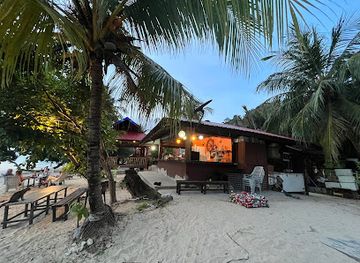
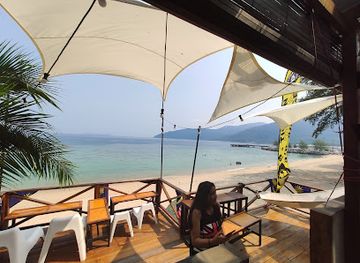
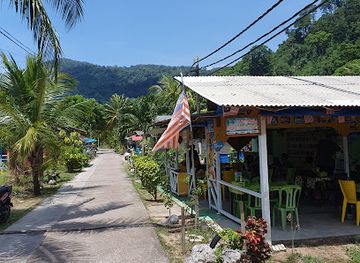
Tioman’s food scene is concentrated in its villages and resort areas rather than in a formal dining district. Small Malay eateries, family-run cafés and accommodation restaurants commonly serve rice dishes, noodles, grilled seafood, curries and simple Western meals, with menus influenced by the island’s fishing culture and the practical limits of transporting supplies from the mainland. Tekek offers the broadest choice of provisions and casual dining, while Air Batang, Salang, Paya, Genting and Juara have eating places associated with guesthouses and beach accommodation. Availability can be seasonal and less predictable in smaller settlements, so visitors staying in a remote bay should ask locally about meals and supplies. Fresh fish may feature where catches and transport allow, alongside Malaysian staples such as nasi goreng, nasi lemak and mee dishes, but the island is not a destination for a large, formal restaurant circuit.
-
Pizza
Sunset Corner
Experience tropical dining at Sunset Corner with delectable pizzas and stunning ocean sunsets on Tioman Island.
-
Bistro
Tioman Cabana Beach Bistro
Discover culinary delights at Tioman Cabana Beach Bistro, where local flavors meet stunning beach views on beautiful Tioman Island.
-
Restaurant
Mia Cafe
Discover authentic Malaysian cuisine at Mia Cafe on Tioman Island – where every dish tells a story amidst breathtaking tropical scenery.
-
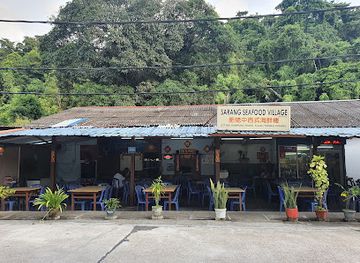
Seafood
Sarang Seafood Village
Experience the best of Malaysian seafood at Sarang Seafood Village in Pulau Tioman – fresh flavors in a beautiful setting await you.
Best bars in Tioman Island
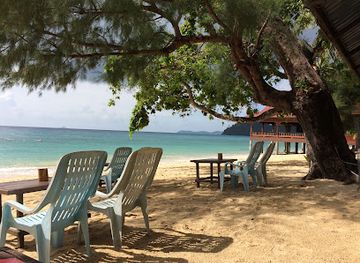
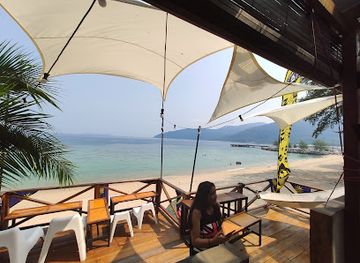
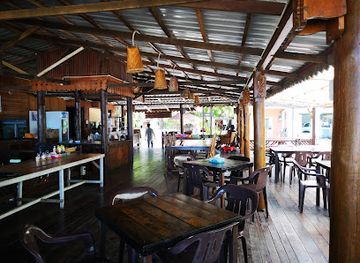
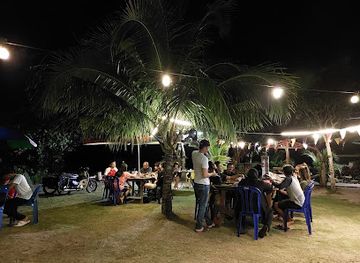
Tioman has a quiet evening culture rather than a substantial nightlife scene. Beach resorts and guesthouses in places such as Air Batang, Salang, Paya and Tekek may provide informal bars, drinks and relaxed social spaces, while village restaurants and resort terraces are the more typical settings after dark. Entertainment often centres on conversation, the sound of the sea and occasional informal gatherings rather than nightclubs or a dedicated nightlife district. Juara and Mukut are generally even more subdued, with limited late-night facilities. Visitors should respect village life, keep music and conversation at considerate levels, and check locally because opening arrangements can vary with the season, weather and the operating patterns of individual accommodation businesses.
-
Pizza
Sunset Corner
Experience exquisite pizza with breathtaking sunset views at Sunset Corner on Tioman Island, a paradise for food lovers.
-
Bistro
Tioman Cabana Beach Bistro
Savor the taste of Tioman Island at Tioman Cabana Beach Bistro, a tropical haven for food lovers and beach enthusiasts.
-
Tourist attraction
Tioman Santai Bistro Resort
Experience the ultimate tropical retreat at Tioman Santai Bistro Resort, where local flavors and breathtaking views await every traveler.
-
Family-friendly
Juara Ocean Cafe
Discover Juara Ocean Cafe on Tioman Island, where family-friendly dining meets stunning ocean views and delicious local cuisine.
Best nightclubs in Tioman Island
Tioman has a quiet evening culture rather than a substantial nightlife scene. Beach resorts and guesthouses in places such as Air Batang, Salang, Paya and Tekek may provide informal bars, drinks and relaxed social spaces, while village restaurants and resort terraces are the more typical settings after dark. Entertainment often centres on conversation, the sound of the sea and occasional informal gatherings rather than nightclubs or a dedicated nightlife district. Juara and Mukut are generally even more subdued, with limited late-night facilities. Visitors should respect village life, keep music and conversation at considerate levels, and check locally because opening arrangements can vary with the season, weather and the operating patterns of individual accommodation businesses.
-
Resort hotel
Paya Beach Spa & Dive Resort
Experience the ultimate escape at Paya Beach Spa & Dive Resort, where relaxation meets adventure on the enchanting Tioman Island.
-
Island
Tioman Island
Experience the breathtaking beauty and vibrant marine life of Tioman Island, a tropical paradise in Malaysia perfect for relaxation and adventure.
-
Resort hotel
Japamala Resort
Experience the ultimate tropical escape at Japamala Resort on Tioman Island, where luxury meets nature in a breathtaking paradise.
-
Bistro
Tioman Cabana Beach Bistro
Experience the tropical charm and culinary delights of Tioman Cabana Beach Bistro on the breathtaking Tioman Island.
Best shops in Tioman Island
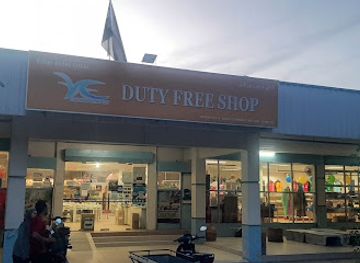
Shopping on Tioman is small-scale and practical, with facilities concentrated in Tekek and the larger beach settlements rather than arranged along a conventional high street. Village shops and resort outlets sell snacks, drinks, toiletries, beachwear, souvenirs, basic travel supplies and, in some locations, equipment or accessories for diving and snorkelling. Visitors may also find locally produced food items and small craft or shell-themed souvenirs, although responsible travellers should avoid products made from coral, protected shells or wildlife. Tekek is the most useful place to arrange essential purchases before travelling to a quieter bay, where retail choice is limited and supplies may depend on deliveries from the mainland. The island’s shopping character reflects its village economy and marine setting more than a specialised artisan tradition or large permanent market.
-
Duty free store
Vision Duty Free Shop
Explore the Vision Duty Free Shop in Mersing for an exceptional duty-free shopping experience featuring luxury goods at unbeatable prices.
-
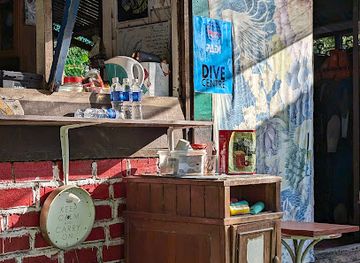
Dive shop
Tioman Big Brother Diver
Discover the vibrant underwater world of Pulau Tioman with Tioman Big Brother Diver, the ultimate destination for diving enthusiasts.
-
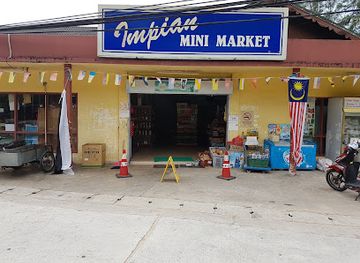
Grocery store
Impian Mini Market
Explore Tioman Island's vibrant culture and convenience at Impian Mini Market, your go-to grocery store for fresh produce and local flavors.
-
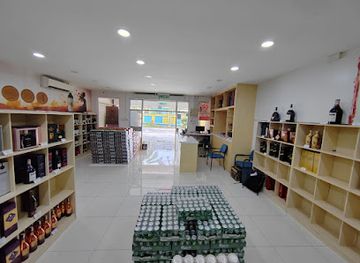
Duty free store
Star Glory (fka QKS Duty Free Shop)
Explore Star Glory Duty Free Store in Mersing for a diverse selection of tax-free goods, from luxury cosmetics to gourmet treats.
Get your free copy of our complete guide to Tioman Island, delivered straight to you.
Everything on this page, from attractions and restaurants to essentials and local phrases, in one PDF you can read offline, print or share.
Already have an account? Sign in
Your Tioman Island guide is ready.
We'll send it to · Not you? Sign out

Getting your guide ready…
We are putting together a fresh copy of the Tioman Island guide. This can take up to a minute.
This can take a few moments. If your browser asks, choose Allow so the download can start. You'll find the guide in your Downloads folder.
Nothing happened? Download it again
Sorry, the guide is taking longer than usual. Please try again in a minute, or get it by email instead.
Tioman Island essentials
Currency and Payment
Safety
Emergency Situations
Do's and Don'ts
Local Tips
From Eve
Local phrases worth knowing
You don't need to get them perfect. A few words go a long way, and locals appreciate the effort.
Basics
| English | Local | Say it |
|---|---|---|
| Hello | Apa khabar | [Ah-pah kah-bah] |
| Goodbye | Selamat tinggal | [Suh-lah-maht ting-gahl] |
| Yes | Ya | [Yah] |
| No | Tidak | [Tee-dahk] |
| Please/You're welcome | Sila | [See-lah] |
| Thank you | Terima kasih | [Teh-ree-mah kah-see] |
| Excuse me/Sorry | Maaf | [Mah-ahf] |
| How are you? | Apa khabar? | [Ah-pah kah-bah] |
| Fine. And you? | Baik. Dan awak? | [Bah-ee. Dan ah-wahk] |
| Do you speak English? | Boleh berbahasa Inggeris? | [Boh-leh buhr-bah-hah-sah Ing-guh-rees] |
| I don't understand | Saya tak faham | [Sah-yah tahk fah-hahm] |
Eating & Drinking
| English | Local | Say it |
|---|---|---|
| I'd like to see the menu, please | Boleh saya lihat menu? | [Boh-leh sah-yah lee-haht meh-noo] |
| I don't eat meat | Saya tak makan daging | [Sah-yah tahk mah-kahn dah-yee-ng] |
| Cheers! | Sihat! | [See-hat] |
| I would like to pay, please | Boleh saya bayar, sila | [Boh-leh sah-yah bah-yahr, see-lah] |
Emergencies
| English | Local | Say it |
|---|---|---|
| Help! | Tolong! | [Toh-long] |
| Go away! | Pergi jauh! | [Pehr-gee jow] |
| Call the Police! | Panggil polis! | [Pahng-geel poh-lees] |
| Call a doctor! | Panggil doktor! | [Pahng-geel dohk-tor] |
| I'm lost | Saya sesat | [Sah-yah suh-saht] |
| I'm ill | Saya sakit | [Sah-yah sah-keet] |
Shopping
| English | Local | Say it |
|---|---|---|
| I'd like to buy... | Saya ingin membeli... | [Sah-yah een-geen mehm-buh-lee] |
| I'm just looking | Saya hanya melihat | [Sah-yah han-yah meh-lee-haht] |
| How much is it? | Berapa harganya? | [Buh-rah-pah har-gahn-yah] |
| That's too expensive | Itu terlalu mahal | [Ee-too tuhr-lah-loo mah-hahl] |
| Can you lower the price? | Boleh kurangkan harga? | [Boh-leh koo-rang-kahn har-gah] |
Time & Numbers
| English | Local | Say it |
|---|---|---|
| What time is it? | Pukul berapa sekarang? | [Poo-kool buh-rah-pah suh-kah-rahn] |
| It's one o'clock | Pukul satu | [Poo-kool sah-too] |
| Half past (10) | Pukul setengah (10) | [Poo-kool suh-teng-gah] |
| Morning | Pagi | [Pah-gee] |
| Afternoon | Petang | [Peh-tahng] |
| Evening | Malam | [Mah-lahm] |
| Yesterday | Semalam | [Suh-mah-lahm] |
| Today | Hari ini | [Hah-ree ee-nee] |
| Tomorrow | Esok | [Eh-sohk] |
| 1 | Satu | [Sah-too] |
| 2 | Dua | [Doo-ah] |
| 3 | Tiga | [Tee-gah] |
| 4 | Empat | [Em-paht] |
| 5 | Lima | [Lee-mah] |
| 6 | Enam | [Eh-nahm] |
| 7 | Tujuh | [Too-joo] |
| 8 | Lapan | [Lah-pahn] |
| 9 | Sembilan | [Suhm-bee-lahn] |
| 10 | Sepuluh | [Suh-poo-loo] |
Transport & Directions
| English | Local | Say it |
|---|---|---|
| Where's a/the...? | Di mana...? | [Dee mah-nah] |
| What's the address? | Apa alamatnya? | [Ah-pah ah-lah-mat-nyah] |
| Can you show me (on the map)? | Boleh tunjukkan kepada saya (di peta)? | [Boh-leh toon-jook-kahn keh-pah sah-yah (dee peh-tah)] |
| When's the next (bus)? | Bila akan datang (bas) berikutnya? | [Bee-lah ah-kahn dah-tahng (bahs) buh-roo-keet-nyah] |
| A ticket (to ....) | Satu tiket (ke ....) | [Sah-too tee-keht (keh)] |
History of Tioman Island
Granite Island and Forest Formation
Tioman’s physical history reaches far beyond human settlement. The island is formed largely from ancient igneous rocks, including granite, and its steep interior reflects long-term geological uplift, weathering and erosion. Rainforest, streams and a deeply indented coastline developed around this mountainous structure, producing the coves, offshore rocks and forested ridges that define the island today. Geological processes continue through rainfall, coastal erosion and the movement of sediment along beaches and stream valleys, although the visible landscape is now also shaped by villages, paths, water transport and tourism.
Maritime Settlement and Local Communities
Tioman’s position along sea routes between the Malay Peninsula and the wider South China Sea encouraged maritime contact long before modern tourism. The island’s settlements developed around coastal access, fishing, small-scale agriculture and trade, with communities traditionally relying on the sea and forested hinterland for aspects of daily life. Local stories also preserve the legend of a dragon princess said to have rested here while travelling to a wedding, an oral tradition that helps explain Tioman’s enduring place in regional culture without replacing the island’s documented maritime history.
Colonial-Era Sea Routes
During the colonial period, Tioman remained a small and relatively remote island rather than becoming a major urban or plantation centre. Its sheltered bays and location off the Pahang coast kept it connected to coastal shipping and fishing networks, while the surrounding waters formed part of the busy maritime world of the Malay Peninsula. The island’s separate villages, limited overland routes and dependence on boats are legacies of this coastal geography. Much of the built environment remained modest, contrasting with the larger port settlements on the mainland.
From Film Association to Tourism
Tioman became more widely known internationally during the twentieth century, helped by travel writing, improved sea connections and its association with the fictional island setting of Bali Ha’i in the 1958 film South Pacific. That popular image contributed to the island’s reputation for beaches and tropical scenery, although the film itself was not a documentary portrayal of Tioman. Tourism subsequently developed around village guesthouses, beach accommodation, diving and boat excursions, while local communities continued to provide much of the island’s food, transport and hospitality.
Marine Protection and the Biosphere Reserve
As visitor numbers and marine recreation grew, protection of Tioman’s reefs and coastal ecosystems became increasingly important. The island’s surrounding waters are included within the Mersing Marine Park framework, which supports conservation and responsible use of marine habitats. In 2021, Tioman Island was designated a UNESCO biosphere reserve, recognising the relationship between its forested land, coastal waters, local communities and sustainable development. Conservation remains closely connected with tourism, since reef health, forest condition, freshwater resources and village livelihoods all influence the island’s future.
Tioman Island in Photos
Browse through our photo collection highlighting the charm and character of the destination.
Neighbouring destination travel guides
The closest destinations to Tioman Island, if you have time for more than one.
-

-
-

-

-


Swipe for more destinations
Explore more

Explore more of Southern Region
Discover Southern Malaysia: A captivating mix of historical charm, modern attractions, and breathtaking natural beauty in Johor, Melaka, and Negeri Sembilan.
Explore Southern Region
Explore more of Malaysia
Discover Malaysia: A stunning blend of modernity and nature, where diverse cultures meet, and adventure awaits. From vibrant cities to serene beaches, Malaysia has it all.
Explore Malaysia