

Free Żebbuġ (Gozo) Travel Guide & Mobile App
Explore Żebbuġ (Gozo) with free travel guides. Discover regional history, expert tips, proposed trips, and audio guides on web or mobile app.


Explore Żebbuġ in Gozo for village heritage, Marsalforn’s bay, Xwejni salt pans, coastal walks and traditional Gozitan food.
Read more about Żebbuġ (Gozo)
When is the best time to visit Żebbuġ (Gozo)?
Best: May–July · 24–32°C| Month | High (°C) | Rainfall (mm) |
|---|---|---|
| January | 16 | 85 |
| February | 16 | 54 |
| March | 18 | 34 |
| April | 20 | 20 |
| May (best) | 24 | 12 |
| June (best) | 28 | 5 |
| July (best) | 32 | 1 |
| August | 32 | 7 |
| September | 29 | 35 |
| October | 25 | 80 |
| November | 20 | 85 |
| December | 17 | 110 |
Getting to and around Żebbuġ (Gozo)
How to get there
Transportation
Top city travel guides in Żebbuġ (Gozo)
The cities of Żebbuġ (Gozo), and the easiest places to base yourself.

Swipe for more cities
Destinations in Żebbuġ (Gozo)
Resorts, valleys and scenic spots worth a trip of their own.
-

-
-


Swipe for more destinations
Best attractions in Żebbuġ (Gozo)
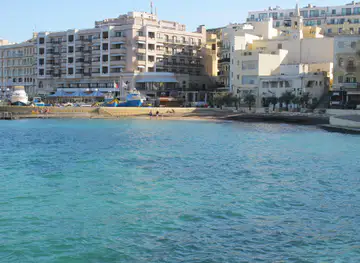
Żebbuġ’s attractions are spread between a traditional inland village and a varied northern coastline. In the village, the parish church and surrounding streets provide an introduction to Gozitan religious architecture, local stonework and community life. Marsalforn offers a sheltered bay, a broad seafront and opportunities for swimming, boating and leisurely coastal walks, with a greater concentration of cafés and restaurants than the inland settlement. West of the resort, Qbajjar and Xwejni are valued for their open limestone shore, rocky bathing places and the celebrated salt pans, where shallow basins cut into the rock reveal a continuing connection between landscape and livelihood. Wied il-Għasri adds a more secluded walking experience, descending through a narrow valley to a small sea inlet. The area suits visitors interested in geology, photography, birdwatching, sea swimming in suitable conditions and short walks rather than large formal attractions. Its appeal lies in the contrast between cultivated fields, built-up resort streets and exposed coastal terrain, with the changing light on the limestone often making the same route feel different from morning to evening.
-
Catholic church
St George's Basilica
Explore the breathtaking St George's Basilica in Victoria, Malta, a stunning example of Baroque architecture and a significant cultural landmark.
-
Archaeological museum
Gozo Museum Of Archaeology
Explore the rich cultural heritage of Malta at the Gozo Museum of Archaeology in Victoria, showcasing fascinating artifacts from ancient civilizations.
-
Tourist attraction
Reqqa Point
Experience the stunning beauty of Reqqa Point, Malta's premier destination for diving, snorkeling, and breathtaking coastal views.
-
Vineyard
Ta Mena Estate
Experience the beauty of Ta Mena Estate, a stunning vineyard and winery in Xagħra, Malta, offering exquisite wines and breathtaking views.


Best landmarks in Żebbuġ (Gozo)
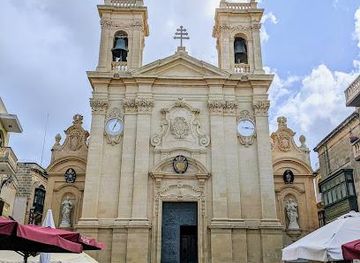
The parish church of the Assumption is Żebbuġ’s principal architectural landmark, standing at the centre of the village and expressing the importance of parish life in Gozitan communities. Its limestone construction and prominent position are best appreciated together with the surrounding streets, where traditional façades and enclosed domestic spaces reveal the village’s older urban form. Along the coast, the Xwejni salt pans form a landmark landscape rather than a single monument: geometric rock-cut basins extend beside the sea and preserve a long-established method of salt gathering. Marsalforn Bay is the area’s defining geographical landmark, its sheltered curve contrasting with the more exposed shore towards Qbajjar. Wied il-Għasri is another notable natural feature, where a narrow valley cuts through the limestone to a sea inlet framed by steep rock walls. These places are significant because they show the interaction of settlement, agriculture, maritime activity and geology that distinguishes northern Gozo, rather than presenting a collection of isolated monuments.
-
Tourist attraction
Salt Pans
Explore the historical and scenic salt pans of Marsalforn Bay, Malta, a captivating destination showcasing natural beauty and rich cultural heritage.
-
Historical landmark
Foso e Interior Citadelle De Victoria
Explore the rich history and stunning architecture of Foso e Interior Citadelle De Victoria, a captivating landmark in the heart of Malta.
-
Tourist attraction
Wied il-Għasri
Experience the breathtaking beauty and tranquility of Wied il-Għasri, Gozo's hidden gem, perfect for swimming, hiking, and stunning photography.
-
Catholic church
St George's Basilica
Discover the Baroque splendor of St George's Basilica in Victoria, Gozo, a marble masterpiece of faith, art, and history.


Explore Żebbuġ (Gozo) on the map
Plan your trip on one map. See where the top cities, national parks and sights are, and book hotels and experiences in a few clicks.
Best hotels in Żebbuġ (Gozo)
Best restaurants in Żebbuġ (Gozo)
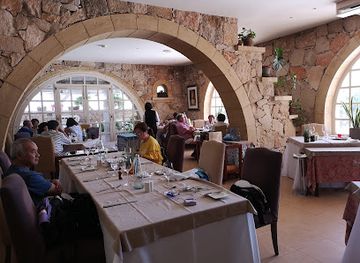
Dining in Żebbuġ ranges from informal village cafés to seafront restaurants in Marsalforn, where menus commonly reflect the resort’s relationship with the sea. Fresh fish, seafood, pasta and salads are widely available, while Gozitan specialities provide a stronger local identity: ġbejna sheep’s cheese, rabbit prepared in traditional styles, rustic bread, pastizz, bigilla and dishes using tomatoes, capers and seasonal vegetables. Small bakeries and snack counters are useful for a quick bite before a coastal walk, and local cheese, honey, olive oil and wine make practical food souvenirs. Marsalforn has the broadest choice and more seasonal dining activity; Żebbuġ village is quieter and better suited to a slower meal shaped by local rhythms. Menus vary considerably with the fishing season and summer demand, so it is sensible to ask what is locally sourced rather than assuming every seafood dish is from nearby waters.
-
Restaurant
Qbajjar Restaurant Gozo
Experience the flavors of Gozo at Qbajjar Restaurant - where fresh seafood meets breathtaking coastal views.
-
Mediterranean
Il-Kartell Restaurant
Discover Il-Kartell Restaurant in Marsalforn - where Mediterranean flavors meet breathtaking views for an unforgettable dining experience.
-
Restaurant
Maldonado Bistro Gozo
Experience authentic Mediterranean cuisine at Maldonado Bistro in Gozo—where local flavors meet exceptional hospitality.
-
Italian
The Pierre's Restaurant
Experience the essence of Italy with fresh ingredients and stunning views at The Pierre's Restaurant in Marsalforn.


Best bars in Żebbuġ (Gozo)
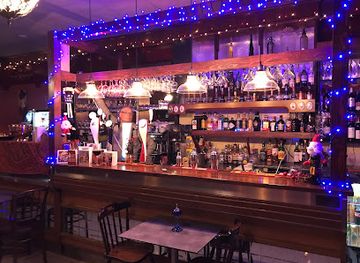
Evenings in Żebbuġ centre on Marsalforn rather than on a large club scene. The resort’s promenade and waterfront restaurants support relaxed dining, drinks and late conversations, with activity increasing markedly during the summer bathing season. Traditional cafés and bars in the village and coastal communities offer a quieter setting, while some establishments combine food with televised sport, music or occasional live entertainment. Qbajjar and Xwejni are generally more subdued after dark, reflecting their open coastal setting and smaller resident population. Visitors should not expect a continuous nightlife district comparable with Malta’s major resorts; the local evening culture is more closely tied to seaside walks, family meals, village gatherings and informal drinks. Those seeking larger late-night venues will generally need to travel beyond Żebbuġ, while anyone returning from a coastal walk should plan transport in advance because rural connections become less convenient at night.
-
Pizza
Francesco's
Discover authentic Italian pizzas at Francesco's in Żebbuġ, where every bite is a delightful journey through Italian flavors.
-
Restaurant
Ta' Frenċ
Discover exquisite Maltese flavors at Ta' Frenċ, an upscale dining experience in the heart of Gozo, Malta.
-
Bar
Kafe' San Gorg
Discover the vibrant atmosphere and local flavors at Kafe' San Gorg, the perfect café and bar in Victoria, Malta.
-
Restaurant
Tepie's Coffee Bar
Discover the charm of Tepie's Coffee Bar in Victoria, Malta, where quality coffee meets cozy ambiance in a historic square.



Best nightclubs in Żebbuġ (Gozo)
Evenings in Żebbuġ centre on Marsalforn rather than on a large club scene. The resort’s promenade and waterfront restaurants support relaxed dining, drinks and late conversations, with activity increasing markedly during the summer bathing season. Traditional cafés and bars in the village and coastal communities offer a quieter setting, while some establishments combine food with televised sport, music or occasional live entertainment. Qbajjar and Xwejni are generally more subdued after dark, reflecting their open coastal setting and smaller resident population. Visitors should not expect a continuous nightlife district comparable with Malta’s major resorts; the local evening culture is more closely tied to seaside walks, family meals, village gatherings and informal drinks. Those seeking larger late-night venues will generally need to travel beyond Żebbuġ, while anyone returning from a coastal walk should plan transport in advance because rural connections become less convenient at night.
-
Bar
Castle Bar
Discover the charm of Castle Bar in Victoria, Gozo, where delightful drinks meet a cozy atmosphere, perfect for unwinding after your adventures.
-
Bar
Piùtrentanove Lounge Bar
Experience the vibrant nightlife at Piùtrentanove Lounge Bar, the ultimate spot for cocktails, sports, and socializing in Malta.
-
Bar
200 Bar
Experience the vibrant nightlife of Gozo at 200 Bar, a popular gathering spot for locals and tourists with a welcoming atmosphere and affordable drinks.
-
Bar
Flamingo
Experience the vibrant nightlife at Flamingo Bar in Victoria, where lively music and great company create unforgettable memories.


Best shops in Żebbuġ (Gozo)
Shopping in Żebbuġ is modest and locally focused, with the widest choice found in Marsalforn during the summer season. Small food shops, bakeries and convenience stores cater to residents and visitors, while village businesses in Żebbuġ offer a slower, less resort-oriented experience. Useful regional purchases include ġbejna, Gozitan honey, olive oil, wine, preserves and other island-produced foods, subject to transport and customs rules in the traveller’s destination. Craft shops and galleries may stock pottery, glass, lace, jewellery and stone-related work associated with Maltese and Gozitan artisans, although selection varies by location and season. The area is not a major fashion-shopping centre; visitors looking for extensive retail choice should travel to larger centres elsewhere in Gozo or Malta. Buying directly from reputable local producers, while respecting working salt pans and private agricultural land, gives greater meaning to souvenirs connected with Żebbuġ’s food and coastal heritage.
-
Shopping mall
The Duke Shopping Mall
Discover an exceptional shopping experience at The Duke Shopping Mall in Victoria, Malta, with a mix of local and international brands.
-
Shopping mall
Arkadia Commercial Centre
Explore the vibrant Arkadia Commercial Centre in Victoria, Gozo – a premier shopping destination with diverse shops and delicious dining options.
-
Supermarket
Ta' Dirjanu Supermarket
Experience the essence of Gozo at Ta' Dirjanu Supermarket, a local hub for fresh produce and unique souvenirs that embody the island's rich culture.
-
Supermarket
Ta Dirjanu Foodstore
Discover authentic Maltese flavors at Ta Dirjanu Foodstore, your go-to spot for local produce, delicacies, and culinary souvenirs in Għajnsielem.



Get your free copy of our complete guide to Żebbuġ (Gozo), delivered straight to you.
Everything on this page, from attractions and restaurants to essentials and local phrases, in one PDF you can read offline, print or share.
Already have an account? Sign in
Your Żebbuġ (Gozo) guide is ready.
We'll send it to · Not you? Sign out

Getting your guide ready…
We are putting together a fresh copy of the Żebbuġ (Gozo) guide. This can take up to a minute.
This can take a few moments. If your browser asks, choose Allow so the download can start. You'll find the guide in your Downloads folder.
Nothing happened? Download it again
Sorry, the guide is taking longer than usual. Please try again in a minute, or get it by email instead.
Żebbuġ (Gozo) essentials
Currency and Payment
Safety
Emergency Situations
Do's and Don'ts
Local Tips
From Eve
Local phrases worth knowing
You don't need to get them perfect. A few words go a long way, and locals appreciate the effort.
Basics
| English | Local | Say it |
|---|---|---|
| Hello | Ħelow | [heh-low] |
| Goodbye | Ċaw | [chow] |
| Yes | Iva | [ee-vah] |
| No | Le | [leh] |
| Please/You're welcome | Jekk jogħġbok | [yek jog-bok] |
| Thank you | Grazzi | [graht-see] |
| Excuse me/Sorry | Skużani | [skoo-zah-nee] |
| How are you? | Kif inti? | [keef in-tee] |
| Fine. And you? | Tajjeb. U int? | [tie-yeb. oo int] |
| Do you speak English? | Titkellem bl-Ingliż? | [tit-kell-em bl-een-gliz] |
| I don't understand | Ma nifhimx | [mah neef-hemx] |
Eating & Drinking
| English | Local | Say it |
|---|---|---|
| I'd like to see the menu, please | Nixtieq naraw il-menu, jekk jogħġbok | [neesh-tieq nah-raw il-meh-noo, yek jog-bok] |
| I don't eat meat | Ma niekolx laħam | [mah nee-kolx lah-ham] |
| Cheers! | Salute! | [sah-loo-teh] |
| I would like to pay, please | Nixtieq inħallas, jekk jogħġbok | [neesh-tieq in-ha-las, yek jog-bok] |
Emergencies
| English | Local | Say it |
|---|---|---|
| Help! | Għajnuna! | [ah-y-noon-ah] |
| Go away! | Mur 'il bogħod! | [moor eel bohd] |
| Call the Police! | Ċempel lill-Pulizija! | [chem-pel leel poo-lee-zee-ah] |
| Call a doctor! | Ċempel dottur! | [chem-pel dot-toor] |
| I'm lost | Jien mitluf | [yeen meet-loof] |
| I'm ill | Jien morda | [yeen mor-dah] |
Shopping
| English | Local | Say it |
|---|---|---|
| I'd like to buy... | Nixtieq nixtri... | [neesh-tieq neesh-tree] |
| I'm just looking | Biss qed nara | [bis ked nah-rah] |
| How much is it? | Kemm hu? | [kemm hoo] |
| That's too expensive | Dak hu wisq għali | [dak hoo wis-q ah-lee] |
| Can you lower the price? | Tista' tnaqqas il-prezz? | [tees-tah tnack-ass il-prets] |
Time & Numbers
| English | Local | Say it |
|---|---|---|
| What time is it? | Kemm hija l-ħin? | [kemm hee-yah l-heen] |
| It's one o'clock | Hija l-ewwel siegħa | [hee-yah l-ew-el see-ah] |
| Half past (10) | Nofs (10) | [nawfs] |
| Morning | Filgħodu | [feel-oh-doo] |
| Afternoon | Wara nofsinhar | [wah-rah nof-seen-har] |
| Evening | Filgħaxija | [feel-ah-hee-yah] |
| Yesterday | Ilbieraħ | [il-bee-rah] |
| Today | Illum | [ee-loom] |
| Tomorrow | Għada | [ah-dah] |
| 1 | Wieħed | [wee-ehd] |
| 2 | Tnejn | [tneh-een] |
| 3 | Tlieta | [tlee-tah] |
| 4 | Erbgħa | [air-bah] |
| 5 | Ħamsa | [ham-sah] |
| 6 | Sitt | [sit] |
| 7 | Sebgħa | [seb-gah] |
| 8 | Tmienja | [tmee-nyah] |
| 9 | Disgħa | [dees-gah] |
| 10 | Għaxra | [ahk-shrah] |
Transport & Directions
| English | Local | Say it |
|---|---|---|
| Where's a/the...? | Fejn hemm ...? | [fane hem ...?] |
| What's the address? | X'jismu l-indirizz? | [x'ee-smoo l-in-dee-reez] |
| Can you show me (on the map)? | Tista' turi lili (fuq il-mappa)? | [tees-tah too-ree lee-lee (fooq il-map-pah)?] |
| When's the next (bus)? | Meta jasal (il-linja) li jmiss? | [meh-tah yah-sal (il-leen-yah) lee ye-miss?] |
| A ticket (to ....) | Biljet (għal ...) | [beel-yet (ahl ...)] |
History of Żebbuġ (Gozo)
Prehistoric Settlement and Gozo’s Early Communities
Gozo has been inhabited since prehistoric times, and the wider northern plateau around Żebbuġ forms part of an island landscape shaped by early farming communities, terraced fields and megalithic activity. Major temple sites such as Ġgantija lie outside Żebbuġ, in neighbouring Xagħra, but they provide important context for understanding the depth of human settlement on Gozo. The local area’s valleys, fertile pockets and coastal resources would have supported cultivation, grazing and the gathering of marine products over many centuries, even though comparatively little monumental prehistoric architecture survives within the present local council.
Phoenician, Roman and Late Antique Maritime Connections
The Maltese islands occupied a strategic position between Sicily, North Africa and the central Mediterranean, drawing Phoenician, Punic and later Roman influence. Gozo’s bays and coastal inlets supported small-scale maritime activity, while agriculture and the use of local limestone remained fundamental to rural life. Archaeological evidence across the island indicates changing patterns of settlement and trade, although the most visible Roman remains are not concentrated in Żebbuġ itself. The coast around Marsalforn and Xwejni is best understood as part of this wider maritime network rather than as an isolated settlement.
Medieval Gozo and the Formation of Rural Communities
During the medieval period Gozo was governed through the changing political structures that controlled Malta, including Arab and later Norman, Sicilian and Aragonese authority. Rural communities developed around agriculture, water management and defensive needs, while the island’s exposed position made coastal vigilance important. The name Żebbuġ is connected with the Maltese word for olives, reflecting the agricultural vocabulary that shaped many island place names. The modern village emerged gradually from this rural setting, with scattered cultivation and religious organisation eventually giving way to a more defined parish community.
The Knights of St John and the Development of Żebbuġ Parish
Under the Order of St John, which ruled Malta and Gozo from 1530 to 1798, Gozo’s villages became more firmly organised around parish institutions and agricultural production. Żebbuġ developed as an independent parish in the late seventeenth century, and its church dedicated to the Assumption became the principal architectural and communal focus of the village. The period also reinforced the importance of coastal observation, small ports and salt gathering. The broad streets and honey-coloured limestone buildings visible today reflect later rebuilding, but their setting belongs to this long period of village formation.
Marsalforn, Fishing and Salt Making
Marsalforn grew as one of Gozo’s principal coastal settlements, serving fishing, small-scale maritime transport and seasonal bathing. Nearby Xwejni developed a particularly distinctive salt-making landscape, in which shallow basins cut into the coastal rock allowed seawater to evaporate in the summer sun. Salt production depended on weather, maintenance and inherited knowledge, and it remains an emblematic part of the northern coast’s working heritage. The shore was never only recreational: fishing, agriculture, quarrying and salt gathering all contributed to the local economy before tourism became the dominant influence.
British Rule, Modernisation and Changing Mobility
Malta became a British possession in 1800 after the end of the Knights’ rule, bringing new administrative, military and commercial connections while preserving village institutions and local religious traditions. During the nineteenth and twentieth centuries, improved roads and maritime links made northern Gozo more accessible from Victoria and the island’s harbour. Marsalforn increasingly attracted seasonal visitors, while Żebbuġ village retained its agricultural role. The arrival of mass motor transport and later widespread private car ownership gradually changed the relationship between inland settlements and the coast.
Tourism and the Contemporary Coastal Landscape
The second half of the twentieth century brought substantial growth in Marsalforn, where apartments, restaurants and leisure facilities transformed a fishing settlement into Gozo’s best-known northern resort. Xwejni and Qbajjar remained less intensively developed, allowing salt pans, rocky shore and open garigue to retain a strong visual presence. Contemporary Żebbuġ therefore combines a working village, a seasonal resort and a fragile coastal environment. Managing visitor pressure, protecting traditional salt production and conserving the limestone landscape are central to the area’s present identity.
Żebbuġ (Gozo) in Photos
Browse through our photo collection highlighting the charm and character of the destination.
Neighbouring regions of Żebbuġ (Gozo)
The closest regions to Żebbuġ (Gozo), if you have time for more than one.
-
-
-

-

-


Swipe for more regions
Explore more
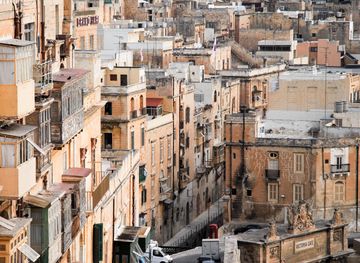
Explore more of Malta
Discover Malta's crystal-clear waters, rich history, and vibrant culture. From ancient temples to modern nightlife, this Mediterranean gem offers something for everyone.
Explore Malta