

Flic en Flac Beach Travel Guide - Free Web & App
Your ultimate guide to Flic en Flac Beach. Discover top landmarks, proposed trips, and local tips. Free on the web or via the Evendo companion app.


Flic en Flac Beach, Mauritius, blends a long west-coast shoreline, calm lagoon waters, sunset views, snorkelling and easy access to village life.
A Long Shoreline on the West Coast
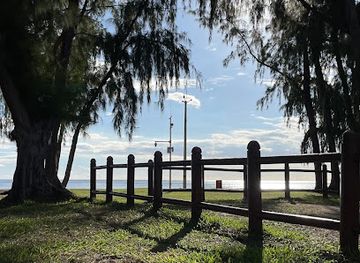
Flic en Flac Beach stretches along Mauritius’s west coast beside the settled seaside village of Flic en Flac. Its broad public beach is shaded in places by casuarina trees and faces a protected lagoon edged by the island’s coral reef. The west coast is known for warm, relatively sheltered waters and striking sunsets, while the distant outline of the Black River mountain range gives the coastal view a distinctly Mauritian setting. Flic en Flac is not an isolated beach: hotels, apartments, restaurants, shops and practical visitor services extend inland and along the coastal road, making it one of the island’s more convenient bases.Read more about Flic en Flac Beach
Lagoon Life and Outdoor Exploration
Village Character and Regional Setting
When is the best time to visit Flic en Flac Beach?
Best: June–August · 25–28°C| Month | High (°C) | Rainfall (mm) |
|---|---|---|
| January | 31 | 120 |
| February | 30 | 120 |
| March | 30 | 130 |
| April | 29 | 110 |
| May | 29 | 100 |
| June (best) | 28 | 90 |
| July (best) | 25 | 90 |
| August (best) | 25 | 90 |
| September | 28 | 90 |
| October | 29 | 100 |
| November | 30 | 110 |
| December | 31 | 120 |
Getting to and around Flic en Flac Beach
How to get there
Transportation
Best attractions in Flic en Flac Beach
The main attraction is the long public beach itself, where casuarina shade, pale sand and the reef-protected lagoon create space for swimming, walking and sunset watching. The coastal road and village provide easy access to cafés, restaurants and marine excursions, while the wider west coast adds several distinct experiences. Tamarin Bay, just north of Flic en Flac, has a more rugged coastal setting and is associated with surfing and dolphin-watching excursions, subject to responsible operating practices and sea conditions. Inland, Casela Nature Parks offers wildlife and outdoor activities, while the Black River Gorges landscape and Chamarel are reached by road rather than lying within Flic en Flac. The beach is also a practical base for exploring the southwest, but visitors should distinguish these nearby day-trip destinations from the beach settlement itself.
-
Tourist attraction
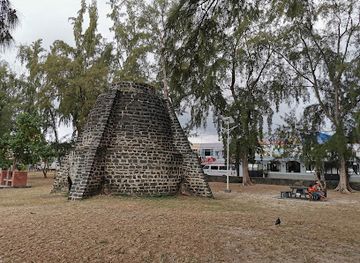
Lime kiln
Explore the historical Lime Kiln in Flic en Flac, a stunning tourist attraction that showcases Mauritius' rich cultural heritage and natural beauty.
-
Park
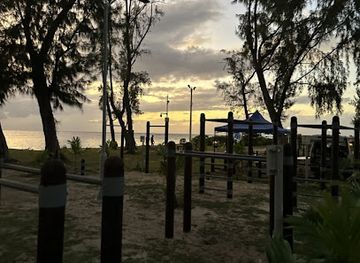
Parc de StreetWorkout de Flic en Flac
Experience the vibrant blend of fitness and leisure at Parc de StreetWorkout de Flic en Flac, a serene park perfect for relaxation and active pursuits.
Explore Flic en Flac Beach on the map
Plan your trip on one map. See where the top attractions, landmarks, restaurants and hotels are, and book hotels and experiences in a few clicks.
Best hotels in Flic en Flac Beach
Best restaurants in Flic en Flac Beach
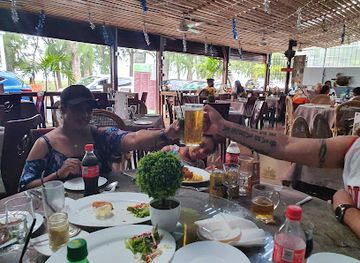
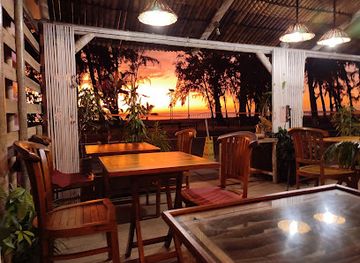
Flic en Flac has one of the west coast’s more developed concentrations of places to eat, ranging from hotel dining rooms and resort restaurants to cafés, takeaway counters and independent restaurants along the village roads. Mauritian cooking reflects Indian, Creole, Chinese and European influences, so menus may include dholl puri, farata, rougaille, fried noodles, curries, samosas and seafood prepared with local seasoning. Street-food stalls and informal eateries can provide a more everyday taste of the island, while supermarkets and small shops are useful for picnics and self-catering accommodation. Fish and seafood are available in the coastal region, but supply and menus vary. Nearby Tamarin and Black River provide additional choices, particularly for visitors travelling beyond the resort, while more remote beach or inland excursions may have few dining facilities.
-
Restaurant
Le Bougainville Restaurant
Experience exquisite European and seafood cuisine at Le Bougainville Restaurant in beautiful Flic en Flac, Mauritius.
-
Restaurant
La Marmite Mauricienne-Flic en Flac
Discover authentic Mauritian cuisine at La Marmite Mauricienne-Flic en Flac - a coastal dining experience like no other.
-
Restaurant
Rib & Reef
Discover exquisite seafood and grilled delights at Rib & Reef, where every meal tells a story of Mauritian culture.
-
Restaurant
Twin's Garden II
Experience exceptional dining at Twin's Garden II in Flic en Flac, where local flavors meet elegance by the sea.
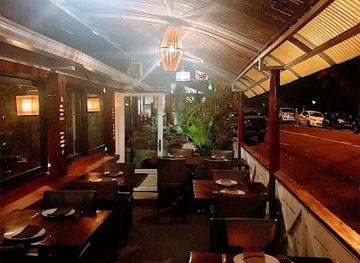
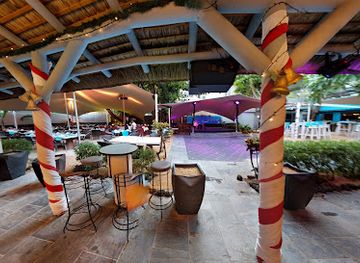
Best bars in Flic en Flac Beach
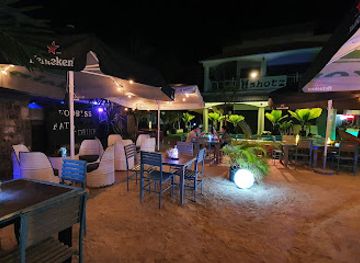
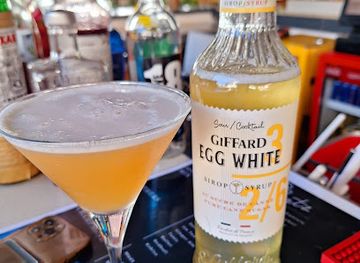
Evenings in Flic en Flac are generally relaxed rather than centred on a large club scene. Hotel bars, beach-oriented restaurants and village venues provide places for drinks, music and conversation, while the public beach is popular for watching the sun set over the western horizon. Entertainment varies by property and season, so visitors should check locally rather than assume that a particular performance or venue operates nightly. The settlement’s dining areas tend to become livelier after dark, but the atmosphere remains suited to casual evenings rather than a dedicated nightlife district. Tamarin, north of Flic en Flac, offers further west-coast evening options, although transport should be arranged in advance if returning late.
-
Pub
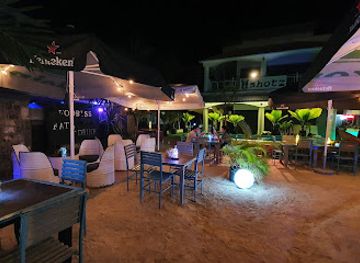
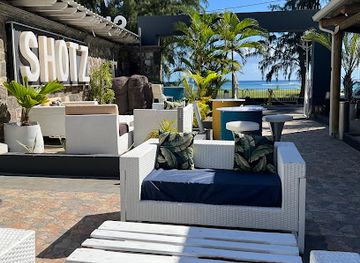
Shotz
Experience the vibrant nightlife of Flic en Flac at Shotz Pub, where local flavors and lively music create unforgettable memories.
-
Restaurant
Le Bois Noir Beach
Le Bois Noir Beach: A Tropical Paradise in Flic en Flac, Mauritius with Stunning Views and Vibrant Marine Life.
-
Pub
Oasis Beach Bar
Discover the relaxing vibes and vibrant nightlife at Oasis Beach Bar in Flic en Flac, Mauritius, where stunning ocean views meet delicious cocktails.
-
 Bar
BarParking, Oasis Complex
Experience the vibrant nightlife at Parking, Oasis Complex in Flic en Flac, where refreshing cocktails and local culture come together.
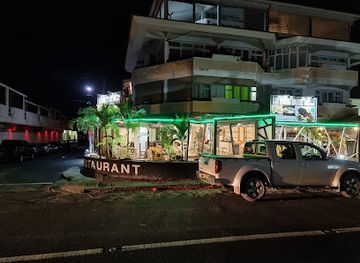
Best nightclubs in Flic en Flac Beach
Evenings in Flic en Flac are generally relaxed rather than centred on a large club scene. Hotel bars, beach-oriented restaurants and village venues provide places for drinks, music and conversation, while the public beach is popular for watching the sun set over the western horizon. Entertainment varies by property and season, so visitors should check locally rather than assume that a particular performance or venue operates nightly. The settlement’s dining areas tend to become livelier after dark, but the atmosphere remains suited to casual evenings rather than a dedicated nightlife district. Tamarin, north of Flic en Flac, offers further west-coast evening options, although transport should be arranged in advance if returning late.
-
Pub
Shotz
Experience the lively nightlife at Shotz, the premier pub in Flic en Flac, where vibrant energy meets exceptional drinks and unforgettable experiences.
-
Pub
Oasis Beach Bar
Discover the lively atmosphere of Oasis Beach Bar in Flic en Flac, Mauritius – where tropical vibes meet unforgettable entertainment.
-
Night club
Saxo Beach Club
Experience the vibrant nightlife at Saxo Beach Club, where music, dance, and stunning ocean views come together in Flic en Flac.
-
Night club
Summerbeach
Dive into the vibrant nightlife of Flic en Flac at Summerbeach, the ultimate destination for unforgettable nights filled with music, dance, and fun.
Best shops in Flic en Flac Beach
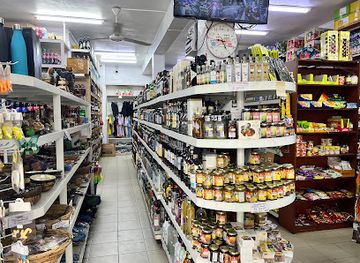
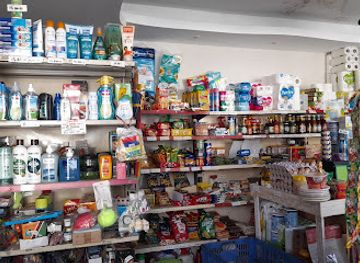
Shopping in Flic en Flac is concentrated on practical resort retail rather than a large historic market quarter. Small supermarkets, convenience shops, pharmacies, beachwear outlets and businesses serving self-catering visitors are found around the village and coastal roads. Visitors may also encounter Mauritian food products, rum, tea, spices, textiles and locally made souvenirs, although authenticity and availability vary from shop to shop. The resort is useful for everyday supplies and beach equipment, while larger shopping centres and a broader range of retail can be found in towns such as Quatre Bornes and Port Louis outside the destination. Farm produce, craft goods and market shopping are often best explored during wider island excursions, where visitors can compare products from different regions rather than treating Flic en Flac as a dedicated shopping destination.
-
Supermarket
Wolmar Supermarket
Explore the vibrant offerings of Wolmar Supermarket in Flic en Flac, Mauritius, where local flavors meet convenience for every traveler.
-
Grocery store
Lotus Alkatraz Shop
Experience the local charm and convenience at Lotus Alkatraz Shop, your ultimate grocery destination in Flic en Flac, Mauritius.
-
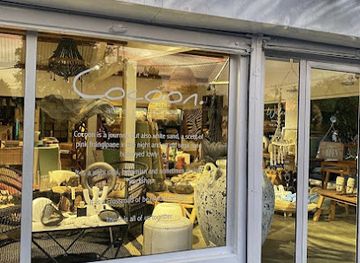
Furniture store
Cocoon
Discover unique furniture and home decor at Cocoon in Flic en Flac, where local craftsmanship meets contemporary design.
-
Fruit and vegetable store
Emotion
Discover Emotion in Flic en Flac for the freshest fruits and vegetables, offering delightful salads and local flavors at reasonable prices.
Get your free copy of our complete guide to Flic en Flac Beach, delivered straight to you.
Everything on this page, from attractions and restaurants to essentials and local phrases, in one PDF you can read offline, print or share.
Already have an account? Sign in
Your Flic en Flac Beach guide is ready.
We'll send it to · Not you? Sign out

Getting your guide ready…
We are putting together a fresh copy of the Flic en Flac Beach guide. This can take up to a minute.
This can take a few moments. If your browser asks, choose Allow so the download can start. You'll find the guide in your Downloads folder.
Nothing happened? Download it again
Sorry, the guide is taking longer than usual. Please try again in a minute, or get it by email instead.
Flic en Flac Beach essentials
Currency and Payment
Safety
Emergency Situations
Do's and Don'ts
Local Tips
From Eve
Local phrases worth knowing
You don't need to get them perfect. A few words go a long way, and locals appreciate the effort.
Basics
| English | Local | Say it |
|---|---|---|
| Hello | Bonjour | [bohn-zhoor] |
| Goodbye | Au revoir | [oh reh-vwah] |
| Yes | Oui | [wee] |
| No | Non | [noh] |
| Please/You're welcome | S'il vous plaît/De rien | [seel voo pleh / duh ryen] |
| Thank you | Merci | [mehr-see] |
| Excuse me/Sorry | Excusez-moi/Désolé | [ehk-skew-zay mwah / day-zoh-lay] |
| How are you? | Comment ça va? | [koh-mohn sah vah] |
| Fine. And you? | Bien. Et vous? | [byen. ay voo] |
| Do you speak English? | Parlez-vous anglais? | [par-lay voo ahn-glay] |
| I don't understand | Je ne comprends pas | [zhuh nuh kohm-prahn pah] |
Eating & Drinking
| English | Local | Say it |
|---|---|---|
| I'd like to see the menu, please | Je voudrais voir la carte, s'il vous plaît | [zhuh voo-dray vwahr lah kar-tuh, seel voo pleh] |
| I don't eat meat | Je ne mange pas de viande | [zhuh nuh mahnj pah duh vee-and] |
| Cheers! | Santé! | [sahn-tay] |
| I would like to pay, please | Je voudrais payer, s'il vous plaît | [zhuh voo-dray pay-yay, seel voo pleh] |
Emergencies
| English | Local | Say it |
|---|---|---|
| Help! | Au secours! | [oh se-kur] |
| Go away! | Allez-vous en! | [ah-lay vooz ahn] |
| Call the Police! | Appelez la Police! | [ah-peh-lay lah po-leess] |
| Call a doctor! | Appelez un médecin! | [ah-peh-lay uh may-suhn] |
| I'm lost | Je suis perdu | [zhuh swee pair-doo] |
| I'm ill | Je suis malade | [zhuh swee mah-lahd] |
Shopping
| English | Local | Say it |
|---|---|---|
| I'd like to buy... | Je voudrais acheter... | [zhuh voo-dray ah-sheh-tay] |
| I'm just looking | Je regarde juste | [zhuh ruh-gard joo-st] |
| How much is it? | Combien ça coûte? | [kohm-byen sah koot] |
| That's too expensive | C'est trop cher | [say troh shair] |
| Can you lower the price? | Pouvez-vous baisser le prix? | [poo-vay voo beh-say luh pree] |
Time & Numbers
| English | Local | Say it |
|---|---|---|
| What time is it? | Quelle heure est-il? | [kell uhr eh-teel] |
| It's one o'clock | Il est une heure | [eel eh oon uhr] |
| Half past (10) | Dix heures et demie | [dees uhr ay duh-mee] |
| Morning | Matin | [mah-tahn] |
| Afternoon | Après-midi | [ah-pray mee-dee] |
| Evening | Soir | [swahr] |
| Yesterday | Hier | [yehr] |
| Today | Aujourd'hui | [oh-zhoor dwee] |
| Tomorrow | Demain | [duh-mahn] |
| 1 | Un | [uhn] |
| 2 | Deux | [deuh] |
| 3 | Trois | [twah] |
| 4 | Quatre | [kah-truh] |
| 5 | Cinq | [sank] |
| 6 | Six | [sees] |
| 7 | Sept | [set] |
| 8 | Huit | [weet] |
| 9 | Neuf | [nuf] |
| 10 | Dix | [dees] |
Transport & Directions
| English | Local | Say it |
|---|---|---|
| Where's a/the...? | Où est le/la...? | [oo eh luh/lah] |
| What's the address? | Quelle est l'adresse? | [kell eh lah-dress] |
| Can you show me (on the map)? | Pouvez-vous me montrer (sur la carte)? | [poo-vay voo muh mohn-tray (soor lah kar-tuh)] |
| When's the next (bus)? | Quand est le prochain (bus)? | [kahn eh luh proh-shahn (bus)] |
| A ticket (to ....) | Un billet (pour ...) | [uhn bee-yay (poor)] |
History of Flic en Flac Beach
Volcanic Island and Coral Lagoon
Flic en Flac’s physical setting belongs to Mauritius’s volcanic history. The island was built by successive volcanic activity, while later marine processes and coral growth helped form the shallow reef-fringed lagoon that defines much of the west coast. The beach is therefore part of a wider coastal system rather than an isolated strip of sand: reef, lagoon, shoreline and inland volcanic mountains are closely connected. The sheltered western aspect also contributes to the area’s warm, dry coastal character, although sea conditions can still change with weather and seasonal swell.
Early Settlement and Colonial Land Use
Mauritius was uninhabited when Portuguese sailors encountered the island, and permanent settlement developed later under Dutch, French and British rule. The west-coast landscape was shaped by plantation agriculture, especially sugar, as estates occupied fertile areas inland from the shore. Flic en Flac remained a coastal settlement within this broader plantation district rather than an early urban centre. The names and land patterns of the region reflect successive periods of European administration, while wider Mauritian society developed through the arrival of enslaved Africans, indentured labourers from India and other communities.
From Plantation Coast to Resort Village
For much of its modern history, the west coast was associated more strongly with agriculture, fishing and small settlements than with international beach tourism. As Mauritius developed a larger visitor economy in the twentieth century, the lagoon beaches around Flic en Flac attracted hotels, holiday apartments, restaurants and recreational services. The village expanded from a relatively modest coastal community into a substantial resort area, while the public beach remained an important gathering place for residents as well as visitors. This transition connected Flic en Flac to the island’s shift from a sugar-dominated economy towards tourism and services.
Marine Conservation and Contemporary Mauritius
The lagoon is part of the coastal environment on which west-coast communities and tourism depend. Contemporary concerns include coral health, water quality, coastal development and responsible marine recreation, with conservation responsibilities shared by authorities, operators, residents and visitors. Flic en Flac’s modern identity consequently combines public beach life and resort development with the need to protect reef and lagoon habitats. Its proximity to the Black River district’s forests, mountains and marine environments also places it within a wider landscape where tourism, local livelihoods and environmental management continue to intersect.
Flic en Flac Beach in Photos
Browse through our photo collection highlighting the charm and character of the destination.
Neighbouring destination travel guides
The closest destinations to Flic en Flac Beach, if you have time for more than one.
-

-
-

-

-


Swipe for more destinations
Explore more

Explore more of Plaines Wilhems
Explore Plaines Wilhems in Mauritius for cool highlands, volcanic landscapes, lively markets, historic towns and everyday island culture.
Explore Plaines Wilhems
Explore more of Mauritius
Discover Mauritius, the tropical paradise of the Indian Ocean, where pristine beaches, lush landscapes, and vibrant culture come together for an unforgettable escape.
Explore Mauritius