

Johnson's Shut-Ins State Park, Missouri Travel Guide
Discover the natural splendor and unique geological formations of Johnson's Shut-Ins State Park, a must-visit destination in Missouri's Ozark Mountains.
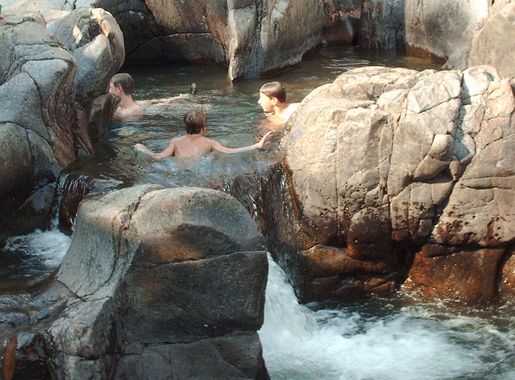
Johnson's Shut-Ins State Park in Missouri is a natural playground set amidst the stunning Ozark Mountains. Known for its unique geological formations, this park offers a refreshing escape from the hustle and bustle of city life. The 'shut-ins' are natural water slides formed by ancient volcanic rock, creating a series of pools and waterfalls that are perfect for cooling off during the hot summer months. The park is not just about water fun; it also boasts an extensive network of trails, offering hikers the chance to explore the diverse flora and fauna of the region. From the Black River to the picturesque rocky landscapes, every corner of the park reveals something new and exciting. Whether you're an avid hiker, a nature lover, or just someone looking to relax by the water, Johnson's Shut-Ins State Park has something for everyone. Camping is another popular activity here, with well-maintained campsites that cater to both tent campers and those with RVs. The park also features picnic areas, making it a great spot for family outings. With its rich history and natural beauty, Johnson's Shut-Ins State Park offers a memorable experience for all its visitors.

Know before you go
Hi, I'm Eve. Here are a few practical things to know before exploring Johnson's Shut-Ins State Park.
- Visit early during summer months to avoid crowds and secure a good spot by the water.
- Wear water shoes to navigate the rocky terrain safely while exploring the shut-ins.
- Check the park's website for any alerts or closures before your visit, especially after heavy rains.
- Bring a packed lunch and enjoy a picnic in one of the designated areas.
- Consider camping overnight to fully experience the park’s natural beauty and night sky.
Explore Johnson's Shut-Ins State Park: Things to Do, Places to Eat, Hotels & More
Handpicked recommendations for top attractions, local dining, accommodations, and more

Best attractions in Johnson's Shut-Ins State Park
Top-rated picks
Best Attractions

Johnson's Shut-Ins State Park Campground
Explore Johnson's Shut-Ins State Park Campground for an unforgettable outdoor adventure amid stunning natural beauty and rich wildlife in Missouri.

Johnson Shut-Ins
Experience the breathtaking beauty and thrilling rapids of Johnson Shut-Ins, a must-visit natural wonder in Missouri's Ozarks.

Peaceful Valley Hideaway
Discover the serene beauty of Peaceful Valley Hideaway, a perfect destination for nature lovers and families seeking tranquility and outdoor adventures in Missouri.

Goggins Mountain Trailhead
Experience Goggins Mountain Trailhead, a hiking paradise in Missouri with scenic trails and stunning views, perfect for nature lovers and outdoor adventurers.

Best landmarks in Johnson's Shut-Ins State Park
Top-rated picks
Best Landmarks

Johnson's Shut-Ins State Park Campground
Camp amidst nature's waterpark in the Missouri Ozarks; explore natural waterslides, hiking trails, and a landscape shaped by ancient geology.

Shut-Ins Trail
Hike through a billion years of geological history at Johnson's Shut-Ins State Park, where the East Fork Black River creates a natural waterpark.

Johnson Shut-Ins
Explore a billion-year-old natural waterpark in the Missouri Ozarks. Swim, hike, and discover the unique beauty of Johnson's Shut-Ins State Park.

Best restaurants in Johnson's Shut-Ins State Park
Top-rated picks
Best Restaurants

Johnson's Shut-Ins State Park
Explore Johnson's Shut-Ins State Park: A stunning destination in Missouri featuring unique geological formations and endless outdoor adventures.

Johnson's Shut-Ins State Park Campground
Discover breathtaking scenery at Johnson's Shut-Ins State Park Campground—your gateway to adventure in Missouri's stunning outdoors.

Best bars in Johnson's Shut-Ins State Park
Top-rated picks
Best Bars

Johnson's Shut-Ins State Park Campground
Experience the breathtaking beauty and outdoor adventures at Johnson's Shut-Ins State Park Campground in Missouri's stunning Ozarks.

Shut-Ins Trail
Explore the stunning Shut-Ins Trail in Lesterville, Missouri—a hiker's paradise with breathtaking views and unique rock formations.

Johnson Shut-Ins
Experience the natural beauty and thrilling rapids of Johnson Shut-Ins, a top destination for outdoor enthusiasts in Missouri.

Scour Trail
Explore the breathtaking Scour Trail in Ironton, MO – a must-visit hiking area for outdoor lovers seeking adventure amidst nature's beauty.

Best shops in Johnson's Shut-Ins State Park
Top-rated picks
Best Shops

Johnson's Shut-Ins State Park
Discover the breathtaking beauty of Johnson's Shut-Ins State Park, a natural wonder in Missouri perfect for swimming, hiking, and family adventures.

Johnson's Shut-Ins State Park Campground
Explore the stunning natural landscapes and unique rock formations at Johnson's Shut-Ins State Park Campground in Missouri, perfect for outdoor enthusiasts.

Shut-Ins Trail
Discover the enchanting beauty and adventure of Shut-Ins Trail in Lesterville, Missouri, a premier destination for hiking and nature exploration.

Johnson Shut-Ins
Explore the stunning rock formations and thrilling rapids of Johnson Shut-Ins, a must-visit natural paradise in Missouri.

Explore Johnson's Shut-Ins State Park on the Map
A handpicked selection of must-see spots in Johnson's Shut-Ins State Park, mapped for you.
Johnson's Shut-Ins State Park Essentials
-
Johnson's Shut-Ins State Park is located in southeastern Missouri, approximately 120 miles south of St. Louis. The nearest major airport is St. Louis Lambert International Airport. From there, you can rent a car and drive to the park, which takes around 2.5 hours. The park is accessible via Missouri Route 21, and clear signage will guide you to the entrance.
-
While the park itself is best explored by car, there are several options for getting around. Rental cars are available at St. Louis Lambert International Airport. Inside the park, walking and hiking are the primary modes of transportation. There are no public transportation options within the park, so having a car is essential for convenience.
-
The official currency is the United States Dollar (USD). Most establishments in and around the park accept major credit and debit cards, but it's advisable to carry some cash for smaller vendors or in case of emergencies. ATMs are available in nearby towns, but not within the park itself.
-
Johnson's Shut-Ins State Park is generally safe for visitors. However, like any outdoor area, it's important to be cautious. Always stay on marked trails and avoid wandering off-path. There are no neighborhoods with high crime rates targeting tourists, but it's always wise to lock your car and secure your belongings. Wildlife encounters are possible, so maintain a safe distance from animals.
-
In case of an emergency, dial 911 for immediate assistance. The park has a ranger station that can provide help and information. It's advisable to carry a first-aid kit and be aware of the nearest medical facilities, which are located in nearby towns such as Ironton or Farmington. Travel insurance that covers medical emergencies is recommended.
-
Fashion: Do wear comfortable, weather-appropriate clothing and sturdy footwear for hiking. Avoid flip-flops or sandals on trails. Religion: There are no specific religious customs to follow, but general respect is always appreciated. Public Transport: As there is no public transportation within the park, ensure your vehicle is in good condition. Greetings: A friendly greeting with a smile or a simple 'hello' is customary. Eating & Drinking: Do pack out all your trash and respect the 'Leave No Trace' principles. Don't feed the wildlife or leave food unattended, as it can attract animals.
-
To experience the park like a local, visit during weekdays or off-peak seasons to avoid crowds. Bring a picnic and enjoy it at one of the designated picnic areas. Engage with park rangers and volunteers; they often have interesting stories and useful tips. Don't miss the swimming opportunities in the shut-ins, but always check water conditions and follow safety guidelines.
When is the best time to visit Johnson's Shut-Ins State Park?
Useful Local Phrases for Johnson's Shut-Ins State Park
You don't need to speak the language perfectly. Even learning a few simple words can make conversations warmer—and locals usually appreciate the effort.
— Eve

Here are the phrases I use most often in Johnson's Shut-Ins State Park. Try a few—you'll be surprised how far they go! 😊
❤️
-
- HelloHowdy
[haw-dee] - GoodbyeSee ya
[see ya] - YesYep
[yep] - NoNah
[nah] - Please/You're welcomePlease/No problem
[pleez/no problem] - Thank youThanks
[thanks] - Excuse me/SorryPardon me/My bad
[par-dun me/my bad] - How are you?How y'all doin'?
[how y'all doin'] - Fine. And you?Fine. How 'bout you?
[fine. how 'bout you?] - Do you speak English?Ya speak English?
[ya speak english?] - I don't understandI ain't gettin' it
[i ain't get-tin' it]
- HelloHowdy
-
- I'd like to see the menu, pleaseCan I check out the menu, please
[can eye check out the menu, please] - I don't eat meatI don't eat no meat
[i don't eat no meat] - Cheers!Cheers!
[cheers!] - I would like to pay, pleaseI'm ready to settle up, please
[i'm ready to settle up, please]
- I'd like to see the menu, pleaseCan I check out the menu, please
-
- Help!Help!
[help!] - Go away!Git!
[git!] - Call the Police!Ring up the Fuzz!
[ring up the fuzz!] - Call a doctor!Get a doc!
[get a doc!] - I'm lostI'm turned around
[i'm turned around] - I'm illI'm sickly
[i'm sickly]
- Help!Help!
-
- I'd like to buy...I wanna snag...
[i wanna snag...] - I'm just lookingI'm just browsin'
[i'm just browsin'] - How much is it?How much fer that?
[how much fer that?] - That's too expensiveThat's too steep
[that's too steep] - Can you lower the price?Can ya knock the price down?
[can ya knock the price down?]
- I'd like to buy...I wanna snag...
-
- What time is it?What's the time?
[what's the time?] - It's one o'clockIt's one
[it's one] - Half past (10)Ten-thirty
[ten-thur-tee] - MorningMornin'
[mornin'] - AfternoonAfternoon
[afternoon] - EveningEvenin'
[evenin'] - YesterdayYest'day
[yest'day] - TodayToday
[today] - TomorrowTomorra
[tomorra] - 1One
[won] - 2Two
[too] - 3Three
[three] - 4Four
[four] - 5Five
[five] - 6Six
[six] - 7Seven
[seven] - 8Eight
[eight] - 9Nine
[nine] - 10Ten
[ten]
- What time is it?What's the time?
-
- Where's a/the...?Where's the...?
[where's the...?] - What's the address?What's the addy?
[what's the addy?] - Can you show me (on the map)?Can ya point it out (on the map)?
[can ya point it out (on the map)?] - When's the next (bus)?When's the next (bus)?
[when's the next (bus)?] - A ticket (to ....)A ticket (to ....)
[a ticket (to ....)]
- Where's a/the...?Where's the...?
History of Johnson's Shut-Ins State Park
-
Long before European settlers arrived, the area now known as Johnson's Shut-Ins State Park was inhabited by Native American tribes, predominantly the Osage. The rugged terrain and natural resources provided an ideal environment for hunting, fishing, and gathering. Artifacts and remnants of these early inhabitants have been discovered, shedding light on their daily lives and practices.
-
The first European explorers arrived in the region during the late 17th and early 18th centuries. French trappers and traders were among the earliest to document the area, followed by American settlers after the Louisiana Purchase in 1803. These early settlers were drawn by the rich natural resources, including timber and minerals, which were abundant in the region.
-
During the Civil War, Missouri was a battleground state with divided loyalties. The area around Johnson's Shut-Ins saw its share of skirmishes and troop movements, as both Union and Confederate forces sought control over the region. The rugged landscape provided natural fortifications and hideouts for guerrilla fighters.
-
Johnson's Shut-Ins State Park was officially established in 1955. The park's name comes from the 'shut-ins,' a term used to describe areas where the river is 'shut in' by hard, erosion-resistant rocks. The park was created to protect these unique geological formations and to provide recreational opportunities for the public. The land was acquired through a combination of purchases and donations, and the park quickly became a popular destination for outdoor enthusiasts.
-
One of the most significant events in the park’s recent history occurred on December 14, 2005, when the upper reservoir of the Taum Sauk Hydroelectric Plant breached. The resulting flood caused extensive damage to the park, including the destruction of the campground and significant alterations to the landscape. Recovery and restoration efforts began immediately, and the park officially reopened to the public in 2009. This event highlighted the park's resilience and the dedication of those committed to its preservation.
-
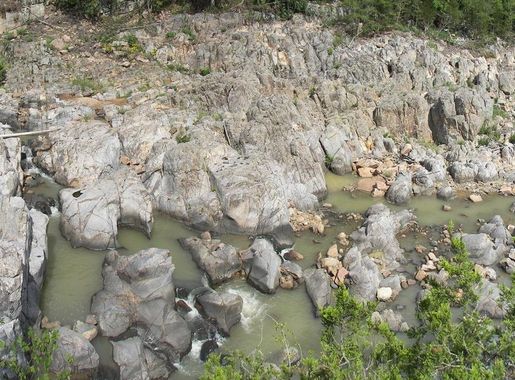
Johnson's Shut-Ins is renowned for its unique geological features. The park is located in the St. Francois Mountains, one of the oldest mountain ranges in North America. The shut-ins themselves are formed from ancient volcanic rock, creating a natural playground of chutes, pools, and waterfalls. These formations date back over a billion years, offering a glimpse into the Earth's distant past.
-
The park is home to a diverse array of plant and animal life. Its varied habitats support species typical of both the Ozarks and the Mississippi River Valley. Visitors can find a range of wildlife, including white-tailed deer, wild turkeys, and a variety of bird species. The park's plant life includes rare and endangered species, making it a significant area for conservation efforts.
Neighbouring destination travel guides
Browse our curated selection of top destinations, scenic points, and must-visit spots in the area.


Your all‑in‑one travel companion app
Explore expert travel guides, compare and book tours, experiences, hotels, and more—all from the palm of your hand. Download now for seamless trip planning wherever your wanderlust takes you.


Explore More of St. Francois Mountains

Looking beyond Johnson's Shut-Ins State Park? Discover St. Francois Mountains for broader travel guides, local hot-spots, and regional highlights.
Explore St. Francois MountainsExplore More of Missouri

Looking beyond Johnson's Shut-Ins State Park? Discover Missouri for broader travel guides, local hot-spots, and regional highlights.
Explore MissouriJohnson's Shut-Ins State Park in Photos
Browse through our photo collection highlighting the charm and character of the destination.


The Natural Wonder of Johnson's Shut-Ins State Park
Johnson's Shut-Ins State Park in Missouri is a natural playground set amidst the stunning Ozark Mountains. Known for its unique geological formations, this park offers a refreshing escape from the hustle and bustle of city life. The 'shut-ins' are natural water slides formed by ancient volcanic rock, creating a series of pools and waterfalls that are perfect for cooling off during the hot summer months. The park is not just about water fun; it also boasts an extensive network of trails, offering hikers the chance to explore the diverse flora and fauna of the region. From the Black River to the picturesque rocky landscapes, every corner of the park reveals something new and exciting. Whether you're an avid hiker, a nature lover, or just someone looking to relax by the water, Johnson's Shut-Ins State Park has something for everyone. Camping is another popular activity here, with well-maintained campsites that cater to both tent campers and those with RVs. The park also features picnic areas, making it a great spot for family outings. With its rich history and natural beauty, Johnson's Shut-Ins State Park offers a memorable experience for all its visitors.