

Free Hannibal Travel Guide & Mobile App
Plan your Hannibal trip with Evendo. Get free guides to top attractions, restaurants, hotels, and bars. Web access or download the mobile app.


Hannibal, Missouri, brings Mark Twain’s boyhood world to life through historic streets, Mississippi River views, museums, caves and small-town Americana.
Mark Twain’s Hannibal
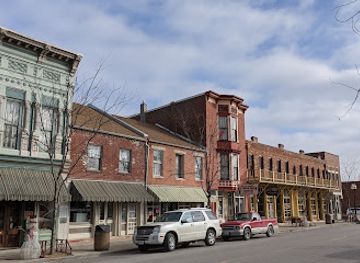
On a bluff above the Mississippi River, Hannibal preserves the small Missouri town that shaped one of America’s best-known writers. Samuel Clemens spent his formative years here from 1839 to 1853, later transforming the town, its river traffic and its inhabitants into the fictional world of Mark Twain’s novels. The Mark Twain Boyhood Home and Museum, Becky Thatcher House and related historic buildings create a walkable introduction to the author’s early life, while Main Street retains the scale and character of a nineteenth-century river settlement.Read more about Hannibal
Riverfront Heritage
Caves, Bluffs and Small-Town Missouri
When is the best time to visit Hannibal?
Best: May, September–October · 19–26°C| Month | High (°C) | Rainfall (mm) |
|---|---|---|
| January | 4 | 43 |
| February | 7 | 41 |
| March | 13 | 68 |
| April | 19 | 91 |
| May (best) | 24 | 117 |
| June | 29 | 112 |
| July | 32 | 104 |
| August | 31 | 97 |
| September (best) | 26 | 86 |
| October (best) | 19 | 76 |
| November | 11 | 68 |
| December | 6 | 51 |
Getting to and around Hannibal
How to get there
Transportation
Best attractions in Hannibal
Hannibal’s principal attractions centre on the life of Samuel Clemens and the fictional world he later created as Mark Twain. The Mark Twain Boyhood Home and Museum presents the Clemens family house alongside several neighbouring properties, including the Becky Thatcher House and Huckleberry Finn House, while interpreters connect the buildings with The Adventures of Tom Sawyer. The Mark Twain Memorial Lighthouse on Cardiff Hill provides a prominent overlook above the river and town. Along the waterfront, parks and the levee offer changing views of the Mississippi, while downtown Main Street retains historic commercial architecture and small museums. South of the centre, Mark Twain Cave links geology with literature through its association with Tom Sawyer. Rockcliffe Mansion adds a different perspective, revealing the scale of a prosperous nineteenth-century Hannibal household. Riverview Park completes the sightseeing picture with elevated views towards Illinois and the broad river corridor.
-
Outdoor activity organiser
Mark Twain Cave
Discover the enchanting Mark Twain Cave in Hannibal, Missouri—where history and adventure meet beneath the earth's surface.
17 min drive · 5.8 km from city centre
-
Tourist attraction
The Mark Twain Boyhood Home Museum Gallery
Explore the Mark Twain Boyhood Home Museum in Hannibal, MO—an immersive journey into the life and legacy of America's beloved author.
10 min drive · 3.2 km from city centre
-
Tourist attraction
Lovers' Leap
Experience breathtaking views and rich history at Lovers' Leap in Hannibal, Missouri, a must-visit destination for all nature lovers and adventurers.
12 min drive · 4.0 km from city centre
-
Park
Riverview Park
Discover the serene beauty of Riverview Park in Hannibal, where lush landscapes and stunning river views await your visit.
8 min drive · 2.7 km from city centre



Best landmarks in Hannibal
Hannibal’s landmarks express the meeting of river commerce, literary memory and nineteenth-century civic ambition. The preserved Mark Twain Boyhood Home is the city’s defining literary building, while the Becky Thatcher House represents the real-world setting associated with the fictional character in The Adventures of Tom Sawyer. High above the town, the Mark Twain Memorial Lighthouse on Cardiff Hill acts as both monument and viewpoint. Rockcliffe Mansion, a substantial historic residence built for businessman John Cruikshank, reflects the wealth accumulated through regional trade and industry. Main Street’s brick commercial buildings and the old riverfront landscape reveal Hannibal’s development as a working port rather than merely a literary attraction. Other notable structures include the Molly Brown Birthplace, associated with Margaret Tobin Brown, who later became known as the “Unsinkable” Molly Brown, and the churches and homes that give the historic town its architectural texture.
-
Outdoor activity organiser
Mark Twain Cave
Explore the cave that inspired Tom Sawyer's adventures! Discover history, mystery, and natural beauty at Missouri's oldest show cave.
17 min drive · 5.8 km from city centre
-
Museum
The Mark Twain Boyhood Home Museum Gallery
Discover Mark Twain's roots in Hannibal, MO, with interactive exhibits, historical artifacts, and a glimpse into the life of America's beloved author.
10 min drive · 3.2 km from city centre
-
Restaurant
Big muddy bbq
Experience authentic, slow-smoked BBQ in Hannibal, Missouri, at Big Muddy BBQ, a local favorite for mouthwatering meats and homemade sides.
8 min walk · 0.6 km from city centre
-
Boat tour agency
Center Street Landing - Mark Twain Riverboat
Cruise the Mississippi on the Mark Twain Riverboat in Hannibal, MO, and experience the river that inspired a literary legend.
10 min drive · 3.3 km from city centre


Explore Hannibal on the map
Plan your Hannibal trip on one map. See where the top attractions, landmarks, restaurants, bars and hotels are, find what's near where you're staying, and book hotels and experiences in a few clicks.
Best hotels in Hannibal
Best restaurants in Hannibal
Hannibal’s dining scene reflects its scale as a small Mississippi River city, with cafés, family-owned restaurants, casual grills and independent eateries concentrated around the historic centre and main commercial roads. Menus commonly draw on familiar Midwestern cooking, including burgers, sandwiches, steaks, fried foods and hearty breakfasts, while local bakeries and cafés provide lighter options between heritage visits. The river and agricultural hinterland shape a food culture based more on regional staples and informal hospitality than on a formal fine-dining tradition. Downtown establishments make a convenient base for eating near Main Street’s historic buildings, and seasonal events may add food stalls or community concessions. Visitors should expect opening patterns and choices to be more limited than in a large urban destination, with several venues operating independently rather than as part of a dense restaurant district.
-
American
Fiddlestiks Food & Spirits Company
Experience delightful American cuisine at Fiddlestiks Food & Spirits Company in Hannibal – where flavor meets friendly service.
10 min drive · 3.3 km from city centre
-
Restaurant
Mark Twain Dinette: Maid-Rite Restaurant and Diner
Savor classic American comfort food at Mark Twain Dinette in Hannibal - your destination for delicious meals and local history.
9 min drive · 3.0 km from city centre
-
Fast Food
McDonald's
Experience classic fast food favorites at McDonald's in Hannibal, MO - your go-to spot for breakfast, burgers, and coffee.
15 min walk · 1.2 km from city centre
-
American
Country Kitchen Restaurant
Discover hearty American breakfasts and family-friendly dining at Country Kitchen Restaurant in Hannibal, Missouri.
5 min drive · 1.7 km from city centre


Best bars in Hannibal
Hannibal’s evenings are relatively restrained, centred on local bars, taverns, casual restaurants and occasional live music rather than a large nightclub scene. Downtown venues provide the most natural setting for an informal drink after exploring the historic district, while community events and seasonal festivals can bring outdoor performances or extended evening activity. The town’s literary heritage also supports occasional theatre, readings and cultural programming connected with Mark Twain, although schedules vary. Visitors seeking a late-night entertainment quarter will find Hannibal quieter than St Louis or Kansas City; the appeal lies instead in relaxed conversation, riverfront walks and small-scale local events. As in other Missouri communities, alcohol service is subject to venue rules and state regulations, and transport options late at night can be limited, making advance planning sensible for anyone staying outside the centre.
-
American
Fiddlestiks Food & Spirits Company
Experience the best of American cuisine at Fiddlestiks Food & Spirits Company in Hannibal, MO, where flavor meets hospitality in a vibrant setting.
10 min drive · 3.3 km from city centre
-
Bar
Rustic Oak Grill & Pub
Discover the charm of Rustic Oak Grill & Pub in Hannibal, offering a delightful menu of American classics, seafood, and desserts in a cozy setting.
5 min drive · 1.5 km from city centre
-
Family-friendly
The Brick Oven
Experience the unique flavors of The Brick Oven in Hannibal, MO, blending gourmet pizzas and fine dining in a family-friendly atmosphere.
10 min drive · 3.2 km from city centre
-
Restaurant
Sticks N Stones Steak & Tap
Experience the perfect blend of steakhouse fare and breakfast delights at Sticks N Stones Steak & Tap, complete with live music and vibrant atmosphere.
11 min walk · 0.9 km from city centre


Best nightclubs in Hannibal
Hannibal’s evenings are relatively restrained, centred on local bars, taverns, casual restaurants and occasional live music rather than a large nightclub scene. Downtown venues provide the most natural setting for an informal drink after exploring the historic district, while community events and seasonal festivals can bring outdoor performances or extended evening activity. The town’s literary heritage also supports occasional theatre, readings and cultural programming connected with Mark Twain, although schedules vary. Visitors seeking a late-night entertainment quarter will find Hannibal quieter than St Louis or Kansas City; the appeal lies instead in relaxed conversation, riverfront walks and small-scale local events. As in other Missouri communities, alcohol service is subject to venue rules and state regulations, and transport options late at night can be limited, making advance planning sensible for anyone staying outside the centre.
-
Sports bar
Rumor Has It... Bar & Grill
Discover the lively ambiance and delicious offerings at Rumor Has It... Bar & Grill in Hannibal, MO, where great food meets sports excitement.
10 min drive · 3.2 km from city centre
-
Bar
Main Street Wine Stoppe
Experience the charm of Hannibal at Main Street Wine Stoppe, where fine wines and live music create an unforgettable atmosphere.
9 min drive · 3.2 km from city centre
-
Bar
WEST END BAR & GRILL
Experience the lively charm of West End Bar & Grill in Hannibal, MO, where delicious food and refreshing drinks await every visitor.
8 min drive · 2.6 km from city centre
-
Bar
Tipsy Bricks Bar
Experience the vibrant nightlife at Tipsy Bricks Bar in Hannibal, Missouri, where great drinks and an inviting atmosphere await.
9 min drive · 3.1 km from city centre


Best shops in Hannibal
Shopping in Hannibal is concentrated along historic Main Street and nearby downtown blocks, where independent shops, galleries, antique dealers and small gift shops occupy older commercial buildings. Mark Twain-themed books, prints and souvenirs are prominent, but the retail character extends beyond literary merchandise to locally made crafts, home décor, artwork, jewellery and regional food products. Antique shopping reflects the town’s heritage setting, while seasonal festivals and community markets may introduce additional handmade goods and food stalls. Visitors interested in the area’s river-town history can browse books about Mark Twain, the Mississippi and Missouri rather than relying solely on mass-produced souvenirs. Larger everyday retail is located outside the historic core, so downtown shopping is best understood as a compact heritage district experience combining independent businesses with the preserved streetscape.
-
Shopping mall
Huck Finn Shopping Center
Discover the Huck Finn Shopping Center in Hannibal, MO – a vibrant shopping mall with diverse stores, delicious dining, and family-friendly entertainment.
5 min drive · 1.6 km from city centre
-
Department store
JCPenney
Experience the best shopping in Hannibal, MO, at JCPenney with a diverse range of clothing, furniture, jewelry, and shoes for every taste.
5 min drive · 1.6 km from city centre
-
Antique furniture store
The Encore Emporium
Explore a captivating array of antique treasures at The Encore Emporium in Hannibal, Missouri, where history meets charm in every corner.
10 min drive · 3.2 km from city centre
-
Chocolate shop
Chocolaterie Stam
Discover the sweet artistry of handcrafted chocolates at Chocolaterie Stam in Hannibal, Missouri, where every bite is a taste of pure delight.
10 min drive · 3.2 km from city centre


Get your free copy of our complete guide to Hannibal, delivered straight to you.
Everything on this page, from attractions and restaurants to essentials and local phrases, in one PDF you can read offline, print or share.
Already have an account? Sign in
Your Hannibal guide is ready.
We'll send it to · Not you? Sign out

Getting your guide ready…
We are putting together a fresh copy of the Hannibal guide. This can take up to a minute.
This can take a few moments. If your browser asks, choose Allow so the download can start. You'll find the guide in your Downloads folder.
Nothing happened? Download it again
Sorry, the guide is taking longer than usual. Please try again in a minute, or get it by email instead.
Hannibal essentials
Currency and Payment
Safety
Emergency Situations
Do's and Don'ts
Local Tips
From Eve
Local phrases worth knowing
You don't need to get them perfect. A few words go a long way, and locals appreciate the effort.
Basics
| English | Local | Say it |
|---|---|---|
| Hello | Howdy | [haw-dee] |
| Goodbye | See ya later | [see yah lay-tur] |
| Yes | Yep | [yep] |
| No | Nah | [nah] |
| Please/You're welcome | Please/You're welcome | [Please/You're welcome] |
| Thank you | Thanks | [thanks] |
| Excuse me/Sorry | Pardon me/My bad | [pahr-dun me/my bad] |
| How are you? | How you doin'? | [how yoo doo-in?] |
| Fine. And you? | Just fine. You? | [just fine. yoo?] |
| Do you speak English? | Y'all speak English? | [yawl speak ing-glish?] |
| I don't understand | I ain't gettin' it | [I aint get-tin it] |
Eating & Drinking
| English | Local | Say it |
|---|---|---|
| I'd like to see the menu, please | Can I see the menu, please | [can eye see the menu, please] |
| I don't eat meat | I don't eat meat | [I don't eat meat] |
| Cheers! | Cheers! | [Cheers!] |
| I would like to pay, please | I'd like to pay, please | [I'd like to pay, please] |
Emergencies
| English | Local | Say it |
|---|---|---|
| Help! | Help! | [Help!] |
| Go away! | Git! | [git!] |
| Call the Police! | Call the cops! | [call the cops!] |
| Call a doctor! | Get a doc! | [get a doc!] |
| I'm lost | I'm lost | [I'm lost] |
| I'm ill | I'm sick | [I'm sick] |
Shopping
| English | Local | Say it |
|---|---|---|
| I'd like to buy... | I wanna buy... | [I wanna buy...] |
| I'm just looking | Just lookin' | [just look-in'] |
| How much is it? | How much? | [how much?] |
| That's too expensive | That's pricey | [That's pricey] |
| Can you lower the price? | Can ya make it cheaper? | [can ya make it cheaper?] |
Time & Numbers
| English | Local | Say it |
|---|---|---|
| What time is it? | What time is it? | [What time is it?] |
| It's one o'clock | It's one | [It's one] |
| Half past (10) | Half past ten | [Half past ten] |
| Morning | Mornin' | [Mornin'] |
| Afternoon | Afternoon | [Afternoon] |
| Evening | Evenin' | [Evenin'] |
| Yesterday | Yesterday | [Yesterday] |
| Today | Today | [Today] |
| Tomorrow | Tomorrow | [Tomorrow] |
| 1 | One | [One] |
| 2 | Two | [Two] |
| 3 | Three | [Three] |
| 4 | Four | [Four] |
| 5 | Five | [Five] |
| 6 | Six | [Six] |
| 7 | Seven | [Seven] |
| 8 | Eight | [Eight] |
| 9 | Nine | [Nine] |
| 10 | Ten | [Ten] |
Transport & Directions
| English | Local | Say it |
|---|---|---|
| Where's a/the...? | Where's the...? | [Where's the...?] |
| What's the address? | What's the address? | [What's the address?] |
| Can you show me (on the map)? | Can you show me (on the map)? | [Can you show me (on the map)?] |
| When's the next (bus)? | When's the next (bus)? | [When's the next (bus)?] |
| A ticket (to ....) | A ticket (to ....) | [A ticket (to ....)] |
History of Hannibal
Settlement on the Mississippi
Hannibal developed on the western bank of the Mississippi River in the early nineteenth century, in a region shaped by Indigenous presence, river travel and the expansion of the United States into Missouri. The settlement is commonly associated with Moses Bates, who laid out a town in 1819 and promoted its position on a navigable stretch of the river. Its location connected farms and inland communities with the wider Mississippi trading network. River landings, warehouses and commercial buildings gradually gave the settlement an economic purpose, while the surrounding bluffs and wooded hills established the physical setting that would later become inseparable from Hannibal’s literary identity.
A Growing River Port
During the nineteenth century, Hannibal grew as a river port and regional centre. Steamboats carried agricultural produce, manufactured goods and passengers along the Mississippi, while merchants established businesses around the waterfront and Main Street. The arrival of rail connections in the 1850s strengthened Hannibal’s role in regional trade and linked the city with markets beyond the river corridor. Economic growth brought churches, civic buildings, homes and commercial blocks, many of which shaped the architectural fabric still visible today. The town’s prosperity was tied to transportation, although floods, changing river conditions and the disruptions of the American Civil War also affected its fortunes.
Samuel Clemens in Hannibal
Samuel Langhorne Clemens moved to Hannibal with his family in 1839, aged four, and remained until 1853. His father’s death forced him into work as a printer’s apprentice, and he later worked in local newspaper offices before travelling elsewhere to pursue journalism and writing. The town’s riverboats, social divisions, games and local personalities supplied material that Clemens transformed through fiction. As Mark Twain, he drew on Hannibal for settings and characters in The Adventures of Tom Sawyer and Adventures of Huckleberry Finn. The surviving buildings associated with his childhood preserve the biographical foundations of a literary reputation formed decades after he left Missouri.
Civil War and Reconstruction
Hannibal lay within a border region during the American Civil War, when Missouri’s political loyalties and strategic waterways made the state deeply contested. The city’s river and rail connections gave it continuing logistical importance, while wartime instability affected commerce and civilian life. After the conflict, Hannibal resumed its role as a manufacturing and trading centre, benefiting from improved rail links and the movement of goods along the Mississippi. Reconstruction-era growth added substantial homes and commercial structures, including buildings associated with prosperous merchants and industrialists. The period helped create the late nineteenth-century townscape represented by parts of today’s historic districts.
Industry and Civic Expansion
Late nineteenth- and early twentieth-century Hannibal combined river commerce with manufacturing, rail transport and regional agriculture. Industries connected with cement, food processing and other production helped diversify the local economy, while civic institutions, schools and churches expanded with the population. Wealth generated by trade and industry appeared in substantial residences such as Rockcliffe Mansion, built for Hannibal businessman John Cruikshank. At the same time, the community’s association with Samuel Clemens became increasingly important as Mark Twain’s international fame grew. Hannibal’s identity therefore developed along two parallel lines: a practical working river town and a place remembered through American literary history.
Preserving a Literary Legacy
In the twentieth century, Hannibal increasingly preserved and interpreted the places connected with Mark Twain’s childhood. Historic homes, museums and commemorative projects turned parts of the old town into a cultural landscape centred on The Adventures of Tom Sawyer and the Mississippi River world that inspired it. The Mark Twain Boyhood Home and Museum and the Mark Twain Memorial Lighthouse now anchor this interpretation, while the riverfront and historic commercial streets retain broader evidence of Hannibal’s development. Festivals, museums and heritage tourism continue to shape the city’s public identity, but the underlying geography remains the same: a compact community looking across the river towards Illinois.
Hannibal in Photos
Browse through our photo collection highlighting the charm and character of the destination.
Cities near Hannibal
The closest cities to Hannibal, if you have time for more than one stop.
-

-

-

-

-


Swipe for more cities
Explore more

Explore more of Missouri
Experience the diverse landscapes, rich history, and vibrant culture of Missouri, the heart of America, offering everything from bustling cities to serene natural escapes.
Explore Missouri