

Free Anti-Atlas Travel Guide & Mobile App
Explore Anti-Atlas with free travel guides. Discover regional history, expert tips, proposed trips, and audio guides on web or mobile app.


Discover the untouched beauty and rich cultural heritage of the Anti-Atlas mountains in Morocco, a hidden gem offering breathtaking landscapes, ancient villages, and unique geology.
Read more about Anti-Atlas
When is the best time to visit Anti-Atlas?
Best: March–April, November · 23–27°C| Month | High (°C) | Rainfall (mm) |
|---|---|---|
| January | 20 | 10 |
| February | 21 | 10 |
| March (best) | 24 | 9 |
| April (best) | 27 | 6 |
| May | 30 | 3 |
| June | 34 | 1 |
| July | 38 | 1 |
| August | 37 | 1 |
| September | 34 | 6 |
| October | 29 | 12 |
| November (best) | 23 | 11 |
| December | 19 | 10 |
Getting to and around Anti-Atlas
How to get there
Transportation
Top city travel guides in Anti-Atlas
The cities of Anti-Atlas, and the easiest places to base yourself.
-

-

-

-


Swipe for more cities
Destinations in Anti-Atlas
Resorts, valleys and scenic spots worth a trip of their own.
-

-
-

-

-

-


Swipe for more destinations
Best attractions in Anti-Atlas
The Anti-Atlas in Morocco offers a mesmerizing blend of rugged landscapes, ancient history, and vibrant culture that captivates every visitor. Traverse through stunning valleys like the Ameln Valley, dotted with traditional Berber villages, where you can witness centuries-old customs and artisan crafts. Marvel at the surreal rock formations and hidden oases, such as the enchanting Aït Mansour Gorge. Discover the remnants of ancient kasbahs and fortresses, each narrating tales of a bygone era. Hiking enthusiasts can challenge themselves with trails that offer breathtaking panoramic views of the mountainous terrain. Don't miss the bustling markets of Tafraoute, where you can indulge in local delicacies and shop for unique souvenirs. The Anti-Atlas is a treasure trove of natural beauty and cultural heritage, promising an unforgettable adventure for those who venture into its heart.
-
Hiking area
Paradise Valley
Explore the breathtaking Paradise Valley in Morocco, a hidden gem with stunning landscapes, pristine waters, and exciting hiking trails.
-
Historical landmark
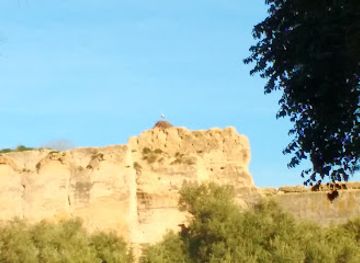
Mausoleum of Moulay Ismail
Explore the Mausoleum of Moulay Ismail, a stunning historical landmark in Meknes, showcasing Moroccan architecture and the legacy of a great Sultan.
-
Guest house
Palais Claudio Bravo
Discover the artistic heart of Morocco at Palais Claudio Bravo, where art and hospitality converge in a stunning setting.
-
Amusement park
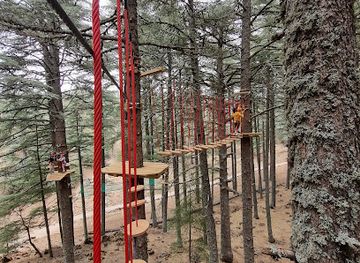
Atlas Parc Aventure
Experience excitement and adventure at Atlas Parc Aventure, a top amusement park in the Forêt de Moudmane, offering thrilling activities for all ages.


Best landmarks in Anti-Atlas
The Anti-Atlas region in Morocco is a treasure trove of captivating landmarks that beckon travelers with its unique blend of rugged landscapes and ancient cultural heritage. Visitors can marvel at the surreal rock formations in Tafraoute, where the Painted Rocks, an outdoor art installation, adds a splash of color to the arid terrain. The Ait Mansour Gorge offers a lush oasis of palm groves and flowing streams, providing a breathtaking contrast to the surrounding desert. For history enthusiasts, the ancient rock carvings of Tazzarine provide a glimpse into prehistoric life, while the fortified granaries, or 'agadirs,' perched atop hills, tell stories of Berber resilience and ingenuity. The quaint village of Tiznit, with its vibrant souks and silver jewelry craftsmanship, invites a deep dive into local traditions. Hiking trails through the Jebel Sirwa massif reveal stunning vistas and the chance to explore remote Berber villages, making the Anti-Atlas a destination rich with adventure and cultural immersion.
-
Tourist attraction
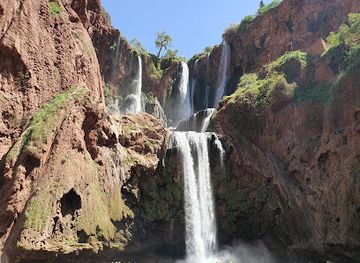
Ouzoud Waterfalls
Explore the stunning Ouzoud Waterfalls, a natural wonder in Morocco, where cascading waters and lush landscapes create a perfect escape for every traveler.
-
Historical landmark
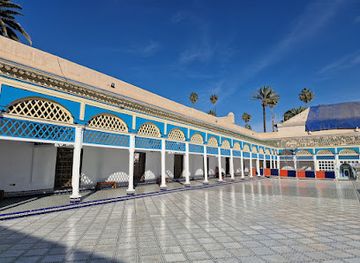
Bahia Palace
Experience the beauty and history of Bahia Palace, a stunning architectural gem in the heart of Marrakesh, revealing the elegance of Moroccan artistry.
-
Historical landmark
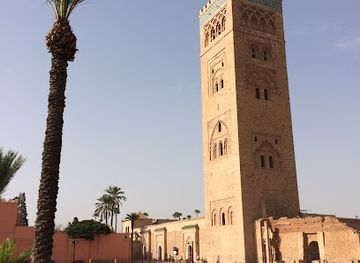
Saadian Tombs
Uncover the rich history of Morocco at the Saadian Tombs, a breathtaking historical site in Marrakesh showcasing stunning architecture and artistry.
-
Historical landmark
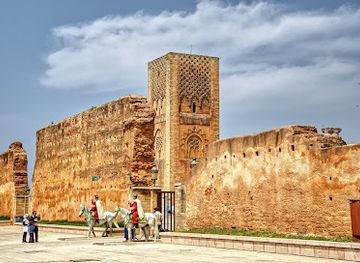
Mausoleum of Mohammed V
Discover the architectural beauty and historical significance of the Mausoleum of Mohammed V in Rabat, a must-visit landmark reflecting Morocco's rich heritage.
Explore Anti-Atlas on the map
Plan your trip on one map. See where the top cities, national parks and sights are, and book hotels and experiences in a few clicks.
Best hotels in Anti-Atlas
Best restaurants in Anti-Atlas
Anti-Atlas offers a culinary journey as captivating as its rugged landscapes, with a dining scene that seamlessly blends traditional Berber flavors with modern Moroccan cuisine. Visitors can indulge in hearty tagines simmered with local spices, savor freshly-baked bread from clay ovens, and delight in the sweet and savory contrasts of almond-filled pastries. Street vendors and local markets overflow with aromatic spices, dried fruits, and the freshest produce, inviting travelers to taste the region’s vibrant street food. From quaint village cafes to family-run restaurants, the hospitality is as warm as the sun-drenched mountains, providing an authentic taste of Moroccan culture with every bite.
-
Restaurant
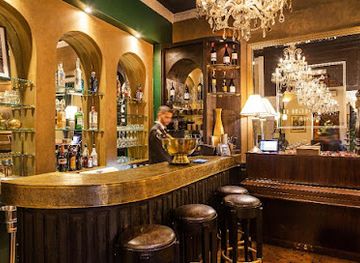
Le Bistro Arabe - Moroccan Jazz Restaurant in Marrakech
Indulge in exquisite Moroccan cuisine paired with enchanting jazz music at Le Bistro Arabe in Marrakech's historic Medina.
-
French
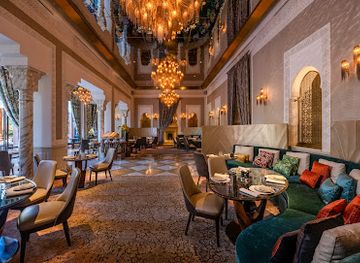
La Grande Table Marocaine
Experience the exquisite fusion of French and Moroccan flavors at La Grande Table Marocaine in Marrakech's luxury setting.
-
Moroccan
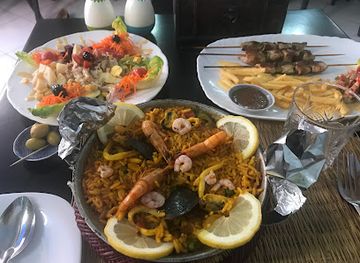
Restaurant snack grand atlas
Discover authentic Moroccan flavors at Restaurant Snack Grand Atlas in Marrakesh - where culinary diversity meets local charm.
-
Moroccan
Les Terrasses Des Arts Marrakech
Discover a unique blend of Moroccan and European culinary experiences at Les Terrasses Des Arts in Marrakech's enchanting Medina.
Best bars in Anti-Atlas
Anti-Atlas may not be known for its bustling nightlife like Marrakech or Casablanca, but it offers a unique and enchanting experience for those willing to embrace its quieter, more intimate evening scene. As the sun sets behind the rugged mountains, local Berber villages come alive with traditional music and dance around communal fires, where visitors are welcomed to join in the festivities. Small, atmospheric cafes and teahouses serve aromatic mint tea and local delicacies, providing a cozy setting for conversations under the starlit sky. For those seeking a more adventurous night, guided night hikes reveal the region's stunning landscapes under the moonlight, an experience that is both magical and serene. In Anti-Atlas, the nightlife is about connecting with the land and its people, offering a cultural immersion that is both authentic and unforgettable.
-
Restaurant
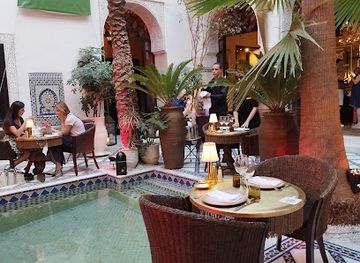
La Pergola
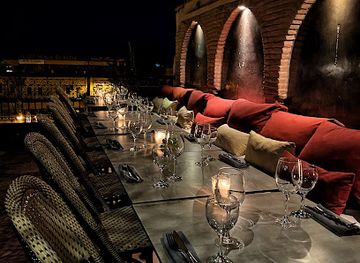
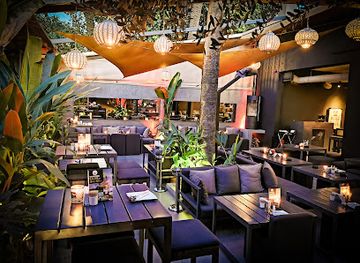
Discover La Pergola in Marrakech for a unique dining experience with Moroccan flavors, live music, and vibrant ambiance.
-
Restaurant
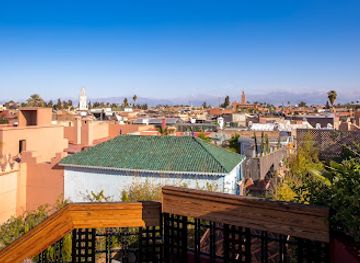
Le Salama Sky-bar
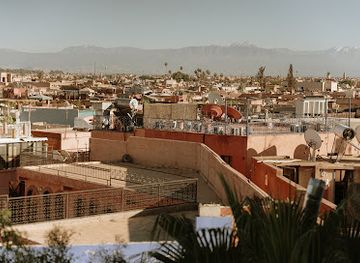
Discover Le Salama Sky-bar, a vibrant rooftop destination in Marrakech offering exquisite Moroccan cuisine and stunning views of the Medina.
-
Lounge
Kosybar Marrakech (Restaurant Bar & Spa)
Discover Kosybar Marrakech, a harmonious blend of Moroccan and Japanese flavors in a serene rooftop setting, perfect for culinary adventures.
-
Restaurant
Pointbar Marrakech
Discover the vibrant culinary scene at Pointbar Marrakech, where modern tapas meet Moroccan flavors in a lively setting.
Best nightclubs in Anti-Atlas
Anti-Atlas may not be known for its bustling nightlife like Marrakech or Casablanca, but it offers a unique and enchanting experience for those willing to embrace its quieter, more intimate evening scene. As the sun sets behind the rugged mountains, local Berber villages come alive with traditional music and dance around communal fires, where visitors are welcomed to join in the festivities. Small, atmospheric cafes and teahouses serve aromatic mint tea and local delicacies, providing a cozy setting for conversations under the starlit sky. For those seeking a more adventurous night, guided night hikes reveal the region's stunning landscapes under the moonlight, an experience that is both magical and serene. In Anti-Atlas, the nightlife is about connecting with the land and its people, offering a cultural immersion that is both authentic and unforgettable.
-
Disco club
Theatro Marrakech
Discover the exhilarating nightlife at Theatro Marrakech, where vibrant music and electrifying ambiance create unforgettable memories in the heart of Morocco.
-
Night club
BABOUCHKA
Discover the pulse of Marrakech’s nightlife at Babouchka, a vibrant night club with electrifying music and an unforgettable atmosphere.
-
Disco club
SECRET ROOM MARRAKECH
Unleash your inner party animal at Secret Room Marrakech, the ultimate disco club for a vibrant nightlife experience.
-
Night club
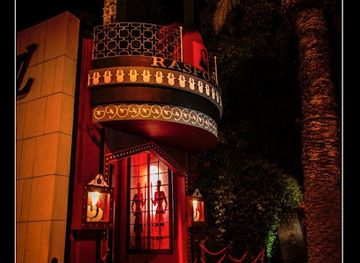
555 Famous Club Marrakech
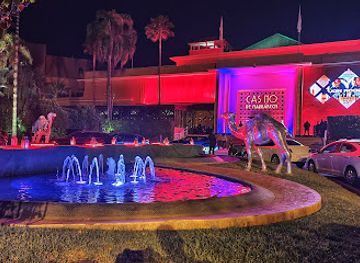
Discover the vibrant nightlife of Marrakech at 555 Famous Club, where music, dance, and excitement come alive.


Best shops in Anti-Atlas
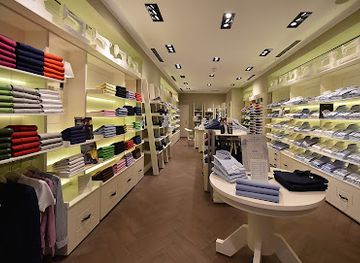
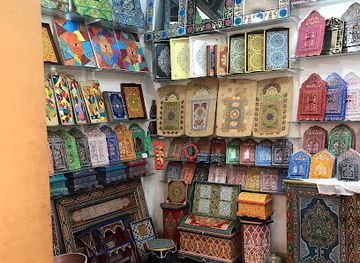
The shopping scene in the Anti-Atlas region of Morocco is a treasure trove for those seeking authentic Berber craftsmanship and unique cultural artifacts. As you wander through the vibrant souks and bustling markets, you'll encounter an array of handmade rugs, intricately woven textiles, beautifully crafted pottery, and traditional silver jewelry that reflect the rich heritage of the local Amazigh people. The air is filled with the enticing aromas of spices and the chatter of artisans proudly displaying their wares, offering a sensory experience that is both captivating and immersive. Each market is a labyrinth of colors and textures, where every turn reveals a new discovery, from hand-carved wooden items to aromatic argan oil and rare fossils that tell the story of the region's ancient past. Whether you're a collector of rare finds or simply looking for a unique souvenir, the Anti-Atlas offers a shopping adventure that is as diverse and enchanting as its dramatic landscapes.
-
Shopping mall
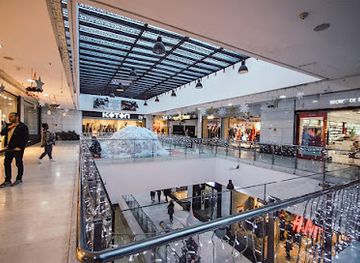
Morocco Mall
Explore Morocco Mall in Casablanca for an unmatched shopping experience, blending modern retail with Moroccan culture and entertainment.
-
Shopping mall
Carré Eden
Discover the best of shopping and dining at Carré Eden, Marrakech’s premier shopping destination blending modernity with Moroccan culture.
-
Chamber of handicrafts
Ensemble Artisanal
Discover the vibrant artistry of Moroccan handicrafts at Ensemble Artisanal, a must-visit cultural gem in the heart of Marrakech.
-
Souvenir store
Dar Bouchaib
Explore Dar Bouchaib in Marrakesh for unique Moroccan souvenirs, cosmetics, and jewelry, perfect for memorable gifts and personal treasures.
Get your free copy of our complete guide to Anti-Atlas, delivered straight to you.
Everything on this page, from attractions and restaurants to essentials and local phrases, in one PDF you can read offline, print or share.
Already have an account? Sign in
Your Anti-Atlas guide is ready.
We'll send it to · Not you? Sign out

Getting your guide ready…
We are putting together a fresh copy of the Anti-Atlas guide. This can take up to a minute.
This can take a few moments. If your browser asks, choose Allow so the download can start. You'll find the guide in your Downloads folder.
Nothing happened? Download it again
Sorry, the guide is taking longer than usual. Please try again in a minute, or get it by email instead.
Anti-Atlas essentials
Currency and Payment
Safety
Emergency Situations
Do's and Don'ts
Local Tips
From Eve
Local phrases worth knowing
You don't need to get them perfect. A few words go a long way, and locals appreciate the effort.
Basics
| English | Local | Say it |
|---|---|---|
| Hello | Salam | [sah-lahm] |
| Goodbye | B'slama | [b'slah-mah] |
| Yes | Iwa | [ee-wah] |
| No | La | [lah] |
| Please/You're welcome | Afak | [ah-fahk] |
| Thank you | Shukran | [shoo-kraan] |
| Excuse me/Sorry | Smah liya | [smah lee-yah] |
| How are you? | Kif halak? | [keef ha-lak] |
| Fine. And you? | Labas. W nta? | [lah-bas. w en-tah?] |
| Do you speak English? | Kat'hder inglizi? | [kaht-hder in-gree-zee] |
| I don't understand | Ma fehemtsh | [mah feh-himtsh] |
Eating & Drinking
| English | Local | Say it |
|---|---|---|
| I'd like to see the menu, please | Bghit nchoof l'menou, afak | [bghit n-shoof l-men-oo, ah-fahk] |
| I don't eat meat | Ma nakolsh l'lahm | [mah nah-kol-sh l-lahm] |
| Cheers! | B'shaaf! | [b-shaaf] |
| I would like to pay, please | Bghit n'khalless, afak | [bghit n-khal-les, ah-fahk] |
Emergencies
| English | Local | Say it |
|---|---|---|
| Help! | Awn! | [a-oon] |
| Go away! | Imshi! | [eem-shee] |
| Call the Police! | Ittasil b'l-police! | [it-ta-sil b'l-po-lees] |
| Call a doctor! | Ittasil b'doktor! | [it-ta-sil b'dok-tor] |
| I'm lost | Ana t'laite | [ah-nah t-lay-teh] |
| I'm ill | Ana m'rid | [ah-nah m-reed] |
Shopping
| English | Local | Say it |
|---|---|---|
| I'd like to buy... | Bghit nshri... | [bghit n-shee-ree] |
| I'm just looking | Ana ghadi nchoof | [ah-nah ghah-dee n-shoof] |
| How much is it? | Bshhal hadi? | [bsh-hal ha-dee] |
| That's too expensive | Hadi zyada f'prix | [ha-dee zee-dah f-preeks] |
| Can you lower the price? | Tqder t'khafed l'soum? | [tq-der t-kha-fed l-soom] |
Time & Numbers
| English | Local | Say it |
|---|---|---|
| What time is it? | Shhal f'sa? | [shhal f-sah] |
| It's one o'clock | Hya wahed f'sa | [hee-yah wah-hed f-sah] |
| Half past (10) | Nus f'sa (10) | [noos f-sah (10)] |
| Morning | Sbah | [s-bah] |
| Afternoon | B'laas | [b-lahs] |
| Evening | Msa | [m-sah] |
| Yesterday | Lbareh | [l-bah-reh] |
| Today | Lyoum | [l-yoom] |
| Tomorrow | Gheda | [ghe-dah] |
| 1 | Wahed | [wah-hed] |
| 2 | Juj | [juj] |
| 3 | Tlata | [t-lah-tah] |
| 4 | Rb'aa | [r-bah-ah] |
| 5 | Khamsa | [khahm-sah] |
| 6 | Sitta | [sit-tah] |
| 7 | Sb'aa | [s-bah-ah] |
| 8 | Thmanya | [th-mah-nyah] |
| 9 | Tsa'ud | [ts-ah-ood] |
| 10 | Ashra | [ah-shrah] |
Transport & Directions
| English | Local | Say it |
|---|---|---|
| Where's a/the...? | Fin kayn...? | [fin kayn] |
| What's the address? | Shnou l'adresse? | [shnoo l-adr-ess] |
| Can you show me (on the map)? | Tqder twarini (f'l-kharita)? | [tq-der taw-ree-nee (f'l-kha-ree-tah)] |
| When's the next (bus)? | Fuqash kayn l'bus jayin? | [foo-kash kayn l-bus jah-yeen] |
| A ticket (to ....) | Tiqet (l'...) | [ti-qet (l-...)] |
History of Anti-Atlas
Ancient Berber Civilizations
Anti-Atlas, a part of the vast Atlas Mountains, has been home to Berber communities for thousands of years. The Berbers, or Amazigh, are indigenous to North Africa and have left a profound imprint on the region. Evidence of their ancient kingdoms, such as the Kingdom of Mauretania, can be found in the form of rock carvings, ancient settlements, and fortified granaries (agadirs) that dot the landscape.
Phoenician and Carthaginian Influence
During antiquity, the Anti-Atlas region experienced the influence of Phoenician and Carthaginian traders who established trade routes and outposts along the coast. These interactions brought new goods, cultural exchanges, and elements of Mediterranean civilization to the Berber tribes, shaping the region's development.
Arab Conquest and Islamization
In the 7th and 8th centuries, the Arab conquest of North Africa brought Islam to the Anti-Atlas region. This period saw the establishment of Islamic sultanates and the construction of mosques and other Islamic architecture. The Berbers gradually adopted Islam, blending it with their pre-existing traditions and customs, creating a unique cultural synthesis.
The Almoravid and Almohad Dynasties
The Anti-Atlas region played a crucial role during the rise of the Almoravid and Almohad dynasties between the 11th and 13th centuries. These Berber dynasties emerged from the Atlas Mountains and expanded their influence across North Africa and into Spain. Their rule brought significant religious, architectural, and cultural developments, including the construction of monumental buildings like the Tin Mal Mosque.
French Colonial Period
In the early 20th century, the Anti-Atlas region fell under French colonial rule. The French influence led to the development of infrastructure, including roads and schools, but also brought about resistance and revolts among the Berber tribes. Notably, the Berber resistance leader, Mohamed Ameziane, led a series of uprisings against the colonial forces in the Anti-Atlas region.
Post-Independence and Modern Era
Following Morocco's independence in 1956, the Anti-Atlas region has seen efforts to preserve its unique cultural heritage while integrating into the modern state. The region remains a testament to the resilience and continuity of Berber culture, with traditional crafts, music, and festivals still thriving amidst the backdrop of the rugged and picturesque landscape.
Anti-Atlas in Photos
Browse through our photo collection highlighting the charm and character of the destination.
Neighbouring regions of Anti-Atlas
The closest regions to Anti-Atlas, if you have time for more than one.
-

-

-

-

-


Swipe for more regions
Explore more

Explore more of Morocco
Discover Morocco: A land of rich history, vibrant culture, and stunning landscapes, where ancient traditions meet modern allure.
Explore Morocco