

Free Haouz Travel Guide & Mobile App
Explore Haouz with free travel guides. Discover regional history, expert tips, proposed trips, and audio guides on web or mobile app.


Explore Haouz in Morocco for Atlas valleys, Amazigh villages, mountain walks, prehistoric rock art and highland scenery south of Marrakech.
Read more about Haouz
When is the best time to visit Haouz?
Best: March–April, October · 23–27°C| Month | High (°C) | Rainfall (mm) |
|---|---|---|
| January | 16 | 55 |
| February | 19 | 50 |
| March (best) | 23 | 45 |
| April (best) | 27 | 35 |
| May | 31 | 25 |
| June | 35 | 15 |
| July | 37 | 10 |
| August | 36 | 10 |
| September | 32 | 15 |
| October (best) | 26 | 25 |
| November | 20 | 35 |
| December | 17 | 45 |
Getting to and around Haouz
How to get there
Transportation
Top city travel guides in Haouz
The cities of Haouz, and the easiest places to base yourself.

Swipe for more cities
Destinations in Haouz
Resorts, valleys and scenic spots worth a trip of their own.
-

-
-

-


Swipe for more destinations
Best attractions in Haouz
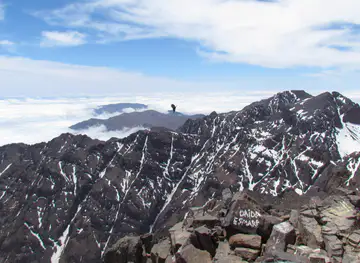
Haouz’s attractions are spread through changing mountain landscapes rather than concentrated in a single resort. The Ourika Valley offers riverside scenery, village walks and the route towards the waterfalls above Setti Fatma, while the valleys around Asni and Imlil provide access to trekking routes beneath the Toubkal massif. Oukaïmeden combines a high-altitude plateau, winter skiing, summer grazing grounds and prehistoric rock engravings. Around Lalla Takerkoust, the reservoir and dry foothills suit scenic drives, walking and water-based recreation where conditions and local operators permit. The province also contains village markets, earthen settlements, orchards, mountain guesthouses and viewpoints that reveal the relationship between agriculture and steep terrain. Longer walks should be planned with local knowledge, especially where trails cross remote passes or areas affected by earthquake damage. Haouz is most rewarding when treated as a living rural region: its attractions include the landscapes themselves, the routes between communities, the food served in family-run lodgings and the opportunity to understand how mountain societies manage water, pasture and limited arable land.
-
Tourist attraction
Ouzoud Waterfalls
Experience the breathtaking beauty of Ouzoud Waterfalls, a natural wonder in Morocco's Atlas Mountains, perfect for adventure and relaxation.
-
Historical landmark
Saadian Tombs
Explore the Saadian Tombs in Marrakesh, a historical landmark rich in culture and breathtaking architecture that echoes the grandeur of the Saadian dynasty.
-
Historical landmark
Badi Palace
Discover the regal history and stunning architecture of Badi Palace in Marrakech, a must-visit historical landmark and museum.
-
Historical landmark
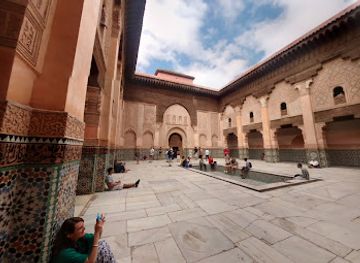
Medresa Ben Youssef
Explore Medresa Ben Youssef, a historical jewel in Marrakesh showcasing exquisite Moroccan architecture and cultural heritage.


Best landmarks in Haouz
Mount Toubkal is Haouz’s most recognisable natural landmark, rising above the Imlil area and the high valleys of the central High Atlas. Reaching its summit is a serious mountain undertaking, but the massif is also visually important from lower trails and village viewpoints. The Oukaïmeden plateau forms another distinctive landmark, combining broad highland terrain with prehistoric rock engravings that record human activity over millennia. Below the high mountains, the Ourika Valley is defined by its river corridor, steep cultivated slopes and settlements strung along the road towards Setti Fatma. The Lalla Takerkoust reservoir provides a contrasting landmark in the province’s drier western foothills, where open horizons replace narrow Alpine-style valleys. Earthen village architecture, terraced fields and stone irrigation channels are less monumental but equally significant, expressing the practical history of Amazigh mountain settlement. After the 2023 earthquake, some traditional structures and village skylines have changed or remain under reconstruction, so the landscape should be viewed with respect rather than as an architectural display.
-
Garden
Jardin Majorelle
Explore Jardin Majorelle, a vibrant botanical garden in Marrakech, where art and nature unite in a tranquil oasis filled with exotic plants and cultural heritage.
-
Cultural landmark
Jemaa el-Fnaa
Explore the vibrant Jemaa el-Fnaa, a cultural landmark in Marrakesh, where markets, street performances, and local cuisine come together in a sensory feast.
-
Tourist attraction
Ouzoud Waterfalls
Discover the breathtaking Ouzoud Waterfalls, Morocco's stunning natural wonder, where cascading waters meet lush landscapes and unforgettable adventures await.
-
Historical landmark
Bahia Palace
Experience the stunning beauty and rich history of Bahia Palace, a magnificent historical landmark in the heart of Marrakesh, Morocco.



Explore Haouz on the map
Plan your trip on one map. See where the top cities, national parks and sights are, and book hotels and experiences in a few clicks.
Best hotels in Haouz
Best restaurants in Haouz
Eating in Haouz is closely tied to mountain agriculture and the hospitality of rural homes and guesthouses. Menus commonly feature Moroccan staples such as vegetable and meat tagines, couscous, harira, salads, fresh bread and sweet mint tea, with recipes varying according to seasonal produce and household tradition. In the higher valleys, walnuts, apples, cherries and other orchard products are important local foods, while honey and olive oil are produced in parts of the foothills. Roadside cafés and village restaurants offer simple meals for walkers and drivers, often ordered according to what is available that day. Imlil and the Ourika Valley have the broadest choice for visitors, while smaller settlements may require advance arrangements with a guesthouse. Marrakech-style restaurant dining is less relevant once inside the province; the most distinctive meals are often shared in rural homes, mountain lodges or family-run accommodation. Carry snacks and water on longer excursions, since food outlets become sparse away from the main valleys.
-
Moroccan
Dar Essalam
Discover the essence of Moroccan cuisine at Dar Essalam, where tradition meets elegance in the heart of Marrakech's Medina.
-
Moroccan
Chez Brahim Restaurant
Experience the essence of Moroccan cuisine blended with Italian delights at Chez Brahim Restaurant in vibrant Marrakesh.
-
Moroccan
Restaurant Dar Cherifa Marrakech
Experience authentic Moroccan flavors at Restaurant Dar Cherifa in Marrakech's enchanting Medina.
-
Moroccan
Kui-Zin
Savor authentic Moroccan flavors combined with Italian flair at Kui-Zin in Marrakesh's charming Medina district.



Best bars in Haouz
Haouz does not have a substantial nightclub scene, and evening life is generally quieter and more social than in Marrakech. In mountain villages and smaller towns, cafés and guesthouses provide places for tea, coffee, conversation and simple meals, while some accommodations arrange traditional music or informal gatherings for visitors. The larger hotels and resorts around the more accessible valleys may have licensed restaurants, but alcohol availability is limited compared with urban Morocco and should never be assumed in a rural setting. Night-time entertainment is primarily concerned with hospitality, local conversation and the landscape after dark rather than late opening hours. Visitors staying in Imlil, Ourika or near Lalla Takerkoust should arrange evening transport in advance, as shared taxis and other services can be scarce after dark. Respect quiet residential communities, particularly where accommodation is close to family homes or working farms.
-
Bar
La Pergola
Experience the vibrant taste of Moroccan cuisine and live music at La Pergola, Marrakech's premier dining destination.
-
Moroccan
Comptoir Darna
Experience the captivating blend of Moroccan cuisine and vibrant nightlife at Comptoir Darna, a gem in the heart of Marrakech.
-
Restaurant
Epicurien
Discover the culinary artistry at Epicurien, where Moroccan flavors meet modern elegance in the heart of Marrakech.
-
Bar
Le Salama Sky-bar
Experience the enchanting blend of Moroccan culture and stunning views at Le Salama Sky-bar in Marrakech.
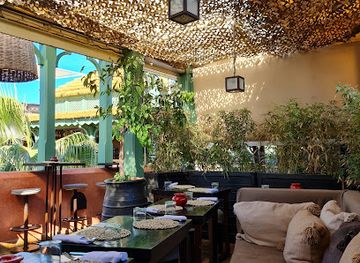


Best nightclubs in Haouz
Haouz does not have a substantial nightclub scene, and evening life is generally quieter and more social than in Marrakech. In mountain villages and smaller towns, cafés and guesthouses provide places for tea, coffee, conversation and simple meals, while some accommodations arrange traditional music or informal gatherings for visitors. The larger hotels and resorts around the more accessible valleys may have licensed restaurants, but alcohol availability is limited compared with urban Morocco and should never be assumed in a rural setting. Night-time entertainment is primarily concerned with hospitality, local conversation and the landscape after dark rather than late opening hours. Visitors staying in Imlil, Ourika or near Lalla Takerkoust should arrange evening transport in advance, as shared taxis and other services can be scarce after dark. Respect quiet residential communities, particularly where accommodation is close to family homes or working farms.
-
Disco club
Theatro Marrakech
Discover the heartbeat of Marrakech's nightlife at Theatro, where every night is a celebration filled with music, dance, and unforgettable moments.
-
Night club
BABOUCHKA
Discover the vibrant nightlife at Babouchka, Marrakech's luxurious night club offering unforgettable experiences and eclectic music.
-
Restaurant
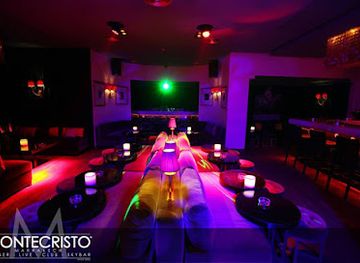
Montecristo
Experience the best of Moroccan cuisine and vibrant nightlife at Montecristo, the ultimate dining and disco destination in Marrakech.
-
Disco club
SECRET ROOM MARRAKECH
Discover the electrifying nightlife of Marrakech at Secret Room, where vibrant beats and stylish ambiance create unforgettable late-night experiences.
Best shops in Haouz
Shopping in Haouz is centred on weekly souks, village provisions shops and small craft businesses rather than large retail centres. Souks around the foothill towns and valleys sell fruit, vegetables, spices, bread, household goods, clothing, tools and livestock-related products, reflecting the needs of local communities as much as visitor demand. In mountain settlements, visitors may find woven textiles, baskets, pottery, carved wooden articles, woollen goods, honey, walnuts, dried fruit and other locally produced foods, though quality and provenance vary. Ask whether a product was made locally and bargain politely where bargaining is customary, without treating a working market as a performance. Imlil and the Ourika Valley have more visitor-oriented shops, while Asni and other market towns offer a more practical shopping experience. Carry cash in small dirham notes, and avoid buying archaeological objects, old-looking fossils or rock fragments, particularly around Oukaïmeden, where cultural and natural material should remain in place.
-
Gift shop
Dar Bouchaib
Discover the essence of Moroccan craftsmanship at Dar Bouchaib, where unique gifts and local artistry await in the heart of Marrakesh.
-
Store
Max & Jan Medina
Explore Max & Jan Medina in Marrakesh for unique clothing and accessories that capture the essence of Moroccan artistry and culture.
-
Souvenir store
33 RUE MAJORELLE
Discover authentic Moroccan craftsmanship at 33 Rue Majorelle, where fashion meets culture in the heart of Marrakech.
-
Fashion accessories store
Asianshop Maroc
Explore an eclectic mix of fashion accessories at Asianshop Maroc in Marrakech, where culture meets style in every unique piece.


Get your free copy of our complete guide to Haouz, delivered straight to you.
Everything on this page, from attractions and restaurants to essentials and local phrases, in one PDF you can read offline, print or share.
Already have an account? Sign in
Your Haouz guide is ready.
We'll send it to · Not you? Sign out

Getting your guide ready…
We are putting together a fresh copy of the Haouz guide. This can take up to a minute.
This can take a few moments. If your browser asks, choose Allow so the download can start. You'll find the guide in your Downloads folder.
Nothing happened? Download it again
Sorry, the guide is taking longer than usual. Please try again in a minute, or get it by email instead.
Haouz essentials
Currency and Payment
Safety
Emergency Situations
Do's and Don'ts
Local Tips
From Eve
Local phrases worth knowing
You don't need to get them perfect. A few words go a long way, and locals appreciate the effort.
Basics
| English | Local | Say it |
|---|---|---|
| Hello | سلام | [Salam] |
| Goodbye | مع السلامة | [Ma'a as-salamah] |
| Yes | نعم | [Na'am] |
| No | لا | [La] |
| Please/You're welcome | من فضلك | [Min fadlik] |
| Thank you | شكرا | [Shukran] |
| Excuse me/Sorry | عفوا | [Afwan] |
| How are you? | كيف حالك؟ | [Kayfa halak?] |
| Fine. And you? | بخير. وأنت؟ | [Bikhayr. Wa anta?] |
| Do you speak English? | هل تتحدث الإنجليزية؟ | [Hal tatahadath al-ingliziyya?] |
| I don't understand | لا أفهم | [La afham] |
Eating & Drinking
| English | Local | Say it |
|---|---|---|
| I'd like to see the menu, please | أود رؤية القائمة، من فضلك | [Awd ru'yat al-qaimah, min fadlik] |
| I don't eat meat | لا أتناول اللحم | [La atanaawal al-lahm] |
| Cheers! | في صحتك! | [Fi sihtak!] |
| I would like to pay, please | أود الدفع، من فضلك | [Awd ad-daf', min fadlik] |
Emergencies
| English | Local | Say it |
|---|---|---|
| Help! | نجدة! | [Najda!] |
| Go away! | ابتعد! | [Ibt'id!] |
| Call the Police! | اتصل بالشرطة! | [Ittasil bil-shurta!] |
| Call a doctor! | اتصل بالطبيب! | [Ittasil bil-tabeeb!] |
| I'm lost | أنا ضائع | [Ana dae'] |
| I'm ill | أنا مريض | [Ana marid] |
Shopping
| English | Local | Say it |
|---|---|---|
| I'd like to buy... | أود شراء... | [Awd shira'] |
| I'm just looking | أنا فقط أبحث | [Ana faqat abhas] |
| How much is it? | كم ثمنه؟ | [Kam thamanuh?] |
| That's too expensive | هذا غالي جدا | [Hatha ghali jidan] |
| Can you lower the price? | هل يمكنك تخفيض السعر؟ | [Hal yumkinuka takhfid as-si'r?] |
Time & Numbers
| English | Local | Say it |
|---|---|---|
| What time is it? | كم الساعة؟ | [Kam as-saa'a?] |
| It's one o'clock | الساعة واحدة | [As-saa'a wahida] |
| Half past (10) | نصف الساعة (10) | [Nisf as-saa'a (10)] |
| Morning | صباحا | [Sabahan] |
| Afternoon | بعد الظهر | [Ba'd az-zuhur] |
| Evening | مساء | [Masa'a] |
| Yesterday | أمس | [Ams] |
| Today | اليوم | [Al-yawm] |
| Tomorrow | غدا | [Ghadan] |
| 1 | واحد | [Wahid] |
| 2 | اثنان | [Ithnan] |
| 3 | ثلاثة | [Thalatha] |
| 4 | أربعة | [Arba'a] |
| 5 | خمسة | [Khamsa] |
| 6 | ستة | [Sitta] |
| 7 | سبعة | [Sab'a] |
| 8 | ثمانية | [Thamaniya] |
| 9 | تسعة | [Tis'a] |
| 10 | عشرة | [Ashara] |
Transport & Directions
| English | Local | Say it |
|---|---|---|
| Where's a/the...? | أين...؟ | [Ayn...?] |
| What's the address? | ما هو العنوان؟ | [Ma huwa al-'unwan?] |
| Can you show me (on the map)? | هل يمكنك أن تريني (على الخريطة)؟ | [Hal yumkinuka an turini (ala al-kharita)?] |
| When's the next (bus)? | متى تأتي الحافلة التالية؟ | [Mata ta'ti al-hafila at-taliya?] |
| A ticket (to ....) | تذكرة (إلى ...) | [Tadhkira (ila ...)] |
History of Haouz
Prehistoric activity on the Oukaïmeden plateau
The high plateau of Oukaïmeden contains prehistoric rock engravings, including images of animals and hunting scenes associated with ancient communities of the Atlas. These carvings show that the area was used long before the formation of today’s villages and agricultural systems. The plateau’s seasonal pasture, open terrain and water sources helped make it a practical environment for mobile groups. The rock art is important not only for its age but also because it places the High Atlas within the wider prehistoric cultural landscape of North Africa. Visitors should treat the engravings as fragile archaeological evidence and avoid touching or climbing on the decorated surfaces.
Amazigh settlement and mountain agriculture
For centuries, Amazigh communities have shaped the valleys of Haouz through terracing, irrigation, transhumance and the cultivation of barley, fruit, walnuts and vegetables. The steep slopes demanded careful management of water and soil, while communal institutions helped regulate access to fields, pastures and village resources. Traditional houses and granaries, though altered by modern materials and migration, still reveal how architecture adapted to mountain climates. Amazigh language and cultural practices remain important parts of regional identity, particularly in the High Atlas valleys around Asni, Imlil and Ourika.
The Almoravid and Almohad eras
The wider Haouz plain became increasingly connected to the political centres of southern Morocco as the Almoravid and later Almohad dynasties established Marrakech as a major imperial capital. Although the city itself lies outside modern Haouz Province, its growth affected the surrounding mountain and agricultural districts through trade, taxation, religious networks and the movement of people and goods. The Atlas supplied livestock, produce and routes towards the south, while the plain provided markets for mountain communities. This relationship between Marrakech and its southern hinterland has remained central to the region’s history.
Mountain routes, pilgrimage and regional exchange
The valleys leading towards the High Atlas served as routes linking the Marrakech plain with upland pastures and communities beyond the major passes. Markets and seasonal movement connected villages around Asni, Ourika and the Toubkal massif with one another and with the city. Islamic shrines, village mosques and local religious lineages added a spiritual dimension to these routes. Moulay Brahim and other settlements in the foothills became points of connection between rural communities, travellers and pilgrims. The region’s history was therefore shaped less by large urban monuments than by movement through valleys and across mountain corridors.
The French Protectorate and modern mountain administration
During the French Protectorate, which began in 1912, the Atlas became the subject of new mapping, road building, administrative control and military expeditions. Mountain communities retained many local institutions, but the colonial government sought to regulate movement and incorporate remote districts into the state’s transport and administrative systems. Roads later improved access between Marrakech and the valleys, encouraging tourism, skiing, trekking and agricultural trade. The modern infrastructure visible in Haouz reflects several layers of development rather than a single transformation.
Tourism and the Toubkal trekking economy
From the later twentieth century, trekking around Imlil and the Toubkal massif became a significant part of Haouz’s visitor economy. Local muleteers, guides, cooks, guesthouse owners and transport providers developed services for walkers travelling towards mountain refuges and high passes. Oukaïmeden also acquired a national reputation as a winter sports destination, while the Ourika Valley became a popular excursion area from Marrakech. Tourism has brought income and new opportunities, but water use, waste, trail erosion and unequal distribution of revenue remain important considerations in a fragile mountain environment.
The 2023 Al Haouz earthquake
On 8 September 2023, a powerful earthquake struck the High Atlas, with Al Haouz among the provinces most severely affected. Remote villages suffered extensive destruction, loss of life and damage to homes, roads, schools and community buildings. The disaster highlighted the vulnerability of earthen and masonry construction in steep terrain, as well as the difficulties of reaching isolated settlements. Recovery and reconstruction have continued unevenly, and the earthquake remains part of the living history of the region. Visitors should avoid treating affected communities as spectacles and should follow local guidance when travelling through rebuilding areas.
Haouz in Photos
Browse through our photo collection highlighting the charm and character of the destination.
Neighbouring regions of Haouz
The closest regions to Haouz, if you have time for more than one.
-
-

-

-

-


Swipe for more regions
Explore more

Explore more of Morocco
Discover Morocco: A land of rich history, vibrant culture, and stunning landscapes, where ancient traditions meet modern allure.
Explore Morocco