

Free North West Travel Guide & Mobile App
Explore North West with free travel guides. Discover regional history, expert tips, proposed trips, and audio guides on web or mobile app.


Explore North West Nigeria for Hausa cities, Islamic heritage, historic markets, Sahel landscapes and distinctive regional food across seven diverse states.
Read more about North West
When is the best time to visit North West?
Best: January–February, November · 23–27°C| Month | High (°C) | Rainfall (mm) |
|---|---|---|
| January (best) | 23 | 1 |
| February (best) | 26 | 2 |
| March | 30 | 3 |
| April | 33 | 5 |
| May | 36 | 6 |
| June | 38 | 8 |
| July | 37 | 10 |
| August | 36 | 9 |
| September | 35 | 8 |
| October | 31 | 5 |
| November (best) | 27 | 3 |
| December | 22 | 1 |
Getting to and around North West
How to get there
Transportation
Top city travel guides in North West
The cities of North West, and the easiest places to base yourself.
-

-

-

-


Swipe for more cities
Destinations in North West
Resorts, valleys and scenic spots worth a trip of their own.
-

-
 Kajuru Castle
 in Nigeria offers medieval-style architecture, hilltop views, Kaduna heritage and a distinctive rural escape near Kaduna city for curious visitors.
-

-


Swipe for more destinations
Best attractions in North West
North West Nigeria’s attractions are primarily cultural, historical and landscape-based rather than organised around a single tourism circuit. Kano’s old city offers traditional markets, historic gates, sections of the ancient walls and museums that interpret Hausa emirate history and craft production. Kaduna State combines urban cultural institutions with the wider legacy of Nok archaeology and rural landscapes such as the area around Kajuru, although access to countryside attractions should be arranged with current local advice. Sokoto’s religious and political heritage, Katsina’s historic monuments and Daura’s Hausa traditions provide further points of interest. In Kebbi, the waterways and fishing culture around Argungu illustrate the importance of the Sokoto-Rima basin, while seasonal festivals may highlight local traditions when security and event arrangements permit. Birdlife, open savannah, farmland and seasonal wetlands can be significant to visitors with specialist interests, but wildlife tourism infrastructure is limited compared with Nigeria’s better-known southern destinations. The region is best experienced through museums, guided heritage visits, markets, architecture, food and carefully planned journeys between historic cities.
-
Mountain peak
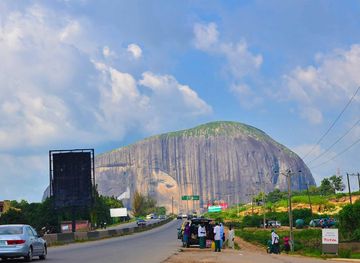
Aso Rock
Experience the breathtaking beauty and cultural significance of Aso Rock, a majestic natural landmark in Abuja, Nigeria's capital city.
-
Park
Solomon Lar Amusement Park
Explore family fun at Solomon Lar Amusement Park in Jos, Nigeria—a perfect blend of adventure, relaxation, and vibrant entertainment.
-
Tourist attraction
Usi Kwo Kwo Kwo Caves Koton-Karfe
Discover the stunning Usi Kwo Kwo Kwo Caves in Kogi State, a breathtaking natural wonder perfect for hiking and exploration.
-
Tourist attraction
Niger/Benue River Confluence
Discover the breathtaking beauty where the Niger and Benue Rivers meet, a serene escape into nature's wonder in Lokoja, Nigeria.


Best landmarks in North West
The ancient walls and gates of Kano are among the North West’s most recognisable physical reminders of the Hausa city-state era, even though modern development now surrounds and interrupts parts of the original defensive system. Within Kano’s historic core, the Gidan Makama Museum occupies a traditional palace complex and helps explain the city’s emirate, craft and cultural history. The Gobarau Minaret in Katsina is a prominent surviving monument associated with the city’s Islamic scholarly tradition and early mosque culture. Sokoto’s Sultan Bello Mosque and the institutional presence of the Sultanate express the city’s importance as the spiritual centre of the Sokoto Caliphate, although access and photography should be confirmed locally. In Daura, the Kusugu Well is connected with Hausa origin traditions and remains a significant cultural reference point. Kaduna’s landscape includes rocky formations and historic institutional architecture, while the wider state is linked to the archaeological legacy of Nok terracotta. These landmarks are best understood as parts of living cities and communities rather than isolated museum pieces.
-
National park
Freedom Park Lagos
Explore the lush landscapes and rich history of Freedom Park Lagos, a remarkable national park that offers a serene escape in the heart of the city.
-
National park
Yankari Game Reserve
Explore the breathtaking Yankari Game Reserve, Nigeria's premier national park known for wildlife, hot springs, and rich cultural heritage.
-
Historical landmark
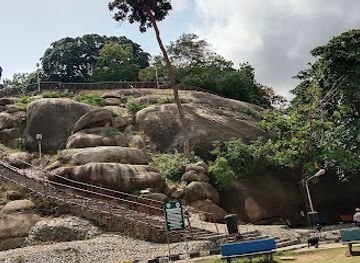
Olumo Rock Tourist Centre
Discover the historical and cultural essence of Nigeria at the breathtaking Olumo Rock Tourist Centre in Abeokuta, where nature meets heritage.
-
Tourist attraction
Gurara Waterfalls
Discover the breathtaking beauty of Gurara Waterfalls, a stunning natural wonder in Niger State, perfect for hiking and serene escapes into nature.



Explore North West on the map
Plan your trip on one map. See where the top cities, national parks and sights are, and book hotels and experiences in a few clicks.
Best hotels in North West
Best restaurants in North West
Dining in North West Nigeria centres on Hausa and wider northern Nigerian cooking, with dishes built around millet, sorghum, rice, beans, meat and richly seasoned soups. Tuwo, a soft grain-based accompaniment served with soups, is common in many communities, while masa rice cakes and kosai bean fritters are popular breakfast or snack foods. Suya and other grilled meats are widely available, although preparation and seasoning vary by city. In Kano, Kaduna and Sokoto, visitors will find a broader range of restaurants, cafés and hotel dining rooms, while smaller towns rely more heavily on local eateries, food stalls and household-style cooking. Markets can be useful for seeing grains, spices, dried foods and seasonal produce, but hygiene standards vary and visitors should choose busy outlets with good food turnover. Tea, ginger drinks and locally prepared non-alcoholic beverages are common, and menus may reflect the region’s predominantly Muslim culture. Alcohol availability is likely to be restricted or absent in many venues, especially in conservative areas.
-
West African
Farmcity Lekki lounge
Experience the best of West African cuisine at Farmcity Lekki Lounge—where vibrant flavors meet lively atmosphere in Lagos.
-
Restaurant
Cactus Restaurant
Experience the best of Nigerian cuisine at Cactus Restaurant on Victoria Island – where delicious food meets vibrant atmosphere.
-
Restaurant
BluCabana Restaurant & Cafe
Discover a culinary haven at BluCabana Restaurant & Cafe in Abuja – where diverse flavors meet exceptional service.
-
West African
Jevinik Restaurant
Experience authentic West African cuisine at Jevinik Restaurant in Abuja—where vibrant flavors meet warm hospitality.


Best bars in North West
Nightlife in North West Nigeria is generally quieter and more locally focused than in Lagos or Abuja. In Kano, Kaduna and other larger cities, evening activity centres on restaurants, cafés, hotel lounges, tea spots, private social gatherings and occasional live entertainment rather than a dense nightclub scene. Kaduna has a comparatively broad mix of contemporary restaurants and cultural venues, while Kano and Sokoto offer more conservative evening environments shaped by local religious and social norms. Alcohol is restricted or unavailable in many places, particularly in predominantly Muslim communities, and visitors should not assume that a western-style bar scene exists. Traditional tea culture, late meals, conversation and market activity often form a larger part of urban evenings. Security considerations are important: avoid isolated streets, confirm transport arrangements before going out, and follow local advice about safe evening movement, especially outside established city centres.
-
Bar
Sailors Lounge | Restaurant | Lounge | Bar in Lekki Lagos
Experience the vibrant fusion of dining and nightlife at Sailor's Lounge in Lekki, Lagos, where every moment is a celebration.
-
Lounge
Beer Barn Abuja
Experience the lively nightlife and vibrant atmosphere at Beer Barn Abuja, the ultimate lounge and sports bar for locals and tourists alike.
-
Lounge
Pub69 Lounge
Experience the vibrant nightlife at Pub69 Lounge in Abuja, where delicious cuisine and a lively atmosphere await every visitor.
-
Bar
W Bar Lounge
Experience the vibrant nightlife of Lagos at W Bar Lounge, where exquisite cocktails and stunning skyline views create unforgettable moments.


Best nightclubs in North West
Nightlife in North West Nigeria is generally quieter and more locally focused than in Lagos or Abuja. In Kano, Kaduna and other larger cities, evening activity centres on restaurants, cafés, hotel lounges, tea spots, private social gatherings and occasional live entertainment rather than a dense nightclub scene. Kaduna has a comparatively broad mix of contemporary restaurants and cultural venues, while Kano and Sokoto offer more conservative evening environments shaped by local religious and social norms. Alcohol is restricted or unavailable in many places, particularly in predominantly Muslim communities, and visitors should not assume that a western-style bar scene exists. Traditional tea culture, late meals, conversation and market activity often form a larger part of urban evenings. Security considerations are important: avoid isolated streets, confirm transport arrangements before going out, and follow local advice about safe evening movement, especially outside established city centres.
-
Disco club
Silverfox - Luxury Adult Entertainment Club
Discover luxury and vibrant nightlife at Silverfox, Lagos' premier adult entertainment club, offering unforgettable performances and exquisite cocktails.
-
Night club
Tokyo Nightlife Abuja
Discover the thrilling blend of nightlife and dining at Tokyo Nightlife Abuja, where vibrant experiences await in Nigeria's capital.
-
Night club
Avatar Hush Lounge and Nightclub
Discover the pulsating nightlife of Abuja at Avatar Hush Lounge and Nightclub, where great music and vibrant atmosphere meet for an unforgettable experience.
-
Night club
Club Quilox
Dive into the electrifying nightlife of Lagos at Club Quilox, where vibrant music and luxurious ambience create unforgettable memories.



Best shops in North West
Shopping in North West Nigeria is closely connected with markets, craft production and regional commerce. Kano is the most prominent centre for textiles, leather goods, traditional clothing, grains, spices and household merchandise, with the old commercial districts offering a sense of the city’s historic trading role. Indigo-dyed cloth, embroidered garments, woven materials, sandals, bags and metalwork can be found in different markets across the region, although quality and provenance vary. Kaduna provides a more mixed urban retail environment with modern shops, craft outlets and food retailers, while Sokoto, Katsina, Birnin Kebbi and other state capitals have busy markets serving local communities. Visitors interested in crafts should compare workmanship, ask about materials and negotiate politely rather than assuming that every item is locally made. Regional food products such as dried grains, spices, nuts and packaged snacks are practical purchases, but check labelling and customs rules before taking agricultural products abroad. Opening arrangements and market conditions can change, so local guidance is useful.
-
Shopping mall
Dunes Center
Discover the Dunes Center: Abuja's premier shopping mall featuring local cuisine, international brands, and vibrant cultural experiences.
-
Department store
Exclusive Stores
Explore Exclusive Stores in Abuja for a unique shopping experience blending luxury and affordability, perfect for every tourist's needs.
-
Shopping mall
Park N' Shop
Discover the vibrant shopping scene at Park N' Shop in Abuja, where local flavors meet international brands in a lively atmosphere.
-
Department store
Temple Muse Lagos
Discover the essence of luxury shopping at Temple Muse Lagos, where fashion meets culture and elegance reigns.


Get your free copy of our complete guide to North West, delivered straight to you.
Everything on this page, from attractions and restaurants to essentials and local phrases, in one PDF you can read offline, print or share.
Already have an account? Sign in
Your North West guide is ready.
We'll send it to · Not you? Sign out

Getting your guide ready…
We are putting together a fresh copy of the North West guide. This can take up to a minute.
This can take a few moments. If your browser asks, choose Allow so the download can start. You'll find the guide in your Downloads folder.
Nothing happened? Download it again
Sorry, the guide is taking longer than usual. Please try again in a minute, or get it by email instead.
North West essentials
Currency and Payment
Safety
Emergency Situations
Do's and Don'ts
Local Tips
From Eve
Local phrases worth knowing
You don't need to get them perfect. A few words go a long way, and locals appreciate the effort.
Basics
| English | Local | Say it |
|---|---|---|
| Hello | Sannu | [sahn-noo] |
| Goodbye | Sai | [sigh] |
| Yes | Iya | [ee-yah] |
| No | A'a | [ah-ah] |
| Please/You’re welcome | Don Allah | [dawn ah-lah] |
| Thank you | Na gode | [nah goh-deh] |
| Excuse me/Sorry | Yi hakuri | [yee hah-koo-ree] |
| How are you? | Lafiya lau? | [lah-fee-yah lah-oo] |
| Fine. And you? | Lafiya. Kai fa? | [lah-fee-yah. kai fah] |
| Do you speak English? | Shin kana jin Turanci? | [sheen kah-nah jeen too-ran-chee] |
| I don't understand | Ban gane ba | [bahn gah-neh bah] |
Eating & Drinking
| English | Local | Say it |
|---|---|---|
| I’d like to see the menu, please | Zan so in ga menu, don Allah | [zahn soh in gah meh-noo, dawn ah-lah] |
| I don’t eat meat | Ban ci nama | [bahn chee nah-mah] |
| Cheers! | Lafiya | [lah-fee-yah] |
| I would like to pay, please | Zan so in biya, don Allah | [zahn soh in bee-yah, dawn ah-lah] |
Emergencies
| English | Local | Say it |
|---|---|---|
| Help! | Taimako! | [tie-mah-koh] |
| Go away! | Tafi! | [tah-fee] |
| Call the Police! | Kira 'yan sanda! | [kee-rah 'yan sahn-dah] |
| Call a doctor! | Kira likita! | [kee-rah lee-kee-tah] |
| I’m lost | Na bace | [nah bah-cheh] |
| I’m ill | Ina jin ciwo | [ee-nah jeen chee-woh] |
Shopping
| English | Local | Say it |
|---|---|---|
| I’d like to buy... | Zan so in sayi... | [zahn soh in sah-yee] |
| I’m just looking | Ni kawai ina kallo | [nee kah-wah-ee ee-nah kah-loh] |
| How much is it? | Nawa ne? | [nah-wah neh] |
| That’s too expensive | Wannan yana da tsada | [wahn-nahn yah-nah dah tsah-dah] |
| Can you lower the price? | Za ka rage farashin? | [zah kah rah-geh fah-rah-sheen] |
Time & Numbers
| English | Local | Say it |
|---|---|---|
| What time is it? | Wane lokaci ne? | [wah-neh loh-kah-chee neh] |
| It’s one o’clock | Karfe daya | [kar-feh dah-yah] |
| Half past (10) | Rabi (10) | [rah-bee (10)] |
| Morning | Safiya | [sah-fee-yah] |
| Afternoon | Yamma | [yah-mah] |
| Evening | Yamma | [yah-mah] |
| Yesterday | Jiya | [jee-yah] |
| Today | Yau | [yah-oo] |
| Tomorrow | Gobe | [goh-beh] |
| 1 | Daya | [dah-yah] |
| 2 | Biyu | [bee-yoo] |
| 3 | Uku | [oo-koo] |
| 4 | Hudu | [hoo-doo] |
| 5 | Biyar | [bee-yahr] |
| 6 | Shida | [shee-dah] |
| 7 | Bakwai | [bah-kwhy] |
| 8 | Takwas | [tah-kwahs] |
| 9 | Tara | [tah-rah] |
| 10 | Goma | [goh-mah] |
Transport & Directions
| English | Local | Say it |
|---|---|---|
| Where's a/the...? | Ina ...? | [ee-nah ...?] |
| What's the address? | Menene adireshin? | [meh-neh-neh ah-dee-reh-sheen] |
| Can you show me (on the map)? | Za ka nuna min (a taswira)? | [zah kah noo-nah meen (ah tahs-we-rah)?] |
| When's the next (bus)? | Yaushe ne na gaba (busa)? | [yah-oo-sheh neh nah gah-bah (boo-sah)?] |
| A ticket (to ....) | Tikit (zuwa ...) | [tee-kit (zoo-wah ...)] |
History of North West
Early Sahelian and Nok Cultural Traditions
North West Nigeria occupies a zone where farming, pastoralism and long-distance exchange developed across the savannah and Sahel. Kaduna State is associated with the Nok cultural tradition, celebrated for terracotta sculpture dating broadly from the first millennium BC into the early first millennium AD. Archaeological research has shown that communities in this wider area possessed sophisticated knowledge of ironworking and artistic production. Much of the archaeological record is dispersed and not arranged for routine tourism, but Nok heritage remains important to the cultural history of northern Nigeria and is represented through museums, research and regional interpretation.
Hausa City-States and Trans-Saharan Trade
From the medieval period, Hausa-speaking city-states including Kano, Katsina, Zazzau, Daura and Gobir grew through agriculture, craft production and trade. Kano and Katsina became particularly important centres linking the region with routes across the Sahara and with communities farther south. Their economies supported leatherworking, weaving, dyeing, metalwork and Islamic scholarship. The old urban quarters, market traditions and emirate institutions visible in parts of the North West reflect this long period of political competition and commercial exchange, although modern cities have expanded far beyond their historic cores.
The Rise of Zazzau and the Walled Cities
Zazzau, with its capital at Zaria, became one of the most influential Hausa polities in the central part of the region. Its history is associated with military expansion, agricultural production and the development of fortified settlements. Kano and other major cities also constructed substantial walls and gates, combining defence with control of movement and trade. In contemporary North West Nigeria, surviving walls, gates, old quarters and emirate institutions provide physical reminders of the political organisation of the pre-colonial Hausa states, even where only sections of the original structures remain.
The Sokoto Jihad and Caliphate, 1804–1903
The reform movement led by Usman dan Fodio from 1804 transformed political and religious life across much of northern Nigeria. It established the Sokoto Caliphate, a large network of emirates governed through Islamic scholarship and political administration. Sokoto became the caliphate’s spiritual centre, while states such as Kano, Katsina and Kebbi were drawn into its wider political world in different ways. The legacy survives in the authority of the Sultanate, Islamic learning, emirate institutions and the architectural and intellectual heritage associated with Sokoto and other historic cities.
Colonial Rule and the Northern Protectorate
British conquest and administrative consolidation in the early twentieth century brought the region into the Northern Nigeria Protectorate and later the Colony and Protectorate of Nigeria. Colonial authorities often governed through existing emirate structures while introducing new systems of taxation, courts, communications and education. Railways and roads strengthened links between inland cities and southern ports, while Kaduna became an important administrative and transport centre. This period altered patterns of authority and commerce without erasing older institutions, producing the layered urban and political landscape visible across the North West today.
Independence, Regional Reorganisation and Urban Growth
After Nigerian independence in 1960, northern cities expanded rapidly as administrative, educational and commercial centres. Kaduna served for decades as a major regional capital, while Kano developed into a manufacturing and trading powerhouse. The creation of new states progressively separated the former Northern Region into smaller administrative units, including the seven states now commonly grouped as North West Nigeria. Population growth, modern transport, universities, industry and migration have reshaped the region, although agriculture, livestock, open-air markets and religious institutions remain central to everyday economic life.
Contemporary Cultural and Economic Change
The modern North West combines strong Hausa cultural continuity with substantial social and economic change. Traditional textiles, leatherwork, farming and livestock trading coexist with manufacturing, telecommunications, higher education and expanding urban markets. Cities such as Kano, Kaduna and Sokoto have become centres for media, scholarship and public administration, while smaller towns retain important craft and agricultural roles. Security challenges, climate pressure, uneven infrastructure and rapid population growth affect how the region is travelled and experienced, making current local knowledge essential for visitors.
North West in Photos
Browse through our photo collection highlighting the charm and character of the destination.
Neighbouring regions of North West
The closest regions to North West, if you have time for more than one.
-

-

-

-

-


Swipe for more regions
Explore more
Explore more of Nigeria
Discover Nigeria: A Land of Vibrant Cultures, Stunning Landscapes, and Rich History in the Heart of Africa.
Explore Nigeria