

Free Azad Jammu and Kashmir Travel Guide & Mobile App
Explore Azad Jammu and Kashmir with free travel guides. Discover regional history, expert tips, proposed trips, and audio guides on web or mobile app.


Explore Azad Jammu and Kashmir for forested valleys, river journeys, mountain lakes, Kashmiri heritage and highland villages near Muzaffarabad.
Read more about Azad Jammu and Kashmir
When is the best time to visit Azad Jammu and Kashmir?
Best: April–May, October · 24–30°C| Month | High (°C) | Rainfall (mm) |
|---|---|---|
| January | 13 | 80 |
| February | 14 | 70 |
| March | 20 | 60 |
| April (best) | 24 | 50 |
| May (best) | 30 | 40 |
| June | 34 | 30 |
| July | 35 | 90 |
| August | 34 | 80 |
| September | 31 | 50 |
| October (best) | 24 | 40 |
| November | 17 | 50 |
| December | 13 | 60 |
Getting to and around Azad Jammu and Kashmir
How to get there
Transportation
Top city travel guides in Azad Jammu and Kashmir
The cities of Azad Jammu and Kashmir, and the easiest places to base yourself.
-

-

-

-

-

-


Swipe for more cities
Destinations in Azad Jammu and Kashmir
Resorts, valleys and scenic spots worth a trip of their own.
-

-

-

-

-


Swipe for more destinations
Best attractions in Azad Jammu and Kashmir
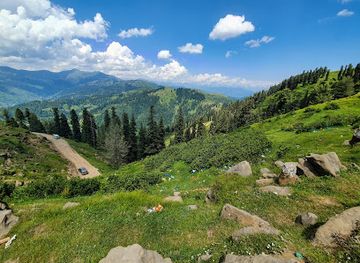
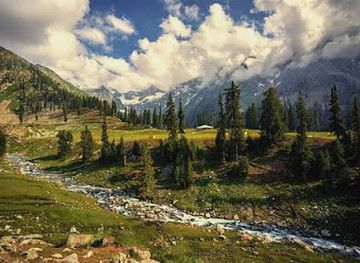
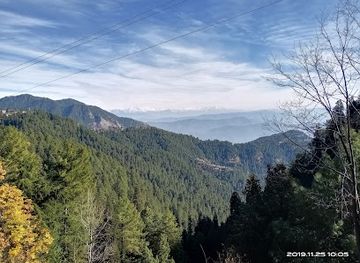
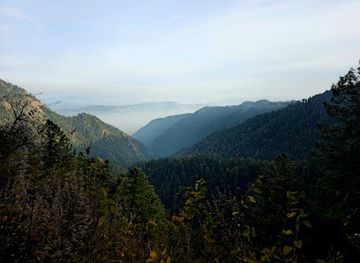
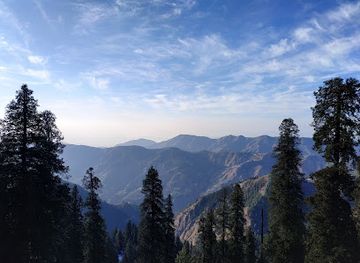
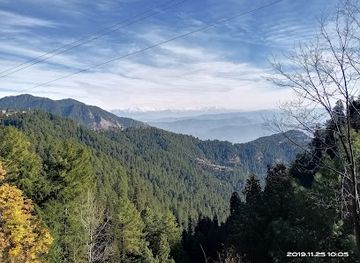
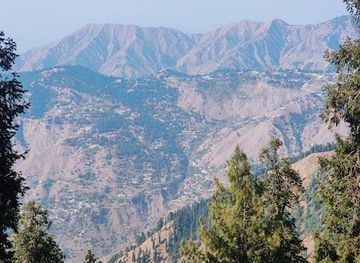
Azad Jammu and Kashmir's attractions are primarily landscape-based and spread along difficult but rewarding mountain roads. Muzaffarabad offers river scenery, viewpoints and the historic Red Fort, while the Neelum Valley provides a changing sequence of wooded slopes, villages, streams and high-altitude routes. Travellers seeking more demanding scenery can plan excursions towards alpine lakes such as Ratti Gali, subject to seasonal road and trail conditions. Around Rawalakot and Bagh, pine hills, meadows and upland viewpoints create opportunities for walking, picnicking and photography, with Toli Pir among the better-known highland destinations. The Jhelum Valley and Leepa Valley add river journeys, terraced agriculture and traditional rural settlements, while Mirpur's surroundings include the broad waters and engineered landscape associated with Mangla Dam. Historic forts, mosques, shrines and older village buildings provide cultural context, though the region has fewer formal museums and large visitor complexes than Pakistan's major cities. Outdoor activities should be approached with local guidance, since trail marking, accommodation, road access and rescue facilities can be limited away from principal towns.
-
Tourist attraction
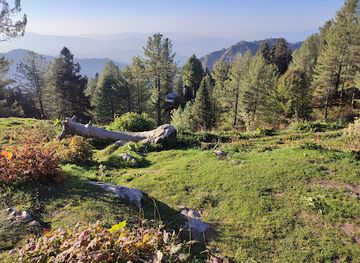
Toli Peer
Experience breathtaking views and serene nature at Toli Peer, a picturesque hill station perfect for hiking and relaxation in Pakistan.
-
Tourist attraction
Pir Chinasi
Discover the breathtaking beauty of Pir Chinasi, a serene hilltop retreat in Azad Jammu and Kashmir, perfect for nature lovers and adventure seekers.
-
Tourist attraction
Ayubia Motto Tunnel
Explore the historic Ayubia Motto Tunnel, a scenic gem in Khyber Pakhtunkhwa, offering breathtaking views and a glimpse into the region's rich heritage.
-
Ayubia Park Mountain Top
Explore the breathtaking beauty of Ayubia Park Mountain Top, a serene getaway in Khyber Pakhtunkhwa, perfect for nature lovers and adventure seekers.
Best landmarks in Azad Jammu and Kashmir
Muzaffarabad's Red Fort, also called Muzaffarabad Fort, is the region's most recognisable historic structure. Built during the period of Dogra rule, it occupies a strategic position above the city and reflects the importance of controlling the river corridors and routes through the western Kashmir hills. The confluence of the Jhelum and Neelum rivers is a major geographical landmark, giving Muzaffarabad its distinctive setting. In the Neelum Valley, the river itself becomes the defining feature, threading between steep wooded slopes and settlements; high routes towards Ratti Gali lead into a more austere alpine landscape of meadows and mountain water. Mangla Dam and its reservoir form the most prominent engineered landmark around Mirpur, transforming the Jhelum Valley into a broad body of water and shaping local economic and social geography. The wooded ridges and open summit landscapes around Toli Pir represent the Poonch uplands, while the narrow, cultivated valley of Leepa illustrates how communities have adapted architecture and agriculture to difficult mountain terrain. These places are significant not only for their visual character but also for the historical, environmental and infrastructural forces they reveal.
-
Monument
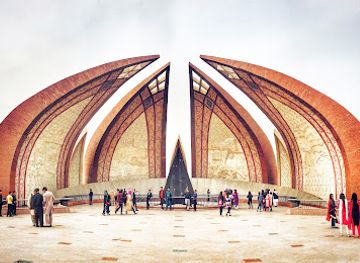
Pakistan Monument
Discover the Pakistan Monument, a stunning symbol of national unity and heritage nestled in the scenic Shakarparian Hills of Islamabad.
-
Tourist attraction
Thandiani Top
Explore the serene beauty of Thandiani Top, a hidden gem in Abbottabad, Khyber Pakhtunkhwa, perfect for nature lovers and adventure seekers.
-
Tourist attraction
Toli Peer
Discover the breathtaking beauty of Toli Peer, a serene hill station in Azad Kashmir, perfect for hiking and nature lovers.
-
Hiking area
Pipeline Track Starting Point
Discover breathtaking views and lush landscapes at the Pipeline Track Starting Point in Dunga Gali, a top hiking destination in Pakistan's Ayubia National Park.
Explore Azad Jammu and Kashmir on the map
Plan your trip on one map. See where the top cities, national parks and sights are, and book hotels and experiences in a few clicks.
Best hotels in Azad Jammu and Kashmir
Best restaurants in Azad Jammu and Kashmir
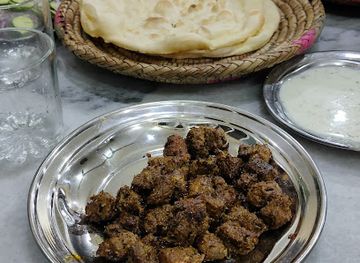
Dining in Azad Jammu and Kashmir is centred on home-style Kashmiri, Pahari and broader Pakistani cooking rather than a sharply separated restaurant tradition. In Muzaffarabad, Mirpur, Rawalakot and Bagh, visitors will find cafés, family restaurants and roadside establishments serving rice dishes, curries, lentils, grilled meats, breads and tea. Regional meals may include meat preparations, seasonal vegetables and rice-based dishes influenced by the wider Kashmir and northern Pakistani culinary world, while chapati and other breads remain everyday staples. Walnuts, apples, honey and other orchard products are associated with upland districts, although availability follows the seasons. Smaller valleys have fewer choices and may rely on guesthouse meals or simple roadside food, so dietary requirements should be explained clearly and in advance. Alcohol is not part of ordinary public dining culture, and visitors should expect conservative settings in many communities. Tea, including milk tea, is widely available, while local produce markets offer a practical way to see the relationship between mountain agriculture and daily food.
-
National park
Ayubia National Park
Experience breathtaking landscapes and rich biodiversity at Ayubia National Park in Khyber Pakhtunkhwa, Pakistan.
-
Fast Food
Sweettooth Mushkpuri
Discover Sweettooth Mushkpuri: Where fast food meets stunning mountain views in Abbottabad's serene landscape.
-
Restaurant
Pakistan Hotel, Muzaffarabad AK, Pakistan
Discover authentic Pakistani cuisine at Pakistan Hotel in Muzaffarabad - renowned for its delicious Baqar Khani and warm hospitality.
-
 Hotel
HotelPTDC Motel Ayubia
Experience nature's beauty at PTDC Motel Ayubia – your gateway to adventure in Khyber Pakhtunkhwa's lush landscapes.
Best bars in Azad Jammu and Kashmir
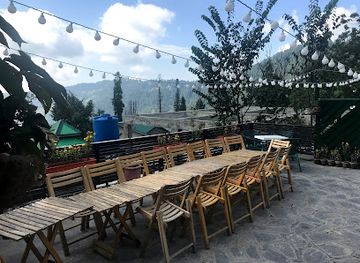
Azad Jammu and Kashmir does not have a conventional bar or nightclub scene. Evening life is concentrated in family restaurants, tea stalls, cafés, hotel dining rooms and private social gatherings, especially in Muzaffarabad, Mirpur, Rawalakot and Bagh. Some towns have modest cafés where younger residents meet, but opening arrangements and atmosphere vary, and alcohol is not a normal feature of public nightlife. In rural valleys, darkness arrives quickly and evenings are generally quiet, shaped by guesthouse meals, conversation, television and clear mountain skies rather than organised entertainment. Visitors should avoid assuming that music, photography or late-night socialising is welcome in every setting, particularly near religious places or conservative villages. Seasonal tourism can bring more activity to popular valley stops, but it remains small-scale and locally oriented rather than comparable with the nightlife of Pakistan's largest cities.
-
National park
Ayubia National Park
Discover the breathtaking landscapes and diverse wildlife of Ayubia National Park, a true gem in the heart of Pakistan's Khyber Pakhtunkhwa region.
-
Hotel
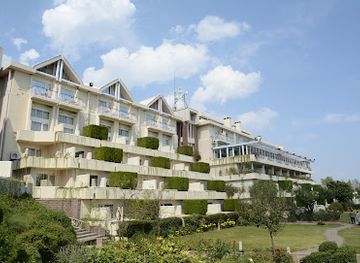
Pearl-Continental Hotel Bhurban
Discover luxury and tranquility at Pearl-Continental Hotel Bhurban, a premier resort offering breathtaking views and world-class amenities in Pakistan.
-
Hotel
Pearl Continental Muzaffarabad
Discover the luxurious Pearl Continental Muzaffarabad, where breathtaking views and top-notch services await you in the heart of Azad Jammu and Kashmir.
-
Tourist attraction
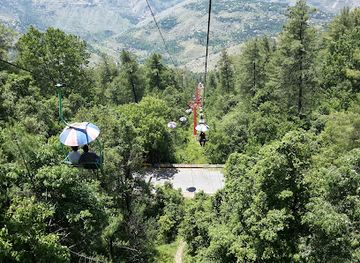
Pindi Point Chair Lift Murree
Discover the breathtaking views of Murree from the Pindi Point Chair Lift, an unforgettable experience amidst Pakistan's stunning landscapes.
Best nightclubs in Azad Jammu and Kashmir
Azad Jammu and Kashmir does not have a conventional bar or nightclub scene. Evening life is concentrated in family restaurants, tea stalls, cafés, hotel dining rooms and private social gatherings, especially in Muzaffarabad, Mirpur, Rawalakot and Bagh. Some towns have modest cafés where younger residents meet, but opening arrangements and atmosphere vary, and alcohol is not a normal feature of public nightlife. In rural valleys, darkness arrives quickly and evenings are generally quiet, shaped by guesthouse meals, conversation, television and clear mountain skies rather than organised entertainment. Visitors should avoid assuming that music, photography or late-night socialising is welcome in every setting, particularly near religious places or conservative villages. Seasonal tourism can bring more activity to popular valley stops, but it remains small-scale and locally oriented rather than comparable with the nightlife of Pakistan's largest cities.
-
National park
Ayubia National Park
Explore the breathtaking landscapes and diverse wildlife of Ayubia National Park in Khyber Pakhtunkhwa, Pakistan - a haven for nature lovers.
-
Hotel
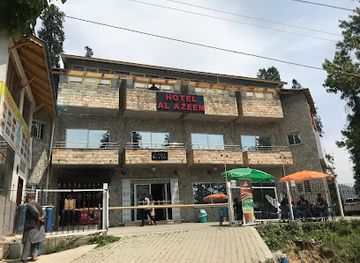
Hotel Al Azeem
Discover the charm of Hotel Al Azeem in Ayubia, where nature meets comfort in a tranquil hillside retreat.
-
Hiking area
Pipeline Track Starting Point
Discover the beauty of nature and adventure at the Pipeline Track Starting Point in Ayubia National Park, Khyber Pakhtunkhwa.
-
Amusement park
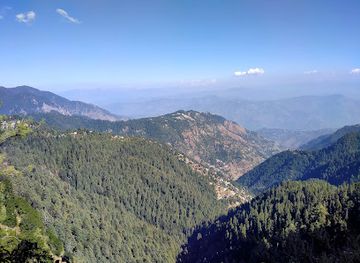
Ayubia Park Mountain Top
Discover the natural beauty and adventure of Ayubia Park Mountain Top, a perfect escape for nature lovers and families in Khyber Pakhtunkhwa.
Best shops in Azad Jammu and Kashmir
Shopping in Azad Jammu and Kashmir is most useful for local food products, practical mountain goods and small-scale handicrafts rather than luxury retail. Muzaffarabad, Mirpur, Rawalakot and Bagh have the broadest selection of clothing, household goods, mobile phones and everyday produce, while smaller valley bazaars serve local communities with a more limited range. Walnuts, honey, dried fruit, apples when in season and regional spices can make suitable edible purchases, provided they are packed for travel. Visitors may also find embroidered textiles, shawls, woven items and carved or handmade objects, although quality and provenance vary, so buying directly from makers or reputable shops is preferable. Market bargaining is common in some independent bazaars but should remain courteous. Rural markets are practical places to observe local commerce, yet they are not generally arranged as tourist shopping districts; cash, smaller notes and durable bags are useful. Avoid purchasing archaeological objects, wildlife products or anything that appears to have been removed from a historic or natural site.
-
National park
Ayubia National Park
Explore the tranquil beauty and diverse wildlife of Ayubia National Park, a must-visit gem in Khyber Pakhtunkhwa, Pakistan.
-
Amusement park
Ayubia Park Mountain Top
Discover the beauty and thrill of Ayubia Park Mountain Top - a perfect blend of nature and adventure in Khyber Pakhtunkhwa, Pakistan.
-
Market
Barian Bazar
Discover the charm of Barian Bazar in Murree, where vibrant markets meet rich local culture and exquisite shopping experiences await.
-
Shopping mall
Azad Mega Mart
Discover the ultimate shopping experience at Azad Mega Mart, where local charm meets modern retail in New Mirpur City.
Get your free copy of our complete guide to Azad Jammu and Kashmir, delivered straight to you.
Everything on this page, from attractions and restaurants to essentials and local phrases, in one PDF you can read offline, print or share.
Already have an account? Sign in
Your Azad Jammu and Kashmir guide is ready.
We'll send it to · Not you? Sign out

Getting your guide ready…
We are putting together a fresh copy of the Azad Jammu and Kashmir guide. This can take up to a minute.
This can take a few moments. If your browser asks, choose Allow so the download can start. You'll find the guide in your Downloads folder.
Nothing happened? Download it again
Sorry, the guide is taking longer than usual. Please try again in a minute, or get it by email instead.
Azad Jammu and Kashmir essentials
Currency and Payment
Safety
Emergency Situations
Do's and Don'ts
Local Tips
From Eve
Local phrases worth knowing
You don't need to get them perfect. A few words go a long way, and locals appreciate the effort.
Basics
| English | Local | Say it |
|---|---|---|
| Hello | السلام علیکم | [Assalam Alaikum] |
| Goodbye | الوداع | [Alvida] |
| Yes | جی ہاں | [Ji Haan] |
| No | نہیں | [Nahin] |
| Please/You're welcome | براہ کرم/خوش آمدید | [Barah-e-Karam/Khosh Aamdeed] |
| Thank you | شکریہ | [Shukriya] |
| Excuse me/Sorry | معاف کیجیے/معاف کریں | [Maaf Kijiye/Maaf Karein] |
| How are you? | آپ کیسے ہیں؟ | [Aap Kaise Hain?] |
| Fine. And you? | ٹھیک ہوں۔ اور آپ؟ | [Theek Hoon. Aur Aap?] |
| Do you speak English? | کیا آپ انگریزی بولتے ہیں؟ | [Kya Aap Angrezi Bolte Hain?] |
| I don't understand | مجھے سمجھ نہیں آئی | [Mujhe Samajh Nahin Aayi] |
Eating & Drinking
| English | Local | Say it |
|---|---|---|
| I'd like to see the menu, please | براہ کرم مینو دکھائیں | [Barah-e-Karam Menu Dikhain] |
| I don't eat meat | میں گوشت نہیں کھاتا | [Main Gosht Nahin Khata] |
| Cheers! | چیرز! | [Cheers!] |
| I would like to pay, please | براہ کرم میں بل ادا کرنا چاہتا ہوں | [Barah-e-Karam Main Bill Ada Karna Chahta Hoon] |
Emergencies
| English | Local | Say it |
|---|---|---|
| Help! | مدد! | [Madad!] |
| Go away! | چلے جاؤ! | [Chalay Jao!] |
| Call the Police! | پولیس کو بلائیں! | [Police Ko Bulain!] |
| Call a doctor! | ڈاکٹر کو بلائیں! | [Doctor Ko Bulain!] |
| I'm lost | میں کھو گیا ہوں | [Main Kho Gaya Hoon] |
| I'm ill | میں بیمار ہوں | [Main Bimar Hoon] |
Shopping
| English | Local | Say it |
|---|---|---|
| I'd like to buy... | میں خریدنا چاہتا ہوں... | [Main Khareedna Chahta Hoon...] |
| I'm just looking | میں صرف دیکھ رہا ہوں | [Main Sirf Dekh Raha Hoon] |
| How much is it? | یہ کتنے کا ہے؟ | [Yeh Kitne Ka Hai?] |
| That's too expensive | یہ بہت مہنگا ہے | [Yeh Bohat Mehnga Hai] |
| Can you lower the price? | کیا آپ قیمت کم کر سکتے ہیں؟ | [Kya Aap Qeemat Kam Kar Sakte Hain?] |
Time & Numbers
| English | Local | Say it |
|---|---|---|
| What time is it? | کیا وقت ہوا ہے؟ | [Kya Waqt Hua Hai?] |
| It's one o'clock | یہ ایک بجے ہیں | [Yeh Aik Baje Hain] |
| Half past (10) | ساڑھے (10) | [Saadhe (10)] |
| Morning | صبح | [Subah] |
| Afternoon | دوپہر | [Dopahar] |
| Evening | شام | [Shaam] |
| Yesterday | کل | [Kal] |
| Today | آج | [Aaj] |
| Tomorrow | کل | [Kal] |
| 1 | 1 | [1] |
| 2 | 2 | [2] |
| 3 | 3 | [3] |
| 4 | 4 | [4] |
| 5 | 5 | [5] |
| 6 | 6 | [6] |
| 7 | 7 | [7] |
| 8 | 8 | [8] |
| 9 | 9 | [9] |
| 10 | 10 | [10] |
Transport & Directions
| English | Local | Say it |
|---|---|---|
| Where's a/the...? | کہاں ہے...؟ | [Kahan Hai...?] |
| What's the address? | پتہ کیا ہے؟ | [Pata Kya Hai?] |
| Can you show me (on the map)? | کیا آپ مجھے دکھا سکتے ہیں (نقشے پر)؟ | [Kya Aap Mujhe Dikhah Sakte Hain (Naqshe Par)?] |
| When's the next (bus)? | اگلی (بس) کب ہے؟ | [Agli (Bus) Kab Hai?] |
| A ticket (to ....) | ایک ٹکٹ (.... کے لیے) | [Aik Ticket (.... Ke Liye)] |
History of Azad Jammu and Kashmir
Early Kashmir and the Ancient Valley Civilisations
The wider Kashmir region has a long history of settlement shaped by mountain routes linking the subcontinent with the western Himalaya. Communities in the territory that is now Azad Jammu and Kashmir were influenced by the cultural and religious currents of the Kashmir Valley, including Hindu and Buddhist traditions, while local languages and hill societies developed their own identities. Archaeological and historical evidence across the wider region points to longstanding agriculture, river trade and movement through mountain passes. Although many early remains are fragmentary, the region's later political and cultural history cannot be understood without this older Kashmir setting.
Medieval Kashmir and Regional Sultanates
During the medieval period, Kashmir and its surrounding hill territories came under the influence of successive dynasties and regional powers. Islam spread through a combination of political change, trade, scholarship and Sufi traditions, while earlier religious and cultural practices continued to shape local society. Mountain valleys were never isolated completely: routes connected them with the Punjab plains, the Kashmir Valley and the highlands to the west. Fortified positions and settlements grew in importance as rulers competed for control of communications, agriculture and river corridors.
Dogra Rule and the Princely State of Jammu and Kashmir
In the nineteenth century, the Dogra dynasty consolidated a large princely state known as Jammu and Kashmir under British paramountcy. Its territories included Jammu, the Kashmir Valley, Ladakh and extensive mountain districts that now fall within different administrations. Dogra authority affected taxation, landholding, military recruitment and the movement of goods through the western hill country. Forts, administrative settlements and road links associated with this period remain part of the historical landscape around places such as Muzaffarabad, although local experiences of Dogra rule varied considerably between communities and districts.
The 1947 Partition and Kashmir Conflict
The Partition of British India in 1947 transformed the political geography of Jammu and Kashmir. Conflict followed the princely state's accession crisis, and fighting divided the former state along a ceasefire line that later became known as the Line of Control. The territory now called Azad Jammu and Kashmir emerged under Pakistani administration, while other parts of the former princely state came under Indian administration and Chinese control. This unresolved dispute continues to influence security arrangements, travel permissions, political language and cross-border family histories throughout the region.
Muzaffarabad and the Development of a Regional Capital
Muzaffarabad developed as the administrative centre of Azad Jammu and Kashmir because of its position at the confluence of the Jhelum and Neelum rivers and on routes leading towards the northern valleys. Government offices, schools, markets and transport links expanded its importance during the twentieth century. The city retains historic traces, including Muzaffarabad's Red Fort, alongside dense modern development and neighbourhoods rebuilt or altered after natural disasters. Its role today is both administrative and commercial, serving as the principal starting point for many journeys into the surrounding mountains.
The 2005 Kashmir Earthquake and Reconstruction
On 8 October 2005, a major earthquake centred near the Kashmir region caused extensive loss of life and destruction across Azad Jammu and Kashmir, particularly around Muzaffarabad, Bagh and adjoining mountain districts. Roads, bridges, schools, hospitals and homes were damaged, and many communities faced landslides and difficult access. Reconstruction reshaped parts of the region's infrastructure and urban form, while the disaster remains central to local memory. Travellers may still encounter rebuilt public buildings, altered road alignments and memorial references to the earthquake.
Diaspora, Remittances and Contemporary Change
From the mid-twentieth century onwards, substantial migration from Azad Jammu and Kashmir to Britain and other countries created enduring family, commercial and cultural links across continents. Remittances have supported household improvements, education, businesses and new construction, particularly in towns and villages with strong overseas connections. This diaspora relationship is visible in architecture, bilingual family life and seasonal patterns of travel. At the same time, agriculture, tourism, hydropower, public services and road building continue to reshape the regional economy, with development balanced against steep terrain and environmental pressures.
Azad Jammu and Kashmir in Photos
Browse through our photo collection highlighting the charm and character of the destination.
Neighbouring regions of Azad Jammu and Kashmir
The closest regions to Azad Jammu and Kashmir, if you have time for more than one.
-

-

-

-

-


Swipe for more regions
Explore more

Explore more of Pakistan
Discover Pakistan: A land of majestic mountains, rich history, and delicious cuisine, where every journey is an adventure and every moment is filled with wonder.
Explore Pakistan