

Free Lesser Poland Travel Guide & Mobile App
Explore Lesser Poland with free travel guides. Discover regional history, expert tips, proposed trips, and audio guides on web or mobile app.


Explore Lesser Poland from Kraków’s royal heritage and salt mines to Tatra trails, Carpathian spa towns, wooden churches and regional cuisine.
Read more about Lesser Poland
When is the best time to visit Lesser Poland?
Best: June–August · 23–25°C| Month | High (°C) | Rainfall (mm) |
|---|---|---|
| January | 2 | 30 |
| February | 4 | 30 |
| March | 9 | 40 |
| April | 14 | 50 |
| May | 19 | 60 |
| June (best) | 23 | 70 |
| July (best) | 25 | 80 |
| August (best) | 24 | 70 |
| September | 20 | 60 |
| October | 14 | 50 |
| November | 7 | 40 |
| December | 3 | 30 |
Getting to and around Lesser Poland
How to get there
Transportation
Top city travel guides in Lesser Poland
The cities of Lesser Poland, and the easiest places to base yourself.
-
-

-

-

-
-


Swipe for more cities
Destinations in Lesser Poland
Resorts, valleys and scenic spots worth a trip of their own.
-

-

-

-

-

-


Swipe for more destinations
Best attractions in Lesser Poland
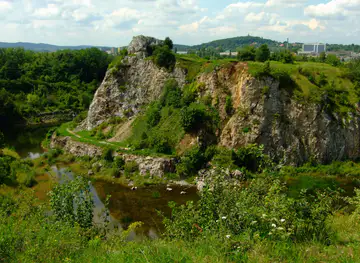
Lesser Poland combines major historic institutions with varied outdoor landscapes. Kraków’s Wawel Royal Castle, Old Town and Kazimierz form the region’s most concentrated cultural offering, while museums and galleries broaden the city’s appeal beyond its architecture. Underground, the Wieliczka and Bochnia salt mines explain the economic importance of salt extraction through chambers, shafts and mining displays. To the west, the Auschwitz-Birkenau State Museum near Oświęcim is a place of historical education and remembrance rather than conventional tourism. The region’s national parks provide a contrasting experience: Tatra National Park offers high mountain trails and glacial lakes, Pieniny National Park is associated with the Dunajec Gorge and limestone summits, and Ojców National Park protects wooded valleys, caves and dramatic rock formations close to Kraków. Beskid landscapes are well suited to walking, winter sports and spa visits around towns such as Krynica-Zdrój. Historic wooden churches, manor houses, open-air museums and market towns add smaller-scale cultural experiences, while rafting, cycling and scenic rail or road journeys provide ways to connect the region’s urban, agricultural and mountain districts.
-
Tourist attraction
Wawel Cathedral
Explore Wawel Cathedral, a stunning architectural gem in Kraków, showcasing Poland's rich history and spiritual heritage.
-
Tourist attraction
Polish Aviation Museum
Discover the legacy of flight at the Polish Aviation Museum in Kraków, showcasing an extraordinary collection of aircraft and aviation history.
-
Tourist attraction
Zatorland Amusement Park
Experience the ultimate family adventure at Zatorland Amusement Park, where thrills and laughter await in a magical setting.
-
Tourist attraction
Bielańsko-Tyniecki Landscape Park
Explore the serene trails and diverse wildlife of Bielańsko-Tyniecki Landscape Park, a natural haven near Kraków, perfect for outdoor adventures.


Best landmarks in Lesser Poland
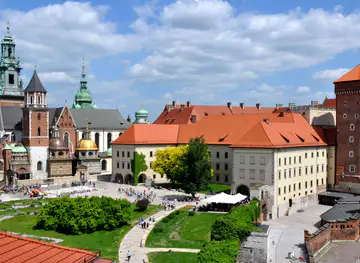
Wawel Hill and its castle, cathedral and defensive walls remain Lesser Poland’s most recognisable historic ensemble, embodying the region’s former royal role above the Vistula. Kraków’s Main Market Square, Cloth Hall and St Mary’s Basilica define the medieval urban core, while the former Jewish quarter of Kazimierz preserves synagogues, cemeteries and a distinctive street pattern. The salt mines at Wieliczka and Bochnia are remarkable subterranean landmarks built through centuries of extraction. In western Lesser Poland, the Auschwitz-Birkenau camp site is a profoundly important memorial landscape whose barracks, rail platform and preserved structures document the Holocaust. The wooden churches of southern Małopolska, including those within the region’s historic wooden church heritage, reveal a distinctive Carpathian building tradition. Natural landmarks are equally prominent: the limestone formations of Ojców, the Dunajec Gorge in the Pieniny and the Tatra’s sharply defined peaks and mountain lakes express the geological range of the voivodeship. In Zakopane, the early twentieth-century Zakopane style adds a recognisable architectural layer inspired by highland forms.
-
Plaza
Rynek Główny
Discover the vibrant heart of Kraków at Rynek Główny, where history and culture meet in Poland's largest medieval square.
-
National park
Ojcowski National Park
Explore the stunning landscapes and rich biodiversity of Ojcowski National Park, a natural gem in Poland with breathtaking trails and historical landmarks.
-
Tourist attraction
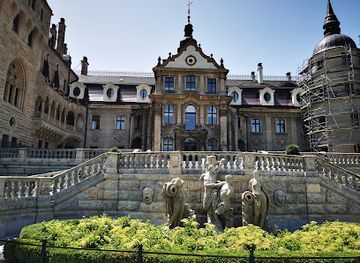
Moszna Castle
Explore the magical Moszna Castle, a stunning blend of Gothic and Renaissance architecture set in lush gardens, steeped in history and beauty.
-
Historical place
Wieliczka Salt Mine
Explore the enchanting Wieliczka Salt Mine, a UNESCO World Heritage site, featuring stunning salt sculptures and a rich history beneath the earth.



Explore Lesser Poland on the map
Plan your trip on one map. See where the top cities, national parks and sights are, and book hotels and experiences in a few clicks.
Best hotels in Lesser Poland
Best restaurants in Lesser Poland
Dining in Lesser Poland ranges from Kraków’s contemporary restaurants and traditional milk bars to mountain inns, market stalls and family-run cafés. Kraków is closely associated with obwarzanek, a boiled-and-baked ring bread sold from street stands, while soups, dumplings, breads, pickles and slow-cooked meats reflect wider Polish traditions interpreted locally. In the Podhale mountains, oscypek is the best-known smoked sheep’s-milk cheese, although visitors should distinguish the protected regional product from similar cheeses sold under informal names. Highland restaurants often serve substantial dishes suited to cold weather, including soups, potatoes and grilled or smoked specialities. Tarnów and the eastern foothills provide access to seasonal produce, bakeries and a growing number of small vineyards, while farmers’ markets across the region are useful for fruit, honey and preserves. Kraków also has Jewish culinary influences, particularly around Kazimierz, though the city’s dining scene is broader than any single tradition. Reservations are sensible for popular restaurants in the historic centre and Zakopane during peak periods.
-
Polish
Pod Wawelem Kompania Kuflowa
Experience authentic Polish cuisine at Pod Wawelem Kompania Kuflowa in Kraków - where tradition meets taste amidst historic surroundings.
-
Polish
Kuchnia u Doroty
Discover authentic Polish flavors at Kuchnia u Doroty, where tradition meets taste in the heart of Kraków.
-
Family-friendly
Szalone Widelce
Discover family-friendly dining at Szalone Widelce in Kraków – where traditional Polish cuisine meets European flair for an unforgettable culinary experience.
-
Polish
Restauracja Sukiennice
Experience authentic Polish and Czech cuisine at Restauracja Sukiennice in Kraków's historic Main Market Square.


Best bars in Lesser Poland
Kraków has Lesser Poland’s broadest evening scene, with traditional cellars, beer bars, cocktail venues, cafés, live-music rooms and late-night establishments concentrated around the Old Town and Kazimierz. The character varies from historic interiors and quiet wine bars to busy student-oriented venues, and visitors should check current arrangements rather than rely on old reputations. Zakopane offers restaurants, regional inns, hotel bars and seasonal evening entertainment, with nightlife often connected to mountain tourism rather than a large club circuit. Tarnów and other larger towns have a smaller selection of pubs, cafés and cultural venues. In rural districts, evenings generally centre on local restaurants, village pubs, accommodation bars or occasional concerts rather than purpose-built nightclubs. Breweries and craft beer bars are increasingly visible in the region, while wine tourism is developing around the foothills. Responsible drinking and consideration for residents are especially important in compact historic streets and mountain communities.
-
Bar
House of Beer
Discover the best of Kraków's craft beer scene at House of Beer, where local brews meet hearty Polish cuisine in a welcoming atmosphere.
-
Bar
BaniaLuka
Discover BaniaLuka, a vibrant bar and restaurant in Kraków, offering delightful local cuisine and a lively atmosphere for every traveler.
-
Lounge
Multi Qlti Tap Bar | Craft Beer
Experience the lively atmosphere and craft beer selection at Multi Qlti Tap Bar, a must-visit destination in Kraków's vibrant Stare Miasto.
-
Gastropub
Nowy Kraftowy
Experience the vibrant flavors of Kraków at Nowy Kraftowy, a premier gastropub offering craft beers and delicious local cuisine in a lively atmosphere.


Best nightclubs in Lesser Poland
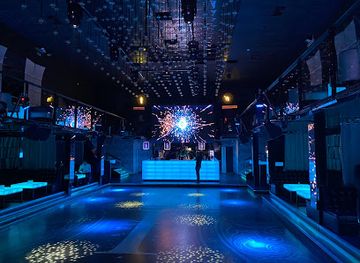
Kraków has Lesser Poland’s broadest evening scene, with traditional cellars, beer bars, cocktail venues, cafés, live-music rooms and late-night establishments concentrated around the Old Town and Kazimierz. The character varies from historic interiors and quiet wine bars to busy student-oriented venues, and visitors should check current arrangements rather than rely on old reputations. Zakopane offers restaurants, regional inns, hotel bars and seasonal evening entertainment, with nightlife often connected to mountain tourism rather than a large club circuit. Tarnów and other larger towns have a smaller selection of pubs, cafés and cultural venues. In rural districts, evenings generally centre on local restaurants, village pubs, accommodation bars or occasional concerts rather than purpose-built nightclubs. Breweries and craft beer bars are increasingly visible in the region, while wine tourism is developing around the foothills. Responsible drinking and consideration for residents are especially important in compact historic streets and mountain communities.
-
Disco club
Energy 2000 Przytkowice
Experience the vibrant nightlife at Energy 2000 Przytkowice, a premier disco club and live music venue in Poland, where unforgettable nights await.
-
Live Music
Club Jaszczury
Dive into Kraków's electrifying nightlife at Club Jaszczury, where live music, cocktails, and dancing await in a vibrant atmosphere.
-
Night club
Shine Club Kraków
Shine Club Kraków: Your ultimate destination for vibrant nightlife, exquisite cocktails, and unforgettable live music in the heart of the city.
-
Night club
Klub 30
Discover the lively atmosphere of Klub 30, Kraków's ultimate night club for cocktails, disco, and live music, perfect for a memorable night out.



Best shops in Lesser Poland
Kraków offers the region’s widest choice of shopping, from mainstream retail and department stores to independent design shops, bookshops, galleries and antique dealers around the Old Town and Kazimierz. The Cloth Hall on the Main Market Square is oriented towards visitors and is associated with amber, jewellery, textiles and souvenirs, while local food shops provide preserves, sweets, breads and regional products. Zakopane’s Krupówki area has a strongly visitor-focused retail character, with woollens, carved wood, leather goods and highland-inspired products; compare quality and provenance rather than assuming every item is locally made. In the Podhale and Beskid districts, small markets and roadside stalls sell cheese, honey, fruit and handicrafts according to season. Tarnów and other market towns provide a quieter mix of independent shops, bakeries, galleries and everyday Polish retail. Farmers’ markets are a useful way to encounter regional produce, but schedules vary, so check locally before making a special journey.
-
Shopping mall
Galeria Krakowska
Experience the best of shopping, dining, and entertainment at Galeria Krakowska, the heart of Kraków's retail scene.
-
Shopping mall
Westfield Arkadia
Explore Westfield Arkadia, Warsaw's premier shopping mall featuring over 200 stores, diverse dining, and vibrant entertainment options for all.
-
Shopping mall
Galeria Katowicka
Explore Galeria Katowicka, a premier shopping destination in Katowice, featuring diverse shops, dining, and entertainment options for every traveler.
-
Shopping mall
Centrum Handlowe Bonarka
Explore Centrum Handlowe Bonarka, Kraków's premier shopping mall offering diverse shops, dining, and entertainment for an unforgettable experience.


Get your free copy of our complete guide to Lesser Poland, delivered straight to you.
Everything on this page, from attractions and restaurants to essentials and local phrases, in one PDF you can read offline, print or share.
Already have an account? Sign in
Your Lesser Poland guide is ready.
We'll send it to · Not you? Sign out

Getting your guide ready…
We are putting together a fresh copy of the Lesser Poland guide. This can take up to a minute.
This can take a few moments. If your browser asks, choose Allow so the download can start. You'll find the guide in your Downloads folder.
Nothing happened? Download it again
Sorry, the guide is taking longer than usual. Please try again in a minute, or get it by email instead.
Lesser Poland essentials
Currency and Payment
Safety
Emergency Situations
Do's and Don'ts
Local Tips
From Eve
Local phrases worth knowing
You don't need to get them perfect. A few words go a long way, and locals appreciate the effort.
Basics
| English | Local | Say it |
|---|---|---|
| Hello | Cześć | [cheh-shch] |
| Goodbye | Do widzenia | [doh vee-dzen-yah] |
| Yes | Tak | [tahk] |
| No | Nie | [nyeh] |
| Please/You're welcome | Proszę | [proh-sheh] |
| Thank you | Dziękuję | [jen-koo-yeh] |
| Excuse me/Sorry | Przepraszam | [psheh-prah-sham] |
| How are you? | Jak się masz? | [yak shay mahsh] |
| Fine. And you? | Dobrze. A ty? | [doh-bzheh. ah tih] |
| Do you speak English? | Czy mówisz po angielsku? | [chih moo-veesh poh an-gyehl-skoo] |
| I don't understand | Nie rozumiem | [nyeh roh-zoo-myem] |
Eating & Drinking
| English | Local | Say it |
|---|---|---|
| I'd like to see the menu, please | Chciałbym zobaczyć menu, proszę | [hchyał-bim zo-bah-chih menu, proh-sheh] |
| I don't eat meat | Nie jem mięsa | [nyeh yem myen-sah] |
| Cheers! | Na zdrowie! | [nah zdroh-vyeh] |
| I would like to pay, please | Chciałbym zapłacić, proszę | [hchyał-bim zah-pwah-cheech, proh-sheh] |
Emergencies
| English | Local | Say it |
|---|---|---|
| Help! | Pomocy! | [poh-moh-tsih] |
| Go away! | Idź stąd! | [eedj stont] |
| Call the Police! | Zadzwoń na policję! | [zahdz-von nah poh-leet-syeh] |
| Call a doctor! | Zadzwoń po lekarza! | [zahdz-von poh leh-kah-zhah] |
| I'm lost | Zgubiłem się | [zgoo-bee-wem shay] |
| I'm ill | Jestem chory | [yes-tem kho-ree] |
Shopping
| English | Local | Say it |
|---|---|---|
| I'd like to buy... | Chciałbym kupić... | [hchyał-bim koo-peech] |
| I'm just looking | Tylko się rozglądam | [til-koh shay rozh-glah-dahm] |
| How much is it? | Ile to kosztuje? | [ee-leh toh kosh-too-yeh] |
| That's too expensive | To za drogie | [toh zah droh-gyeh] |
| Can you lower the price? | Czy możesz obniżyć cenę? | [chih moh-zhehsh ob-nee-zhich tseh-neh] |
Time & Numbers
| English | Local | Say it |
|---|---|---|
| What time is it? | Która godzina? | [ktoo-rah goh-jee-nah] |
| It's one o'clock | Jest pierwsza | [yest pyair-vsha] |
| Half past (10) | Wpół do (11) | [fpoo-doh (jedenaście)] |
| Morning | Poranek | [poh-rah-nek] |
| Afternoon | Popołudnie | [poh-poh-ood-nyeh] |
| Evening | Wieczór | [vyeh-choor] |
| Yesterday | Wczoraj | [fcho-rah-y] |
| Today | Dzisiaj | [djee-shy] |
| Tomorrow | Jutro | [yoo-troh] |
| 1 | 1 | [1] |
| 2 | 2 | [2] |
| 3 | 3 | [3] |
| 4 | 4 | [4] |
| 5 | 5 | [5] |
| 6 | 6 | [6] |
| 7 | 7 | [7] |
| 8 | 8 | [8] |
| 9 | 9 | [9] |
| 10 | 10 | [10] |
Transport & Directions
| English | Local | Say it |
|---|---|---|
| Where's a/the...? | Gdzie jest...? | [g-dye yest] |
| What's the address? | Jaki jest adres? | [yah-kee yest ah-dres] |
| Can you show me (on the map)? | Możesz mi pokazać (na mapie)? | [moh-zhehsh mee poh-kah-zhatch (nah mah-pyeh)] |
| When's the next (bus)? | Kiedy jest następny (autobus)? | [kyeh-dy yest nah-stemp-nee (ow-toh-boos)] |
| A ticket (to ....) | Bilet (do ....) | [bee-let (doh ....)] |
History of Lesser Poland
Early Settlement and the Vistulan Strongholds
The upper Vistula basin has been inhabited since prehistoric times, and archaeological evidence records successive communities before the formation of the Polish state. Early medieval strongholds at places including Kraków and Wiślica reflect the political importance of the region’s river routes and upland approaches. By the tenth century, the territory had been incorporated into the Piast realm. Kraków’s position on major routes helped it become one of the principal centres of power in medieval Poland.
Kraków and the Piast and Jagiellonian Kingdoms
Kraków became the capital of the Polish kingdom in the eleventh century and remained the seat of the monarchy until the court moved to Warsaw in the late sixteenth century. Wawel Castle and Cathedral developed as royal and ecclesiastical centres, while the medieval city expanded around its market square. The foundation of Kraków’s university in 1364, later known as the Jagiellonian University, strengthened the city’s role in European intellectual and political life.
Trade, Towns and Jewish Life
From the Middle Ages onwards, Lesser Poland prospered through trade linking the Baltic world with Hungary and the lands south of the Carpathians. Kraków, Tarnów, Biecz and other towns gained markets, guilds and civic institutions. Jewish communities became an important part of the region’s urban life, particularly in Kraków’s Kazimierz and in many private towns. Synagogues, cemeteries and surviving town layouts preserve part of this history, although the Holocaust destroyed most of the region’s Jewish population.
Salt Mining at Wieliczka and Bochnia
Rock salt extraction transformed the economies of Wieliczka and Bochnia from the medieval period. The mines supplied the Polish monarchy with valuable revenue and supported specialised communities of miners, engineers and craftsmen. Underground chambers, shafts and chapels were expanded over centuries, leaving an extraordinary industrial landscape beneath the towns. Both mines are now major heritage sites, while Wieliczka is recognised internationally for its carved underground interiors and long continuity of mining.
Partitions and Habsburg Galicia
After the partitions of Poland in the late eighteenth century, most of present-day Lesser Poland fell under Habsburg rule as part of Galicia, while Kraków briefly existed as a free city before being incorporated into Austria. The period brought administrative change, railways and new links southwards, but also preserved Kraków’s importance as a centre of Polish political and cultural life. Spa towns, railway settlements and the emerging modern cityscape all bear traces of the nineteenth-century transformation.
War, Occupation and the Holocaust
The Second World War brought occupation, mass violence and the destruction of Jewish communities across the region. The German Nazi camp complex at Auschwitz-Birkenau, near Oświęcim in western Lesser Poland, became the largest site of mass murder carried out by Nazi Germany. Kraków and other towns also experienced persecution, forced labour and resistance. Auschwitz-Birkenau is now a museum and memorial whose exhibitions document the victims and the machinery of the Holocaust; visits require solemn conduct and advance planning.
Post-war Reconstruction and Contemporary Małopolska
After 1945, Lesser Poland was reshaped by socialist industrialisation, population movements and the reconstruction of historic centres. Kraków’s Old Town and Kazimierz later became major cultural and visitor districts, while mountain tourism expanded around Zakopane and the national parks. Since Poland’s democratic transition and accession to the European Union, the region has developed stronger heritage, transport and tourism infrastructure while retaining working towns, agricultural districts and long-established highland cultures.
Lesser Poland in Photos
Browse through our photo collection highlighting the charm and character of the destination.
Neighbouring regions of Lesser Poland
The closest regions to Lesser Poland, if you have time for more than one.
-

-

-

-

-


Swipe for more regions
Explore more

Explore more of Poland
Discover Poland's rich history, vibrant cities, and scenic landscapes, from the medieval streets of Kraków to the serene beauty of the Tatra Mountains and Masurian Lakes.
Explore Poland