

Camuy River Cave Park Travel Guide - Free Web & App
Your ultimate guide to Camuy River Cave Park. Discover top landmarks, proposed trips, and local tips. Free on the web or via the Evendo companion app.


Camuy River Cave Park in Puerto Rico reveals limestone caverns, sinkholes, tropical forest and the underground course of the Río Camuy.
A Landscape Shaped by Water
Camuy River Cave Park occupies part of Puerto Rico’s extensive northern karst belt, where rainwater has dissolved the limestone over thousands of years to create sinkholes, underground passages, caverns and steep-sided mogotes. The protected landscape extends across parts of Camuy, Hatillo and Lares, with the Río Camuy flowing through one of the largest known cave systems in the western hemisphere. Above ground, dense tropical vegetation covers a terrain of tower-like limestone hills and depressions; below it, darkness, dripping rock and the sound of running water define a very different environment.Read more about Camuy River Cave Park
Caverns, Sinkholes and Tropical Forest
Planning a Visit
When is the best time to visit Camuy River Cave Park?
Best: February, April, September · 29–30°C| Month | High (°C) | Rainfall (mm) |
|---|---|---|
| January | 28 | 100 |
| February (best) | 29 | 90 |
| March | 29 | 90 |
| April (best) | 30 | 80 |
| May | 30 | 80 |
| June | 31 | 80 |
| July | 31 | 80 |
| August | 30 | 80 |
| September (best) | 30 | 80 |
| October | 30 | 90 |
| November | 29 | 90 |
| December | 29 | 100 |
Getting to and around Camuy River Cave Park
How to get there
Transportation
Best attractions in Camuy River Cave Park
The principal attraction is the cave landscape associated with Cueva Clara, where organised visits, when operating, introduce visitors to the scale of the underground chambers and the limestone processes that shaped them. The Tres Pueblos sinkhole provides one of the clearest above-ground expressions of the park’s multi-municipality geography, linking Camuy, Hatillo and Lares through a dramatic karst depression. The Río Camuy is the natural focus of the wider system, flowing through subterranean passages and helping explain the formation of caverns, shafts and sinkholes. Around the entrances, tropical vegetation and steep limestone terrain create a forested setting that contrasts with the open coastal plain. The attraction is not simply a single cavern but the relationship between surface forest, exposed rock, underground water and a network that extends beyond the areas accessible to ordinary visitors. Access to individual chambers, trails and facilities depends on official operating conditions.
-
Hiking area
Cueva Ensueno (Dream Cave)
Discover the enchanting Cueva Ensueno in Hatillo, Puerto Rico, where breathtaking hikes and serene natural beauty await your exploration.
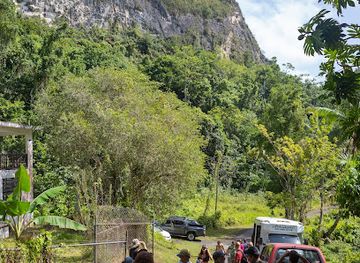
Explore Camuy River Cave Park on the map
Plan your trip on one map. See where the top attractions, landmarks, restaurants and hotels are, and book hotels and experiences in a few clicks.
Best hotels in Camuy River Cave Park
Best shops in Camuy River Cave Park
Shopping at Camuy River Cave Park is limited and should not be confused with the retail facilities of nearby towns. Visitors may find official souvenirs or interpretive merchandise when park facilities are operating, while Camuy, Hatillo and Arecibo provide practical shops, supermarkets, pharmacies and places to purchase food for a rural excursion. Puerto Rican specialities available in the wider region can include coffee, sweets, preserved foods, rum-based products, crafts and locally made artwork, although selection varies by business and season. Arecibo generally offers the broadest range of independent and everyday retail among the nearby urban centres. The park’s most meaningful purchases are usually connected with supporting local businesses or learning about the island’s natural and cultural heritage, rather than browsing a dedicated shopping district beside the caves.
-
Party store
Decoraciones Chainy
Explore Decoraciones Chainy in Lares, Puerto Rico, for vibrant party supplies and unique decorations to elevate your celebrations.
-
Home goods store
Ebanistería Nieves
Immerse yourself in Puerto Rican craftsmanship at Ebanistería Nieves, a charming home goods store showcasing handcrafted treasures in Lares.

Get your free copy of our complete guide to Camuy River Cave Park, delivered straight to you.
Everything on this page, from attractions and restaurants to essentials and local phrases, in one PDF you can read offline, print or share.
Already have an account? Sign in
Your Camuy River Cave Park guide is ready.
We'll send it to · Not you? Sign out

Getting your guide ready…
We are putting together a fresh copy of the Camuy River Cave Park guide. This can take up to a minute.
This can take a few moments. If your browser asks, choose Allow so the download can start. You'll find the guide in your Downloads folder.
Nothing happened? Download it again
Sorry, the guide is taking longer than usual. Please try again in a minute, or get it by email instead.
Camuy River Cave Park essentials
Currency and Payment
Safety
Emergency Situations
Do's and Don'ts
Local Tips
From Eve
Local phrases worth knowing
You don't need to get them perfect. A few words go a long way, and locals appreciate the effort.
Basics
| English | Local | Say it |
|---|---|---|
| Hello | Hola | [oh-lah] |
| Goodbye | Adiós | [ah-dee-ohs] |
| Yes | Sí | [see] |
| No | No | [noh] |
| Please/You're welcome | Por favor/De nada | [por fah-vor/de nah-dah] |
| Thank you | Gracias | [grah-see-ahs] |
| Excuse me/Sorry | Perdón/Lo siento | [pehr-dohn/loh see-ehn-toh] |
| How are you? | ¿Cómo estás? | [koh-moh ehs-tahs] |
| Fine. And you? | Bien. ¿Y tú? | [byehn. ee too] |
| Do you speak English? | ¿Hablas inglés? | [ah-blahs een-glays] |
| I don't understand | No entiendo | [noh ehn-tee-ehn-doh] |
Eating & Drinking
| English | Local | Say it |
|---|---|---|
| I'd like to see the menu, please | Me gustaría ver el menú, por favor | [meh goos-tah-ree-ah vehr ehl meh-noo, poor fah-vor] |
| I don't eat meat | No como carne | [noh koh-moh kahr-neh] |
| Cheers! | ¡Salud! | [sah-lood] |
| I would like to pay, please | Me gustaría pagar, por favor | [meh goos-tah-ree-ah pah-gahr, poor fah-vor] |
Emergencies
| English | Local | Say it |
|---|---|---|
| Help! | ¡Ayuda! | [ah-yoo-dah] |
| Go away! | ¡Vete! | [veh-teh] |
| Call the Police! | ¡Llama a la Policía! | [yah-mah ah lah poh-lee-see-ah] |
| Call a doctor! | ¡Llama a un doctor! | [yah-mah ah oon dohk-tohr] |
| I'm lost | Estoy perdido | [ehs-toy pehr-dee-doh] |
| I'm ill | Estoy enfermo | [ehs-toy ehn-fehr-moh] |
Shopping
| English | Local | Say it |
|---|---|---|
| I'd like to buy... | Me gustaría comprar... | [meh goos-tah-ree-ah kohm-prahr] |
| I'm just looking | Solo estoy mirando | [soh-loh ehs-toy meer-ahn-doh] |
| How much is it? | ¿Cuánto cuesta? | [kwan-toh kwehs-tah] |
| That's too expensive | Eso es demasiado caro | [eh-soh ehs deh-mah-see-ah-doh kah-roh] |
| Can you lower the price? | ¿Puedes bajar el precio? | [pweh-dehs bah-har ehl pree-see-oh] |
Time & Numbers
| English | Local | Say it |
|---|---|---|
| What time is it? | ¿Qué hora es? | [keh oh-rah ehs] |
| It's one o'clock | Es la una | [ehs lah oo-nah] |
| Half past (10) | Media hora (10) | [meh-dee-ah oh-rah (deez)] |
| Morning | Mañana | [mah-nyah-nah] |
| Afternoon | Tarde | [tahr-deh] |
| Evening | Noche | [noh-cheh] |
| Yesterday | Ayer | [ah-yehr] |
| Today | Hoy | [oy] |
| Tomorrow | Mañana | [mah-nyah-nah] |
| 1 | Uno | [oo-noh] |
| 2 | Dos | [dohs] |
| 3 | Tres | [trehs] |
| 4 | Cuatro | [kwah-troh] |
| 5 | Cinco | [seen-koh] |
| 6 | Seis | [seys] |
| 7 | Siete | [syeh-teh] |
| 8 | Ocho | [oh-choh] |
| 9 | Nueve | [nweh-veh] |
| 10 | Diez | [dyehs] |
Transport & Directions
| English | Local | Say it |
|---|---|---|
| Where's a/the...? | ¿Dónde está...? | [dohn-deh ehs-tah] |
| What's the address? | ¿Cuál es la dirección? | [kwal ehs lah dee-rehk-see-ohn] |
| Can you show me (on the map)? | ¿Puedes mostrarme (en el mapa)? | [pweh-dehs mohs-trahr-meh (ehn ehl mah-pah)] |
| When's the next (bus)? | ¿Cuándo es el próximo (autobús)? | [kwan-doh ehs ehl proh-ksee-moh (ow-toh-boos)] |
| A ticket (to ....) | Un boleto (para ....) | [oon boh-leh-toh (pah-rah)] |
History of Camuy River Cave Park
Limestone Foundations and Karst Formation
The story of Camuy River Cave Park begins with the thick limestone bedrock of northern Puerto Rico, deposited in ancient marine environments and later altered by uplift, erosion and the action of rainwater. Water entering through cracks and depressions gradually enlarged subterranean channels, creating the caves, sinkholes and mogote hills characteristic of the island’s northern karst region. The Río Camuy became part of this underground drainage system, disappearing and re-emerging through passages that continue to develop naturally. This geological history explains why the park is not a single cave but part of an interconnected landscape extending beneath several municipalities.
Indigenous and Rural Landscapes
Long before the area became a public attraction, northern Puerto Rico was inhabited and used by Indigenous communities, including the Taíno, whose presence across the island is reflected in archaeological evidence and place names. Later Spanish colonisation brought new settlement patterns, agriculture and land ownership, while rural communities developed around the limestone hills and fertile areas of the north. Caves and sinkholes were part of the local landscape, but many underground spaces remained difficult to explore and were understood primarily through community knowledge, practical use and oral tradition rather than formal tourism.
Exploration of the Cave System
Systematic exploration of the Camuy cave network expanded during the twentieth century, particularly through the work of local and visiting speleologists. The scale of the underground passages, the Río Camuy and the connections between caverns attracted scientific interest and gradually brought the area to wider public attention. Exploration had to contend with flooded passages, vertical shafts and the complexity of a cave system spread across Camuy, Hatillo and Lares. These investigations helped establish the geological importance of the area while also demonstrating why guided access is appropriate in a fragile and potentially hazardous underground setting.
Creation of a Public Park
The cave system was developed as a public attraction in the late twentieth century, with Camuy River Cave Park becoming associated with guided visits to major caverns, interpretation of the karst landscape and managed access to sinkholes and forest. Roads, visitor facilities and transport within the park made parts of the system accessible to people without specialist caving experience. The park’s identity therefore combines scientific discovery with public education, while its multi-municipality setting reflects the fact that the protected landscape is larger than any single entrance or visitor area.
Conservation and Changing Access
Modern management has had to balance tourism with the protection of limestone formations, underground waterways, cave wildlife and surrounding forest. Hurricanes and other severe weather events have periodically affected roads, buildings and visitor operations across Puerto Rico, making access arrangements subject to repair and official review. Conservation also requires limits on where visitors can go and how they behave underground, particularly around bats, fragile formations and watercourses. The park’s continuing importance lies in presenting the Río Camuy karst system while recognising that its geological and ecological processes extend beyond the areas open to tourism.
Camuy River Cave Park in Photos
Browse through our photo collection highlighting the charm and character of the destination.
Neighbouring destination travel guides
The closest destinations to Camuy River Cave Park, if you have time for more than one.
-

-

-

-

-


Swipe for more destinations
Explore more

Explore more of West Region
Explore Puerto Rico’s West Region for surf beaches, colonial San Germán, dry forests, coffee hills, seafood and bioluminescent coastal waters.
Explore West Region
Explore more of Puerto Rico
Discover Puerto Rico, where vibrant culture, stunning beaches, and rich history create an unforgettable Caribbean experience. Perfect for adventurers and relaxation seekers alike.
Explore Puerto Rico