

Free Guánica Travel Guide & Mobile App
Plan your Guánica trip with Evendo. Get free guides to top attractions, restaurants, hotels, and bars. Web access or download the mobile app.


Guánica, Puerto Rico, pairs a historic 1898 landing site with a UNESCO Biosphere Reserve, quiet beaches, coastal trails and southern island culture.
A Southern Coast Shaped by Nature
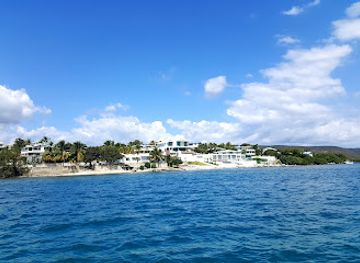
Guánica occupies a sheltered stretch of Puerto Rico’s south-western coast, where low hills descend towards a broad bay and the Caribbean Sea. The municipality is defined by contrasts: parched limestone woodland and salt-tolerant vegetation inland, sheltered coves and mangrove-fringed waters along the coast, and a town whose measured pace reflects its distance from the island’s busiest urban centres. The Bosque Estatal de Guánica, a UNESCO Biosphere Reserve, is one of the finest examples of tropical dry forest in the Caribbean, with marked trails, hardy native plants and viewpoints across the hills.Read more about Guánica
History at the Water’s Edge
Beaches, Cays and Coastal Life
When is the best time to visit Guánica?
Best: June–July, September · 29°C| Month | High (°C) | Rainfall (mm) |
|---|---|---|
| January | 27 | 60 |
| February | 27 | 53 |
| March | 28 | 50 |
| April | 28 | 34 |
| May | 29 | 22 |
| June (best) | 29 | 12 |
| July (best) | 29 | 14 |
| August | 29 | 16 |
| September (best) | 29 | 14 |
| October | 29 | 20 |
| November | 28 | 29 |
| December | 28 | 42 |
Getting to and around Guánica
How to get there
Transportation
Best attractions in Guánica
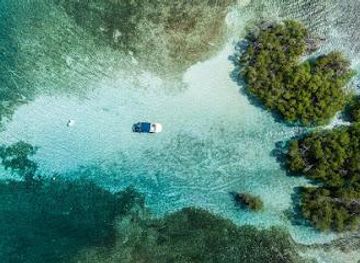
Guánica’s principal attractions are spread across a landscape where dry woodland meets the Caribbean coast. The Bosque Estatal de Guánica offers marked trails through one of the Caribbean’s best-preserved tropical dry forests, with cacti, thorny scrub, native trees and elevated views towards the sea. Around town, the central plaza and Iglesia Inmaculada Concepción provide a sense of the municipality’s civic and religious life, while the nearby Ensenada area preserves associations with the former sugar economy. Playa Santa and Tamarindo are among the better-known coastal places for swimming, sunbathing and marine recreation, subject to conditions. Offshore, Cayo Aurora—better known to many visitors as Gilligan’s Island—is valued for shallow waters, mangroves and paddling or snorkelling excursions. Guánica Bay also carries historical significance as the site of the 1898 United States landing, giving the shoreline a meaning beyond its beaches.
-
State park
Guánica State Forest
Discover the ecological richness and scenic beauty of Guánica State Forest, a top destination for outdoor adventures in Puerto Rico.
12 min drive · 4.2 km from city centre
-
Tourist attraction
Playa Caña Gorda
Experience the tranquil beauty of Playa Caňa Gorda, a public beach in Guánica, Puerto Rico, perfect for relaxation, swimming, and family fun.
10 min drive · 3.3 km from city centre
-
Tourist attraction
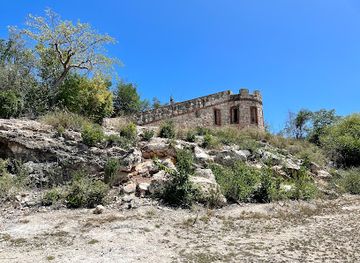
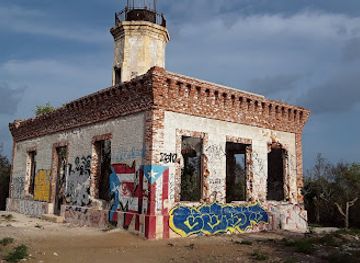
Fuerte Caprón
Discover the historical Fuerte Caprón in Guánica, a stunning fortress offering breathtaking views and rich cultural heritage amidst nature's beauty.
16 min walk · 1.3 km from city centre
-
Boat tour agency
Parguera Water Sports Adventures & Bioluminescent Bay Tour Boat-Kayak-Swim
Discover La Parguera, Puerto Rico's enchanting bioluminescent bay and thrilling water sports adventures in a tropical paradise.
35 min drive · 15 km from city centre

Best landmarks in Guánica
Guánica’s landmarks reflect its civic history, colonial inheritance, wartime importance and sugar economy. The Iglesia Inmaculada Concepción and the central plaza form the traditional heart of the town, where public life is organised around familiar Puerto Rican civic and religious spaces. Guánica Bay is itself a historical landmark in the broader sense: on 25 July 1898, United States forces landed here during the Spanish-American War, changing Puerto Rico’s political future. In Ensenada, the remains and landscape associated with Central Guánica recall the industrial power of the sugar era and the workers who sustained it. The Bosque Estatal de Guánica is a landmark of conservation as well as scenery, representing a rare and scientifically important tropical dry-forest ecosystem. Together, these sites show how town, plantation, military history and fragile ecology have shaped the municipality.
-
Hotel
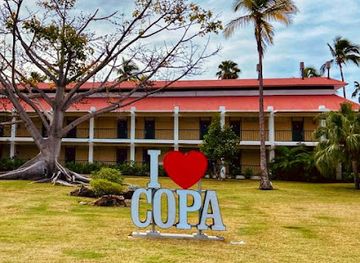
Copamarina Beach Resort & Spa
Experience the ultimate tropical getaway at Copamarina Beach Resort & Spa in Guánica, Puerto Rico, with stunning beaches and luxurious amenities.
11 min drive · 3.6 km from city centre
-
State park
Guánica State Forest
Explore the unique dry forests and stunning coastal views of Guánica State Forest, a natural paradise in Puerto Rico perfect for adventurers and nature lovers.
12 min drive · 4.2 km from city centre
-
Garden
Finca El Girasol
Discover the vibrant beauty of Finca El Girasol, a tropical garden oasis in Guánica, Puerto Rico, perfect for relaxation and nature exploration.
13 min drive · 4.5 km from city centre
-
Restaurant
Trasiego Sea Food Restaurant
Experience the best of Puerto Rican seafood at Trasiego Sea Food Restaurant, located on the stunning Malecón de Guánica with breathtaking ocean views.
9 min walk · 0.7 km from city centre
Explore Guánica on the map
Plan your Guánica trip on one map. See where the top attractions, landmarks, restaurants, bars and hotels are, find what's near where you're staying, and book hotels and experiences in a few clicks.
Best hotels in Guánica
Best restaurants in Guánica
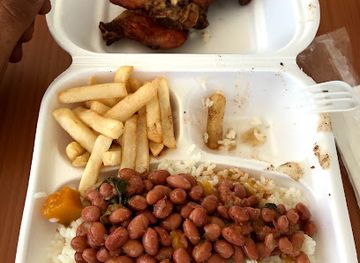
Guánica’s dining scene is modest, local and closely tied to the southern coast rather than built around a large concentration of destination restaurants. Seafood, fried fish, rice and beans, mofongo and other Puerto Rican staples appear in casual eateries and roadside establishments, while alcapurrias, empanadillas and other fritters are useful choices for an informal meal near the coast. Ensenada and the town centre offer the greatest likelihood of finding everyday local food, although opening days and hours can vary. The surrounding agricultural region also influences the kitchen through plantains, root vegetables, pork and seasonal produce. Visitors should expect a relaxed atmosphere, simple dining rooms and beach-oriented food stops rather than an extensive fine-dining district. Spanish is useful when discussing ingredients and ordering in smaller establishments, and seafood availability may change with weather and local supply.
-
Pizza
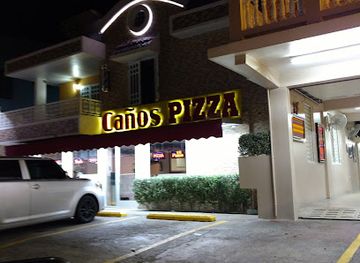
Caños Pizza
Savor the authentic flavors of Guánica at Caños Pizza - where every slice tells a story!
1 min walk · 0.1 km from city centre
-
Restaurant
Trasiego Sea Food Restaurant
Experience authentic Puerto Rican seafood at Trasiego Sea Food Restaurant in Guánica, where every dish tells a story of coastal tradition.
9 min walk · 0.7 km from city centre
-
 Restaurant
Parador Guánica 1929
Experience authentic Puerto Rican cuisine at Parador Guánica 1929—where local flavors meet stunning coastal views.
6 min drive · 2.1 km from city centre
-
Restaurant
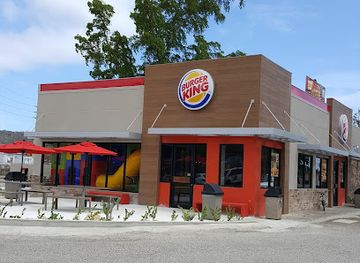
Burger King
Experience iconic flame-grilled burgers at Burger King in Guánica – where taste meets tradition in every bite.
11 min walk · 0.8 km from city centre
Best bars in Guánica
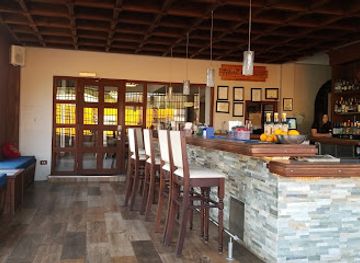
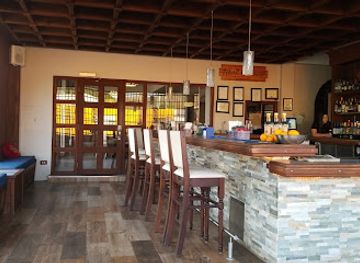
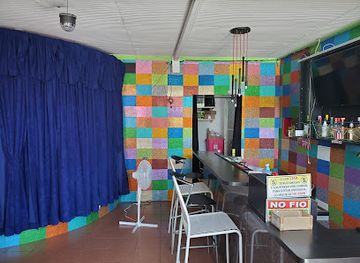
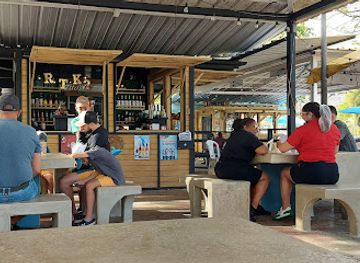
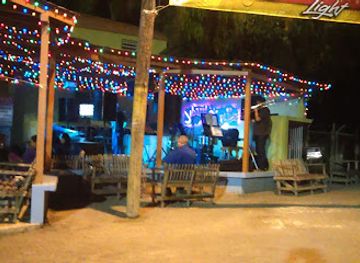
Guánica has a low-key evening scene rather than a concentrated nightlife quarter. Small bars, casual eateries and neighbourhood gathering places around the town and Ensenada provide opportunities for a beer, rum-based drink, conversation and music, while coastal restaurants may be livelier at weekends. Traditional Puerto Rican sounds, including salsa, merengue and reggaetón, are more likely to shape the atmosphere than formal club programming, and community celebrations can bring additional music and dancing at particular times of year. Evenings are generally suited to relaxed socialising, sunset views and local food rather than late-night bar hopping. Visitors staying near beaches should arrange transport in advance, as rural roads may be dark and regular late public transport should not be assumed.
-
Restaurant
Trasiego Sea Food Restaurant
Discover the exquisite seafood delights and breathtaking ocean views at Trasiego Sea Food Restaurant in Guánica, Puerto Rico.
9 min walk · 0.7 km from city centre
-
Restaurant
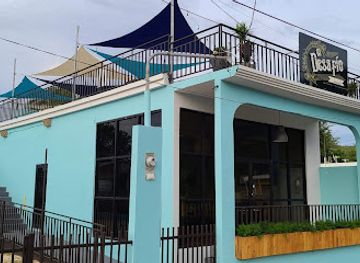
El Desafío Bar & Grill
Experience the vibrant flavors of Puerto Rican cuisine at El Desafío Bar & Grill, where breathtaking ocean views meet culinary excellence.
9 min walk · 0.7 km from city centre
-
Grill
Lucas Spot Guánica
Explore the vibrant culinary scene at Lucas Spot Guánica, where grilled dishes and local flavors create unforgettable dining experiences.
3 min walk · 0.2 km from city centre
-
Restaurant
Rincon Tropical
Experience the essence of Puerto Rican cuisine at Rincon Tropical, where every dish is a celebration of flavor and culture.
7 min drive · 2.5 km from city centre
Best nightclubs in Guánica
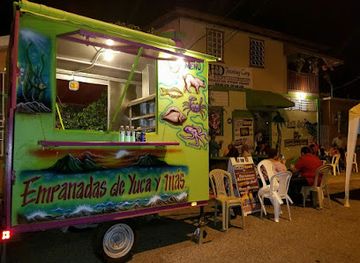
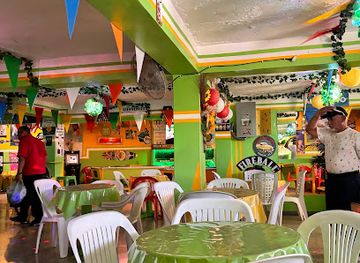
Guánica has a low-key evening scene rather than a concentrated nightlife quarter. Small bars, casual eateries and neighbourhood gathering places around the town and Ensenada provide opportunities for a beer, rum-based drink, conversation and music, while coastal restaurants may be livelier at weekends. Traditional Puerto Rican sounds, including salsa, merengue and reggaetón, are more likely to shape the atmosphere than formal club programming, and community celebrations can bring additional music and dancing at particular times of year. Evenings are generally suited to relaxed socialising, sunset views and local food rather than late-night bar hopping. Visitors staying near beaches should arrange transport in advance, as rural roads may be dark and regular late public transport should not be assumed.
-
Grill
Lucas Spot Guánica
Discover the rich flavors of Puerto Rico at Lucas Spot Guánica, a top-rated grill known for its welcoming atmosphere and delicious grilled dishes.
3 min walk · 0.2 km from city centre
-
Bar
Toñin y Malen
Experience the vibrant nightlife and local flavors at Toñin y Malen, a lively bar in Guánica, Puerto Rico, perfect for socializing and entertainment.
17 min drive · 5.6 km from city centre
-
Sports bar
EL TINGLAO
Experience the excitement of sports and local cuisine at El Tinglao, Guánica's premier sports bar, where every game becomes a celebration.
9 min walk · 0.7 km from city centre
-
Bar
El Jibarito en Playa
Experience the vibrant nightlife at El Jibarito en Playa, where local flavors and a lively atmosphere await you in beautiful Guánica, Puerto Rico.
10 min walk · 0.8 km from city centre
Best shops in Guánica
Shopping in Guánica is practical and locally oriented, with small grocery shops, pharmacies, convenience stores and independent businesses concentrated around the town rather than a major retail district. Beach areas and local food businesses may offer Puerto Rican snacks, drinks, casual souvenirs and products suited to a day on the coast. Visitors looking for distinctive island goods can seek out coffee, sweets, sauces, rum-related products, crafts and small artisan items, although selection varies and Guánica is not primarily a craft-market destination. Nearby larger towns provide broader retail choice, while local purchases are most rewarding when they support small businesses and reflect everyday southern Puerto Rican life. Because remote forest and beach areas have few services, buying water, food and sun protection in town before exploring is often more useful than expecting extensive shopping at the attractions themselves.
-
Bakery
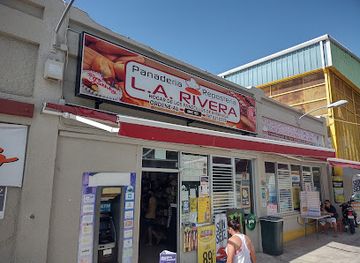
Panadería y Repostería L.A. Rivera
Discover the authentic taste of Puerto Rican pastries at Panadería y Repostería L.A. Rivera in Guánica, a bakery beloved by locals and tourists alike.
8 min drive · 2.6 km from city centre
-
Supermarket
Supermercado Econo
Explore local flavors and essential goods at Supermercado Econo, Guánica's go-to supermarket for an authentic shopping experience.
8 min walk · 0.7 km from city centre
-
Store
Piraguas Las Muchachas
Experience the authentic taste of Puerto Rico with refreshing piraguas at Piraguas Las Muchachas in Guánica, a must-visit for tourists.
13 min drive · 4.4 km from city centre
-
Coffee shop
Tajadas Coffee Bar
Experience the rich coffee culture of Puerto Rico at Tajadas Coffee Bar, a cozy haven in Guánica offering exceptional brews and delightful pastries.
8 min drive · 2.6 km from city centre


Get your free copy of our complete guide to Guánica, delivered straight to you.
Everything on this page, from attractions and restaurants to essentials and local phrases, in one PDF you can read offline, print or share.
Already have an account? Sign in
Your Guánica guide is ready.
We'll send it to · Not you? Sign out

Getting your guide ready…
We are putting together a fresh copy of the Guánica guide. This can take up to a minute.
This can take a few moments. If your browser asks, choose Allow so the download can start. You'll find the guide in your Downloads folder.
Nothing happened? Download it again
Sorry, the guide is taking longer than usual. Please try again in a minute, or get it by email instead.
Guánica essentials
Currency and Payment
Safety
Emergency Situations
Do's and Don'ts
Local Tips
From Eve
Local phrases worth knowing
You don't need to get them perfect. A few words go a long way, and locals appreciate the effort.
Basics
| English | Local | Say it |
|---|---|---|
| Hello | Hola | [oh-la] |
| Goodbye | Adiós | [ah-dee-ohs] |
| Yes | Sí | [see] |
| No | No | [noh] |
| Please/You're welcome | Por favor/De nada | [pohr fah-bohr/de nah-dah] |
| Thank you | Gracias | [grah-see-ahs] |
| Excuse me/Sorry | Perdón/Lo siento | [pehr-dohn/loh see-ehn-toh] |
| How are you? | ¿Cómo estás? | [koh-moh ehs-tahs] |
| Fine. And you? | Bien. ¿Y tú? | [byehn. ee too] |
| Do you speak English? | ¿Hablas inglés? | [ah-blahs een-glehs] |
| I don't understand | No entiendo | [noh ehn-tee-ehn-doh] |
Eating & Drinking
| English | Local | Say it |
|---|---|---|
| I'd like to see the menu, please | Me gustaría ver el menú, por favor | [meh goos-tah-ree-ah vehr ehl meh-noo, pohr fah-bohr] |
| I don't eat meat | No como carne | [noh koh-moh kahr-neh] |
| Cheers! | ¡Salud! | [sah-lood] |
| I would like to pay, please | Me gustaría pagar, por favor | [meh goos-tah-ree-ah pah-gahr, pohr fah-bohr] |
Emergencies
| English | Local | Say it |
|---|---|---|
| Help! | ¡Ayuda! | [ah-yoo-dah] |
| Go away! | ¡Vete! | [veh-teh] |
| Call the Police! | ¡Llama a la policía! | [yah-mah ah lah poh-lee-see-ah] |
| Call a doctor! | ¡Llama a un médico! | [yah-mah ah oon meh-dee-koh] |
| I'm lost | Estoy perdido/a | [ehs-toy pehr-dee-doh/dah] |
| I'm ill | Estoy enfermo/a | [ehs-toy ehn-fehr-moh/ah] |
Shopping
| English | Local | Say it |
|---|---|---|
| I'd like to buy... | Me gustaría comprar... | [meh goos-tah-ree-ah kohm-prahr] |
| I'm just looking | Solo estoy mirando | [soh-loh ehs-toy mee-rahn-doh] |
| How much is it? | ¿Cuánto cuesta? | [kwan-toh kwehs-tah] |
| That's too expensive | Eso es demasiado caro | [eh-soh ehs deh-mah-see-ah-doh kah-roh] |
| Can you lower the price? | ¿Puedes bajar el precio? | [pweh-dehs bah-hahr ehl pree-syoh] |
Time & Numbers
| English | Local | Say it |
|---|---|---|
| What time is it? | ¿Qué hora es? | [keh o-rah ehs] |
| It's one o'clock | Es la una en punto | [ehs lah oo-nah ehn poon-toh] |
| Half past (10) | Media (10) | [meh-dee-ah (dheez)] |
| Morning | Mañana | [mah-nyah-nah] |
| Afternoon | Tarde | [tahr-deh] |
| Evening | Noche | [noh-cheh] |
| Yesterday | Ayer | [ah-yehr] |
| Today | Hoy | [oy] |
| Tomorrow | Mañana | [mah-nyah-nah] |
| 1 | Uno | [oo-noh] |
| 2 | Dos | [dohs] |
| 3 | Tres | [trehs] |
| 4 | Cuatro | [kwah-troh] |
| 5 | Cinco | [seen-koh] |
| 6 | Seis | [sehs] |
| 7 | Siete | [syeh-teh] |
| 8 | Ocho | [oh-choh] |
| 9 | Nueve | [nweh-veh] |
| 10 | Diez | [dyehs] |
Transport & Directions
| English | Local | Say it |
|---|---|---|
| Where's a/the...? | ¿Dónde está...? | [dohn-deh ehs-tah] |
| What's the address? | ¿Cuál es la dirección? | [kwal ehs lah dee-rek-syohn] |
| Can you show me (on the map)? | ¿Puedes mostrarme (en el mapa)? | [pweh-dehs mohs-trar-meh (ehn ehl mah-pah)] |
| When's the next (bus)? | ¿Cuándo pasa el próximo (autobús)? | [kwan-doh pah-sah ehl proh-ksee-moh (ow-toh-boos)] |
| A ticket (to ....) | Un boleto (a ....) | [oon boh-leh-toh (ah)] |
History of Guánica
Indigenous and Coastal Beginnings
Before European colonisation, the south-western coast of Puerto Rico was occupied by Taíno communities whose settlements were connected to productive coastal waters, rivers and inland resources. The name Guánica is generally associated with the indigenous geography of the region, although interpretations of pre-Columbian place names are not always certain. Spanish settlement altered the coastline through agriculture, livestock raising and the establishment of new political and religious structures. Guánica’s sheltered bay remained important because it provided access between the Caribbean coast and the interior of the island, while the surrounding dry climate created a landscape distinct from Puerto Rico’s wetter northern and mountainous regions.
Spanish Rule and the Southern Coast
During the Spanish colonial period, the area around present-day Guánica developed as a rural coastal district rather than a major urban centre. Agriculture, fishing and maritime connections shaped local life, while nearby settlements became linked by roads and coastal routes. The dry forest and low hills influenced farming patterns and helped preserve a different ecology from the rainier parts of Puerto Rico. Religious and civic institutions gradually provided the framework for community life, and the settlement’s location beside a navigable bay gave it strategic importance. Guánica was formally established as a municipality in the nineteenth century, as Puerto Rico’s southern communities became more administratively defined and commercially connected.
Sugar, Ensenada and Industrial Change
The expansion of sugar production transformed Guánica during the nineteenth and early twentieth centuries. The Central Guánica sugar mill, associated with the Ensenada area, became a major economic force and connected the municipality to the wider plantation economy of Puerto Rico. Sugar required land, labour, transport and shipping facilities, bringing profound social and environmental changes to the southern coast. The industry created employment and commercial activity but also concentrated land and economic power. Ruins and altered landscapes around the former central provide material reminders of this period, even though the large-scale sugar economy that once structured local life has disappeared.
The 1898 Landing at Guánica
On 25 July 1898, during the Spanish-American War, United States troops landed at Guánica Bay under the command of Major General Nelson A. Miles. The landing followed the American capture of Puerto Rico’s southern port of Ponce and opened another route for the campaign across the island. It marked the end of Spanish colonial rule in Puerto Rico and the beginning of a new political era under United States sovereignty. Guánica’s association with the event is preserved in local historical interpretation and in the geography of the bay, where the physical setting helps explain why the coast was strategically attractive to an invading force.
Guánica in the Modern Commonwealth
After the upheavals of the late nineteenth century, Guánica continued as a small southern municipality shaped by agriculture, coastal commerce and the gradual decline of sugar. Puerto Rico became a United States territory in 1898 and later adopted Commonwealth status in 1952, placing Guánica within the island’s evolving political and economic framework. As industrial agriculture receded, the municipality’s dry forest, beaches and marine environments gained greater importance for conservation and recreation. The Bosque Estatal de Guánica became a central expression of that ecological value, while the town, Ensenada and the coast retain traces of the older sugar landscape and the community’s long relationship with the bay.
Guánica in Photos
Browse through our photo collection highlighting the charm and character of the destination.
Cities near Guánica
The closest cities to Guánica, if you have time for more than one stop.
-

-

-

-

-


Swipe for more cities
Explore more

Explore more of Puerto Rico
Discover Puerto Rico, where vibrant culture, stunning beaches, and rich history create an unforgettable Caribbean experience. Perfect for adventurers and relaxation seekers alike.
Explore Puerto Rico