

Free Saint Thomas Middle Island Parish Travel Guide & Mobile App
Explore Saint Thomas Middle Island Parish with free travel guides. Discover regional history, expert tips, proposed trips, and audio guides on web or mobile app.


Explore Saint Thomas Middle Island Parish for Brimstone Hill, plantation heritage, Caribbean views and the early history of Saint Kitts.
Read more about Saint Thomas Middle Island Parish
When is the best time to visit Saint Thomas Middle Island Parish?
Best: January–March · 28–29°C| Month | High (°C) | Rainfall (mm) |
|---|---|---|
| January (best) | 28 | 50 |
| February (best) | 28 | 40 |
| March (best) | 29 | 40 |
| April | 29 | 50 |
| May | 30 | 70 |
| June | 31 | 70 |
| July | 31 | 80 |
| August | 31 | 100 |
| September | 31 | 100 |
| October | 30 | 90 |
| November | 29 | 80 |
| December | 29 | 60 |
Getting to and around Saint Thomas Middle Island Parish
How to get there
Transportation
Top city travel guides in Saint Thomas Middle Island Parish
The cities of Saint Thomas Middle Island Parish, and the easiest places to base yourself.
-

-

-


Swipe for more cities
Destinations in Saint Thomas Middle Island Parish
Resorts, valleys and scenic spots worth a trip of their own.
-

-


Swipe for more destinations
Best attractions in Saint Thomas Middle Island Parish
The parish’s attractions centre on a concentrated historic landscape rather than a large collection of commercial entertainment. Brimstone Hill Fortress National Park is the principal site, combining military architecture, museum interpretation and elevated views over the Caribbean. Its bastions and barracks are best explored slowly, since the slopes and exposed position are part of the experience. Around Old Road, Wingfield Estate and Romney Manor introduce plantation-era history through ruins, gardens and surviving estate features, while the surrounding countryside shows how cultivation once occupied the lower volcanic slopes. Middle Island provides access to churches and village heritage associated with the early English settlement. The coast offers quieter views and opportunities to appreciate the parish’s relationship with the sea, though beach facilities are more limited than in the island’s principal resort areas. Visitors interested in nature can use the parish as a base for observing tropical vegetation and the transition towards wetter upland environments, but should distinguish local walks from formally managed national-park trails elsewhere on Saint Kitts. The strongest itinerary combines history, landscape and community rather than treating each site as an isolated attraction.
-
Recreation center
Sky Safari Zipline
Experience the thrill of soaring through the treetops at Sky Safari Zipline in St. Kitts, where adventure meets stunning natural beauty.
-
Tourist attraction
Caribelle Batik at Romney Manor
Discover the stunning artistry and botanical beauty of Caribelle Batik at Romney Manor, a must-visit destination in St. Kitts for every traveler.
-
Tour operator
Spectrum ATV Tours
Discover the thrill of St. Kitts with Spectrum ATV Tours—your ultimate adventure experience on the island.
-
Sugar factory
Old Road Rum Co at Wingfield Estate Sugar Plantation Ruins
Explore the heritage of rum-making at Old Road Rum Co in St. Kitts, where history meets flavor in a stunning plantation setting.


Best landmarks in Saint Thomas Middle Island Parish
Brimstone Hill Fortress is the parish’s dominant landmark, rising dramatically above the western coast on a volcanic outcrop. Its carefully engineered walls, steep approaches and elevated gun platforms express the military importance of Saint Kitts during British and French imperial rivalry, while its UNESCO World Heritage status reflects the exceptional survival of the complex. In Middle Island, St Thomas Church is associated with the early English colonial presence and with Thomas Warner, whose tomb is connected with the church and the first permanent English settlement on Saint Kitts. Old Road’s historic significance lies less in one monumental structure than in its status as an early English settlement and a surviving coastal community. Wingfield Estate and nearby plantation remains provide another visible layer of the parish’s past, linking mills, cultivation and Atlantic commerce. Together these landmarks create a connected story: Indigenous landscapes transformed by colonisation, fortified against European rivals and later reorganised around emancipation, community life and heritage conservation.
-
Fortress
Brimstone Hill Fortress National Park
Explore Brimstone Hill Fortress National Park, a UNESCO World Heritage Site, and immerse yourself in the rich history and stunning views of St. Kitts.
-
Tourist attraction
Dolphin Discovery Saint Kitts
Experience unforgettable dolphin encounters and thrilling water activities at Dolphin Discovery Saint Kitts, a top tourist attraction in the Caribbean.
-
Historical landmark
Fairview Great House and Botanical Gardens
Experience the rich history and vibrant beauty of Fairview Great House and Botanical Gardens, a must-see landmark in St. Kitts and Nevis.
-
Historical landmark
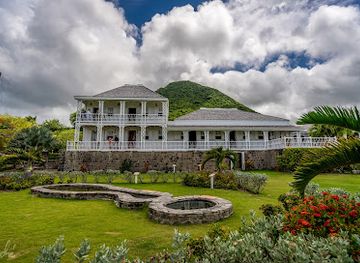
Romney Manor
Explore Romney Manor, a historical landmark in St. Kitts, where rich heritage meets vibrant local culture amidst stunning gardens.

Explore Saint Thomas Middle Island Parish on the map
Plan your trip on one map. See where the top cities, national parks and sights are, and book hotels and experiences in a few clicks.
Best hotels in Saint Thomas Middle Island Parish
Best restaurants in Saint Thomas Middle Island Parish
Dining in Saint Thomas Middle Island Parish is generally low-key, with choices concentrated around Old Road, Middle Island, roadside establishments and heritage-oriented visitor sites rather than a substantial restaurant district. Menus commonly reflect the wider cuisine of Saint Kitts and Nevis: rice and peas, stewed meats, saltfish, fresh fish, seafood, plantain, provisions and locally influenced Caribbean soups and sauces. Small eateries and cookshops may offer the most direct insight into everyday food, while casual cafés and bars provide refreshments after visiting Brimstone Hill or the nearby estates. Local produce varies with season and may include tropical fruit, vegetables and root crops. The parish’s plantation history is also relevant to its food culture, though historic estate dining should not obscure the human story behind sugar production. For a wider choice of international restaurants, supermarkets and evening dining, visitors usually travel outside the parish towards Basseterre or the larger resort areas. Confirm payment methods and service arrangements at small establishments, where hours can be flexible.
-
Restaurant
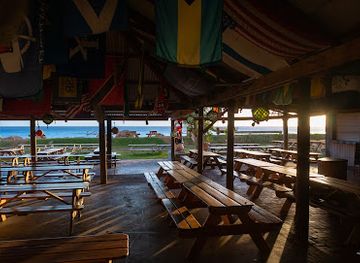
Sprat Net
Experience authentic Caribbean flavors at Sprat Net in St. Kitts - where every dish tells a story.
-
Restaurant
Palms Court Gardens
Experience Caribbean charm at Palms Court Gardens in Brumaire - where lush gardens meet delightful cuisine for an unforgettable dining experience.
-
Cafe
Coconut Grove Cafe - Bar - Pizzeria
Discover the culinary delights at Coconut Grove Cafe - Bar - Pizzeria in Frigate Bay, St. Kitts – where island flavors meet vibrant ambiance.
-
Caribbean
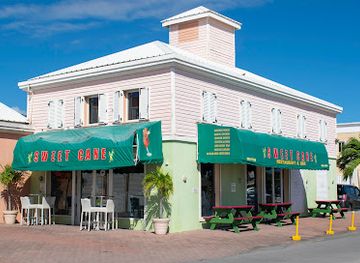
Sweet Cane | Restaurant & Bar
Experience authentic Caribbean flavors at Sweet Cane Restaurant & Bar in Basseterre, St. Kitts - where every dish tells a story.
Best bars in Saint Thomas Middle Island Parish
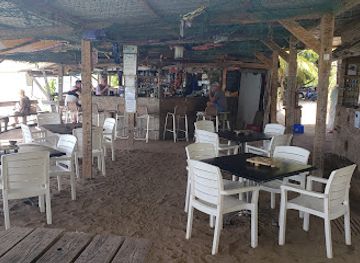
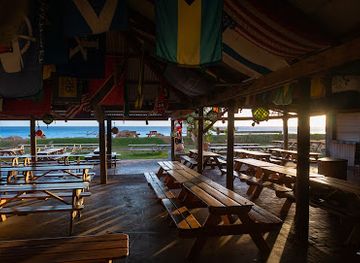
Evening life in Saint Thomas Middle Island Parish is modest and community-based rather than centred on nightclubs. Old Road and Middle Island may have informal bars, rum shops and small restaurants where residents meet, while occasional music and social events provide local entertainment without forming a permanent nightlife circuit. The parish is better suited to a relaxed drink, an early meal or a quiet evening after sightseeing than to late-night clubbing. Visitors seeking live music, cocktails, larger venues or a more dependable choice after dark generally travel outside the parish to Basseterre or the island’s established resort zones. Rum is part of the wider Caribbean drinking culture, but drinking is not necessary to engage with local life, and visitors should arrange transport before staying out late. Rural roads can be poorly lit, so walking between scattered establishments at night is not advisable; use a pre-arranged taxi or designated driver.
-
Grill
Reggae Beach Bar-Grill
Experience the vibrant flavors and lively atmosphere of Reggae Beach Bar-Grill in St. Kitts & Nevis, where every meal is a celebration of Caribbean culture.
-
Bar
Sunshines Restaurant
Discover the vibrant nightlife and delicious Caribbean cuisine at Sunshines Restaurant, a top spot for tourists in St. Kitts & Nevis.
-
Restaurant
Shipwreck Beach Bar
Experience the vibrant flavors and stunning views at Shipwreck Beach Bar in St. Kitts, where every meal is a slice of paradise.
-
Restaurant
Sprat Net
Experience the heart of Caribbean cuisine at Sprat Net, where local flavors and vibrant atmosphere come together for an unforgettable dining experience.


Best nightclubs in Saint Thomas Middle Island Parish
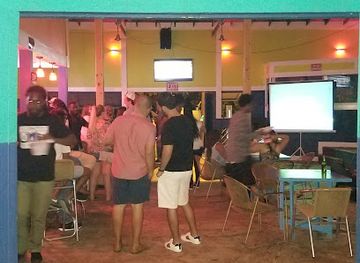
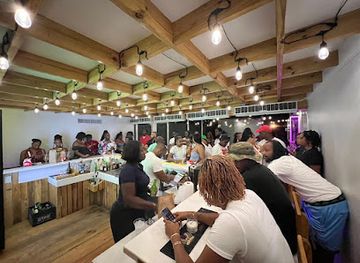
Evening life in Saint Thomas Middle Island Parish is modest and community-based rather than centred on nightclubs. Old Road and Middle Island may have informal bars, rum shops and small restaurants where residents meet, while occasional music and social events provide local entertainment without forming a permanent nightlife circuit. The parish is better suited to a relaxed drink, an early meal or a quiet evening after sightseeing than to late-night clubbing. Visitors seeking live music, cocktails, larger venues or a more dependable choice after dark generally travel outside the parish to Basseterre or the island’s established resort zones. Rum is part of the wider Caribbean drinking culture, but drinking is not necessary to engage with local life, and visitors should arrange transport before staying out late. Rural roads can be poorly lit, so walking between scattered establishments at night is not advisable; use a pre-arranged taxi or designated driver.
-
Grill
Oceans Beach Bar Lounge and Aqua Park Ltd
Experience the ultimate tropical getaway at Oceans Beach Bar Lounge and Aqua Park Ltd, where relaxation meets adventure in stunning Frigate Bay, St. Kitts & Nevis.
-
Bar
Last Lap Bar and Lounge
Discover the vibrant spirit of St. Kitts at Last Lap Bar and Lounge, where refreshing drinks and friendly vibes await every visitor.
-
Lounge
KayanJet St. Kitts
Discover KayanJet St. Kitts, where relaxation meets Caribbean charm in the heart of Basseterre's vibrant atmosphere.
-
Bar
Aqua Lounge & Bar
Experience the vibrant nightlife at Aqua Lounge & Bar in St. Kitts, where cocktails meet breathtaking views and an unforgettable atmosphere.
Best shops in Saint Thomas Middle Island Parish
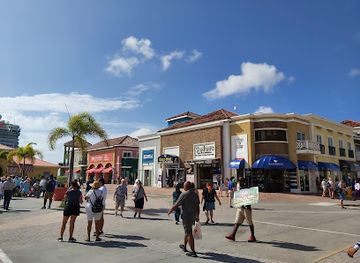
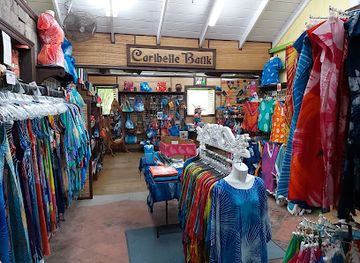
Shopping in Saint Thomas Middle Island Parish is limited and local in character. Old Road and Middle Island have small shops and everyday services rather than substantial retail streets, while heritage properties may offer locally themed crafts, books or souvenirs. Visitors can look for Caribbean food products, spices, preserves, rum-related gifts, handmade objects and artwork, but availability varies and should not be assumed outside visitor hours. Small vendors may prefer cash, particularly for low-value purchases. The parish is not a major destination for designer fashion or large shopping centres; Basseterre, outside the parish, provides the country’s broadest range of supermarkets, commercial services, duty-free outlets and craft shopping. Buying directly from local makers, where available, supports small-scale enterprise, but ask permission before photographing work or stalls and avoid purchasing artefacts that may have been removed from historic sites. Fresh produce and prepared foods may be found through informal local trade, although market arrangements can change with the season and day of the week.
-
Historical landmark
Fairview Great House and Botanical Gardens
Discover the enchanting Fairview Great House and Botanical Gardens, a historical gem nestled in the vibrant landscapes of St. Kitts.
-
Jewelry store
Colors Duty Free Jewellers
Discover a stunning selection of luxury jewelry at Colors Duty Free Jewellers in St. Kitts, where quality meets affordability.
-
Tourist attraction
Caribelle Batik at Romney Manor
Explore vibrant batik artistry surrounded by lush gardens at Caribelle Batik in St. Kitts—a must-visit for every traveler.
-
Bar
La Casa Del Habano
Discover the ultimate cigar experience at La Casa Del Habano in the heart of Basseterre, where culture and relaxation meet.

Get your free copy of our complete guide to Saint Thomas Middle Island Parish, delivered straight to you.
Everything on this page, from attractions and restaurants to essentials and local phrases, in one PDF you can read offline, print or share.
Already have an account? Sign in
Your Saint Thomas Middle Island Parish guide is ready.
We'll send it to · Not you? Sign out

Getting your guide ready…
We are putting together a fresh copy of the Saint Thomas Middle Island Parish guide. This can take up to a minute.
This can take a few moments. If your browser asks, choose Allow so the download can start. You'll find the guide in your Downloads folder.
Nothing happened? Download it again
Sorry, the guide is taking longer than usual. Please try again in a minute, or get it by email instead.
Saint Thomas Middle Island Parish essentials
Currency and Payment
Safety
Emergency Situations
Do's and Don'ts
Local Tips
From Eve
Local phrases worth knowing
You don't need to get them perfect. A few words go a long way, and locals appreciate the effort.
Basics
| English | Local | Say it |
|---|---|---|
| Hello | Hello | [Heh-loh] |
| Goodbye | Bye | [Bahy] |
| Yes | Yes | [Yes] |
| No | No | [No] |
| Please/You're welcome | Please/You’re welcome | [Pleez/You’re welcome] |
| Thank you | Thank you | [Thank you] |
| Excuse me/Sorry | Excuse me/Sorry | [Ex-kyoos mee/Sor-ree] |
| How are you? | How you doing? | [How yuh doin?] |
| Fine. And you? | Fine. And you? | [Fine. An yuh?] |
| Do you speak English? | Yuh speak English? | [Yuh speek In-glish?] |
| I don't understand | I no understand | [I noh un-der-stand] |
Eating & Drinking
| English | Local | Say it |
|---|---|---|
| I'd like to see the menu, please | Can I see the menu, please? | [Can I see de menu, pleez?] |
| I don't eat meat | I no eat meat | [I noh eet meet] |
| Cheers! | Cheers! | [Cheers!] |
| I would like to pay, please | I would like to pay, please | [I wud like to pay, pleez] |
Emergencies
| English | Local | Say it |
|---|---|---|
| Help! | Help! | [Help!] |
| Go away! | Go away! | [Go away!] |
| Call the Police! | Call de Police! | [Call de Po-lees!] |
| Call a doctor! | Call a doctor! | [Call a doc-tor!] |
| I'm lost | I lost | [I lost] |
| I'm ill | I sick | [I sick] |
Shopping
| English | Local | Say it |
|---|---|---|
| I'd like to buy... | I want to buy... | [I want to buy...] |
| I'm just looking | I just looking | [I juss looking] |
| How much is it? | How much it cost? | [How much it cost?] |
| That's too expensive | Dat too expensive | [Dat too ex-pens-ive] |
| Can you lower the price? | Can yuh lower de price? | [Can yuh lower de prys?] |
Time & Numbers
| English | Local | Say it |
|---|---|---|
| What time is it? | What time it is? | [What time it is?] |
| It's one o'clock | It one o'clock | [It one o'clock] |
| Half past (10) | Half past ten | [Half past ten] |
| Morning | Morning | [Morn-ing] |
| Afternoon | Afternoon | [Af-ter-noon] |
| Evening | Evening | [Eve-ning] |
| Yesterday | Yesterday | [Yes-ter-day] |
| Today | Today | [To-day] |
| Tomorrow | Tomorrow | [To-mor-row] |
| 1 | 1 | [1] |
| 2 | 2 | [2] |
| 3 | 3 | [3] |
| 4 | 4 | [4] |
| 5 | 5 | [5] |
| 6 | 6 | [6] |
| 7 | 7 | [7] |
| 8 | 8 | [8] |
| 9 | 9 | [9] |
| 10 | 10 | [10] |
Transport & Directions
| English | Local | Say it |
|---|---|---|
| Where's a/the...? | Where de...? | [Where de...?] |
| What's the address? | Wha de address? | [Wha de ad-dress?] |
| Can you show me (on the map)? | Can yuh show me (on de map)? | [Can yuh show me (on de map)?] |
| When's the next (bus)? | When de next (bus)? | [When de next (bus)?] |
| A ticket (to ....) | A ticket (to ....) | [A ticket (to....)] |
History of Saint Thomas Middle Island Parish
Kalinago and Earlier Settlement
Saint Kitts was inhabited long before European colonisation by Indigenous peoples, including communities identified in European records as Kalinago. The island’s fertile volcanic soils, freshwater and coastal resources supported settlement and movement across the landscape. Archaeological evidence from Saint Kitts demonstrates an early human presence, although surviving colonial accounts often distorted Indigenous identities and political organisation. In the area now forming Saint Thomas Middle Island Parish, the meeting of coastal lowlands and mountain slopes would later make the district valuable for cultivation and settlement. Any account of the parish therefore begins before the arrival of English and French colonists, with the Indigenous history of Saint Kitts forming an essential part of its deeper heritage.
Thomas Warner and English Settlement, 1623
English settlers led by Thomas Warner established a permanent colony on Saint Kitts in 1623, traditionally associated with Old Road on the island’s west coast. The settlement became the first permanent English colony in the Caribbean, although the island was also occupied by French settlers and already inhabited by Indigenous people. Warner’s arrival initiated a new political and economic order based on European colonial authority, plantation agriculture and Atlantic trade. Old Road’s position on the leeward coast helped make the district an important early centre, while Middle Island later developed as a religious and administrative community within the expanding English colony.
Sugar, Plantations and Enslaved Labour
From the seventeenth century, sugar transformed Saint Kitts and its western parishes. Estates in the district around Old Road and Middle Island used fertile volcanic land to grow cane, with mills, boiling houses, roads and estate residences forming a connected plantation landscape. The wealth generated by sugar depended on the forced labour of Africans and their descendants, whose lives, resistance and family histories are central to the parish’s past. Estate ruins and historic buildings remain visible, but they should be read alongside the violence of enslavement and the social order that sustained plantation production. The sugar economy linked this small parish to merchants, shipping routes and imperial markets across the Atlantic.
Brimstone Hill and Imperial Rivalry
Brimstone Hill’s volcanic prominence made it an ideal defensive position during the long rivalry between Britain and France in the eastern Caribbean. British forces developed the fortress over generations, constructing walls, bastions, barracks and gun positions that commanded approaches to Saint Kitts and the surrounding sea. French forces captured the stronghold in 1782, but Britain regained the island under the Treaty of Versailles the following year. The surviving complex illustrates the military technology, engineering and imperial competition of the period. Its later preservation as Brimstone Hill Fortress National Park has made it the parish’s most important historic monument.
Emancipation and the End of Plantation Society
The abolition of slavery in the British Empire took effect in Saint Kitts in 1834, followed by a period of apprenticeship before full freedom in 1838. Emancipation changed labour relations but did not remove the economic dominance of the sugar estates, and many formerly enslaved people continued to work in conditions shaped by limited land access and dependence on plantation employment. Villages and churches became important centres of community life, while the old estate system gradually adapted to new labour arrangements. The history of Middle Island and Old Road after emancipation is therefore one of continuity as well as change, with African-descended communities preserving cultural and religious traditions within a colonial economy.
The Decline of Sugar and Heritage Preservation
Sugar remained central to Saint Kitts into the twentieth century, but changes in world prices, production costs and the island’s economy eventually undermined the industry. Commercial sugar production ended in 2005, encouraging greater emphasis on tourism, services and heritage conservation. Former estates such as Wingfield, along with the fortress and historic churches, acquired new importance as places where the island’s environmental and social history could be interpreted. Brimstone Hill Fortress National Park became a UNESCO World Heritage Site in 1999, recognising its significance as a well-preserved example of a Caribbean colonial military complex. The parish now presents its historic landscape alongside a contemporary rural community rather than as a functioning plantation district.
Saint Thomas Middle Island Parish in Photos
Browse through our photo collection highlighting the charm and character of the destination.
Neighbouring regions of Saint Thomas Middle Island Parish
The closest regions to Saint Thomas Middle Island Parish, if you have time for more than one.
-

-

-

-

-


Swipe for more regions
Explore more

Explore more of Saint Kitts and Nevis
Discover the pristine beaches, lush landscapes, and rich history of Saint Kitts and Nevis, a hidden gem in the Caribbean offering adventure and relaxation.
Explore Saint Kitts and Nevis