

Free Prešov Travel Guide & Mobile App
Plan your Prešov trip with Evendo. Get free guides to top attractions, restaurants, hotels, and bars. Web access or download the mobile app.


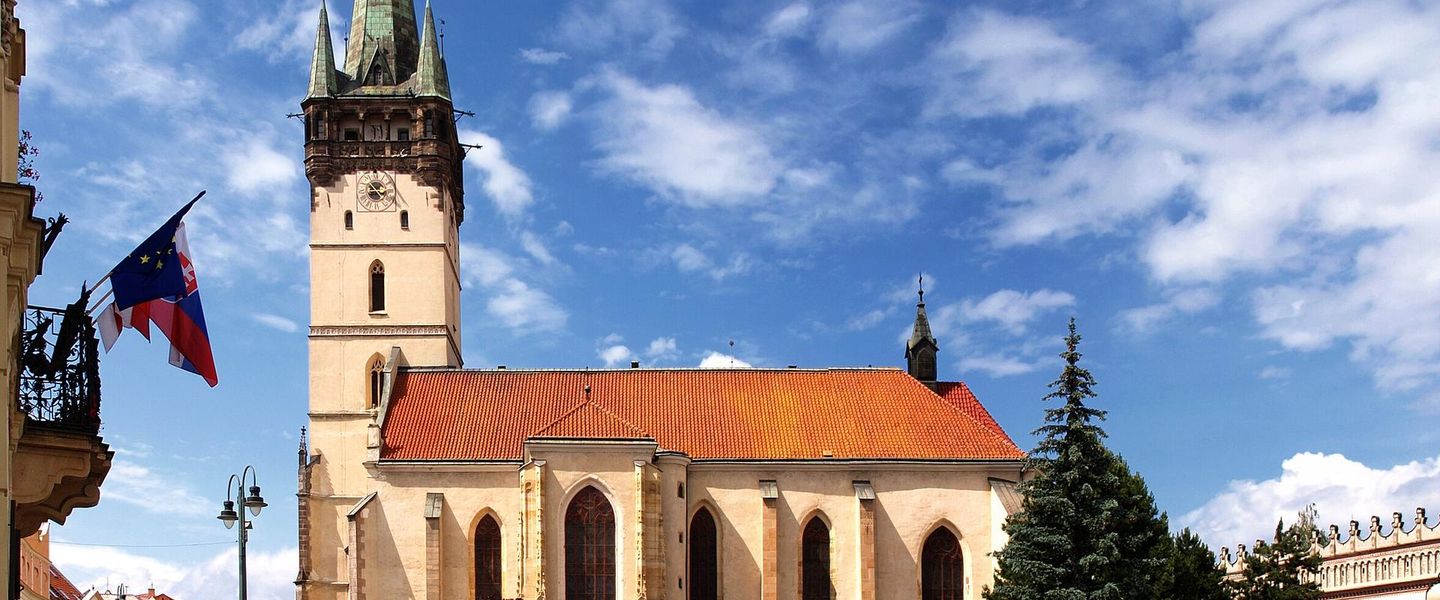


Prešov in eastern Slovakia blends a Gothic old town, Šariš culture, salt-working heritage, galleries and lively cafés for rewarding city sightseeing and nearby hills.
A historic eastern Slovak city
Prešov lies in eastern Slovakia, between the Torysa and Sekčov rivers and close to the wooded foothills of the Čergov and Šarišská vrchovina ranges. Its compact centre is shaped by a long main street, Hlavná, lined with colourful burgher houses, churches, cafés and civic buildings. The city belongs to the historic Šariš region, whose traditions remain visible in local food, music and religious heritage.Read more about Prešov
Architecture along Hlavná
Salt, faith and contemporary life
When is the best time to visit Prešov?
Best: June–August · 22–23°C| Month | High (°C) | Rainfall (mm) |
|---|---|---|
| January | 0 | 22 |
| February | 1 | 21 |
| March | 6 | 22 |
| April | 13 | 26 |
| May | 19 | 32 |
| June (best) | 22 | 38 |
| July (best) | 23 | 39 |
| August (best) | 23 | 38 |
| September | 17 | 31 |
| October | 14 | 29 |
| November | 7 | 25 |
| December | 2 | 23 |
Getting to and around Prešov
How to get there
Transportation
Best attractions in Prešov
Prešov's main sightseeing area follows Hlavná street, where the Gothic Church of St Nicholas, colourful historic houses and civic architecture create a coherent walk through the old town. The Šariš Gallery presents Slovak art in historic surroundings, while the Regional Museum introduces the history and culture of the wider Šariš region. The Orthodox synagogue, now associated with the city's Jewish heritage, offers a moving perspective on the communities that shaped Prešov. South of the centre, the Solivar salt works preserve industrial buildings and equipment linked to traditional salt production. Prešov Calvary rises above the city with chapels and views towards the surrounding hills. Cafés, small cultural venues and public spaces around the central square add contemporary life to the historic setting, while the nearby Torysa and Sekčov valleys provide opportunities for quieter walks beyond the main sightseeing route.
-
Fountain
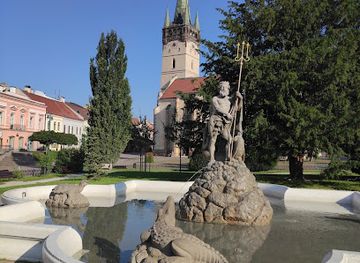
Neptune Fountain
Explore the Neptune Fountain, a stunning 18th-century masterpiece in Prešov, blending historical charm with a vibrant atmosphere.
8 min walk · 0.6 km from city centre
-
Cathedral
Co-Cathedral of Saint Nicholas
Explore the stunning Co-Cathedral of Saint Nicholas, a breathtaking Gothic masterpiece and a significant cultural landmark in Prešov, Slovakia.
7 min walk · 0.5 km from city centre
-
Tourist attraction
Kolman's garden
Discover the tranquil beauty of Kolman's Garden in Prešov, a perfect urban park for relaxation, walks, and nature appreciation.
15 min walk · 1.2 km from city centre
-
Tourist attraction
Statue Of Jesus Christ
Explore the Statue of Jesus Christ in Prešov, a majestic symbol of faith offering stunning views and rich cultural experiences in Slovakia.
5 min walk · 0.4 km from city centre


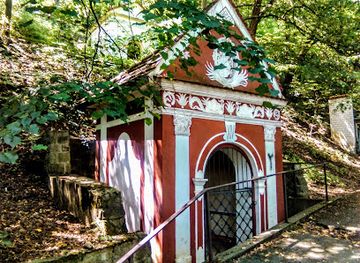
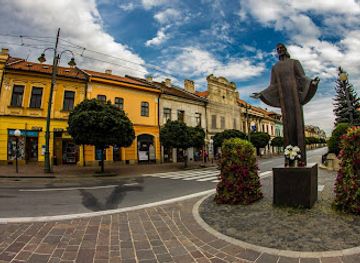
Best landmarks in Prešov
The Church of St Nicholas is Prešov's defining historic landmark, a Gothic church whose later alterations reflect the changing religious and architectural life of the town. Hlavná street also contains the former Rákóczi House, associated with the Rákóczi family and the political history of the region, as well as the Evangelical church, whose presence recalls the strong Protestant tradition of early modern Prešov. The Orthodox synagogue is an important surviving marker of Jewish life and wartime loss. Near the centre, the Neptune fountain provides a familiar civic meeting point, while Prešov Calvary forms a long ridge of chapels above the city. At Solivar, industrial structures connected with salt extraction represent a different kind of heritage, showing how technology and natural resources influenced the city's development.
-
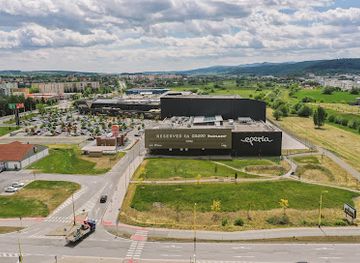
Shopping mall
EPERIA
Discover EPERIA, a vibrant shopping mall in Prešov-Sekčov, offering a unique blend of shopping, dining, and entertainment for all visitors.
7 min drive · 2.5 km from city centre
-
Fountain
Neptune Fountain
Discover the Neptune Fountain in Prešov, a stunning architectural marvel that reflects the city's rich history and vibrant culture, making it a must-see attraction.
8 min walk · 0.6 km from city centre
-
Fortress
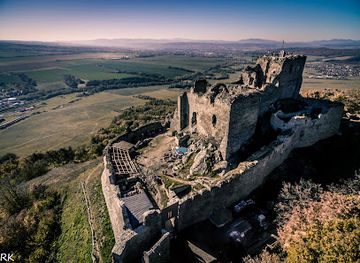
Kapušany Castle
Discover the enchanting Kapušany Castle, a historical fortress in Slovakia that showcases medieval architecture and breathtaking landscapes.
26 min drive · 8.8 km from city centre
-
Sports complex
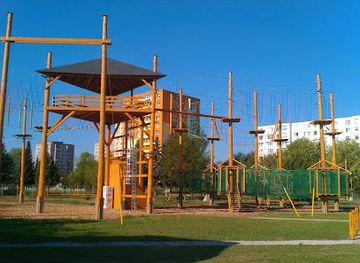
Lanové centrum Outdoor Park
Explore thrilling rock climbing and zip-lining adventures at Lanové Centrum Outdoor Park in Prešov, Slovakia, an ideal destination for outdoor enthusiasts.
6 min drive · 1.9 km from city centre
Explore Prešov on the map
Plan your Prešov trip on one map. See where the top attractions, landmarks, restaurants, bars and hotels are, find what's near where you're staying, and book hotels and experiences in a few clicks.
Best hotels in Prešov
Best restaurants in Prešov
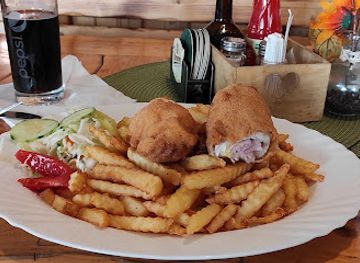
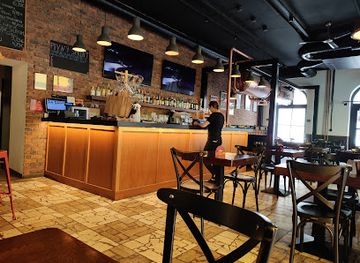
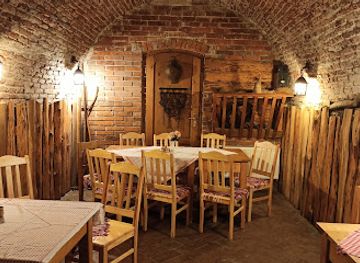
Prešov's food culture reflects the hearty cooking of Šariš and the broader traditions of eastern Slovakia. Menus may feature bryndzové halušky, potato dumplings with sheep's cheese and bacon, as well as pirohy, soups, cabbage dishes, lokše and roast meats. Bryndza, smoked products, potatoes and seasonal mushrooms are familiar regional ingredients, while sweet pastries and poppy-seed baking appear in cafés and bakeries. The centre around Hlavná street provides the broadest choice of restaurants, cafés and casual dining, with traditional Slovak cooking alongside Central European and international options. Markets and bakeries offer a more everyday view of local tastes than formal dining rooms. The city's Greek Catholic and Carpathian cultural connections also form part of its culinary background, though restaurant menus vary and regional dishes are not necessarily available everywhere.
-
Restaurant
Steak House Preshow
Experience mouthwatering steaks at Steak House Preshow in Prešov – where culinary excellence meets warm hospitality.
11 min drive · 3.6 km from city centre
-
Restaurant
Sabaraca 3 Prešov
Experience authentic Slovak cuisine at Sabaraca 3 in Prešov – where delicious flavors meet warm hospitality.
12 min walk · 1.0 km from city centre
-
Restaurant
Staré dobré Mexiko
Savor authentic Mexican cuisine in Prešov at Staré dobré Mexiko - where every meal tells a story!
6 min walk · 0.5 km from city centre
-
Eastern European
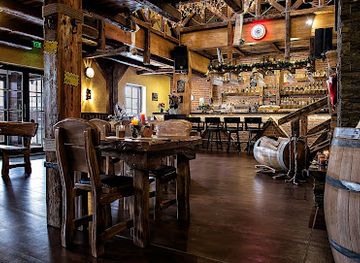
Šarišská Chiža
Experience authentic Eastern European cuisine at Šarišská Chiža in Prešov - where tradition meets taste in every dish.
8 min walk · 0.6 km from city centre
Best bars in Prešov
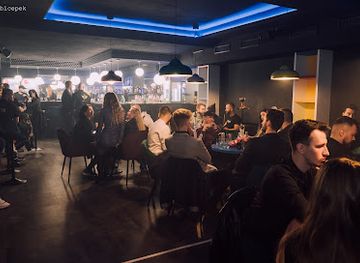
Evening life in Prešov is concentrated around Hlavná street and nearby central lanes, where cafés, pubs and small bars draw students, residents and visitors. The atmosphere is generally sociable rather than metropolitan, with relaxed places for Slovak beer, wine or coffee alongside venues that host live music and cultural events. The city's university population supports a changing selection of informal bars, while theatres and concert programmes provide alternatives to late-night drinking. Traditional pubs can be useful places to encounter local social life, whereas the centre's cafés suit a quieter evening. Nightclubs exist but the scale is modest compared with Bratislava or Košice, and activity varies according to the academic calendar and scheduled performances.
-
Hookah bar
Meduza Prešov - Shisha Fun Bar & Disco Club
Discover Meduza Prešov, where vibrant nightlife meets exquisite shisha and cocktails in the heart of Slovakia's cultural gem.
14 min walk · 1.1 km from city centre
-
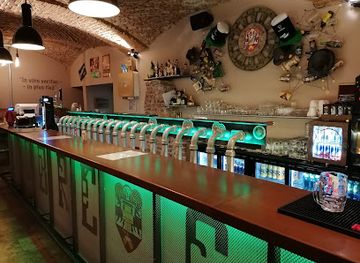
Pub
Dobré Časy
Experience authentic Slovak culture at Dobré Časy, a brewpub in Prešov offering delicious local cuisine and craft beers in a cozy atmosphere.
10 min walk · 0.8 km from city centre
-
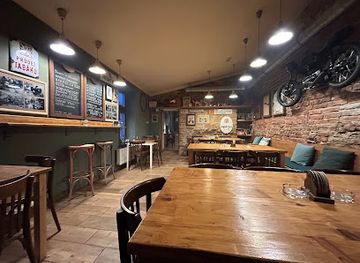
Bar
Lokal
Discover Lokal in Prešov, where the best of bar, café, and pub converge to create a lively atmosphere for every visitor.
10 min walk · 0.8 km from city centre
-
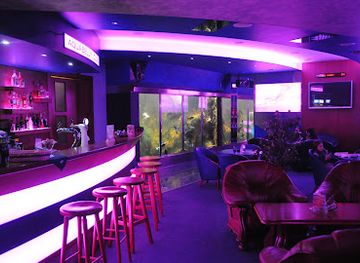
Bar
Aquabelly CLUB
Experience the vibrant nightlife of Prešov at Aquabelly CLUB, where great drinks, music, and unforgettable moments await.
6 min walk · 0.4 km from city centre
Best nightclubs in Prešov
Evening life in Prešov is concentrated around Hlavná street and nearby central lanes, where cafés, pubs and small bars draw students, residents and visitors. The atmosphere is generally sociable rather than metropolitan, with relaxed places for Slovak beer, wine or coffee alongside venues that host live music and cultural events. The city's university population supports a changing selection of informal bars, while theatres and concert programmes provide alternatives to late-night drinking. Traditional pubs can be useful places to encounter local social life, whereas the centre's cafés suit a quieter evening. Nightclubs exist but the scale is modest compared with Bratislava or Košice, and activity varies according to the academic calendar and scheduled performances.
-
Hookah bar
Meduza Prešov - Shisha Fun Bar & Disco Club
Discover the ultimate nightlife experience at Meduza Prešov – a vibrant Hookah bar and Disco Club offering cocktails, dance, and shisha in a lively atmosphere.
14 min walk · 1.1 km from city centre
-
Night club
ENCORE the club
Discover the ultimate nightlife experience at ENCORE the Club in Prešov, where vibrant music, cocktails, and unforgettable moments await.
6 min walk · 0.5 km from city centre
-
Disco club
Submarine Music Pub
Experience the electrifying nightlife at Submarine Music Pub, a premier disco club in Prešov offering an unforgettable party atmosphere.
11 min walk · 0.9 km from city centre
-
Bar
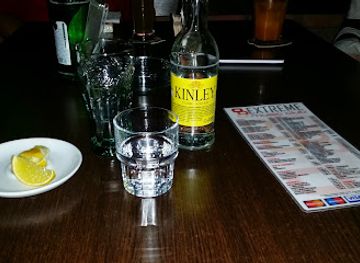
Extreme music club
Experience the pulse of Prešov's nightlife at Extreme Music Club, where music and fun collide in a vibrant setting.
8 min drive · 2.8 km from city centre


Best shops in Prešov
Shopping in Prešov combines ordinary city commerce with the historic centre's smaller independent businesses. Hlavná street and its adjoining lanes contain cafés, bookshops, pharmacies, services and boutiques, while larger retail centres such as Novum Prešov and MAX offer chain shops and everyday amenities outside the old-town atmosphere. Markets provide seasonal fruit, vegetables and practical goods, although their exact range changes during the year. Visitors looking for regional souvenirs can consider Slovak food products, honey, herbal goods, ceramics, woodcraft and textiles, while bakeries are useful for locally familiar pastries rather than generic keepsakes. The city's strongest shopping character lies in the contrast between contemporary retail and the long commercial role of the central street, not in a specialised luxury district.
-
Shopping mall
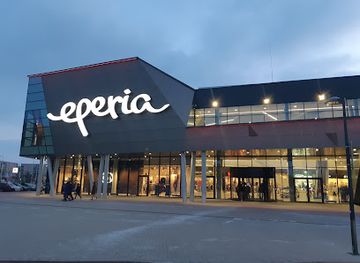
EPERIA
Discover EPERIA, the ultimate shopping mall in Prešov-Sekčov, where shopping, dining, and entertainment come together for a perfect day out.
7 min drive · 2.5 km from city centre
-
Shopping mall
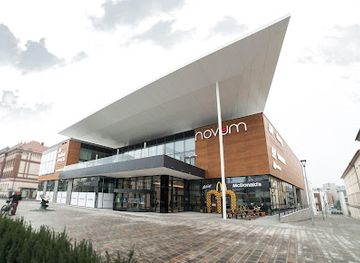
Novum Prešov
Explore Novum Prešov, a vibrant shopping mall blending modern retail with local culture in the heart of Prešov, Slovakia.
13 min walk · 1.1 km from city centre
-
Coffee shop
Dublin Cafe
Experience the inviting atmosphere and exceptional brews at Dublin Cafe, Prešov's perfect spot for coffee lovers and travelers alike.
5 min walk · 0.4 km from city centre
-
Coffee shop
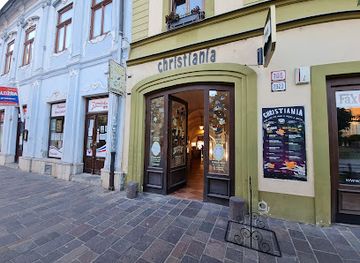
Christiania
Discover the charm of Christiania, Prešov's enchanting coffee shop known for its cozy ambiance and exceptional brews.
5 min walk · 0.4 km from city centre
Get your free copy of our complete guide to Prešov, delivered straight to you.
Everything on this page, from attractions and restaurants to essentials and local phrases, in one PDF you can read offline, print or share.
Already have an account? Sign in
Your Prešov guide is ready.
We'll send it to · Not you? Sign out

Getting your guide ready…
We are putting together a fresh copy of the Prešov guide. This can take up to a minute.
This can take a few moments. If your browser asks, choose Allow so the download can start. You'll find the guide in your Downloads folder.
Nothing happened? Download it again
Sorry, the guide is taking longer than usual. Please try again in a minute, or get it by email instead.
Prešov essentials
Currency and Payment
Safety
Emergency Situations
Do's and Don'ts
Local Tips
From Eve
Local phrases worth knowing
You don't need to get them perfect. A few words go a long way, and locals appreciate the effort.
Basics
| English | Local | Say it |
|---|---|---|
| Hello | Ahoj | [ahoy] |
| Goodbye | Dovidenia | [doh-vee-de-nyah] |
| Yes | Áno | [ah-no] |
| No | Nie | [nye] |
| Please/You're welcome | Prosím | [pro-seem] |
| Thank you | Ďakujem | [dya-koo-yem] |
| Excuse me/Sorry | Prepáčte | [preh-pahch-teh] |
| How are you? | Ako sa máš? | [ah-ko sa mah-sh] |
| Fine. And you? | Dobre. A ty? | [doh-breh. ah tee] |
| Do you speak English? | Hovoríte po anglicky? | [ho-vo-ree-teh poh ahn-gleet-skee] |
| I don't understand | Nerozumiem | [neh-roh-zoo-mee-em] |
Eating & Drinking
| English | Local | Say it |
|---|---|---|
| I'd like to see the menu, please | Chcel by som vidieť jedálny lístok, prosím | [kh-tsel bih sohm vee-dyet ye-dahl-nee lees-tok pro-seem] |
| I don't eat meat | Nepozerám mäso | [neh-poh-ze-rahm mah-soh] |
| Cheers! | Na zdravie! | [nah zdrah-vee-eh] |
| I would like to pay, please | Chcel by som zaplatiť, prosím | [kh-tsel bih sohm zah-plah-teet pro-seem] |
Emergencies
| English | Local | Say it |
|---|---|---|
| Help! | Pomoc! | [poh-mohts] |
| Go away! | Choďte preč! | [kho-jteh prech] |
| Call the Police! | Volajte políciu! | [voh-lah-yteh poh-lee-tsyoo] |
| Call a doctor! | Volajte doktora! | [voh-lah-yteh dohk-toh-rah] |
| I'm lost | Stratil som sa | [strah-teel sohm sah] |
| I'm ill | Som chorý | [sohm khoh-ree] |
Shopping
| English | Local | Say it |
|---|---|---|
| I'd like to buy... | Chcel by som kúpiť... | [kh-tsel bih sohm koo-peeht] |
| I'm just looking | Iba si pozriem | [ee-bah see poh-zree-em] |
| How much is it? | Koľko to stojí? | [kohl-koh toh stoh-yee] |
| That's too expensive | To je príliš drahé | [toh yeh pree-leesh drah-heh] |
| Can you lower the price? | Dokážete znížiť cenu? | [doh-kah-zheh-teh znee-zheet tseh-noo] |
Time & Numbers
| English | Local | Say it |
|---|---|---|
| What time is it? | Koľko je hodín? | [kohl-koh yeh hoh-deen] |
| It's one o'clock | Je jedna hodina | [yeh yehd-nah hoh-dee-nah] |
| Half past (10) | Polovica desiatej | [poh-loh-vee-tsah deh-syah-teh] |
| Morning | Ráno | [rah-noh] |
| Afternoon | Popoludní | [poh-poh-loo-dnee] |
| Evening | Večer | [veh-chehr] |
| Yesterday | Včera | [v-cheh-rah] |
| Today | Dnes | [dnes] |
| Tomorrow | Zajtra | [zai-trah] |
| 1 | Jeden | [yeh-dehn] |
| 2 | Dva | [dvah] |
| 3 | Tri | [tree] |
| 4 | Štyri | [shteer-ee] |
| 5 | Päť | [paht] |
| 6 | Šesť | [shtesh-t] |
| 7 | Sedem | [seh-dehm] |
| 8 | Osem | [oh-sehm] |
| 9 | Deväť | [deh-vaht] |
| 10 | Desať | [deh-saht] |
Transport & Directions
| English | Local | Say it |
|---|---|---|
| Where's a/the...? | Kde je... | [kdeh yeh] |
| What's the address? | Aká je adresa? | [ah-kah yeh ah-dreh-sah] |
| Can you show me (on the map)? | Môžete mi ukázať (na mape)? | [moh-zheh-teh mee oo-kah-zah-t na mah-peh] |
| When's the next (bus)? | Kedy je ďalší (autobus)? | [keh-dee yeh dyahl-shee ow-toh-boos] |
| A ticket (to ....) | Lístok (do ....) | [lees-tohk doh] |
History of Prešov
Early Settlements and Medieval Origins
The Prešov area was occupied long before the modern town emerged, with Slavic settlement developing within the wider Šariš region. The settlement is first recorded in 1247, after the Mongol invasion had reshaped communities across the Kingdom of Hungary. German-speaking settlers were invited to strengthen trade and urban development, and the town grew around the route linking northern Hungary with Poland. Its position on the Torysa helped Prešov develop as a commercial centre, while the surrounding agricultural and forested region supplied the town with food and materials.
Royal Town and Regional Trade
Prešov received important privileges during the later Middle Ages and was granted the status of a free royal town in 1374 by King Louis I of Hungary. This encouraged craft production, markets and the construction of substantial stone buildings. The Church of St Nicholas, whose origins lie in the medieval period, became the principal architectural expression of the growing town. Prešov later joined the Pentapolitana, an alliance of five important towns in present-day eastern Slovakia that co-operated in trade and regional administration. The surviving street plan and burgher houses still reveal this mercantile past.
Reformation and Confessional Change
The sixteenth and seventeenth centuries brought religious and political upheaval. Lutheran ideas gained strong support among the town's German-speaking burghers, while the Catholic and later Greek Catholic traditions remained important in the surrounding region. Prešov was drawn into conflicts connected with the Habsburg monarchy, the Ottoman frontier and repeated uprisings in Royal Hungary. These struggles affected commerce and civic life, but they also produced the religious diversity visible in the city's churches and later synagogue. The period left Prešov with a layered confessional identity rather than a single dominant tradition.
The Caraffa Executions of 1687
One of the darkest episodes in Prešov's history occurred in 1687, during the uprising led by Imre Thököly against Habsburg rule. Under General Antonio Caraffa, a special tribunal condemned twenty-four townspeople and nobles, most of them Protestant, on accusations of rebellion. They were executed in the town, and the event became known as the Prešov slaughter. The sentences were later recognised as unjust, but the trauma remained embedded in local memory. The Caraffa prison memorial and related historical references in the centre preserve this difficult chapter of political repression and confessional conflict.
Salt Works and Industrial Development
Salt extraction became an important part of Prešov's economic history, particularly at Solivar, where brine was pumped and processed. The works developed over several centuries and were modernised during the Habsburg period, creating a specialised industrial landscape south of the historic centre. Technical structures, storage buildings and the former salt-working complex now form the basis of the Solivar museum site. In the nineteenth century, improved roads and railway connections further linked Prešov with Košice, Poland and other parts of the Kingdom of Hungary, supporting trade and manufacturing.
From Czechoslovakia to Present-Day Slovakia
After the creation of Czechoslovakia in 1918, Prešov became part of a new political and economic framework while retaining its role as a regional centre. The Second World War brought persecution and the destruction of much of the city's Jewish community, a loss commemorated by the Orthodox synagogue and local historical institutions. Socialist-era expansion added housing estates and industrial workplaces beyond the old town. Since the peaceful dissolution of Czechoslovakia in 1993, Prešov has developed as a Slovak regional and university city, combining restored historic buildings with contemporary cultural and civic life.
Prešov in Photos
Browse through our photo collection highlighting the charm and character of the destination.
Cities near Prešov
The closest cities to Prešov, if you have time for more than one stop.
-

-

-

-

-


Swipe for more cities
Explore more

Explore more of Slovakia
Discover Slovakia: A land of majestic mountains, charming castles, and vibrant culture in the heart of Europe.
Explore Slovakia