

Free Southeast Slovenia Travel Guide & Mobile App
Explore Southeast Slovenia with free travel guides. Discover regional history, expert tips, proposed trips, and audio guides on web or mobile app.


Explore Southeast Slovenia for Novo Mesto, forested Kočevje, Kolpa River summers, medieval castles, rural food and Dolenjska wine country.
When is the best time to visit Southeast Slovenia?
Best: June–August · 25–27°C| Month | High (°C) | Rainfall (mm) |
|---|---|---|
| January | 6 | 50 |
| February | 8 | 45 |
| March | 12 | 50 |
| April | 16 | 55 |
| May | 21 | 60 |
| June (best) | 25 | 65 |
| July (best) | 27 | 70 |
| August (best) | 26 | 65 |
| September | 22 | 60 |
| October | 16 | 55 |
| November | 8 | 50 |
| December | 5 | 55 |
Getting to and around Southeast Slovenia
How to get there
Transportation
Top city travel guides in Southeast Slovenia
The cities of Southeast Slovenia, and the easiest places to base yourself.

Swipe for more cities
Best attractions in Southeast Slovenia
Southeast Slovenia's attractions are spread through several contrasting landscapes. Novo Mesto combines the Dolenjska Museum's archaeological collections with a historic centre above the Krka, making it the region's strongest base for understanding the area's Iron Age past. Along the river, Otočec Castle and the villages around the lower Krka bring together heritage, gardens and riverside scenery, while Pleterje offers insight into monastic life and traditional rural production. Kostanjevica na Krki adds galleries, a historic island town and the former Cistercian monastery complex, with Kostanjevica Cave nearby. South of Novo Mesto, Žužemberk is a useful starting point for exploring the Krka valley and its medieval castle. Kočevje provides woodland trails, wildlife interpretation and wartime history, with the surrounding forests offering a very different experience from the vineyard hills. In Bela krajina, Metlika and Črnomelj introduce local folklore, wine and food traditions, while the Kolpa valley is suited to paddling, swimming, cycling and warm-weather walking. The region's appeal lies in this deliberate variety rather than in one concentrated attraction zone.
-
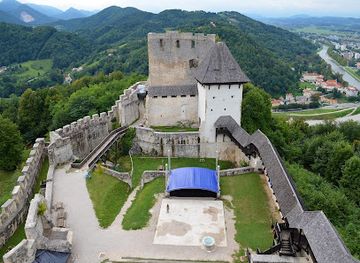
Castle
Celje Castle
Explore Celje Castle, Slovenia's historical fortress offering stunning views and captivating stories from the past.
-
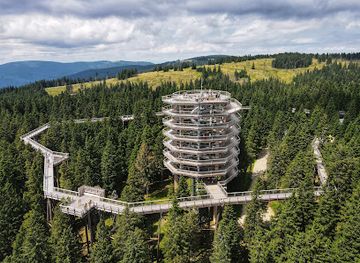
Tourist attraction
Pot med krošnjami Pohorje
Discover the scenic Pot med krošnjami Pohorje, a treetop walkway in Slovenia that offers stunning views and a unique nature experience.
-
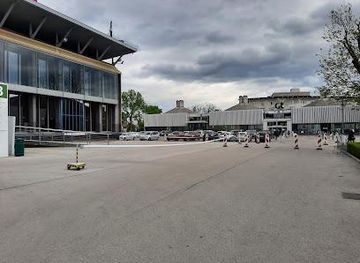
Convention center
Exhibition and Convention Centre
Explore Slovenia's vibrant culture and innovation at the Ljubljana Exhibition and Convention Centre, the go-to venue for events and exhibitions.
-
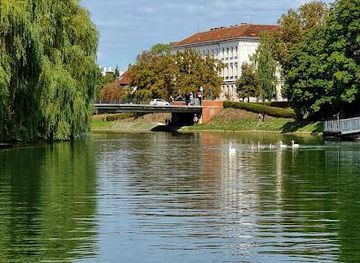
Park
Park Špica
Explore the natural beauty and tranquility of Park Špica, a serene oasis along the Ljubljanica River in the heart of Ljubljana, Slovenia.
Best landmarks in Southeast Slovenia
The Krka River is Southeast Slovenia's defining natural landmark, curving through wooded and vineyard-covered country before passing the historic core of Novo Mesto. The town's Kapiteljska Church and elevated old centre are among its most recognisable urban features, while the nearby archaeological heritage gives the landscape a significance extending far beyond its appearance. Otočec Castle, positioned on an island in the Krka, is the region's most distinctive castle setting. Žužemberk Castle rises above the river in a more rugged inland landscape, its ruined and restored elements recalling the defensive role of medieval estates. Kostanjevica na Krki is notable as a compact historic settlement on an island, complemented by the former monastery complex and the nearby cave. In Bela krajina, Metlika Castle and the old town reflect the area's long frontier history. Around Kočevje, vast forest horizons and remnants of abandoned Gottscheer settlements form a less monumental but deeply significant cultural landscape, while the Kolpa itself provides the southern region with a luminous geographical boundary and a focus for seasonal life.
-
Nature preserve
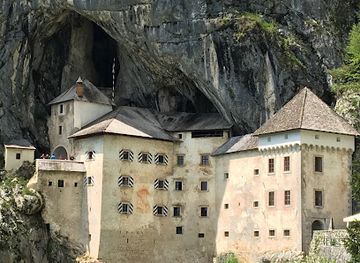
Postojna Cave
Discover the breathtaking beauty of Postojna Cave - a stunning underground wonder with amazing formations and rich history in Slovenia.
-
Castle
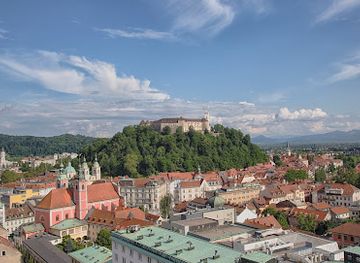
Ljubljana Castle
Explore the historical Ljubljana Castle, a stunning medieval fortress offering breathtaking views and engaging exhibitions in Slovenia's vibrant capital.
-
Castle
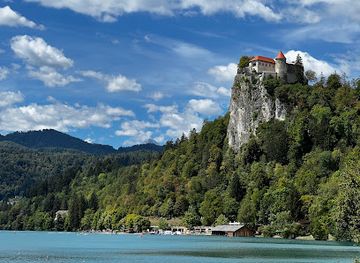
Bled Castle
Discover the enchanting Bled Castle, a historical marvel with breathtaking views, rich culture, and captivating stories atop a cliff by Lake Bled.
-
National park
Triglav National Park
Discover the breathtaking landscapes and rich biodiversity of Triglav National Park, Slovenia's jewel of the Julian Alps.
Explore Southeast Slovenia on the map
Plan your trip on one map. See where the top cities, national parks and sights are, and book hotels and experiences in a few clicks.
Best hotels in Southeast Slovenia
Best restaurants in Southeast Slovenia
Dining in Southeast Slovenia is closely connected with vineyards, forests, rivers and farmsteads. Dolenjska is the home territory of cviček, a light red or rosé-style wine traditionally made from a blend of grape varieties, and wine cottages on the Gorjanci and surrounding hills may accompany tastings with simple local food. Bela krajina is associated with belokranjska pogača, a distinctive flatbread, as well as lamb, kid, grilled meats, seasonal vegetables and rural baking. Kočevje's woodland setting is reflected in honey, game-based cooking and foraged ingredients, although menus vary by establishment. Across the region, look for farm tourism, traditional inns, cafés in market towns and contemporary restaurants using produce from nearby farms. Local honey, cheeses, cured meats and seasonal fruit make practical food souvenirs, while river valleys and wine areas offer different dining atmospheres. Smaller rural venues may open seasonally or by arrangement, so advance contact is sensible when planning a meal outside the main towns.
-
Restaurant
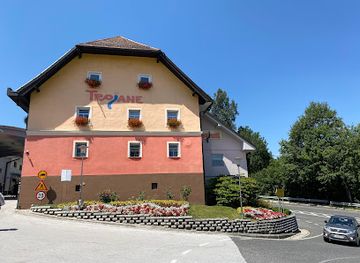
Gostinsko podjetje Trojane d.d.
Experience authentic Slovenian cuisine at Gostinsko podjetje Trojane—home of generous portions and delightful flavors.
-
Restaurant
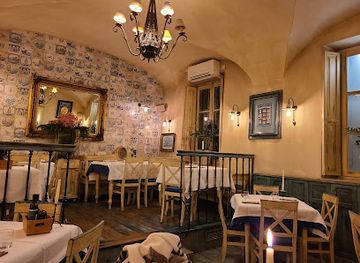
Julija
Savor the rich flavors of Slovenia at Julija, where authentic cuisine meets warm hospitality in the heart of Ljubljana.
-
Restaurant
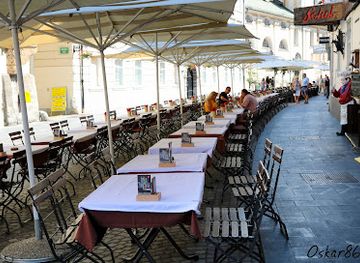
Gostilna Sokol
Experience authentic Slovenian cuisine at Gostilna Sokol, where tradition meets modern dining in the heart of Ljubljana.
-
Restaurant
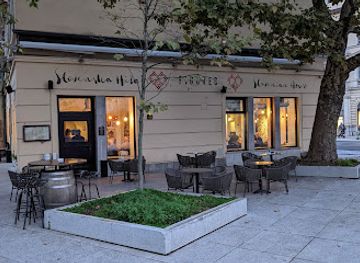
Slovenska Hiša - Figovec
Discover authentic Slovenian flavors at Slovenska Hiša - Figovec, where tradition meets modern dining in the heart of Ljubljana.
Best bars in Southeast Slovenia
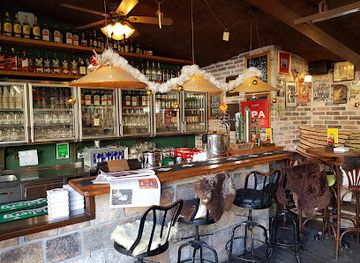
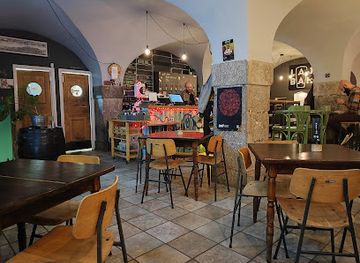
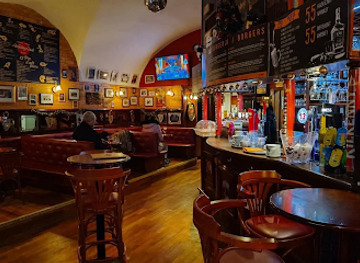
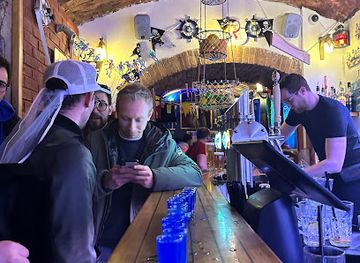
Southeast Slovenia has a modest evening scene rather than a concentrated club culture. In Novo Mesto, evenings centre on cafés, wine bars, restaurants and occasional live music or cultural programming, with the Krka-side setting adding atmosphere without turning the town into a late-night resort. Kočevje, Metlika, Črnomelj and other larger settlements have local pubs and cafés where residents meet, while rural Dolenjska and Bela krajina are more closely associated with wine cottages, traditional inns and social gatherings than with nightclubs. Summer brings more activity around the Kolpa, particularly where campsites and outdoor recreation providers operate, but arrangements are seasonal. Visitors interested in local drinks should look for cviček in Dolenjska and regional wines in Bela krajina, while breweries and small producers may provide tastings by appointment. Check current arrangements locally, as opening patterns and cultural events can change.
-
Bar
Cutty Sark Pub
Discover the lively Cutty Sark Pub in Ljubljana, where local charm meets a vibrant nightlife experience.
-
Beer hall
Pub Lajbah
Experience the vibrant fusion of local and international flavors at Pub Lajbah, a must-visit beer hall in the heart of Ljubljana.
-
Bar
Holidays' Pub
Discover the charm of Holidays' Pub, a vibrant Irish bar and karaoke haven in the heart of Ljubljana, perfect for a night of fun and entertainment.
-
Bar
Captain's Cabin
Discover the vibrant atmosphere and affordable drinks at Captain's Cabin, Ljubljana's charming nautical-themed bar.
Best nightclubs in Southeast Slovenia
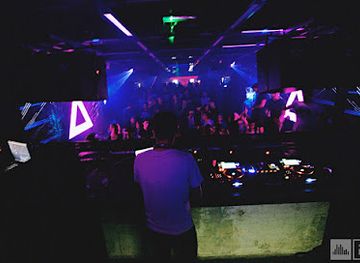
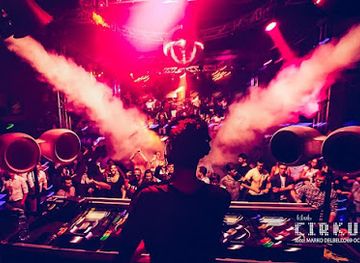
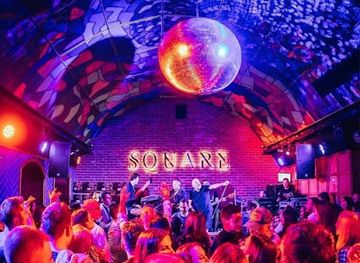
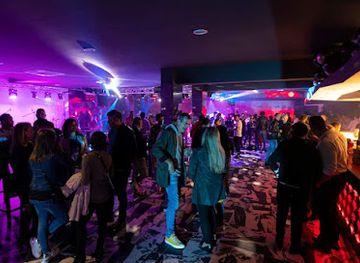
Southeast Slovenia has a modest evening scene rather than a concentrated club culture. In Novo Mesto, evenings centre on cafés, wine bars, restaurants and occasional live music or cultural programming, with the Krka-side setting adding atmosphere without turning the town into a late-night resort. Kočevje, Metlika, Črnomelj and other larger settlements have local pubs and cafés where residents meet, while rural Dolenjska and Bela krajina are more closely associated with wine cottages, traditional inns and social gatherings than with nightclubs. Summer brings more activity around the Kolpa, particularly where campsites and outdoor recreation providers operate, but arrangements are seasonal. Visitors interested in local drinks should look for cviček in Dolenjska and regional wines in Bela krajina, while breweries and small producers may provide tastings by appointment. Check current arrangements locally, as opening patterns and cultural events can change.
-
Night club
Klub K4
Discover the heart of Ljubljana's nightlife at Klub K4, where electrifying music and vibrant crowds create unforgettable nights.
-
Night club
Cirkus Klub
Experience the vibrant energy and stylish atmosphere at Cirkus Klub, Ljubljana's premier nightlife destination for an unforgettable night out.
-
Cocktail bar
Square club
Experience Ljubljana's vibrant nightlife at Square Club, the premier cocktail bar offering innovative drinks and an energetic atmosphere.
-
Night club
Pegas Club
Discover the pulsating heart of Sežana's nightlife at Pegas Club, where great music and vibrant energy create unforgettable nights.
Best shops in Southeast Slovenia
Shopping in Southeast Slovenia is best approached through market towns, local producers and farm-based outlets rather than large retail districts. Novo Mesto has the region's broadest choice of everyday shops, independent businesses, cafés and galleries, while Metlika and Črnomelj are useful for finding Bela krajina food products and locally made goods. Look for cviček and other Dolenjska wines, honey, fruit preserves, cured meats, cheeses and seasonal produce, ideally purchased directly from established farms or specialist shops. Belokranjska pogača is best enjoyed fresh, though packaged regional foods can travel more easily. Craft traditions and folk culture are represented through textiles, decorative items, pottery and small artworks, with selection varying by town and season. Kočevje is a practical place to seek forest-related products, honey and locally themed gifts. Markets and small producers may operate on particular days or by arrangement, so confirm details locally rather than assuming that a rural shop will be open daily.
-
Shopping mall
BTC City Ljubljana
Discover the ultimate shopping and leisure experience at BTC City Ljubljana, Slovenia's premier destination for shopping, dining, and cultural activities.
-
Store
Shopping Center Citypark
Discover the ultimate shopping experience in Ljubljana at Shopping Center Citypark, offering diverse stores, delicious dining, and family-friendly fun all in one place.
-
Shopping mall
Supernova Ljubljana Rudnik
Discover the vibrant shopping experience at Supernova Ljubljana Rudnik, where retail therapy meets delightful dining and family fun.
-
Shopping mall
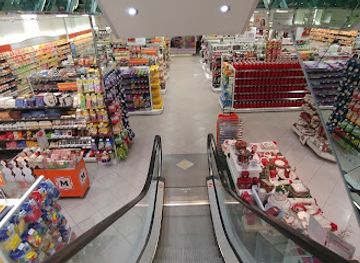
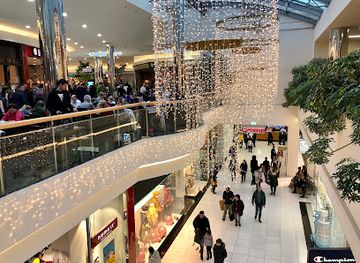
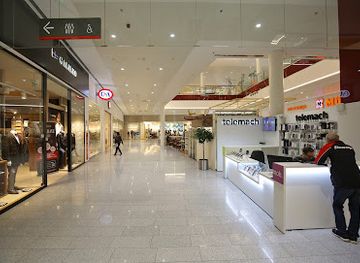
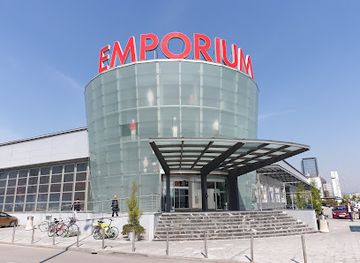
Emporium
Discover an exceptional shopping experience at Emporium, Ljubljana's premier shopping mall featuring diverse retail, dining, and cultural experiences.
Get your free copy of our complete guide to Southeast Slovenia, delivered straight to you.
Everything on this page, from attractions and restaurants to essentials and local phrases, in one PDF you can read offline, print or share.
Already have an account? Sign in
Your Southeast Slovenia guide is ready.
We'll send it to · Not you? Sign out

Getting your guide ready…
We are putting together a fresh copy of the Southeast Slovenia guide. This can take up to a minute.
This can take a few moments. If your browser asks, choose Allow so the download can start. You'll find the guide in your Downloads folder.
Nothing happened? Download it again
Sorry, the guide is taking longer than usual. Please try again in a minute, or get it by email instead.
Southeast Slovenia essentials
Currency and Payment
Safety
Emergency Situations
Do's and Don'ts
Local Tips
From Eve
Local phrases worth knowing
You don't need to get them perfect. A few words go a long way, and locals appreciate the effort.
Basics
| English | Local | Say it |
|---|---|---|
| Hello | Zdravo | [Zdra-vo] |
| Goodbye | Nasvidenje | [Nas-vi-den-ye] |
| Yes | Da | [Da] |
| No | Ne | [Ne] |
| Please/You’re welcome | Prosim | [Pro-sim] |
| Thank you | Hvala | [H-va-la] |
| Excuse me/Sorry | Opravičujem se | [O-pra-vi-ču-jem se] |
| How are you? | Kako si? | [Ka-ko si] |
| Fine. And you? | Dobro. In ti? | [Do-bro. In ti?] |
| Do you speak English? | Ali govoriš angleško? | [A-li go-vo-riš an-gle-ško?] |
| I don't understand | Ne razumem | [Ne ra-zu-mem] |
Eating & Drinking
| English | Local | Say it |
|---|---|---|
| I’d like to see the menu, please | Rad bi videl meni, prosim | [Rad bi vi-del me-ni, pro-sim] |
| I don’t eat meat | Ne jem mesa | [Ne yem me-sa] |
| Cheers! | Na zdravje! | [Na zdrav-ye] |
| I would like to pay, please | Rad bi plačal, prosim | [Rad bi pla-čal, pro-sim] |
Emergencies
| English | Local | Say it |
|---|---|---|
| Help! | Pomagajte! | [Po-ma-gaj-te] |
| Go away! | Pojdi stran! | [Poj-di stran] |
| Call the Police! | Pokličite policijo! | [Po-kli-či-te po-li-ci-jo] |
| Call a doctor! | Pokličite zdravnika! | [Po-kli-či-te zdrav-ni-ka] |
| I’m lost | Izgubil sem se | [Iz-gu-bil sem se] |
| I’m ill | Bolehen sem | [Bo-le-hen sem] |
Shopping
| English | Local | Say it |
|---|---|---|
| I’d like to buy... | Rad bi kupil... | [Rad bi ku-pil] |
| I’m just looking | Samo gledam | [Sa-mo gle-dam] |
| How much is it? | Koliko stane? | [Ko-li-ko sta-ne?] |
| That’s too expensive | To je predrago | [To ye pre-dra-go] |
| Can you lower the price? | Lahko znižaš ceno? | [La-hko zni-žaš ce-no?] |
Time & Numbers
| English | Local | Say it |
|---|---|---|
| What time is it? | Koliko je ura? | [Ko-li-ko ye u-ra?] |
| It’s one o’clock | Je ena ura | [Ye e-na u-ra] |
| Half past (10) | Pol (10) | [Pol (10)] |
| Morning | Jutro | [Yu-tro] |
| Afternoon | Popoldne | [Po-pold-ne] |
| Evening | Večer | [Ve-čer] |
| Yesterday | Včeraj | [Vče-raj] |
| Today | Danes | [Da-nes] |
| Tomorrow | Jutri | [Yu-tri] |
| 1 | 1 | [1] |
| 2 | 2 | [2] |
| 3 | 3 | [3] |
| 4 | 4 | [4] |
| 5 | 5 | [5] |
| 6 | 6 | [6] |
| 7 | 7 | [7] |
| 8 | 8 | [8] |
| 9 | 9 | [9] |
| 10 | 10 | [10] |
Transport & Directions
| English | Local | Say it |
|---|---|---|
| Where's a/the...? | Kje je...? | [Kje ye...?] |
| What’s the address? | Kakšna je naslov? | [Kakšna ye nas-lov?] |
| Can you show me (on the map)? | Mi lahko pokažeš (na zemljevidu)? | [Mi la-hko po-ka-žeš (na zem-le-vi-du)?] |
| When's the next (bus)? | Kdaj gre naslednji (avtobus)? | [Kdaj gre nas-led-nji (av-to-bus)?] |
| A ticket (to ....) | Eno vozovnico (do ....) | [E-no vo-zo-vni-co (do ....)] |
History of Southeast Slovenia
Iron Age Situla Culture
The Novo Mesto area was an important centre of Iron Age settlement, and its richly furnished graves produced celebrated bronze situlae, decorated vessels that illustrate the artistic and trading connections of the southeastern Alpine and northern Balkan worlds. Archaeological material from the region shows that communities here participated in long-distance exchange well before Roman rule. Novo Mesto's archaeological collections, including finds from the Kapiteljska njiva cemetery, provide the clearest introduction to this early heritage and remain central to the region's historical identity.
Roman Roads and Settlements
Roman incorporation brought new systems of administration, trade and transport to the valleys of present-day Southeast Slovenia. Roads connected the area with larger settlements and routes across the province of Pannonia, while farms and smaller settlements occupied productive land along the Krka and its tributaries. Roman remains are less monumental here than in some parts of Slovenia, but archaeological discoveries around Dolenjska and Bela krajina demonstrate the region's continuing role as a corridor between the Adriatic hinterland and the inland Balkans.
Medieval Castles, Towns and Monasteries
From the medieval period onwards, castles and monasteries organised political, religious and economic life across the region. Otočec, Žužemberk and other fortified sites guarded river crossings and local routes, while towns such as Novo Mesto, Metlika and Kostanjevica na Krki developed as centres of commerce and administration. The Cistercians established Pleterje monastery in the fifteenth century, adding a long-lived religious and agricultural institution to the Dolenjska landscape. Many later buildings and settlement patterns still reflect this medieval framework.
Habsburg Borderlands and Military History
For centuries, much of the region lay within the Habsburg lands and close to changing political frontiers. Bela krajina, in particular, was shaped by its position near the border with Croatia, with fortifications, administrative towns and military obligations influencing local life. Metlika's heritage reflects this frontier role, while castles along the Krka protected estates and routes rather than functioning solely as residences. The region's history therefore combines local lordship, imperial administration and the practical concerns of communities living near a political boundary.
Forestry and the Kočevje Landscape
The extensive forests around Kočevje supported forestry, charcoal burning, hunting and timber-related livelihoods over many generations. The area also had a distinctive German-speaking rural population, commonly known as the Gottscheers, whose settlements were profoundly disrupted by the Second World War and its aftermath. Some villages disappeared or were abandoned, leaving traces in the forest rather than intact townscapes. Today, woodland interpretation, memorial sites and surviving cultural remnants help explain how migration, war and land-use change transformed the Kočevje area.
The Second World War and Partisan Heritage
Southeast Slovenia was an important theatre of occupation, resistance and civil conflict during the Second World War. Forested terrain offered cover for the Yugoslav Partisan movement, while towns and villages experienced military reprisals, displacement and political upheaval. Places associated with wartime hospitals, resistance administration and memorials are found in several parts of the region. The legacy is complex and should be approached through museums and curated memorial sites, which place local experiences within the wider history of occupied Slovenia and the wartime resistance.
Modern Wine, Tourism and Conservation
After the Second World War, the region combined agricultural modernisation and industrial development with the persistence of small-scale vineyards, forests and family farming. Dolenjska's cviček became a prominent expression of local wine culture, while Bela krajina retained distinctive food, folklore and vineyard traditions. In recent decades, river recreation, cycling, cultural tourism and forest conservation have added new economic roles. The expansion of protected areas and nature-based tourism reflects growing recognition of the Krka, Kolpa and Kočevje landscapes as assets alongside their historical heritage.
Southeast Slovenia in Photos
Browse through our photo collection highlighting the charm and character of the destination.
Neighbouring regions of Southeast Slovenia
The closest regions to Southeast Slovenia, if you have time for more than one.
-

-

-

-

-


Swipe for more regions
Explore more

Explore more of Slovenia
Discover Slovenia's stunning landscapes, rich cultural heritage, and delightful cuisine. A hidden gem in Europe, perfect for outdoor adventures, history, and culinary exploration.
Explore Slovenia