

Columbia Riverfront Park Travel Guide - Free Web & App
Your ultimate guide to Columbia Riverfront Park. Discover top landmarks, proposed trips, and local tips. Free on the web or via the Evendo companion app.


Columbia Riverfront Park in South Carolina follows the historic canal beside the Broad River, with trails, water views and links to Columbia's greenways.
A Waterway Landscape beside Columbia
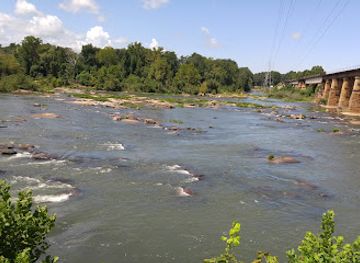
Columbia Riverfront Park occupies a narrow, wooded corridor along the Broad River and the historic Columbia Canal, just north-west of central Columbia, South Carolina. Often referred to as Columbia Canal and Riverfront Park, it preserves an unusual meeting point between industrial history and a regenerating riverside landscape. The canal follows the river through shaded woodland, while paths provide views towards rocky shallows, wooded banks and the moving water of the Broad River. Rather than being a formal garden or a built-up waterfront, the park is primarily a place for walking, running, cycling, fishing where permitted, and observing the changing character of the river.Read more about Columbia Riverfront Park
Industrial Heritage and Outdoor Recreation
When is the best time to visit Columbia Riverfront Park?
Best: April–May, October · 24–29°C| Month | High (°C) | Rainfall (mm) |
|---|---|---|
| January | 13 | 96 |
| February | 16 | 86 |
| March | 19 | 96 |
| April (best) | 24 | 76 |
| May (best) | 29 | 91 |
| June | 32 | 106 |
| July | 34 | 126 |
| August | 33 | 116 |
| September | 31 | 96 |
| October (best) | 26 | 81 |
| November | 19 | 86 |
| December | 14 | 91 |
Getting to and around Columbia Riverfront Park
How to get there
Transportation
Best attractions in Columbia Riverfront Park
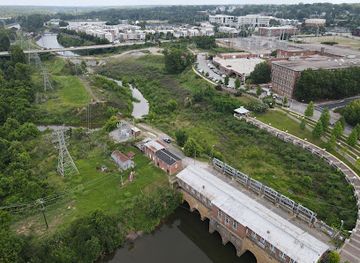
The central attraction is the historic Columbia Canal, whose long, quiet channel runs beside the Broad River through a wooded urban corridor. Walking or cycling the riverside trail reveals the contrast between the engineered canal bank and the more natural river edge, with occasional views of flowing water, rocky shallows and forested slopes. Interpretive features and surviving industrial remains help explain the canal's former role in navigation, water power and Columbia's development. The park also forms an important section of the Three Rivers Greenway, allowing visitors to extend an outing towards connected riverside areas in Columbia, West Columbia and Cayce, subject to current access conditions. River Drive and the Laurel Street vicinity provide principal urban approaches, while downtown Columbia and the Vista are nearby for museums, restaurants and cultural attractions outside the park. The experience is primarily one of landscape, history and recreation rather than a collection of buildings or formal visitor attractions.
-
Museum
South Carolina State Museum
Explore the South Carolina State Museum, a treasure trove of art, history, and science located in the heart of Columbia, South Carolina.
-
Children's museum
EdVenture
Discover the joy of learning through play at EdVenture, Columbia's premier children's museum, where imagination and education come together.
-
Nature preserve
West Columbia Riverwalk Park and Amphitheater
Experience the natural beauty and vibrant events at West Columbia Riverwalk Park and Amphitheater, a serene escape along the Congaree River.
-
Recreation center
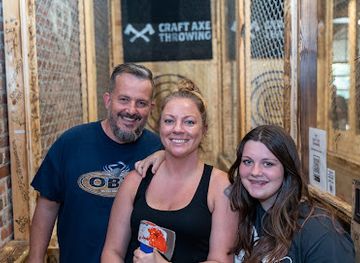
Craft Axe Throwing
Experience the thrill of axe throwing at Craft Axe Throwing in Columbia, SC – a thrilling adventure for all ages and skill levels.
Best landmarks in Columbia Riverfront Park
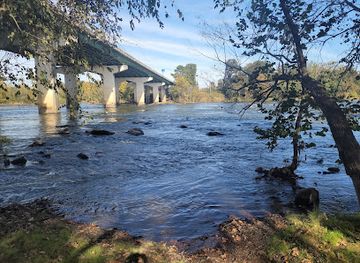
The defining natural landmark is the Broad River, whose waters meet the Saluda River downstream from the park to form the Congaree River and whose rocky, wooded corridor shaped Columbia's location. Beside it, the Columbia Canal is the area's principal historic landmark: its engineered channel records the city's nineteenth-century efforts to improve inland navigation and its later use in water-powered industry and electricity generation. Remnants of the former waterworks and canal infrastructure add industrial meaning to the landscape, although visitors should observe barriers and interpretive guidance around structures. The park's relationship with the Three Rivers Greenway is also significant, linking a historic working waterway with a modern regional network of public paths. Its landmark character comes less from monumental architecture than from the legible connection between river, canal, engineering and Columbia's urban growth.
-
Museum
South Carolina State Museum
Explore South Carolina's cultural heritage and natural wonders at the State Museum, where history, art, and science come alive.
-
Nature preserve
West Columbia Riverwalk Park and Amphitheater
Explore the natural beauty and vibrant community spirit of West Columbia Riverwalk Park and Amphitheater, a perfect retreat for nature lovers and entertainment seekers alike.
-
Park
Columbia Canal and Riverfront Park
Discover the serene beauty and historical significance of Columbia Canal and Riverfront Park, a must-visit outdoor gem in Columbia, South Carolina.
-
Park
Finlay Park
Discover the tranquility of Finlay Park, a scenic urban retreat in Columbia, South Carolina, perfect for relaxation, picnics, and community events.

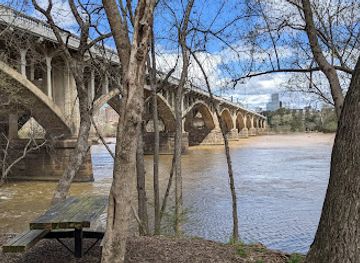


Explore Columbia Riverfront Park on the map
Plan your trip on one map. See where the top attractions, landmarks, restaurants and hotels are, and book hotels and experiences in a few clicks.
Best hotels in Columbia Riverfront Park
Best restaurants in Columbia Riverfront Park
Columbia Riverfront Park has no established dining district within the trail corridor, so visitors normally eat in nearby Columbia, the Vista, downtown or across the rivers in West Columbia and Cayce. These areas provide the region's broader choice of restaurants, cafés, casual eateries and traditional Southern cooking, with menus commonly influenced by South Carolina's agricultural produce, barbecue culture and Lowcountry connections. The city's food scene also includes national and international cuisines, reflecting Columbia's role as a state capital and university city. For a park outing, carrying water and a picnic is practical because food purchases are concentrated outside the riverside landscape; visitors should avoid leaving waste behind and follow park regulations. Independent cafés and restaurants in the surrounding urban districts are better suited to a pre- or post-walk meal than relying on facilities at the park itself.
-
Hamburger
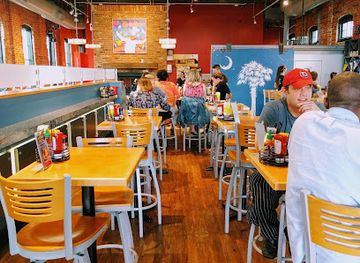
Grill Marks - COLA
Experience the ultimate burger haven at Grill Marks - COLA in Columbia SC, where delicious flavors meet vibrant dining.
-
Grill
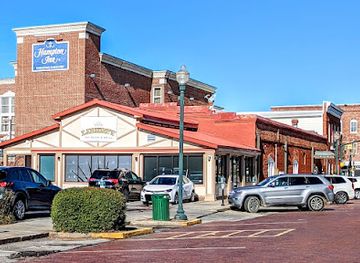
Liberty Tap Room & Grill
Discover Liberty Tap Room & Grill: A vibrant American restaurant in Columbia offering delicious food and an extensive drink menu.
-
American
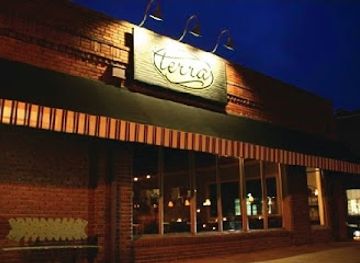
Terra
Discover Terra in West Columbia: A culinary haven blending American flavors with European elegance for an unforgettable dining experience.
-
Italian
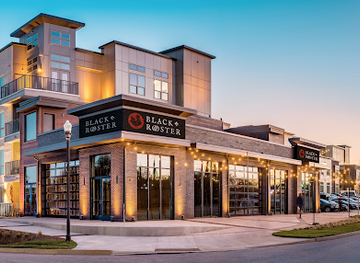
Black Rooster
Experience the essence of Italy at Black Rooster – where authentic flavors meet warm hospitality in West Columbia.
Best bars in Columbia Riverfront Park
Evening entertainment is limited within Columbia Riverfront Park, which is primarily a daytime greenway and historic landscape rather than a nightlife venue. After dark, visitors generally head to downtown Columbia, the Vista, Five Points or nearby West Columbia, where established restaurants, pubs, bars, live-music venues and cultural programmes provide the city's main evening options. The atmosphere varies from casual dining and craft-beverage settings to busier student-oriented areas, but individual venues and events change over time. The riverfront is more suited to a quiet walk during permitted hours than to an evening entertainment outing, and visitors should check current park access arrangements rather than assume that trails remain open late. Public transport and driving arrangements are best planned before leaving the park's wooded corridor.
-
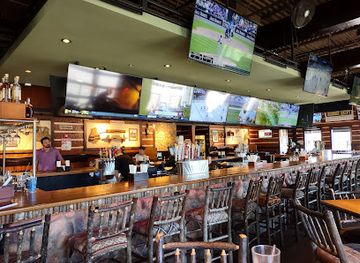
Sports bar
Twin Peaks
Discover the ultimate sports bar experience at Twin Peaks in Columbia, SC, where great food, drinks, and sports come together.
-
Grill
Liberty Tap Room & Grill
Discover the delicious flavors of American cuisine at Liberty Tap Room & Grill, a vibrant spot in Columbia, SC, perfect for food lovers and social gatherings.
-
Bar
Art Bar
Experience the vibrant fusion of art and nightlife at Art Bar in Columbia, SC, where creativity meets entertainment in an unforgettable setting.
-
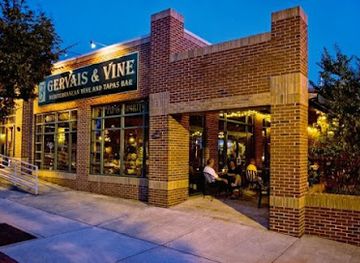
Tapas Bar
Gervais & Vine
Experience the best of tapas and fine wines at Gervais & Vine, a culinary treasure in Columbia, SC, perfect for any occasion.
Best nightclubs in Columbia Riverfront Park
Evening entertainment is limited within Columbia Riverfront Park, which is primarily a daytime greenway and historic landscape rather than a nightlife venue. After dark, visitors generally head to downtown Columbia, the Vista, Five Points or nearby West Columbia, where established restaurants, pubs, bars, live-music venues and cultural programmes provide the city's main evening options. The atmosphere varies from casual dining and craft-beverage settings to busier student-oriented areas, but individual venues and events change over time. The riverfront is more suited to a quiet walk during permitted hours than to an evening entertainment outing, and visitors should check current park access arrangements rather than assume that trails remain open late. Public transport and driving arrangements are best planned before leaving the park's wooded corridor.
-
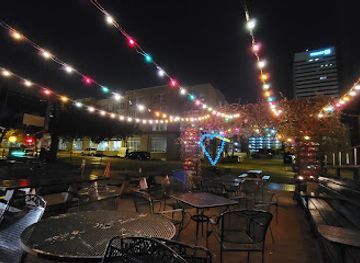
Bar
Art Bar
Discover the vibrant Art Bar in Columbia, SC—a unique blend of bar, art gallery, live music venue, and karaoke hotspot for an unforgettable night out.
Best shops in Columbia Riverfront Park
Shopping is not a principal activity inside Columbia Riverfront Park, where visitors will find a trail landscape rather than a retail centre. The nearest broader opportunities are in downtown Columbia, the Vista, Five Points and West Columbia, with independent shops, galleries, food businesses and practical retailers distributed through the city rather than concentrated along the river trail. Visitors interested in South Carolina products may encounter regional foods, locally made art, crafts and state-themed goods in these urban districts, while outdoor retailers can be useful for walking and cycling equipment. Because the park itself has limited facilities, buy refreshments, maps and anything needed for a longer outing before arriving. Retail availability changes, and the surrounding city is a more dependable place for shopping than the canal corridor.
-
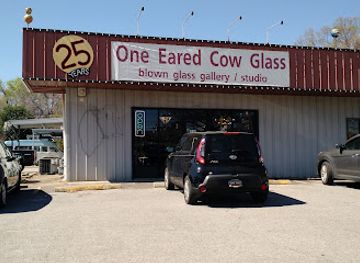
Gift shop
One Eared Cow Glass
Explore the vibrant world of handmade glass at One Eared Cow Glass, a unique gift shop and art gallery in Columbia, SC.
-
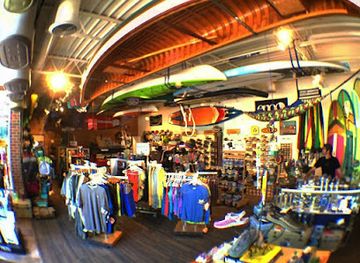
Canoe & kayak store
River Runner Outdoor Center
Discover the ultimate canoe and kayak experience at River Runner Outdoor Center in Columbia, SC, where adventure meets nature in perfect harmony.
-
Gift shop
Cotton Mill Exchange
Discover unique gifts and local treasures at Cotton Mill Exchange in Columbia, SC – your go-to destination for handcrafted souvenirs and artisanal goods.
Get your free copy of our complete guide to Columbia Riverfront Park, delivered straight to you.
Everything on this page, from attractions and restaurants to essentials and local phrases, in one PDF you can read offline, print or share.
Already have an account? Sign in
Your Columbia Riverfront Park guide is ready.
We'll send it to · Not you? Sign out

Getting your guide ready…
We are putting together a fresh copy of the Columbia Riverfront Park guide. This can take up to a minute.
This can take a few moments. If your browser asks, choose Allow so the download can start. You'll find the guide in your Downloads folder.
Nothing happened? Download it again
Sorry, the guide is taking longer than usual. Please try again in a minute, or get it by email instead.
Columbia Riverfront Park essentials
Currency and Payment
Safety
Emergency Situations
Do's and Don'ts
Local Tips
From Eve
Local phrases worth knowing
You don't need to get them perfect. A few words go a long way, and locals appreciate the effort.
Basics
| English | Local | Say it |
|---|---|---|
| Hello | Hey y'all | [Hey y'all] |
| Goodbye | See ya later | [See ya later] |
| Yes | Yeah | [Yeah] |
| No | Nah | [Nah] |
| Please/You're welcome | Please/Nah | [Please/Nah] |
| Thank you | Thanks y'all | [Thanks y'all] |
| Excuse me/Sorry | Pardon me | [Pardon me] |
| How are you? | How y'all doin'? | [How y'all doin'?] |
| Fine. And you? | I'm good. And you? | [I'm good. And you?] |
| Do you speak English? | Y'all speak English? | [Y'all speak English?] |
| I don't understand | I don't git it | [I don't git it] |
Eating & Drinking
| English | Local | Say it |
|---|---|---|
| I'd like to see the menu, please | Can y'all show me the menu? | [Can y'all show me the menu?] |
| I don't eat meat | I don't eat meat | [I don't eat meat] |
| Cheers! | Cheers! | [Cheers!] |
| I would like to pay, please | I'd like to pay now, please | [I'd like to pay now, please] |
Emergencies
| English | Local | Say it |
|---|---|---|
| Help! | Help! | [Help!] |
| Go away! | Git outta here! | [Git outta here!] |
| Call the Police! | Call the cops! | [Call the cops!] |
| Call a doctor! | Call the doc! | [Call the doc!] |
| I'm lost | I'm lost | [I'm lost] |
| I'm ill | I'm sick | [I'm sick] |
Shopping
| English | Local | Say it |
|---|---|---|
| I'd like to buy... | I wanna buy... | [I wanna buy...] |
| I'm just looking | I'm just lookin' | [I'm just lookin'] |
| How much is it? | How much does it cost? | [How much does it cost?] |
| That's too expensive | That's too much money | [That's too much money] |
| Can you lower the price? | Can you make it cheaper? | [Can you make it cheaper?] |
Time & Numbers
| English | Local | Say it |
|---|---|---|
| What time is it? | What time is it? | [What time is it?] |
| It's one o'clock | It's one o'clock | [It's one o'clock] |
| Half past (10) | Half past ten | [Half past ten] |
| Morning | Mornin' | [Mornin'] |
| Afternoon | Afternoon | [Afternoon] |
| Evening | Evenin' | [Evenin'] |
| Yesterday | Yest'day | [Yest'day] |
| Today | Today | [Today] |
| Tomorrow | Tomorra | [Tomorra] |
| 1 | One | [One] |
| 2 | Two | [Two] |
| 3 | Three | [Three] |
| 4 | Four | [Four] |
| 5 | Five | [Five] |
| 6 | Six | [Six] |
| 7 | Seven | [Seven] |
| 8 | Eight | [Eight] |
| 9 | Nine | [Nine] |
| 10 | Ten | [Ten] |
Transport & Directions
| English | Local | Say it |
|---|---|---|
| Where's a/the...? | Where's the...? | [Where's the...?] |
| What's the address? | What's the address? | [What's the address?] |
| Can you show me (on the map)? | Can you show me (on the map)? | [Can you show me (on the map)?] |
| When's the next (bus)? | When's the next (bus)? | [When's the next (bus)?] |
| A ticket (to ....) | A ticket (to ....) | [A ticket (to ....)] |
History of Columbia Riverfront Park
The Broad River and Early Columbia
The park's history begins with the Broad River, one of the waterways that shaped the location and development of Columbia. Founded in 1786 as South Carolina's inland capital, Columbia grew near the junction of the Broad and Saluda rivers, where their combined flow forms the Congaree River. The rivers provided water, movement and potential industrial power, although rapids and changing levels made navigation difficult. Long before the modern park existed, the surrounding river corridor was part of a broader landscape used and transformed by Indigenous peoples and later by European settlement, agriculture and expanding transport networks. The present woodland and trails therefore occupy a landscape whose importance predates the city's urban development.
The Columbia Canal
The Columbia Canal was built in the early nineteenth century to create a more practical route around difficult stretches of the Broad and Congaree rivers. Construction began in 1819 and the canal was completed in the 1820s, helping connect Columbia with the wider inland waterway system. Its commercial importance declined as railways and improved roads altered the movement of goods, but the channel remained a visible record of the city's ambition to use the rivers for navigation and trade. The surviving canal now gives Riverfront Park its defining linear form, with the waterway, banks and associated structures revealing how engineering reshaped the natural edge of Columbia.
Industry, Water Power and Electricity
As navigation became less central, the canal and river corridor continued to serve industrial purposes. Water power supported mills and other enterprises in the Columbia area, while the city's relationship with the canal later included the development of hydroelectric infrastructure. The former Columbia Water Power Company works, associated with the canal's later industrial history, helped make the riverside an important part of Columbia's early modern utility network. Surviving structures and interpretive features are significant because they connect the contemporary park with a period when the Broad River was not simply scenery but a working source of transport, mechanical power and electricity.
From Working Corridor to Public Greenway
The riverfront gradually changed character as heavy industry and older utility uses declined. Conservation, public access and riverside recreation became increasingly important, leading to the creation and improvement of Columbia Canal and Riverfront Park as a public landscape. The park's paths and the wider Three Rivers Greenway reflect a regional effort to reconnect Columbia with the Broad, Saluda and Congaree rivers. Today, the canal and its industrial remnants are interpreted alongside woodland and recreational trails rather than functioning primarily as commercial infrastructure. This change preserves the area's historical evidence while giving residents and visitors a way to experience the river corridor at a slower pace.
Columbia Riverfront Park in Photos
Browse through our photo collection highlighting the charm and character of the destination.
Neighbouring destination travel guides
The closest destinations to Columbia Riverfront Park, if you have time for more than one.
-

-

-

-
-


Swipe for more destinations
Explore more

Explore more of Midlands
Explore South Carolina’s Midlands for Columbia museums, Revolutionary history, Congaree forest, lake recreation and distinctive Southern food.
Explore Midlands
Explore more of South Carolina
Explore South Carolina: A blend of historic charm, natural beauty, and southern hospitality. From Charleston's cobblestone streets to Myrtle Beach's sandy shores, adventure awaits.
Explore South Carolina