

Free Southeast South Dakota Travel Guide & Mobile App
Explore Southeast South Dakota with free travel guides. Discover regional history, expert tips, proposed trips, and audio guides on web or mobile app.


Explore Southeast South Dakota for Sioux Falls, Missouri River recreation, Indigenous heritage, prairie landscapes, museums and welcoming small cities.
Read more about Southeast South Dakota
Getting to and around Southeast South Dakota
How to get there
Transportation
Top city travel guides in Southeast South Dakota
The cities of Southeast South Dakota, and the easiest places to base yourself.
-

-

-

-


Swipe for more cities
Destinations in Southeast South Dakota
Resorts, valleys and scenic spots worth a trip of their own.
-
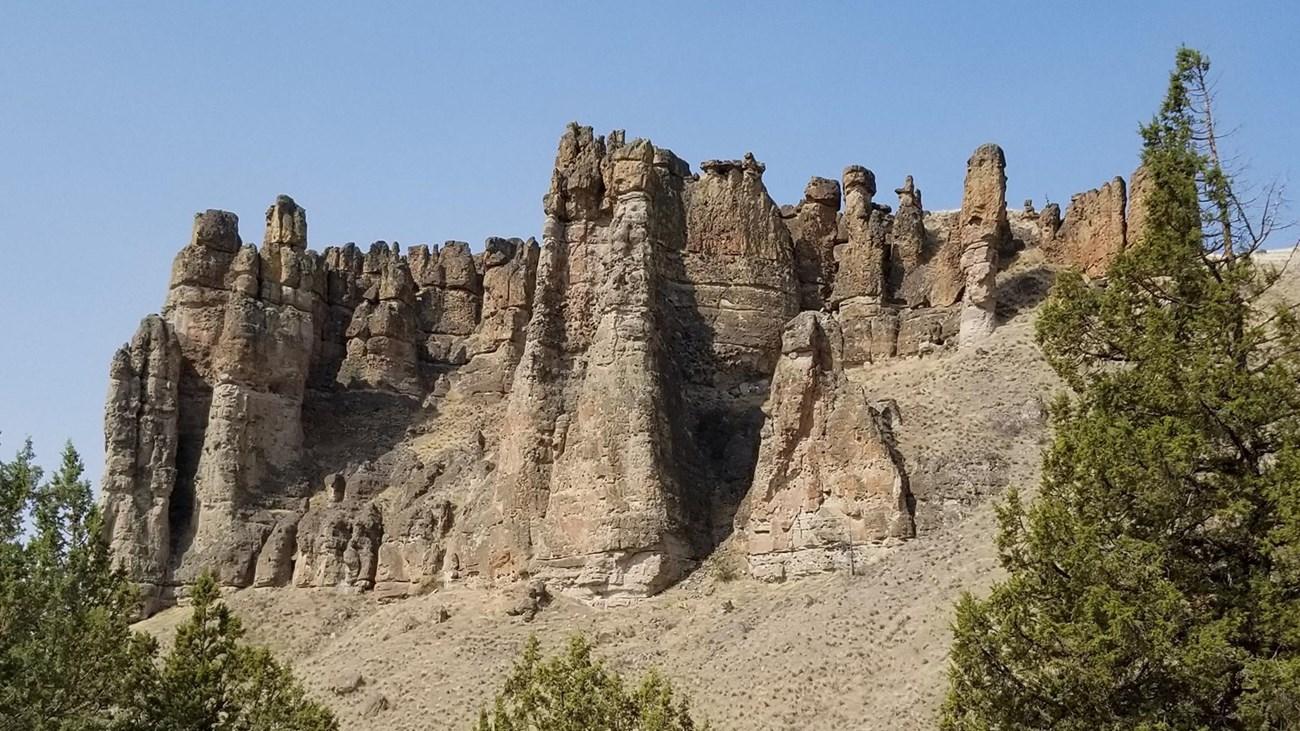 Palisades State Park
 in South Dakota features quartzite cliffs, the Split Rock River, hiking, camping, climbing and scenic landscapes near Garretson and Sioux Falls.
-

-

-


Swipe for more destinations
Best attractions in Southeast South Dakota
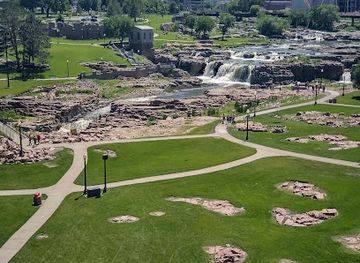
Southeast South Dakota’s attractions range from urban riverfront spaces to archaeological landscapes, museums and large reservoirs. In Sioux Falls, Falls Park is the defining natural and civic attraction, with the Big Sioux River moving over layers of pink and grey quartzite beside traces of historic milling. Good Earth State Park at Blood Run, south of the city, offers trails and interpretation within a culturally important Indigenous landscape. Vermillion combines the University of South Dakota campus with the National Music Museum, whose extensive instrument collection is one of the region’s notable indoor attractions. Along the Missouri River, Lewis and Clark Recreation Area near Yankton provides opportunities for walking, camping, boating and fishing, while Fort Randall Recreation Area lies farther south near the river’s reservoir country. Mitchell’s Corn Palace is an unusual agricultural and architectural attraction, and smaller museums throughout the region interpret local settlement, transport and military histories. Outdoor plans should take account of open exposure, seasonal weather and the distances between communities.
-
Memorial park
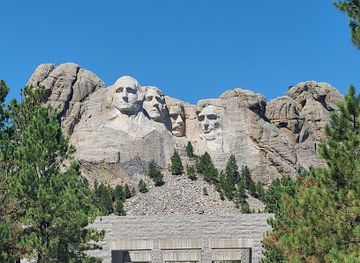
Mount Rushmore National Memorial
Explore the iconic Mount Rushmore National Memorial, a breathtaking tribute to four U.S. presidents set in the stunning Black Hills of South Dakota.
-
National park
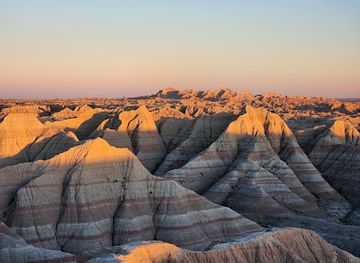
Badlands National Park
Discover the breathtaking landscapes and unique wildlife of Badlands National Park, a top destination for nature lovers and adventure seekers in South Dakota.
-
Park
Falls Park
Explore the breathtaking natural wonder of Falls Park, where stunning waterfalls and lush landscapes create an unforgettable experience in Sioux Falls, SD.
-
National park
Theodore Roosevelt National Park
Discover the wild heart of North Dakota at Theodore Roosevelt National Park, where breathtaking landscapes and diverse wildlife await.
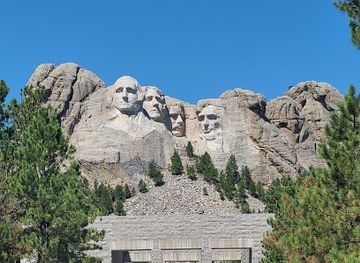

Best landmarks in Southeast South Dakota
Falls Park in Sioux Falls is Southeast South Dakota’s most recognisable natural landmark, where the Big Sioux River drops over exposed Sioux Quartzite that also influenced the city’s early industry and architecture. The Cathedral of Saint Joseph, rising above downtown Sioux Falls, is a prominent example of early twentieth-century ecclesiastical architecture and remains an important civic and religious presence. The USS South Dakota Battleship Memorial and adjacent military displays commemorate the state’s association with the Second World War battleship, while the Pettigrew Home and Museum represents the city’s late-nineteenth-century civic history. In Yankton, the Meridian Highway Bridge, a historic Missouri River crossing, recalls the era when road bridges connected the region’s river towns to national routes. Good Earth State Park at Blood Run is a landmark of cultural and archaeological importance rather than a conventional monument. Mitchell’s Corn Palace, repeatedly reworked with corn murals, is one of the most distinctive pieces of civic architecture in the American Great Plains.
-
Memorial park
Mount Rushmore National Memorial
Experience the grandeur of Mount Rushmore National Memorial, where history and artistry unite in the stunning Black Hills of South Dakota.
-
Park
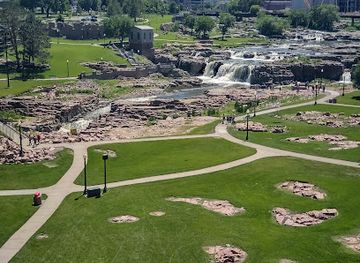
Falls Park
Experience the breathtaking beauty of Falls Park in Sioux Falls, SD, a perfect blend of nature, history, and community events.
-
State park
Custer State Park
Explore the breathtaking landscapes and diverse wildlife of Custer State Park in South Dakota, a premier destination for outdoor adventures.
-
Cultural landmark
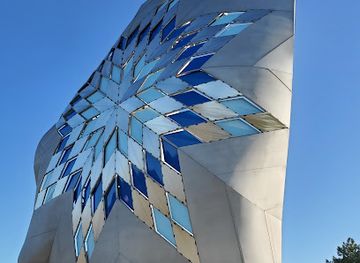
Dignity of Earth and Sky
Explore Dignity of Earth and Sky, a stunning cultural landmark in South Dakota celebrating Native American heritage and breathtaking natural beauty.
Explore Southeast South Dakota on the map
Plan your trip on one map. See where the top cities, national parks and sights are, and book hotels and experiences in a few clicks.
Best hotels in Southeast South Dakota
Best restaurants in Southeast South Dakota
Dining in Southeast South Dakota combines Great Plains staples with an increasingly broad urban scene in Sioux Falls. Steaks, burgers, fried foods, sandwiches, sweet corn and hearty breakfasts are common, while local bakeries and cafés reflect the practical food culture of farming communities and regional towns. Sioux Falls provides the widest range of cuisines, from contemporary American cooking and independent coffee shops to Asian, Mexican, Mediterranean and other international restaurants. Vermillion benefits from its university population, with casual dining and cafés alongside traditional establishments. Around Yankton and the reservoir communities, menus often suit outdoor visitors and may include freshwater fish, though availability varies by season. Farmers’ markets and farm shops can offer produce, baked goods and locally made products, while South Dakota craft breweries and small beverage producers appear most prominently in larger towns. Reservations and advance planning are more useful for special-occasion dining than for everyday meals, particularly outside Sioux Falls.
-
Steak
Texas Roadhouse
Experience the best of American cuisine at Texas Roadhouse in Sioux Falls - where every meal is an unforgettable feast.
-
Restaurant
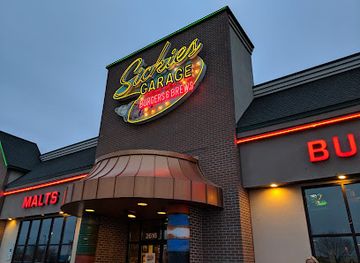
Sickies Garage Burgers & Brews
Experience gourmet burgers and an extensive craft beer selection at Sickies Garage Burgers & Brews in Sioux Falls.
-
Bar
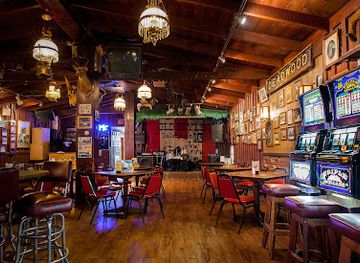
Saloon No. 10
Experience the vibrant atmosphere of Saloon No. 10 in Deadwood: where history meets hearty meals and lively entertainment.
-
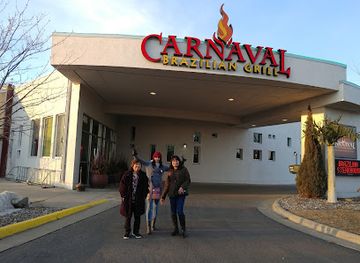
Brazilian
Carnaval Brazilian Grill
Experience authentic Brazilian cuisine at Carnaval Brazilian Grill in Sioux Falls with delectable grilled meats and vibrant cultural ambiance.

Best bars in Southeast South Dakota
Evening life is centred on Sioux Falls, where downtown and surrounding commercial areas offer traditional pubs, breweries, cocktail bars, restaurants with late service and venues for live music or comedy. The city has the region’s broadest choice, but its nightlife is generally more varied than club-focused. Vermillion has a youthful, university-influenced evening scene with casual bars, live events and seasonally changing activity, while Yankton and Mitchell rely more on neighbourhood bars, restaurants and community venues than on large nightclubs. In rural areas, a local pub, brewery or gathering place is often the main evening option, and distances make taxis or a designated driver important. The region’s nightlife is seasonal and event-led in some communities, so visitors should check current arrangements rather than assume that a venue or performance operates year-round.
-
Bar
Full Throttle Saloon
Discover the ultimate motorcycle haven at Full Throttle Saloon in South Dakota, where live music, great food, and adventure await!
-
Pub
Blarney Stone Pub - Sioux Falls
Discover the vibrant Irish culture at Blarney Stone Pub in downtown Sioux Falls, where delicious food and drinks meet a lively atmosphere.
-
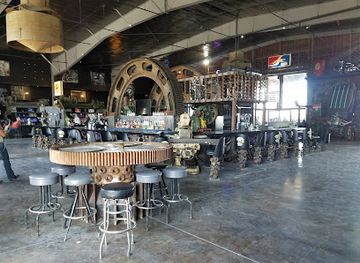
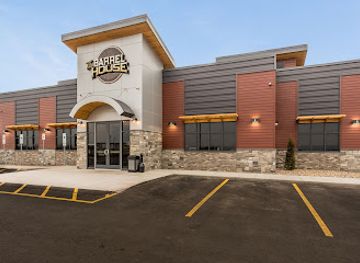
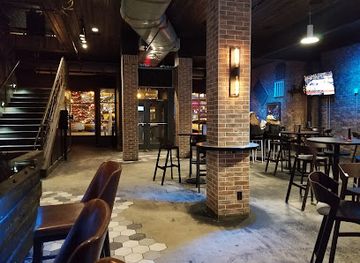
Restaurant
The Barrel House
Experience the best of Sioux Falls dining at The Barrel House, where comfort food meets a lively bar atmosphere.
-
Grill
Crooked Pint Ale House
Discover the Crooked Pint Ale House: A vibrant grill and brewpub in Sioux Falls, offering delicious food, craft brews, and a lively atmosphere for all.


Best nightclubs in Southeast South Dakota
Evening life is centred on Sioux Falls, where downtown and surrounding commercial areas offer traditional pubs, breweries, cocktail bars, restaurants with late service and venues for live music or comedy. The city has the region’s broadest choice, but its nightlife is generally more varied than club-focused. Vermillion has a youthful, university-influenced evening scene with casual bars, live events and seasonally changing activity, while Yankton and Mitchell rely more on neighbourhood bars, restaurants and community venues than on large nightclubs. In rural areas, a local pub, brewery or gathering place is often the main evening option, and distances make taxis or a designated driver important. The region’s nightlife is seasonal and event-led in some communities, so visitors should check current arrangements rather than assume that a venue or performance operates year-round.
-
Bar
PAve
Discover PAve, Sioux Falls' premier bar and nightclub, where vibrant nightlife meets delicious dining in a lively downtown setting.
-
Grill
Wileys Bar
Discover Sioux Falls' vibrant nightlife at Wileys Bar, a grill and live music venue offering delicious cuisine and a lively atmosphere.
-
Bar
Bigs Bar
Experience the vibrant nightlife of Sioux Falls at Bigs Bar, where great food, drinks, and entertainment await.
-
Bar
Top Hat Bar & Lounge
Discover the lively charm of Top Hat Bar & Lounge in Sioux Falls, where good drinks and great company come together for an unforgettable night.


Best shops in Southeast South Dakota
Shopping in Southeast South Dakota is concentrated in Sioux Falls, whose downtown and surrounding districts offer independent boutiques, galleries, bookshops, specialist food retailers and larger national shopping areas. The city is the best place to compare contemporary clothing, homeware, art and locally made goods in one visit. Market towns such as Vermillion, Yankton and Mitchell have smaller high streets with practical shops, antiques, cafés and independent retailers, although opening patterns can be limited outside central periods. Farmers’ markets and seasonal community markets are useful for South Dakota produce, baked goods, preserves and crafts, subject to the time of year. Regional souvenirs often include Native-inspired or locally made artwork from reputable sellers, prairie-themed prints, food products and items associated with the Corn Palace or Missouri River. Visitors should distinguish authentic local work from generic mass-produced merchandise and ask about provenance when purchasing art or culturally significant objects.
-
Shopping mall
The Empire Mall
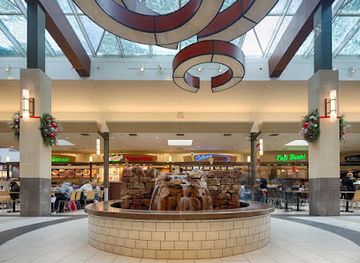
Discover a shopping haven at The Empire Mall in Sioux Falls, South Dakota, featuring over 150 stores, diverse dining, and entertainment options.
-
Sporting goods store
Scheels
Explore Scheels in Sioux Falls: Your one-stop-shop for sporting goods, outdoor gear, and family fun in a vibrant shopping environment.
-
Shopping mall
Lake Lorraine
Explore Lake Lorraine, the ultimate shopping destination in Sioux Falls, featuring diverse shops, delicious dining, and exciting events for all ages.
-
Gift shop
Prairie Edge Trading Co & Galleries
Discover authentic Native American art and crafts at Prairie Edge Trading Co & Galleries, a vibrant cultural hub in Rapid City, SD.


Get your free copy of our complete guide to Southeast South Dakota, delivered straight to you.
Everything on this page, from attractions and restaurants to essentials and local phrases, in one PDF you can read offline, print or share.
Already have an account? Sign in
Your Southeast South Dakota guide is ready.
We'll send it to · Not you? Sign out

Getting your guide ready…
We are putting together a fresh copy of the Southeast South Dakota guide. This can take up to a minute.
This can take a few moments. If your browser asks, choose Allow so the download can start. You'll find the guide in your Downloads folder.
Nothing happened? Download it again
Sorry, the guide is taking longer than usual. Please try again in a minute, or get it by email instead.
Southeast South Dakota essentials
Currency and Payment
Safety
Emergency Situations
Do's and Don'ts
Local Tips
From Eve
Local phrases worth knowing
You don't need to get them perfect. A few words go a long way, and locals appreciate the effort.
Basics
| English | Local | Say it |
|---|---|---|
| Hello | Howdy | [hau-dee] |
| Goodbye | See ya later | [see ya lay-ter] |
| Yes | Yup | [yup] |
| No | Nope | [nohp] |
| Please/You're welcome | You bet | [yu bet] |
| Thank you | Thanks a lot | [thanks a lot] |
| Excuse me/Sorry | Pardon me | [pardun mee] |
| How are you? | How's it goin'? | [how's it goin'] |
| Fine. And you? | Good. And you? | [good. and you?] |
| Do you speak English? | Do ya speak English? | [do ya speak ing-glish?] |
| I don't understand | I ain't followin' | [I ain't fol-oh-win'] |
Eating & Drinking
| English | Local | Say it |
|---|---|---|
| I'd like to see the menu, please | Can I see the menu, please? | [can I see the men-yu, pleez?] |
| I don't eat meat | I ain't no meat eater | [I ain't no meet ee-ter] |
| Cheers! | Cheers! | [cheers] |
| I would like to pay, please | Can I get the check, please? | [can I get the chek, pleez?] |
Emergencies
| English | Local | Say it |
|---|---|---|
| Help! | Help! | [help] |
| Go away! | Get outta here! | [get outta here] |
| Call the Police! | Call the cops! | [call the cops] |
| Call a doctor! | Get a doctor! | [get a dok-ter] |
| I'm lost | I'm turned around | [I'm turned a-round] |
| I'm ill | I'm not feelin' good | [I'm not feel-in' good] |
Shopping
| English | Local | Say it |
|---|---|---|
| I'd like to buy... | I wanna buy... | [I wanna buy...] |
| I'm just looking | Just lookin' | [just look-in'] |
| How much is it? | What’s the price? | [what's the pryce?] |
| That's too expensive | That's way too high | [that's way too high] |
| Can you lower the price? | Can ya cut the price? | [can ya kut the pryce?] |
Time & Numbers
| English | Local | Say it |
|---|---|---|
| What time is it? | What's the time? | [what's the time?] |
| It's one o'clock | It's one o'clock | [it's one o'clock] |
| Half past (10) | Half past ten | [half past ten] |
| Morning | Mornin' | [mornin'] |
| Afternoon | Afternoon | [af-ter-noon] |
| Evening | Evenin' | [evenin'] |
| Yesterday | Yesterday | [yes-ter-day] |
| Today | Today | [to-day] |
| Tomorrow | Tomorrow | [to-mor-row] |
| 1 | One | [wun] |
| 2 | Two | [too] |
| 3 | Three | [three] |
| 4 | Four | [for] |
| 5 | Five | [fiv] |
| 6 | Six | [siks] |
| 7 | Seven | [sev-en] |
| 8 | Eight | [ayt] |
| 9 | Nine | [nyn] |
| 10 | Ten | [ten] |
Transport & Directions
| English | Local | Say it |
|---|---|---|
| Where's a/the...? | Where's the...? | [where's the...?] |
| What's the address? | What's the address? | [what's the ad-dress?] |
| Can you show me (on the map)? | Can ya show me (on the map)? | [can ya show me (on the map)?] |
| When's the next (bus)? | When's the next bus? | [when's the next bus?] |
| A ticket (to ....) | A ticket (to ...) | [a tik-it (to ...)] |
History of Southeast South Dakota
Indigenous Landscapes and Blood Run
The Southeast South Dakota landscape has long been shaped by Indigenous peoples, including the Oneota tradition associated with the Blood Run archaeological complex near the Big Sioux River. The area was a major settlement and ceremonial landscape before sustained European-American expansion, and archaeological evidence records substantial communities, agriculture and regional exchange. Today, Good Earth State Park at Blood Run protects part of this important cultural setting. Its significance is not limited to visible trails or earthworks: it represents living Indigenous history and should be approached with respect for tribal connections and the continuing importance of the place.
The Missouri River and Early Exploration
The Missouri River became a major route through the region for Indigenous nations, traders, explorers and later settlers. The Lewis and Clark Expedition travelled along this waterway in 1804 and 1806, recording landscapes and encounters that became part of the national story, although the expedition entered a river corridor already known and used by Native peoples. River travel, trading activity and later transport links helped establish communities such as Yankton and influenced settlement patterns across the southeastern part of the state.
Treaties, Settlement and the Dakota Territory
During the nineteenth century, United States treaties, military expansion and settler migration transformed Southeast South Dakota while dispossessing Indigenous nations and restricting their lands. Yankton became an important early administrative and commercial centre, and towns grew along river routes and emerging overland connections. The creation of Dakota Territory in 1861 placed the area within a new federal political framework. The period’s legacy remains visible in historic town plans, military and governmental records, reservation histories and the continuing presence of Native communities.
Railways, Agriculture and Town Building
Railway expansion in the late nineteenth century accelerated settlement and connected Southeast South Dakota to wider markets. Grain, livestock and later corn and soybeans became central to the regional economy, while rail-served towns developed stores, grain elevators, schools, churches and civic buildings. Sioux Falls expanded as a commercial and industrial centre, helped by water power from the Big Sioux River and its position on major transportation routes. Many of the region’s present-day communities and agricultural patterns date from this period of rapid town building.
The Corn Palace and Civic Promotion
Mitchell’s Corn Palace emerged from a late-nineteenth-century tradition of agricultural palaces designed to promote prairie towns and their produce. The present building, opened in 1921 and subsequently remodelled, is decorated with murals made from locally grown corn and other natural materials. Its changing exterior artwork makes it both a functioning events venue and a distinctive record of regional agricultural identity. The building reflects how small American cities used architecture, fairs and public spectacle to attract residents, visitors and investment.
Modern Industry, Universities and Cultural Institutions
During the twentieth and twenty-first centuries, Southeast South Dakota became more urbanised and economically varied while retaining its agricultural base. Sioux Falls grew into the state’s largest city and a centre for healthcare, finance, manufacturing and services. The University of South Dakota in Vermillion strengthened the region’s academic and cultural life, including through the National Music Museum. New roads, reservoirs and recreation facilities broadened tourism, while institutions such as the South Dakota Air and Space Museum near the region’s western approach and local heritage museums helped interpret wider state histories.
Southeast South Dakota in Photos
Browse through our photo collection highlighting the charm and character of the destination.
Neighbouring regions of Southeast South Dakota
The closest regions to Southeast South Dakota, if you have time for more than one.
-

-

-

-

-


Swipe for more regions
Explore more

Explore more of South Dakota
Discover South Dakota: From the iconic Mount Rushmore and Crazy Horse Memorial to the stunning Badlands and charming small towns, it's a land of history and natural beauty.
Explore South Dakota