

Free Västerbotten Travel Guide & Mobile App
Explore Västerbotten with free travel guides. Discover regional history, expert tips, proposed trips, and audio guides on web or mobile app.


Västerbotten pairs Umeå's culture with Baltic coastlines, forest rivers, Sámi heritage and mountain adventures across northern Sweden.
Read more about Västerbotten
When is the best time to visit Västerbotten?
Best: June–August · 19–22°C| Month | High (°C) | Rainfall (mm) |
|---|---|---|
| January | -3 | 30 |
| February | -2 | 25 |
| March | 2 | 25 |
| April | 8 | 30 |
| May | 14 | 35 |
| June (best) | 19 | 50 |
| July (best) | 22 | 60 |
| August (best) | 19 | 70 |
| September | 15 | 60 |
| October | 8 | 50 |
| November | 2 | 40 |
| December | -3 | 30 |
Getting to and around Västerbotten
How to get there
Transportation
Top city travel guides in Västerbotten
The cities of Västerbotten, and the easiest places to base yourself.
-

-


Swipe for more cities
Destinations in Västerbotten
Resorts, valleys and scenic spots worth a trip of their own.
-

-

-

-


Swipe for more destinations
Best attractions in Västerbotten
Västerbotten's attractions range from Umeå's museums and cultural venues to vast outdoor landscapes. In Umeå, Västerbottens museum and the open-air museum at Gammlia introduce regional archaeology, Sámi history, farming, handicrafts and the county's changing ways of life, while Bildmuseet provides a contemporary counterpoint. Skellefteå offers the Skellefteå Museum and access to the historic church town of Bonnstan, while the former sawmill settlement of Norrbyskär illustrates the scale of nineteenth-century timber industry. Inland, the forests and river valleys around Lycksele, Sorsele and Vilhelmina support fishing, canoeing, hiking and wildlife watching. The Vindelälven river is particularly important for free-flowing river landscapes, and the extensive Vindelfjällen Nature Reserve opens into mountain terrain around Ammarnäs and Hemavan. Björnlandet National Park, in the southern part of the county, protects old-growth forest and rugged woodland scenery. In winter, Hemavan and Tärnaby are established bases for downhill skiing and access to ski touring, while summer brings marked mountain routes, although conditions remain more remote than in Sweden's larger resort areas.
-
Tourist attraction
Observatorielunden
A compact, leafy hill-park behind the Stadsbiblioteket—quiet lawns, a playground and small panoramas in central Vasastan.
-
Tourist attraction
Almedalen
Visby's elm-shaded park: from medieval harbor to Sweden's political stage and cultural heartbeat amid ancient walls.
-
Shopping mall
MVG-Gallerian
A compact, practical city‑centre shopping mall on Kungsgatan offering everyday stores, cafés and quick service dining in the heart of Umeå.
-
American
O'Learys Umeå
Big screens, bowling lanes and a full bar — Umeå’s go-to spot for food, sport and group nights under one roof.


Best landmarks in Västerbotten
Umeå's City Church, built in a nineteenth-century Gothic Revival style beside the Ume River, is one of the coastal city's most recognisable historic buildings. The nearby cultural landscape of Gammlia and Västerbottens museum preserves representative buildings and environments from across the county rather than a single monument. In Skellefteå, Bonnstan is a notable church town of closely grouped wooden cottages that once accommodated worshippers travelling from distant rural districts; it is part of the historic setting around Skellefteå Landsförsamlings kyrka. Norrbyskär's industrial remains, reached by boat in season, mark the scale of the former timber economy on the coast. Further inland, Fatmomakke church town near Kultsjön is an important Sámi and settler meeting place, with historic buildings gathered around its church. The Vindelälven river provides a major natural landmark, while the mountain silhouettes around Tärnaby, Hemavan and the Vindelfjällen Nature Reserve express the county's western geographical limit.
-
Tourist attraction
Stegeborg Castle
Medieval ruins on a Baltic island, blending fortress history with lush gardens and sea views for a peaceful historical escape.
-
Tourist attraction
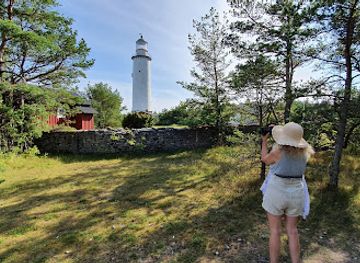
Fårö Lighthouse
Historic beacon atop Fårö's wild eastern tip, guarding Baltic seas with timeless views and coastal hikes amid dramatic cliffs and endless horizons.
-
Cultural center
Kulturväven
Umeå's woven cultural heart: library, stages, museums, and river views in one architectural marvel.
-
Tourist attraction
När Lighthouse (Protected historic lighthouse from 1872)
A compact 1872 lighthouse on Närsholmen where maritime history meets windswept coastal nature and wide Baltic panoramas.


Explore Västerbotten on the map
Plan your trip on one map. See where the top cities, national parks and sights are, and book hotels and experiences in a few clicks.
Best hotels in Västerbotten
Best restaurants in Västerbotten
Dining in Västerbotten reflects the county's forest, river and coastal geography. Menus commonly draw on freshwater fish, reindeer and other game, mushrooms, herbs and northern berries such as lingonberries and cloudberries, alongside produce from small farms. Umeå has the widest range of contemporary restaurants, bakeries, cafés and international food, while Skellefteå and the larger inland towns provide a mixture of restaurants, traditional cafés and pubs. Rural inns and seasonal establishments are useful places to look for local fish, game and baked goods, though opening patterns can vary outside the main towns. Västerbottensost, produced in Burträsk, is the region's best-known food product and appears in cooking as well as in shops. Farmers' markets, farm shops and local food events offer opportunities to buy preserves, smoked products, bread and cheese, but visitors should check seasonal availability rather than expect every speciality throughout the year.
-
Restaurant
Pinchos
Circus-themed tapas haven in Umeå Centrum: app-ordered global small plates, vibrant drinks, and playful vibes for sharing unforgettable meals.
-
Restaurant
Lottas Krog & Pub
Umeå's family-owned pub haven since 1977: house-brewed beers, hearty Swedish classics, and English pub charm in a lively drop-in krog.
-
Restaurant
Sjöbris
A bustling riverside restaurant on Umeälven — wood-fired pizza, seafood and year-round terrace dining with a vibrant bar and live events.
-
Restaurant
Rådhuskällaren
A vaulted, convivial cellar bar beneath Umeå’s town hall — street‑food plates, many craft beers and late‑night drinks in a historic setting.


Best bars in Västerbotten
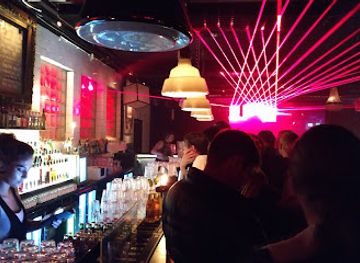
Evening life in Västerbotten is concentrated in Umeå and, to a lesser extent, Skellefteå. Umeå's student population supports a varied mixture of pubs, cocktail bars, live-music venues, cultural events and later-night clubs, with the programme changing during university holidays and festival periods. Skellefteå has restaurants, pubs and music-oriented venues suited to a smaller regional city. In Lycksele, Vilhelmina, Storuman, Tärnaby and other inland communities, nightlife is more likely to centre on hotel bars, traditional pubs, seasonal après-ski, community events and occasional live music than on a large club scene. Mountain resorts are livelier during the ski season, while summer evenings may focus on outdoor dining and local events. Always check current arrangements in advance, particularly in smaller settlements where opening days can be limited.
-
Restaurant
Lottas Krog & Pub
Experience the heart of Umeå at Lottas Krog & Pub, where local flavors and vibrant atmosphere come together for an unforgettable dining experience.
-
American
O'Learys Umeå
Umeå's ultimate sports bar and entertainment empire: devour burgers, crush bowling strikes, and cheer live games in 3600 sqm of non-stop fun.
-
Gastropub
Köksbaren
Umeå's charcoal-grilled haven: dry-aged steaks, local fish, and seasonal flavors in a buzzing gastropub atmosphere.
-
Gastropub
The Bishops Arms - Skellefteå
Classic British gastropub in Skellefteå's Torget, boasting vast beers, whiskeys, hearty BBQ-seafood fare, and cozy vibes for northern Sweden evenings.


Best nightclubs in Västerbotten
Evening life in Västerbotten is concentrated in Umeå and, to a lesser extent, Skellefteå. Umeå's student population supports a varied mixture of pubs, cocktail bars, live-music venues, cultural events and later-night clubs, with the programme changing during university holidays and festival periods. Skellefteå has restaurants, pubs and music-oriented venues suited to a smaller regional city. In Lycksele, Vilhelmina, Storuman, Tärnaby and other inland communities, nightlife is more likely to centre on hotel bars, traditional pubs, seasonal après-ski, community events and occasional live music than on a large club scene. Mountain resorts are livelier during the ski season, while summer evenings may focus on outdoor dining and local events. Always check current arrangements in advance, particularly in smaller settlements where opening days can be limited.
-
Night club
Engelen
Historic vaulted cellars, hearty Swedish fare and a basement nightclub make Engelen a Gamla Stan staple for dinner and late-night revelry.
-
Night club
Rådhuskällaren
A craft‑beer focused cellar bar beneath Umeå’s Town Hall — street‑food plates by day, DJ‑driven late nights under vaulted brick ceilings.
-
Night club
Kristall
Lively night club and grill on Kungsgatan, blending daytime dining with late-night dancing in Stockholm's vibrant heart.
-
Night club
Slakthuset
Raw industrial nightclub with techno heart, rooftop vibes, and Stockholm's electronic underground—where slaughterhouse echoes meet pounding beats and skyline views.


Best shops in Västerbotten
Umeå has Västerbotten's broadest retail choice, with central streets, department-style stores, independent design shops, bookshops, galleries and food retailers concentrated around the city centre and the Väven cultural district. Skellefteå provides a smaller urban shopping environment, while towns such as Lycksele, Vilhelmina and Storuman function as practical service and supply centres for large inland areas. Farm shops, local food outlets and seasonal markets are good places to look for Västerbottensost, berry preserves, smoked fish, crispbread and other regional foods. Craft shops and galleries sell northern textiles, woodwork, ceramics and contemporary design; Sámi-made work should be bought from reputable makers or sellers who identify its origin and materials clearly. In mountain communities, outdoor equipment and practical clothing are often more useful purchases than general souvenirs, while local museums and heritage sites may carry books and craft products connected with regional history.
-
Shopping mall
Avion Shopping
Discover Avion Shopping in Umeå, a bustling retail haven filled with diverse shops, delectable dining, and exciting entertainment options.
-
Shopping mall
Kvarteret Utopia
Umeå's vibrant shopping heart: modern stores, tasty bites, and cultural buzz connecting the city's key squares.
-
Second hand store
Rondellen Solkraft
Skellefteå's heartfelt second-hand hub where municipal makers craft sustainable stories from donated treasures, blending community support with eco-smart shopping.
-
Hunting and fishing store
Grönlunds Jakt & Fiske AB
Vilhelmina's essential outfitter for hunting rifles, fishing tackle, and gear conquering Sweden's wild north.


Get your free copy of our complete guide to Västerbotten, delivered straight to you.
Everything on this page, from attractions and restaurants to essentials and local phrases, in one PDF you can read offline, print or share.
Already have an account? Sign in
Your Västerbotten guide is ready.
We'll send it to · Not you? Sign out

Getting your guide ready…
We are putting together a fresh copy of the Västerbotten guide. This can take up to a minute.
This can take a few moments. If your browser asks, choose Allow so the download can start. You'll find the guide in your Downloads folder.
Nothing happened? Download it again
Sorry, the guide is taking longer than usual. Please try again in a minute, or get it by email instead.
Västerbotten essentials
Currency and Payment
Safety
Emergency Situations
Do's and Don'ts
Local Tips
From Eve
Local phrases worth knowing
You don't need to get them perfect. A few words go a long way, and locals appreciate the effort.
Basics
| English | Local | Say it |
|---|---|---|
| Hello | Hej | [hay] |
| Goodbye | Adjö | [ah-yuh] |
| Yes | Ja | [yah] |
| No | Nej | [nay] |
| Please/You're welcome | Snälla/Tack | [snel-lah/tahk] |
| Thank you | Tack | [tahk] |
| Excuse me/Sorry | Ursäkta/Mi ledsen | [oor-sehk-tah/mee led-sen] |
| How are you? | Hur mår du? | [hoor mohr doo] |
| Fine. And you? | Bra. Och du? | [bra. ohk doo] |
| Do you speak English? | Talar du engelska? | [tah-lar doo eng-el-ska] |
| I don't understand | Jag förstår inte | [yahg for-stor in-teh] |
Eating & Drinking
| English | Local | Say it |
|---|---|---|
| I'd like to see the menu, please | Jag skulle vilja se menyn, tack | [yahg skool-leh vil-yah seh meh-nyn, tahk] |
| I don't eat meat | Jag äter inte kött | [yahg eh-ter in-teh shutt] |
| Cheers! | Skål! | [skawl] |
| I would like to pay, please | Jag skulle vilja betala, tack | [yahg skool-leh vil-yah beh-tah-lah, tahk] |
Emergencies
| English | Local | Say it |
|---|---|---|
| Help! | Hjälp! | [yelp] |
| Go away! | Gå bort! | [gaw bort] |
| Call the Police! | Ring polisen! | [ring po-lee-sen] |
| Call a doctor! | Ring en läkare! | [ring en leh-kah-reh] |
| I'm lost | Jag har gått vilse | [yahg har got vil-seh] |
| I'm ill | Jag är sjuk | [yahg air shook] |
Shopping
| English | Local | Say it |
|---|---|---|
| I'd like to buy... | Jag skulle vilja köpa... | [yahg skool-leh vil-yah shuh-pah] |
| I'm just looking | Jag tittar bara | [yahg tit-ar bah-rah] |
| How much is it? | Hur mycket kostar det? | [hoor mee-ket koh-star deh] |
| That's too expensive | Det är för dyrt | [deht air fur deert] |
| Can you lower the price? | Kan du sänka priset? | [kan doo sen-kah pree-set] |
Time & Numbers
| English | Local | Say it |
|---|---|---|
| What time is it? | Vad är klockan? | [vahd air kloh-kahn] |
| It's one o'clock | Det är ett | [deht air eht] |
| Half past (10) | Halv efter (10) | [halv ef-ter (10)] |
| Morning | Morgon | [mor-gon] |
| Afternoon | Eftermiddag | [ef-ter-mid-dahg] |
| Evening | Kväll | [kvel] |
| Yesterday | Igår | [ee-gor] |
| Today | Idag | [ee-dahg] |
| Tomorrow | Imorgon | [ee-mor-gon] |
| 1 | Ett | [eht] |
| 2 | Två | [tvaw] |
| 3 | Tre | [treh] |
| 4 | Fyra | [fee-rah] |
| 5 | Fem | [fem] |
| 6 | Sex | [sex] |
| 7 | Sju | [shoo] |
| 8 | Åtta | [aw-tah] |
| 9 | Nio | [nee-oh] |
| 10 | Tio | [tee-oh] |
Transport & Directions
| English | Local | Say it |
|---|---|---|
| Where's a/the...? | Var är en/den...? | [var air en/den...?] |
| What's the address? | Vad är adressen? | [vahd air ah-dres-sen] |
| Can you show me (on the map)? | Kan du visa mig (på kartan)? | [kan doo vee-sah may (paw kar-tahn)?] |
| When's the next (bus)? | När går nästa (buss)? | [nair gor nes-tah (boos)?] |
| A ticket (to ....) | En biljett (till ...) | [en bil-yet (til ...)] |
History of Västerbotten
Sámi Landscapes and Early Settlement
Human activity in Västerbotten reaches back thousands of years, with archaeological evidence of hunting, fishing and seasonal movement after the retreat of the inland ice. Sámi communities developed long-established livelihoods across the forests, river valleys and mountain areas, including reindeer herding, fishing and hunting. Coastal and river settlements also supported farming and trade. The region was not an empty wilderness awaiting later settlement: its landscapes were known, used and managed through detailed local knowledge long before the Swedish state extended more systematic administration northwards.
Medieval Colonisation and Church Networks
From the Middle Ages, the Swedish Crown and the church sought greater control over northern territories through taxation, parish organisation and settlement. Coastal farming communities became more closely connected to markets around the Gulf of Bothnia, while inland river routes linked Sámi communities, settlers and trading centres. Churches and parish centres gradually became important meeting places. The resulting relationship between coast, river valley and interior shaped the county's later geography, although it also brought pressure on established Sámi land use and political autonomy.
Coastal Towns and the 1809 War
Umeå, Skellefteå and other coastal communities grew as administrative, commercial and maritime centres. Their histories were tied to shipping, agriculture, fishing and the export of timber and other northern resources. During the Finnish War of 1808–09, Russian forces occupied Umeå on more than one occasion, and Sweden's defeat led to the loss of Finland to Russia. The war left a strong mark on the Gulf of Bothnia region and helped expose the strategic importance of Västerbotten's coast and river crossings.
Timber, Sawmills and River Transport
During the nineteenth century, expanding international demand for timber transformed Västerbotten. Forests were harvested on an increasing scale, logs were floated down rivers and sawmills grew along the coast. Communities such as Norrbyskär became closely associated with industrial forestry, while ports handled the movement of sawn wood and other goods. River transport and timber work created employment but also altered forests, waterways and patterns of settlement. The county's industrial heritage, old sawmill sites and timber buildings preserve traces of this economic transformation.
Settler Expansion and Northern Infrastructure
Nineteenth- and early twentieth-century settlement expanded along river valleys and into forest districts, encouraged by farming opportunities, state policy and improved communications. Roads, telegraph lines and railways gradually connected inland communities with the coast. Vilhelmina, Lycksele and Storuman developed as service centres for wide rural areas, while mountain communities maintained distinctive Sámi and settler economies. The growth of infrastructure made education, administration and trade more accessible, but it also accelerated state intervention in local land use and natural resources.
Mining and the Skellefteå District
The discovery and development of mineral deposits around the Skellefteå district in the twentieth century added mining and metal production to Västerbotten's economic base. Boliden's mine, opened in the 1920s, became central to the region's industrial history and helped shape modern Skellefteå. Mining brought investment, technical expertise and new employment, while also leaving environmental and social legacies that remain part of contemporary regional debate. The district's museums and industrial landscapes help explain how northern resource economies developed.
Umeå's Cultural and Educational Growth
Umeå changed significantly after the establishment of its university in the 1960s, becoming a major centre for education, research, healthcare and the arts in northern Sweden. Population growth and new cultural institutions complemented the city's older commercial and administrative role. Umeå's designation as European Capital of Culture in 2014 reflected an established creative scene rather than a sudden change. Today, the city provides a marked contrast with the county's remote mountain and forest districts while remaining closely connected to them through universities, public services and regional transport.
Västerbotten in Photos
Browse through our photo collection highlighting the charm and character of the destination.
Neighbouring regions of Västerbotten
The closest regions to Västerbotten, if you have time for more than one.
-
-

-

-

-


Swipe for more regions
Explore more
Explore more of Sweden
Discover Sweden's breathtaking landscapes, vibrant cities, and rich cultural heritage. From the Northern Lights to historic castles, experience the essence of Scandinavia.
Explore Sweden