

Free Andaman Coast Travel Guide & Mobile App
Explore Andaman Coast with free travel guides. Discover regional history, expert tips, proposed trips, and audio guides on web or mobile app.


Explore Thailand’s Andaman Coast for limestone bays, island parks, southern food, historic towns and marine adventures from Phuket to Satun.
Read more about Andaman Coast
When is the best time to visit Andaman Coast?
Best: January–March · 32–34°C| Month | High (°C) | Rainfall (mm) |
|---|---|---|
| January (best) | 32 | 15 |
| February (best) | 33 | 13 |
| March (best) | 34 | 32 |
| April | 35 | 102 |
| May | 34 | 253 |
| June | 32 | 270 |
| July | 31 | 270 |
| August | 31 | 270 |
| September | 31 | 310 |
| October | 31 | 330 |
| November | 30 | 210 |
| December | 30 | 80 |
Getting to and around Andaman Coast
How to get there
Transportation
Top city travel guides in Andaman Coast
The cities of Andaman Coast, and the easiest places to base yourself.
-

-

-

-

-


Swipe for more cities
Destinations in Andaman Coast
Resorts, valleys and scenic spots worth a trip of their own.
-

-

-
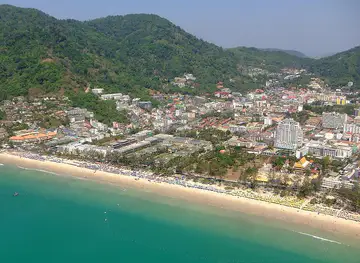
-

-

-


Swipe for more destinations
Best attractions in Andaman Coast
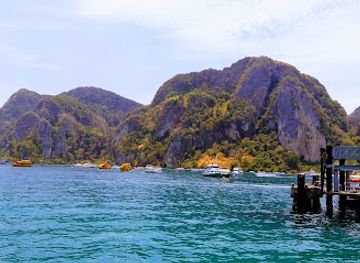
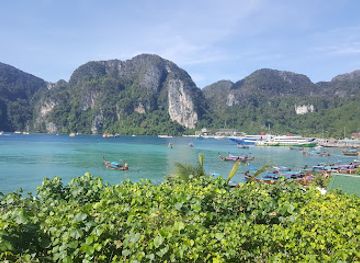
The Andaman Coast’s attractions are defined by the relationship between mainland landscapes and offshore parks. Phang Nga Bay offers sea-kayaking routes through caves, mangroves and limestone formations, while the Similan and Surin island groups are known for diving, snorkelling and protected marine habitats when access is available. Krabi combines beaches and boat-accessible islands with limestone cliffs, mangrove waterways and the forested setting around inland hot springs and trails. Phuket provides a broader urban and cultural mix, including Old Phuket Town, temples, viewpoints and established beaches. Further south, Mu Ko Lanta, Hat Chao Mai, Mu Ko Phetra and Mu Ko Tarutao national parks protect islands, reefs, beaches and coastal forests around Krabi, Trang and Satun. Visitors can also seek out sea caves, birdlife, fishing communities, cooking experiences and markets, although exact access varies by season. The region rewards choosing an attraction according to the landscape desired: busy island excursions near major resorts, quiet beaches and village life in the southern provinces, or mainland nature where mangroves, karst and rainforest meet the sea.
-
Scenic spot
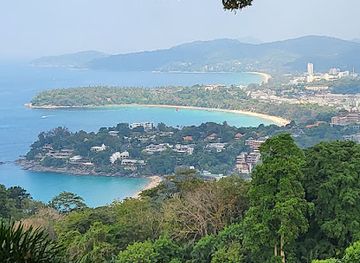
Karon Viewpoint
Discover the breathtaking beauty of Karon Viewpoint, a must-see scenic spot in Phuket offering stunning panoramic views of the Andaman Sea.
-
Buddhist temple
Wat Tham Suea
Discover the spiritual and scenic beauty of Wat Tham Suea, a breathtaking Buddhist temple in Krabi, Thailand, surrounded by lush nature and stunning views.
-
Tourist attraction
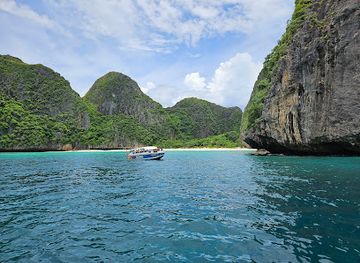
Maya Bay
Discover the breathtaking beauty of Maya Bay, a tropical paradise with crystal-clear waters and stunning limestone cliffs in Krabi, Thailand.
-
Tourist attraction
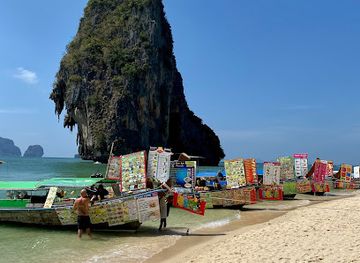
Pi Leh Bay
Experience the stunning beauty of Pi Leh Bay with its crystal-clear waters and majestic limestone cliffs, a true paradise for nature lovers and adventure seekers.
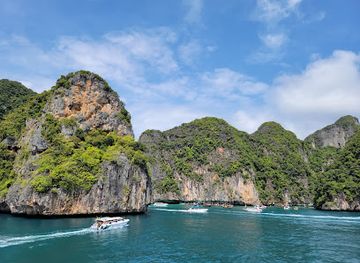
Best landmarks in Andaman Coast
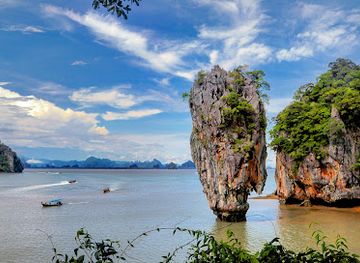
The Andaman Coast’s most identifiable landmarks are often natural rather than monumental. The limestone towers of Phang Nga Bay form one of Thailand’s best-known maritime landscapes, rising abruptly from tidal waters and mangrove channels. Krabi’s karst cliffs around Railay, Ao Nang and the surrounding bays create a similarly distinctive visual identity, although individual beaches and access points belong to different local jurisdictions within Krabi Province. Phuket Old Town is the region’s most significant historic urban landmark, where Sino-Portuguese façades, Chinese shrines and former commercial buildings reflect the island’s tin-mining and trading past. In the south, the islands and forested hills of Mu Ko Tarutao National Park express a more remote frontier character, while Ko Muk’s accessible sea cave and the coastal formations around Trang display the geological variety of the region. Wat Chalong is an important Buddhist religious site on Phuket, and the old commercial quarters of Phang Nga and Ranong preserve additional evidence of southern trade. These places are valuable not merely as viewpoints but as records of geology, maritime movement, belief and settlement.
-
National park
Ao Phang Nga National Park
Explore the breathtaking beauty of Ao Phang Nga National Park, where limestone cliffs meet emerald waters and adventure awaits.
-
Tourist attraction
Pi Leh Bay
Explore the breathtaking beauty of Pi Leh Bay in Krabi, Thailand, a paradise for nature lovers and adventure seekers alike.
-
Tourist attraction
Bamboo Island
Discover the enchanting beauty of Bamboo Island in Krabi, Thailand—a true tropical paradise with stunning beaches and vibrant marine life.
-
 Resort hotel
Santhiya Koh Yao Yai Resort & Spa
Experience unparalleled luxury and natural beauty at Santhiya Koh Yao Yai Resort & Spa, the ultimate destination for relaxation and adventure in Thailand.

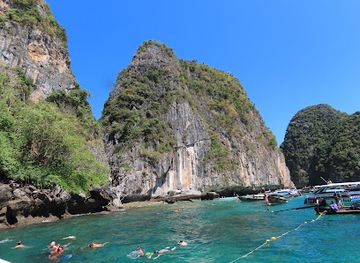
Explore Andaman Coast on the map
Plan your trip on one map. See where the top cities, national parks and sights are, and book hotels and experiences in a few clicks.
Best hotels in Andaman Coast
Best restaurants in Andaman Coast
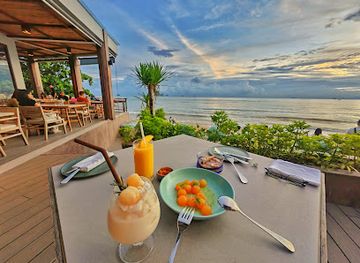
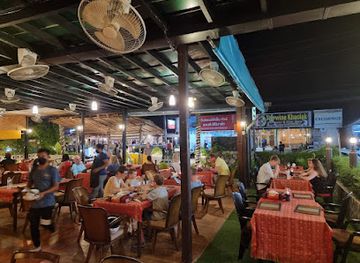
Dining along the Andaman Coast ranges from international resort restaurants to informal provincial markets and seafood stalls. Southern Thai cooking is often assertive with chilli, turmeric, herbs and fermented flavours, with dishes such as gaeng som, nam phrik, seafood curries and grilled fish appearing in local variations. Phuket’s culinary identity reflects Sino-Thai heritage as well as southern ingredients, with noodle dishes, pork specialities, dim-sum-style breakfasts and distinctive snacks found around the old town and markets. Trang is well known for a substantial morning food culture, roast pork and local-style dim sum, while Muslim communities across the coast contribute roti, grilled meats, curries and aromatic rice dishes. Krabi, Phang Nga and the islands offer abundant seafood, but prices and menus are usually more tourist-oriented near major beaches. Look to town markets, family-run restaurants, rural inns and fishing communities for a clearer sense of provincial food traditions, and check whether seafood is locally landed rather than assuming every coastal dish is regional.
-
Restaurant
Garlic 1992 Restaurant
Experience authentic Thai flavors at Garlic 1992 Restaurant in Ao Nang - where culinary tradition meets modern dining.
-
Restaurant
Anna's Restaurant
Experience authentic Thai cuisine at Anna's Restaurant in Ao Nang - where every dish tells a story.
-
Restaurant
REEVE Beach Club Krabi
Experience culinary bliss at REEVE Beach Club Krabi – where stunning views meet delectable cuisine in paradise.
-
Thai
Mali Restaurant - Thaifood Seafood BBQ Hotpan
Discover authentic Thai flavors at Mali Restaurant in Khao Lak - where fresh seafood meets traditional cooking.
Best bars in Andaman Coast
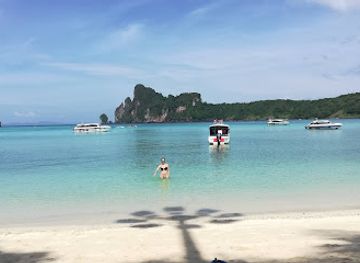
Nightlife varies sharply along the Andaman Coast. Phuket has the region’s broadest evening scene, ranging from busy entertainment streets and beach-club areas to cocktail bars, live music, night markets and quieter restaurants in Old Phuket Town. Krabi’s main resort areas offer relaxed bars, music venues and late-opening restaurants, while nearby islands generally concentrate evening activity around compact beach strips rather than large urban nightlife districts. In Phang Nga, Trang, Ranong and Satun, evenings are more commonly spent at local restaurants, cafés, markets, hotel bars and traditional pubs, with fewer dedicated clubs. Craft beer, Thai spirits and contemporary cocktail menus are available in the larger tourist centres, but the atmosphere becomes noticeably quieter outside peak holiday periods. Visitors should check local licensing and transport arrangements, particularly on islands where taxis and boat services may finish early, and should not assume that drinking is the principal way to experience coastal communities.
-
Bar
Slinky Bar
Slinky Bar in Ao Nang offers an unforgettable nightlife experience with stunning sea views, vibrant music, and delicious cocktails.
-
Bar
Reggae Bar
Discover the lively Reggae Bar in Ao Nang, where refreshing drinks, vibrant music, and a welcoming atmosphere create unforgettable nights.
-
Bar
Memories Beach Bar
Experience the vibrant atmosphere and breathtaking sunsets at Memories Beach Bar in Khao Lak, your perfect tropical getaway.
-
Bar
Carlito's bar
Discover the vibrant nightlife and stunning beachfront views at Carlito's Bar in Ao Nang, Krabi – the perfect spot for cocktails and sunsets.
Best nightclubs in Andaman Coast
Nightlife varies sharply along the Andaman Coast. Phuket has the region’s broadest evening scene, ranging from busy entertainment streets and beach-club areas to cocktail bars, live music, night markets and quieter restaurants in Old Phuket Town. Krabi’s main resort areas offer relaxed bars, music venues and late-opening restaurants, while nearby islands generally concentrate evening activity around compact beach strips rather than large urban nightlife districts. In Phang Nga, Trang, Ranong and Satun, evenings are more commonly spent at local restaurants, cafés, markets, hotel bars and traditional pubs, with fewer dedicated clubs. Craft beer, Thai spirits and contemporary cocktail menus are available in the larger tourist centres, but the atmosphere becomes noticeably quieter outside peak holiday periods. Visitors should check local licensing and transport arrangements, particularly on islands where taxis and boat services may finish early, and should not assume that drinking is the principal way to experience coastal communities.
-
Night club
Illuzion Phuket
Discover the pulse of Phuket's nightlife at Illuzion, a premier nightclub boasting spectacular performances and an energetic dance scene.
-
Bar
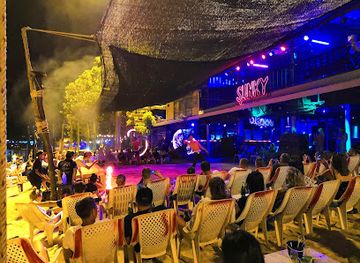
Slinky Bar
Slinky Bar in Ao Nang: A lively beach bar experience with cocktails, stunning views, and vibrant nightlife in Krabi, Thailand.
-
Disco club
The Green Mango
Immerse yourself in the vibrant nightlife of Ko Samui at The Green Mango, where music, dance, and unforgettable experiences await you.
-
Bar
Memories Beach Bar
Experience the vibrant atmosphere of Memories Beach Bar in Khao Lak, where tropical flavors meet stunning ocean views for an unforgettable beach getaway.


Best shops in Andaman Coast
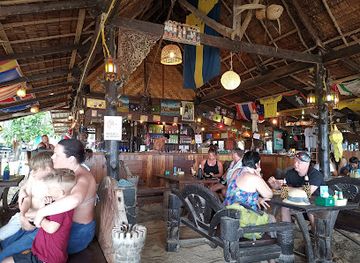
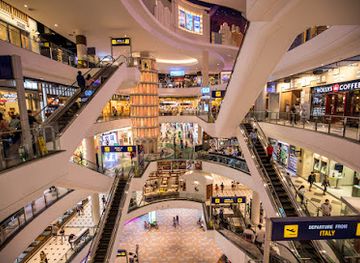
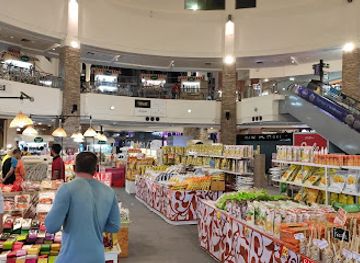
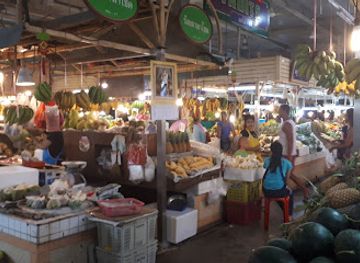
Shopping on the Andaman Coast ranges from resort convenience stores and modern malls in Phuket to provincial markets, independent town shops and island stalls. Phuket offers the broadest retail choice, including the historic streets of Old Phuket Town, contemporary shopping complexes, Sino-Thai food shops, art spaces and businesses selling regional snacks. Krabi and Phang Nga are useful for local produce, handmade items, beachwear and practical travel goods, while Trang’s markets are particularly good places to browse southern snacks, dried seafood, cakes and packaged food gifts. In Satun and the islands, visitors may find Malay-influenced foods, woven products, shells and small handicrafts, although quality and provenance vary. Farmers’ markets and morning markets are generally better for fruit, spices, curry pastes and prepared foods than for formal souvenirs. Choose crafts, textiles, ceramics or food products with clear local connections, and avoid buying coral, shells, wildlife products or antiquities, which may be illegal to remove or export.
-
Shopping mall
Terminal 21 Pattaya
Discover a world of shopping at Terminal 21 Pattaya, where each floor takes you on a journey to iconic global destinations with diverse shops and dining.
-
Shopping mall
Jungceylon
Discover Jungceylon, Phuket's ultimate shopping mall, featuring a vibrant mix of retail, dining, and entertainment for an unforgettable experience.
-
Fresh food market
Banzaan Fresh Market
Discover the vibrant flavors and fresh ingredients at Banzaan Fresh Market in Phuket, a culinary paradise for food lovers.
-
Shopping mall
Central Samui
Explore Central Samui: A vibrant shopping mall combining local charm, top brands, dining, and entertainment in the heart of Koh Samui.
Get your free copy of our complete guide to Andaman Coast, delivered straight to you.
Everything on this page, from attractions and restaurants to essentials and local phrases, in one PDF you can read offline, print or share.
Already have an account? Sign in
Your Andaman Coast guide is ready.
We'll send it to · Not you? Sign out

Getting your guide ready…
We are putting together a fresh copy of the Andaman Coast guide. This can take up to a minute.
This can take a few moments. If your browser asks, choose Allow so the download can start. You'll find the guide in your Downloads folder.
Nothing happened? Download it again
Sorry, the guide is taking longer than usual. Please try again in a minute, or get it by email instead.
Andaman Coast essentials
Currency and Payment
Safety
Emergency Situations
Do's and Don'ts
Local Tips
From Eve
Local phrases worth knowing
You don't need to get them perfect. A few words go a long way, and locals appreciate the effort.
Basics
| English | Local | Say it |
|---|---|---|
| Hello | สวัสดี | [sawasdee] |
| Goodbye | ลาก่อน | [laa-gorn] |
| Yes | ใช่ | [chai] |
| No | ไม่ | [mai] |
| Please/You're welcome | กรุณา/ยินดี | [karuna/yindi] |
| Thank you | ขอบคุณ | [khob khun] |
| Excuse me/Sorry | ขอโทษ | [kho thot] |
| How are you? | คุณสบายดีไหม | [khun sabai dee mai] |
| Fine. And you? | ดี และคุณล่ะ? | [dee lae khun la?] |
| Do you speak English? | คุณพูดภาษาอังกฤษได้ไหม? | [khun phut phasa angkrit dai mai?] |
| I don't understand | ฉันไม่เข้าใจ | [chan mai khao jai] |
Eating & Drinking
| English | Local | Say it |
|---|---|---|
| I'd like to see the menu, please | ขอดูเมนูหน่อยได้ไหม? | [kho du menu noi dai mai?] |
| I don't eat meat | ฉันไม่กินเนื้อ | [chan mai gin nuea] |
| Cheers! | ชนแก้ว! | [chon kaew!] |
| I would like to pay, please | ฉันอยากจ่ายเงิน | [chan yak jai ngern] |
Emergencies
| English | Local | Say it |
|---|---|---|
| Help! | ช่วยด้วย! | [chuay duay!] |
| Go away! | ไปไกลๆ! | [pai klai-klai!] |
| Call the Police! | เรียกตำรวจ! | [riak tamruat!] |
| Call a doctor! | เรียกหมอ! | [riak mor!] |
| I'm lost | ฉันหลงทาง | [chan long thang] |
| I'm ill | ฉันป่วย | [chan puai] |
Shopping
| English | Local | Say it |
|---|---|---|
| I'd like to buy... | ฉันอยากซื้อ... | [chan yak seu...] |
| I'm just looking | ฉันแค่ดู | [chan kae du] |
| How much is it? | ราคานี้เท่าไหร่? | [rakha nee thao rai?] |
| That's too expensive | แพงเกินไป | [paeng koen pai] |
| Can you lower the price? | คุณช่วยลดราคาได้ไหม? | [khun chuay lot rakha dai mai?] |
Time & Numbers
| English | Local | Say it |
|---|---|---|
| What time is it? | ตอนนี้กี่โมง? | [ton nee kii mong?] |
| It's one o'clock | ตอนนี้หนึ่งโมง | [ton nee neung mong] |
| Half past (10) | สิบโมงครึ่ง | [sip mong khrung] |
| Morning | เช้า | [chao] |
| Afternoon | บ่าย | [bai] |
| Evening | เย็น | [yen] |
| Yesterday | เมื่อวาน | [meu wan] |
| Today | วันนี้ | [wan nee] |
| Tomorrow | พรุ่งนี้ | [prung nee] |
| 1 | หนึ่ง | [neung] |
| 2 | สอง | [song] |
| 3 | สาม | [sam] |
| 4 | สี่ | [si] |
| 5 | ห้า | [ha] |
| 6 | หก | [hok] |
| 7 | เจ็ด | [jet] |
| 8 | แปด | [paet] |
| 9 | เก้า | [kao] |
| 10 | สิบ | [sip] |
Transport & Directions
| English | Local | Say it |
|---|---|---|
| Where's a/the...? | ที่ไหนมี...? | [thi nai mee...?] |
| What's the address? | ที่อยู่คืออะไร? | [thi yuu kheu arai?] |
| Can you show me (on the map)? | คุณช่วยชี้ให้ดู (บนแผนที่) ได้ไหม? | [khun chuay chee hai du (bon phaen thi) dai mai?] |
| When's the next (bus)? | รถบัสคันถัดไปเมื่อไหร่? | [rot bas khan that pai meu rai?] |
| A ticket (to ....) | ตั๋ว (ไป....) | [tua (pai....)] |
History of Andaman Coast
Early Maritime Exchange and Coastal Communities
The Andaman shoreline formed part of long-distance maritime networks linking the Indian Ocean with the Malay Peninsula and the Straits of Malacca. Coastal settlements exchanged ceramics, forest products, shells and other goods with visiting traders, while mangrove waterways and sheltered bays supported fishing and small-scale commerce. Archaeological evidence from southern Thailand points to sustained contact with wider Asian trading worlds, although the coast was never shaped by a single uniform kingdom. Sea-oriented communities, including the ancestors of groups later associated with the Moken, developed distinctive knowledge of reefs, seasonal waters and island environments.
Indian Ocean and Malay-World Influences
From the first millennium onwards, religious, commercial and political influences travelled through ports and coastal settlements around the Andaman Sea. Hindu and Buddhist traditions, followed later by Islam in parts of the southern peninsula, interacted with local practices. The western coast’s position opposite western Malaysia helped create cultural links that remain particularly visible in Satun and among Muslim communities elsewhere in the south. Control of the coast was often indirect and fluctuating, with local rulers and port communities operating within broader networks connected to Ayutthaya, Nakhon Si Thammarat and Malay sultanates.
Siamese Administration and the Southern Peninsula
Over the early modern and modern periods, Siam strengthened its administrative presence in the southern peninsula as European powers expanded around the region. The western coast became strategically important because of its proximity to British-controlled territories in Burma and Malaya. Administrative reforms in the late nineteenth and early twentieth centuries brought provinces more firmly into the modern Thai state. The resulting political geography helped shape the provincial identities of Ranong, Phang Nga, Phuket, Krabi, Trang and Satun, even though their coastal economies and cultural connections remained diverse.
Phuket’s Tin-Mining Era
Tin mining transformed Phuket and parts of the surrounding Andaman region from the nineteenth century into the twentieth century. Chinese migrants arrived in substantial numbers to work in mining, trade and associated businesses, contributing to the Sino-Portuguese architecture and commercial culture still visible in Phuket Old Town. Mining also altered hills, waterways and settlement patterns before tourism became the dominant economic force. The legacy survives in historic shophouses, shrines, family businesses and food traditions, as well as in the region’s multi-ethnic urban history.
Rural, Fishing and Island Economies
Away from the principal towns, Andaman communities developed livelihoods based on fishing, rubber, coconut, fruit, small-scale farming and coastal trade. Islands and estuaries were not empty scenery but working environments managed through local knowledge and customary use. In areas such as Trang, Satun and Phang Nga, Muslim, Buddhist, Chinese-Thai and sea-oriented communities contributed to distinctive local cultures. The expansion of roads, ports and domestic transport gradually connected these settlements more closely with provincial centres while leaving substantial differences between resort corridors and working coastal villages.
Tourism, Conservation and Coastal Change
International tourism expanded rapidly along the Andaman Coast from the late twentieth century, first in Phuket and later around resorts and island gateways in Phang Nga and Krabi. Marine parks and national parks were established to protect forests, reefs, islands and coastal habitats, making conservation an important part of the visitor economy. Tourism has brought employment and infrastructure but also pressure on water, waste systems, shorelines and marine environments. The 2004 Indian Ocean tsunami profoundly affected communities and tourism facilities along the coast, leading to major reconstruction and renewed attention to coastal warning and resilience.
Andaman Coast in Photos
Browse through our photo collection highlighting the charm and character of the destination.
Neighbouring regions of Andaman Coast
The closest regions to Andaman Coast, if you have time for more than one.
-

-

-

-

-


Swipe for more regions
Explore more
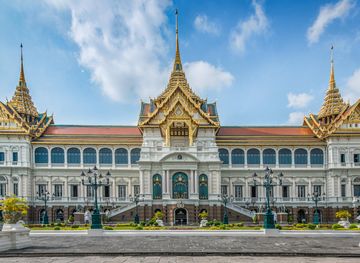
Explore more of Thailand
Discover Thailand: A land of diverse landscapes, rich culture, and warm hospitality, where ancient traditions blend seamlessly with modern attractions.
Explore Thailand