

Free Exuma Travel Guide & Mobile App
Plan your Exuma trip with Evendo. Get free guides to top attractions, restaurants, hotels, and bars. Web access or download the mobile app.


Exuma, The Bahamas, pairs George Town heritage with clear-water beaches, sailing, snorkelling, island culture and extraordinary cays across the Atlantic.
An Archipelago of Blue
Exuma is not a conventional single city but a long chain of islands and cays in The Bahamas, centred on Great Exuma and the small administrative capital of George Town. Its defining landscape is the Exuma Cays Land and Sea Park, a protected world of limestone islets, mangrove creeks, reefs and extraordinarily clear water stretching north-west through the archipelago. Great Exuma offers the most developed base, while Little Exuma, joined by a bridge, retains a quieter rural character. Roads, settlements and beaches are scattered rather than arranged around one dense urban centre.Read more about Exuma
George Town and Great Exuma
Island Life and the Sea
When is the best time to visit Exuma?
Best: January–March · 27–29°C| Month | High (°C) | Rainfall (mm) |
|---|---|---|
| January (best) | 27 | 55 |
| February (best) | 27 | 48 |
| March (best) | 29 | 46 |
| April | 30 | 39 |
| May | 31 | 29 |
| June | 33 | 24 |
| July | 33 | 24 |
| August | 33 | 25 |
| September | 33 | 30 |
| October | 32 | 39 |
| November | 30 | 43 |
| December | 29 | 52 |
Getting to and around Exuma
How to get there
Transportation
Best attractions in Exuma
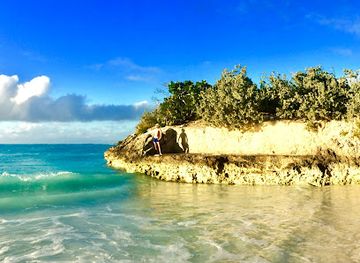
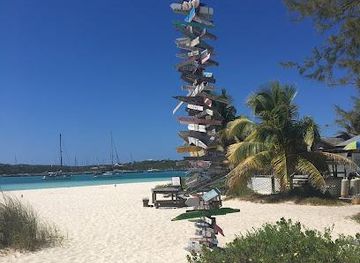
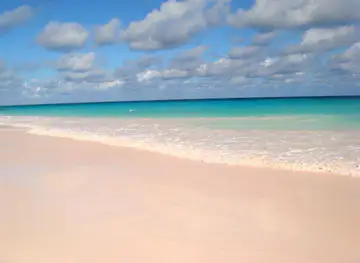
Exuma's attractions are spread across Great Exuma, Little Exuma and the surrounding cays rather than concentrated in George Town. The harbour town offers a glimpse of everyday island life, while nearby Stocking Island combines broad beaches, trails and clear shallows reached by boat. Great Exuma's coastline is lined with sandy stretches and lagoons, including Jolly Hall Beach and Hoopers Bay, known for calm water and seasonal encounters with turtles. Little Exuma brings a more historical dimension through plantation-era remains associated with Rolle Town and the salt beacon near Salt Pond, as well as the long sweep of Tropic of Cancer Beach. Boat excursions venture towards sandbars, snorkelling reefs and the famous swimming pigs of Big Major Cay, which lies in the northern Exumas rather than on Great Exuma itself. For dedicated sailors and divers, the Exuma Cays Land and Sea Park provides the archipelago's most extensive protected marine landscape.
-
Grill
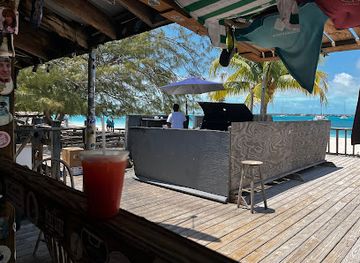
Chat 'N' Chill Beach Bar & Grill
Discover the flavors of the Bahamas at Chat 'N' Chill Beach Bar & Grill, the ultimate beachside dining experience on Stocking Island.
7 min drive · 2.2 km from city centre
-
Tourist attraction
Forbes Hill Beach
Explore the serene beauty of Forbes Hill Beach, a hidden paradise in the Bahamas, perfect for relaxation and water adventures.
34 min drive · 14 km from city centre
-
Bay
Hoopers Bay
Experience the tranquil beauty of Hoopers Bay in the Bahamas, a perfect spot for swimming, snorkeling with turtles, and enjoying stunning sunsets.
22 min drive · 7.2 km from city centre
-
Island
Stocking Island
Experience the tranquil charm of Stocking Island, a Bahamian paradise with stunning beaches and vibrant marine life perfect for relaxation.
9 min drive · 3.0 km from city centre


Best landmarks in Exuma
Exuma's landmarks express its maritime geography, colonial history and continuing community life. In George Town, the Anglican church of St Andrew's provides a visible religious and civic reference point, while the harbour and Elizabeth Harbour remain working landscapes shaped by sailing, fishing and inter-island movement. Across Little Exuma, the monument associated with John Rolle commemorates the formerly enslaved landowner whose bequest helped establish a lasting community connection with the island. The Salt Beacon near Salt Pond recalls the importance of salt working and coastal trade, and nearby plantation-era traces point to the Loyalist period and its difficult legacy of enslavement. The Tropic of Cancer Beach landmark on Little Exuma is less architectural than geographical: its name marks the passage of the latitude across the island. Further north, the protected cays and reefs of the Exuma Cays Land and Sea Park form a major natural landmark of the wider district.
-
 Resort hotel
Sandals Emerald Bay
Experience unparalleled luxury at Sandals Emerald Bay, a premium all-inclusive resort on Great Exuma, where romance meets adventure in paradise.
42 min drive · 22 km from city centre
-
Grill
Chat 'N' Chill Beach Bar & Grill
Experience the ultimate beachside dining at Chat 'N' Chill Beach Bar & Grill, where delicious food meets stunning ocean views in the heart of Stocking Island.
7 min drive · 2.2 km from city centre
-
Restaurant
Santanna's Bar & Grill
Experience the best of Bahamian cuisine at Santanna's Bar & Grill, where fresh seafood and vibrant culture come together in a tropical paradise.
41 min drive · 21 km from city centre
-
Resort hotel
Grand Isle Resort And Residences
Experience luxury and tranquility at Grand Isle Resort and Residences, your ultimate tropical getaway in Great Exuma, Bahamas.
42 min drive · 22 km from city centre

Explore Exuma on the map
Plan your Exuma trip on one map. See where the top attractions, landmarks, restaurants, bars and hotels are, find what's near where you're staying, and book hotels and experiences in a few clicks.
Best hotels in Exuma
Best restaurants in Exuma
Exuma's food culture reflects Bahamian home cooking, fishing traditions and the practical character of an island community. Conch is central, served raw with citrus as conch salad, cracked and fried, or incorporated into soups and fritters; fresh fish, lobster when in season, peas 'n' rice, macaroni and cheese, johnnycakes and stewed meats also appear in local cooking. George Town and the settlements along Great Exuma provide the broadest choice of restaurants, takeaways, beach bars and provision shops, while smaller roadside kitchens and casual eateries offer a closer connection to everyday island meals. Local produce can include fruit, vegetables and baked goods when available, although much food is imported and supplies vary. Dining is generally relaxed rather than formal, with seafood and Bahamian dishes sharing menus with Caribbean, American and international fare in visitor-oriented establishments.
-
Grill
Chat 'N' Chill Beach Bar & Grill
Discover paradise at Chat 'N' Chill Beach Bar & Grill on Stocking Island—where delicious food meets stunning ocean views.
7 min drive · 2.2 km from city centre
-
Restaurant
Santanna's Bar & Grill
Discover authentic Bahamian cuisine at Santanna's Bar & Grill in William's Town - where flavor meets affordability.
41 min drive · 21 km from city centre
-
Seafood
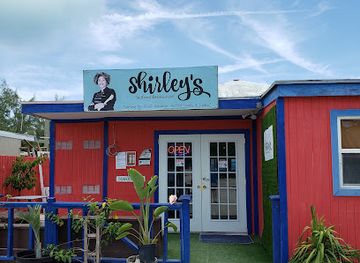
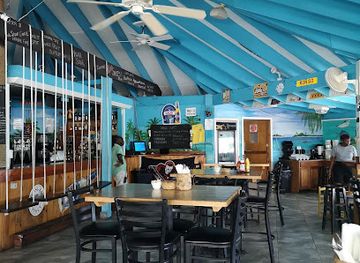
Shirley's Seafood Restaurant
Discover fresh seafood delights at Shirley's Seafood Restaurant in the Bahamas—where every meal is a taste of island paradise.
11 min drive · 3.7 km from city centre
-
Grill
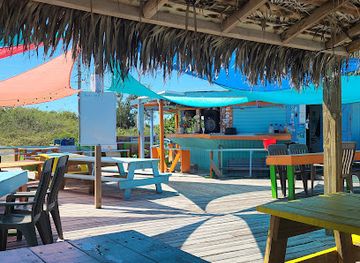
Splash Beach Bar
Discover the vibrant ambiance and delicious grilled cuisine at Splash Beach Bar in George Town – a tropical paradise for food lovers.
13 min drive · 4.3 km from city centre
Best bars in Exuma
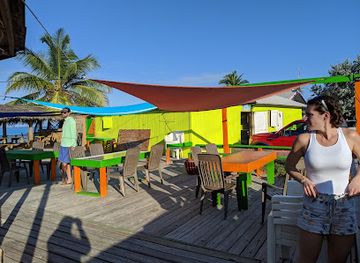
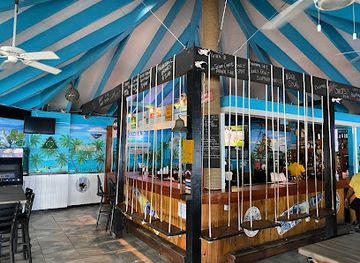
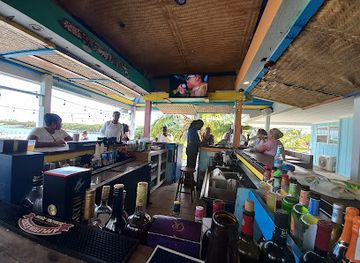
Exuma's evenings are generally sociable and low-key rather than centred on a large club scene. George Town and the harbour area have the greatest concentration of casual bars, restaurants with drinks and waterfront venues, while beach bars and hotel lounges provide quieter settings elsewhere on Great Exuma. Live music, Bahamian storytelling and informal gatherings may accompany special events, particularly around the National Family Island Regatta and other community celebrations. Some boat excursions include an evening stop or sunset setting, making the sea part of the after-dark experience. Little Exuma is more subdued, with nightlife often connected to local restaurants, small bars and accommodation rather than dedicated nightclubs. Visitors should expect distances between venues, limited late-night transport and island schedules that vary with season, weather and community events.
-
Grill
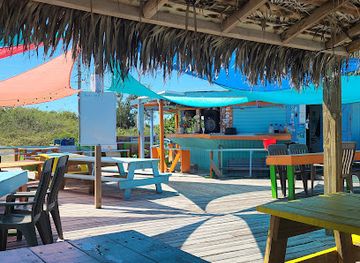
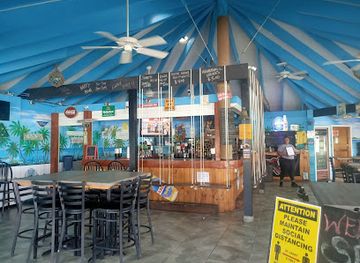
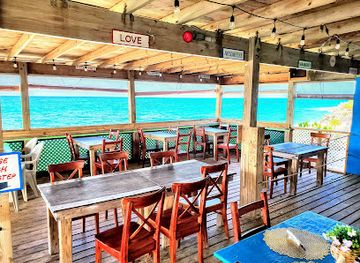
Chat 'N' Chill Beach Bar & Grill
Experience the vibrant flavors and laid-back vibes of the Caribbean at Chat 'N' Chill Beach Bar & Grill on Stocking Island.
7 min drive · 2.2 km from city centre
-
Restaurant
Santanna's Bar & Grill
Experience the flavors of the Bahamas at Santanna's Bar & Grill, where seafood delights and local charm meet in William's Town.
41 min drive · 21 km from city centre
-
Grill
Splash Beach Bar
Experience the vibrant flavors and relaxed atmosphere at Splash Beach Bar in George Town, the perfect spot for food and fun by the sea.
13 min drive · 4.3 km from city centre
-
Grill
Tropic Breeze
Tropic Breeze: A Beach Bar & Grill Experience in William's Town with Fresh Flavors and Stunning Ocean Views.
40 min drive · 20 km from city centre
Best nightclubs in Exuma
Exuma's evenings are generally sociable and low-key rather than centred on a large club scene. George Town and the harbour area have the greatest concentration of casual bars, restaurants with drinks and waterfront venues, while beach bars and hotel lounges provide quieter settings elsewhere on Great Exuma. Live music, Bahamian storytelling and informal gatherings may accompany special events, particularly around the National Family Island Regatta and other community celebrations. Some boat excursions include an evening stop or sunset setting, making the sea part of the after-dark experience. Little Exuma is more subdued, with nightlife often connected to local restaurants, small bars and accommodation rather than dedicated nightclubs. Visitors should expect distances between venues, limited late-night transport and island schedules that vary with season, weather and community events.
-
Grill
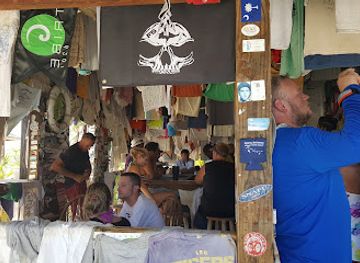
Chat 'N' Chill Beach Bar & Grill
Experience the tropical bliss of Chat 'N' Chill Beach Bar & Grill, where mouthwatering flavors meet stunning ocean views on Stocking Island.
7 min drive · 2.2 km from city centre
-
Restaurant
Santanna's Bar & Grill
Experience the vibrant flavors of the Bahamas at Santanna's Bar & Grill, a top dining spot in William's Town offering fresh seafood and tropical drinks.
41 min drive · 21 km from city centre
-
Grill
Splash Beach Bar
Experience the vibrant flavors and stunning views at Splash Beach Bar, the perfect grill destination in George Town, Bahamas.
13 min drive · 4.3 km from city centre
-
Restaurant
Exuma Yacht Club Restaurant and Bar
Experience the flavors of the Bahamas at Exuma Yacht Club Restaurant and Bar, where tropical ambiance meets delicious local cuisine.
6 min drive · 1.9 km from city centre
Best shops in Exuma
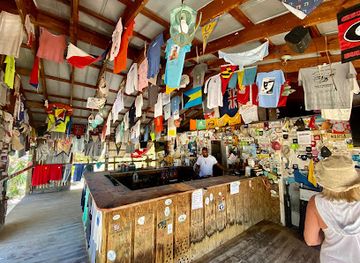
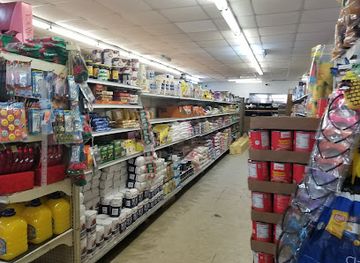
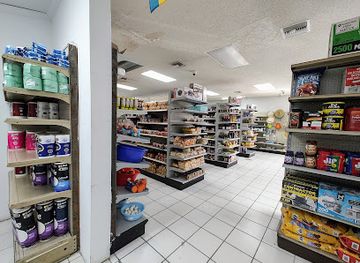
Shopping in Exuma is practical, local and dispersed rather than built around a large retail district. George Town has the broadest selection of grocery shops, pharmacies, service businesses, souvenir outlets and small retailers, while settlements along Great Exuma offer provisions and roadside stalls. Visitors may find Bahamian-made crafts, straw work, shell-based souvenirs, paintings, T-shirts, hot sauces, baked goods and locally inspired gifts, though selection varies and genuine handmade items should be distinguished from imported merchandise. Small food shops and markets are useful for assembling supplies for beach days or boat trips, especially because remote cays have few services. Little Exuma has a quieter retail scene, with purchases generally tied to local businesses and community stops rather than dedicated shopping streets. Bargaining is not an automatic expectation in formal shops, and card acceptance can be less consistent with small vendors.
-
Grill
Chat 'N' Chill Beach Bar & Grill
Experience the tropical charm of Chat 'N' Chill Beach Bar & Grill on Stocking Island, where great food meets stunning ocean views.
7 min drive · 2.2 km from city centre
-
Grocery store
Exuma Markets
Discover the vibrant flavors of the Bahamas at Exuma Markets, your go-to grocery store for local produce and gourmet delights in George Town.
6 min drive · 2.0 km from city centre
-
Grocery store
Smittys Grocery & Convenience
Discover the authentic flavors of the Bahamas at Smitty's Grocery & Convenience, your go-to spot for local goods and warm hospitality in George Town.
18 min drive · 5.9 km from city centre
-
Grocery store
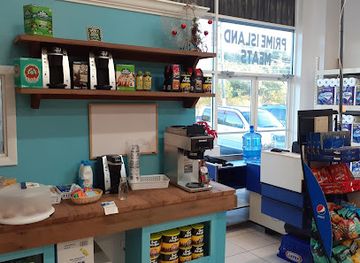
Prime Island Meats, Deli and Grocery Store
Explore the vibrant flavors of the Bahamas at Prime Island Meats, your go-to grocery store and deli in Hoopers Bay.
21 min drive · 7.1 km from city centre
Get your free copy of our complete guide to Exuma, delivered straight to you.
Everything on this page, from attractions and restaurants to essentials and local phrases, in one PDF you can read offline, print or share.
Already have an account? Sign in
Your Exuma guide is ready.
We'll send it to · Not you? Sign out

Getting your guide ready…
We are putting together a fresh copy of the Exuma guide. This can take up to a minute.
This can take a few moments. If your browser asks, choose Allow so the download can start. You'll find the guide in your Downloads folder.
Nothing happened? Download it again
Sorry, the guide is taking longer than usual. Please try again in a minute, or get it by email instead.
Exuma essentials
Currency and Payment
Safety
Emergency Situations
Do's and Don'ts
Local Tips
From Eve
Local phrases worth knowing
You don't need to get them perfect. A few words go a long way, and locals appreciate the effort.
Basics
| English | Local | Say it |
|---|---|---|
| Hello | Hello | [Heh-loh] |
| Goodbye | Goodbye | [Good-bye] |
| Yes | Yes | [Yes] |
| No | No | [No] |
| Please/You're welcome | Please/You're welcome | [Pleez/Yur wel-kum] |
| Thank you | Thank you | [Thank yoo] |
| Excuse me/Sorry | Excuse me/Sorry | [Eks-kyoos mee/Sor-ee] |
| How are you? | How are you? | [How ar yoo?] |
| Fine. And you? | Fine. And you? | [Fyn. And yoo?] |
| Do you speak English? | Do you speak English? | [Doo yoo speek Ing-lish?] |
| I don't understand | I don't understand | [I dohnt und-er-stand] |
Eating & Drinking
| English | Local | Say it |
|---|---|---|
| I'd like to see the menu, please | I'd like to see the menu, please | [I'd lyk to see the men-yoo, pleez] |
| I don't eat meat | I don't eat meat | [I dohnt eet meet] |
| Cheers! | Cheers! | [Cheerz!] |
| I would like to pay, please | I would like to pay, please | [I wood lyk to pay, pleez] |
Emergencies
| English | Local | Say it |
|---|---|---|
| Help! | Help! | [Help!] |
| Go away! | Go away! | [Go a-way!] |
| Call the Police! | Call the Police! | [Kawl the Po-lees!] |
| Call a doctor! | Call a doctor! | [Kawl a dok-ter!] |
| I'm lost | I'm lost | [I'm lost] |
| I'm ill | I'm ill | [I'm il] |
Shopping
| English | Local | Say it |
|---|---|---|
| I'd like to buy... | I'd like to buy... | [I'd lyk to buy...] |
| I'm just looking | I'm just looking | [I'm just look-ing] |
| How much is it? | How much is it? | [How much iz it?] |
| That's too expensive | That's too expensive | [Thatz too ex-pen-siv] |
| Can you lower the price? | Can you lower the price? | [Can yoo low-er the prys?] |
Time & Numbers
| English | Local | Say it |
|---|---|---|
| What time is it? | What time is it? | [Wat tym iz it?] |
| It's one o'clock | It's one o'clock | [It's wun o'klok] |
| Half past (10) | Half past (10) | [Haf past (ten)] |
| Morning | Morning | [Morn-ing] |
| Afternoon | Afternoon | [Af-ter-noon] |
| Evening | Evening | [Eev-ning] |
| Yesterday | Yesterday | [Yes-ter-day] |
| Today | Today | [To-day] |
| Tomorrow | Tomorrow | [To-mor-row] |
| 1 | 1 | [Wun] |
| 2 | 2 | [Too] |
| 3 | 3 | [Tree] |
| 4 | 4 | [For] |
| 5 | 5 | [Fyv] |
| 6 | 6 | [Siks] |
| 7 | 7 | [Seven] |
| 8 | 8 | [Ayt] |
| 9 | 9 | [Nyn] |
| 10 | 10 | [Ten] |
Transport & Directions
| English | Local | Say it |
|---|---|---|
| Where's a/the...? | Where's a/the...? | [Werz a/the...?] |
| What's the address? | What's the address? | [Wats the ad-dress?] |
| Can you show me (on the map)? | Can you show me (on the map)? | [Can yoo show mee (on the map)?] |
| When's the next (bus)? | When's the next (bus)? | [Wenz the nekst (bus)?] |
| A ticket (to ....) | A ticket (to ....) | [A tik-et (to ....)] |
History of Exuma
Lucayan Peoples and European Arrival
Before European colonisation, the Exumas were inhabited by Lucayan communities whose lives were closely connected to the sea. Spanish voyages and slave raids devastated the wider Bahamian population during the early sixteenth century, and the islands were subsequently left with very few inhabitants. English settlement expanded in The Bahamas during the seventeenth and eighteenth centuries, although the Exumas remained relatively remote. Their sheltered channels, shallow banks and abundant marine resources later attracted mariners, small farmers and plantation interests. The archipelago's geography continued to shape its history: settlements developed beside navigable water, while many cays remained sparsely inhabited and dependent on seafaring.
George Town and the Loyalist Settlement
George Town was established in 1793 and named in honour of King George III. The American War of Independence brought Loyalist refugees and enslaved Africans to The Bahamas, transforming settlement patterns and agricultural activity across islands including Great Exuma and Little Exuma. Cotton plantations were established where soil and rainfall allowed, though the environment was less suited to large-scale plantation production than some Caribbean colonies. Enslaved labour supported plantation households and agriculture until emancipation in the British Empire in 1834, with apprenticeship ending in 1838. The churches, roads, fields and family networks of the southern Exumas reflect this era as well as its long social consequences.
Salt, Plantations and Maritime Trade
During the nineteenth century, the Exumas participated in the small-scale economy of the Bahamian Out Islands through farming, fishing, salt production and maritime trade. Salt was especially important in parts of the archipelago where shallow ponds could be worked, while coastal communities exchanged produce and provisions with passing vessels. Plantation agriculture declined after emancipation, and many residents turned increasingly towards the sea for livelihoods. George Town's harbour became a practical focus for administration and commerce, while family connections linked the islands with Nassau and other Bahamian settlements. The resulting culture was neither wholly agricultural nor urban: it was an island economy shaped by seasonal work, navigation and resourcefulness.
A Seafaring Community Takes Shape
In the twentieth century, improved boats, air connections and communications gradually reduced the Exumas' isolation without erasing their out-island character. Fishing, boatbuilding, farming and local trade remained important, while migration for employment connected Exuma families with Nassau, Florida and other Bahamian islands. George Town developed as the administrative and service centre for the district, but settlement stayed dispersed along Great Exuma and Little Exuma. Churches, schools and community organisations became important anchors of local life. The sea continued to determine movement and opportunity, whether through working boats, inter-island travel or the growing interest of visitors in the archipelago's reefs and beaches.
Conservation and Contemporary Exuma
Modern Exuma combines a resident island community with a tourism economy based on sailing, boating, fishing, diving and beach holidays. The creation of the Exuma Cays Land and Sea Park in 1959 established one of the world's notable protected marine areas, helping conserve reefs, mangroves, seabird habitats and important marine environments. Conservation has become central to the archipelago's identity, although pressure from development, waste, anchoring and visitor activity requires careful management. The annual National Family Island Regatta, founded in 1954 and held in George Town, expresses a living maritime tradition through Bahamian sloop racing. Contemporary Exuma therefore looks both outward to international visitors and inward to its seafaring heritage.
Exuma in Photos
Browse through our photo collection highlighting the charm and character of the destination.
Cities near Exuma
The closest cities to Exuma, if you have time for more than one stop.
-

-

-

-
-


Swipe for more cities

