

Karakum Desert, Turkmenistan Travel Guide
Discover the Karakum Desert: Turkmenistan's mesmerizing landscape of fiery craters, ancient Silk Road relics, and timeless nomadic traditions.
The Karakum Desert, known as 'Black Sand' in Turkic, is a vast and mesmerizing expanse covering around 70% of Turkmenistan. This desert is not just an endless sea of sand; it is a landscape of striking contrasts where you can find rolling dunes, sparse vegetation, and unique geological formations. The heart of the desert is home to the Darvaza Gas Crater, also known as the 'Door to Hell', a fiery crater that has been burning continuously since 1971, offering an unforgettable visual spectacle especially at night. Exploring the Karakum Desert is an adventure like no other. The desert is sparsely populated, offering a sense of solitude and tranquility. Visitors can experience the traditional nomadic lifestyle by staying in yurts, enjoying local cuisine, and witnessing the timeless ways of life that have been preserved for centuries. The desert's flora and fauna, although limited, are uniquely adapted to the harsh environment and include a variety of reptiles, rodents, and hardy plants. One of the most fascinating aspects of the Karakum Desert is its ancient history. The area is dotted with remnants of the Silk Road, including caravanserais and ancient ruins, providing a glimpse into the region's rich cultural heritage. For those interested in geology, the Karakum offers a stunning array of rock formations and fossil beds, making it a paradise for amateur geologists and history buffs alike.

Know before you go
Hi, I'm Eve. Here are a few practical things to know before exploring Karakum Desert.
- Visit the Darvaza Gas Crater at night for the most spectacular views.
- Stay hydrated and wear sun protection; the desert can be extremely hot during the day.
- Consider hiring a local guide to enhance your understanding of the desert's history and ecology.
- Bring cash, as ATMs and card payment options are very limited in remote areas.
- Respect local customs and traditions, especially when interacting with nomadic communities.
Top City Travel Guides in Karakum Desert
The cities of Karakum Desert, and the easiest places to base yourself.

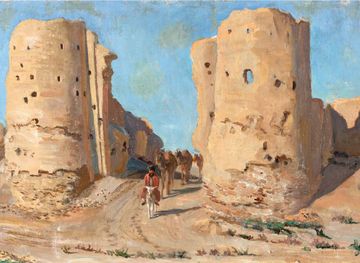

Destinations in Karakum Desert
Resorts, valleys and scenic spots worth a trip of their own.


Best bars in Karakum Desert
Top-rated picks
Best Bars

AlpEt Steakhouse
Savor the finest steaks in Ashgabat at AlpEt Steakhouse, where culinary excellence meets warm hospitality.

Üzüm Café
Experience the cozy charm and delicious flavors of Üzüm Café, a local gem in Ashgabat's Bagtyyarlyk district.

Kaplankyr Reserve
Explore the breathtaking landscapes and rich biodiversity of Kaplankyr Reserve, a premier national park in Turkmenistan.

Gul zaman Restaurant
Experience the essence of Turkmen cuisine at Gul Zaman Restaurant in Ashgabat, where tradition meets elegance in every dish.


Best shops in Karakum Desert
Top-rated picks
Best Shops

Berkarar
Explore Berkarar Shopping Mall in Ashgabat for a vibrant mix of shopping, dining, and modern architecture that showcases the best of Turkmen culture.

Darvaza Gas Crater - "Door to Hell"
Explore the Darvaza Gas Crater, a mesmerizing fiery phenomenon in Turkmenistan, renowned as the 'Door to Hell' and a must-visit for adventurous travelers.

State shopping center Gulistan (Russian bazaar)
Discover the vibrant State Shopping Center Gulistan in Ashgabat, a cultural haven for unique crafts, delicious street food, and authentic Turkmen hospitality.

Teke Bazar
Discover Teke Bazar in Ashgabat: A cultural marketplace filled with local crafts, delicious foods, and a vibrant atmosphere that captures the essence of Turkmenistan.

Explore Karakum Desert on the Map
A handpicked selection of must-see spots in Karakum Desert, mapped for you.
Karakum Desert Essentials
-
The Karakum Desert is located in Turkmenistan, and the nearest international airport is Ashgabat International Airport, approximately 100 kilometers away from the desert's border. From Ashgabat, you can take a domestic flight to cities such as Mary or Dashoguz, which are closer to various entry points of the desert. Alternatively, you can hire a taxi or arrange for a private car to take you directly from Ashgabat to the desert. The journey by road typically takes around 2 to 3 hours, depending on your exact destination within the Karakum Desert.
-
Traveling within the Karakum Desert typically requires a sturdy 4x4 vehicle due to the challenging terrain. Car rentals are available in Ashgabat, and it's advisable to hire a local driver who is familiar with the desert routes. Public transportation options are limited within the desert, so organized tours and private vehicles are the most reliable means of transport. Camel treks are also popular for shorter journeys and provide a traditional experience of desert travel.
-
The official currency of Turkmenistan is the Turkmen manat (TMT). Credit cards are not widely accepted, especially in rural areas and within the desert, so it is essential to carry sufficient cash. ATMs are available in major cities like Ashgabat, Mary, and Dashoguz, but they are scarce elsewhere. It is advisable to withdraw cash before heading into the desert to ensure you have enough funds for your trip.
-
The Karakum Desert is generally safe for tourists, but it is crucial to take standard precautions. Avoid traveling alone and always have a reliable guide or driver with you. There are no specific high-crime areas targeting tourists, but it is wise to safeguard your belongings and be cautious, especially at night. Ensure you are well-prepared for the harsh desert conditions, including extreme temperatures and potential sandstorms.
-
In case of emergency, dial 03 for medical emergencies or 02 to contact the police. It is highly recommended to have comprehensive travel insurance that covers medical emergencies and evacuation. Carry a first-aid kit and plenty of water at all times. For minor health issues, there are pharmacies in larger towns on the outskirts of the desert. Always inform someone of your travel plans and expected return time when venturing into the desert.
-
Fashion: Do wear lightweight, breathable clothing that covers your skin to protect against the sun and sand. Avoid wearing flashy or revealing clothing. Religion: Do respect local customs and religious practices. Be mindful of prayer times and avoid disturbing local communities. Public Transport: Do be patient and respectful when using public transport. Don't expect public transportation within the desert; rely on private vehicles or organized tours. Greetings: Do greet people with a handshake and a smile. A respectful nod or slight bow is also appreciated. Eating & Drinking: Do try local dishes and accept food offerings graciously. Don't refuse hospitality, as it is considered impolite. Always drink bottled or purified water to avoid any health issues.
-
To experience the Karakum Desert like a local, consider joining a camel caravan or staying in a traditional yurt. Engage with local guides who can share insights into the desert's history and culture. Visit the Darvaza Gas Crater, also known as the 'Door to Hell,' for a unique and mesmerizing sight. Participate in traditional Turkmen tea ceremonies and sample local delicacies. Lastly, explore the ancient Silk Road routes that traverse the desert for a glimpse into the region's rich historical heritage.
When is the best time to visit Karakum Desert?
Useful Local Phrases for Karakum Desert
You don't need to speak the language perfectly. Even learning a few simple words can make conversations warmer—and locals usually appreciate the effort.
— Eve

Here are the phrases I use most often in Karakum Desert. Try a few—you'll be surprised how far they go! 😊
❤️
-
- HelloSalam
[sah-lahm] - GoodbyeHoşlaşmak
[hosh-lahsh-mahk] - YesHawa
[ha-wah] - NoYok
[yok] - Please/You're welcomeSiziň üçin
[si-zin ü-jin] - Thank youSag boluň
[sahg bo-loon] - Excuse me/SorryBagyşlaň
[bah-ghi-sh-lahn] - How are you?Nasıl bolarsyň?
[nah-suhl bo-lar-sihn] - Fine. And you?Gowy. Sen näme?
[gow-ee. sen nah-meh] - Do you speak English?Inglizçe aýdyp bilýärsiňizmi?
[in-gliz-cheh ay-dihp bil-yair-sihn-zmih] - I don't understandMen düşünmeýärin
[men du-shun-meh-yair-in]
- HelloSalam
-
- I'd like to see the menu, pleaseMenu görmäge isleg edýärin, haýyş
[meh-nu goor-mah-ge is-leh-eh-dih-rin, ha-yih] - I don't eat meatMen et iýmeýärin
[men et ee-yeh-meh-yair-in] - Cheers!Şerefe!
[sheh-reh-feh] - I would like to pay, pleaseHasap etmäge isleg edýärin, haýyş
[ha-sap et-mah-ge is-leh-eh-dih-rin, ha-yih]
- I'd like to see the menu, pleaseMenu görmäge isleg edýärin, haýyş
-
- Help!Ýardam!
[yahr-dahm] - Go away!Gaýdaý!
[guy-dah-y] - Call the Police!Polisiýa jaň ediň!
[po-lee-sih-yah jahn eh-din] - Call a doctor!Hekimi jaň ediň!
[heh-kee-mee jahn eh-din] - I'm lostMen ýitirip galdym
[men yee-tir-ihp gal-dim] - I'm illMen kesel
[men keh-sehl]
- Help!Ýardam!
-
- I'd like to buy...Men ... satyn almak isleýärin
[men ... sa-tin al-mahk ee-sle-yair-in] - I'm just lookingMen diňe gözleýärin
[men din-eh gohz-leh-yair-in] - How much is it?Bu näçe?
[boo nah-cheh] - That's too expensiveBu gaty gymmat
[boo gah-tee ghim-maht] - Can you lower the price?Bahalary peseldip bilersiňizmi?
[bah-ah-lah-ree peh-sel-dihp beel-er-sihn-zmih]
- I'd like to buy...Men ... satyn almak isleýärin
-
- What time is it?Saatingiz näme?
[sah-tihn-giz nah-meh] - It's one o'clockBu bir sagat
[boo beer sah-gaht] - Half past (10)On bir geçdi
[on beer geh-ch-dee] - MorningErte
[er-teh] - AfternoonGiç
[gee-ch] - EveningAkşam
[akh-shahm] - YesterdayDüýn
[duyn] - TodayŞu gün
[shoo goon] - TomorrowErteki
[er-teh-kee] - 1Bir
[beer] - 2Iki
[ee-kee] - 3Üç
[ooch] - 4Dört
[duhrt] - 5Besh
[besh] - 6Altı
[ahl-tee] - 7Ýedi
[yeh-dee] - 8Sekiz
[seh-keez] - 9Dokuz
[do-kuz] - 10On
[on]
- What time is it?Saatingiz näme?
-
- Where's a/the...?Nerede ...?
[neh-reh-deh] - What's the address?Salgy näme?
[sal-gee nah-meh] - Can you show me (on the map)?Meni (karte) görkezip bilersiňizmi?
[meh-nee (kar-teh) goh-reh-zh-i-p bil-er-sihn-zmih] - When's the next (bus)?Indiki (awtobus) näme wagty?
[in-dih-kee (aw-to-boos) nah-meh vah-gty] - A ticket (to ....)Bilet (.... üçin)
[bee-let (.... ü-jin)]
- Where's a/the...?Nerede ...?
History of Karakum Desert
-
The Karakum Desert was a crucial part of the Silk Road, the ancient trade route that connected the East and West. Caravans carrying silk, spices, and other valuable goods would traverse this harsh desert, often stopping at oases such as those near the ancient city of Merv. Merv, once one of the largest cities in the world, served as a vital hub for commerce, culture, and knowledge exchange during the height of the Silk Road.
-
Merv, located on the southern edge of the Karakum Desert, is one of the oldest and most significant historical sites in Turkmenistan. Founded around the 6th century BCE, it became a major center of trade, culture, and learning. During the Islamic Golden Age, Merv was known for its impressive libraries and scholars. The city reached its zenith in the 12th century before being destroyed by the Mongols in the 13th century. Today, its ruins are a UNESCO World Heritage Site.
-
During the Soviet era, the Karakum Desert saw significant changes with the construction of the Karakum Canal, one of the largest irrigation and water supply projects in the world. Completed in 1988, the canal stretches over 1,375 kilometers, diverting water from the Amu Darya River to irrigate the arid lands of Turkmenistan, transforming parts of the desert into fertile agricultural land. This massive engineering project has had a profound impact on the region's economy and environment.
-
The Darvaza Gas Crater, also known as the 'Door to Hell,' is one of the most iconic landmarks of the Karakum Desert. In 1971, Soviet geologists accidentally caused the ground to collapse while drilling for natural gas, creating a large crater. To prevent the spread of methane gas, they ignited it, expecting the fire to burn out in a few weeks. However, the crater has been burning ever since, creating a surreal and eerie spectacle that attracts adventurous travelers from around the world.
-
The Karakum Desert is home to the nomadic Turkmen people, who have lived in this harsh environment for centuries. Known for their distinctive yurts, colorful carpets, and intricate jewelry, the Turkmen have a rich cultural heritage deeply connected to the desert. Traditional activities such as camel breeding, horse racing, and folk music play an essential role in their way of life. Visitors to the Karakum can experience this unique culture by engaging with local communities and participating in traditional events and festivals.
Neighbouring Regions of Karakum Desert
The closest regions to Karakum Desert, if you have time for more than one.


Your all‑in‑one travel companion app
Explore expert travel guides, compare and book tours, experiences, hotels, and more—all from the palm of your hand. Download now for seamless trip planning wherever your wanderlust takes you.


Explore More of Turkmenistan
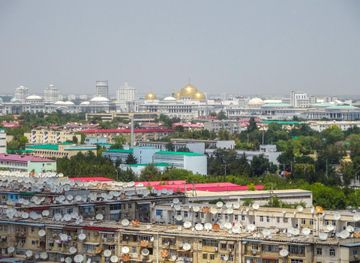
Looking beyond Karakum Desert? Discover Turkmenistan for broader travel guides, local hot-spots, and regional highlights.
Explore TurkmenistanKarakum Desert in Photos
Browse through our photo collection highlighting the charm and character of the destination.


The Enigmatic Karakum Desert: Turkmenistan's Hidden Jewel
The Karakum Desert, known as 'Black Sand' in Turkic, is a vast and mesmerizing expanse covering around 70% of Turkmenistan. This desert is not just an endless sea of sand; it is a landscape of striking contrasts where you can find rolling dunes, sparse vegetation, and unique geological formations. The heart of the desert is home to the Darvaza Gas Crater, also known as the 'Door to Hell', a fiery crater that has been burning continuously since 1971, offering an unforgettable visual spectacle especially at night. Exploring the Karakum Desert is an adventure like no other. The desert is sparsely populated, offering a sense of solitude and tranquility. Visitors can experience the traditional nomadic lifestyle by staying in yurts, enjoying local cuisine, and witnessing the timeless ways of life that have been preserved for centuries. The desert's flora and fauna, although limited, are uniquely adapted to the harsh environment and include a variety of reptiles, rodents, and hardy plants. One of the most fascinating aspects of the Karakum Desert is its ancient history. The area is dotted with remnants of the Silk Road, including caravanserais and ancient ruins, providing a glimpse into the region's rich cultural heritage. For those interested in geology, the Karakum offers a stunning array of rock formations and fossil beds, making it a paradise for amateur geologists and history buffs alike.