

Malcolm's Road Beach Travel Guide - Free Web & App
Your ultimate guide to Malcolm's Road Beach. Discover top landmarks, proposed trips, and local tips. Free on the web or via the Evendo companion app.


Malcolm's Road Beach in Turks and Caicos offers a quiet Atlantic shoreline, reef views, sunset walks and a rugged route to Providenciales' northwest coast.
A Remote Northwestern Shoreline
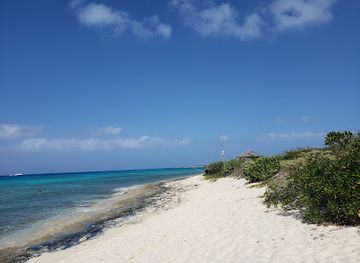
Malcolm's Road Beach lies on the north-western side of Providenciales in the Turks and Caicos Islands, reached by following Malcolm's Road towards the island's remote Northwest Point area. It is a natural, lightly developed beach rather than a resort frontage, with pale sand, clear water and a broad sense of open space. The approach is part of the experience: the road becomes rough and unpaved, and conditions can change after rain, so visitors should allow more time than the short distance from the built-up parts of the island might suggest.Read more about Malcolm's Road Beach
Coast, Reef and Protected Waters
The Character of a Less Developed Coast
When is the best time to visit Malcolm's Road Beach?
Best: May, September–October · 33°C| Month | High (°C) | Rainfall (mm) |
|---|---|---|
| January | 31 | 75 |
| February | 32 | 60 |
| March | 32 | 40 |
| April | 33 | 30 |
| May (best) | 33 | 20 |
| June | 34 | 20 |
| July | 34 | 20 |
| August | 34 | 20 |
| September (best) | 33 | 20 |
| October (best) | 33 | 20 |
| November | 32 | 40 |
| December | 32 | 60 |
Getting to and around Malcolm's Road Beach
How to get there
Transportation
Best attractions in Malcolm's Road Beach
-
Tourist attraction
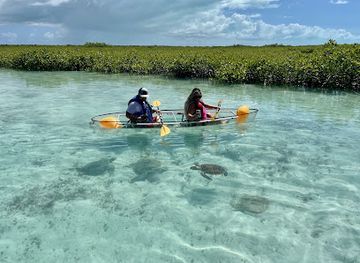
Rising Tide Tours
Discover the beauty of Turks & Caicos with Rising Tide Tours - your gateway to adventure in the mangroves!
Explore Malcolm's Road Beach on the map
Plan your trip on one map. See where the top attractions, landmarks, restaurants and hotels are, and book hotels and experiences in a few clicks.
Best hotels in Malcolm's Road Beach
Best shops in Malcolm's Road Beach
Malcolm's Road Beach has no shops, craft stalls or market, and shopping should be completed in Providenciales' developed settlements before travelling along Malcolm's Road. Grace Bay and other populated areas offer the island's principal selection of supermarkets, convenience shops, galleries, resort retail and places selling souvenirs or locally themed goods. Visitors may find Turks and Caicos-inspired art, clothing, jewellery and food products, although the selection varies between businesses and not every item is locally made. A practical stop at a supermarket or small shop is more relevant to a beach visit than browsing for speciality goods: water, snacks, sun protection and rubbish bags are not supplied on the shore. The limited retail presence around the beach is part of its remote character, not a sign of an overlooked shopping district.
-
Beach
Malcolm's Road Beach
Discover the serene beauty of Malcolm's Road Beach, a hidden paradise in the Turks & Caicos Islands, perfect for relaxation and adventure.
Get your free copy of our complete guide to Malcolm's Road Beach, delivered straight to you.
Everything on this page, from attractions and restaurants to essentials and local phrases, in one PDF you can read offline, print or share.
Already have an account? Sign in
Your Malcolm's Road Beach guide is ready.
We'll send it to · Not you? Sign out

Getting your guide ready…
We are putting together a fresh copy of the Malcolm's Road Beach guide. This can take up to a minute.
This can take a few moments. If your browser asks, choose Allow so the download can start. You'll find the guide in your Downloads folder.
Nothing happened? Download it again
Sorry, the guide is taking longer than usual. Please try again in a minute, or get it by email instead.
Malcolm's Road Beach essentials
Currency and Payment
Safety
Emergency Situations
Do's and Don'ts
Local Tips
From Eve
Local phrases worth knowing
You don't need to get them perfect. A few words go a long way, and locals appreciate the effort.
Basics
| English | Local | Say it |
|---|---|---|
| Hello | Hello | [heh-loh] |
| Goodbye | Goodbye | [guhd-bye] |
| Yes | Yes | [yehs] |
| No | No | [noh] |
| Please/You're welcome | Please/You're welcome | [pleez/yoor wel-kuhm] |
| Thank you | Thank you | [thank yoo] |
| Excuse me/Sorry | Excuse me/Sorry | [ik-skyoos mee/sor-ee] |
| How are you? | How are you? | [hao ahr yoo?] |
| Fine. And you? | Fine. And you? | [fain. and yoo?] |
| Do you speak English? | Do you speak English? | [doo yoo speek ing-glish?] |
| I don't understand | I don't understand | [ai dohnt und-er-stand] |
Eating & Drinking
| English | Local | Say it |
|---|---|---|
| I'd like to see the menu, please | I'd like to see the menu, please | [ai'd laik too see thee men-yoo, pleez] |
| I don't eat meat | I don't eat meat | [ai dohnt eet meet] |
| Cheers! | Cheers! | [cheers] |
| I would like to pay, please | I would like to pay, please | [ai wood laik too pay, pleez] |
Emergencies
| English | Local | Say it |
|---|---|---|
| Help! | Help! | [help!] |
| Go away! | Go away! | [goh uh-way!] |
| Call the Police! | Call the Police! | [kahl thee puh-leece!] |
| Call a doctor! | Call a doctor! | [kahl ah dohk-ter!] |
| I'm lost | I'm lost | [ai'm lost] |
| I'm ill | I'm ill | [ai'm il] |
Shopping
| English | Local | Say it |
|---|---|---|
| I'd like to buy... | I'd like to buy... | [ai'd laik too bahy...] |
| I'm just looking | I'm just looking | [ai'm jahst look-ing] |
| How much is it? | How much is it? | [hao much iz it?] |
| That's too expensive | That's too expensive | [thats tooh ek-spensiv] |
| Can you lower the price? | Can you lower the price? | [kan yoo loh-er thee prahys?] |
Time & Numbers
| English | Local | Say it |
|---|---|---|
| What time is it? | What time is it? | [waht tahym iz it?] |
| It's one o'clock | It's one o'clock | [its wuhn oh-klok] |
| Half past (10) | Half past (10) | [hahf past (10)] |
| Morning | Morning | [mawr-nin] |
| Afternoon | Afternoon | [af-ter-noon] |
| Evening | Evening | [eev-ning] |
| Yesterday | Yesterday | [yest-er-day] |
| Today | Today | [toh-day] |
| Tomorrow | Tomorrow | [toh-moh-row] |
| 1 | 1 | [wuhn] |
| 2 | 2 | [too] |
| 3 | 3 | [tree] |
| 4 | 4 | [fohr] |
| 5 | 5 | [fahyv] |
| 6 | 6 | [siks] |
| 7 | 7 | [sev-uhn] |
| 8 | 8 | [eyt] |
| 9 | 9 | [nahn] |
| 10 | 10 | [tehn] |
Transport & Directions
| English | Local | Say it |
|---|---|---|
| Where's a/the...? | Where's a/the...? | [whehrz a/the...] |
| What's the address? | What's the address? | [wahts thee uh-dres?] |
| Can you show me (on the map)? | Can you show me (on the map)? | [kan yoo shoh mee (on thee map)?] |
| When's the next (bus)? | When's the next (bus)? | [wenz thee nehkst (buhs)?] |
| A ticket (to ....) | A ticket (to ....) | [ah tik-it (to ....)] |
History of Malcolm's Road Beach
A Limestone Island Landscape
Malcolm's Road Beach occupies part of Providenciales, a low-lying limestone island shaped by marine processes, wind and the movement of sand along the Caicos coastline. The beach, shallow coastal waters and nearby reef and seagrass habitats are products of this wider island environment rather than monuments created by a single historical event. The north-western shore has remained comparatively lightly developed because it is distant from Providenciales' principal settlement and resort areas, allowing its coastal character to persist.
Lucayan Island Heritage
Before European colonisation, the Turks and Caicos Islands were inhabited by Lucayan communities, who travelled among the islands and depended on marine and coastal resources. Archaeological evidence across the archipelago records this wider history, although Malcolm's Road Beach is not chiefly known for a major surviving Lucayan monument. The landscape nevertheless belongs to the same island world in which fishing, shellfish gathering, navigation and knowledge of shallow banks were central to human life.
Colonial Change and Salt Production
European expansion brought profound change to the Turks and Caicos Islands, including the displacement of Lucayan society and the growth of salt production, trade and plantation activity in selected parts of the archipelago. Providenciales did not develop into the principal historic salt centre, and the remote north-western coast remained less intensively settled than areas associated with farming, transport or later tourism. Malcolm's Road Beach has no well-documented historic townscape or industrial complex of its own, so its history is best understood through the broader development of Providenciales.
Conservation and Modern Access
The modern significance of Malcolm's Road Beach is closely connected with the protection of Providenciales' western marine and coastal environments. Northwest Point Marine National Park forms part of the island's protected natural framework, recognising the importance of reefs, seagrass, mangroves and other marine habitats. Tourism has concentrated elsewhere on Providenciales, especially around Grace Bay, while the rough approach and limited facilities at Malcolm's Road Beach have helped retain a quieter character. Conservation management now shapes how visitors should use the shoreline and surrounding waters.
Malcolm's Road Beach in Photos
Browse through our photo collection highlighting the charm and character of the destination.
Neighbouring destination travel guides
The closest destinations to Malcolm's Road Beach, if you have time for more than one.
-

-

-

-
-


Swipe for more destinations
Explore more

Explore more of Turks and Caicos Islands
Discover the pristine beaches, luxurious resorts, and vibrant culture of Turks and Caicos Islands, a tropical paradise in the Atlantic Ocean.
Explore Turks and Caicos Islands