

Free Northern Emirates Travel Guide & Mobile App
Explore Northern Emirates with free travel guides. Discover regional history, expert tips, proposed trips, and audio guides on web or mobile app.


Explore the Northern Emirates for Sharjah's museums, Gulf beaches, Fujairah's east coast, Ras Al Khaimah's mountains and traditional maritime towns.
Read more about Northern Emirates
When is the best time to visit Northern Emirates?
Best: December–February · 24–26°C| Month | High (°C) | Rainfall (mm) |
|---|---|---|
| January (best) | 24 | 10 |
| February (best) | 25 | 10 |
| March | 29 | 10 |
| April | 33 | 5 |
| May | 38 | 2 |
| June | 41 | 0 |
| July | 43 | 0 |
| August | 43 | 0 |
| September | 40 | 1 |
| October | 36 | 2 |
| November | 31 | 5 |
| December (best) | 26 | 10 |
Getting to and around Northern Emirates
How to get there
Transportation
Top city travel guides in Northern Emirates
The cities of Northern Emirates, and the easiest places to base yourself.
-

-

-

-

-

-


Swipe for more cities
Destinations in Northern Emirates
Resorts, valleys and scenic spots worth a trip of their own.
-

-

-

-

-

-


Swipe for more destinations
Best attractions in Northern Emirates
The Northern Emirates offer a varied attraction landscape that extends well beyond modern shopping centres and beaches. Sharjah is the region's principal cultural destination, with the restored Heart of Sharjah, museums devoted to Islamic art, archaeology, heritage and the local environment, and the Sharjah Arts Museum. On the east coast, Khor Fakkan combines a broad waterfront with mountain scenery, while Kalba is associated with mangroves, wildlife and coastal nature. Ajman provides a compact museum and creekside setting, and Umm Al Quwain is suited to quieter boating, mangrove and maritime experiences. Ras Al Khaimah brings together historic forts, archaeological remains, beaches and the dramatic uplands around Jebel Jais, where hiking and outdoor adventure are concentrated. Fujairah's attractions include its fort, museum, old mosques, east-coast beaches and access to Hajar Mountain villages. Diving, snorkelling, kayaking, hiking and desert-edge excursions are available in different parts of the region, but visits to protected landscapes and remote wadis should be planned around seasonal conditions and access regulations.
-
Park
Burj Park
Experience the serene beauty of Burj Park, nestled at the foot of the Burj Khalifa, offering breathtaking views and a peaceful retreat in the heart of Dubai.
-
Monument
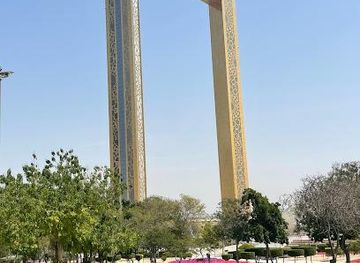
Dubai Frame
Experience the breathtaking views and rich history of Dubai at the iconic Dubai Frame, where tradition meets innovation.
-
Conference center
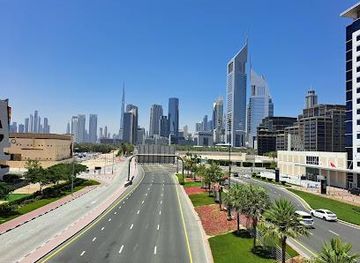
Dubai World Trade Centre
Explore Dubai World Trade Centre: The epicenter of business, culture, and innovation in the UAE, offering a unique blend of exhibitions and events.
-
Park
Zabeel Park
Experience the tranquility and beauty of Zabeel Park, an expansive urban oasis in the heart of Dubai, offering recreation and relaxation for all visitors.


Best landmarks in Northern Emirates
Sharjah's Al Hisn Fort, restored heritage houses and traditional souqs form one of the clearest architectural records of Gulf urban life in the region, while the Sharjah Mosque and the Museum of Islamic Civilization provide prominent modern and historic reference points. Ajman Museum occupies a fortified eighteenth-century building that served as the ruler's residence and seat of government before the emirate's modern expansion. In Umm Al Quwain, the old fort now associated with the National Museum recalls the emirate's former defensive and administrative centre. Ras Al Khaimah's Dhayah Fort stands among date groves and mountain foothills, and the National Museum occupies a former fort complex in the old town. Fujairah Fort, constructed from local materials and restored after damage, is one of the UAE's best-known defensive landmarks. Nearby Al Bidyah Mosque represents an early form of regional mosque architecture. Jebel Jais provides the region's most recognisable natural landmark, its high ridges and exposed rock marking the northern end of the Hajar Mountains.
-
Landmark
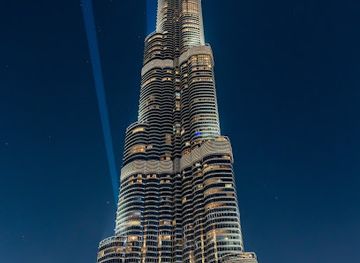
Burj Khalifa
Experience breathtaking views and architectural brilliance at the world's tallest building, Burj Khalifa, in the heart of Dubai.
-
Fountain
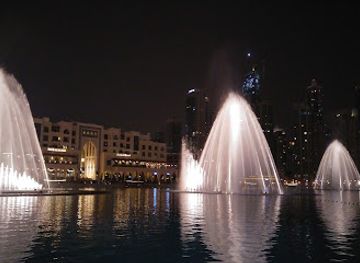
The Dubai Fountain
Experience the breathtaking beauty of The Dubai Fountain, the world's largest choreographed fountain, set against the iconic skyline of Downtown Dubai.
-
Mosque
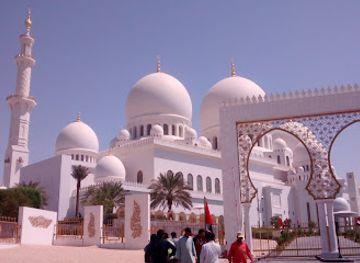
Sheikh Zayed Grand Mosque
Discover the breathtaking beauty and cultural significance of Sheikh Zayed Grand Mosque, an architectural gem in Abu Dhabi's landscape.
-
Monument
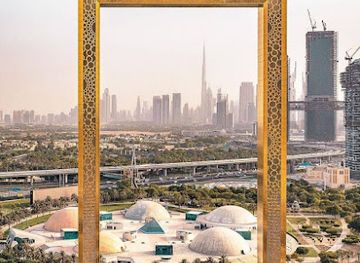
Dubai Frame
Discover the breathtaking views and cultural insights from the iconic Dubai Frame, a stunning monument that connects the past and future of Dubai.
Explore Northern Emirates on the map
Plan your trip on one map. See where the top cities, national parks and sights are, and book hotels and experiences in a few clicks.
Best hotels in Northern Emirates
Best restaurants in Northern Emirates
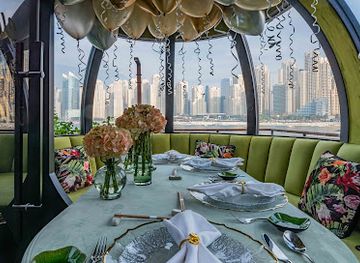
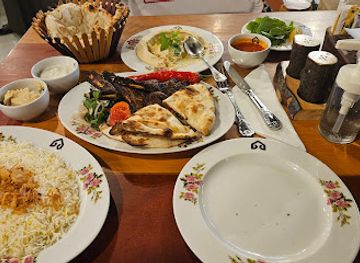
Dining in the Northern Emirates ranges from Emirati home-style cooking and traditional cafés to Indian, Persian, Levantine, East Asian and international restaurants serving the region's diverse resident population. Local dishes commonly feature rice, spiced meat, seafood, dates, yoghurt, flatbreads and Arabic coffee, while coastal towns place greater emphasis on grilled or fried fish. Sharjah has the broadest concentration of established restaurants and cafés, including venues around heritage districts and waterfronts; Ajman, Ras Al Khaimah and Fujairah offer hotel dining, informal eateries and independent restaurants along their urban coasts. In Umm Al Quwain, seafood and simple local dining suit the emirate's quieter maritime character. Look for Emirati specialities such as machboos, harees, thareed and luqaimat, although recipes and availability vary. Markets, bakeries, juice shops and roadside cafés provide useful introductions to everyday food culture, while licensed hotel restaurants are the principal setting for alcohol service.
-
Middle Eastern
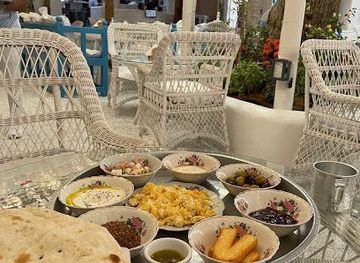
Arabian Tea House Restaurant & Cafe - Al Fahidi, Dubai
Discover authentic Emirati flavors in a historic Bastakiya courtyard oasis, where spiced machboos, saffron teas, and warm hospitality transport you to old Dubai's heart.
-
Traditional restaurant
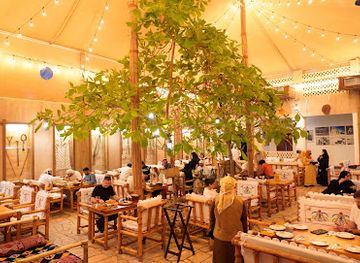
Al Khayma Heritage Restaurant | مطعم الخيمة التراثي
Savor authentic Emirati cuisine at Al Khayma Heritage Restaurant, where tradition meets taste in the heart of Dubai's historical district.
-
Fine Dining
THE PODS
Discover culinary excellence at THE PODS on Bluewaters Island - where fine dining meets breathtaking views in Dubai.
-
Restaurant
Al Khayma Heritage Restaurant Abu Dhabi
Savor traditional Emirati dishes in an enchanting setting near Sheikh Zayed Grand Mosque at Al Khayma Heritage Restaurant.
Best bars in Northern Emirates
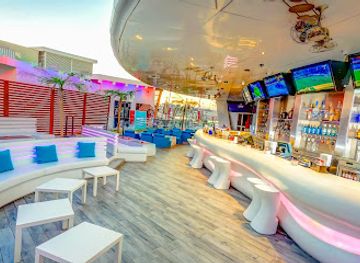
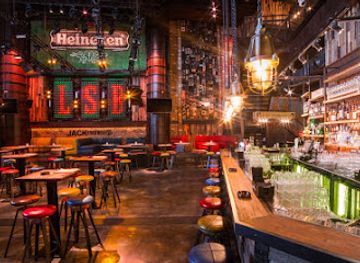
Evening life in the Northern Emirates is generally more relaxed and dispersed than in Dubai. Sharjah has cafés, cultural events, restaurants and late-opening tea and coffee places, but alcohol is not served in the emirate. Ajman, Ras Al Khaimah and Fujairah have licensed bars, lounges and restaurants mainly within hotels and resorts, with the largest concentration of evening venues in the more developed coastal districts. Ras Al Khaimah also has resort-based entertainment and occasional live music, while Fujairah's waterfront hotels provide a quieter evening setting. Umm Al Quwain is better suited to casual restaurants, cafés and outdoor activities than to a large club scene. Venue policies, licensing and opening arrangements can change, so visitors should check locally rather than assume that nightlife operates identically across the five emirates. In smaller towns, evenings often centre on family restaurants, coffee shops and promenades rather than a dedicated nightlife district.
-
Irish pub
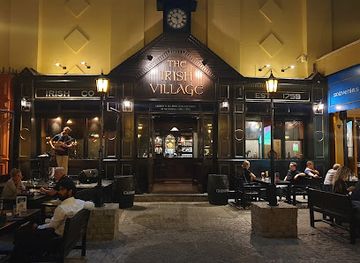
The Irish Village, Al Garhoud
Discover the lively spirit of Ireland at The Irish Village, a vibrant pub in Dubai's Al Garhoud offering authentic food, drinks, and entertainment.
-
Grill
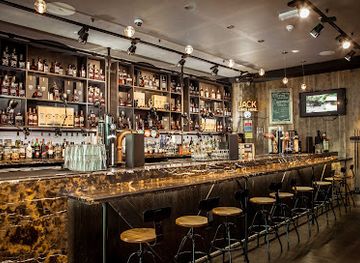
Jack's Bar & Grill
Experience the ultimate dining adventure at Jack's Bar & Grill in Dubai International Airport, where delicious grilled favorites meet refreshing drinks.
-
Sports bar
Stars N Bars
Experience the ultimate sports bar at Stars N Bars in Abu Dhabi, where great food, live music, and thrilling games come together.
-
Bar
Lock, Stock & Barrel
Experience the vibrant nightlife of Dubai at Lock, Stock & Barrel, a lively bar offering delicious drinks, live music, and an unforgettable atmosphere.
Best nightclubs in Northern Emirates
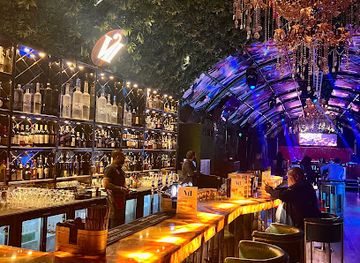
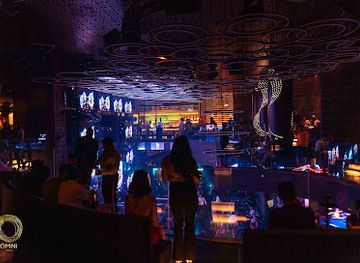
Evening life in the Northern Emirates is generally more relaxed and dispersed than in Dubai. Sharjah has cafés, cultural events, restaurants and late-opening tea and coffee places, but alcohol is not served in the emirate. Ajman, Ras Al Khaimah and Fujairah have licensed bars, lounges and restaurants mainly within hotels and resorts, with the largest concentration of evening venues in the more developed coastal districts. Ras Al Khaimah also has resort-based entertainment and occasional live music, while Fujairah's waterfront hotels provide a quieter evening setting. Umm Al Quwain is better suited to casual restaurants, cafés and outdoor activities than to a large club scene. Venue policies, licensing and opening arrangements can change, so visitors should check locally rather than assume that nightlife operates identically across the five emirates. In smaller towns, evenings often centre on family restaurants, coffee shops and promenades rather than a dedicated nightlife district.
-
Lounge
Vii Dubai - Secret Garden
Experience luxury and vibrancy at Vii Dubai, a premier lounge and nightclub offering stunning views, exquisite cocktails, and an unforgettable nightlife experience.
-
Night club
Omni Club Dubai Night club
Discover the ultimate nightlife experience at Omni Club Dubai, where modern elegance meets vibrant energy and unforgettable entertainment.
-
Night club
SOT Dubai - Nightclub & Lounge
Discover the electrifying atmosphere of SOT Dubai, a premier nightclub and lounge offering exquisite dining and vibrant nightlife in the heart of Dubai.
-
Night club
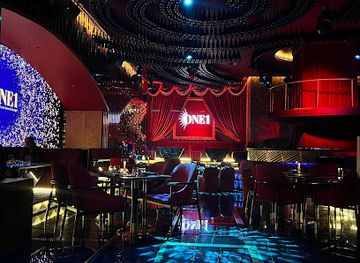
Club One Dubai
Dive into the energetic nightlife of Dubai at Club One, a premier night club featuring top DJs and an electrifying atmosphere.

Best shops in Northern Emirates
Shopping in the Northern Emirates ranges from traditional souqs and covered markets to modern malls, neighbourhood shops and waterfront retail areas. Sharjah's heritage districts are the strongest place to browse restored market architecture, books, crafts, perfumes, textiles and Islamic art, while its larger shopping centres provide international brands and everyday retail. Ajman and Ras Al Khaimah combine conventional malls with independent tailoring, jewellery, electronics and food shops, and Fujairah serves as a practical shopping centre for the east coast. Local food products such as dates, Arabic sweets, spices, coffee and honey make useful gifts, while craft and souvenir selections vary considerably by venue. Traditional gold and textile shopping is more commercial than museum-like, so compare quality and prices before buying. Major malls offer air-conditioned convenience, whereas smaller markets and independent stores provide a closer view of ordinary local commerce; opening arrangements can differ during Ramadan and public holidays.
-
Shopping mall
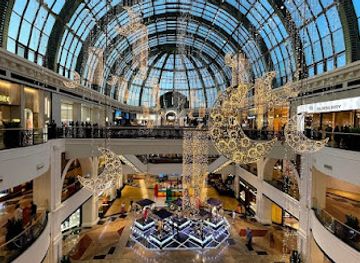
Mall of the Emirates
Explore the Mall of the Emirates: Dubai's premier shopping, dining, and entertainment destination featuring luxury brands and unique attractions.
-
Shopping mall
City Centre Deira
Explore City Centre Deira, a premier shopping mall in Dubai featuring over 500 stores, diverse dining options, and exciting entertainment for all ages.
-
Shopping mall
Dubai Festival City Mall
Experience the ultimate shopping and dining adventure at Dubai Festival City Mall, where luxury meets leisure amidst stunning waterfront views.
-
Shopping mall
Sahara Centre
Explore Sahara Centre, Sharjah's premier shopping mall, offering diverse retail, dining, and entertainment options for all visitors.
Get your free copy of our complete guide to Northern Emirates, delivered straight to you.
Everything on this page, from attractions and restaurants to essentials and local phrases, in one PDF you can read offline, print or share.
Already have an account? Sign in
Your Northern Emirates guide is ready.
We'll send it to · Not you? Sign out

Getting your guide ready…
We are putting together a fresh copy of the Northern Emirates guide. This can take up to a minute.
This can take a few moments. If your browser asks, choose Allow so the download can start. You'll find the guide in your Downloads folder.
Nothing happened? Download it again
Sorry, the guide is taking longer than usual. Please try again in a minute, or get it by email instead.
Northern Emirates essentials
Currency and Payment
Safety
Emergency Situations
Do's and Don'ts
Local Tips
From Eve
Local phrases worth knowing
You don't need to get them perfect. A few words go a long way, and locals appreciate the effort.
Basics
| English | Local | Say it |
|---|---|---|
| Hello | مرحبا | [Marhaba] |
| Goodbye | وداعا | [Wada'an] |
| Yes | نعم | [Na'am] |
| No | لا | [La] |
| Please/You're welcome | من فضلك | [Min fadlik] |
| Thank you | شكرا | [Shukran] |
| Excuse me/Sorry | عذرا | [Udhra] |
| How are you? | كيف حالك؟ | [Kayfa halak?] |
| Fine. And you? | بخير. وأنت؟ | [Bikhayr. Wa anta?] |
| Do you speak English? | هل تتحدث الإنجليزية؟ | [Hal tatahadath al-ingliziyya?] |
| I don't understand | لا أفهم | [La afham] |
Eating & Drinking
| English | Local | Say it |
|---|---|---|
| I'd like to see the menu, please | أود رؤية القائمة، من فضلك | [Awad ru'yat al-qa'ima, min fadlik] |
| I don't eat meat | لا آكل اللحم | [La akul al-lahm] |
| Cheers! | في صحتك! | [Fi sihatak!] |
| I would like to pay, please | أود الدفع، من فضلك | [Awad ad-daf', min fadlik] |
Emergencies
| English | Local | Say it |
|---|---|---|
| Help! | نجدة! | [Najda!] |
| Go away! | ابتعد! | [Ibt'id!] |
| Call the Police! | اتصل بالشرطة! | [Ittasil bil-shurta!] |
| Call a doctor! | اتصل بطبيب! | [Ittasil bi-tabeeb!] |
| I'm lost | أنا ضائع | [Ana da'i'] |
| I'm ill | أنا مريض | [Ana marid] |
Shopping
| English | Local | Say it |
|---|---|---|
| I'd like to buy... | أود شراء... | [Awad shir'a...] |
| I'm just looking | أنا فقط أنظر | [Ana faqat anzur] |
| How much is it? | كم سعره؟ | [Kam si'ruhu?] |
| That's too expensive | هذا غالي جدا | [Hatha ghali jidan] |
| Can you lower the price? | هل يمكنك خفض السعر؟ | [Hal yumkinuka khafd as-si'r?] |
Time & Numbers
| English | Local | Say it |
|---|---|---|
| What time is it? | كم الساعة؟ | [Kam as-saa'a?] |
| It's one o'clock | الساعة الواحدة | [As-saa'a al-wahidah] |
| Half past (10) | العاشرة والنصف | [Al-'ashirah wa an-nisf] |
| Morning | صباحا | [Sabahan] |
| Afternoon | بعد الظهر | [Ba'd al-zuhur] |
| Evening | مساءً | [Masa'an] |
| Yesterday | أمس | [Ams] |
| Today | اليوم | [Al-yawm] |
| Tomorrow | غدا | [Ghadan] |
| 1 | واحد | [Wahid] |
| 2 | اثنان | [Ithnan] |
| 3 | ثلاثة | [Thalatha] |
| 4 | أربعة | [Arba'a] |
| 5 | خمسة | [Khamsa] |
| 6 | ستة | [Sitta] |
| 7 | سبعة | [Sab'a] |
| 8 | ثمانية | [Thamaniya] |
| 9 | تسعة | [Tis'a] |
| 10 | عشرة | [Ashara] |
Transport & Directions
| English | Local | Say it |
|---|---|---|
| Where's a/the...? | أين ...؟ | [Ayn ...?] |
| What's the address? | ما هو العنوان؟ | [Ma huwa al-'unwan?] |
| Can you show me (on the map)? | هل يمكنك أن تريني (على الخريطة)؟ | [Hal yumkinuka an turini (ala al-kharita)?] |
| When's the next (bus)? | متى تكون الحافلة القادمة؟ | [Mata takun al-hafila al-qadima?] |
| A ticket (to ....) | تذكرة (إلى ....) | [Tadhkara (ila ....)] |
History of Northern Emirates
Early Settlement and Gulf Trade
The Northern Emirates have a long archaeological record shaped by access to both the Arabian Gulf and the Gulf of Oman. Excavated settlements, burial sites and artefacts show that communities in the region participated in fishing, farming, metalworking and maritime exchange thousands of years ago. The Hajar Mountains supplied stone and minerals, while the coastal inlets supported fishing and sea travel. Finds across Sharjah, Ras Al Khaimah and Fujairah demonstrate that the area was connected to wider networks linking Arabia with Mesopotamia, Iran and the Indian Ocean well before the emergence of the modern UAE.
Julfar and Medieval Maritime Commerce
The historic port of Julfar, generally associated with the Ras Al Khaimah area, became an important centre of Gulf and Indian Ocean trade during the medieval and early modern periods. Its merchants dealt in goods including ceramics, dates and pearls, and the port was connected to routes reaching India, East Africa and the wider Gulf. The archaeological landscape around Ras Al Khaimah records successive settlements as coastlines and channels changed. Julfar's legacy helps explain the region's long-standing maritime outlook and the importance of seafaring to northern coastal communities.
Pearling, Fishing and Coastal Sheikdoms
Before oil transformed the economy, coastal life depended heavily on fishing, pearling, boatbuilding, oasis agriculture and trade. Creeks in Umm Al Quwain, Ajman and Ras Al Khaimah sheltered boats, while Sharjah's port connected the coast with regional commerce. Local ruling families governed separate sheikdoms whose influence extended through coastal settlements, islands and parts of the interior. Pearling was demanding and seasonal, and its decline in the twentieth century, alongside the growth of cultivated pearls and changing international markets, had a profound effect on household economies throughout the Gulf.
The Qawasim and Regional Power
From the eighteenth century, the Qawasim became a major maritime power centred on Ras Al Khaimah and Sharjah, with commercial and political influence across parts of the Gulf. Their position brought them into conflict with British naval interests, and the coastal sheikdoms later entered a series of treaties with Britain. These agreements shaped the political geography of the Trucial Coast while leaving local rulers responsible for internal administration. Forts, old ports and family histories in the Northern Emirates reflect this period of maritime competition and diplomacy.
Treaty Relations and the Trucial States
During the nineteenth and early twentieth centuries, the emirates of the Trucial Coast operated under treaty arrangements with Britain intended to regulate maritime affairs and external relations. Local economies remained based on pearling, fishing, trade, herding and oasis cultivation, with limited infrastructure compared with later decades. Fujairah's position on the Gulf of Oman gave it a distinct east-coast setting, while the Gulf emirates developed around creeks and sheltered anchorages. The period ended as Britain announced its withdrawal from the Gulf and the political future of the emirates was renegotiated.
Federation and Rapid Modernisation
The United Arab Emirates was formed in 1971 by Abu Dhabi, Dubai, Sharjah, Ajman, Umm Al Quwain and Fujairah; Ras Al Khaimah joined in 1972. Oil wealth, federal investment, port development and international trade then accelerated change across the Northern Emirates. Roads, airports, universities, industrial zones, hospitals and new residential districts expanded around older coastal settlements. Each emirate pursued its own economic and cultural priorities: Sharjah developed a prominent cultural profile, Ras Al Khaimah diversified through industry and tourism, and Fujairah strengthened its east-coast port and logistics role.
Heritage Conservation and Contemporary Culture
Since the late twentieth century, the Northern Emirates have invested in preserving forts, traditional houses, archaeological sites, museums and maritime collections while also building modern cultural venues. Sharjah's heritage and arts institutions have become especially influential, while Ajman, Umm Al Quwain, Ras Al Khaimah and Fujairah have developed museums and visitor facilities around their own histories. Contemporary tourism increasingly combines this heritage with mountain recreation, nature protection, beaches and adventure activities, reflecting a regional move beyond a purely urban or resort-based image.
Northern Emirates in Photos
Browse through our photo collection highlighting the charm and character of the destination.
Neighbouring regions of Northern Emirates
The closest regions to Northern Emirates, if you have time for more than one.
-

-

-

-

-


Swipe for more regions
Explore more

Explore more of United Arab Emirates
Discover the United Arab Emirates: A land where futuristic cities meet timeless deserts, offering luxury, adventure, and rich cultural experiences.
Explore United Arab Emirates