Shap Abbey Travel Guide
Free Guide: Explore the serene ruins of Shap Abbey, a 12th-century Premonstratensian monastery nestled in the tranquil Cumbrian valley of the River Lowther.


A brief summary of Shap Abbey
Explore the serene ruins of Shap Abbey, a 12th-century Premonstratensian monastery nestled in the tranquil Cumbrian valley of the River Lowther.
On-site amenities
 Restrooms
 Parking
 Information boards
 Seating areas
 Trash bins
Opening hours
- Every dayOpen 24 hours
Opening hours as listed on the venue’s Google Business Profile. Hours can change for services and special events, so check with the venue before you go.
- Address
- Keld Ln, Penrith CA10 3NB
- Phone
- Website
Getting there
Car
Bus
Walking
Cycling
Discover more about Shap Abbey
Origins and Monastic Heritage of Shap Abbey
Founded around 1199 by Thomas, son of Gospatric, Shap Abbey was established as a religious house for Premonstratensian canons, also known as the 'white canons' for their distinctive woollen habits. This order, founded in 1120 in northern France, combined contemplative monastic life with pastoral duties, serving local communities as priests. Shap Abbey was one of 32 Premonstratensian houses in Britain, notable for its relatively small but wealthy community, sustained by extensive land grants from prominent northern families. The abbey’s location in a quiet valley beside the River Lowther was deliberately chosen for seclusion and access to fertile land.
Architectural Features and the Abbey’s Layout
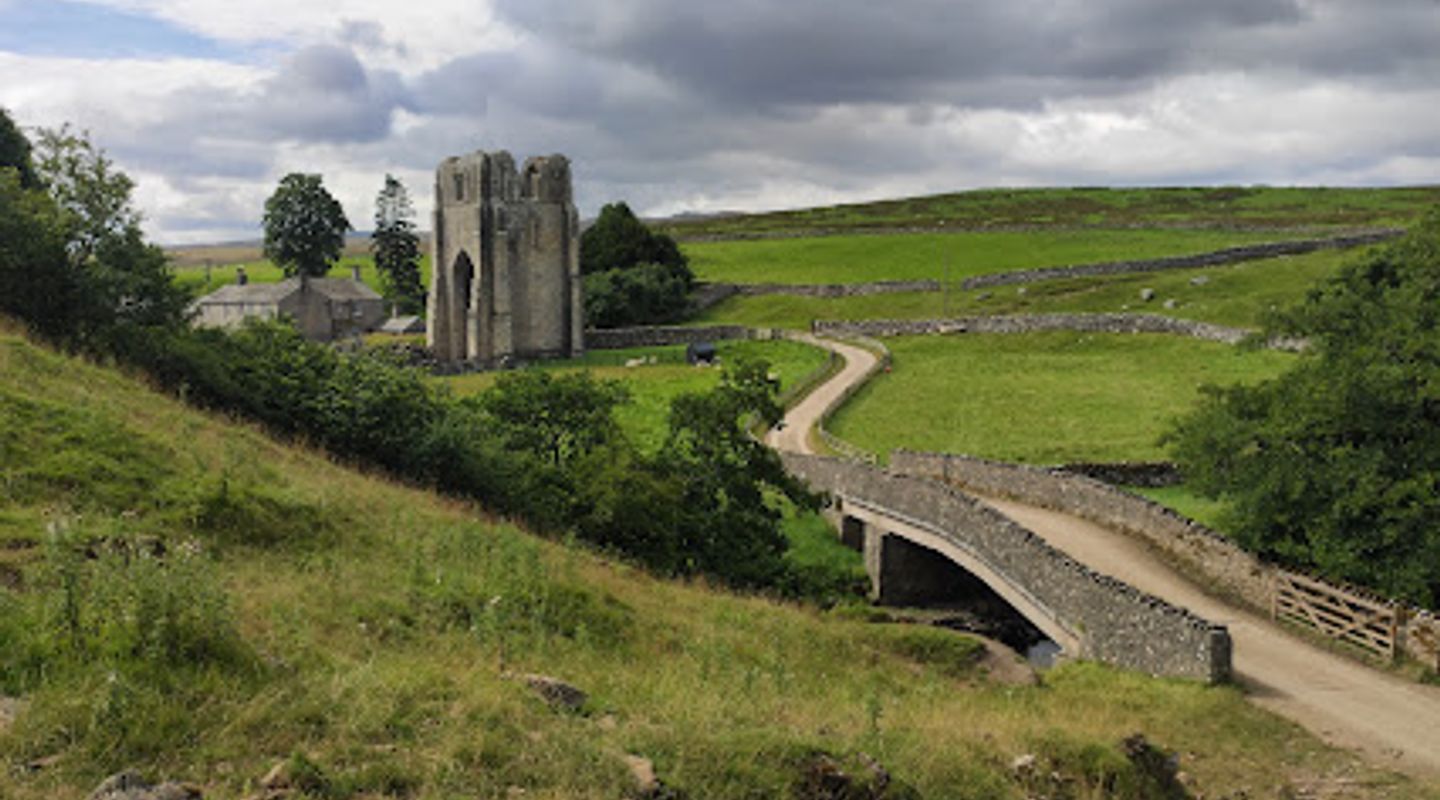
The abbey complex originally included a large stone church with a nave, chancel, transepts, and a central tower, built in phases from the 13th century onward. The dominant surviving feature is the impressive 15th-century west tower, constructed under Abbot Richard Redman, a significant figure who led the abbey and the Premonstratensian order in England. Surrounding the church were cloisters, a chapter house, dormitory, refectory, and gardens, all enclosed within a walled precinct with an outer gatehouse. The design reflected the Premonstratensian ideal of austerity and simplicity, though the tower’s elaborate Perpendicular style marked a later architectural flourish.
Historical Significance and Dissolution
Shap Abbey holds the distinction of being the last monastic house to surrender during Henry VIII’s Dissolution of the Monasteries in 1540. Following the surrender, the abbey’s occupants received pensions, and the land was granted to the governor of Carlisle. Much of the abbey’s stonework was dismantled and repurposed for local buildings, including Shap Market Hall and Lowther Castle. Some monastic buildings were converted into farm structures, which remain adjacent to the ruins. The abbey’s history is intertwined with notable figures such as Abbot Richard Redman, who also served as bishop in several dioceses and is commemorated with a monument in Ely Cathedral.
Visiting Experience and Natural Setting
Today, Shap Abbey is managed by English Heritage and lies within the Lake District National Park. The open-air ruins are accessible during daylight hours year-round and provide a peaceful retreat in the Cumbrian countryside. Visitors can explore the remains with the aid of information panels that illuminate the abbey’s daily monastic life and architectural evolution. The surrounding landscape, characterized by rolling hills and the nearby River Lowther, enhances the site’s tranquil ambience. The approach involves walking over uneven terrain, and while parking is available nearby for a small fee, the site’s rural setting encourages visitors to immerse themselves in nature and history.
Conservation and Cultural Legacy
The abbey ruins were entrusted to the state in 1948 by the Lowther Estate, ensuring their preservation for future generations. Conservation efforts maintain the structural remains and protect the site’s heritage value. Shap Abbey’s legacy extends beyond its stones; it reflects the spiritual and social role of Premonstratensian canons in medieval England, their architectural contributions, and the profound impact of the Reformation. The abbey’s peaceful atmosphere continues to inspire contemplation and appreciation of England’s monastic past.
Surrounding Attractions and Regional Context
Located about 10 miles south of Penrith, Shap Abbey is near other historic and natural sites, including Brougham Castle and the Eden Valley’s scenic landscapes. The nearby Lake District National Park, a UNESCO World Heritage Site, offers further opportunities for exploration. The abbey’s rural location means visitors often enjoy solitude and encounters with local wildlife, enhancing the sense of stepping back in time within an unspoiled environment.
Evendo Review Centre
 Google
Guest reviews
Best time to go
Quietest: Jan, Feb & Dec · before 6am or at 8pm
Busy times are Evendo estimates for a typical year, to help you plan. Actual crowds vary with events, school holidays and the weather.
Explore Shap Abbey on the map
A handpicked selection of must-see spots near Shap Abbey, mapped for you.
Get your free copy of our complete guide to Shap Abbey, delivered straight to you.
Everything on this page, from opening hours and how to get there to Eve’s tips and the best time to go, in one PDF you can read offline, print or share.
Already have an account? Sign in
Your Shap Abbey guide is ready.
We'll send it to · Not you? Sign out

Getting your guide ready…
We are putting together a fresh copy of the Shap Abbey guide. This can take up to a minute.
This can take a few moments. If your browser asks, choose Allow so the download can start. You'll find the guide in your Downloads folder.
Nothing happened? Download it again
Sorry, the guide is taking longer than usual. Please try again in a minute, or get it by email instead.
Other nearby places you may find interesting
The closest places of the same kind, if this one is not quite what you had in mind.
-
-
-
-
-


Swipe for more places
More to explore near Shap Abbey

 Best experiences near Shap Abbey
 Best hotels near Shap Abbey
 Best landmarks near Shap Abbey
 Best attractions near Shap Abbey
 Best shops near Shap Abbey
 Best restaurants near Shap Abbey
 Best bars near Shap Abbey
Do you manage this location?
Take control to get all the benefits, like improved information, better appearance, and stronger visibility across AI-powered discovery.