Huntly Castle, Banffshire Travel Guide
Explore the majestic ruins of Huntly Castle, a Renaissance masterpiece and historic seat of the powerful Gordons in scenic Aberdeenshire.
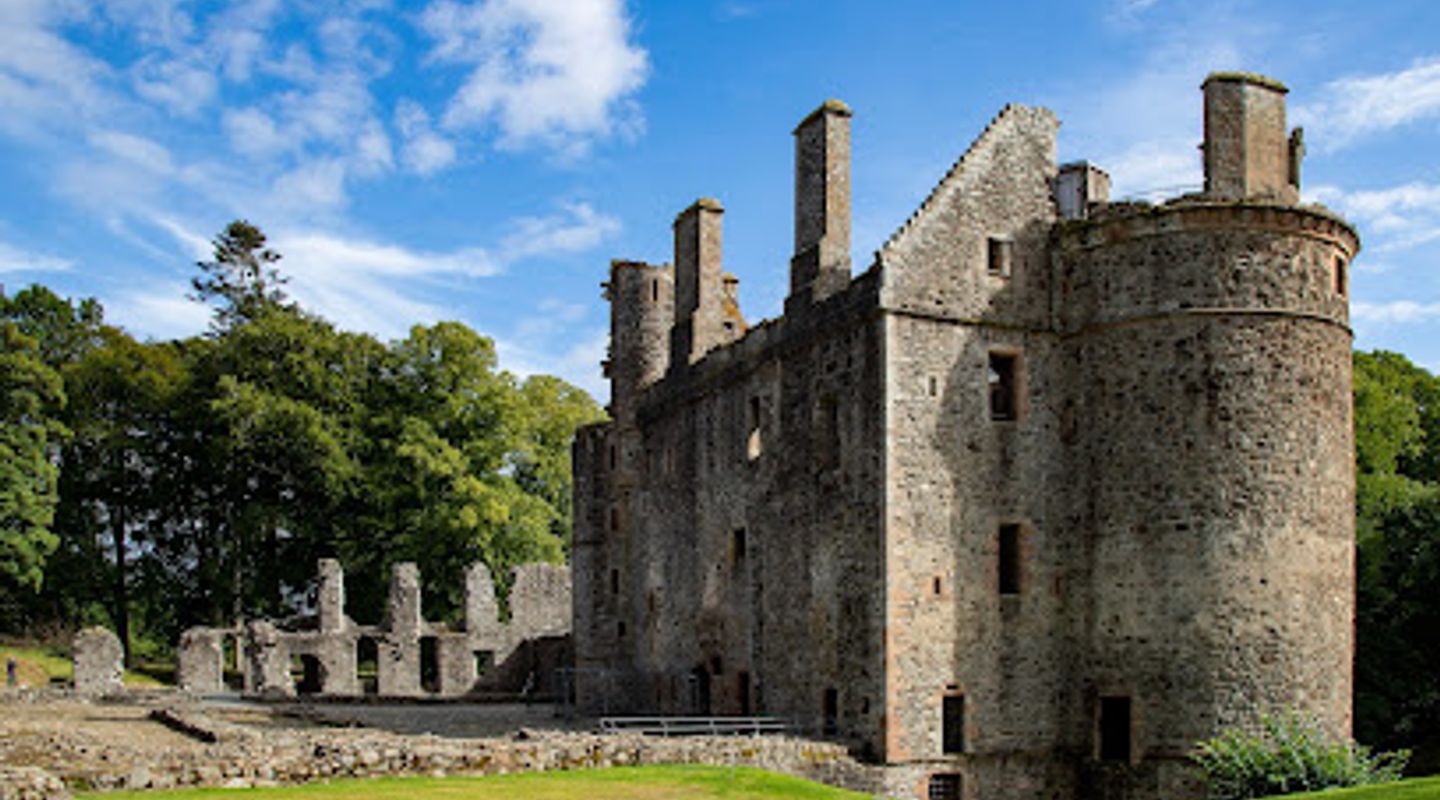
Huntly Castle, located in Aberdeenshire, Scotland, is a striking ruin with origins dating back to the late 12th century. Once the seat of the powerful Gordon family, the castle showcases impressive Renaissance architecture, heraldic sculptures, and stone friezes. Visitors can explore its vast courtyard, vaulted basements, and remnants of grand halls, all set amidst the scenic meeting of the Bogie and Deveron rivers.
A brief summary to Huntly Castle
- Castle St, Huntly, AB54 4SH, GB
- Click to display
- Click to display
- Duration: 1 to 3 hours
- Mid ranged
-
 Outdoor
- Mobile reception: 4 out of 5
- Monday 10 am-4:30 pm
- Tuesday 10 am-4:30 pm
- Wednesday 10 am-4:30 pm
- Thursday 10 am-4:30 pm
- Friday 10 am-4:30 pm
- Saturday 10 am-4:30 pm
- Sunday 10 am-4:30 pm

Know before you go
Hi, I'm Eve. Here are a few practical things to know before exploring Huntly Castle.
- Wear sturdy footwear as the castle grounds have many uneven surfaces and steps.
- Visit in spring or summer for the best weather and longer opening hours.
- Pick up a guidebook or use the interpretation boards to fully appreciate the castle’s history and architecture.
- Note that upper floors and the highest tower platform may be closed for safety reasons.
- Members of Historic Environment Scotland and partner organizations can enter for free.
Do you manage this location?
Take control to get all the benefits, like improved information, better appearance, and stronger visibility across AI-powered discovery. Learn more about listing your business on Evendo
Activate your presenceOther nearby places you may find interesting
The closest places of the same kind, if this one is not quite what you had in mind.
Explore Huntly Castle on the Map
A handpicked selection of must-see spots near Huntly Castle, mapped for you.
Getting There
-
Public Bus
Take the Stagecoach bus service from Aberdeen to Huntly town center, which takes approximately 1.5 to 2 hours. From Huntly town center, the castle is about a 15-minute walk through the town. Bus services run several times daily but check schedules for weekend and holiday variations. Tickets cost around £8-£12 one way.
-
Car
Drive from Aberdeen via the A96 to Huntly, a journey of about 1 hour and 15 minutes covering 60 miles. Parking is available near the visitor center at the castle. Note that some roads in Huntly town center are narrow, and parking can be limited during peak season. There is no parking fee at the castle.
-
Train and Taxi
Take a train from Aberdeen to Huntly station, which takes approximately 1 hour. From Huntly station, a taxi ride of about 5 minutes will bring you to the castle. Train services run regularly but may be less frequent on weekends. Taxi fares typically range from £5 to £10.
For the on-the-go comforts that matter to you
-
 Restrooms
-
 Drink Options
-
 Food Options
-
 Seating Areas
-
 Trash Bins
-
 Information Boards
-
 Visitor Center
Discover more about Huntly Castle
Origins and Early History of Huntly Castle
Huntly Castle began life around 1190 as the Peel of Strathbogie, built by the Earls of Fife to guard the strategic confluence of the rivers Bogie and Deveron. This early stronghold was a timber and earthwork structure, later replaced by stone. The castle changed hands in the early 14th century when the Gordons took possession, following Robert the Bruce’s victory at Bannockburn in 1314. The Gordons renamed the estate Huntly, marking the start of their long and influential tenure in the region.The Gordons’ Architectural Legacy
From the mid-15th century, the Gordons transformed the castle into a grand palace. Alexander Gordon, 2nd Lord Gordon and later Earl of Huntly, initiated the construction of a stone tower house and expanded the complex. The 16th century saw extensive remodeling, especially under George Gordon, the 4th Earl, who rebuilt much of the castle into a Renaissance-style palace. His grandson, the 6th Earl and 1st Marquis of Huntly, further embellished the castle around 1600 with ornate heraldic carvings, double-height oriel windows, a great round tower, and a striking frontispiece proclaiming Gordon ownership.Conflict, Siege, and Decline
Huntly Castle’s history is marked by conflict. It suffered damage during the 1452 burning by the Earl of Moray and was involved in political struggles during the 16th and 17th centuries. The castle was attacked by King James VI in 1594 due to the 6th Earl’s rebellion and later endured sieges during the Scottish Civil War. The castle’s defenders were starved into surrender in 1647, and the site was occupied by government troops during the 1746 Jacobite rising. After this, the castle fell into decay and was used as a quarry for local building materials.The Castle as a Ruin and Heritage Site
By the late 19th century, appreciation for Huntly Castle’s historical and architectural value grew. The ruins, including the vaulted basements, dungeons, and heraldic stonework, offer a vivid glimpse into its past grandeur. The castle passed into state care in 1923 and is now managed by Historic Environment Scotland. Visitors can explore the extensive courtyard, cellars, and ground-floor rooms, though upper floors and some towers remain inaccessible for safety.Visitor Experience and Setting
Set just outside the market town of Huntly, the castle’s location at the meeting point of two rivers offers a picturesque backdrop. The site features interpretation boards and a visitor center with a gift shop. While wheelchair access is limited due to steps and uneven terrain, the grounds provide excellent views of the castle’s impressive south front and the surrounding countryside. The castle’s evocative atmosphere, combining history, architecture, and natural beauty, makes it a compelling destination for history enthusiasts and casual visitors alike.Architectural Highlights and Symbolism
Huntly Castle is renowned for its heraldic sculptures and inscribed friezes, which symbolize the power and prestige of the Gordon family. The frontispiece above the main entrance is considered unmatched in the British Isles for its craftsmanship. The castle’s Renaissance features, including ornate fireplaces and decorative stonework, reflect the Gordons’ wealth and status during the late medieval and early modern periods. These elements, alongside the castle’s turbulent history, contribute to its unique character as a noble ruin.












Your all‑in‑one travel companion app
Explore expert travel guides, compare and book tours, experiences, hotels, and more—all from the palm of your hand. Download now for seamless trip planning wherever your wanderlust takes you.


Explore More of Banffshire
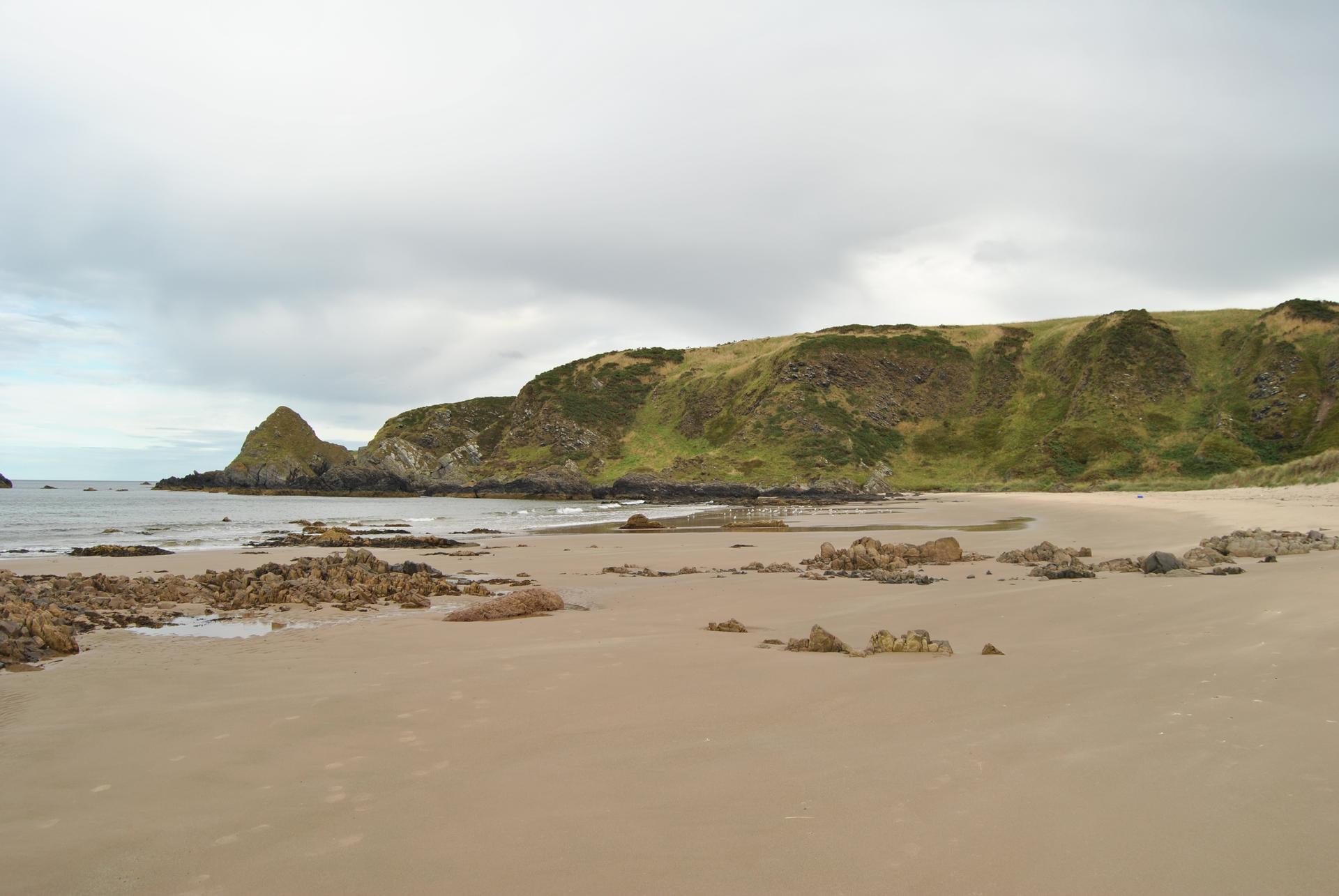
Looking beyond Huntly Castle? Discover Banffshire for broader travel guides, local hot-spots, and regional highlights.
Explore Banffshire