West Kennet Long Barrow, Wiltshire Travel Guide
Explore one of Britain’s largest Neolithic burial chambers set atop Wiltshire’s scenic chalk ridge, offering ancient history and panoramic countryside views.
West Kennet Long Barrow is a striking Neolithic chambered tomb near Marlborough, Wiltshire, dating back around 5,600 years. Stretching 100 meters long, it is one of Britain’s largest and most accessible prehistoric burial sites. Visitors can explore its five stone chambers, set within a long earthen mound, and enjoy panoramic views of the surrounding Wiltshire countryside including Silbury Hill. Managed by English Heritage and the National Trust, the site offers a peaceful, evocative glimpse into early human ceremonial life with free entry during daylight hours.
A brief summary to West Kennet Long Barrow
- Marlborough, West Kennett, SN8 1QH, GB
- Click to display
- Click to display
- Duration: 0.5 to 2 hours
- Free
-
 Outdoor
- Mobile reception: 4 out of 5

Know before you go
Hi, I'm Eve. Here are a few practical things to know before exploring West Kennet Long Barrow.
- Bring a flashlight to safely explore the dark interior chambers and appreciate the details.
- Wear comfortable shoes for the 10-20 minute uphill walk from the parking layby.
- Visit during daylight hours as the site is open freely but has no artificial lighting.
- Parking is limited; arriving early is recommended especially on weekends.
Do you manage this location?
Take control to get all the benefits, like improved information, better appearance, and stronger visibility across AI-powered discovery. Learn more about listing your business on Evendo
Activate your presenceOther nearby places you may find interesting
The closest places of the same kind, if this one is not quite what you had in mind.
Explore West Kennet Long Barrow on the Map
A handpicked selection of must-see spots near West Kennet Long Barrow, mapped for you.
Unlock the Best of West Kennet Long Barrow
Buy tickets
-
No tickets available
Book tours with entry


Book tours without entry

Getting There
-
Car
Drive to the layby parking area off the A4 near West Kennett, about 5.5 miles west of Marlborough. Parking is free but limited, so early arrival is advised. From the layby, expect a 10- to 20-minute uphill walk across farmland to the barrow.
-
Bus and Walking
Take a regional bus service to Marlborough or Avebury, then arrange a taxi or cycle to the layby near West Kennett. From there, walk uphill for 10-20 minutes to reach the site. Public transport options may be limited on weekends and evenings.
-
Guided Tour
Join a guided tour from nearby towns such as Marlborough or Bath, which often include West Kennet Long Barrow along with Avebury and Silbury Hill. Tours typically last a full day and provide expert commentary, with prices ranging from £50 to £150 depending on the provider.
For the on-the-go comforts that matter to you
-
 Restrooms
-
 Drink Options
-
 Food Options
-
 Seating Areas
-
 Information Boards
Discover more about West Kennet Long Barrow
A Monument of Prehistoric Engineering and Ritual
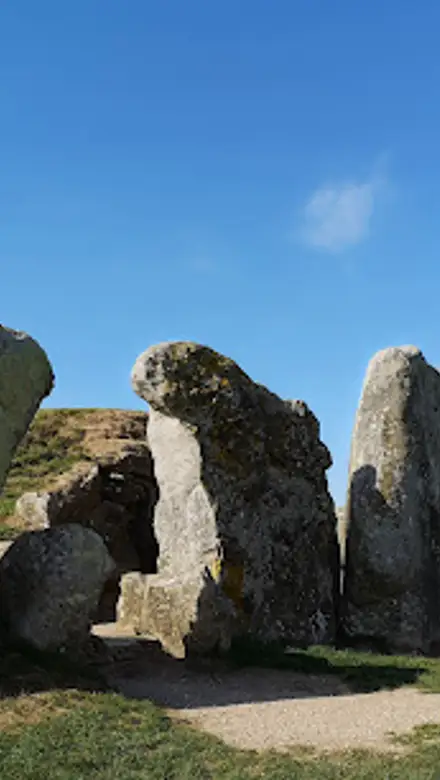
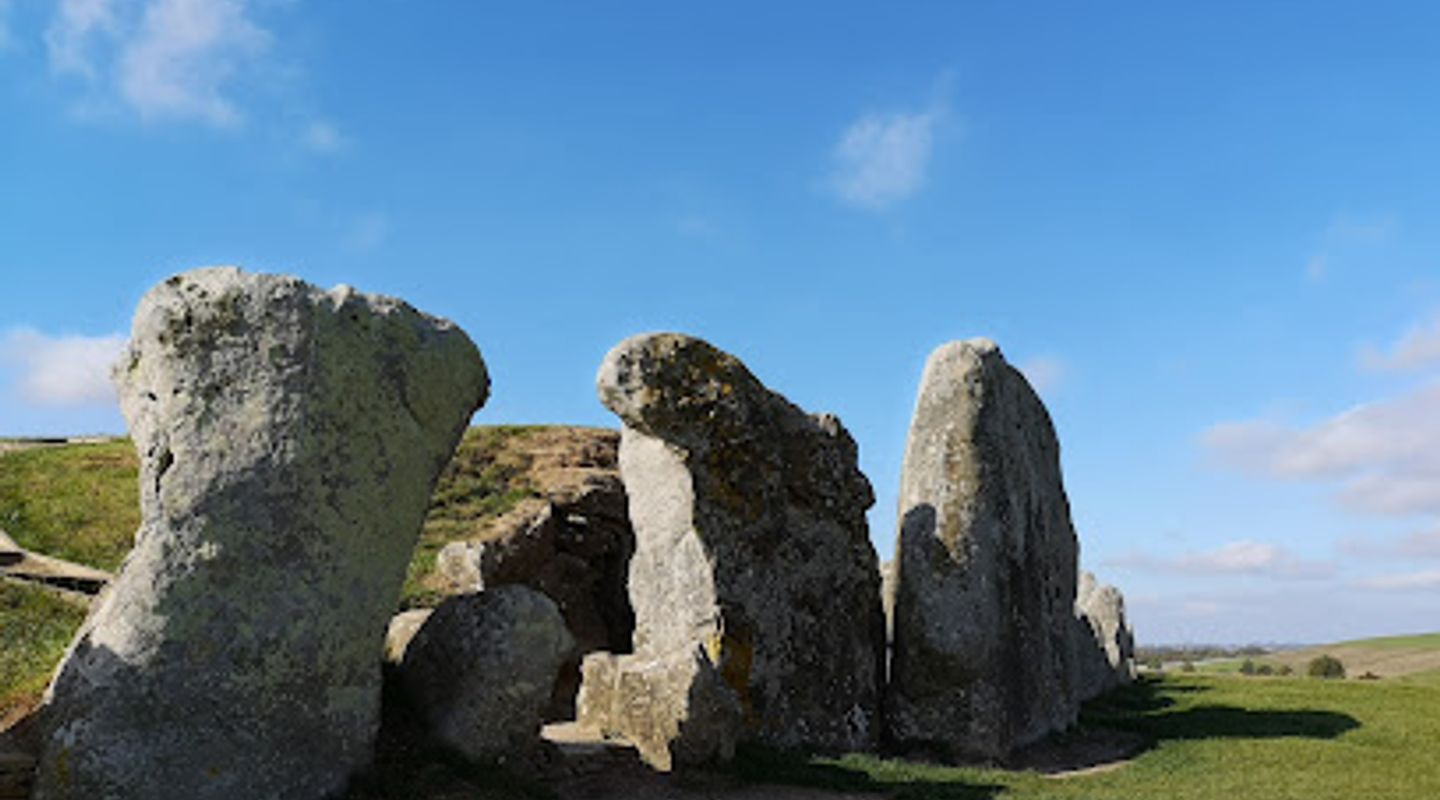
West Kennet Long Barrow was constructed around 3650 BC, making it one of the oldest and largest Neolithic chambered tombs in Britain. The barrow measures approximately 100 meters in length and 20 meters wide at its entrance, built with a massive earthen mound covering five stone burial chambers. These chambers were used to house the remains of nearly 50 individuals over a period of years, carefully placed within the tomb before it was sealed. The enormous sarsen stones at the entrance form a dramatic façade, signaling the importance of this site to its ancient builders.Exploring the Burial Chambers and Surroundings
Visitors can walk inside the narrow stone chambers, experiencing the dark, atmospheric interior where prehistoric people once conducted ceremonies and honored their dead. Outside, a concave forecourt formed by large stones likely served as a gathering place for rituals. From the hilltop vantage point near the barrow, sweeping views extend across the Wiltshire landscape, including notable landmarks such as Silbury Hill and the Ridgeway. The site’s peaceful setting amid wildflowers and open fields enhances its spiritual and contemplative atmosphere.Historical Significance and Archaeological Insights
West Kennet Long Barrow is part of the Avebury and Stonehenge UNESCO World Heritage Site, linking it to a wider prehistoric landscape rich in ceremonial monuments. Archaeological excavations have revealed pottery, beads, tools, and human bones, providing valuable insights into Neolithic life and death practices. The barrow’s construction required immense coordinated labor, reflecting sophisticated social organization and engineering skills of early farming communities. Over centuries, the site has endured disturbances but remains remarkably preserved as a testament to ancient ritual traditions.Visitor Experience and Practical Information
The site is freely accessible during daylight hours, with no admission charge. Visitors should prepare for a 10- to 20-minute uphill walk from a nearby layby parking area, crossing farmland to reach the barrow. Inside the chambers, it is advisable to bring a flashlight due to low light conditions. Dogs are restricted to assistance animals only. The site is managed by English Heritage on behalf of the National Trust, ensuring ongoing conservation and interpretation. Informative plaques provide historical context, and the tranquil environment invites reflection.Myths, Legends, and Cultural Resonance
Local folklore adds a layer of mystery to West Kennet Long Barrow, including tales of ghostly priests and spectral hounds appearing on Midsummer Day. These stories enrich the cultural heritage of the site, linking it to centuries of human imagination and reverence for ancestors. The barrow’s presence within a landscape dotted with other prehistoric monuments creates a powerful sense of continuity and connection to Britain’s distant past.Integration within the Wiltshire Prehistoric Landscape
West Kennet Long Barrow is ideally combined with visits to nearby Avebury Stone Circle and Silbury Hill, forming a cluster of iconic Neolithic sites. Together, they illustrate the complexity and scale of ancient ceremonial landscapes. The barrow’s location on a prominent chalk ridge emphasizes its visibility and significance within the natural environment. This setting offers visitors a multi-dimensional experience of archaeology, nature, and history intertwined.More to explore near West Kennet Long Barrow













Your all‑in‑one travel companion app
Explore expert travel guides, compare and book tours, experiences, hotels, and more—all from the palm of your hand. Download now for seamless trip planning wherever your wanderlust takes you.


Explore More of Wiltshire
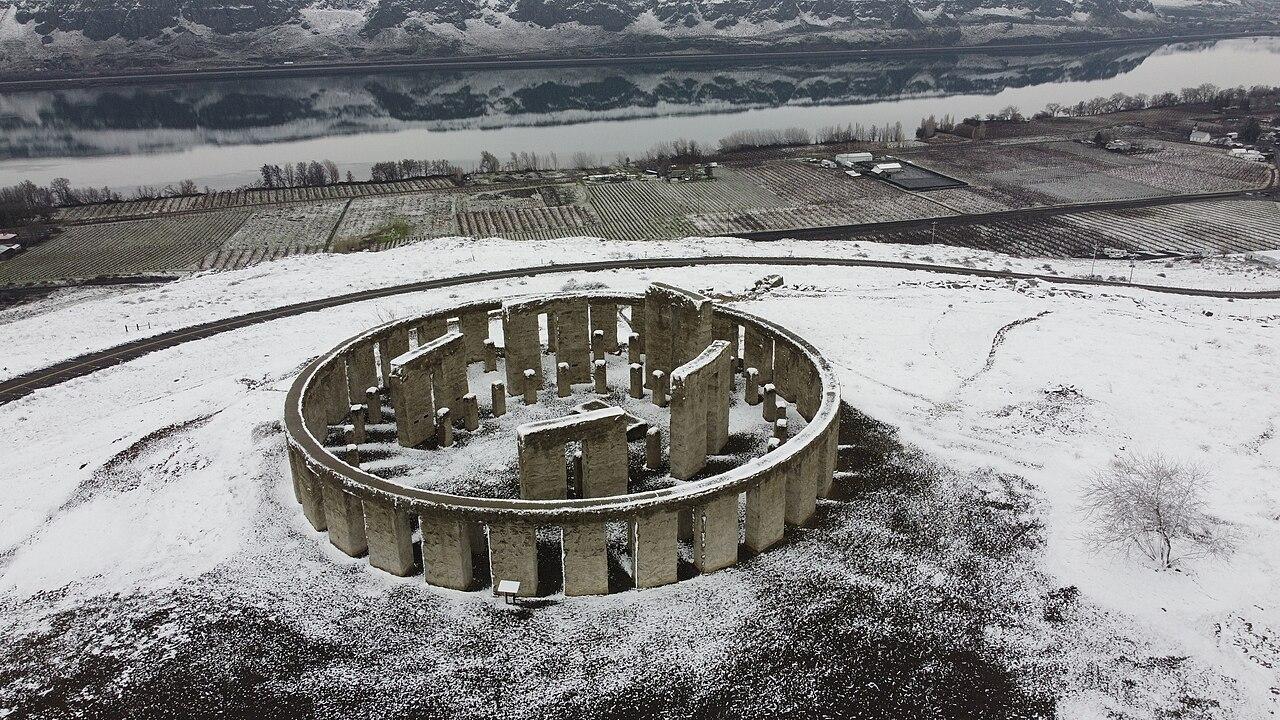
Looking beyond West Kennet Long Barrow? Discover Wiltshire for broader travel guides, local hot-spots, and regional highlights.
Explore Wiltshire
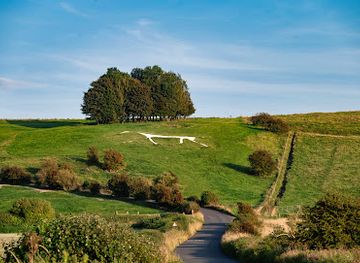
Explore the ancient earthworks of Uffington Castle, an Iron Age hillfort overlooking the iconic White Horse and legendary Dragon Hill.

Explore Silbury Hill, Europe's largest prehistoric chalk mound, a monumental mystery towering over the Wiltshire landscape since 2400 BC.