

Hall of Memory, Birmingham Travel Guide
Free Guide: A solemn war memorial in Birmingham’s Centenary Square honoring the city’s fallen heroes with timeless artistry and peaceful reflection.


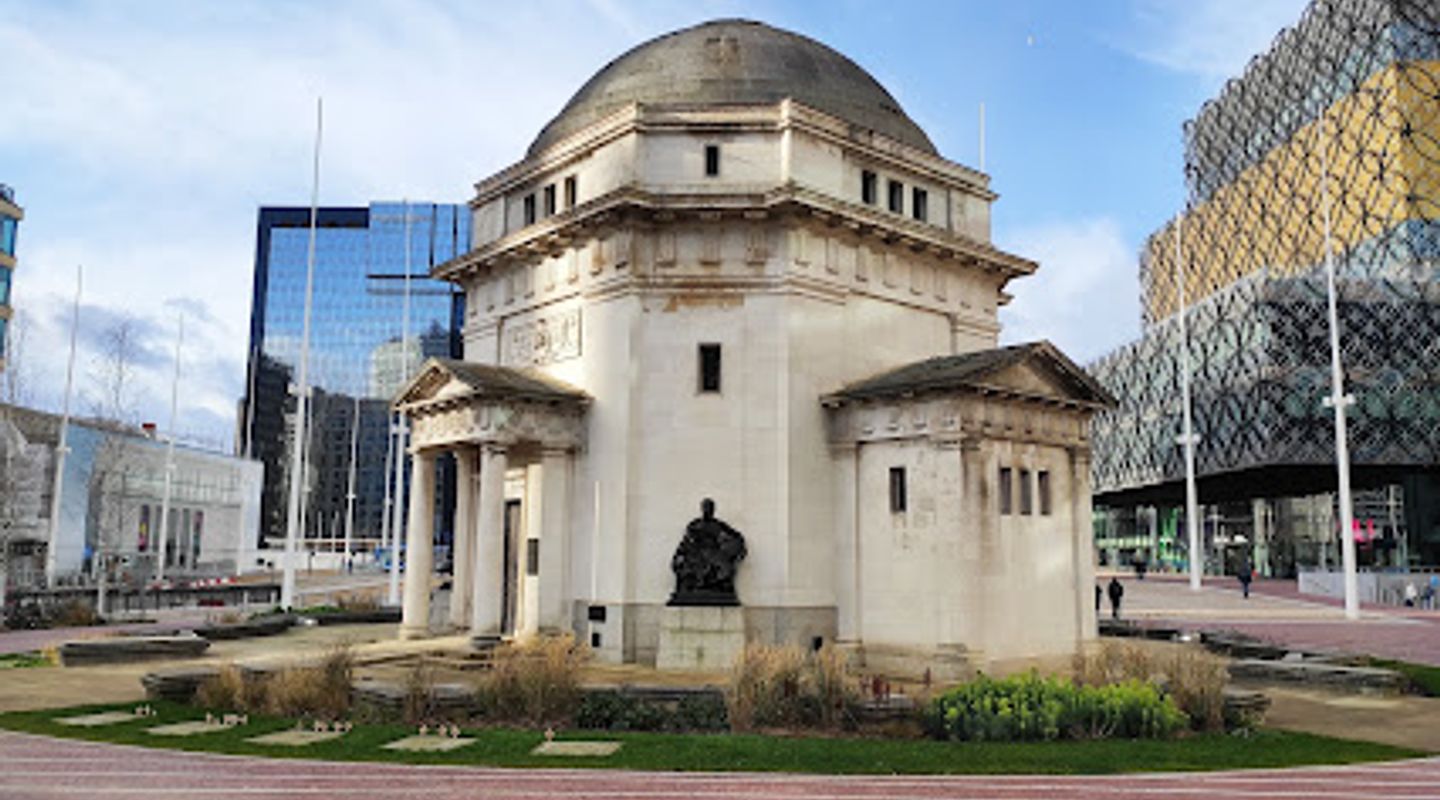
A brief summary of Hall of Memory
A solemn war memorial in Birmingham’s Centenary Square honoring the city’s fallen heroes with timeless artistry and peaceful reflection.
The Hall of Memory in Birmingham is a solemn war memorial dedicated to the 12,320 citizens who lost their lives in World War I, later honoring those fallen in World War II and subsequent conflicts. Located in Centenary Square, this limestone monument features striking bronze statues representing the British military services and offers a quiet space for remembrance amid the city’s bustle. Admission is free, with visiting hours typically from 10am to 4pm, Thursday to Saturday.
On-site amenities
 Restrooms
 Drink options
 Food options
 Seating areas
 Trash bins
 Information boards
Opening hours
- MonClosed
- TueClosed
- WedClosed
- Thu10 am–4 pm
- Fri10 am–4 pm
- Sat10 am–4 pm
- SunClosed
Opening hours as listed on the venue’s Google Business Profile. Hours can change for services and special events, so check with the venue before you go.
- Address
- Broad St, Birmingham B1 2HF
- Website
Getting there
Public Bus
Train and Walk
Car
Discover more about Hall of Memory
A Tribute Carved in Stone and Bronze
The Hall of Memory stands as a poignant tribute to Birmingham’s fallen heroes, originally erected in 1925 to honor the 12,320 citizens who died in World War I. Its limestone structure is both imposing and dignified, designed by architects S. N. Cooke and W. N. Twist. The exterior is adorned with four bronze statues crafted by local artist Albert Toft, each symbolizing a branch of the British armed forces: the Army, Navy, Air Force, and Women’s Services. These statues not only enhance the monument’s aesthetic but also embody the collective sacrifice of those who served.
An Interior of Quiet Reverence
Entering through grand bronze doors, visitors find themselves in a spacious chamber where thick walls muffle the sounds of the busy city outside, creating an atmosphere of solemn reflection. Inside, three intricate carvings depict the themes of Call, Front Line, and Return, narrating the journey of those who served. The roll of honor lists the names of Birmingham residents who lost their lives in military service, offering a deeply personal connection to the past. This interior space invites contemplation and remembrance, making it a sanctuary amid urban life.
Historical and Cultural Significance
The Hall of Memory not only commemorates those lost in World War I but has expanded its remit to include casualties from World War II and later military conflicts. Funded primarily by public donations, its construction cost £60,000, a significant sum at the time. The memorial’s location in Centenary Square situates it among other cultural landmarks such as the Birmingham Museum and Art Gallery and the city’s Town Hall, embedding it within the city’s historical and civic heart.
Visitor Experience and Surroundings
Visitors can explore the memorial free of charge, with typical opening hours from 10am to 4pm on Thursdays, Fridays, and Saturdays. The site is accessible and offers a peaceful contrast to the surrounding cityscape. Nearby amenities include multi-story parking and pay-and-display spaces. The Victoria Cross paving stones in the vicinity add another layer of remembrance, honoring the highest military decoration for valor. The Hall of Memory’s proximity to Birmingham Snow Hill Railway Station and other transport links makes it an accessible destination for those interested in history and heritage.
Architectural and Artistic Highlights
The memorial’s design reflects early 20th-century architectural sensibilities with its clean limestone surfaces and robust form. Albert Toft’s bronze sculptures are notable for their detail and emotional depth, capturing the solemn dignity of military service. The carvings inside are a rare artistic narrative of wartime experience, providing visitors with visual storytelling that complements the written roll of honor.
A Place for Reflection in a Modern City
Despite its central urban location, the Hall of Memory offers a tranquil space for mindfulness and remembrance. Its thick walls and thoughtful design create a quiet refuge where visitors can connect with Birmingham’s military history. The memorial stands as a testament to sacrifice and resilience, inviting all who visit to pause and reflect on the cost of conflict and the value of peace.
Evendo Review Centre
 Google
Guest reviews
Best time to go
Quietest: Jan, Feb & Dec · before 8am or from 8pm
Busy times are Evendo estimates for a typical year, to help you plan. Actual crowds vary with events, school holidays and the weather.
Explore Hall of Memory on the map
A handpicked selection of must-see spots near Hall of Memory, mapped for you.
Get your free copy of our complete guide to Hall of Memory, delivered straight to you.
Everything on this page, from opening hours and how to get there to Eve’s tips and the best time to go, in one PDF you can read offline, print or share.
Already have an account? Sign in
Your Hall of Memory guide is ready.
We'll send it to · Not you? Sign out

Getting your guide ready…
We are putting together a fresh copy of the Hall of Memory guide. This can take up to a minute.
This can take a few moments. If your browser asks, choose Allow so the download can start. You'll find the guide in your Downloads folder.
Nothing happened? Download it again
Sorry, the guide is taking longer than usual. Please try again in a minute, or get it by email instead.
Unlock the best of Hall of Memory
Skip-the-line tickets, guided tours with entry, and walking tours of the area, booked in a few clicks.




Other nearby places you may find interesting
The closest places of the same kind, if this one is not quite what you had in mind.
-
The Birmingham Botanical Gardens Explore 15 acres of historic Victorian gardens with diverse plants, iconic glasshouses, and peaceful walking paths in the heart of Birmingham.
-
Thinktank Birmingham Science Museum Explore science, history, and innovation hands-on at Birmingham’s award-winning Thinktank Science Museum with immersive exhibits and a 4K Planetarium.
-
The Coffin Works A Victorian coffin factory preserved as a time-capsule museum, revealing the craftsmanship behind royal funerals and industrial Birmingham.
-
National Trust - Birmingham Back to Backs Step back in time at Birmingham’s last surviving 19th-century back-to-back houses, where history and community come alive through immersive guided tours.
-
Birmingham Wildlife Conservation Park Discover rare and endangered species in a compact, conservation-focused urban wildlife park nestled in Birmingham’s Edgbaston district.
Swipe for more places
More to explore near Hall of Memory

 Best experiences near Hall of Memory
 Best hotels near Hall of Memory
 Best landmarks near Hall of Memory
 Best attractions near Hall of Memory
 Best shops near Hall of Memory
 Best restaurants near Hall of Memory
 Best bars near Hall of Memory
Do you manage this location?
Take control to get all the benefits, like improved information, better appearance, and stronger visibility across AI-powered discovery.
Explore more

Explore more of Birmingham
Discover Birmingham, a city that blends rich industrial heritage with vibrant modern culture, offering diverse attractions from historic museums to bustling shopping districts.
Explore Birmingham
Explore more of United Kingdom
Discover the United Kingdom: A blend of rich history, stunning landscapes, and vibrant cities, offering a unique travel experience for every visitor.
Explore United Kingdom
