
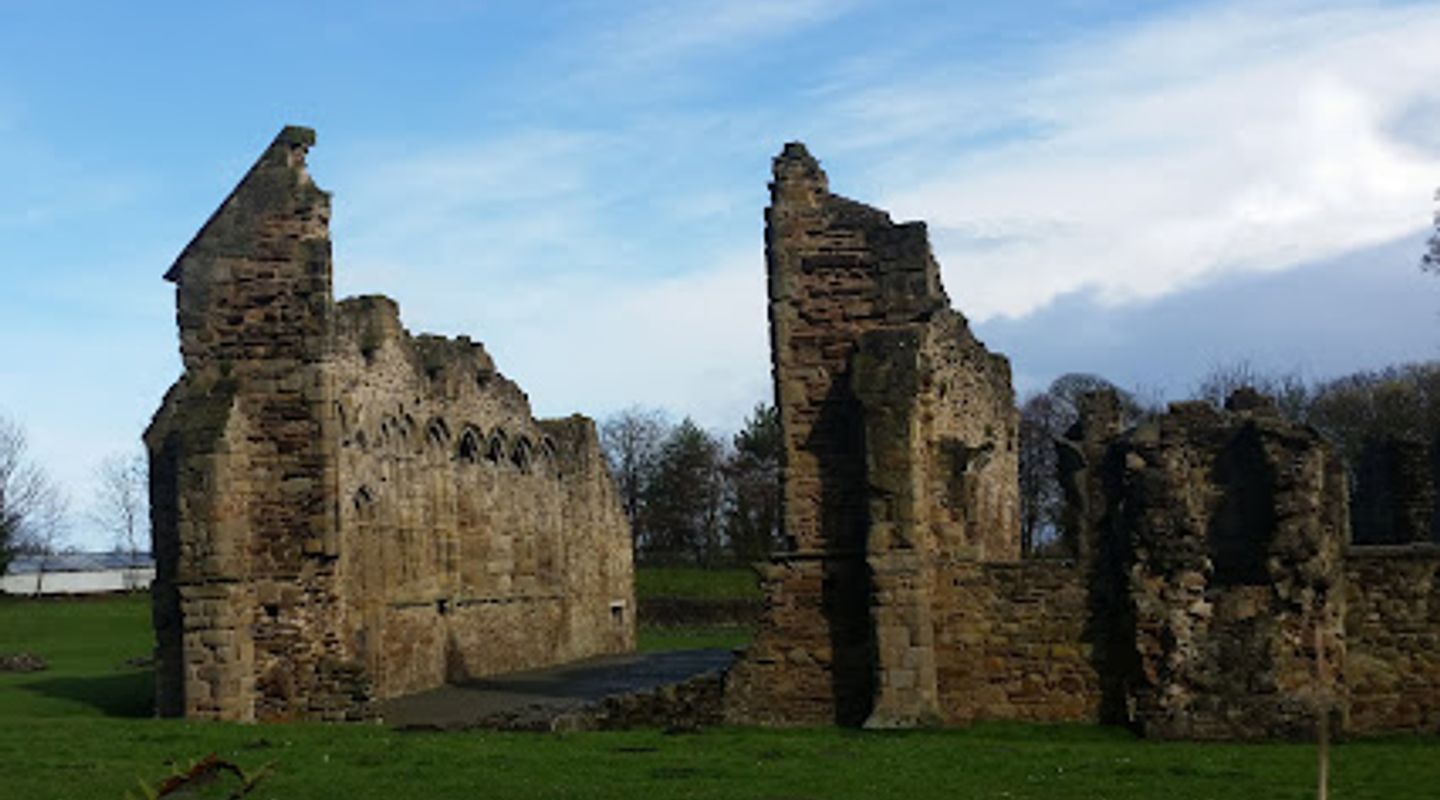
Basingwerk Abbey, Caernarfonshire Travel Guide
Explore the evocative ruins of a 12th-century Cistercian abbey nestled in tranquil North Wales, a place of history, pilgrimage, and peaceful reflection.
Basingwerk Abbey, founded in 1131 near Holywell in North Wales, is the atmospheric ruin of a once-thriving Cistercian monastery. Extensively remodelled in the 13th century, the site offers insight into medieval monastic life with remains like the chapter house, monks’ parlour, and dining hall. Set within Greenfield Valley Heritage Park, it remains a place of pilgrimage and peaceful reflection, linked to the nearby shrine of St Winifred and the North Wales Pilgrim’s Way.
A brief summary to Basingwerk Abbey
- Holywell, Greenfield, CH8 7GH, GB
- Click to display
- Click to display
- Duration: 1 to 3 hours
- Free
-
 Outdoor
- Mobile reception: 4 out of 5

Know before you go
Hi, I'm Eve. Here are a few practical things to know before exploring Basingwerk Abbey.
- Wear sturdy footwear as the site is mainly grassland with uneven surfaces.
- Bring your own historical background or guidebook, as on-site information boards are limited.
- The abbey grounds are dog-friendly; keep dogs on a short lead to protect wildlife and vegetation.
- Visit during daylight hours year-round for the best experience and safety.
- Combine your visit with nearby Holywell and Flint Castle for a fuller historical day trip.
Do you manage this location?
Take control to get all the benefits, like improved information, better appearance, and stronger visibility across AI-powered discovery. Learn more about listing your business on Evendo
Activate your presenceOther nearby places you may find interesting
The closest places of the same kind, if this one is not quite what you had in mind.

Explore Basingwerk Abbey on the Map
A handpicked selection of must-see spots near Basingwerk Abbey, mapped for you.
Getting There
-
Car
Driving from Holywell, expect a 5-10 minute journey along local roads to reach the free car park near the abbey. Parking is ample but can fill during weekends and holidays.
-
Train and Bus
From Flint railway station, about 6.5 km away, take a local bus towards Greenfield or Holywell, with a travel time of approximately 20-30 minutes. Bus services run regularly but check schedules in advance.
-
Cycling
Cyclists can access the abbey via National Cycle Network Route 5, with a gentle 3.3 km ride from Holywell. Terrain is mostly flat and suitable for casual riders.
-
Walking
For walkers, the abbey is accessible via well-maintained paths from Greenfield village, with a 20-30 minute walk over level terrain suitable for most abilities.
For the on-the-go comforts that matter to you
-
 Restrooms
-
 Drink Options
-
 Food Options
-
 Seating Areas
-
 Trash Bins
-
 Information Boards
-
 Visitor Center
Discover more about Basingwerk Abbey
Origins and Historical Significance
Basingwerk Abbey was established in 1131 by Ranulf II, Earl of Chester, originally as a Savigniac monastery before becoming part of the Cistercian Order in 1147. Its foundation was strategically important, located in the contested borderlands between the Welsh and Norman-English powers. Over centuries, it flourished under royal and noble patronage, including Welsh princes like Llywelyn the Great and English monarchs such as Henry V and Edward IV. The abbey was not only a religious centre but also a significant landowner, with estates extending into Derbyshire, England.Monastic Life and Architecture
The abbey was built following the Benedictine rule, with a layout typical of Cistercian monasteries. Key surviving structures include the 12th-century chapter house, where monks gathered for readings, and the parlour, the only place where silence was broken. The monks’ dining hall, a large and impressive space, remains a highlight. Most visible ruins date from the 13th century remodel, reflecting the abbey’s growth and prosperity. The site also includes remnants of industrial activity, such as the Abbey Wire Mill, reflecting the monks’ economic enterprises.Religious Importance and Pilgrimage
Basingwerk Abbey was closely linked to the shrine of St Winifred in nearby Holywell, a major pilgrimage destination since the 12th century. The abbey managed the shrine’s chapel and hosted pilgrims traveling along the valley. In 1427, Pope Martin V granted indulgences to visitors, enhancing the abbey’s religious status. Pilgrimage remains a part of the site’s identity today, with the abbey marking the start of the North Wales Pilgrim’s Way, a long-distance walking route to Bardsey Island.Decline and Ruin
The abbey was dissolved in 1536 during Henry VIII’s Dissolution of the Monasteries. Its buildings were sold, partly demolished, and stones repurposed for local construction. Over time, the site fell into ruin, with some parts used industrially during the Greenfield Valley’s later development. Despite this, the ruins remain extensive and evocative, offering a tangible connection to medieval monastic life and the region’s turbulent history.Modern Setting and Visitor Experience
Today, Basingwerk Abbey is part of Greenfield Valley Heritage Park, surrounded by peaceful woodland and grassland. The site is dog-friendly and accessible, with free parking and level terrain suitable for gentle walking. While on-site information is limited, the abbey’s atmospheric ruins and tranquil setting invite quiet contemplation and exploration. Nearby facilities include a museum and café within the heritage park, enriching the visitor experience.Archaeological Discoveries and Continuing Research
Recent archaeological investigations have uncovered evidence of Roman activity beneath and around the abbey grounds, including defensive ditches and temporary structures. These findings reveal a complex layering of history at the site, from Roman times through the medieval period and beyond. Continued research highlights Basingwerk Abbey’s importance as a cultural and historical landmark in North Wales.












Your all‑in‑one travel companion app
Explore expert travel guides, compare and book tours, experiences, hotels, and more—all from the palm of your hand. Download now for seamless trip planning wherever your wanderlust takes you.


Explore More of Caernarfonshire

Looking beyond Basingwerk Abbey? Discover Caernarfonshire for broader travel guides, local hot-spots, and regional highlights.
Explore Caernarfonshire