

Canongate Kirk, Edinburgh Travel Guide
Free Guide: Historic Canongate Kirk, a royal parish church with unique Dutch gable and serene blue interior, nestled on Edinburgh’s iconic Royal Mile.


A brief summary of Canongate Kirk
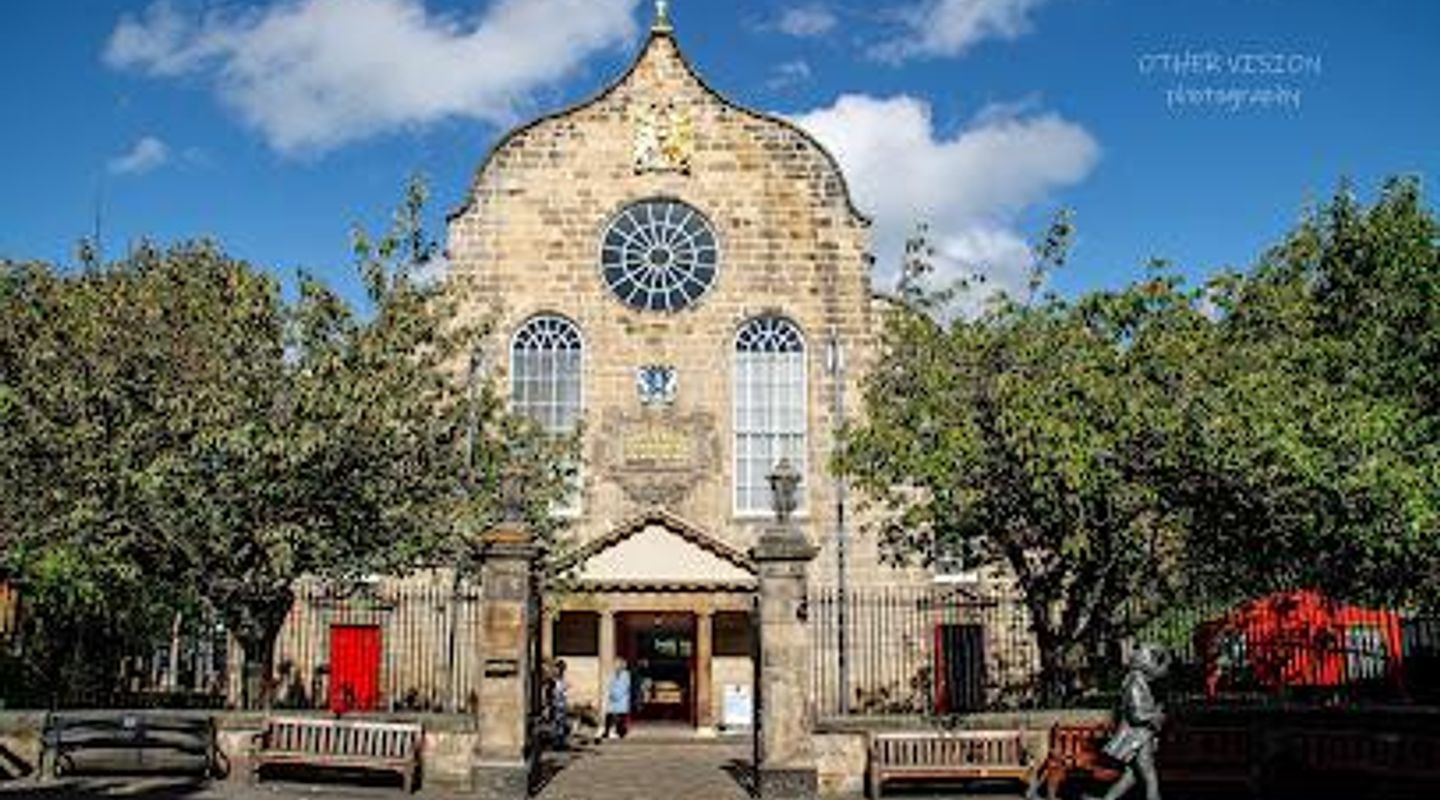
Historic Canongate Kirk, a royal parish church with unique Dutch gable and serene blue interior, nestled on Edinburgh’s iconic Royal Mile.
Canongate Kirk, completed in 1691 and designed by architect James Smith, stands as a distinctive Presbyterian church with a Dutch-style gable and Doric portico. It serves as the parish church for the Palace of Holyroodhouse and Edinburgh Castle, housing notable graves including economist Adam Smith. The church interior features a unique cruciform layout with pale blue paintwork and a celebrated Danish Frobenius organ, blending modest elegance with deep royal and local heritage.
On-site amenities
 Restrooms
 Drink options
 Food options
 Seating areas
 Information boards
- Address
- 153 Canongate, Edinburgh EH8 8BN
- Phone
- Website
Getting there
Bus
Tram and Walk
Taxi
Walking
Discover more about Canongate Kirk
A Royal Foundation and Historical Significance
Canongate Kirk was constructed between 1688 and 1691 following a royal mandate by King James VII, who repurposed Holyrood Abbey for the Roman Catholic Order of the Thistle. This forced the local Church of Scotland congregation to relocate, prompting the use of funds from a mortification left by Thomas Moodie, a wealthy merchant and treasurer of Edinburgh, to finance the new church. Moodie's coat of arms and a commemorative plaque remain prominently displayed above the church entrance, symbolizing his lasting legacy. The Kirk has since maintained close ties to the Palace of Holyroodhouse and Edinburgh Castle, serving as their parish church and hosting royal worship services including visits by Queen Elizabeth II in 1952.
Architectural Distinctiveness and Interior Character
Designed by James Smith, a notable 17th-century Scottish architect, Canongate Kirk features an unusual Dutch-style curvilinear gable topped by a golden cross set between stag antlers—a symbol linked to King David I’s legendary encounter with a white stag in the nearby forest. The church’s exterior also includes a small Doric-columned portico. Inside, the Kirk departs from typical post-Reformation Scottish church designs with its cruciform layout and Romanesque basilica style. The interior is painted in pale blue and white, creating a serene and modest atmosphere that contrasts with grander ecclesiastical spaces. Renovations over time have removed earlier Victorian-era alterations, restoring the original simplicity and enhancing natural light.
Musical Heritage and Memorials
Canongate Kirk was among the first Church of Scotland buildings to install an organ in 1874. The current Danish Frobenius organ, installed in 1998, was the 1000th instrument produced by the maker and honors the late Very Rev Dr Ronald Selby Wright. The church also displays military colours and honours, reflecting its role as the regimental church for The Royal Regiment of Scotland. The surrounding kirkyard is the final resting place of prominent Edinburgh figures such as economist Adam Smith, poet Robert Fergusson, and Agnes MacLehose, known as Robert Burns’ muse “Clarinda.”
Community Role and Cultural Events
Beyond its religious function, Canongate Kirk remains an active community hub. It hosts concerts and events, especially during the Edinburgh Festival Fringe, and offers guided tours that delve into its rich history and architecture. The churchyard features informational plaques and the old Mercat Cross of the Canongate, connecting visitors with Edinburgh’s civic heritage. Twin cherry trees planted by Queen Elizabeth II and Prince Philip flank the entrance, blooming in spring and adding seasonal charm.
Symbolism and Local Legends
The stag’s antlers and cross motif, prominent on the church’s facade and interior decorations, derive from a medieval legend of King David I’s miraculous vision of a white stag with a cross between its antlers. This emblem links the Kirk to the nearby Holyrood Abbey’s origins and the spiritual heritage of the area. The church’s modest yet evocative design invites reflection on the blending of royal history, local tradition, and Presbyterian worship.
Preservation and Restoration Efforts
Canongate Kirk has undergone several restorations, notably in the early 1950s when Victorian galleries and partitions were removed to restore light and dignity to the interior. Further refurbishment in 1991 and the organ installation in 1998 reflect ongoing efforts to preserve the church’s historical and cultural significance. The building’s Craigleith sandstone construction ties it to Edinburgh’s architectural heritage, sharing material lineage with landmarks such as Nelson’s statue in London.
Evendo Review Centre
 Google
Guest reviews
Best time to go
Quietest: Jan, Feb & Dec · before 6am
Busy times are Evendo estimates for a typical year, to help you plan. Actual crowds vary with events, school holidays and the weather.
Explore Canongate Kirk on the map
A handpicked selection of must-see spots near Canongate Kirk, mapped for you.
Get your free copy of our complete guide to Canongate Kirk, delivered straight to you.
Everything on this page, from opening hours and how to get there to Eve’s tips and the best time to go, in one PDF you can read offline, print or share.
Already have an account? Sign in
Your Canongate Kirk guide is ready.
We'll send it to · Not you? Sign out

Getting your guide ready…
We are putting together a fresh copy of the Canongate Kirk guide. This can take up to a minute.
This can take a few moments. If your browser asks, choose Allow so the download can start. You'll find the guide in your Downloads folder.
Nothing happened? Download it again
Sorry, the guide is taking longer than usual. Please try again in a minute, or get it by email instead.
Unlock the best of Canongate Kirk
Skip-the-line tickets, guided tours with entry, and walking tours of the area, booked in a few clicks.



Other nearby places you may find interesting
The closest places of the same kind, if this one is not quite what you had in mind.
-
-
-
-
-


Swipe for more places
More to explore near Canongate Kirk

 Best experiences near Canongate Kirk
 Best hotels near Canongate Kirk
 Best landmarks near Canongate Kirk
 Best attractions near Canongate Kirk
 Best shops near Canongate Kirk
 Best restaurants near Canongate Kirk
 Best bars near Canongate Kirk
Do you manage this location?
Take control to get all the benefits, like improved information, better appearance, and stronger visibility across AI-powered discovery.
Explore more

Explore more of Edinburgh
Discover the enchanting blend of history, culture, and natural beauty in Edinburgh, Scotland's captivating capital city.
Explore Edinburgh
Explore more of United Kingdom
Discover the United Kingdom: A blend of rich history, stunning landscapes, and vibrant cities, offering a unique travel experience for every visitor.
Explore United Kingdom
