

Free Essex Travel Guide & Mobile App
Explore Essex with free travel guides. Discover regional history, expert tips, proposed trips, and audio guides on web or mobile app.


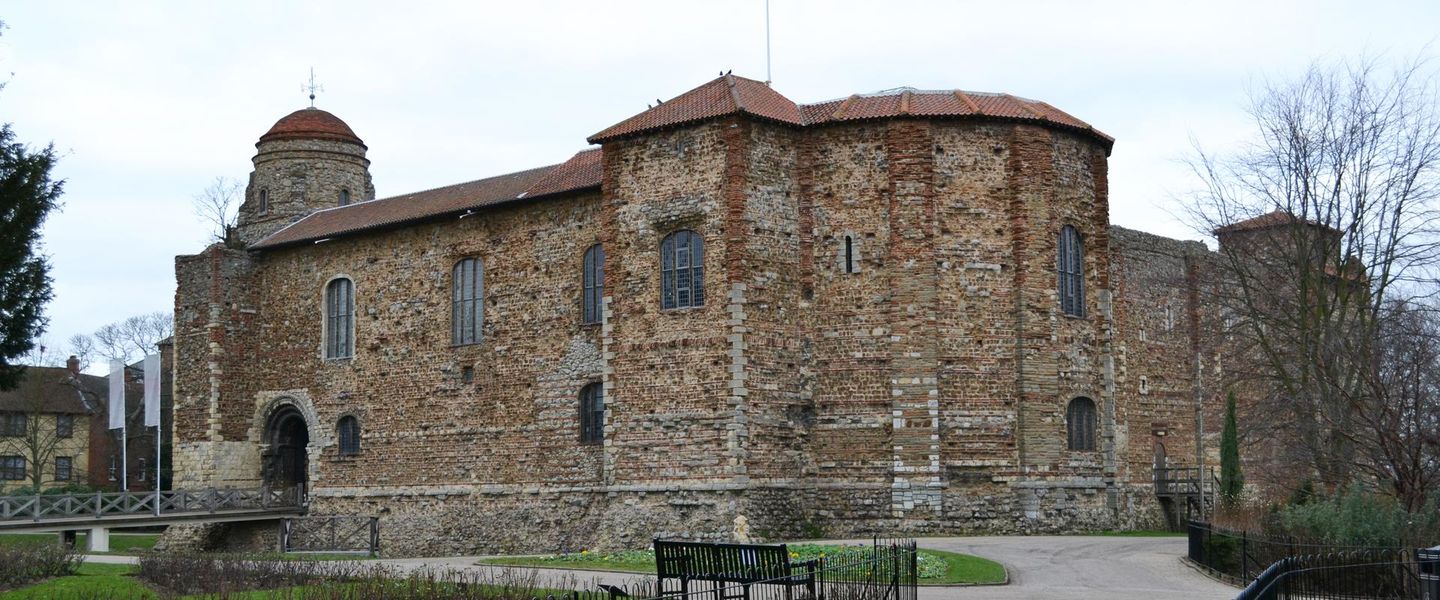


Explore Essex for Roman Colchester, ancient woodland, estuary villages, North Sea coastlines, local oysters and accessible countryside.
Read more about Essex
When is the best time to visit Essex?
Best: June–August · 21–24°C| Month | High (°C) | Rainfall (mm) |
|---|---|---|
| January | 7 | 40 |
| February | 8 | 35 |
| March | 11 | 40 |
| April | 14 | 45 |
| May | 18 | 50 |
| June (best) | 21 | 55 |
| July (best) | 24 | 60 |
| August (best) | 23 | 55 |
| September | 20 | 50 |
| October | 15 | 45 |
| November | 10 | 40 |
| December | 7 | 45 |
Getting to and around Essex
How to get there
Transportation
Top city travel guides in Essex
The cities of Essex, and the easiest places to base yourself.
-

-


Swipe for more cities
Destinations in Essex
Resorts, valleys and scenic spots worth a trip of their own.

Swipe for more destinations
Best attractions in Essex
Essex offers an unusually broad range of attractions for a county close to London. Colchester provides Roman archaeology, defensive walls, museums and a Norman castle, while Saffron Walden combines a historic centre with Audley End House and its landscaped estate nearby. Chelmsford is useful for exploring the county town’s civic and engineering heritage, including the story of early wireless communication. On the western edge, Epping Forest delivers ancient woodland, open commons and long walking routes, although parts extend beyond Essex into Greater London. The coast shifts from Southend’s traditional resort attractions and pier to the quieter creeks, salt marshes and boatyards of the Blackwater, Crouch and Dengie districts. Nature reserves and estuary habitats are important for birdwatching, particularly during migration and winter. Walkers and cyclists can follow sections of the Essex Way, Flitch Way and coastal paths, while family visitors will find museums, country estates, beaches and activity centres distributed across the county. The attraction landscape is therefore less about one concentrated resort than about moving between archaeological sites, market towns, woodland, farmland and tidal scenery.
-
Shopping Centre
Lakeside Shopping Centre
Discover over 250 shops, dining, and family fun at Lakeside Shopping Centre—West Thurrock’s vibrant retail and leisure hub.
-
Zoo
Colchester Zoo
Explore 60 acres of diverse wildlife habitats and immersive animal encounters at Colchester Zoo, a leading conservation and family attraction in Essex.
-
Live Music
ABBA Arena
Experience ABBA like never before in London’s cutting-edge ABBA Arena, home to the revolutionary ABBA Voyage concert residency.
-
Theme park
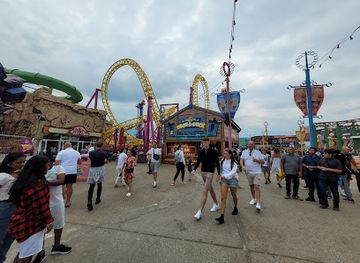
Adventure Island
Experience thrilling rides and family fun at Southend’s free-entry seafront theme park with over 40 attractions and stunning pier views.


Best landmarks in Essex
Colchester’s Roman town wall is one of Essex’s most important physical reminders of imperial Britain, while Colchester Castle’s massive Norman keep reflects the county’s early importance after the Conquest. In Saffron Walden, the ruins of the Norman castle and the medieval buildings around the market area convey the town’s former commercial prosperity. Audley End House, near Saffron Walden, is a major country-house landmark whose surviving mansion, service buildings and designed landscape illustrate the scale of aristocratic estates. Chelmsford Cathedral, with medieval origins and later additions, anchors the county town’s historic centre. Along the coast, Southend Pier projects far into the Thames estuary and has become the county’s most recognisable seaside structure. The Hythe Quay area at Maldon, with traditional sailing barges and working waterfront character, expresses the relationship between the town and the Blackwater. Epping Forest’s ancient pollarded trees and open commons form a natural landmark on Essex’s western boundary, while the flat horizons, sea walls and winding creeks of the Dengie and Blackwater estuaries create a distinctive landscape landmark rather than a single monument.
-
Cathedral
Chelmsford Cathedral
A serene 11th-century cathedral in the city centre offering free entry, beautiful architecture, and vibrant cultural events.
-
Historical landmark
English Heritage - St Botolph's Priory
Explore the evocative ruins of England’s first Augustinian priory, showcasing Norman architecture and Civil War history in the heart of Colchester.
-
Museum
Natural History Museum
Discover Colchester’s natural past and present in a charming historic church turned family-friendly museum with free entry and engaging exhibits.
-
Historical landmark
Balkerne Gate
Explore Balkerne Gate, Britain's largest surviving Roman gateway, a monumental symbol of Colchester’s ancient Roman heritage and architectural mastery.


Explore Essex on the map
Plan your trip on one map. See where the top cities, national parks and sights are, and book hotels and experiences in a few clicks.
Best hotels in Essex
Best restaurants in Essex
Essex dining draws on both its agricultural interior and its estuarine coast. Blackwater oysters are the county’s best-known maritime speciality, particularly around Maldon and the villages bordering the Blackwater, while local seafood appears in restaurants and pubs along the coast. Maldon sea salt is another recognisable regional product, used well beyond the county as a finishing salt. Farm shops, producers’ markets and independent delis commonly feature seasonal vegetables, bread, preserves, meats and cheeses from the surrounding countryside. Traditional pubs and rural inns remain important for straightforward British cooking, while Colchester, Chelmsford, Southend and Leigh-on-Sea offer a broader mix of cafés, international restaurants and contemporary dining. Coastal towns suit fish, shellfish and casual meals with harbour or seafront settings; inland villages often centre on pubs, bakeries and tea rooms. Food availability is more limited in remote estuary districts, so visitors exploring the Dengie Peninsula or smaller creekside settlements should plan meals rather than assume that every village has a full-service restaurant.
-
Family friendly
Harvester Stanway Colchester
Casual family-friendly British bar & grill in Colchester offering fresh, flavorful meals from breakfast to dinner in a relaxed setting.
-
Restaurant
Acanteen
Chelmsford’s all-day bar, restaurant and live music venue – brunch, pizza, cocktails and events in a buzzing city-centre setting.
-
Italian
Vita Bella
Authentic Italian cuisine with fresh local ingredients in a charming village setting near Chelmsford.
-
Gastropub
Dukes Head Billericay
A charming gastropub in Billericay blending traditional British fare with a warm, inviting atmosphere and scenic outdoor spaces.


Best bars in Essex
Essex nightlife varies sharply between the large towns, seaside resorts and rural districts. Southend-on-Sea has the county’s broadest evening offer, with pubs, bars, live entertainment and a larger concentration of late venues around the central resort area. Chelmsford also has a substantial town-centre scene, including pubs, cocktail bars, restaurants and venues for live music, while Colchester combines traditional pubs with bars and cultural events linked to its sizeable student and arts communities. Leigh-on-Sea is better known for independent bars, restaurants and relaxed evening outings than for large clubs. In smaller towns such as Maldon, Saffron Walden and Burnham-on-Crouch, evenings tend to centre on pubs, historic inns, restaurants, breweries and occasional live performances. Rural Essex generally becomes quiet earlier, and taxi availability can be limited outside the main centres, so arranging transport in advance is sensible. Seasonal seafront activity can also make coastal nightlife busier in summer than in winter.
-
Pub
Three Wise Monkeys
A vibrant multi-floor pub in Colchester offering craft beers, hearty smokehouse food, and lively events in a unique historic setting.
-
Bar
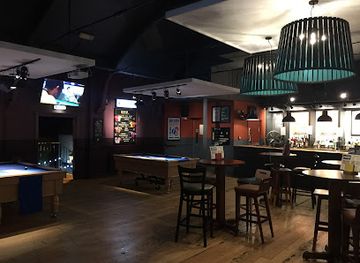
Boom Battle Bar Chelmsford
Chelmsford’s premier games bar blending axe throwing, shuffleboard, street food, and cocktails for unforgettable nights out.
-
Pub
The Alex
A lively, welcoming pub in Southend-on-Sea offering great vegan options, classic pub grub, and a friendly, vibrant atmosphere.
-
Cocktail bar
Slug & Lettuce - Chelmsford
A vibrant cocktail bar and restaurant in Chelmsford offering creative drinks, stylish interiors, and a lively social atmosphere from brunch to late night.



Best nightclubs in Essex
Essex nightlife varies sharply between the large towns, seaside resorts and rural districts. Southend-on-Sea has the county’s broadest evening offer, with pubs, bars, live entertainment and a larger concentration of late venues around the central resort area. Chelmsford also has a substantial town-centre scene, including pubs, cocktail bars, restaurants and venues for live music, while Colchester combines traditional pubs with bars and cultural events linked to its sizeable student and arts communities. Leigh-on-Sea is better known for independent bars, restaurants and relaxed evening outings than for large clubs. In smaller towns such as Maldon, Saffron Walden and Burnham-on-Crouch, evenings tend to centre on pubs, historic inns, restaurants, breweries and occasional live performances. Rural Essex generally becomes quiet earlier, and taxi availability can be limited outside the main centres, so arranging transport in advance is sensible. Seasonal seafront activity can also make coastal nightlife busier in summer than in winter.
-
Nightclub
MooMoo Clubrooms Southend
Experience Southend’s vibrant nightlife at MooMoo Clubrooms, where themed rooms and lively beats create unforgettable party nights.
-
Nightclub
Popworld - Chelmsford
Experience Chelmsford’s ultimate pop-themed nightclub with vibrant music, creative cocktails, and unforgettable themed parties.
-
Dance club
The Loft Basildon
Experience Basildon’s vibrant dance scene with energetic music nights, friendly staff, and a lively atmosphere at The Loft Basildon.
-
Nightclub
Bar & Beyond Chelmsford
A large, lively nightclub in Chelmsford known for affordable drinks, vibrant atmosphere, and a mix of praise and controversy around its staff and music.


Best shops in Essex
Shopping in Essex ranges from substantial town centres to independent market-town streets and rural producers. Chelmsford and Colchester provide the broadest high-street selection, with department-style retailers, national chains, cafés and independent shops, while Southend adds the retail concentration of a large seaside town. Saffron Walden is noted for its historic streets, market setting, antiques, books, galleries and smaller specialist businesses. Maldon and other coastal towns are good places to look for local food products, craft goods and nautical items rather than extensive fashion retail. Farmers’ markets, farm shops and delis commonly sell Essex produce, preserves, baked goods, beer, wine and Maldon sea salt; Blackwater oysters are usually purchased through food businesses and producers rather than as a conventional souvenir. Art galleries and craft shops appear in historic towns and coastal communities, while antique and vintage shopping is strongest where independent traders cluster. Opening days and market schedules vary, particularly in smaller settlements, so rural shopping is best combined with a planned town visit.
-
Shopping Centre
Victoria Shopping Centre
A bustling Southend retail destination blending diverse shops, dining, and leisure under one roof with excellent accessibility and extended hours.
-
Shopping Centre
Riverside Retail Park
A convenient and lively retail hub in Chelmsford offering diverse stores, eateries, and accessible parking on Victoria Road.
-
Shopping Centre
George Yard Shopping Centre
A vibrant pedestrianised shopping hub in Braintree offering diverse stores and a welcoming community atmosphere.
-
Shopping Centre
The Baytree Shopping Centre
A practical and accessible shopping centre at the heart of Brentwood, offering everyday essentials and local services.


Get your free copy of our complete guide to Essex, delivered straight to you.
Everything on this page, from attractions and restaurants to essentials and local phrases, in one PDF you can read offline, print or share.
Already have an account? Sign in
Your Essex guide is ready.
We'll send it to · Not you? Sign out

Getting your guide ready…
We are putting together a fresh copy of the Essex guide. This can take up to a minute.
This can take a few moments. If your browser asks, choose Allow so the download can start. You'll find the guide in your Downloads folder.
Nothing happened? Download it again
Sorry, the guide is taking longer than usual. Please try again in a minute, or get it by email instead.
Essex essentials
Currency and Payment
Safety
Emergency Situations
Do's and Don'ts
Local Tips
From Eve
Local phrases worth knowing
You don't need to get them perfect. A few words go a long way, and locals appreciate the effort.
Basics
| English | Local | Say it |
|---|---|---|
| Hello | Alright | [Aw-right] |
| Goodbye | Laters | [Lay-taz] |
| Yes | Yeah | [Yeh] |
| No | Nah | [Nah] |
| Please/You're welcome | Cheers | [Cheerz] |
| Thank you | Ta | [Taa] |
| Excuse me/Sorry | Sorry mate | [Sore-ee mate] |
| How are you? | You alright? | [Yoo aw-right?] |
| Fine. And you? | Good, you? | [Good, yew?] |
| Do you speak English? | Do ya speak English? | [Doo ya speek Inglish?] |
| I don't understand | I don’t get it | [I dunt get it] |
Eating & Drinking
| English | Local | Say it |
|---|---|---|
| I'd like to see the menu, please | Can I see the menu, please? | [Can I see the men-yoo, pleez?] |
| I don't eat meat | I’m a veggie | [I'm a vej-ee] |
| Cheers! | Cheers! | [Cheerz!] |
| I would like to pay, please | Can I pay, please? | [Can I pay, pleez?] |
Emergencies
| English | Local | Say it |
|---|---|---|
| Help! | Help! | [Help!] |
| Go away! | Jog on! | [Jog on!] |
| Call the Police! | Ring the coppers! | [Ring the coppers!] |
| Call a doctor! | Get a doc! | [Get a doc!] |
| I'm lost | I’m well lost | [I'm well lost] |
| I'm ill | I’m feeling rough | [I'm feelin rough] |
Shopping
| English | Local | Say it |
|---|---|---|
| I'd like to buy... | I wanna buy... | [I wanna buy...] |
| I'm just looking | Just browsing, thanks | [Just browsin, thanks] |
| How much is it? | How much? | [How much?] |
| That's too expensive | That's well pricey | [That's well pricy] |
| Can you lower the price? | Can you do it cheaper? | [Can you do it cheaper?] |
Time & Numbers
| English | Local | Say it |
|---|---|---|
| What time is it? | What’s the time? | [What's the time?] |
| It's one o'clock | It's one | [It's one] |
| Half past (10) | Half ten | [Half ten] |
| Morning | Mornin' | [Mornin'] |
| Afternoon | Arvo | [Arvo] |
| Evening | Evenin' | [Evenin'] |
| Yesterday | Yest'day | [Yest'day] |
| Today | Today | [Today] |
| Tomorrow | Tomorra | [Tomorra] |
| 1 | One | [One] |
| 2 | Two | [Two] |
| 3 | Three | [Three] |
| 4 | Four | [Four] |
| 5 | Five | [Five] |
| 6 | Six | [Six] |
| 7 | Seven | [Seven] |
| 8 | Eight | [Eight] |
| 9 | Nine | [Nine] |
| 10 | Ten | [Ten] |
Transport & Directions
| English | Local | Say it |
|---|---|---|
| Where's a/the ...? | Where’s the ...? | [Where's the ...?] |
| What's the address? | What’s the addy? | [What's the addy?] |
| Can you show me (on the map)? | Show me on the map, yeah? | [Show me on the map, yeh?] |
| When's the next (bus)? | When's the next bus? | [When's the next bus?] |
| A ticket (to ...) | A ticket to ... | [A ticket to ...] |
History of Essex
Prehistoric Landscapes and Early Settlement
Essex contains evidence of settlement extending from the Palaeolithic period through the Neolithic, Bronze Age and Iron Age. Cropmarks, earthworks and archaeological finds show that communities farmed the fertile river valleys and occupied defensible sites before the Roman conquest. The county’s estuaries also offered routes for trade and communication. Iron Age settlements and material associated with the Trinovantes, a powerful local people, are especially important to the story of Colchester and the surrounding north-eastern part of the county.
Camulodunum and Roman Colchester
The Roman conquest transformed the settlement at Camulodunum, near present-day Colchester, into a colonia for retired soldiers and one of Roman Britain’s leading towns. It had a substantial forum, temple precincts, public buildings and defensive walls. In AD 60 or 61, the revolt led by Boudica destroyed the settlement, but Roman administration and urban life were subsequently rebuilt. Colchester’s surviving wall circuits, archaeological collections and Roman remains make this period one of the county’s most visible historical foundations.
Saxon and Medieval Essex
After the end of Roman rule, Essex developed within the Anglo-Saxon kingdom of the East Saxons, whose name survives in the county. Christianity, royal administration and later Norman rule reshaped the landscape. The Normans built Colchester Castle’s great keep, while monasteries, parish churches, manor houses and planned market settlements expanded across the county. Medieval ports and river crossings supported trade, and places such as Saffron Walden acquired distinctive street plans and buildings that remain important parts of Essex’s heritage.
Agriculture, Wool and Market Towns
For centuries Essex was principally an agricultural county, with fertile soils supporting grain production, livestock and market gardening. The medieval and early modern wool trade brought prosperity to settlements including Saffron Walden, while later improvements in farming and transport strengthened towns such as Chelmsford and Braintree. Maldon and other estuarine communities combined farming with salt-making, fishing and coastal trade. Many timber-framed houses, barns, churches and market squares reflect these long agricultural and commercial connections.
Maritime Trade and the Estuary Economy
The Thames, Blackwater, Crouch and Colne estuaries connected Essex to wider coastal and international networks. Harwich developed as a major port and naval base, while smaller creeks supported fishing, shipbuilding, oyster cultivation and the movement of agricultural goods. The coast was also exposed to wartime threats and smuggling. Maritime heritage remains visible in fishing communities, boatyards, sea walls, salt marshes and the continued importance of oysters and sailing to the county’s coastal identity.
Industrialisation and Chelmsford’s Electrical Legacy
The arrival of railways in the nineteenth century accelerated urban growth, commuting and the movement of goods. Chelmsford became associated with electrical engineering through the Marconi company, whose work in wireless communication helped establish the town as a centre of technological development. Engineering, manufacturing and later electronics complemented the county’s agricultural economy. Railway expansion also encouraged the growth of seaside resorts such as Southend-on-Sea and linked Essex more closely to London and national markets.
The Modern London Fringe and New Towns
During the twentieth century, Essex changed rapidly as improved roads and railways drew it into London’s economic orbit. Southend expanded as a major resort, while towns such as Basildon and Harlow grew through planned development and post-war housing programmes. Stansted Airport later became a significant international gateway in the north-west of the county. Despite suburbanisation and industrial change, extensive farmland, ancient woodland, estuaries and protected landscapes continue to preserve a strong rural and maritime dimension.
Essex in Photos
Browse through our photo collection highlighting the charm and character of the destination.
Neighbouring regions of Essex
The closest regions to Essex, if you have time for more than one.
-

-

-
-
-


Swipe for more regions
Explore more

Explore more of United Kingdom
Discover the United Kingdom: A blend of rich history, stunning landscapes, and vibrant cities, offering a unique travel experience for every visitor.
Explore United Kingdom