Princelet St, London Travel Guide
Free Guide: A quiet Spitalfields street of Georgian terraces, workshop traces and migration history, best explored on foot as part of an East End heritage walk.


A brief summary of Princelet St
A quiet Spitalfields street of Georgian terraces, workshop traces and migration history, best explored on foot as part of an East End heritage walk.
Princelet Street is a compact historic street in Spitalfields where Georgian terraces, later workshop conversions and immigrant histories sit close together. It is best visited as part of a wider East End walk, with Brick Lane, Christ Church Spitalfields and nearby museums within easy reach. Expect a quiet, lived-in street rather than a formal attraction, with the appeal lying in façades, doorways and the texture of the conservation area.
On-site amenities
 Food options
 Drink options
 Seating areas
 Trash bins
 Information boards
- Address
- London
Getting there
Tube and rail
Bus
Walking or cycling
Taxi or rideshare
Discover more about Princelet St
What it is
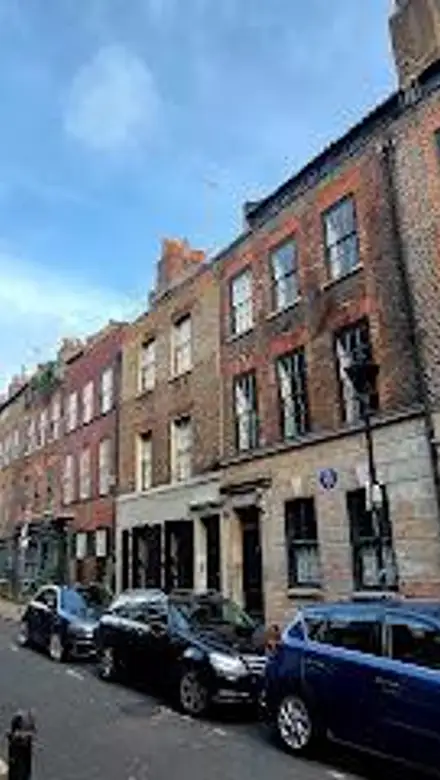
Princelet Street is not a standalone attraction so much as a heritage streetscape: a short, walkable East End street in Spitalfields with preserved Georgian terrace patterns, later alterations and a strong association with the area’s artisan and immigrant past. It sits within one of London’s most closely studied historic urban districts, where the street plan, building fabric and surrounding lanes still carry the imprint of workshop life, settlement and reuse.The street’s interest comes from context as much as from any single building. It belongs to the wider Spitalfields and Brick Lane conservation-area landscape, where Huguenot silk-weaving, Jewish migration and later communities shaped both the architecture and the social history of the neighbourhood.
What visitors experience
A visit is usually brief and self-guided. You come here to walk slowly, look up, and read the street through its façades, plaques, doorways and side connections. The pace is observational rather than eventful. Compared with nearby Brick Lane, Princelet Street feels quieter and more residential, though it remains unmistakably urban and active.Most travellers combine it with nearby stops such as Christ Church Spitalfields, the markets and galleries around Spitalfields, and the museum and heritage sites in the surrounding streets. That is where the visit makes most sense: as a measured detour within a broader East End itinerary. Photographers, architecture enthusiasts and visitors interested in migration history tend to linger longest.
History and setting
Princelet Street sits in a district shaped by repeated waves of arrival and adaptation. The built environment reflects that layering: early Georgian houses, later industrial use, and conversions that speak to changing patterns of work and residence. One notable nearby example is 19 Princelet Street, which began as an early 18th-century terraced house and was later adapted for industrial use and then as a synagogue before becoming a museum linked to immigration and diversity.The street itself is compact and enclosed, with narrow proportions and dense surrounding development. There are no grand vistas here. The visual interest lies in brickwork, window rhythm, street texture and the contrast between preserved frontage and the busier energy of the surrounding district. It is a place for close looking rather than sweeping views.
Practical expectations
Princelet Street is free to visit and easy to fold into a central London day. Public transport is the sensible approach, followed by a short walk from nearby stations in the Aldgate East, Shoreditch High Street, Liverpool Street or Whitechapel area. Driving is awkward and generally not worth the trouble because parking is limited and controlled.Facilities on the street itself are minimal, as this is public realm rather than a managed venue. Food, drink and toilets are more likely to be found in the surrounding Spitalfields and Brick Lane area. The street is usable year-round, but the experience is best in mild, dry weather when the architectural detail is easier to appreciate and the walk feels more comfortable.
Evendo Review Centre
 Google
Guest reviews
Best time to go
Quietest: Jan, Feb & Dec · before 7am or from 9pm
Busy times are Evendo estimates for a typical year, to help you plan. Actual crowds vary with events, school holidays and the weather.
Explore Princelet St on the map
A handpicked selection of must-see spots near Princelet St, mapped for you.
Get your free copy of our complete guide to Princelet St, delivered straight to you.
Everything on this page, from opening hours and how to get there to Eve’s tips and the best time to go, in one PDF you can read offline, print or share.
Already have an account? Sign in
Your Princelet St guide is ready.
We'll send it to · Not you? Sign out

Getting your guide ready…
We are putting together a fresh copy of the Princelet St guide. This can take up to a minute.
This can take a few moments. If your browser asks, choose Allow so the download can start. You'll find the guide in your Downloads folder.
Nothing happened? Download it again
Sorry, the guide is taking longer than usual. Please try again in a minute, or get it by email instead.
Unlock the best of Princelet St
Skip-the-line tickets, guided tours with entry, and walking tours of the area, booked in a few clicks.
 Tour with entry
Interactive Jack the Ripper Night Walk: London's Murder Mystery
from $20.25 Tour with entry
Jack the Ripper Walking Tour in London
from $23.89 Tour with entry
Women of Whitechapel 2 hour Walking Tour
from $25.15 Tour with entry
Jack the Ripper: Night Murder Mystery Walking Tour in London
from $30.91
Other nearby places you may find interesting
The closest places of the same kind, if this one is not quite what you had in mind.
-
-
-
-
-


Swipe for more places
More to explore near Princelet St

 Best experiences near Princelet St
 Best hotels near Princelet St
 Best landmarks near Princelet St
 Best attractions near Princelet St
 Best shops near Princelet St
 Best restaurants near Princelet St
 Best bars near Princelet St
Do you manage this location?
Take control to get all the benefits, like improved information, better appearance, and stronger visibility across AI-powered discovery.
Explore more

Explore more of London
Explore London: A city of iconic landmarks, rich history, vibrant culture, and endless attractions that cater to every taste, making it a must-visit destination.
Explore London
Explore more of United Kingdom
Discover the United Kingdom: A blend of rich history, stunning landscapes, and vibrant cities, offering a unique travel experience for every visitor.
Explore United Kingdom