

Camden Town (London) Travel Guide - Free
Explore Camden Town in London with Evendo's free guide. Find the best shops, historic streets, restaurants, and gems on web or mobile.


Camden Town, London blends canal walks, lively markets, live music, street food and alternative shopping with Victorian streets and creative local history.
Canal-Side Character
Camden Town occupies a lively stretch of north-west London between Regent’s Park, Primrose Hill, Kentish Town and the Regent’s Canal. Its identity is immediately legible: narrow Victorian streets give way to the canal towpath, while Camden High Street and Chalk Farm Road form a busy axis of food stalls, music venues, alternative fashion and late-opening shops. The neighbourhood is not a single historic quarter with uniform architecture, but a layered urban district whose old terraces, railway infrastructure, converted industrial buildings and exuberant shopfronts sit alongside one another.Read more about Camden Town
Markets and Street Life
Music and Everyday London
Best attractions in Camden Town
Camden Market is the neighbourhood’s principal visitor attraction, spreading through several connected areas around Camden Lock, the canal and the former market buildings towards Chalk Farm. Its stalls and small shops range from street food and international snacks to vintage clothing, crafts, records, souvenirs and alternative fashion. The Regent’s Canal towpath offers a contrasting experience, with waterway views, narrow bridges, houseboats and a route towards Regent’s Park or King’s Cross. For architecture and atmosphere, explore the market’s converted industrial spaces and the railway-related structures around Chalk Farm Road. The Roundhouse, a former railway engine shed, is a major cultural venue with a striking circular form and a programme centred on music and performance. Nearby Primrose Hill is outside the core of Camden Town but is a short walk away, offering broad views across London from its summit.
-
Tourist attraction
Camden Market
Explore Camden Market’s vibrant mix of vintage finds, global street food, and alternative culture in the heart of London’s iconic canal-side district.
1 min walk · 0.1 km from neighbourhood centre
-
Tourist attraction
Primrose Hill
A historic hilltop park in London offering breathtaking panoramic city views, Victorian charm, and a tranquil urban retreat.
14 min walk · 1.1 km from neighbourhood centre
-
Events Venue
Roundhouse
A legendary Victorian venue in Camden, blending historic charm with cutting-edge music, theatre, and creative arts.
7 min walk · 0.5 km from neighbourhood centre
-
Sculpture
Amy Winehouse Statue
A poignant bronze tribute to Amy Winehouse, capturing her iconic style and spirit in the heart of Camden Town’s vibrant Stables Market.
3 min walk · 0.2 km from neighbourhood centre


Best landmarks in Camden Town
Camden Lock is the neighbourhood’s defining piece of industrial infrastructure, retaining the physical presence of the Regent’s Canal and its former working relationship with warehouses, yards and transport. The market buildings around the lock and Stables Market preserve fragments of Camden’s commercial and railway past, although many now serve retail and food businesses. The Roundhouse is another major landmark: its circular former engine-shed structure records the importance of railways to Camden’s nineteenth-century development and has been adapted for performance. The Regent’s Canal itself is a linear heritage feature, marked by towpaths, bridges and water-level engineering. Camden Town Underground station, with its distinctive location at the junction of Camden High Street and Kentish Town Road, is a practical landmark as well as a transport gateway. Much of the neighbourhood’s visual character comes from the combination of these structures with Victorian terraces and railway arches.
-
Market
Camden Market
Discover Camden Market, London's vibrant cultural hotspot for vintage finds, global street food, and creative energy, open daily from 10am to 6pm.
1 min walk · 0.1 km from neighbourhood centre
-
Bridge
Iron Footbridge over Regent’s Canal (Camden)
Historic iron footbridge offering scenic canal views and vibrant access to Camden’s lively markets and cultural heart.
1 min walk · 0.1 km from neighbourhood centre
-
Historical landmark
Hawley Street Art
Discover Camden’s vibrant Hawley Street Art, a dynamic outdoor gallery celebrating creativity, culture, and iconic urban murals.
2 min walk · 0.2 km from neighbourhood centre


Explore Camden Town on the map
A handpicked selection of must-see spots in Camden Town, mapped for you.
Best hotels in Camden Town
Best restaurants in Camden Town
Camden’s dining scene reflects the area’s markets, music culture and international visitor flow rather than a single traditional cuisine. Around Camden Lock and the market halls, food stalls serve dishes influenced by cuisines from across the world, making the district particularly suited to informal eating and browsing several counters in one visit. Camden High Street and Chalk Farm Road add cafés, bakeries, pubs and casual restaurants, while quieter side streets contain more conventional neighbourhood dining. The market areas are useful for vegetarian and globally inspired street food, though menus and traders change over time. Eating here is often tied to movement: a quick meal between shops, food before a concert or a snack beside the canal. Visitors seeking a calmer restaurant setting can look beyond the busiest market passages towards Chalk Farm and the residential streets adjoining the main thoroughfares.
-
Vegan
Mildreds Camden
Discover vibrant international vegan cuisine and lively atmosphere at Mildreds Camden, a cornerstone of London’s plant-based dining scene.
1 min walk · 0.1 km from neighbourhood centre
-
Italian
Rossopomodoro Camden
Experience authentic Neapolitan pizza and classic Italian dishes in the vibrant heart of Camden, London.
1 min walk · 0.1 km from neighbourhood centre
-
Italian
Goodfare Italian Restaurant
Cozy Camden Italian eatery serving authentic pizzas, pastas, and seafood with warm hospitality and a lively street-side vibe.
4 min walk · 0.3 km from neighbourhood centre
-
Tapas
Jamon Jamon
Experience authentic Spanish tapas and vibrant Mediterranean flavors in a lively NW1 London setting with rustic charm and inviting atmosphere.
4 min walk · 0.3 km from neighbourhood centre


Best bars in Camden Town
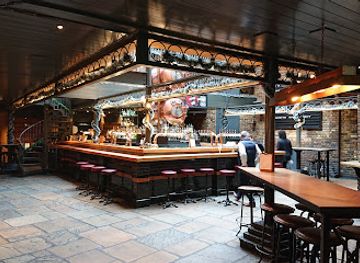
Camden’s evening identity is strongly connected with live music, late bars and venues that have hosted generations of performers. The Roundhouse presents concerts and cultural events in a distinctive former railway building, while the Electric Ballroom remains a prominent live-music and club venue on Camden High Street; KOKO is nearby in the wider Camden area, close to Mornington Crescent rather than at the market itself. Pubs and bars cluster along Camden High Street, Chalk Farm Road and the lanes around the markets, ranging from informal drinking places to venues built around DJs or live performance. The atmosphere changes sharply according to the concert calendar, and queues can form outside established venues. Camden is not uniformly nocturnal: streets away from the entertainment corridors become markedly quieter, with residents living close to the main late-night routes.
-
Pub
The World's End
A large Victorian Camden pub with mezzanine bars and the Underworld music venue below — where food, tanks of beer and live gigs meet.
4 min walk · 0.3 km from neighbourhood centre
-
Pub
The Elephants Head
Scruffy Victorian boozer on Camden High Street: jukebox rock anthems, Full English feasts, and late-night singalongs in London's alternative epicenter.
1 min walk · 0.1 km from neighbourhood centre
-
Pub
The Hawley Arms
Camden’s intimate music pub — cosy sofas, punters and live gigs in a scuffed, music-filled setting.
1 min walk · 0.1 km from neighbourhood centre
-
Pub
Bucks Head
Lively Camden pub with roof terrace views, pub grub, real ales, and festive vibes opposite Buck Street Market—perfect for soaking up the neighborhood's electric energy.
2 min walk · 0.1 km from neighbourhood centre


Best nightclubs in Camden Town
Camden’s evening identity is strongly connected with live music, late bars and venues that have hosted generations of performers. The Roundhouse presents concerts and cultural events in a distinctive former railway building, while the Electric Ballroom remains a prominent live-music and club venue on Camden High Street; KOKO is nearby in the wider Camden area, close to Mornington Crescent rather than at the market itself. Pubs and bars cluster along Camden High Street, Chalk Farm Road and the lanes around the markets, ranging from informal drinking places to venues built around DJs or live performance. The atmosphere changes sharply according to the concert calendar, and queues can form outside established venues. Camden is not uniformly nocturnal: streets away from the entertainment corridors become markedly quieter, with residents living close to the main late-night routes.
-
Nightclub
Lockside
Canal views, craft cocktails, and DJ-fueled nights atop Camden Market's vibrant West Yard—a daytime diner turned electric nightlife escape.
1 min walk · 0.1 km from neighbourhood centre
-
Nightclub
The Underworld
Dive into Camden's throbbing heart of rock and metal at this legendary basement club, where intimate gigs unleash mosh pits and unforgettable riffs.
4 min walk · 0.3 km from neighbourhood centre
-
Nightclub
Electric Ballroom
A gritty, multi-level Camden music hall where loud live bands and club nights collide beneath theatrical lighting and raised balconies.
3 min walk · 0.2 km from neighbourhood centre
-
Club
Club Swizzle
Dive into acrobatic cabaret mayhem at the Roundhouse: Swizzle Boys flip chairs, Reuben Kaye slays with wit, and the bar becomes your front-row thrill ride in Camden's hottest 2018 spectacle.
5 min walk · 0.4 km from neighbourhood centre


Best shops in Camden Town
Shopping in Camden Town is concentrated around the linked market areas between Camden High Street, Camden Lock, Chalk Farm Road and the former railway-side buildings. Camden Market and Stables Market offer clothing, accessories, crafts, artworks, records, souvenirs and specialist gifts, alongside food stalls and small independent retailers. The range is broad and changeable, with vintage and alternative styles particularly associated with the area’s long-standing youth and music culture. Camden High Street adds fashion shops, convenience stores, cafés and businesses serving the daily needs of local residents and visitors. The market experience is more about browsing stalls and adapted industrial spaces than following a formal luxury shopping street. Visitors should distinguish the established market areas from ordinary retail premises on surrounding roads, where the atmosphere becomes less themed and more representative of a mixed residential neighbourhood.
-
Clothing Shop
Cyberdog
Dive into a neon-fueled rave shop where futuristic clubwear meets pounding techno in Camden's wildest corner—Cyberdog's alien statues and glowing racks await.
3 min walk · 0.2 km from neighbourhood centre
-
Gift shop
To Home From London
Camden's go-to for handcrafted London souvenirs: witty mugs, sturdy totes, and homewares that pack whimsy and quality into every piece.
2 min walk · 0.1 km from neighbourhood centre
-
Vintage Clothing Shop
Rokit Camden
Dive into punk-fueled vintage at Rokit Camden, where Camden High Street's eclectic racks hide bold styles favored by icons like Kate Moss and Amy Winehouse.
2 min walk · 0.2 km from neighbourhood centre
-
Gift shop
KESKIN GIFT
Discover handmade wonders at Keskin Gift, where Camden's craft spirit shines through chess sets, masks, and artisanal jewelry in the iconic Lock Market.
1 min walk · 0.1 km from neighbourhood centre


Camden Town essentials
Getting There
Getting Around
Safety
Emergency Situations
Do's and Don'ts
Local Tips

From Eve
Local phrases worth knowing
You don't need to get them perfect. A few words go a long way, and locals appreciate the effort.
Basics
| English | Local | Say it |
|---|---|---|
| Hello | Alright mate | [al-right mayt] |
| Goodbye | See ya later | [see ya lay-ta] |
| Yes | Yeah | [yeah] |
| No | Nah | [nah] |
| Please/You're welcome | Ta | [ta] |
| Thank you | Cheers | [cheers] |
| Excuse me/Sorry | Sorry mate | [sore-ee mayt] |
| How are you? | You alright? | [you al-right] |
| Fine. And you? | Not bad. You? | [not bad. you] |
| Do you speak English? | You speak English? | [you speak ing-glish] |
| I don't understand | I ain't got a clue | [i aint got a clue] |
Eating & Drinking
| English | Local | Say it |
|---|---|---|
| I'd like to see the menu, please | Can I see the menu, mate? | [can i see the menu mayt] |
| I don't eat meat | I'm veggie | [i'm veg-gie] |
| Cheers! | Cheers! | [cheers] |
| I would like to pay, please | Can I pay, mate? | [can i pay mayt] |
Emergencies
| English | Local | Say it |
|---|---|---|
| Help! | Help! | [help] |
| Go away! | Clear off! | [clear off] |
| Call the Police! | Ring the Old Bill! | [ring the old bill] |
| Call a doctor! | Get a doc! | [get a doc] |
| I'm lost | I'm lost | [i'm lost] |
| I'm ill | I'm not feeling well | [i'm not feeling well] |
Shopping
| English | Local | Say it |
|---|---|---|
| I'd like to buy... | I wanna buy... | [i wanna buy] |
| I'm just looking | Just browsing | [just brows-ing] |
| How much is it? | How much? | [how much] |
| That's too expensive | Too pricey, mate | [too pry-see mayt] |
| Can you lower the price? | Can you do me a deal? | [can you do me a deal] |
Time & Numbers
| English | Local | Say it |
|---|---|---|
| What time is it? | What's the time? | [what's the time] |
| It's one o'clock | It's one | [it's one] |
| Half past (10) | Half ten | [half ten] |
| Morning | Morning | [morning] |
| Afternoon | Afternoon | [after-noon] |
| Evening | Evening | [even-ing] |
| Yesterday | Yesterday | [yes-ter-day] |
| Today | Today | [to-day] |
| Tomorrow | Tomorrow | [to-mor-row] |
| 1 | One | [one] |
| 2 | Two | [two] |
| 3 | Three | [three] |
| 4 | Four | [four] |
| 5 | Five | [five] |
| 6 | Six | [six] |
| 7 | Seven | [seven] |
| 8 | Eight | [eight] |
| 9 | Nine | [nine] |
| 10 | Ten | [ten] |
Transport & Directions
| English | Local | Say it |
|---|---|---|
| Where's a/the...? | Where's the...? | [where's the] |
| What's the address? | What's the postcode? | [what's the post-code] |
| Can you show me (on the map)? | Can you point it out? | [can you point it out] |
| When's the next (bus)? | When's the next bus? | [when's the next bus] |
| A ticket (to ....) | A ticket to... | [a ticket to] |
History of Camden Town
From Estate Land to Suburb
The name Camden derives from Charles Pratt, who became the first Earl Camden in 1765 and owned the large Camden Place estate in Kentish Town. For centuries, the area now associated with Camden Town was largely open land north of London, crossed by routes linking the capital with settlements further north. Urban change accelerated in the late eighteenth and early nineteenth centuries, when landowners and developers began laying out streets and terraces. The planned suburb that emerged was shaped by London’s expanding population and by the need for housing beyond the older built-up core, leaving Camden Town with much of its characteristic grid of residential streets.
The Canal Brings Industry
The opening of the Regent’s Canal in 1820 connected the Paddington area with the eastern docks and brought a new industrial and transport dimension to Camden Town. Wharves, warehouses, workshops and yards developed beside the water, handling materials and goods moving across London. Camden Lock became associated with the canal’s engineering and operational infrastructure, while nearby streets combined modest housing with commercial premises serving workers and passing trade. The canal also established the physical contrast that still defines the neighbourhood: a hard-working industrial corridor beside dense residential development.
Railways and Urban Connection
Railway construction further changed Camden Town during the nineteenth century. The London and Birmingham Railway reached Euston in 1837, and the expanding railway network brought cutting, bridges, sidings and workshops into the wider Camden area. These infrastructures helped link the suburb to central London while occupying substantial land and dividing parts of the neighbourhood. The arrival of the Metropolitan Railway’s Camden Town station in 1907, now known as Camden Road on the London Overground network, reinforced the area’s role as a connected part of the capital. Industrial employment and transport continued to influence its built form and social life.
Markets, Music and Reinvention
The canal’s commercial importance declined as road haulage and other forms of freight transport expanded, leaving waterside premises available for new uses. Camden Lock Market began in 1973 in the former canal-side area and helped establish the market and independent-retail culture for which the neighbourhood became known. From the late twentieth century, venues including the Roundhouse, Electric Ballroom and later KOKO strengthened Camden’s association with live music and youth culture. The district has since experienced redevelopment, rising visitor numbers and commercial change, yet its present identity still depends on the meeting of canal infrastructure, market trading, music venues and established residential streets.
Camden Town in Photos
Browse through our photo collection highlighting the charm and character of the destination.
Neighbourhoods near Camden Town
The closest neighbourhoods to Camden Town, if you have time for more than one stop.
-

-

-

-

-


Swipe for more neighbourhoods
Explore more

Explore more of London
London combines royal landmarks, world-class museums, historic neighbourhoods, theatre, markets and diverse dining along the River Thames for rich urban exploration.
Explore London