

Blackfriars Bridge, London Travel Guide
Free Guide: Historic and widest Thames crossing in London, blending Victorian engineering with medieval heritage and stunning river views.


A brief summary of Blackfriars Bridge
Historic and widest Thames crossing in London, blending Victorian engineering with medieval heritage and stunning river views.
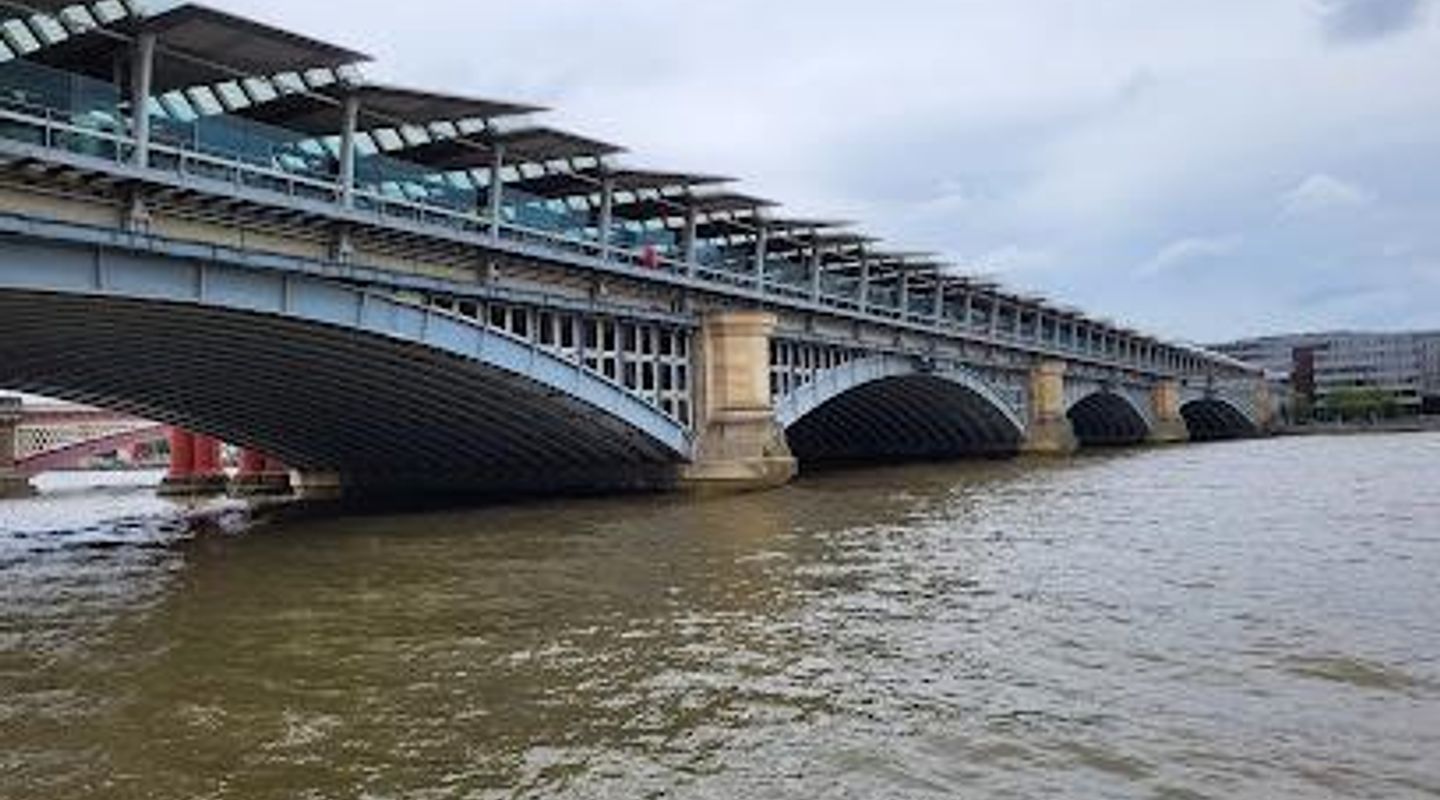
Blackfriars Bridge, spanning the River Thames in London, is a striking wrought-iron structure opened by Queen Victoria in 1869. It replaced an earlier 1769 stone bridge and stands as the widest bridge over the Thames in London today. Rich in history, the bridge connects the City of London with Southwark, marked by its distinctive red, white, and gold colors and iconic pulpit-shaped piers referencing the medieval Blackfriars monastery once nearby.
On-site amenities
 Seating areas
 Information boards
Opening hours
- Every dayOpen 24 hours
Opening hours as listed on the venue’s Google Business Profile. Hours can change for services and special events, so check with the venue before you go.
- Address
- Blackfriars Rd, London SE1 9UD
Getting there
Public Transport
Bus
Walking
Discover more about Blackfriars Bridge
Origins and Early History of Blackfriars Bridge
Blackfriars Bridge’s story begins with the original bridge opened in 1769, designed by the young Scottish architect Robert Mylne. This first bridge, constructed from Portland stone, was an elegant Italianate design featuring nine semi-elliptical arches. It was originally named William Pitt Bridge after the Prime Minister William Pitt the Elder but was popularly known as Blackfriars Bridge, named after the nearby Dominican friary whose monks wore black habits. The bridge was initially a toll bridge until 1785, and despite its beauty, it suffered from structural weakening due to pollution and river traffic, requiring frequent repairs.
The Victorian Replacement and Architectural Features
By the mid-19th century, the original bridge was deemed irreparable. The current Blackfriars Bridge was designed by Joseph Cubitt and opened by Queen Victoria on November 6, 1869. This new bridge was built using five elliptical wrought-iron arches resting on massive granite piers topped with pulpit-shaped structures, a nod to the Blackfriars monastery. Painted in red, white, and gold, the bridge features gold emblems and decorative motifs of freshwater and seabirds on its eastern and western sides. It was the first bridge to use elliptical arches to avoid disrupting river currents, showcasing Victorian engineering innovation.
Blackfriars Bridge and Its Surroundings Through Time
The bridge connects the northern City of London with the southern district of Southwark, crossing over the mouth of the River Fleet, one of London’s lost rivers. The surrounding area evolved from industrial wharves and warehouses into a vibrant urban landscape. The bridge was widened between 1907 and 1910 to accommodate trams and increased traffic, making it the widest bridge over the Thames at 105 feet. Remnants of the old railway bridge, including decorative columns, remain visible in the river, preserving the layered history of transport infrastructure at this site.
Symbolism and Cultural Significance
Blackfriars Bridge carries deep historical resonance, symbolizing London’s growth and modernization. The pulpit-shaped piers recall the medieval Blackfriars monastery dissolved in the 16th century. The bridge’s southern landing is guarded by a silver dragon statue, marking the boundary of the historic City of London. Its decorative elements, including the coat of arms of the London Chatham & Dover Railway, celebrate the city’s rich transport heritage. The bridge also serves as a tidal turning point on the Thames, a subtle reminder of the river’s natural rhythms.
Modern Use and Visitor Experience
Today, Blackfriars Bridge is a bustling artery for approximately 54,000 vehicles daily and supports the Cycle Superhighway 6, making it a key route for cyclists. Pedestrians can enjoy panoramic views of the Thames, St Paul’s Cathedral, and the South Bank. The bridge’s pedestrian underpass features decorative tiles from Mylne’s original design, connecting visitors visually to its 18th-century origins. Nearby, the modern Blackfriars Railway Station integrates historic elements, including sandstone blocks carved with the names of 54 destinations, linking past and present travel narratives.
Architectural Legacy and Conservation
Maintained by the Bridge House Estates, a charitable trust overseen by the City of London Corporation, Blackfriars Bridge is a Grade II listed structure. Its preservation reflects the city’s commitment to safeguarding its architectural heritage while adapting to contemporary urban needs. The bridge’s design and continued use illustrate a successful blend of historic charm and modern functionality, making it a landmark that embodies London’s evolving identity along the Thames.
Evendo Review Centre
 Google
Guest reviews
Best time to go
Quietest: Jan, Feb & Dec · before 6am or at 10pm
Busy times are Evendo estimates for a typical year, to help you plan. Actual crowds vary with events, school holidays and the weather.
Explore Blackfriars Bridge on the map
A handpicked selection of must-see spots near Blackfriars Bridge, mapped for you.
Get your free copy of our complete guide to Blackfriars Bridge, delivered straight to you.
Everything on this page, from opening hours and how to get there to Eve’s tips and the best time to go, in one PDF you can read offline, print or share.
Already have an account? Sign in
Your Blackfriars Bridge guide is ready.
We'll send it to · Not you? Sign out

Getting your guide ready…
We are putting together a fresh copy of the Blackfriars Bridge guide. This can take up to a minute.
This can take a few moments. If your browser asks, choose Allow so the download can start. You'll find the guide in your Downloads folder.
Nothing happened? Download it again
Sorry, the guide is taking longer than usual. Please try again in a minute, or get it by email instead.
Unlock the best of Blackfriars Bridge
Skip-the-line tickets, guided tours with entry, and walking tours of the area, booked in a few clicks.



Other nearby places you may find interesting
The closest places of the same kind, if this one is not quite what you had in mind.
-

-
-
-
-


Swipe for more places
More to explore near Blackfriars Bridge

 Best experiences near Blackfriars Bridge
 Best hotels near Blackfriars Bridge
 Best landmarks near Blackfriars Bridge
 Best attractions near Blackfriars Bridge
 Best shops near Blackfriars Bridge
 Best restaurants near Blackfriars Bridge
 Best bars near Blackfriars Bridge
Do you manage this location?
Take control to get all the benefits, like improved information, better appearance, and stronger visibility across AI-powered discovery.
Explore more

Explore more of London
Explore London: A city of iconic landmarks, rich history, vibrant culture, and endless attractions that cater to every taste, making it a must-visit destination.
Explore London
Explore more of United Kingdom
Discover the United Kingdom: A blend of rich history, stunning landscapes, and vibrant cities, offering a unique travel experience for every visitor.
Explore United Kingdom
